
I spill travel tips , and show you the Japan that tourists usually miss.
Walk into a Japanese convenience store looking for a KitKat and things can get out of hand surprisingly quickly.
You came for chocolate. Five minutes later, you’re holding matcha, strawberry, sake and something involving sweet potato, wondering whether wasabi chocolate is a terrible idea or exactly the souvenir your friends deserve.
Welcome to Japanese KitKats.
Japan has turned the humble chocolate-covered wafer into something approaching a national hobby. Over the years, hundreds of different KitKat varieties have appeared in Japan, including regional souvenirs, seasonal releases, collaborations and flavours that disappeared almost as quickly as they arrived.
And yes, some of them get genuinely strange.
Wasabi? Absolutely.
Sake? Of course.
Purple sweet potato? Naturally.
There have even been KitKats designed to be baked in the oven.
So if you’re trying to work out which Japanese KitKat flavours actually exist, which ones you might still find and which ones are worth stuffing into your suitcase, here’s our all Japanese KitKat flavours list.
Important: Japan has released hundreds of KitKat varieties, but they are not all available at the same time. Many flavours in this guide are historical, seasonal or discontinued. Current availability changes frequently, especially for limited editions.
Table of Contents
Why Does Japan Have So Many KitKat Flavours?
KitKat arrived in Japan in 1973, but the really interesting part of its Japanese story came later.
Nestlé began experimenting with alternative flavours and increasingly leaned into seasonal and regional editions.
Japan was practically designed for this idea.
Different prefectures are fiercely proud of their local foods. Hokkaido has azuki beans and dairy products. Nagano has apples. Shizuoka has wasabi. Kyoto has Uji tea. Okinawa has purple sweet potatoes.
Turn those ingredients into chocolate, put them into an attractive box and suddenly you’ve got omiyage — the Japanese tradition of bringing regional gifts home after a trip.
KitKat also gained another peculiarly Japanese advantage.
The name sounds similar to the Japanese expression kitto katsu, roughly meaning “you’ll surely win.” KitKats consequently became popular as good-luck gifts for students sitting entrance exams.
Basically, everything lined up perfectly for Japan to go completely overboard with KitKats.
And we’re rather glad it did.
How Many Japanese KitKat Flavours Are There?
This is trickier than it sounds.
You’ll see claims online ranging from 300 to more than 500 flavours, depending on what counts as a separate flavour, reformulation, collaboration or limited release.
What we can say safely is that hundreds of KitKat varieties have been released in Japan.
The actual selection available at any one time is much smaller.
There is usually a core range, a number of rotating limited editions and several regional KitKats sold mainly as souvenirs.
So think of this guide as a Japanese KitKat flavour archive and shopping guide, rather than a promise that you’ll find every flavour sitting together in one enormous Tokyo 7-Eleven.
All Japanese KitKat Flavours List
Let’s start with the flavours you’re more likely to encounter.
Availability changes, especially with seasonal products, but these are the kinds of KitKats you may see in Japanese supermarkets, convenience stores, souvenir shops and department stores.
Original KitKat
The classic.
Chocolate, wafer, crunch.
Nothing particularly Japanese about this one, but useful as a control sample before you start eating wasabi chocolate.
Otona no Amasa – Adult Sweetness
Best for: people who find regular KitKats too sweet
“Otona no Amasa” translates roughly as adult sweetness.
It’s a darker, less sugary take on the standard KitKat and has become one of Japan’s long-running varieties.
Don’t worry: “adult” does not mean alcoholic.
It simply means the flavour is designed to be a little more sophisticated and less aggressively sweet.
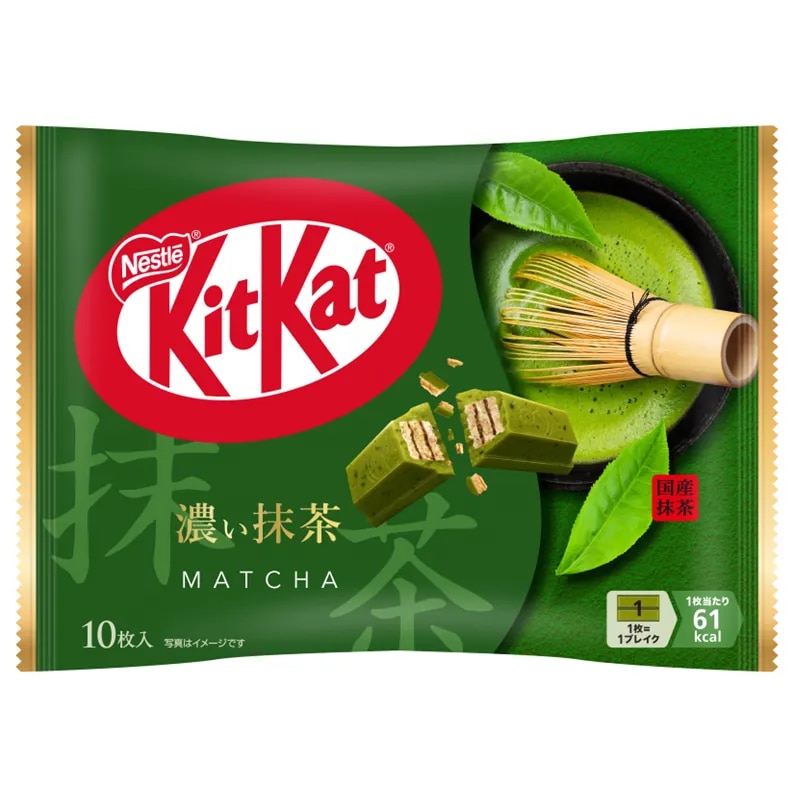
Koi Matcha – Rich Matcha
If you’re buying exactly one Japanese KitKat, we’d start here.
Matcha gives the chocolate a distinct green-tea bitterness that cuts through the sweetness.
It’s unusual enough to feel properly Japanese without entering novelty-snack territory.
Best for: first-time visitors and easy souvenirs.
Strawberry
A strawberry-flavoured chocolate coating surrounds the familiar crispy wafer.
It’s sweet, fruity and considerably less challenging than some of the flavours coming later.
Orange Chocolate
Chocolate and orange is hardly a revolutionary combination, but it’s a good one.
Japanese KitKat ranges have included orange chocolate varieties that combine citrus flavour with the familiar wafer centre.
Limited-Edition Japanese KitKats
This is where things change quickly.
Nestlé regularly rotates special KitKats throughout the year, which means the flavour you see during one trip may have disappeared by your next visit.
Recent limited-edition styles have included varieties such as:
- Strawberry Chocolate
- Double Berry & Nuts
- Strawberry Cheesecake
- Strawberry Shortcake
- Matcha Latte
These are often genuinely temporary releases, so don’t assume you’ll find them year-round.
If you spot one you really want to try, buy it when you see it.
Japanese convenience-store procrastination has consequences.
Regional Japanese KitKat Flavours
Now we get to our favourite part.
Regional KitKats, often called gotouchi KitKats, are designed around foods, ingredients and destinations from different parts of Japan.
They’re particularly popular as souvenirs.
Hokkaido Azuki Bean & Strawberry
Region: Hokkaido
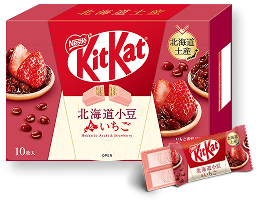
Hokkaido is famous for high-quality agricultural products, and red bean frequently appears in Japanese sweets.
This KitKat combines sweet azuki bean notes with strawberry.
It’s intended to evoke a Japanese-style dessert rather than simply strawberry chocolate.
Best for: anyone who already likes wagashi and red-bean desserts.
Shinshu Apple
Region: Nagano and Shinshu
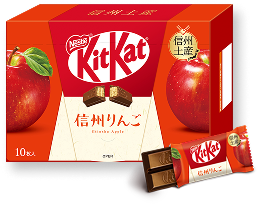
Nagano is one of Japan’s major apple-growing regions, making this one of the regional flavours that actually makes perfect sense.
Sweet apple also happens to work surprisingly well with chocolate.
Best for: a crowd-pleasing regional souvenir.
Tokyo Island Lemon
Region: Tokyo
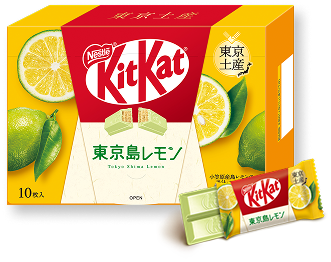
Tokyo isn’t just Shibuya crossings and skyscrapers.
Tokyo Prefecture also includes subtropical islands far out in the Pacific.
This regional KitKat draws on that lesser-known side of Tokyo with a bright citrus flavour.
Strawberry Cheesecake
Region: Yokohama
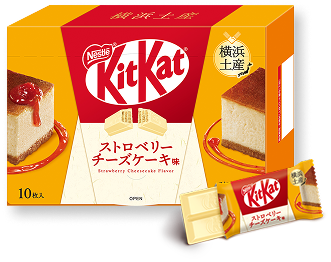
One of the better-known Japanese souvenir KitKats.
Strawberry and cheesecake flavours are combined with KitKat’s wafer, producing something closer to a tiny dessert than ordinary chocolate.
It’s sweet.
Very sweet.
But this isn’t really the moment to worry about restraint.
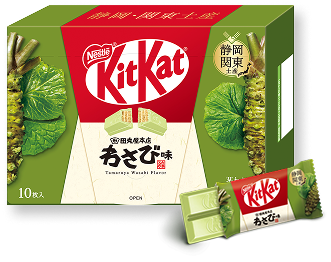
Tamaruya Wasabi
Region: Shizuoka and Kanto
Yes.
It exists.
And this isn’t merely “wasabi-inspired.”
Wasabi powder is used to give the chocolate a mild spicy edge.
The combination isn’t as horrifying as it sounds.
The heat is relatively restrained, while the sweet coating does most of the work.
Best for: the friend who specifically told you not to bring them another fridge magnet.
Uji Matcha
Region: Kyoto
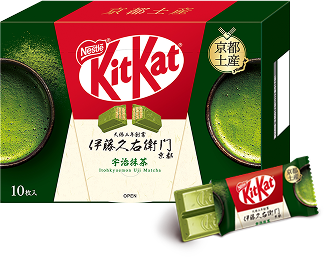
Kyoto is tea country, and Uji matcha KitKats are among the most obvious edible souvenirs to pick up there.
The flavour is usually deeper and more tea-forward than ordinary green-tea confectionery.
Best for: pretty much everyone.
This is one of our top souvenir choices.
Uji Hojicha
Region: Kyoto
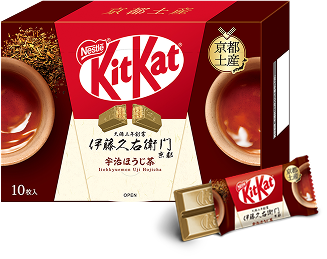
Matcha gets most of the international attention, but don’t ignore hojicha.
Hojicha is roasted green tea, which gives it a warmer, toastier flavour without matcha’s grassy bitterness.
If you normally dislike matcha desserts, try hojicha instead.
Osaka Castle Sakura
Region: Osaka
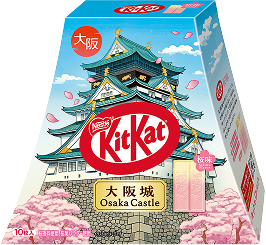
Osaka has its own regional KitKat inspired by the cherry blossoms around Osaka Castle.
The pink-and-white flavour fits neatly into Japan’s obsession with sakura sweets, while the colourful box makes this one particularly good for gifting.
Best for: a pretty Osaka souvenir that doesn’t involve another keyring.
Amaou Strawberry
Region: Kyushu and Fukuoka
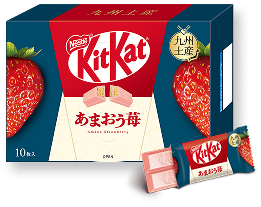
Amaou strawberries are one of Fukuoka’s best-known agricultural products.
They’re famous for being large, sweet and juicy, so turning them into a regional KitKat was almost inevitable.
Best for: children, strawberry fans and easy gifts.
Purple Sweet Potato – Beni Imo
Region: Okinawa
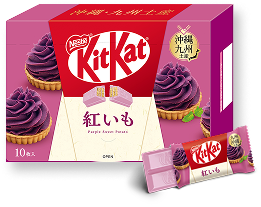
Now we’re getting properly Japanese.
Okinawan beni imo is a vivid purple sweet potato used in cakes, tarts, ice cream and other sweets across the islands.
The KitKat version is sweet, creamy and much better than the phrase “potato chocolate” might suggest.
Best for: one of the most distinctive Okinawa souvenirs.
Japanese Sake KitKat
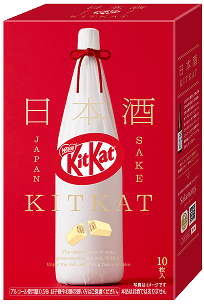
This is one of the Japanese KitKats we’d specifically hunt down.
Sake-flavoured KitKats combine a creamy chocolate coating with the aroma and flavour of Japanese rice wine.
Some versions contain a small amount of alcohol.
Best for: an unmistakably Japanese adult souvenir.
Ume Sake KitKat
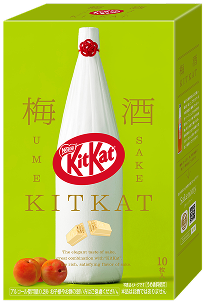
If ordinary sake chocolate isn’t unusual enough, there’s also umeshu.
Umeshu is a sweet Japanese plum liqueur with a fruity, slightly tart flavour.
The combination works surprisingly well with sweet chocolate.
Some versions contain a small amount of alcohol.
Best for: adults who prefer fruity chocolate.
The Big Japanese KitKat Flavour List
And now for the rabbit hole.
The following flavours have appeared in Japan across regular releases, Mini KitKats, seasonal editions, regional products, collaborations and limited runs.
Many are discontinued.
Chocolate and Classic KitKat Flavours
Japanese KitKats have included varieties such as:
- Original Milk Chocolate
- Dark Chocolate
- Bitter Chocolate
- Semi-Sweet Chocolate
- White Chocolate
- Extra Creamy Chocolate
- Cacao 61%
- Cacao 72%
- Cacao 85%
- Chocolate Hazelnut
- Chocolate Almond
- Chocolate & Cookies
- Chocolate Brownie
- Double Chocolate
- Triple Chocolate
- Ruby Chocolate
- Gold Chocolate
- Gianduja
- Cocoa
- Adult Sweetness
Some were relatively ordinary experiments.
Others were short-lived variations of the basic KitKat formula.
Matcha and Japanese Tea KitKat Flavours
This is arguably Japan’s strongest KitKat category.
Over the years, we’ve seen variations including:
- Matcha
- Uji Matcha
- Rich Matcha
- Strong Matcha
- Adult Sweetness Matcha
- Sakura Matcha
- Matcha Latte
- Matcha Milk
- Matcha & Kinako
- Hojicha
- Uji Hojicha
- Genmaicha
- Green Tea
If you want a KitKat that actually tastes connected to Japan rather than simply being a novelty flavour, tea varieties are your best bet.
Our favourites would be:
- Uji Matcha for the classic Japanese experience.
- Hojicha if you want something less bitter.
- Sakura Matcha if you find it during spring.
Strawberry and Berry KitKat Flavours
Japan has a serious strawberry-snack habit, and KitKat has taken full advantage.
Past releases have included:
- Strawberry
- Amaou Strawberry
- Strawberry Milk
- Strawberry Cheesecake
- Strawberry Shortcake
- Strawberry Chocolate
- Whole Strawberry
- Strawberry Maple
- Strawberry Tiramisu
- Strawberry Tart
- Sakura Strawberry
- Double Berry
- Raspberry
- Blueberry
- Blueberry Cheesecake
- Cranberry
- Mixed Berry
- Double Berry & Nuts
If pink packaging starts appearing everywhere around you, you’ve probably arrived during strawberry season.
Apple KitKat Flavours
- Shinshu Apple
- Apple
- Baked Apple
- Apple Pie
- Hot Baked Apple Pie
- Apple Vinegar
- Apple & Carrot
The Shinshu version makes the most sense as a travel souvenir because of Nagano’s strong association with apples.
Citrus KitKat Flavours
KitKat has experimented with practically every citrus fruit Japan can throw at it.
- Orange
- Orange Chocolate
- Mandarin Orange
- Mikan
- Yuzu
- Yuzu Kosho
- Sudachi
- Lemon
- Tokyo Island Lemon
- Lemon Cheesecake
- Citrus Golden Blend
Yuzu is particularly worth trying if you find it. Its fragrant, slightly floral citrus flavour works remarkably well with sweet chocolate.
Banana KitKat Flavours
Yes, plural.
- Banana
- Banana Caramel
- Banana Chocolate
- Tokyo Banana-style collaborations
Banana isn’t the most uniquely Japanese option, but it’s difficult to argue with banana and chocolate.
Peach, Melon and Tropical Fruit KitKats
- Peach
- White Peach
- Golden Peach
- Hokkaido Melon
- Yubari Melon
- Melon & Mascarpone Cheese
- Mango
- Passion Fruit
- Pineapple
- Watermelon
- Pear
Hokkaido melon editions are particularly fun souvenirs if you’re travelling in northern Japan.
Sakura KitKats
Spring brings cherry blossoms.
And cherry-blossom-flavoured everything.
- Sakura
- Sakura Matcha
- Sakura Mochi
- Sakura Sake
Sakura-flavoured sweets tend to be delicate and floral rather than tasting like cherries.
They’re also highly seasonal.
Buying tip: start checking Japanese supermarkets and convenience stores in the weeks leading into cherry-blossom season.
Sweet Potato KitKats
- Sweet Potato
- Roasted Sweet Potato
- Baked Sweet Potato
- Okinawan Purple Sweet Potato
And strangely enough, it works.
Japanese sweet potatoes are naturally rich and dessert-like, so pairing them with a creamy chocolate coating isn’t nearly as peculiar as it first sounds.
Japanese Dessert KitKat Flavours
This category could almost be a separate article.
- Custard Pudding
- Baked Pudding
- Cheesecake
- Strawberry Cheesecake
- Blueberry Cheesecake
- Lemon Cheesecake
- Tiramisu
- Strawberry Tiramisu
- Crème Brûlée
- Shortcake
- Strawberry Shortcake
- Mont Blanc
- Azuki Sandwich
- Daifuku
- Kinako
- Kinako Ohagi
- Sakura Mochi
If you have a sweet tooth, Japan will not allow you to leave hungry.
Coffee KitKat Flavours
- Coffee
- Café Latte
- Espresso
- Café au Lait
- Coffee Milk
- Tiramisu-style coffee flavours
These are generally less touristy than matcha or sake KitKats but are often among the easiest flavours to actually enjoy with coffee.
A revolutionary concept, we know.
Alcohol-Flavoured Japanese KitKats
Japan has released an impressive little alcohol cabinet in chocolate form.
- Japanese Sake
- Ume Sake
- Sakura Sake
- Rum Raisin
- Whisky
- Wine
- Sake collaborations
Some of these aren’t merely alcohol-flavoured.
Certain versions contain small amounts of alcohol, so check the packaging before giving them to children.
Wasabi KitKat
We need to return to this one because it is probably the Japanese KitKat people talk about most.
The Tamaruya Wasabi KitKat is associated with Shizuoka, one of Japan’s best-known wasabi-producing regions.
It looks like the sort of snack invented purely for tourists to dare each other to eat.
But it’s surprisingly restrained.
You don’t get the nasal-clearing blast of wasabi you’d experience after accidentally putting an entire lump of it on your sushi.
Instead, there’s a mild spicy note underneath the sweetness.
Worth trying? Yes.
Even if only once.
The Really Weird Japanese KitKat Flavours
And finally we reach the flavours responsible for Japan’s KitKat reputation.
- Wasabi
- Soy Sauce
- Miso
- Edamame
- Vegetable Juice
- Ginger Ale
- Cola
- Cough Drop
- Yuzu Kosho
- Sansho Pepper
- Hot Chili
- Salt
- Salt & Caramel
- Red Bean
- Azuki Bean
- Kinako Soybean Powder
- Roasted Sweet Potato
Not all were successful.
That is almost beside the point.
Half the fun of hunting Japanese KitKats is finding something that makes everyone stop in the supermarket aisle and say:
“Wait. They made it taste like what?“
Bakeable KitKats: Yes, You Were Supposed to Cook Them
One of Nestlé Japan’s cleverer experiments was the bakeable KitKat.
Instead of eating it straight from the packet, you could heat it so the outer coating caramelised.
Bakeable flavours included varieties such as:
- Custard Pudding
- Cheesecake
- Sweet Potato
The result sat somewhere between a KitKat, biscuit and tiny caramelised dessert.
They aren’t something you should expect to find routinely today, but they remain one of the stranger chapters in Japan’s KitKat history.
Where to Buy Japanese KitKats
Don’t make the mistake of assuming every Japanese KitKat lives in 7-Eleven.
For ordinary and seasonal flavours, try:
- 7-Eleven
- FamilyMart
- Lawson
- Japanese supermarkets
- Large drugstores
- Don Quijote
For regional varieties, your chances are much better at:
- Major railway stations
- Airport souvenir shops
- Department-store food halls
- Tourist souvenir shops
- Regional omiyage stores
Buy Regional KitKats When You See Them
If you’re travelling from Kyoto to Tokyo and spot a Kyoto-exclusive box, buy it in Kyoto.
Don’t assume you’ll find exactly the same product in Tokyo.
That’s rather the point of regional KitKats.
Which Japanese KitKat Flavours Should You Actually Buy?
If your suitcase has limited space, we wouldn’t try to collect everything.
Our shortlist is:
- Uji Matcha – the quintessential Japanese KitKat.
- Uji Hojicha – arguably even better if you like roasted tea.
- Wasabi – because you’re in Japan and when else are you going to buy wasabi chocolate?
- Beni Imo – particularly if you’re visiting Okinawa.
- Shinshu Apple – an easy crowd-pleaser.
- Amaou Strawberry – excellent for gifts.
- Japanese Sake – one of the most distinctive adult souvenirs.
- Ume Sake – fruity, unusual and very Japanese.
If you’re buying gifts for people who aren’t adventurous eaters, stick with matcha, apple and strawberry.
Save the wasabi for somebody you know well.
Are Japanese KitKats Actually Different From Regular KitKats?
Very much so.
The attraction isn’t simply that Japan puts different flavouring onto the same chocolate bar.
Many regional products deliberately connect the KitKat with a Japanese ingredient or destination:
- Uji matcha with Kyoto
- Wasabi with Shizuoka
- Beni imo with Okinawa
- Shinshu apples with Nagano
- Amaou strawberries with Fukuoka
That’s what makes them such good souvenirs.
They’re relatively inexpensive, easy to pack, individually wrapped and unmistakably associated with Japan.
Japanese KitKat FAQ
How many KitKat flavours are there in Japan?
Hundreds of different KitKat varieties have appeared in Japan over the years.
You’ll sometimes see totals of 300, 400 or even 500+, because the answer depends on whether reformulations, collaborations and temporary variations are counted separately.
Only a fraction are available at any one time.
What is the most famous Japanese KitKat flavour?
Matcha is probably the most internationally famous Japanese KitKat flavour.
Several matcha varieties have been released, including Uji matcha, rich matcha and seasonal matcha combinations.
What is the weirdest Japanese KitKat flavour?
Wasabi gets most of the attention, but Japan has also seen flavours such as soy sauce, miso, ginger ale, vegetable juice and sweet potato.
Can you still buy wasabi KitKats in Japan?
Wasabi KitKats are sold as regional souvenirs associated with Shizuoka and the surrounding region.
Availability can change, so check major souvenir shops and transport hubs rather than relying only on convenience stores.
Can you buy sake KitKats in Japan?
Yes, sake-flavoured KitKats are sold in Japan, including Japanese sake and umeshu varieties.
Some versions contain a small amount of alcohol, so check the packaging before giving them to children.
Are Japanese KitKats good souvenirs?
Yes.
They’re one of our favourite inexpensive Japanese souvenirs.
Regional boxes are particularly good because the flavours are connected to destinations around Japan, they’re easy to pack and the individual wrapping makes them simple to share.
Where can I find the biggest selection of KitKats in Japan?
For regular flavours, check supermarkets, convenience stores, Don Quijote and drugstores.
For unusual regional flavours, large railway stations, airports and regional souvenir shops are usually much better hunting grounds.
Are all Japanese KitKat flavours available in Tokyo?
No.
Some are nationwide products, but Japan also has regional KitKats designed specifically as local souvenirs.
If you see a regional flavour while travelling, it’s better to buy it there rather than assume you’ll find it later in Tokyo.
Final Thoughts: Japanese KitKats Are Basically Edible Souvenirs
You could spend an entire Japan trip trying to track down unusual KitKats and still leave with unfinished business.
That’s part of their charm.
Some flavours are genuinely excellent.
Some are clever representations of regional ingredients.
Others feel as though somebody at Nestlé Japan looked around the office and asked, “What haven’t we put in a KitKat yet?”
Either way, don’t restrict yourself to matcha.
Pick up regional flavours as you travel, try at least one that sounds slightly questionable and bring a few boxes home.
Because anyone can return from Japan with a keychain.
Returning with wasabi KitKats and an explanation is considerably more entertaining.
- All Japanese KitKat Flavours List: The Ultimate Japan KitKat Guide
- Sapporo rainy day with kids (2026): 7 Cool Indoor Things to Do

- What To Do In Arashiyama With Kids: A Realistic One-Day Family Itinerary
- 20 Best Things to Do in Shiga (2026): Lake Biwa, Castles, Shrines and More
- 15 Best Things to Do in Sapporo With Kids: Parks, Aquariums, Views, and Family Restaurants