
I spill travel tips , and show you the Japan that tourists usually miss.
There’s a particular kind of Tokyo shopping trip we love: the one where you go looking for a souvenir and come back with a tiny piece of someone else’s imagination. Maybe it’s an illustration discovered between two train connections, a sheet of hand-printed washi paper, or a glass vase that catches the afternoon light just right. No giant souvenir-bag haul required.
If you’re wondering where to buy local art in Tokyo, forget the idea that you need a gallery-sized budget. The city has artist-run-feeling boutiques, independent art-book shops, little antique rooms, and centuries-old craft specialists. Some sell original works by Japanese and international artists; others sell handmade objects that are art you can actually use.
We’ve picked 10 places to buy art and traditional crafts in Tokyo, from Tokyo Station and Nihonbashi to Daikanyama and Nishi-Ogikubo. One useful distinction before we start: not everything here is made in Tokyo itself. Several stores specialize in craftsmanship from other parts of Japan, brought together in the capital.
Love Japanese Art & Design? Explore These Tokyo Guides Next!
From hidden contemporary galleries to centuries-old craftsmanship, Tokyo is full of creative treasures. Here are a few more guides to help you discover Japanese art, beautiful souvenirs, and unique shopping spots.
- Best Contemporary Art Galleries in Tokyo – Discover independent galleries and exciting modern Japanese artists.
- Traditional Japanese Art & Culture – Explore ukiyo-e, calligraphy, ceramics, kintsugi, and other timeless art forms.
- Most Unique Stores in Tokyo – Find unusual gifts, museum shops, and creative souvenirs.
- Best Shopping in Ginza Tokyo – Discover elegant Japanese design stores, paper shops, and specialty boutiques.
- Best Tokyo Station Shopping – Explore shopping spots around Marunouchi and Yaesu.
- Best Things to Buy in Tokyo – From beautiful tea sets and ceramics to authentic Japanese souvenirs.
- Wabi-Sabi Japanese Home Decor – Bring Japanese craftsmanship and understated beauty into your home.
Table of Contents
Quick picks: which Tokyo art shop should you visit?
- Original illustrations, artist-made goods and small prints: VINYL TOKYO.
- Independent zines, art books and changing exhibitions: SALT AND PEPPER.
- Antique objects with an unexpected contemporary-art twist: Poubelle.
- Beautiful paper, prints and affordable gifts: Haibara or Ozu Washi.
- Handmade decorative pieces you can use at home: Tsugaru Vidro.
- Easy gifts for children or friends: Shochiku Kabukiya Honpo.
Short on time? Stick to Tokyo Station and Nihonbashi. You can visit several of the craft shops in one half-day without crossing the city.
Where to buy local art in Tokyo
These are our first stops when we want something that feels genuinely discovered rather than mass-produced. Stock and exhibition artists change, so treat the finds below as examples of the shops’ character, not a guaranteed inventory list.
1. VINYL TOKYO — playful art and original illustrations at Tokyo Station

Tokyo Station is not usually where we expect to find our next favorite artist. Between the Shinkansen announcements and people power-walking towards their trains, though, VINYL is a colorful little exception. It mixes a museum-shop atmosphere with original character merchandise, illustration-led objects, small gifts and a gallery space.
This is the place to look for quirky figurines, stickers, illustrated accessories and art that refuses to take itself too seriously. The gallery also spotlights creators through rotating displays, which means the most interesting thing on the wall might not be there on your next visit. If you fall in love with something, ask whether it’s for sale.
The catch? VINYL is inside the JR ticket gates at Gransta Tokyo. It’s ideal if you already have a train journey; if you’re visiting only to shop, ask station staff about station-entry access before heading through the gates.
Best for: original artist goods, contemporary illustration and gifts | Area: Gransta Tokyo, inside Tokyo Station | Price level: budget-friendly small items to higher-priced artwork | Getting there: Tokyo Station, inside JR fare gates | Hours: Mon–Sat 8:00–22:00; Sun/public holidays 8:00–21:00 (subject to changes) | Details: Official Gransta store listing
2. SALT AND PEPPER — independent art books, zines and exhibitions

Halfway between Ebisu and Daikanyama, SALT AND PEPPER is the kind of place that makes us start mentally rearranging our bookshelves. Founded by Kohei Okita, the designer behind VAINL ARCHIVE, it treats fashion, printed matter and contemporary art as part of the same conversation.
Look for independently published zines, photography books, graphic experiments and small-edition art projects. The shop has also hosted exhibitions and offered work from featured artists, so it’s worth checking what is showing before you visit. This is less about buying a postcard with Mount Fuji on it and more about finding something that looks like it came from somebody’s sketchbook, studio or very specific obsession.
Buying tip: When a zine or print catches your eye, ask about the edition, artist and whether other versions are available. Small runs can disappear quickly.
Best for: zines, artist books, small-run publications and exhibitions | Area: Ebisu Nishi / Daikanyama; Imamura Building, 2-5-2 Ebisu Nishi, Shibuya | Price level: usually accessible for books; originals vary | Getting there: around 6–10 minutes on foot from Daikanyama or Ebisu | Hours: Schedules can vary by exhibition; check current opening days before visiting | Details: Official shop
3. Poubelle — antiques and contemporary art in Nishi-Ogikubo

Nishi-Ogikubo already has the sort of sleepy, slightly eccentric atmosphere that rewards wandering. Poubelle leans right into it. Tucked into a residential street with a modest exterior, this is not a shop that screams for your attention. You may have to look twice to spot the entrance.
Inside, owner Tsuyoshi Yazawa brings together old objects and works by artists without separating them into neat “antiques” and “fine art” categories. The effect is part gallery, part cabinet of curiosities: objects become more interesting simply because of the things they sit beside.
You might find an antique that feels like a sculptural piece, or an artwork that could easily be mistaken for an ordinary object. It’s a lovely place for travelers interested in the stories behind what they buy, though you shouldn’t arrive expecting fixed stock or bargain-bin prices.
Best for: thoughtful antiques and unusual contemporary-art finds | Area: 3-42-5 Nishiogi Kita, Suginami | Price level: variable; some pieces are collector-level | Getting there: about 6 minutes from Nishi-Ogikubo Station | Hours: 12:00–19:30; usually closed Tuesdays | Details: Shop profile and updates
4. Fernweh — art, ceramics and fashion under one roof

If you like your art with a side of vintage clothing and flowers, Fernweh is worth the detour to Umegaoka. The boutique, curated by Tsubasa Mizoguchi, brings together emerging designers, vintage finds, books and objects. It also shares space with Duft, a flower shop, which makes browsing feel rather more atmospheric than your average retail stop.
Art does not sit in a separate white-walled room here. Drawings, ceramics, sculptural design pieces and occasional photography or painting exhibitions are woven into the shop. That’s what makes Fernweh special: something you initially mistake for decoration may actually be a work you can purchase.
It’s best for people who enjoy contemporary art and design as part of everyday life, rather than people hunting for a specific famous artist. Follow the shop’s updates if you want to time your visit to an exhibition.
Best for: art-meets-fashion browsing, design objects and occasional original works | Area: Mond Umegaoka Building 2F, 1-33-9 Umegaoka, Setagaya | Price level: midrange for design pieces; art prices vary | Getting there: about 2 minutes from Umegaoka Station on the Odakyu Line | Hours: 13:00–18:00; generally closed Wednesdays and Thursdays, with irregular closures | Details: Shop information
Where to buy traditional Japanese art and handmade crafts in Tokyo
Now for the beautiful, practical stuff: papers you’ll actually write on, glass that lives on your windowsill, and objects made by people who have spent years mastering one material. Many of these shops are around Nihonbashi and Tokyo Station, making them easy to combine.
5. Haibara Nihonbashi — exquisite washi paper and Japanese patterns

If beautiful paper is your weakness, we apologize in advance. Haibara has been in the Japanese paper business since 1806, and walking into its Nihonbashi shop is a crash course in how wildly creative traditional patterns can be.
The signature draw is washi, including decorative chiyogami patterned paper and elegant writing materials. We’re especially fond of paper shops because you can bring home something genuinely beautiful without sacrificing half your suitcase. A single sheet can become a framed piece of wall art; a decorated envelope makes a letter feel like an occasion.
For affordable Japanese art souvenirs, start with small stationery and patterned sheets. For something more special, look at the textures of different handmade papers and ask the staff which ones suit framing or calligraphy. The shop’s historical designs are a reminder that “traditional” does not have to mean dusty.
Best for: chiyogami, washi sheets, beautiful stationery and compact gifts | Area: Tokyo Nihonbashi Tower, 2-7-1 Nihonbashi, Chuo | Price level: budget-friendly accessories through premium handmade paper | Getting there: about 1 minute from Nihonbashi Station, Exit B6 | Hours: Mon–Fri 10:00–18:30; Sat–Sun 10:00–17:30; verify holiday closures | Details: Haibara official website
6. Ozu Washi — make your own Japanese paper art

Ozu Washi makes a brilliant second stop after Haibara, because here you can go beyond buying the finished product. Founded in 1653, Ozu is part specialist paper shop, part cultural space, with a historical collection, exhibitions and a hands-on papermaking studio.
The shelves are filled with paper from different regions of Japan, suited to everything from ink painting and collage to calligraphy and wrapping a very fancy present. But the experience we’d prioritize is making your own sheet of washi. You’ll work with fibers in water and a traditional screen, guided through the surprisingly delicate process of forming the paper.
The official Tokyo tourism listing describes a short session of roughly 45 minutes, with a one-sheet option starting at ¥1,000; check the latest price and reserve ahead because spaces are limited. This is one of the best art-related activities in Tokyo for curious families, too, though you should confirm age requirements before booking.
Best for: handmade Japanese paper, museum displays and papermaking workshops | Area: Ozu Honkan Building, 3-6-2 Nihonbashi Honcho, Chuo | Price level: small paper purchases to workshop experiences | Getting there: 2 minutes from Shin-Nihonbashi Station, Exit 5 | Hours: Shop Mon–Sat 10:00–18:00; closed Sundays; workshop operates on its own timetable | Details: Ozu Washi official site
Workshop booking: Official Tokyo tourism workshop information.
7. Tsugaru Vidro — colorful Japanese glass art
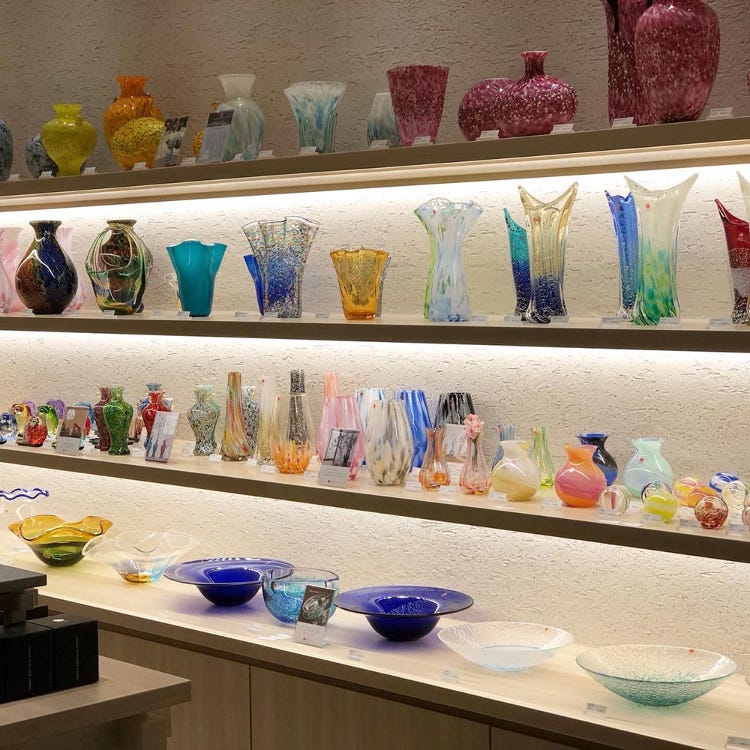
Some shops sell paintings. Tsugaru Vidro sells the kind of glassware you could spend ten minutes holding up to the light. Its colorful hand-crafted pieces come from the Tsugaru region of Aomori Prefecture, and the palette draws on landscapes and the changing seasons of northern Japan.
Inside the Tokyo Midtown Yaesu shop, you’ll find drinking glasses, bowls, vases, small decorative pieces and other objects that blur the line between kitchenware and art. Because each piece is made by artisans, the slight variations in color and finish are part of the charm, not defects.
If you want one particularly lovely souvenir, we’d choose a small vase or a piece of tableware you’ll use often. Check the shop’s Yaesu-exclusive products, and ask for sturdy wrapping before you leave. It is directly connected to Tokyo Station through the underground shopping network, so you can shop here even when the weather is miserable.
Best for: handmade glass, small vases, tableware and seasonal-color gifts | Area: Tokyo Midtown Yaesu, Central Tower 2F, 2-2-1 Yaesu, Chuo | Price level: midrange; special editions cost more | Getting there: underground connection from Tokyo Station | Hours: 11:00–21:00, subject to building closures | Details: Tsugaru Vidro official store page
8. Nihonbashi Kiya — Japanese craftsmanship for the kitchen

Yes, a kitchen-tool shop belongs in an art guide. Hear us out. Nihonbashi Kiya, established in 1792, specializes in precision-made cutlery and household tools, and its displays make it easy to appreciate the design and skill involved in objects we usually take for granted.
Professional-style Japanese knives are the headline attraction, but you’ll also find scissors and other practical items. If you enjoy cooking, this can be a more satisfying purchase than a decorative souvenir you never use. The real value is choosing something that fits your needs and learning how to care for it properly.
If you’re not looking for specialist blades, browse the smaller kitchen accessories. Travel tip: sharp knives must not go in cabin luggage, and airline or destination-country restrictions may apply. For expensive purchases, ask about care and returns before paying.
Best for: high-quality Japanese tools and functional craftsmanship | Area: COREDO Muromachi 1, 1F, 2-2-1 Nihonbashi Muromachi, Chuo | Price level: midrange to premium | Getting there: direct access from Mitsukoshimae Station | Hours: Weekdays 11:00–19:00; weekends and holidays 10:30–19:00 | Details: Official COREDO store page
9. Shochiku Kabukiya Honpo — kabuki-inspired prints and gifts
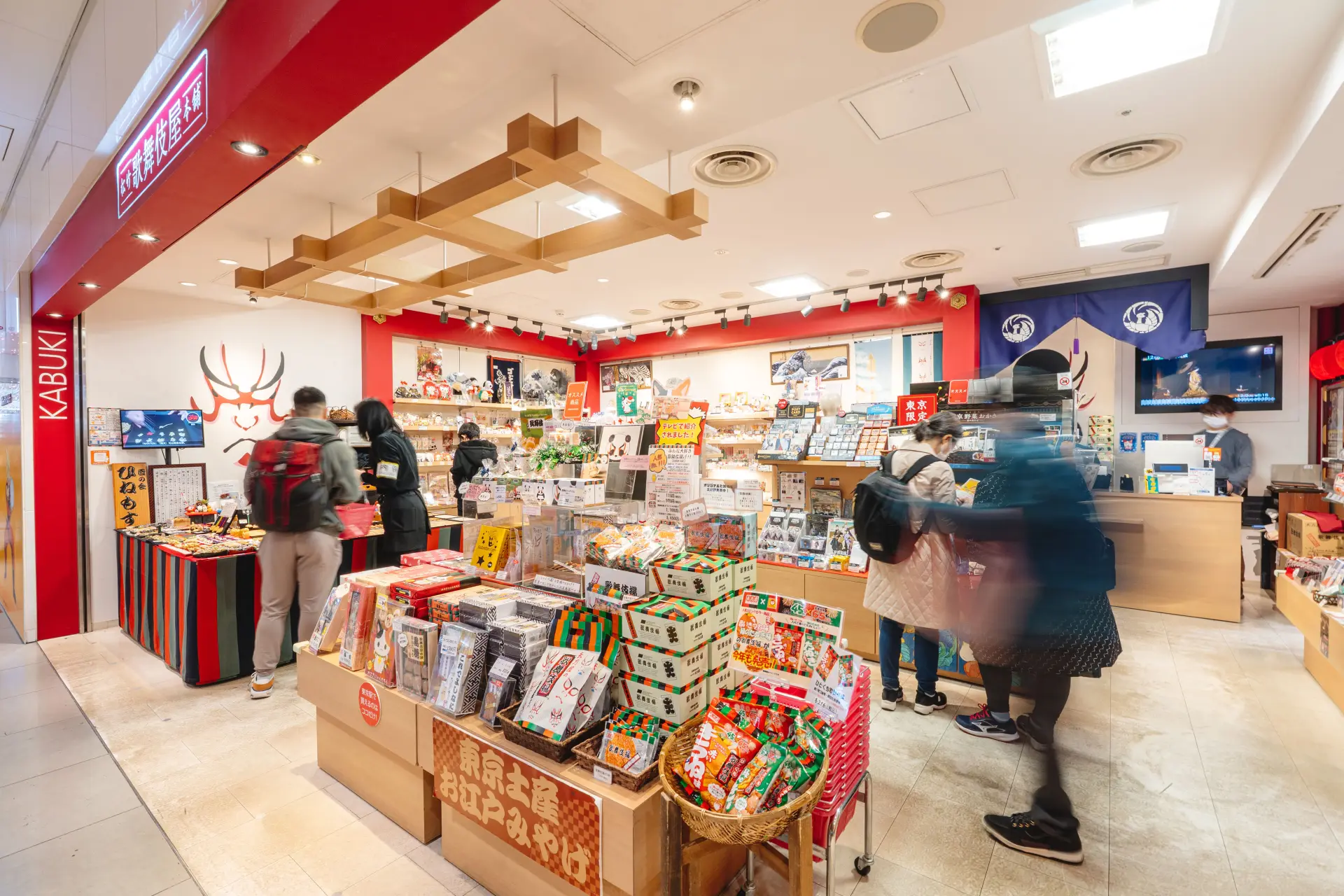
Sometimes the perfect piece of Japanese visual culture is a bold face on a tea towel. Shochiku Kabukiya Honpo celebrates the theater world of kabuki through goods inspired by its costumes, characters, makeup and traditional motifs. You’ll find it on Tokyo Character Street, so this is an easy stop even if you’ve only got a little time before dinner or a train.
Look for accessories and fabrics patterned with kumadori makeup, stationery, books and playful collaborations with familiar characters. The shop feels more like a cheerful souvenir store than a fine-art gallery, and that’s exactly its strength. It makes traditional Japanese performance art approachable and fun.
For a lightweight gift, we’d choose an illustrated paper item or small textile rather than something bulky. This is also a good stop for families: younger travelers can choose something colorful without having to stand quietly in a formal gallery.
Best for: kabuki-themed design, illustrated gifts and family souvenirs | Area: First Avenue Tokyo Station, Tokyo Character Street B1, 1-9-1 Marunouchi, Chiyoda | Price level: budget-friendly to midrange | Getting there: Tokyo Station, Yaesu side; outside the JR ticket gates | Hours: 10:00–20:30, subject to station shopping-center changes | Details: Shochiku official shop details
One for serious collectors: historic Japanese art in Nihonbashi
10. Hattori Bijutsuten — historic Japanese sword art

Hattori Bijutsuten is a very different sort of art destination. This small Nihonbashi business has long specialized in Japanese swords and related fittings, valued not only for their history but also for the extraordinary technical and decorative skill involved in making them.
For readers interested in Edo-period craftsmanship, samurai material culture or historical collecting, it’s a fascinating specialist address. Decorative sword fittings can be intricate works of metal art in their own right. But this is not a general store for ceramic bowls or lacquerware, despite what some broad craft roundups suggest.
Treat a visit as a specialist gallery experience rather than an everyday souvenir stop. Purchases may involve substantial costs, export documentation and import restrictions in your home country. Contact the business before visiting if you have a particular research or collecting interest.
Best for: historical Japanese sword craftsmanship and serious collectors | Area: 3-5-12 Nihonbashi, Chuo, 2F (building designation varies by directory) | Price level: collector-level | Getting there: roughly 5 minutes from Nihonbashi Station | Hours: 11:00–18:30; closed Sundays and public holidays | Details: Specialist association listing
How to plan an art-shopping afternoon in Tokyo
The easiest way to visit several shops without spending most of the day on trains is to focus on the Tokyo Station–Nihonbashi area. Here’s a manageable route, with plenty of time to stop and browse:
- Start at Tokyo Station. Visit VINYL if you are already inside the JR gates; otherwise begin with Shochiku Kabukiya Honpo on Character Street.
- Walk to Tokyo Midtown Yaesu. Spend 20–30 minutes looking at the glassware at Tsugaru Vidro.
- Head toward Nihonbashi. Browse Haibara for handmade paper and elegant stationery.
- Continue to COREDO Muromachi. Drop into Kiya for traditional toolmaking and a quick look at the surrounding shops.
- Finish at Ozu Washi. Allow extra time if you have reserved a papermaking experience.
Allow roughly 3–4 hours for relaxed browsing, longer if you stop for a workshop and food. Poubelle, Fernweh and SALT AND PEPPER are separate neighborhood detours; don’t try to squeeze all ten shops into one afternoon.
Practical tips for buying art in Tokyo and taking it home
- Know what you are buying. Original work, limited-edition print and mass-produced merchandise are not the same thing. Ask about the artist, edition size, medium and certificate of authenticity if relevant.
- Keep fragile items protected. Ask glass and ceramics shops for protective wrapping, and pack purchases where they won’t be crushed. Confirm airline rules for oversized or fragile pieces.
- Take photos only after asking. Small galleries and shops may restrict photography, especially when artworks are for sale.
- Check shipping and customs first. Some shops ship internationally, others do not. Antique objects and regulated items may require additional paperwork. A store’s willingness to sell does not guarantee you can import an object into your country.
- Keep receipts and artist details. A name card or photograph of the label can be surprisingly valuable when you’re back home trying to remember who made your favorite find.
Important tax-free update for 2026: Japan introduced a new tax-refund method on November 1, 2026. Eligible visitors at participating stores now pay the tax-inclusive price at checkout and must complete the required customs confirmation when leaving Japan to receive the applicable refund. The usual minimum is ¥5,000 before tax per store per day, and goods must be taken out of Japan within 90 days. Bring your passport, follow the shop’s refund-registration instructions, and check the departure procedure before checking bags containing eligible goods. Read the current Japan Customs guidance.
FAQ: buying Japanese art in Tokyo
Where can I buy affordable original art in Tokyo?
Start at VINYL TOKYO for artist-designed objects and rotating exhibitions, or SALT AND PEPPER for independent zines and art publications. Ask whether the current exhibition has prints or smaller works for sale; not every object displayed is an original or available to buy.
Is Nihonbashi a good neighborhood for traditional Japanese crafts?
Yes. Haibara, Ozu Washi and Nihonbashi Kiya are all practical stops in or around Nihonbashi, and Tsugaru Vidro is close by at Tokyo Midtown Yaesu. You can combine several without committing to a citywide shopping marathon.
Where can I buy Japanese art that is easy to pack?
Washi paper, illustrated stationery, small prints, zines and lightweight textiles are the safest bets. Start with Haibara, Ozu Washi, VINYL or Shochiku Kabukiya Honpo. Large framed works and glassware need more careful packing.
Can I buy art directly from Tokyo artists?
Yes, especially through rotating exhibitions and specialist shops. VINYL and SALT AND PEPPER are good starting points; Fernweh also hosts occasional artist exhibitions. Check each shop’s current artist list and confirm whether you are buying an original, a print or artist merchandise.
Are Tokyo art galleries and craft shops tax-free for tourists?
Only participating, authorized stores offer Japan’s tax-free purchase system. Since November 2026, eligible shoppers pay the tax-inclusive price first and follow the refund procedure at departure. Small independent galleries may not participate, so never assume a refund is available.
A souvenir that still feels special years later
The best Tokyo art purchases aren’t necessarily the most expensive. They’re the ones that make you stop, ask who made them and imagine where they’ll live when you get home. One perfect sheet of washi paper can be more memorable than a suitcase full of stuff. A little illustrated print might end up on your wall for a decade.
Start with VINYL if you want contemporary art, or Haibara and Ozu Washi if you love traditional craftsmanship. Then leave a little room in your day for the smaller shops that surprise you. Tokyo is particularly good at those.
More Tokyo Candies Shopping Guides
Still in the mood to shop? Explore our guide to the best shopping in Ginza, Tokyo, or browse our picks for the best shoes to buy in Japan.