
I spill travel tips , and show you the Japan that tourists usually miss.
Discover the best contemporary art galleries in Tokyo that showcase cutting-edge Japanese and international art. Explore Tokyo’s modern art scene with this curated guide for art lovers.
Planning more Tokyo art, design and gallery wandering? Read these next
Table of Contents
17 Best Contemporary Art Galleries in Tokyo: Where to See Art Beyond the Museums
Tokyo does contemporary art rather differently. One minute you are dodging shoppers in Harajuku; the next, you are standing in a quiet gallery looking at a sculpture that appears to have escaped from a science-fiction film. There might be a dozen people inside. There might be just you. And, unlike many of the city’s big museums, most independent galleries are free to enter.
We have rounded up 17 of the best contemporary art galleries in Tokyo, from internationally known Roppongi spaces to a converted bathhouse in old-fashioned Yanaka. This is a guide for curious travelers, not just collectors. You can walk in, see what is on the walls, and leave without buying anything.
Our top picks: Choose NANZUKA UNDERGROUND for playful pop-culture art, SCAI THE BATHHOUSE for the setting, or Roppongi for the easiest afternoon of gallery-hopping. For something less touristy, head to the warehouse galleries of Tennoz Isle.
Before you go: Exhibitions change frequently, some spaces close between shows, and Sunday and Monday are common days off. Follow the official exhibition links below rather than assuming every gallery is open.
https://widget.getyourguide.com/default/activities.frame?sha=643c75bb-36b1-51ec-90de-45721f128159&locale_code=en-US&widget=activities&number_of_items=1&partner_id=0JJQDRO&cmp=8fba09480dda4fb0b6988834a-417722&tour_ids=260407&widget_created=1794832391467&host_font_family=%22Times+New+Roman%22&host_font_family_v2=%22Times+New+Roman%22&host_font_size=16px&host_link_color=rgb%280%2C+0%2C+238%29&host_link_decoration=underline&website=file%3A%2F%2F%2FC%3A%2FUsers%2Fmamam%2FDownloads%2FTokyo_Contemporary_Art_Galleries_2026_with_images.html&visitor_id=N81KUZVN7L1NV152HHIH6NR6WNLXLQV9

How to Visit Tokyo’s Art Galleries Without Wasting a Day
- Best area for a first visit: Roppongi. The Piramide Building and complex665 put several respected galleries within a short walk of one another.
- Best for a half-day outing: Tennoz Isle. Explore galleries inside the TERRADA ART COMPLEX buildings, allowing time to find the correct floor.
- Best mix of art and sightseeing: Ginza and Tokyo Station. You can combine a design gallery, a contemporary gallery, and a historic station museum.
- Budget: Most commercial galleries generally have free entry. Tokyo Station Gallery is a museum and sells exhibition tickets.
- How long: Allow 20–40 minutes per small gallery, longer for a large exhibition; plan 2–3 hours for a gallery-hopping route.
1. NANZUKA UNDERGROUND

Best for: Pop art, underground culture, and the gloriously strange. NANZUKA is where Tokyo’s contemporary art scene collides with illustration, street culture, design, and the sort of futuristic imagery that makes you stop in your tracks. You may see a hyperreal robot, cartoonish creatures, or something that defies easy explanation. That unpredictability is half the fun.
The gallery has worked with names such as Hajime Sorayama, Keiichi Tanaami, Haroshi, and Daniel Arsham. Its UNDERGROUND space in Jingumae is especially convenient if you are already exploring Harajuku and Omotesando. The wider NANZUKA operation also has spaces in Shibuya, so check which branch is hosting the exhibition you want.
- Address: 3-30-10 Jingumae, Shibuya-ku, Tokyo, Japan
- Getting there: Harajuku / Meiji-jingumae area; allow extra time to locate the gallery on the side streets.
- Opening hours: Tuesday–Saturday, 11:00–19:00; closed Sunday and Monday.
- Cost and time: Usually free; allow 20–40 minutes.
- Official website: nanzuka.com
2. MISAKO & ROSEN

Best for: Independent Japanese artists and a neighborhood that still feels local. MISAKO & ROSEN sits in Kita-Otsuka, far from the glossier commercial art districts. Getting here means taking a detour into one of Tokyo’s everyday shopping neighborhoods rather than following a trail of souvenir shops.
Founded in 2006, the gallery has developed a distinctive program with artists including Shimon Minamikawa and Kazuyuki Takezaki. Expect painting, experimental presentations, and a chance to discover artists you probably will not encounter in the usual tourist roundups. It is a particularly good choice if you like small, intimate exhibition spaces.
- Address: 3-27-6 Kita-Otsuka, Toshima-ku, Tokyo, Japan (1F)
- Getting there: About 10 minutes on foot from JR Otsuka Station, North Exit.
- Opening hours: Wednesday–Saturday, 12:00–18:00; Sunday, 12:00–17:00; closed Monday, Tuesday and public holidays.
- Cost and time: Usually free; allow 20–30 minutes.
- Official website: misakoandrosen.jp
3. Tokyo Station Gallery

Best for: Art and architecture in one very convenient stop. Strictly speaking, Tokyo Station Gallery is a museum, not a commercial contemporary art gallery. We are keeping it in the guide because its exhibitions can be excellent and the venue itself is worth seeing. The museum occupies part of Tokyo Station’s restored Marunouchi red-brick building, where historic brick walls form part of the exhibition experience.
Its program ranges from modern and contemporary work to photography, design, and historical subjects, so the show is not necessarily contemporary art every time. Check the current exhibition before visiting. It is an easy addition to a central Tokyo itinerary or a day of less obvious Tokyo attractions.
- Address: 1-9-1 Marunouchi, Chiyoda-ku, Tokyo, Japan
- Getting there: Inside Tokyo Station at the Marunouchi North Exit area.
- Opening hours: Normally 10:00–18:00; Friday until 20:00; last admission 30 minutes before closing. Usually closed Monday and between exhibitions.
- Cost and time: Paid admission; price depends on the exhibition. Allow 45–75 minutes.
- Official website: www.ejrcf.or.jp
4. Mizuma Art Gallery

Best for: Provocative Japanese contemporary art and distinctive Asian perspectives. Founded by Sueo Mizuma in 1994, this gallery has spent decades backing artists whose work does not always fit neatly into fashionable categories. It is a particularly rewarding stop when you want art with an argument, an unexpected visual language, or a sense of humour.
The gallery is associated with artists including Makoto Aida, O JUN, Aiko Miyanaga, and Akira Yamaguchi, and has long built relationships across Asia. Some exhibitions engage with traditions that you might recognise from traditional Japanese art, only to turn them inside out. Since this is a little outside the usual gallery clusters, check the show before making a separate journey.
- Address: Kagura Building 2F, 3-13 Ichigayatamachi, Shinjuku-ku, Tokyo, Japan
- Getting there: Ichigaya area, accessible from Ichigaya Station.
- Opening hours: Tuesday–Saturday, 12:00–18:00 according to the gallery’s current homepage; closed Sunday, Monday and national holidays.
- Cost and time: Usually free; allow 25–45 minutes.
- Official website: mizuma-art.co.jp
5. Gallery Koyanagi

Best for: Thoughtful conceptual art, photography, and international artists. Gallery Koyanagi has been a fixture of Ginza’s contemporary art world since 1995. Its program includes names such as Hiroshi Sugimoto, Sophie Calle, Marlene Dumas, and Tabaimo, which should tell you that this is no ordinary white-walled showroom.
You will find it on the ninth floor of the Koyanagi Building, in a gallery environment designed by Hiroshi Sugimoto. Because the space is tucked above street level, it is easy to walk past without realising what is upstairs. Combine a visit with our Ginza sightseeing guide or grab lunch using our Ginza food recommendations.
- Address: Koyanagi Building 9F, 1-7-5 Ginza, Chuo-ku, Tokyo, Japan
- Getting there: Ginza Station Exit A9 or Ginza-itchome Station Exit 7.
- Opening hours: Tuesday–Saturday, 12:00–19:00; closed Sunday, Monday and national holidays.
- Cost and time: Usually free; allow 20–40 minutes.
- Official website: www.gallerykoyanagi.com
6. Take Ninagawa

Best for: Experimental, conceptual, and intellectually curious art. Take Ninagawa has been operating in Higashi-Azabu since 2007, building a program that rewards visitors willing to look beyond a pretty picture. Its exhibitions have involved artists such as Shinro Ohtake, On Kawara, and Kazuko Miyamoto, with work ranging from painting to conceptual installations and archival presentations.
This is one of those galleries where an exhibition might be spare, challenging, quietly beautiful, or all three. Do not arrive expecting a permanent collection; the experience depends entirely on what is on view. It pairs nicely with Tokyo’s more unusual places, particularly if you are exploring the Azabu area.
- Address: 2-14-8 Higashi-Azabu, Minato-ku, Tokyo, Japan
- Getting there: Higashi-Azabu, within reach of Akabanebashi and Azabu-juban stations.
- Opening hours: Tuesday–Saturday, 11:00–19:00; closed Sunday, Monday and public holidays.
- Cost and time: Usually free; allow 20–40 minutes.
- Official website: www.takeninagawa.com
7. Perrotin Tokyo

Best for: Big-name international contemporary art in a compact Tokyo setting. Perrotin started in Paris and now has galleries around the world. Its Roppongi branch brings that international roster into one of Tokyo’s most useful gallery-hopping buildings, the Piramide Building. The exhibition calendar is the attraction here: past presentations have ranged from conceptually adventurous work to striking figurative painting.
Perrotin is associated with artists including Maurizio Cattelan, Takashi Murakami, and JR, although the exact artist and work on display change regularly. Once you are here, you can visit other galleries in the same building without trekking across the city. Tip: Check Perrotin’s Tokyo listing rather than the global homepage for the latest show and any temporary closures.
- Address: Piramide Building 1F, 6-6-9 Roppongi, Minato-ku, Tokyo, Japan
- Getting there: A short walk from Roppongi Station; look for the Piramide Building.
- Opening hours: Exhibition-dependent; check the Tokyo gallery listing for the current schedule.
- Cost and time: Usually free; allow 20–40 minutes.
- Official website: www.perrotin.com
8. Taka Ishii Gallery

Best for: Photography, serious contemporary art, and artists with international reputations. Taka Ishii Gallery has been an important player in Japan’s art world since 1994. It has presented photography, painting, film, and other media, working with artists including Daido Moriyama and Nobuyoshi Araki. The Roppongi gallery is particularly convenient for a self-guided art crawl.
The gallery now operates several Tokyo spaces, including Roppongi, Kyobashi, Tennoz, and a dedicated Photography / Film venue. That makes the exhibition address worth double-checking: there is more than one Taka Ishii destination in the city. The Roppongi space sits in complex665, alongside Tomio Koyama Gallery.
Also useful: Check the official location directory for opening hours at the Kyobashi, Tennoz, and Photography / Film spaces.
- Address: complex665, 3F, 6-5-24 Roppongi, Minato-ku, Tokyo, Japan (Roppongi branch)
- Getting there: Around 3 minutes on foot from Roppongi Station Exit 3.
- Opening hours: Roppongi: Tuesday–Saturday, 12:00–19:00; closed Sunday, Monday and national holidays.
- Cost and time: Usually free; allow 20–40 minutes.
- Official website: www.takaishiigallery.com
9. ginza graphic gallery (ggg)

Best for: Graphic design, typography, posters, and visual culture. The ginza graphic gallery—usually shortened to ggg—is not primarily a contemporary fine-art gallery, but design lovers should absolutely make room for it. Established by Dai Nippon Printing in 1986, it has become a dedicated space for exploring the art and craft of graphic communication.
Expect exhibitions on posters, book design, illustration, art direction, and influential makers from Japan and abroad. If Japanese visual culture interests you, this is an ideal companion to our guides to Japanese graphic designers and Japanese fashion designers. It is also easy to combine with other Ginza galleries.
- Address: DNP Ginza Building 1F/B1F, 7-7-2 Ginza, Chuo-ku, Tokyo, Japan
- Getting there: In Ginza 7-chome, convenient for Ginza and Shimbashi area walks.
- Opening hours: Monday–Saturday, 11:00–19:00; closed Sunday, national holidays and during exhibition changeovers.
- Cost and time: Usually free; allow 30–45 minutes.
- Official website: www.dnpfcp.jp
10. TARO NASU

Best for: Conceptual art, contemporary photography, and installations. Founded in 1998, TARO NASU has a particularly strong program of conceptual artists. Its roster includes Ryan Gander, Pierre Huyghe, Ryoji Ikeda, Philippe Parreno, and Taiji Matsue, so you might encounter anything from photography to sound, light, and complex installation work.
One good reason to visit is practical: TARO NASU is on the fourth floor of the Piramide Building, the same Roppongi address as Perrotin, Ota Fine Arts, and WAKO WORKS OF ART. When the exhibitions line up, you can visit several galleries in the time it would take to cross Tokyo for one.
- Address: Piramide Building 4F, 6-6-9 Roppongi, Minato-ku, Tokyo, Japan
- Getting there: A short walk from Roppongi Station.
- Opening hours: Tuesday–Saturday, 11:00–18:00; closed Sunday, Monday and public holidays.
- Cost and time: Usually free; allow 20–40 minutes.
- Official website: www.taronasugallery.com
More Tokyo Contemporary Art Galleries Worth Visiting
The original ten barely scratch the surface. These seven additions are particularly useful because they bring in a historic gallery in Yanaka, more of Roppongi’s major names, and the fast-growing art cluster around Tennoz Isle.
11. SCAI THE BATHHOUSE

Best for: A memorable gallery building and major Japanese contemporary art. We would make the detour to this one even if we had only a passing interest in contemporary art. Set in the peaceful Yanaka district, SCAI THE BATHHOUSE occupies a former public bathhouse. From the street you see a traditional roof and entrance; inside, the high-ceilinged building has been transformed into a bright exhibition space. It is a wonderfully Tokyo contrast.
Founded in 1993, SCAI has played an important role in presenting artists such as Lee Ufan, Tatsuo Miyajima, Kohei Nawa, and Mariko Mori, while also working with international figures. Come for the art, stay for a walk around Yanaka’s old streets. Unlike a museum, it closes between exhibitions, so check before leaving your hotel.
- Address: Kashiwayu-Ato, 6-1-23 Yanaka, Taito-ku, Tokyo, Japan
- Getting there: Approximately 6 minutes on foot from JR Nippori Station South Exit, or a longer walk from Nezu Station.
- Opening hours: Tuesday–Saturday, 12:00–18:00; closed Sunday, Monday, public holidays and between exhibitions.
- Cost and time: Usually free; allow 30–45 minutes, plus time for Yanaka.
- Official website: www.scaithebathhouse.com
12. Ota Fine Arts

Best for: Influential Japanese artists and contemporary Asian art. Ota Fine Arts was established in 1994 and helped bring major Japanese contemporary artists to wider attention, including Yayoi Kusama. Its program has also explored artistic connections across Asia, with work that moves between painting, video, installation, and other media.
The Tokyo gallery is on the third floor of the Piramide Building in Roppongi, which means there is very little effort involved in adding it to a gallery crawl. Ota Fine Arts also maintains another Tokyo exhibition space in Roppongi 7-chome, so check the venue attached to your chosen exhibition before heading out.
- Address: Piramide Building 3F, 6-6-9 Roppongi, Minato-ku, Tokyo, Japan (main Tokyo gallery)
- Getting there: A short walk from Roppongi Station.
- Opening hours: Tuesday–Saturday, 11:00–19:00; closed Sunday, Monday and public holidays.
- Cost and time: Usually free; allow 20–40 minutes.
- Official website: www.otafinearts.com
13. WAKO WORKS OF ART

Best for: International contemporary painting, photography, and installations. Operating since 1992, WAKO WORKS OF ART has long focused on the social role of art and conversations between artists and audiences. It has worked with significant international names including Gerhard Richter and Luc Tuymans, alongside a carefully selected roster of other artists.
This is another excellent stop on the Piramide Building gallery circuit. We like it as a contrast to NANZUKA: expect a more reflective exhibition experience rather than an anything-goes pop-culture atmosphere. Of course, the latest show may turn that expectation on its head—which is one reason to visit.
- Address: Piramide Building 3F, 6-6-9 Roppongi, Minato-ku, Tokyo, Japan
- Getting there: A short walk from Roppongi Station.
- Opening hours: Tuesday–Saturday, 11:00–18:00; closed Sunday, Monday and Japanese national holidays.
- Cost and time: Usually free; allow 20–40 minutes.
- Official website: www.wako-art.jp
14. Tomio Koyama Gallery
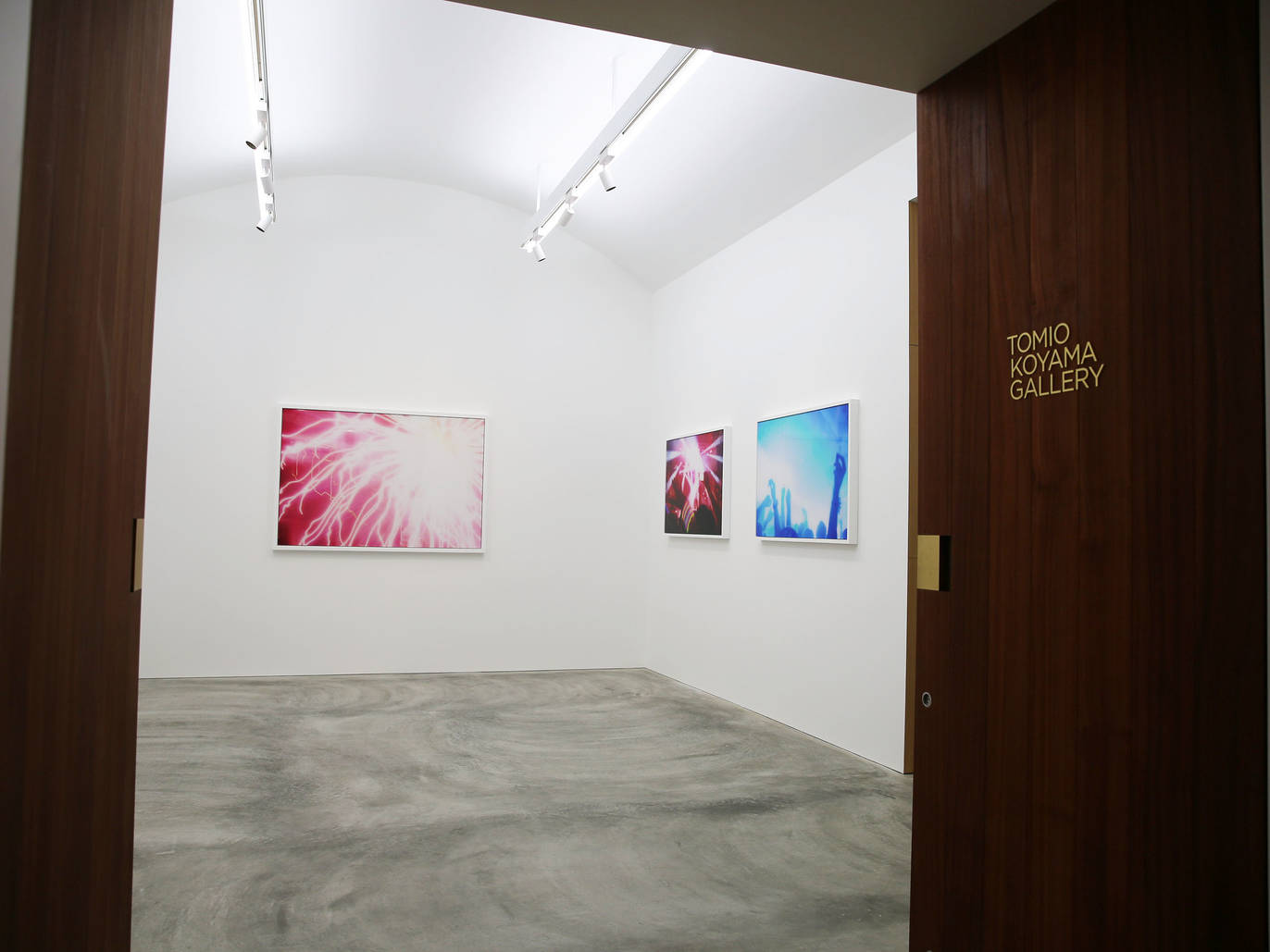
Best for: Discovering important Japanese artists across different generations. Established in 1996, Tomio Koyama Gallery helped shape a new generation of Japan’s contemporary art scene. Its roster includes Kishio Suga, Mika Ninagawa, and Hiroshi Sugito, and its exhibitions range from painting and photography to ceramics and experimental work.
The Roppongi branch is on the second floor of complex665, just below Taka Ishii Gallery. The gallery also operates spaces in Kyobashi and Tennoz, so it is worth checking the schedule at all three before planning your day. For visitors who want high-quality art without squeezing another museum into their trip, this is an excellent pick.
- Address: complex665, 2F, 6-5-24 Roppongi, Minato-ku, Tokyo, Japan (Roppongi branch)
- Getting there: About 3 minutes on foot from Roppongi Station.
- Opening hours: Roppongi: Tuesday–Saturday, 11:00–19:00; closed Sunday, Monday and national holidays.
- Cost and time: Usually free; allow 20–40 minutes.
- Official website: www.tomiokoyamagallery.com
15. KOTARO NUKAGA

Best for: Ambitious exhibitions that connect art, society, and technology. KOTARO NUKAGA is a relatively young gallery, founded in 2018, but it has become a strong addition to Tokyo’s contemporary art scene. Its program deliberately crosses disciplines, bringing together ideas from culture, history, science, and technology rather than sticking to one visual style.
It now has Roppongi and Tennoz venues. The Roppongi branch is in the Piramide Building, while its Tennoz exhibitions occupy spaces in the TERRADA ART COMPLEX buildings. We particularly recommend checking the Tennoz program if you want to make a dedicated gallery-hopping trip; the exhibitions here can be ambitious and spatially immersive.
- Address: Roppongi: Piramide Building 2F, 6-6-9 Roppongi, Minato-ku; Tennoz: TERRADA ART COMPLEX II 1F, 1-32-8 Higashi-Shinagawa, Shinagawa-ku, Tokyo, Japan
- Getting there: Roppongi Station for the Roppongi gallery; around 8 minutes from Tennoz Isle Station for the Tennoz gallery.
- Opening hours: Tuesday–Saturday, 11:30–18:00 at the listed venues; closed Sunday, Monday and national holidays.
- Cost and time: Usually free; allow 25–45 minutes per location.
- Official website: kotaronukaga.com
16. ANOMALY
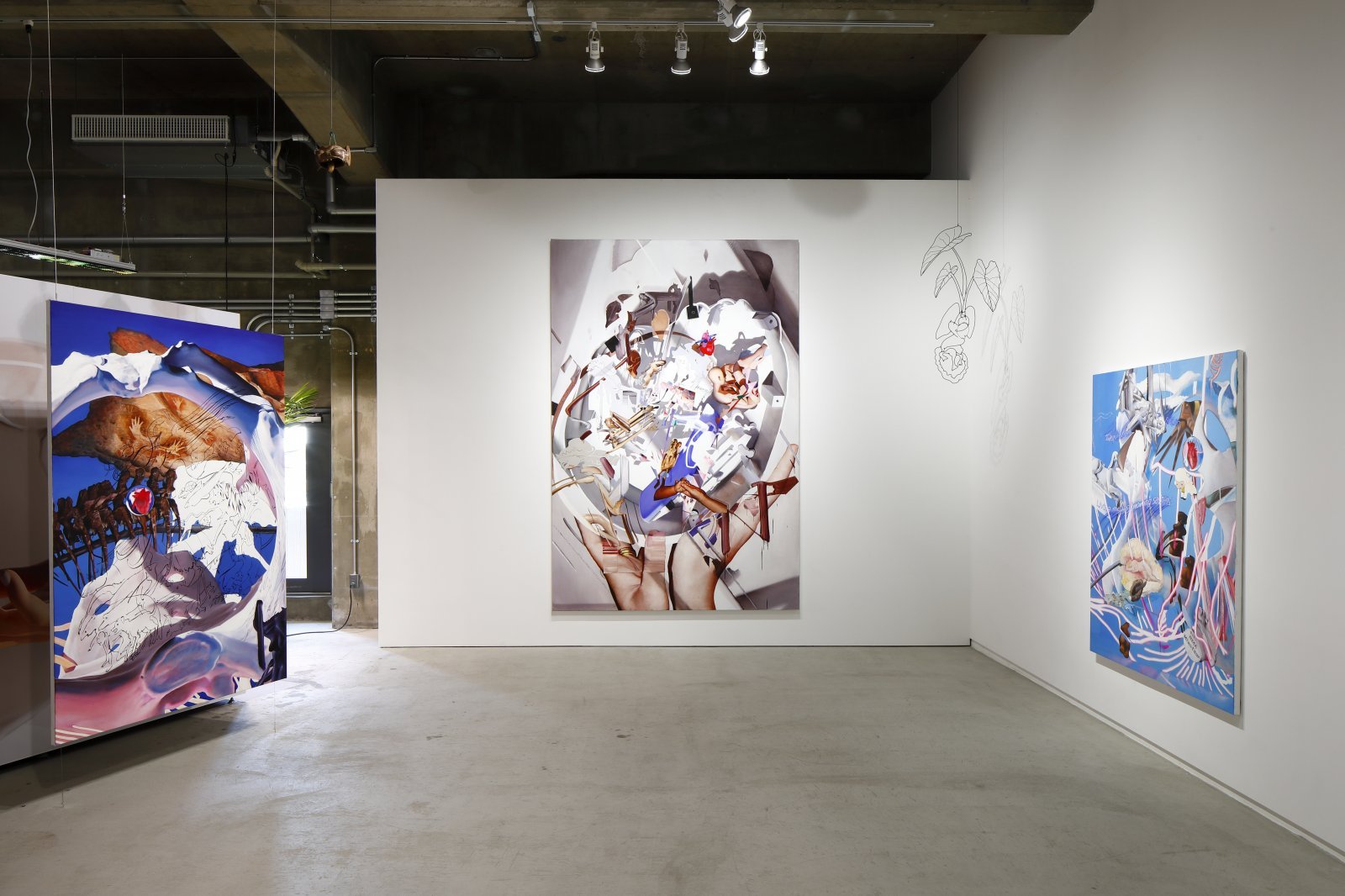
Best for: Experimental exhibitions in Tokyo’s warehouse art district. You will find ANOMALY inside the TERRADA ART COMPLEX in Tennoz, an industrial-style building where multiple contemporary galleries have turned former warehouse spaces into exhibition rooms. Founded in 2018, ANOMALY supports work that challenges conventional ideas about what art can look like.
The program includes painting, installation, performance, and projects shaped by research and conversation. It is a natural addition to a Tennoz itinerary because you can walk between several galleries in the same complex. Do not rely on a quick Google Maps pin alone: note the building and floor before arriving.
- Address: TERRADA ART COMPLEX I, 4F, 1-33-10 Higashi-Shinagawa, Shinagawa-ku, Tokyo, Japan
- Getting there: Tennoz Isle area; allow about 8–10 minutes on foot from local stations.
- Opening hours: Tuesday–Saturday, 12:00–18:00; closed Sunday, Monday and national holidays.
- Cost and time: Usually free; allow 20–40 minutes.
- Official website: anomalytokyo.com
17. KOSAKU KANECHIKA

Best for: Emerging Japanese talent, contemporary craft, and adventurous materials. KOSAKU KANECHIKA is one of the galleries that makes Tennoz worth the journey. Its artists include Takuro Kuwata, Junko Oki, and Noritaka Tatehana, whose practices bridge contemporary art, design, and materials that are sometimes associated with traditional crafts.
The gallery has spaces in both Tennoz and Kyobashi. If you are already at the TERRADA ART COMPLEX, visit its Tennoz space on the fifth floor; otherwise, the Kyobashi branch pairs neatly with Tokyo Station and Ginza. This is a useful choice for travelers who want to see where contemporary Japanese art is heading, rather than only the familiar names.
- Address: Tennoz: TERRADA ART COMPLEX I, 5F, 1-33-10 Higashi-Shinagawa, Shinagawa-ku; Kyobashi: TODA Building 3F, 1-7-1 Kyobashi, Chuo-ku, Tokyo, Japan
- Getting there: Tennoz Isle / Shinbamba for Tennoz; Kyobashi or Tokyo Station for Kyobashi.
- Opening hours: Tennoz: 11:00–18:00; Kyobashi: 11:00–19:00. Both normally closed Sunday, Monday and public holidays.
- Cost and time: Usually free; allow 20–40 minutes per space.
- Official website: kosakukanechika.com
The Best Tokyo Gallery-Hopping Routes
Roppongi: The easiest route (2–3 hours). Start with the Piramide Building, where Perrotin, TARO NASU, Ota Fine Arts, WAKO WORKS OF ART, and KOTARO NUKAGA have venues. Then walk to complex665 for Taka Ishii Gallery and Tomio Koyama Gallery. It is the most efficient way to see several exhibitions without spending half the day on trains.
Tennoz Isle: The art-district route (2–3 hours). Head to the TERRADA ART COMPLEX buildings and check exhibitions at ANOMALY, KOSAKU KANECHIKA, and KOTARO NUKAGA. Several other galleries share this area, so check the current TERRADA exhibition directory on the day. Tennoz feels more like a working art district than a sightseeing strip.
Ginza and Marunouchi: Art plus the classic city (2–3 hours). Begin with Gallery Koyanagi and ginza graphic gallery, then make your way to Tokyo Station Gallery if its current exhibition appeals. This route works particularly well if you are already staying in central Tokyo or plan to browse shops afterward.
Harajuku and Yanaka: These are better as separate outings. Pair NANZUKA with Harajuku/Omotesando, and SCAI THE BATHHOUSE with Yanaka’s streets and the Ueno area rather than trying to join them in one walking route.
Practical Tips Before Visiting a Contemporary Art Gallery in Tokyo
- Check the exhibition calendar first. Commercial galleries frequently close for installation and between shows. An address can be correct even when the space is temporarily shut.
- Expect quiet spaces. Many of these galleries are small, and you can visit without making an appointment unless an event specifically requires one.
- Do not assume photography is allowed. Ask staff before taking pictures, especially of individual works.
- Visiting with children? Short visits can work well for art-curious kids; choose vivid installation shows, supervise closely, and respect no-touch rules.
- Wear comfortable shoes. A Roppongi or Tennoz art crawl involves several buildings, floors and short walks, not just one venue.
FAQs About Contemporary Art Galleries in Tokyo
Are contemporary art galleries in Tokyo free to visit?
Most independent commercial galleries in this guide generally offer free admission to their regular exhibitions. Tokyo Station Gallery is different: it is a museum with paid, exhibition-specific admission. Always check for special events or ticketed programs.
Can tourists enter galleries without buying art?
Yes. Galleries welcome visitors who just want to see an exhibition. You do not need to be a collector, and it is perfectly fine to browse, enjoy the work, and leave. Follow the gallery’s rules and be considerate if a space is very small.
Which Tokyo neighborhood is best for contemporary art galleries?
For a first gallery-hopping afternoon, Roppongi is the easiest choice because several prominent galleries are concentrated in two buildings. Tennoz Isle is better if you want a warehouse-art-district atmosphere, while Ginza is convenient for combining art with shopping and central Tokyo sightseeing.
Are Tokyo art galleries open on Sundays?
Many private galleries close on Sundays and Mondays, but not all. MISAKO & ROSEN, for example, lists Sunday afternoon hours. Exhibition changeovers and public holidays can also affect opening times. A weekday or Saturday is usually a safer bet for a multi-gallery visit.
How much time do you need for Tokyo’s contemporary art galleries?
Allow roughly 20–40 minutes for each small gallery and 2–3 hours for a cluster such as Roppongi or Tennoz. Large or more complex exhibitions may take longer. You do not need to cram in all 17; a handful of well-chosen spaces makes a better afternoon.
More Tokyo Guides to Read Next
Planning a wider trip? Start with our Tokyo travel guide or our two-week Japan itinerary. If you are still deciding what belongs on your route, see the best places to visit in Japan.
More Tokyo art, design and discovery guides
- Best Japanese Brands to Know – for design-minded shopping.
- Traditional Japanese Art – understand the older art forms behind some contemporary ideas.
- What to Do in Ginza – turn your gallery visit into a full afternoon.
- Unusual Things to Do in Tokyo – a few more places beyond the usual tourist trail.
- Unique Places in Tokyo – for the curious and easily bored.
Last reviewed: November 2026. Gallery addresses and general opening hours were checked against official websites; exhibitions, holiday closures, and ticket prices can change.
- Where to Buy Local Art in Tokyo (2026): 10 Hidden Shops & Galleries
- What to Buy in Fukuoka in 2026: 40 Irresistible Japanese Souvenirs Worth Packing

- What to Buy in Hokkaido in 2026: 36 Hokkaido souvenirs worth seeking out

- Best shopping in Ginza Tokyo in 2026: 12 Places Worth Your Time
- What to buy in Kyoto in 2026: 14 Unique Souvenirs