I spill travel tips , and show you the Japan that tourists usually miss.
Two weeks in Japan. It sounds like a dream—and it is. In just 14 days, you can glide from Tokyo’s electric skyline to Kyoto’s temple-studded hills, wander through bamboo forests, slurp your way across ramen capitals, and fall asleep in a traditional ryokan overlooking a garden of maple trees.
This itinerary is designed for travelers who want to experience the best of Japan without rushing: the cities, the culture, the food, and the quiet moments in between. We’ll take you from the buzzing heart of Tokyo to the ancient calm of Kyoto, through the street food of Osaka, and into the mountains of Nikko and the Japanese Alps—with plenty of insider tips along the way.
So pack light, charge your camera, and get ready: two weeks in Japan will change how you see travel forever.
Table of Contents
How to get around Japan

The Best App for Getting Around Japan
When it comes to navigating Japan, Google Maps is your ultimate travel companion. We used it daily during our two-week trip to organize every transfer—trains, subways, and buses included. It’s not just about directions: Google Maps shows real-time schedules, bus stop numbers, which train platform to use, and even the best car to board for a quicker exit . It’s like having a local guide in your pocket.
Is the JR Pass Worth It in 2026?
The JR Pass (Japan Rail Pass) is a single ticket that covers unlimited travel on all JR (Japan Rail) trains for a set number of days. It used to be an easy decision—just buy it, and go anywhere. But since the price increase in late 2024, it’s not always the most cost-effective choice.
Here’s how to decide if it’s worth it for your Japan trip:
- Plan your itinerary first.
List all the cities you’ll visit and try to group your long-distance train rides within the same 7 or 14 days. - Calculate the cost of individual trips.
You can check prices directly on Google Maps, or for more precise info, use the JR Fare Calculator or Klook’s route search—both are available in English and show exact fares. - Compare flight prices.
Sometimes a domestic flight (found easily through Skyscanner) can be cheaper than a long bullet train ride. - Do the math.
Compare the JR Pass cost (for 7, 14, or 21 days) with the total cost of individual tickets. Only buy the pass if it clearly saves you money. - Consider renting a car.
Driving in Japan is easier than you think—and for certain regions like the Japanese Alps or Hokkaido, it can even be more convenient than trains.
Buying Individual Train Tickets in Japan
If you decide to skip the JR Pass, no problem—you can buy tickets as you go. There are two easy ways to do it:
- At the station.
Every station in Japan has automatic ticket machines in English that accept credit cards, cash, and prepaid cards like Suica or Pasmo. - Online (recommended).
Use Klook’s website to search routes, compare prices, and even reserve seats in advance. It’s straightforward, tourist-friendly, and often lets you skip long queues at the station.
Pro Tip:
If you’re using Google Maps to plan a route, look for “JR” in the train name—it means your JR Pass (if you have one) will cover it. If not, just tap through to buy the ticket individually.
Wallet cards: Suica

The Suica card is a wallet card that can be topped up periodically and used to pay for the subway and most buses in Japan. It’s also an accepted payment method in most shops and businesses in Japan.
There’s a physical version of the Suica card, but we recommend downloading the digital version from the Wallet app on Apple or Android. During our two weeks in Japan, we used our virtual Suica card on numerous occasions, especially to pay for public transportation.
To download the Suica card, open the Wallet app on iOS or Android and add it to your card list (on Apple, the Suica card is listed under the Transportation category ). To top it up, you need an internet connection, but it’s not required to use it.
On the subway or train, you swipe the Suica card upon entering and exiting (do this even if the doors are open—otherwise, they’ll close on you). On buses, you typically enter from the back and exit from the front, and you also need to swipe the Suica card upon entering and exiting.
Internet in Japan
As you can see, to travel to Japan independently, it’s absolutely essential to have a SIM card with internet . We recommend an e-SIM like this one ; it’s the cheapest and best-reviewed option we found.
They send it to your home, and you can easily activate it as soon as you land in Japan. This is what we did, and it worked great for our entire two-week trip to Japan.
What to see in two weeks in Japan
Day 1: Tokyo
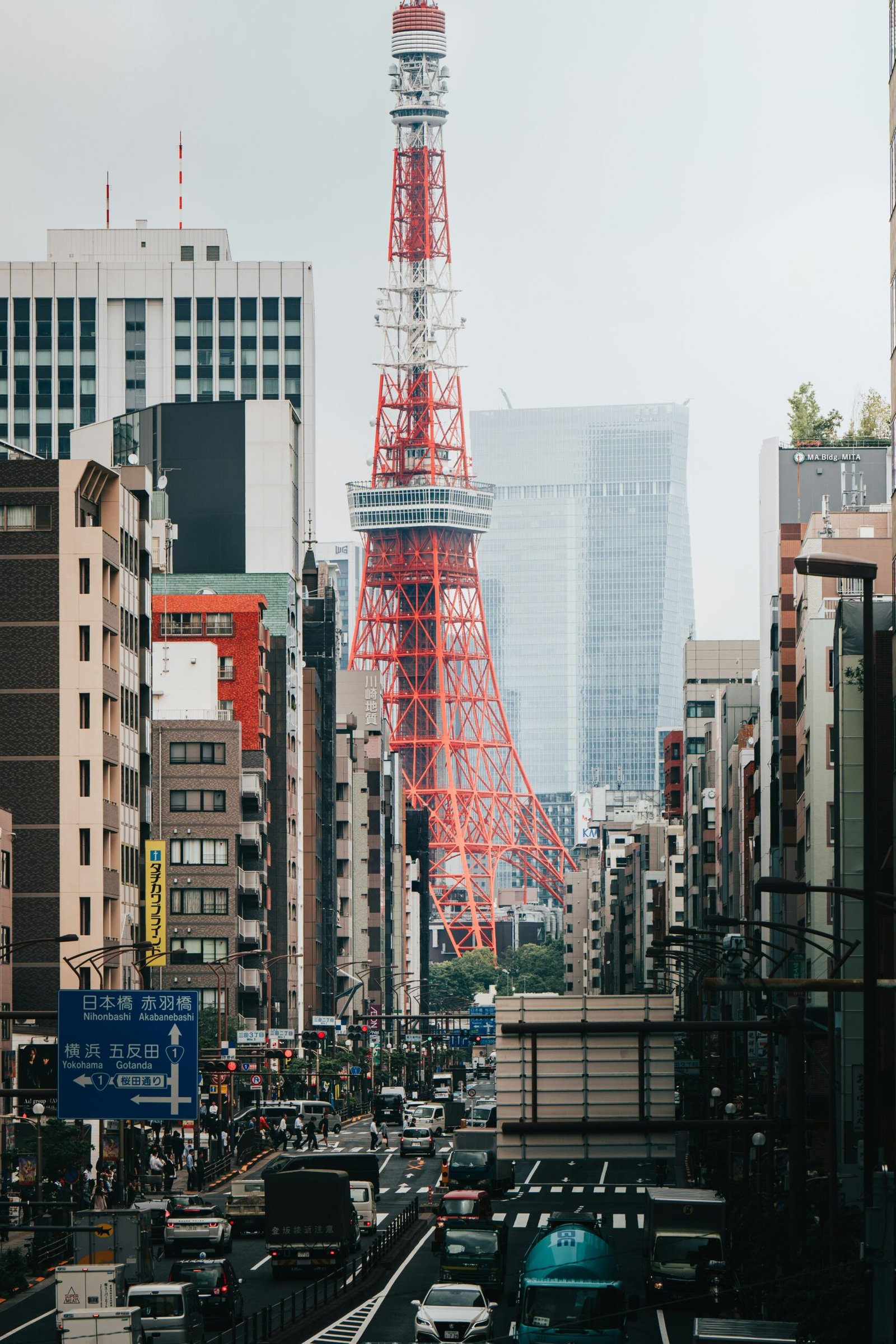
Our two-week Japan adventure kicks off in Tokyo—a city that never just wakes up; it hums. We dedicated our first day to exploring Harajuku, Tokyo’s boldest blend of tradition and pop culture. The morning began beneath the towering torii gates of the Meiji Shrine, surrounded by whispering cedars in the peaceful Yoyogi Park. Just beyond this calm, the mood flips: Takeshita Street bursts into color with crepe stands, streetwear shops, and every shade of kawaii chaos imaginable.
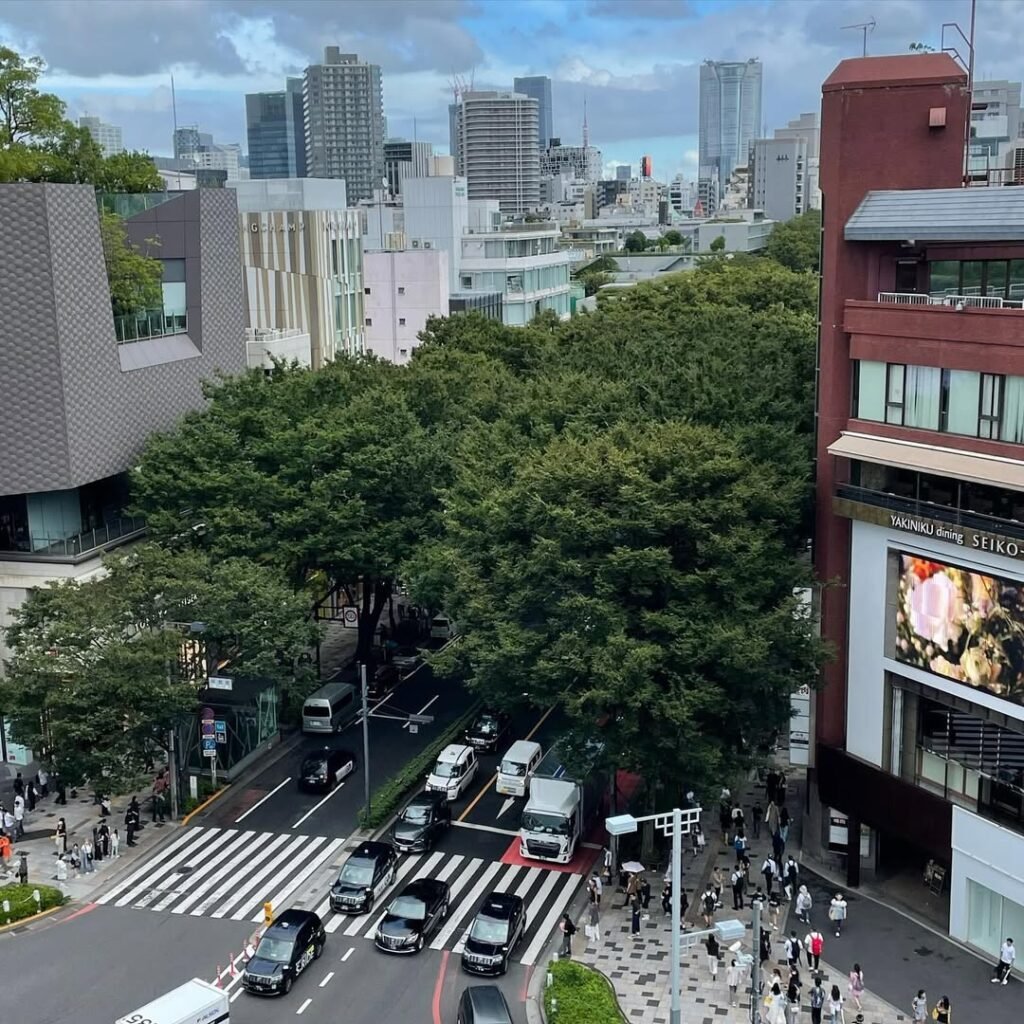
From there, we switched tempo and strolled the sleek, architectural runway that is Omotesando Street. Think glass, geometry, and quiet elegance. A few subway stops later, we arrived at the Imperial Palace area—more precisely, Nijubashi Bridge—to take in its sweeping views and the poetic calm of the moat reflecting the skyline.
Our route then unfolded on foot toward Ginza, Tokyo’s polished heart of luxury and design. Here, art deco clock towers meet futuristic malls, and even coffee feels couture. We paused at Tokyu Plaza Ginza, where a rooftop garden with panoramic views became our caffeine stop of choice.
On weekends, the main boulevards turn car-free, and wandering them feels like floating through a living postcard. Don’t miss the 1931 Ginza Clock Tower, Ginza’s grand dame.
But the district’s most enchanting secret hides on the walls of the Nippon Television building: Hayao Miyazaki’s clock, a whimsical mechanical sculpture that looks straight out of Howl’s Moving Castle or Spirited Away. A few steps away, the Caretta Shiodome shopping center offers a free elevator ride to the 46th floor—and with it, dazzling views of the Odaiba Bay skyline.
As dusk painted the city in neon, we dove back into the subway for one last iconic stop: Shibuya. We soared up to the Shibuya Sky observation deck to watch Tokyo glitter beneath us, then joined the rhythmic chaos below at the world’s most famous pedestrian crossing. Thousands of footsteps, one heartbeat. We wrapped up our first Tokyo day with a sizzling dinner at Gyukatsu Motomura, savoring its signature crispy-on-the-outside, melt-in-the-middle beef katsu. Perfection.
| Where to stay: Hotel Sunroute Plaza Shinjuku. Highly recommended hotel, with tiny rooms (like all in Tokyo) but right next to Shinjuku Station. Very good service and tons of free amenities in the lobby (masks, creams, hair products, etc.). Shinjuku is one of the best neighborhoods to stay in Tokyo, with a great atmosphere and tons to do after dark. Where to eat : – Lunch in Ginza: Tsuru TonTan in Tokyu, Sushi Do Midori, Kushiyaki Bistro, Fukumimi Ginza, or Kyūshū Jangara Ginza. For dessert, a bun or anpan at the most famous bakery in Ginza: Kimuraya. – Night in Shibuya: Gyukatsu Motomura to try the delicious beef katsu. It’s important to arrive early because there’s always a line. Excursions or reservations: – Tokyo subway ticket for unlimited travel for 1/2/3 days – Ticket to go up to the Shibuya Sky Observation Deck |
Day 2: Tokyo
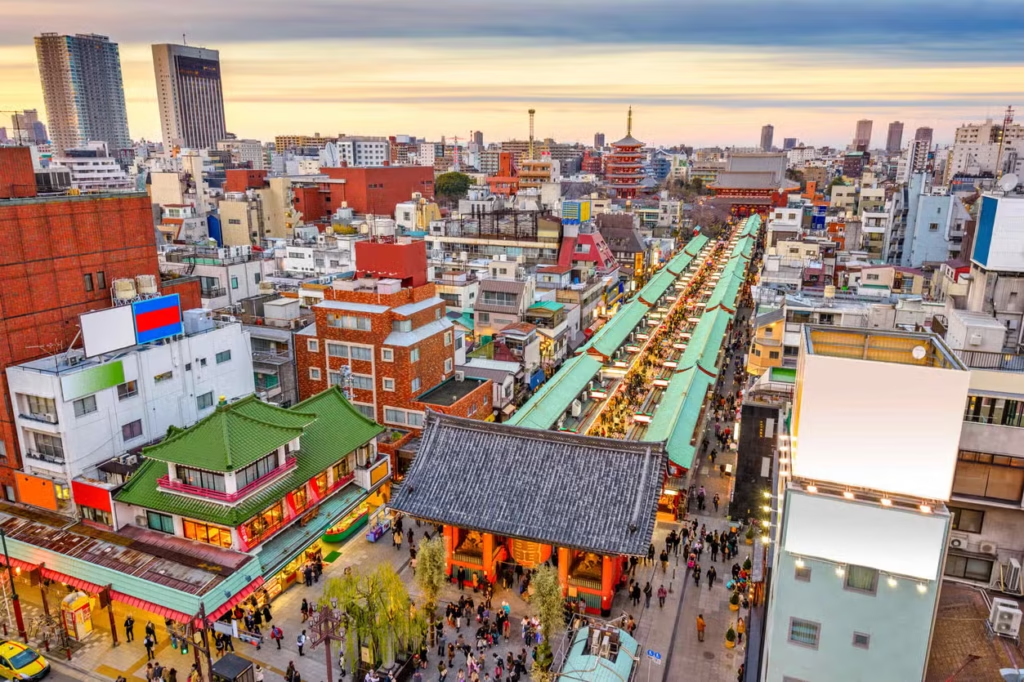
We started our morning early in Asakusa, chasing that golden hour calm before Tokyo wakes up. Our first stop: the magnificent Sensō-ji Temple, Tokyo’s most iconic and oldest shrine. With barely a soul around, we wandered through the giant Thunder Gate, watched smoke rise from the incense burners, and snapped photos before the tour groups rolled in. By 10:00 a.m., it was time to join this great Free Tour of Asakusa — the perfect way to learn the stories, secrets, and traditions behind the city’s most historical neighborhood.
After the tour, we meandered through Asakusa’s maze of street stalls and markets until we reached the famous Asahi Beer Hall, the building shaped like a giant golden pint. Naturally, we went straight up to “the foam” — the rooftop bar with panoramic views across the skyline and the gleaming Tokyo Skytree, Japan’s tallest structure. The observation area is free, the views are spectacular, and the drinks surprisingly affordable. Win-win-win.
Next, we hopped on the subway toward Zojo-ji Temple, an atmospheric Buddhist temple framed perfectly by the Tokyo Tower — the city’s red-and-white Eiffel-inspired icon. Just steps away lie the Hamarikyu Gardens, Tokyo’s largest and most elegant traditional park, where manicured pines meet glistening ponds and skyscraper reflections.
We wrapped up the day in Akihabara, Tokyo’s electric playground and undisputed geek paradise. Picture this: whole buildings filled with retro arcade machines, anime figurines, neon-lit tech shops, and the glorious chaos of Don Quijote. It’s loud, it’s bright, it’s unforgettable — a full sensory overload that perfectly sums up modern Tokyo.
Want to go deeper into Japan’s capital? Check out our complete Tokyo travel guide for itineraries, local tips, and hidden gems beyond the tourist trail.

| Where to stay: Hotel Sunroute Plaza Shinjuku Where to eat: – Lunch: Asahi Beer Hall, Kirby Café (book well in advance here ) or Kura Sushi in Asakusa (delicious and very cheap conveyor belt sushi). – Dinner: CoCo Ichibanya in Akihabara, delicious Japanese curry and very cheap. Excursions or reservations: – Free tour of Asakusa – Ticket to go up the Tokyo SkyTree – Ticket to visit the Tokyo Tower |
Day 3: Tokyo Disneyland

Let’s be honest — no matter how many days you have in Tokyo, it will never feel like enough. The city is an endless maze of temples, neon, sushi bars, and surprises. And since we’re die-hard Disney park fans, there was absolutely no way we were skipping Tokyo Disneyland and Tokyo DisneySea on our two-week Japan adventure.
Our mission? To conquer both parks in a single day. Ambitious? Definitely. Slightly mad? Also yes. But somehow, with the precision of a Shinkansen timetable we pulled it off — and it was pure magic from start to finish.
| Where to stay: Hotel Sunroute Plaza Shinjuku Where to eat: – Queen of Hearts Banquet Hall (Fantasyland — whimsical Alice-in-Wonderland setting; carved roast, hamburger steak, cute desserts. – Grandma Sara’s Kitchen (Critter Country) — homestyle Japanese plates (omelet rice, gratins) in a cozy burrow-like space. – Plaza Pavilion (World Bazaar) — set menus with mains + sides; easy crowd-pleaser near the hub. – Eastside Cafe (World Bazaar) — pasta courses, calm air-con refuge right off the entrance arcade. – Restaurant Hokusai (World Bazaar) — tempura, set meals, and rice bowls with a classic Japanese touch. Excursions or reservations – Tickets to Tokyo Disney Resort (it’s essential to buy them through Klook because the official website doesn’t allow foreign credit cards) – Shuttle bus from Shinjuku to Tokyo Disney Resort (you can get there by subway, but the bus is much more convenient) |
Day 4: Excursion to Nikko

After several days surrounded by skyscrapers and the constant buzz of Tokyo, it was time to trade neon for nature and breathe in the mountain air of Nikko National Park. Listed as a UNESCO World Heritage Site since 1999, Nikko is one of those essential stops on any two-week Japan itinerary. Located just north of Tokyo, it makes for a perfect day trip — easy to reach by train, rental car, or guided tour. This time, we opted for the train.
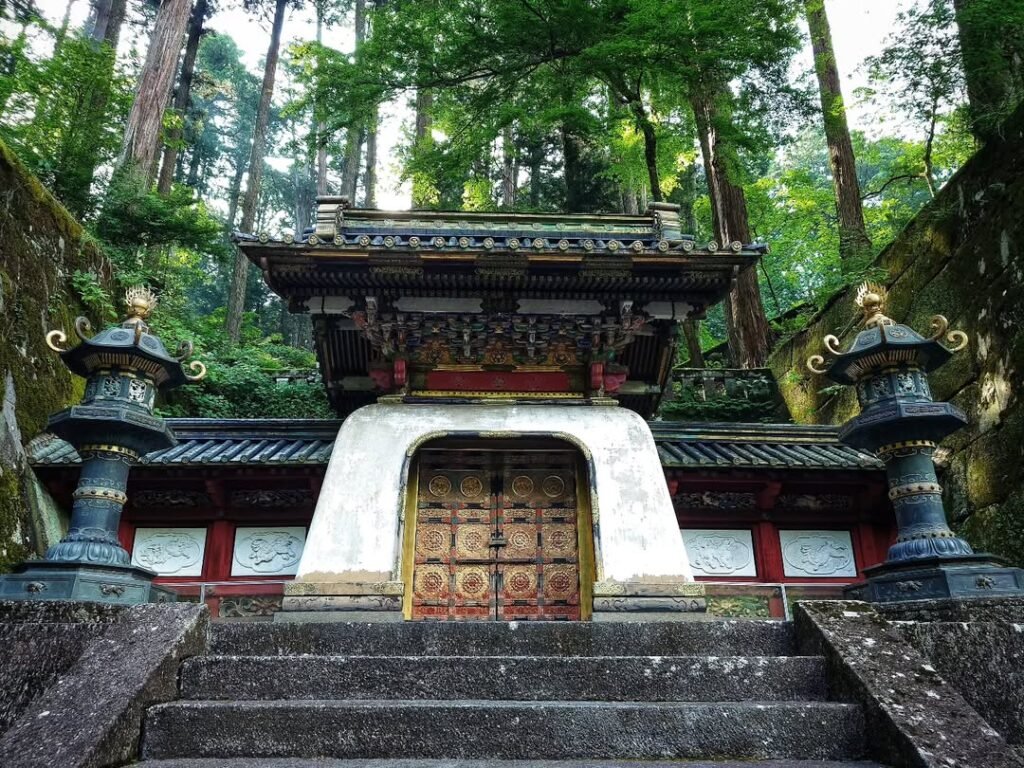
From Nikko Station, we hopped on a Tobu bus from stop 1B bound for the Taiyuinbyo Mausoleum — a stunning complex of ornate shrines nestled deep within lush forest. Visit in autumn and you’ll be treated to the fiery beauty of momiji, the famous Japanese maple leaves in their full red-and-gold glory. Just next door lies the tranquil Futarasan Jinja Shrine, serene and timeless.
A peaceful walk beneath towering cedars leads to Toshogu Shrine, Nikko’s most grand and celebrated site. Every carving, lantern, and pagoda here feels like a masterpiece. We wrapped up our visit at Rinnoji Temple, just steps from Nikko’s iconic red Shinkyo Bridge — the picture-perfect finale to the day.
Back in Tokyo, we ended the day wandering through the glowing streets of Shinjuku, our favorite neighborhood in the city. As the sky turned pink, we rode the elevator up to the Tokyo City Hall observation deck. The view? Absolutely spectacular. The price? Free.
| Where to stay: Hotel Sunroute Plaza Shinjuku Where to eat: – Lunch in Nikko: Hippari-Dako (delicious skewers and curry ramen). – Dinner in Shinjuku: Uogashi Nihon-Ichi (Standing Sushi Bar) (the best sushi we’ve ever had). Excursions or reservations: – Guided tour of Nikko with transportation included from Tokyo (we went by train, but with the JR Pass upgrade, this tour is a great alternative). |
Day 5: Mount Fuji from Tokyo

Just an hour and a half by road from Tokyo rises the majestic and mystical Mount Fuji — Japan’s most sacred volcano and a national icon forever shrouded in cloud and legend.
For us, seeing Mount Fuji was one of the absolute highlights of our two weeks in Japan. Determined to catch it on a clear day, we stalked the weather forecasts like pros and booked our rental car a couple of days in advance — fingers crossed for perfect visibility. And the gods of Fuji must have approved, because we got exactly that.
At 8 a.m., we picked up our car from Nissan Rent-a-Car in Shinjuku. The process was effortless, the roads spotless, and the drive itself an unexpected joy.
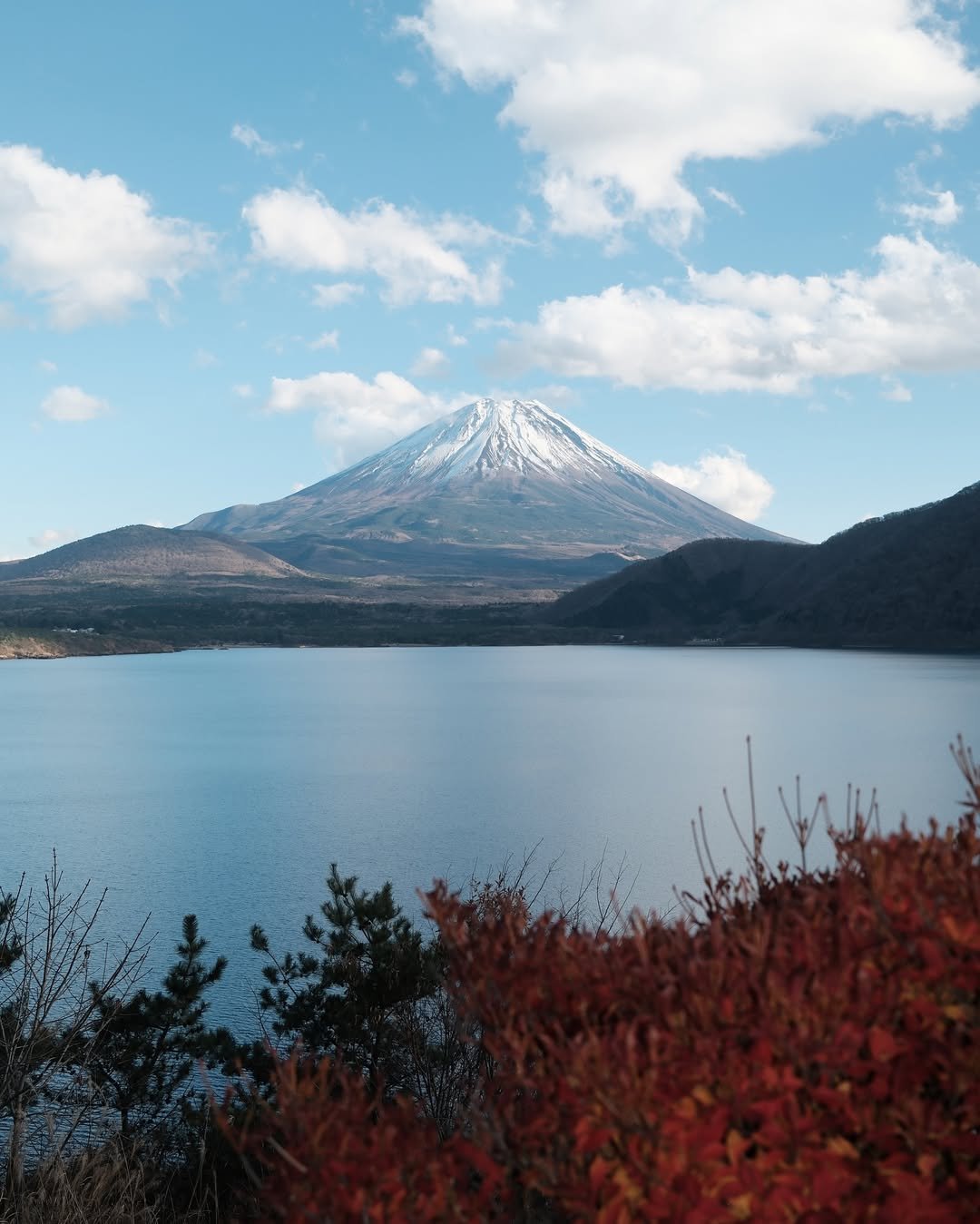
In just over ninety minutes, we reached our destination — the Fuji Five Lakes region. Our first stop: Chureito Pagoda, a red, five-tiered gem perched at the top of nearly 300 steps. From there, we took in that postcard-perfect view — the pagoda framed against Mount Fuji’s snow-capped peak.
Next, we headed to Lake Kawaguchi, the largest of the five. A quick cable car ride later, we were admiring Fuji from above, its reflection shimmering in the lake below. We stopped by the Momiji Corridor and Oishi Park, both spectacular in every season — but especially in autumn, when fiery-red leaves steal the show. This is where we took our favorite photos of the entire trip.
In the region, you’ll also find a few traditional villages worth exploring. We had time for Saiko Iyashi No Sato on the shores of Lake Saiko — a beautiful open-air museum of thatched houses with Mount Fuji looming in the distance. (If you have extra time, add Oshino Hakkai to your route back to Tokyo.)
We ended the day at Lake Shoji, where the sun dipped low and Mount Fuji reflected perfectly in the still water — one of the most breathtaking sunsets we’ve ever seen. No question: it was one of the best days of our two weeks in Japan.
| Where to stay: Hotel Sunroute Plaza Shinjuku Where to eat: – Lunch in Kawaguchi: Miharashi-tei, near the cable car (good for getting by). For dessert, some delicious Fujiyama cookies . – Dinner in Shinjuku: the best ramen in the world is at Ichiran (they have several establishments in Tokyo). Excursions or reservations: – Excursion to the Five Lakes Region (you already know that we recommend doing it by rental car, but if you prefer not to worry about anything, this excursion is an excellent option that covers practically the same places as our route). |
Day 6: Kamakura

Our final day in the Tokyo area took us south to Kamakura, Japan’s first feudal capital in the 12th century—and one of the easiest, most rewarding day trips from Tokyo.
We decided to travel light, sending our luggage straight to Osaka and leaving our small backpacks—with just two days’ worth of essentials—in the lockers at Shinjuku Station before hopping on the train. Just over an hour later, we stepped off into the laid-back coastal air of Kamakura.
From the station, we caught bus #1 or #6 to Daibutsu-mae, home to Kamakura’s star attraction: the Great Buddha of Kotoku-in Temple. Towering more than 13 meters high and cast in bronze, the Buddha has sat peacefully here for nearly 800 years—open to the elements, enduring typhoons and time alike.
From there, we walked to the tranquil Hase-dera Temple, perched on a hillside with sweeping views of the sea. Its gardens are lush, dotted with statues of Kannon, the goddess of mercy. After exploring, we boarded the Enoden local train from Hase back to Kamakura Station, the scenic little tram rattling past beaches and narrow lanes.
Back in the center, we grabbed lunch near the station before heading to Tsurugaoka Hachiman-gu Shrine, Kamakura’s grandest. Dedicated to the god of war, it rises majestically along a long, tree-lined approach, surrounded by ponds, bridges, and the soft hum of wind chimes.
Next, we continued on foot to Hokoku-ji Temple, famous for its miniature bamboo grove—a quiet, green sanctuary that feels like a smaller, more secret version of Kyoto’s Arashiyama. Nearby, the ancient Sugimoto-dera Temple—the oldest in Kamakura—awaited us with moss-covered steps and a serene, timeless calm.
If you have extra time, don’t miss Engaku-ji, Tokei-ji, or Kencho-ji—all beautiful temples that tell their own part of Kamakura’s story.
As the sun dipped low, we made our way back to the station, retrieved our backpacks in Shinjuku, and boarded the bullet train to Kanazawa, ready for the next chapter of our journey. The first thing that greeted us there was the imposing Tsuzumi-mon Gate, glowing in the evening light—a hint that this city has plenty of wonders still waiting for us.

| Where to stay: Hotel Forza Kanazawa. A super-modern hotel 5 minutes from the train station and 5 minutes from Omicho Market. Spacious and clean rooms, delicious breakfast included, and great amenities. One of our favorite hotels on this two-week trip to Japan. Where to eat: – Lunch in Kamakura: delicious Japanese curry at Caraway or delicious but affordable dishes at 5 Senses Diner. – Dinner in Kanazawa: Okina Sushi. Kanazawa is famous for its sushi, and this one is excellent and close to the hotel. Excursions or reservations: – Guided excursion to Kamakura (we went on our own, but it’s true that there’s quite a bit of walking and we didn’t get any explanations; this excursion is a great alternative to a self-guided tour). |
Day 7: Kanazawa
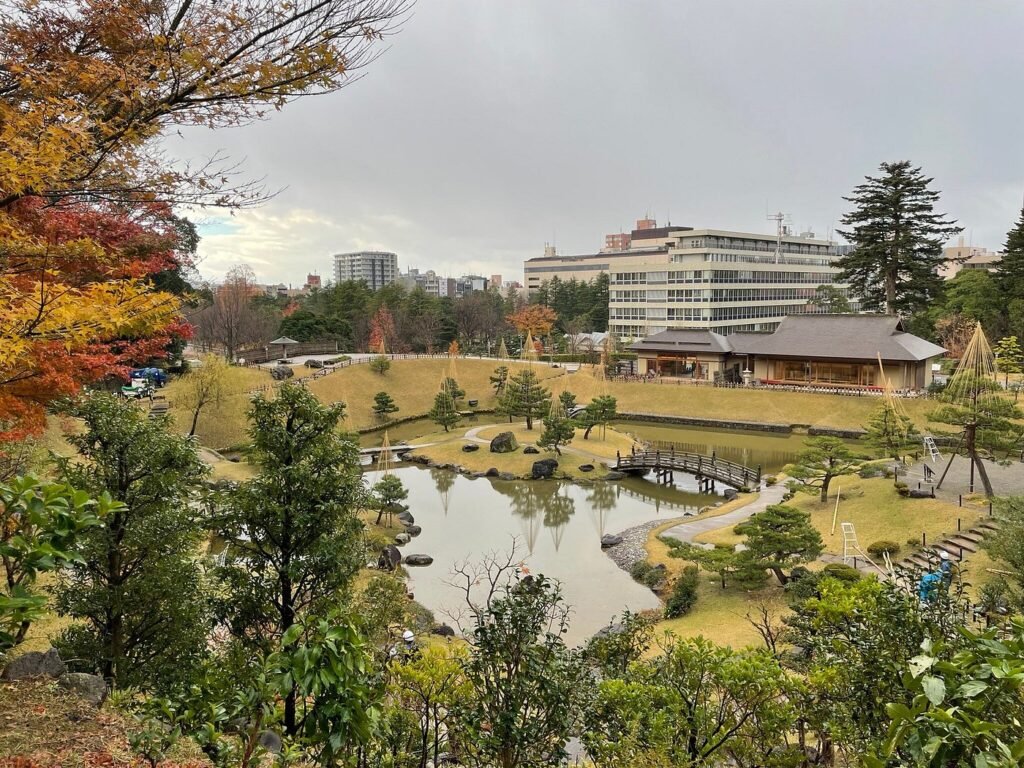
Kanazawa was one of those rare travel moments that catches you completely off guard — a city that swept us off our feet from the very first minute. Elegant, peaceful, and rich in detail, it turned out to be one of the biggest highlights of our two weeks in Japan.
We began the day at Kanazawa Castle, entering through the majestic Ishikawa Gate. Just before stepping inside, we paused at the nearby Omaya Shrine, a quiet prelude to the beauty awaiting us beyond the walls. Within the castle grounds, the immaculate Gyokusen’inmaru Garden immediately stole the show — an exquisite blend of ponds, bridges, and manicured perfection that felt almost too harmonious to be real.
After wandering through the towers and moats, we reached Kenroku-en Gardens, the crown jewel of Kanazawa and widely considered one of Japan’s three most beautiful gardens. Every path here feels like a brushstroke: zen corners, trickling waterfalls, and trees pruned so precisely they look sculpted from air. It’s a place that slows you down in the best possible way.
We continued on foot toward the Nagamachi Samurai District, where narrow lanes and earthen walls whisper stories of the Edo era. Wooden houses,
quiet canals, and lantern-lit doorways make it feel like a living movie set. Don’t miss a visit to one of the samurai residences — the Nomura House is especially beautiful and atmospheric.
Next, we hopped on a short bus ride to Omicho Market, Kanazawa’s beating culinary heart. Here, pristine seafood glistens on display, sushi chefs work with meditative focus, and the aromas of grilled skewers and steaming bowls invite you to taste everything in sight. We refueled with fresh sushi and wandered among stalls that felt more like art galleries than markets.
With satisfied stomachs, we strolled over to Kazuemachi Chaya, another charming historic district where geisha and maiko still perform in wooden teahouses. We finished the afternoon with a quiet cup of matcha inside the Shima Geisha House in the Higashi Chaya district, watching sunlight fall across latticed windows. The streets here are postcard-perfect — full of craft shops, sweet bakeries, and echoes of a slower time.

| Where to stay: Hotel Forza Kanazawa Where to eat: – Lunch at the Omicho Market stalls – Dinner in Kanazawa: Izakaya (traditional Japanese tavern) Musashi or Choi Nomi |
Day 8: Shirakawa-go and Takayama

After loving our road trip to Mount Fuji from Tokyo, we decided to hit the road again — this time to explore the rugged beauty of the Japanese Alps. Once more, we went with Nissan Rent-a-Car and set off into the mountains, the car windows framing bursts of red and gold autumn leaves all the way.
Our first destination was the historic village of Shirakawa-go, one of the absolute must-sees on any two-week Japan itinerary. Pro tip: arrive early — before the buses roll in — to enjoy the serenity and find parking with ease. We first drove up to the Ogimachi Castle Viewpoint, a short stop with its own small parking area, to take in the postcard-perfect view of the village below.
After soaking in the view, we parked in one of the public lots at the base of the valley and began exploring on foot. The village looked like it had stepped out of a fairy tale — dark wooden houses with steep thatched roofs nestled among rice fields and forested mountains. Don’t miss the peaceful Shirakawa Hachiman Shrine at the far end of town; its mossy serenity feels untouched by time.
From there, we continued our road trip to Takayama, another must-visit gem in the Japanese Alps, just over 30 minutes away. Our first stop was the Hida no Sato Folk Village Museum, an enchanting collection of over 30 traditional farmhouses set against a backdrop of ponds and hills — especially stunning in autumn and spring. Afterward, we parked near the city center to explore on foot.
Takayama’s Old Town, known as Sanmachi Suji, is a beautifully preserved district composed of three main streets — Ichinomachi, Ninomachi, and Sannomachi. Here, traditional wooden houses line the lanes, housing craft shops, sake breweries, and family-run eateries. History lovers should stop by the Takayama Jinya government office, a fascinating glimpse into Edo-era administration.
We ended our day crossing the elegant Nakabashi Bridge to visit Hida Kokubun-ji Temple, one of the city’s oldest, dating back to the 7th century. Its three-tiered pagoda gleamed softly in the evening light — a fitting finale before we drove back to Kanazawa, tired but exhilarated after a spectacular day among the mountains.

| Where to stay: Hotel Forza Kanazawa Where to eat: Lunch in Takayama: Aji no Yohei, specializing in Hida beef (reservations required) Dinner in Kanazawa: Kourin Sushi (reservations required) Excursions or reservations: – Guided tours of Takayama , perfect for not missing anything and you can also book it at any time of day. – Complete excursion to Shirakawa-go and Takayama from Kanazawa , perfect option if you don’t want to rent a car. – Bus tickets if you want to do the tour by public transport and on your own . Kanazawa-Shirakawa-go-Takayama route and option to sleep in Takayama. |
Day 9: Osaka
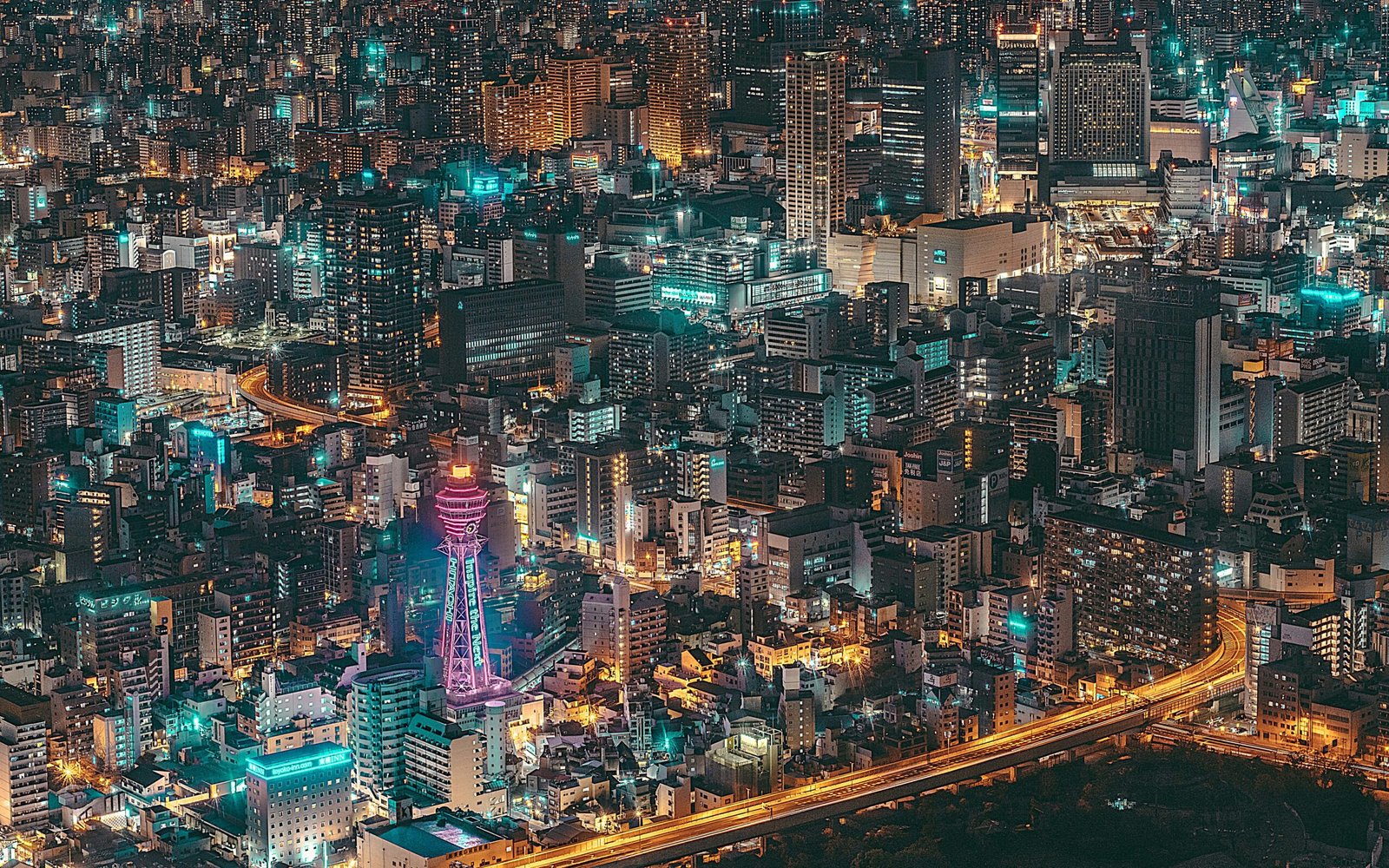
We said goodbye to Kanazawa and this enchanting region that completely won us over. In less than three hours, a Shinkansen bullet train whisked us south to Osaka . It’s amazing how fast you can cross the country here: one moment serene gardens and samurai houses, the next, you’re back in the pulsing chaos of neon and noise. And honestly? We’d missed it.
After checking into our hotel in Umeda, we kicked things off with an aerial view of Osaka from the Umeda Sky Building. Getting to the observation deck is an adventure in itself — a futuristic glass escalator suspended high between towers. From there, the sprawling city stretches endlessly in every direction.
Next, a quick subway ride took us to the magnificent Osaka Castle, one of the most beautiful and historically important fortresses in Japan. Its gleaming white walls rising above the gardens were easily one of our favorite views of the entire trip.
Still craving a touch of spirituality? Osaka’s Isshin-ji and Shitenno-ji Temples are both worth a visit — calm oases amid the urban sprawl. But let’s be honest: what makes Osaka truly unforgettable isn’t its temples or castles, but its gritty charm and eccentric streets. The best place to feel it? Shinsekai, with its nostalgic glow, retro signage, and the Tsūtenkaku Tower lighting up the sky like a beacon from another era.
For something even quirkier, head to Den Den Town and Namba, where gaming stores, anime merch, and arcades spill onto the sidewalks.
And then comes nightfall — when Dotonbori explodes to life. This is Osaka at full volume: giant mechanical crabs, glowing octopus signs, samurai statues, and an orchestra of sizzling street food. We wandered along the canals, tasted takoyaki — those molten-hot octopus balls you have to juggle between bites — and watched the city’s neon reflections ripple in the water. It was chaotic, colorful, and completely addictive.
We finally dragged ourselves back to the hotel, feet aching but hearts full. Tomorrow promised another packed day — and in Osaka, you’ll want all the energy you can get.

| Where to stay: Hotel Intergate Osaka Umeda The best value hotel of our entire trip to Japan. Super modern and well-located in the Umeda area, close to the subway, with a beautiful reception and free food and drink service at different times of the day. This hotel is love at first sight. Where to eat: – Osaka Castle: there are many shops and restaurants in the arcade next to the castle – Takoyaki and onomiyaki at any street stall in Dotombori Excursions or reservations: – Entrance to the Umeda SkyBuilding and the Kuchu Teien Observatory – Entrance to Osaka Castle |
Day 10: Universal Osaka

After our magical day at Tokyo Disneyland, there was no way we were skipping the other theme park masterpiece of Japan — Universal Studios Osaka. And yes, it’s every bit as spectacular as it sounds. From the spellbinding world of Harry Potter to the game-changer that is Super Nintendo World, this park is pure joy for fans of fantasy and nostalgia alike.
If you’ve ever dreamed of walking through Super Mario’s world or sipping butterbeer in Japan, Universal Studios Osaka is your next stop
| Where to stay: Hotel Intergate Osaka Umeda Where to eat: – Mel’s Drive-In (Hollywood) — classic burgers & shakes in 50s diner vibes. – Saido (New York) — Japanese curry, rice bowls, kid-friendly sets. – Louie’s N.Y. Pizza Parlor (New York) — big slices, quick turnaround. – Kinopio’s Café (Super Nintendo World) — cute, themed plates (Mario Burger, Piranha Plant Caprese). Lines can be long—go early or late. – Three Broomsticks (The Wizarding World) — rotisserie plates, fish & chips, Butterbeer with lagoon views. Excursions or reservations: – Tickets to Universal Studios Japan , as with Tokyo Disney Resort, you must purchase the ticket on Klook since the official website does not accept foreign cards. – Express Ticket to Universal Studios Japan , to do 4 attractions without queuing and guaranteed access to Super Nintendo World. |
Day 11: Himeji, Hiroshima and Miyajima

Still dizzy from the whirlwind of lights, sounds, and Mario Kart tracks at Universal Studios Osaka, we decided to slow the pace—just a little. We shipped our big bags ahead to Kyoto through the hotel, packed light overnight backpacks, and set out for a day of contrasts: the elegant Himeji Castle, the somber Hiroshima, and the enchanted island of Miyajima—three unforgettable stops on our two-week journey across Japan.
From Osaka Station, a quick 30-minute ride on the shinkansen brings us to Himeji, home to one of Japan’s most stunning castles. Nicknamed “the White Heron” for its elegant silhouette, the fortress has soared as a UNESCO World Heritage Site since 1993, and it’s often listed among Japan’s top three castles alongside Matsumoto and Kumamoto.
A pleasant 15-minute walk leads from the station straight to the castle grounds. We wander through Himeji’s immaculate gardens, marvel at the intricate wooden interiors, and climb all seven creaking floors barefoot—a small ritual that makes the experience feel even more authentic. Next door, the Koko-en Gardens glow especially beautifully in autumn, all fiery maples and still ponds.
After a quick lunch, we hop back on the train for the next destination: Hiroshima.
Once in Hiroshima, we grab the Hiroshima Circle Sightseeing Bus, which loops past the city’s main landmarks. It’s impossible to arrive here without feeling a quiet weight; Hiroshima is, of course, the first city in history to suffer an atomic bombing in 1945.
We start gently, at the rebuilt Hiroshima Castle, all dark timber and quiet dignity, then continue toward Peace Memorial Park, the heart of the city’s remembrance. Here, between open lawns and solemn monuments, history and humanity intertwine.
We stand before the haunting Atomic Bomb Dome, listen as a group of schoolchildren sing softly at the Children’s Peace Monument, and watch the eternal Flame of Peace flicker before the Peace Memorial Museum—a powerful space that recounts both the devastation and resilience that followed. The air feels heavy yet hopeful; the city vibrates with life.
As evening falls, we catch the last train to Miyajimaguchi, where a short 15-minute ferry ride carries us across the bay to Miyajima Island, one of Japan’s most spiritual places. The sea gleams copper in the fading sun, and deer roam freely along the shore as if welcoming us.
We watch the sun sink behind the hills, its last golden light touching the Great Torii of Itsukushima Shrine, floating gracefully in the water—a scene so ethereal it hardly feels real. Tonight, we sleep in a ryokan, a traditional inn with tatami floors and soft futons, surrounded by the quiet lapping of the tide.
It’s the kind of day that stays with you long after the journey ends—a blend of history, beauty, and silence that defines Japan itself.

| Where to stay: Sakuraya Traditional Ryokan Simple, traditional rooms with tatami mats and futons. It has an onsen (traditional Japanese spa with hot springs) on the ground floor, which is great for relaxing at the end of the day. Accommodations on Miyajima sell out quickly, so book in advance if you want to stay overnight on the magical island. Where to eat: – Lunch in Hiroshima: We bought a traditional boxed lunch at Himeji Station and ate it on the train, just like the Japanese do – Dinner in Miyajima: We treated ourselves to a treat at Niwa Cafe Miyama, highly recommended for tasting the traditional meat and oysters next to a beautiful garden. |
Day 12: Miyajima – Kyoto

The only sound greeting us this morning on Miyajima is the soft chatter of birds. The tide is high, the air still salty, and it’s the perfect moment to visit the island’s crown jewel: Itsukushima Shrine. Its entrance, the famous Great Torii Gate, rises 16 meters tall and weighs over 60 tons—an absolute marvel. In the early hours, the sea floods the shrine’s corridors, turning its wooden walkways into a dreamlike scene where everything seems to float. It’s pure magic.
Next, we reach what turned out to be our favorite temple of the entire trip (yes, seriously): Daisho-in Temple. Nestled at the foot of Mount Misen, this spiritual haven is filled with hidden corners, serene altars, and hundreds of tiny statues tucked between moss and maple leaves. Every step reveals something new. Don’t skip it—it’s unforgettable.
Just nearby lies Momijidani Park—literally “Maple Valley.” In October, the park explodes into fiery reds and oranges as the Japanese maples turn color, creating one of the island’s most photogenic spots. Also worth seeing are the vast Senjokaku, an enormous wooden pavilion with open walls, and the elegant five-story Goju-no-to Pagoda standing right beside it. Both are spectacular in any season.
We spent the rest of the morning wandering along Omotesando Street, popping into souvenir shops and sampling freshly grilled Miyajima oysters—the island’s signature dish. For dessert, we couldn’t resist momiji manju, maple leaf–shaped buns filled with everything from sweet red bean paste to custard or matcha. They’re as cute as they are addictive.
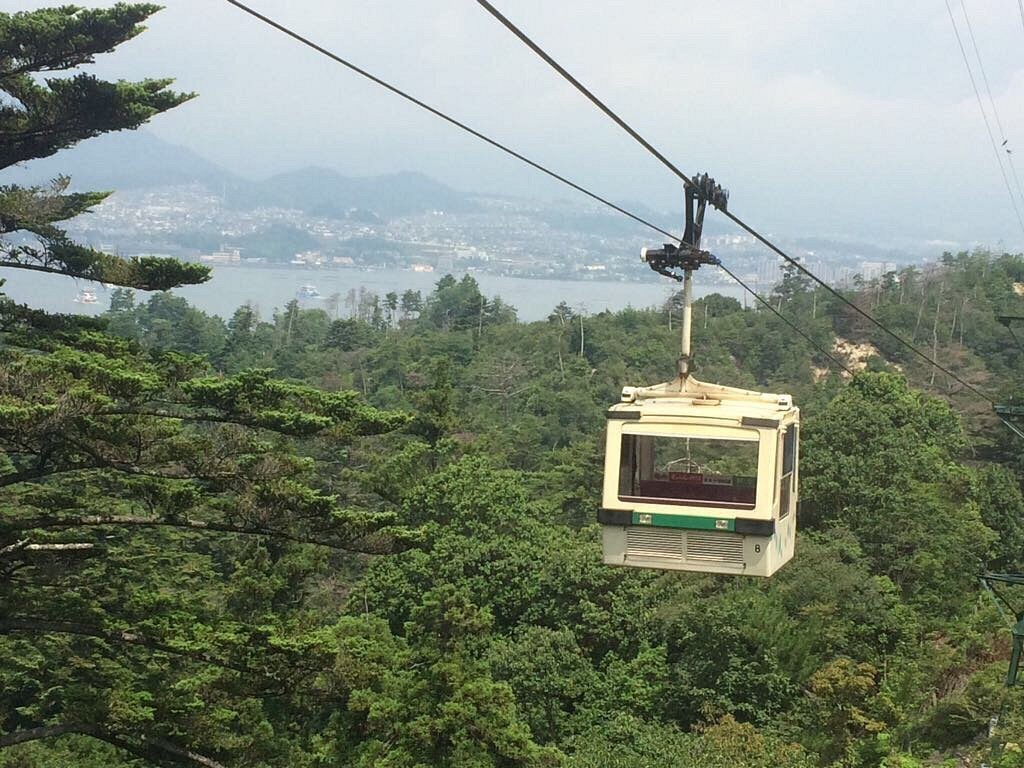
If you’re staying the full day, take the Mount Misen ropeway up the mountain for sweeping island views, then hike down past temples hidden in the forest. It’s a peaceful and rewarding adventure.
As the afternoon fades, we reluctantly say goodbye to Miyajima—one of the true highlights of our Japan trip. A short ferry, a local train, and then the shinkansen carry us back to the timeless city of Kyoto, ready for the next chapter of our journey.
| Where to stay: Kabin Kyoto Brand new accommodation, very modern, and with spacious rooms. Perfect service. Close to Gion and the Shinjo shopping district. If you’re on a budget now, staying near Kyoto Station is also very convenient. This hotel offers excellent value. Where to eat: – Lunch in Miyajima: Okonomiyaki Momochan, to try this typical regional omelet with a thousand different toppings. – Dinner in Kyoto: Japanese food break, we enjoyed a delicious Neapolitan pizza at Pizzeria Brown Blossom . |
Day 13: Kyoto
Oh, Kyoto. Just when we thought two weeks in Japan would be enough temples, torii, and tatami to last a lifetime… Kyoto proves us wrong. This city, once Japan’s capital for a thousand years, is something else entirely—a living museum wrapped in cedar and silence, with an energy that’s both serene and electric. Our first day here is all about diving headfirst into the city’s historical heart: Gion and Higashiyama.
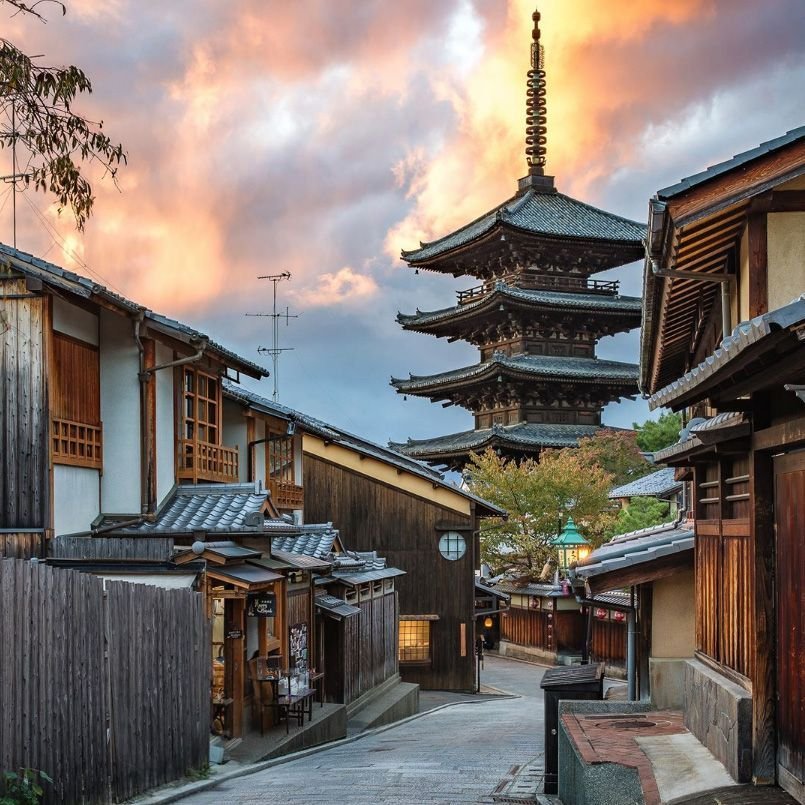
We start early—really early. By 7:00 a.m., the narrow lanes of Higashiyama are still hushed, bathed in soft morning light. It’s the perfect time to wander without the tourist crush, snapping those postcard-perfect shots of Yasaka Pagoda and the sloping streets of Sannenzaka and Ninenzaka, where wooden houses lean gently toward one another as if whispering secrets from the Edo era.
Our first stop is Kiyomizudera Temple, perched high on a wooded hill with sweeping views over Kyoto. Arriving before the crowds, we have the terraces almost to ourselves—just us, the temple bells, and the soft rustle of the forest below.
Breakfast is an experience in itself at the most beautiful Starbucks in Japan, just a few meters from Ninenzaka Street. Tatami floors, sliding doors, and latte art served in the quiet of a traditional townhouse—it’s Kyoto elegance with a caffeine kick.
Once the city starts to stir, we join a Free Tour of Kyoto’s Old Town, a brilliant way to peel back the layers of this historic city. The route winds from Gion, Kyoto’s geisha quarter, along the Kamogawa River toward Chion-in Temple, then through Maruyama Park and the mossy Higashi-Otani Cemetery, before looping back to Kiyomizudera.
It’s packed with stories—about samurai, artisans, monks, and modern Kyotoites who somehow make this ancient city tick
After a quick snack, we make our way to Ryozen Kannon Temple, where a towering 24-meter statue of the goddess Kannon rises over Kyoto, a peaceful tribute to all victims of war. It’s one of those places that humbles you into silence.
From there, we drift through the nearby streets, poking into Kodaiji and Entokuin Temples, their Zen gardens rippling with patterns of raked gravel and maple leaves. Each feels like a private secret tucked between the hills.
As the lanterns flicker on, we return to Gion, where the air hums with the sound of shamisen strings and clattering geta sandals. We wander down the narrow alleys of Pontocho, a timeless lane of wooden houses and glowing paper lamps, and—just when we least expect it—we catch a glimpse of a geisha through a restaurant window, gracefully entertaining a family at dinner.
It’s a fleeting, magical moment—the kind that only Kyoto can give you. And with that, we close our first day in this unforgettable city, already certain that three days won’t be enough.

| Where to stay: Kabin Kyoto Where to eat: – Food in Higashiyama: it was a cold day so we warmed up with some delicious ramen at Japanese Noodle 一寸法師Then we tried all the snacks they sell in Higashiyama: matcha cookies, bean paste sweets, chestnut cake… – Dinner: Traditional Izakaya Kagome Excursions or reservations: – Free Tour of Kyoto |
Day 14: Kyoto
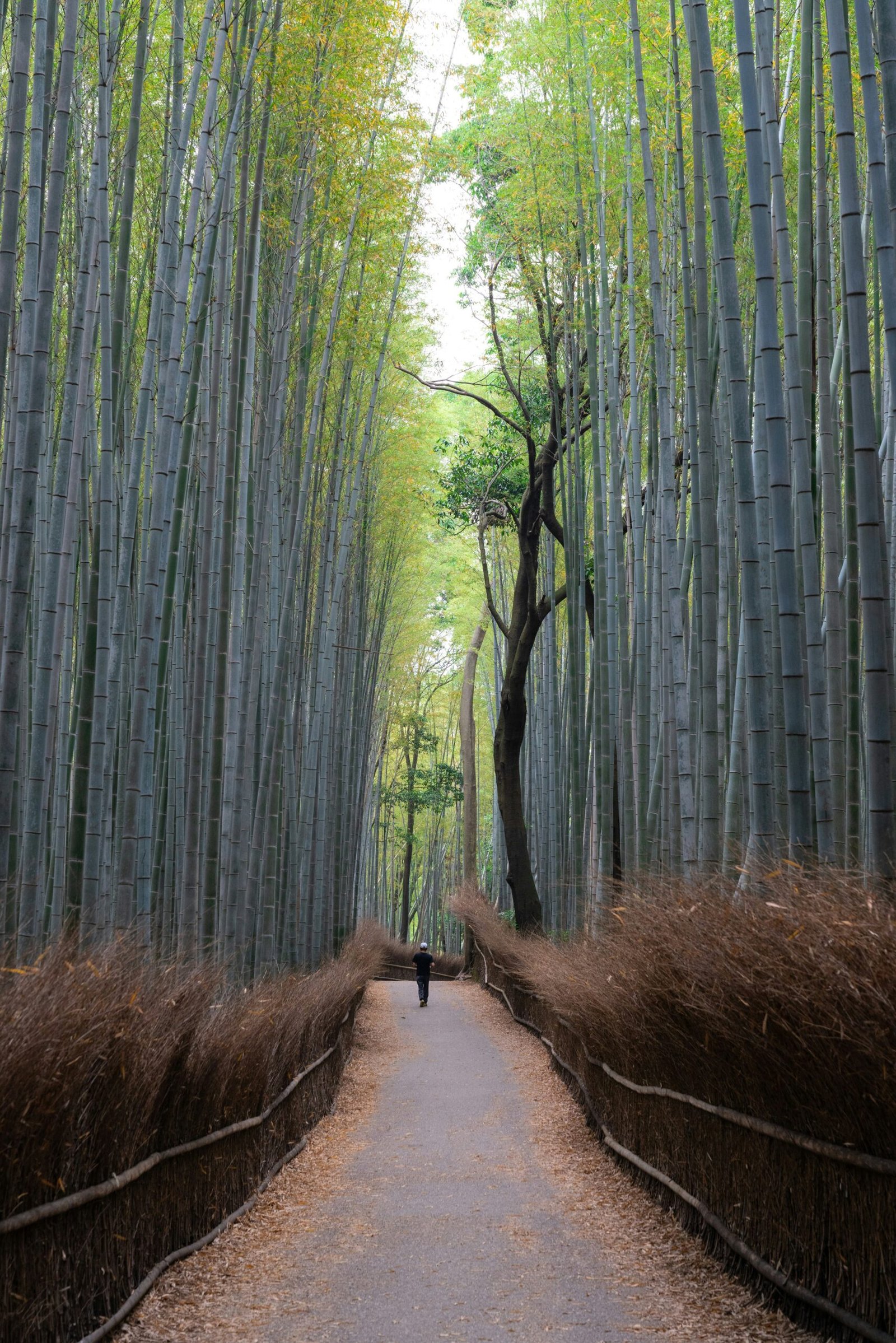
Kyoto never really sleeps—not in the tourist sense, at least. Its beauty isn’t exactly a secret anymore, and for good reason. So once again, we set the alarm at an ungodly hour and slipped out before sunrise, heading straight for the Arashiyama Bamboo Forest on Kyoto’s outskirts.
But here’s the thing: Arashiyama is much more than bamboo. Yes, the green pillars swaying above you feel otherworldly, but the magic doesn’t stop there. The path toward Togetsukyo Bridge—especially when mist curls over the Katsura River—is picture-perfect, and the nearby Tenryu-ji Temple, a UNESCO treasure, radiates quiet harmony. The surrounding streets are lined with little artisan shops, matcha-scented bakeries, and cozy cafés, the ideal reward after such an early start.
Back in central Kyoto, we hopped off the train at Nijo Castle, a former shogun residence famous for its “nightingale floors” that chirp under your feet and gardens so precise they look painted. From there, a short bus ride brought us to the Golden Pavilion (Kinkaku-ji)—and honestly, it exceeded every expectation. Even knowing it’s wildly popular, seeing the golden temple glimmering over its pond in person feels surreal.
After lunch, we crossed the city for a gentler walk along the Philosopher’s Path. It’s one of those places that rewards slow wandering: a canal framed by cherry trees, stone bridges, and the occasional cat sunbathing like a monk. Along the way lie three exquisite temples—Ginkaku-ji, Eikando, and Nanzen-ji—but even without stepping inside, the simple act of strolling under those trees feels almost meditative. Come in cherry blossom season, and it must be pure magic.
We ended the afternoon at the Heian Shrine, instantly recognizable from Lost in Translation. Its massive vermilion torii gate marks the entrance, but what truly amazed us were the gardens—calm ponds, wooden bridges, and soft reflections of Kyoto’s skyline. If you only have time for two stops today, make them the Golden Pavilion and the Heian Shrine. They sum up Kyoto’s quiet grandeur better than words can.
As evening fell, we drifted through the shopping arcades of Shijo, a neon maze of endless galleries and tempting boutiques. After two weeks traveling across Japan, our backpacks were full—but somehow, Kyoto convinced us there’s always room (and an excuse) for one last souvenir.

| Where to stay: Kabin Kyoto Where to eat: – Lunch at the Golden Pavilion: Itadaki, fast, cheap, and delicious. – Dinner at Kura Sushi in Shinjo, we couldn’t help but repeat despite the long lines. We recommend asking for a number and browsing the shops while you wait. Excursions or reservations: – Traditional kimono rental in Kyoto , something that many people do and is cheaper than it seems. |
Day 15: Kyoto
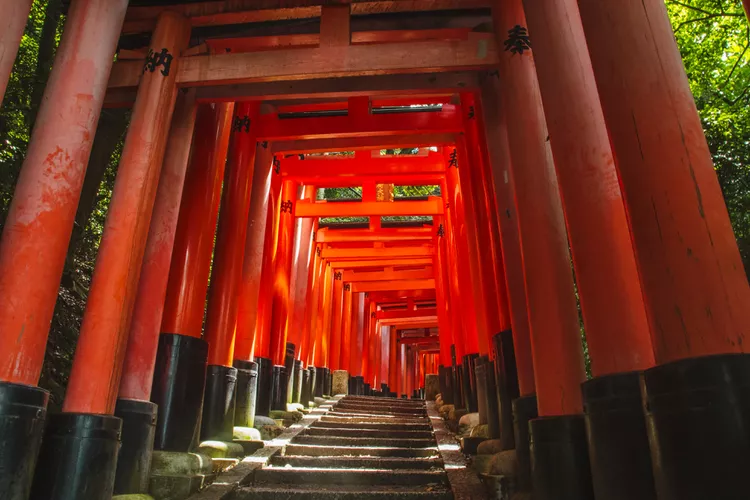
We saved the best for last. Our final day in Japan, and we’re determined to go out with a bang. One more early alarm (no regrets, just yawns) and we’re on the train toward one of the country’s most iconic landmarks: Fushimi Inari-taisha.
Dedicated to Inari, the god of rice and prosperity, this shrine has been gathering offerings since the 8th century—though not in coins or prayers, but in torii gates. Thousands of them. Every Kyoto merchant who wanted a little extra luck in business donated one, and over the centuries, they’ve formed a tunnel of vivid orange that stretches more than four kilometers up the mountainside.
We start at dawn, climbing through the endless corridors of vermilion gates. The light filters through like fire, and for a while it feels like walking through a dream—or maybe a painting. There are smaller shrines along the way, each with its own story, and if you make it to the summit, Kyoto spreads out below like a silent sea.
From the Fushimi-Inari Station, we catch a train—just over an hour—to Nara, another ancient capital and home to a rather mischievous celebrity population: the sika deer. In Shinto tradition, they’re believed to be messengers of the gods. In practice, they’re mostly opportunists. Dozens gather near the stands selling deer crackers, bowing politely at first… until you hesitate to hand one over. Then they nudge, nibble, or stage a full-on snack heist. (Let’s just say we preferred the calmer deer of Miyajima.)
Still, Nara is worth every minute. The magnificent Todai-ji Temple houses one of Japan’s largest bronze Buddha statues, serene and awe-inspiring inside its massive wooden hall. A gentle walk through Nara Park leads to the peaceful Isui-en Gardens, Wakamiya Shrine, and the lantern-lined paths of Kasuga-taisha Temple, where hundreds of moss-covered stone lamps glow softly in the shade. It’s one of those places where time slows down and history feels tangible.
We make it back to Kyoto just before the shutters come down at Nishiki Market, a narrow, colorful maze bursting with sizzling snacks, pickles, sweets, and last-minute souvenirs. We grab a few treats for the journey home, taking one last deep breath of Kyoto’s rhythm—part ancient, part modern, entirely unforgettable.
Fifteen days, countless trains, and more bowls of ramen than we can count—and still, Japan leaves us wanting more.

| Where to stay: Kabin Kyoto Where to eat: – Lunch in Nara: Izasa-Nakatani, traditional Nara sushi sitting on the floor – Dinner in Kyoto: Delicious barbecue grills served at the table at Steak House Kyo Horumon Kura Tours or reservations: – Nara tour , perfect for a guided tour without having to worry about anything. |
FAQs: Two Weeks in Japan Itinerary
How many cities can I visit in two weeks in Japan?
In two weeks, you can comfortably visit Tokyo, Kyoto, Osaka, Nara, Hiroshima, and Kanazawa—plus take day trips to Nikko, Kamakura, or Miyajima without feeling rushed.
Is two weeks enough to explore Japan?
Yes! Two weeks is ideal for a first trip. You’ll have time to experience both modern and traditional Japan—Tokyo’s energy, Kyoto’s temples, Osaka’s food scene, and even a glimpse of the countryside.
What’s the best way to travel between cities in Japan?
The Shinkansen (bullet train) is the fastest and most convenient option. If you plan multiple intercity trips, the Japan Rail Pass (JR Pass) can help you save money.
How much should I budget for two weeks in Japan?
Expect to spend around ¥200,000–¥350,000 (USD $1,300–$2,300) per person, including accommodation, transport, food, and entrance fees—depending on your travel style.
When is the best time to visit Japan for this itinerary?
The best months are March–May (cherry blossom season) and October–November (autumn foliage)—when the weather is mild and landscapes are stunning.
Do I need cash in Japan or can I use a card everywhere?
While cards are accepted more widely now, many small shops and temples still prefer cash (yen). You can withdraw easily at 7-Eleven ATMs, which accept foreign cards.
Should I get a SIM card or eSIM for Japan?
Definitely. Having mobile data is essential for Google Maps, train schedules, and translations. The easiest option is to buy an eSIM before your trip—you can activate it upon arrival.
What’s the best order for a two-week Japan itinerary?
The classic route is:
Tokyo → Nikko or Kamakura (day trip) → Kanazawa → Takayama → Kyoto → Nara → Osaka → Hiroshima & Miyajima.
It flows naturally and makes efficient use of train routes.
Is Japan family-friendly for a two-week trip?
Absolutely! Japan is one of the safest, cleanest, and most kid-friendly countries in the world—with plenty of attractions for families, from theme parks to interactive museums and nature spots.
What kind of accommodations are best in Japan?
Mix it up! Try hotels in cities, ryokans (traditional inns) in Kyoto or the Alps, and business hotels for quick overnight stops. Capsule hotels are also a fun one-night experience.
- Nagoya rainy day with kids in 2026 (Cool Indoor Things to Do )
- Best Gachapon in Tokyo (2026): 20 Places to Find Capsule Toys
- All Japanese KitKat Flavours List: The Ultimate Japan KitKat Guide
- Sapporo rainy day with kids (2026): 7 Cool Indoor Things to Do
- What To Do In Arashiyama With Kids: A Realistic One-Day Family Itinerary