I spill travel tips , and show you the Japan that tourists usually miss.
Are you planning to take the Shinkansen with kids during your trip to Japan ? That’s a great idea! With these tips and tricks, the Shinkansen ride with children will be even more enjoyable than ever. So let’s go!
| Japan with Kids: Family Guides You’ll Actually Use ➡️We visited Tokyo for no less than 10 days, and in our guide, we list all the activities you can do in Tokyo with kids. ➡️Our favorite 7-day Japan itinerary with kids: Tokyo, Kyoto, trains, theme parks, and easy family stops ➡️Best family-friendly restaurants in Tokyo where kids stay happy and parents relax ➡️Tokyo Disneyland and DisneySea guides every family should read before visiting |
Table of Contents
Traveling on the Shinkansen in Japan with children and babies: How it works
Have you decided to travel on the Japanese bullet train – the Shinkansen (新幹線) – in Japan? And your children are coming along too? That’s great!
If you want to travel in Japan and don’t just plan to stay within the megalopolis of Tokyo and the surrounding area, you’ll probably want to take the bullet train. The Shinkansen is convenient; you get to your destination quickly and easily, allowing you to explore all of Japan. But what’s it like taking the Shinkansen with children? Is it even possible? Some parents might ask that… And I can confidently say: Yes, of course!
In this article I would like to show you how easy it is to travel with children and babies on the Shinkansen, and to give you valuable tips and tricks so that you can travel comfortably on the Shinkansen on your trip in Japan.
First, some general information about the Shinkansen:
Shinkansen types of popular route
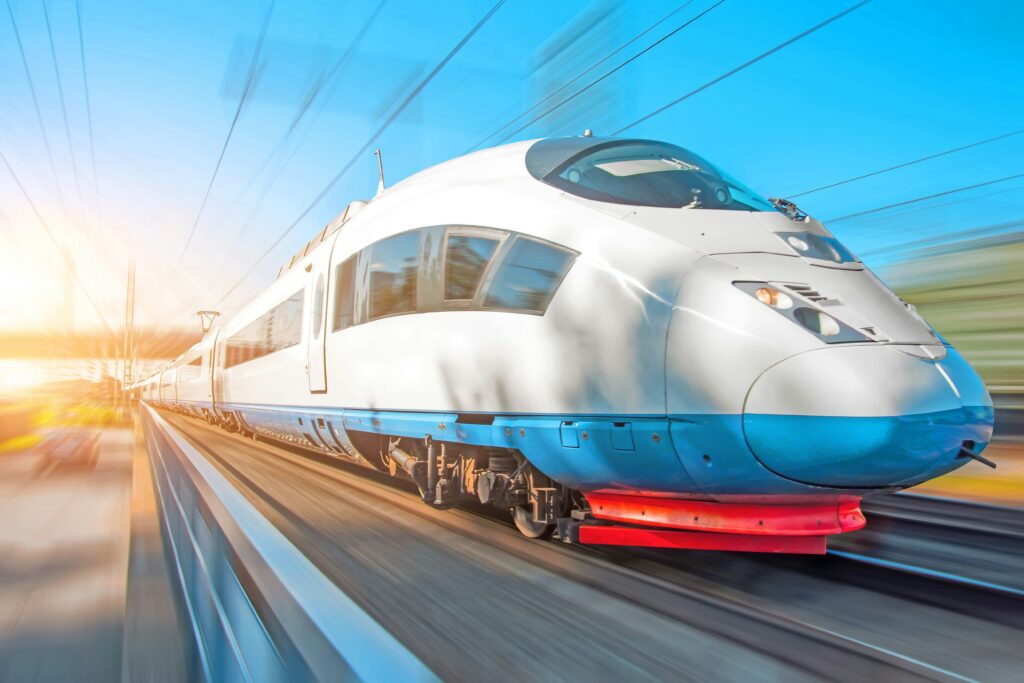
There are three different types of Shinkansen on the most frequently used Shinkansen route, which connect the cities of Tokyo and Fukuoka as well as major cities such as Yokohama, Nagoya, Kyoto, Osaka and Hiroshima: the Tokaido-Sanyo Shinkansen line with the Shinkansen Hikari, Kodama & Nozomi .
The differences between the three Shinkansen are that the Kodama Shinkansen stops at every station, while the Hikari stops at almost every station. Therefore, the Nozomi Shinkansen is the fastest . It stops at fewer stations and gets you to Osaka, Kyoto, and beyond faster.
Is it better to reserve seats on the Shinkansen?
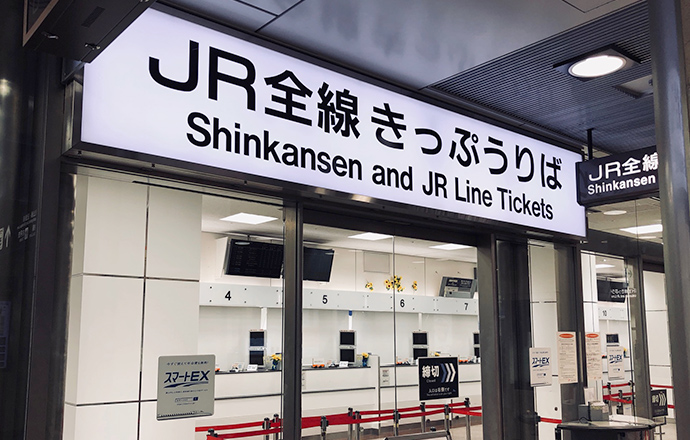
If you plan to travel on the Shinkansen on weekends, holidays, or during rush hour , I recommend reserving a seat . Especially if you want to travel comfortably with children and a baby, I would definitely make a reservation during these times.
You can make your reservation a few days before departure or spontaneously a few minutes beforehand. To do so, simply go to the ticket counter at the station or use the ticket machine. Seat reservation fees vary depending on whether it is peak season (e.g., Golden Week or New Year’s holidays ). Generally, you can expect to pay these prices: 330, 530, 730, or 930 yen . Reservations are free for Japan Rail Pass (JR Pass) holders . Reserved seats are marked “Reserved” or shitei seki (指定席).
If you’re not traveling on holidays or during rush hour, you can take the Shinkansen without a seat reservation . Simply sit with your children in one of the unreserved seats, marked “Non-Reserved” or jiyū seki (自由席). If there are no seats available, you have no choice but to stand and wait until one becomes available.
Can I buy Shinkansen tickets online?
Unless you’re taking the Shinkansen during Golden Week or peak tourist season (e.g., during cherry blossom season in spring), you can also conveniently purchase your tickets locally (at a ticket counter or vending machine) once you arrive in Japan. We like to do this a few days in advance when traveling with children.
If that’s too stressful for you and you’d rather plan, you can also buy Shinkansen tickets online at SmartEx , the official website of the Central Japan Railway Company .
The good thing about the website is that you can book your seat reservation a month in advance, and it is cheaper online than buying the tickets at the ticket counter (only if you also reserve a seat, otherwise the prices are the same).
How long in advance should I arrive at the station if I take the Shinkansen?
Is this your first time taking the Shinkansen? Then I’d recommend getting to the platform about 45-60 minutes before departure. Especially with children, I’d say the earlier, the better. To counter at least one hour before your desired journey.
If you’ve taken the Shinkansen before, I think 40-45 minutes in advance is a good time. This gives you time for last-minute shopping, some leeway in case you get lost, or need to use the restroom beforehand, etc.
Luxurious driving in the Green Car
As if riding the Shinkansen wasn’t luxury enough, the Shinkansen also offers three different types of cars: Ordinary Car , Green Car and the Gran Class Car .
As the name suggests, the Ordinary Car refers to the regular train carriages. The Green Car (1st class) goes a step further. Unlike the Ordinary Car, which offers both reserved and unreserved seats, seats in the Green Car must be reserved. In the Green Car, you have a bit more legroom, more storage space for luggage, and you get free snacks and drinks (depending on the line). The headrests are also softer and the seats have a lower reclining position. You can generally expect to pay about 30% more than the regular Shinkansen fare .
But is it necessary to book first class (the Green Car) with children ? Personally, I don’t think it’s necessary. Unless the regular carriages are absolutely full, I absolutely have to take the Shinkansen.
Shinkansen costs for children

A round-trip Shinkansen ticket from Tokyo to Kyoto costs an average of about 14,000 yen per adult (depending on the Shinkansen, travel time, and reservation). What are the prices for children?
Children generally travel free as long as they are not yet in elementary school. If the Shinkansen isn’t full, they can sit alone in an empty seat. If you reserve a seat, you must also reserve a seat for each child. Shinkansen fares for children are as follows:
Children over 12 years
Children over 12 years pay the full adult price .
Children between 6 and 11 years
Children in this age group pay 50% of the adult fare . Green Cars continue to charge full fares.
Children between 1 and 5 years
Up to two children accompanied by an adult can travel free . Additional children occupying a reserved seat will be charged the regular fare (50% of the full fare).
Babies under 1 year
Infants travel free on the Shinkansen. The regular child fare (50% of the full fare) applies if the child occupies a reserved seat or a seat in the first-class ( Green Car) .
Can I take a stroller and large suitcases on the Shinkansen?
If you plan to take a stroller and large luggage on the Shinkansen, it’s advisable to board in the last row of the carriage . There’s always room there for luggage and other items that can’t be stored above the seats.
Since May 2020, there has also been a new baggage policy, and passengers with large suitcases (total height, width and depth from 161 cm to 250) must reserve special seats with assigned overhead compartments for their excess baggage.
How do I prepare to board the Shinkansen?
If your train is next, you should stand on the platform next to the car number shown on your ticket and wait for the Shinkansen at the designated waiting area. You can find the car number on the signs above.
If you have not reserved a seat, check the signs to see which carriages are reserved for passengers without a reserved seat.
Is it better to bring your own snacks or buy them at the train station?
We always do a mix of both. The kids probably have their own favorite snacks, so I’d definitely bring some of those.
Otherwise, I’d buy an ekiben at the train station! An ekiben (駅弁) is a lunch box sold specifically at train stations, usually containing local specialties. Some of the ekiben lunch boxes are even elaborately made of wood or ceramic, and the food is simply delicious—oh, and it’s warm!
How fast does the Shinkansen travel in Japan?
Shinkansen are high-speed trains operated by Japan Rail (JR) and are the fastest and most comfortable way to explore the country. The trains are clean, punctual, reliable, and reach a top speed of 320 km/h .
More tips and tricks for riding the Shinkansen
Finally, I would like to summarize some more information and tips that will be helpful for your journey on the Shinkansen:
- You can put jackets and bags on the shelf above your head or there is a coat hook next to the window.
- Always have your tickets handy when the conductor comes by to check them.
- You can connect charging cables for your mobile phone to the designated sockets.
- I would take the children’s shoes off on the Shinkansen. This way, the seats don’t get dirty and they can move around more freely.
- Free WiFi is available on the Shinkansen.
- If a family member is sitting in front of or behind you, you can simply fold down the seats and you will be sitting opposite each other.
- The nearest restrooms and trash cans are indicated on the back of the tray table on the seat in front of you.
- Fold-down changing tables are located in the restrooms.
- You can breastfeed at your seat or in a small room (Japanese: tamokuteki shitsu = 多目的室). A train attendant must unlock the room beforehand.
- To ensure that the children don’t get bored during the journey, bring enough toys with you (books, figures, stickers, etc.).
- On the Shinkansen, you don’t always have to look for the stop where you want to get off. Announcements are also made in English, so you can relax and even sleep, because the arrival time is printed on your ticket. It’s so reliable that you can even set your alarm 10 minutes before arrival, so you can start packing and preparing the kids in a relaxed manner.
Rules of conduct when traveling on the Shinkansen
- Leave the seat clean (and the chair reclined) as you found it.
- Telephone calls are only possible in the lobby area between the carriages. This is one reason why it’s so quiet on the Shinkansen.
- Try not to be too loud on the train. Babies and children are, of course, an exception.
- Food with a strong smell is a no-go…
➡️ More information on rules of conduct and etiquette in Japan can be found here.
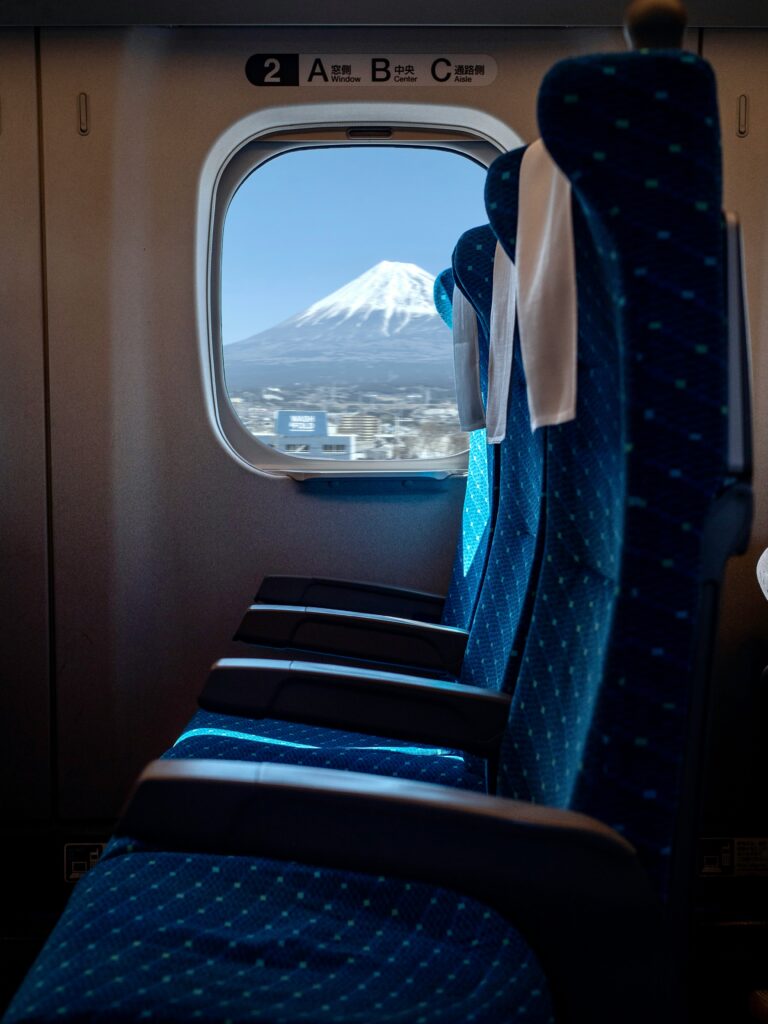
On which side of the Shinkansen can you see Mount Fuji?
If the sky is clear and you’re driving from Tokyo to Kyoto , you might be lucky enough to see Mount Fuji on your right (about a 40-minute drive). If you’re driving from Osaka/Kyoto toward Tokyo , you’ll see Mount Fuji on your left (about an 80-minute drive outside of Kyoto).
Keep in mind that Mount Fuji isn’t always easy to find. However, you’ll have the most luck on a clear winter day with a bright blue sky.
And what should you keep in mind when getting out?
As I mentioned above, the exact arrival time is printed on your ticket. So don’t wait for the Shinkansen to arrive at the station to get ready and pack up. This isn’t a “normal train,” and your stopover will be very brief. Tourists are known to miss their stop completely because of this. Don’t be one of those tourists.
- Nagoya rainy day with kids in 2026 (Cool Indoor Things to Do )
- Best Gachapon in Tokyo (2026): 20 Places to Find Capsule Toys
- All Japanese KitKat Flavours List: The Ultimate Japan KitKat Guide
- Sapporo rainy day with kids (2026): 7 Cool Indoor Things to Do
- What To Do In Arashiyama With Kids: A Realistic One-Day Family Itinerary