
I spill travel tips , and show you the Japan that tourists usually miss.
Between neon megacities and quiet temple towns, Japan runs on a rail network that’s fast, spotless, and famously punctual. We’re talking about Japan’s trains—easily one of the most efficient systems in the world.
If you’ve started planning your trip, you’ve already met the Japan Rail Pass. It’s often sold as the magic ticket for tourists. But here’s the real question: is Japan Rail Pass worth it always?
From the routes we tested and prices we compared on our own trip, we learned it’s not that simple. For some itineraries, the pass is brilliant and pays off quickly. For others, regular tickets, regional passes, or just using an IC card can be cheaper, more flexible, and less hassle.
If you’re thinking about buying a Japan Rail Pass, read on. We’ll walk you through when it makes sense, when it doesn’t, and how to choose the option that actually matches your route, budget, and travel style.
More Japan travel planning guides
- best apps for Japan travel– from transport hacks to translation tools,these must-have downloads make navigating trains, food, and sightseeing so much easier.
- best Japan itinerary — the smartest routes, travel flow, and practical tips for planning your trip.
- Suica card in Japan — how to use Japan’s essential IC card for trains, subways, buses, and everyday payments.
- how to get around Tokyo — the easiest way to navigate Tokyo’s trains, subways, and stations without losing your mind.
- is the Japan Rail Pass worth it — a realistic 2026 guide to whether the JR Pass still saves you money.
- two weeks in Japan itinerary — a complete first-timer route covering Tokyo, Kyoto, Osaka, and beyond.
Table of Contents
When is the Japan Rail Pass worth it?

As soon as you start researching transportation options in Japan, the Japan Rail Pass will almost certainly come up – the ultimate ticket for adventurers who want to travel Japan efficiently. Just hop on a train in Tokyo and be in Kyoto two hours later , without having to worry about individual tickets or hidden costs. Sounds tempting, right? Before you buy it: The JR Pass isn’t the ideal choice for every traveler !
It depends on how much you plan to do, where you want to travel, and whether you also want to use other means of transport, such as buses or rental cars. You’ll find out immediately whether the Japan Rail Pass is worthwhile for your trip to Japan, and if not, we have a few alternatives.
It’s worth it if…
…you’re traveling long distances.
If you plan to visit cities like Tokyo , Kyoto , Osaka , Hiroshima, orHokkaido in a single trip, you’ll save a lot of money with the JR Pass. For example, Tokyo to Kyoto costs about €120, Kyoto to Fukuoka about €100, and the return trip is about €440. The 7-day Japan Rail Pass (Ordinary) currently costs about €310, and you can take as many trips as you like.
…you want to travel quickly and efficiently.
The Shinkansen bullet trains, included in the Japan Rail Pass, offer you a fast, comfortable, and stress-free way to explore the country.
…you want to stay flexible.
The pass allows you to make spontaneous decisions. If you want to discover another city while you’re out, simply hop on the next train. No calculating ticket prices, no rush at the ticket counter – just travel.
It’s not worth it if…
…you limit yourself to one region.
If you’re mainly staying in one region, like Kansai ( Kyoto , Osaka , Nara), then regional passes like the Kansai Thru Pass or inexpensive single tickets are a better choice.
…you only plan a few train journeys or stay for a short time.
The Rail Pass is particularly worthwhile if you’re traveling long distances on the Shinkansen or traveling frequently. However, if you’re only staying in one city or taking short day trips, individual tickets are cheaper.
…you don’t use JR lines .
Not all railways in Japan belong to the Japan Rail Group. Many private railway companies (e.g., Kintetsu, Keihan, or Hankyu) are not covered by the Japan Rail Pass. If you primarily use their lines, the pass is unnecessary.
…you’re only taking a city trip.
The Japan Rail Pass is not valid for subways and buses within cities like Tokyo or Kyoto . Local day tickets are a better option.
The Japan Rail Pass  is ideal if you want to see and experience a lot and are planning to travel longer distances. However, it's not a one-size-fits-all solution for every trip. Plan your route in advance, consider how often and where you want to travel, and weigh up whether the pass is really the best choice for you!

For our last trip to Japan, the JR Pass was NOT worth it – we only took the Shinkansen once and never used the JR lines within the cities. Therefore, booking individual tickets was cheaper for us.
Japan Rail Pass: All details & information
If you are still convinced that the Japan Rail Pass is a good way to get from A to B in Japan, then you should look into the details now to be 100% sure that it’s worth it!
Which trains you can use with the Japan Rail Pass
The rail network in Japan is like a giant spider web, and not everything that runs there is covered by the JR Pass.
Travel across the country at high speed: Long-distance trains in the JR Pass
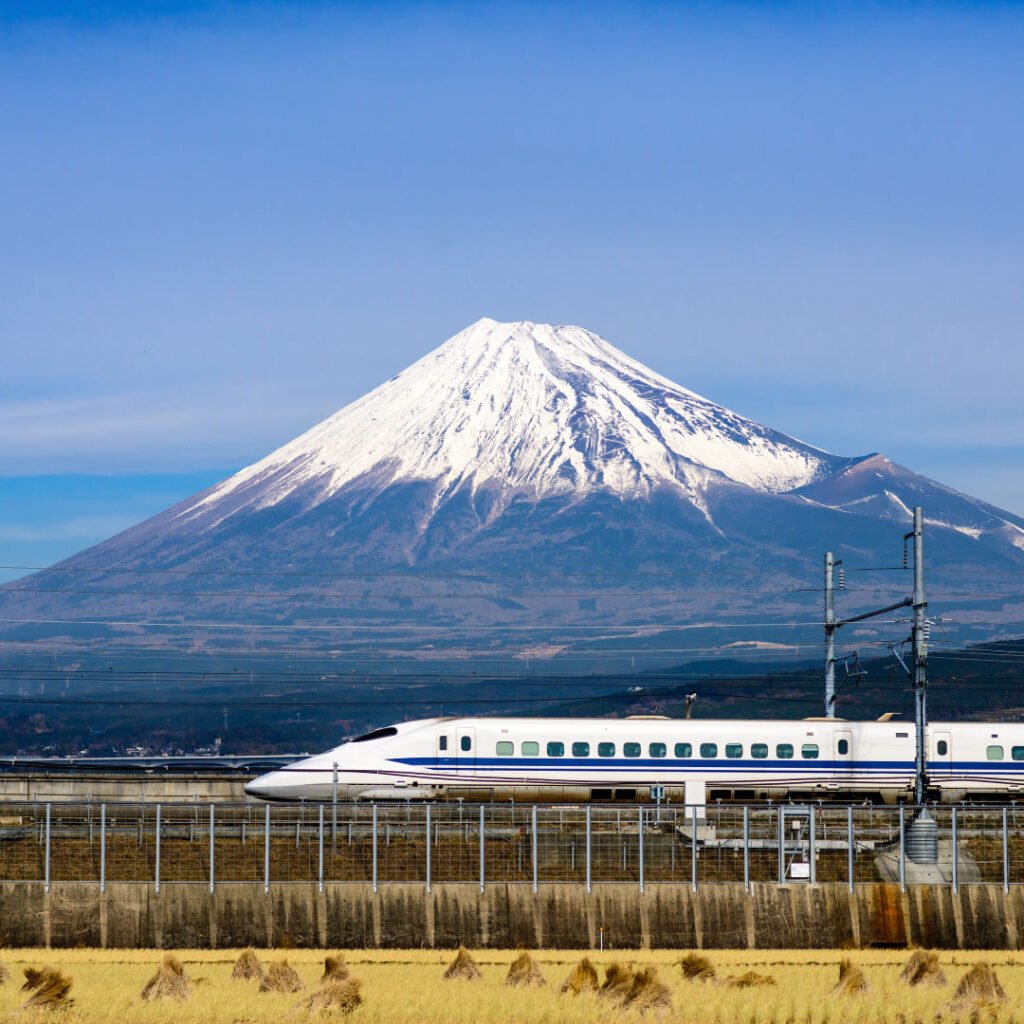
The most significant advantage of the JR Pass is undoubtedly the opportunity to travel on the legendary Shinkansen . These high-speed trains, also known as “bullet trains,” are not only lightning fast (reaching speeds of up to 300 km/h) but also incredibly comfortable. With the pass, you have access to most Shinkansen lines, including the popular Hikari and Kodama trains that connect major cities.
The Nozomi and Mizuho Shinkansen (on the Tokaido, Sanyo and Kyushu Shinkansen lines) are not included.
In the hustle and bustle of the city: Trains for inner-city routes
The Japan Rail Pass isn’t just useful for long-distance travel; it can also make your life easier in major cities. In Tokyo , for example, you can use the JR Yamanote Line , which connects the most important districts like a ring: Shibuya , Shinjuku, and Ueno.
In Osaka, the pass also provides access to several convenient JR lines, making it easy to get around the city.
You need to buy separate tickets for subways and private train lines. Keep this in mind when planning your trips within cities.
Are you planning a trip to Japan?
Our comprehensive travel guide with tips, practical advice, travel costs and inspiration will help you.
How and where do you get the Japan Rail Pass?
Buying a Japan Rail Pass is thankfully not rocket science. With a bit of planning, you can save yourself a lot of stress and get started as soon as you arrive in Japan. But what’s the best way to go about it?
The JR Pass is only available to tourists - Japanese citizens residing in Japan CANNOT purchase it.
Order online: The stress-free option
You can easily order the pass online through official providers , ideally before your trip. You’ll receive a voucher by mail, which you can then easily exchange for a genuine Japan Rail Pass in Japan. Major train stations are perfectly equipped for this – the staff are friendly, quick, and efficient.
Why buy online? It's simple: prices are usually cheaper, and you avoid long waiting times if you buy in Japan. Plus, you can take your time to look at all the options, such as choosing between Ordinary Class (2nd class) or the more luxurious Green Car Class (1st class).

Buy your Japan Rail Pass: Klook or GetYourGuide.
Buy locally: For spontaneous travelers
If you’re feeling spontaneous, you can also buy the pass on-site – for example, at larger train stations . However, you should be aware of a few things: Prices on-site are usually higher, and the purchase process can take longer depending on how busy it is.
One advantage: If you decide to use the pass only once you’re there, you can better plan your itinerary. You might find that you don’t need it at all, or that it can actually save you a lot of money.
Plan ahead if possible. Buying online not only saves money, but also valuable time that you'd rather spend exploring Japan than dealing with formalities.
How much does the Japan Rail Pass cost?
The prices for the JR Pass vary depending on the length of travel and comfort class : You can get the standard car (Second Class) or the more luxurious Green Car class (comparable to 1st class) in three options: for 7, 14 or 21 days.
| Length of time | Ordinary Car (2nd class) | Green Car (1st class) |
|---|---|---|
| 7 days | approx. €280 | approx. €390 |
| 14 days | approx. €445 | approx. €610 |
| 21 days | approx. €555 | approx. €780 |
What is the difference between an Ordinary Car and a Green Car?
Second Class is the standard option and already offers plenty of comfort. You have spacious seats, air conditioning, and enough room for smaller pieces of luggage.
The Green Car class is more luxurious: more legroom, quieter cars, and often more exclusive service. If you want to relax during your journey and are planning longer trips, the upgrade is worth considering.
Seat reservations: Is that really necessary?
Most trains you can use with the JR Pass offer reserved and unreserved seating areas. Especially on popular routes, such as the Shinkansen line from Tokyo to Kyoto , or during peak travel times, a seat reservation is invaluable. You can reserve a seat for free at any JR ticket counter or machine.
If you prefer a more relaxed approach and don’t want to be tied to a fixed train time, you can travel in unreserved carriages. These are available on most Shinkansen and long-distance trains and operate on a “first come, first served” basis.
When you should make a reservation:

 During peak hours , as it can get very crowded.
 On longer journeys: Nobody wants to stand for hours.
 With lots of luggage: In reserved carriages it is often easier to find a place for larger suitcases.
What alternatives are there to the JR Pass?
As you can see, the JR Pass offers a fantastic option for many travelers, but it doesn’t always fit every itinerary (for example, ours). Perhaps you’re staying longer in a particular region or want more flexibility. Fortunately, numerous alternatives in Japan can be just as exciting and often even cheaper.
Regional Rail Passes: Ideal for shorter journeys
Japan is divided into different regions, and each region has its own rail passes. This can be quite confusing, but it will save you a lot of money in the long run. These regional alternatives are perfect if you want to focus on a specific area, for example:
- Kansai Railway Pass: Covers Kyoto , Osaka , Kobe and Nara.
- Hokkaido Rail Pass: Perfect for nature lovers who want to explore the northern part of Japan.
- JR Kyushu Pass: Gives you access to trains on the southern island of Kyushu.
Single tickets: Pay-as-you-go for spontaneous explorers
If you travel like this and your travel plans are flexible, then single tickets are the better choice. Especially for shorter distances, like between Kyoto and Osaka, they are often cheaper than a rail pass. Of course, your journey will take longer, but you’ll see more of rural life in Japan. Furthermore, with an IC card (e.g., Suica or Pasmo), you can conveniently “swipe” through train stations and subways without having to buy a new ticket each time.
Alternatives to traveling in Japan
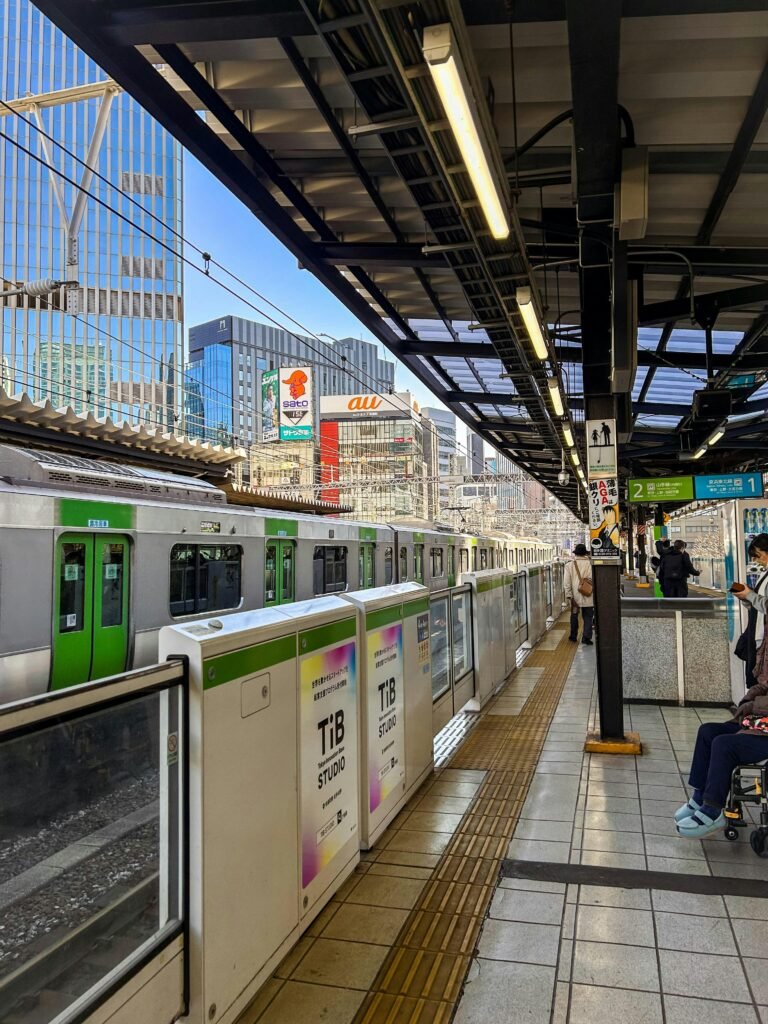
Traveling to Japan is an experience in itself, not only because of the breathtaking landscapes and fascinating culture, but also because of the diverse and well-organized transportation options. However, with so many choices, making a decision can sometimes be overwhelming: Should you buy the Japan Rail Pass, travel across the country on the Shinkansen , or rely on the subway, buses, and rental cars ? Here, we summarize the most essential points to help you make your ideal choice.
Public transport: Bus & subway
Public transportation in Japan is a dream – within cities, subways and buses were our means of transport. It was simple, efficient, punctual, clean, and inexpensive.
Subway: Fast & reliable.
In Japan’s metropolises like Tokyo, Osaka, or Kyoto, the subway is indispensable. No traffic jams, no waiting times – simply hop on, ride, and arrive relaxed. Single tickets are inexpensive, and the frequent service ensures you never have to wait long.
Bus: A flexible alternative.
Where there’s no subway, buses take over – and they’re just as affordable. Especially in smaller towns or more rural areas, you’ll likely rely on the bus, as they’re often the best way to reach remote locations.
With an IC card like Suica or Pasmo, you can travel around the city with ease. These cards work contactlessly and save you the hassle of ticket machines. Simply download the card to your phone, load it with money, and then just scan it at the subway entrances.

Long-distance buses : For longer journeys, night and long-distance buses, such as those operated by Willer Express, are an excellent option. They often cost only a third of a Shinkansen ticket (e.g., Kyoto to Tokyo approx. €35), offer comfortable seats, and save you a hotel night if you travel at night.
Driving in Japan
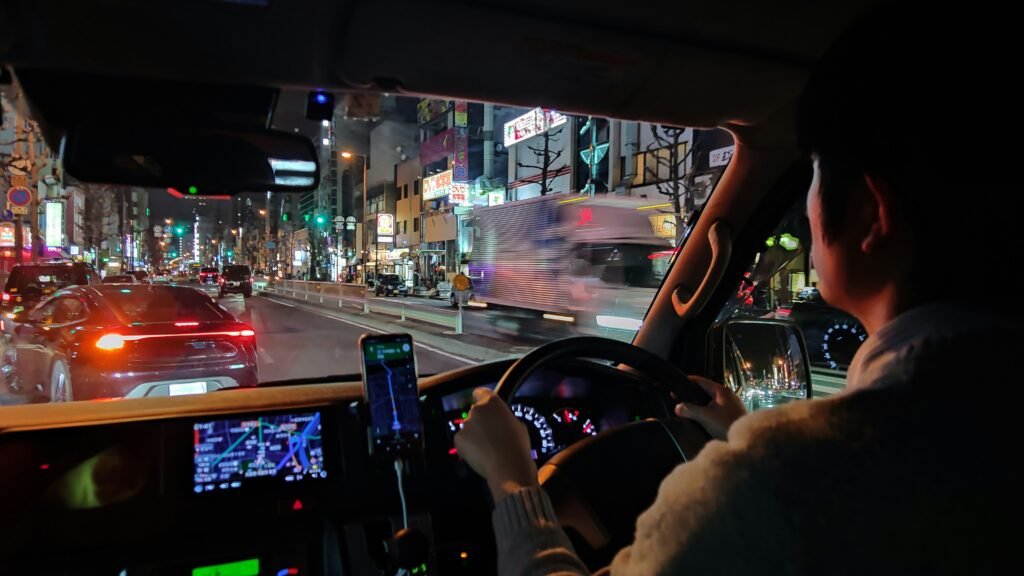
A rental car can give you a freedom in Japan that public transportation simply can’t offer, especially in rural and remote areas that are difficult to reach by bus or train. .
Important points for driving in Japan
In Japan, they drive on the left .

You need an international driving licence translation , which you must apply for at the Japan Automobile Federation (JAF) . You must carry this translation and your international driving licence with you at all times while driving.

Toll fees are sometimes exorbitantly high – we paid around €50 in tolls from Tokyo to Mount Fuji. In more rural areas, it's cheaper.

 Parking fees : Especially in large cities, parking costs can add up.
Taxi: Comfort for short journeys
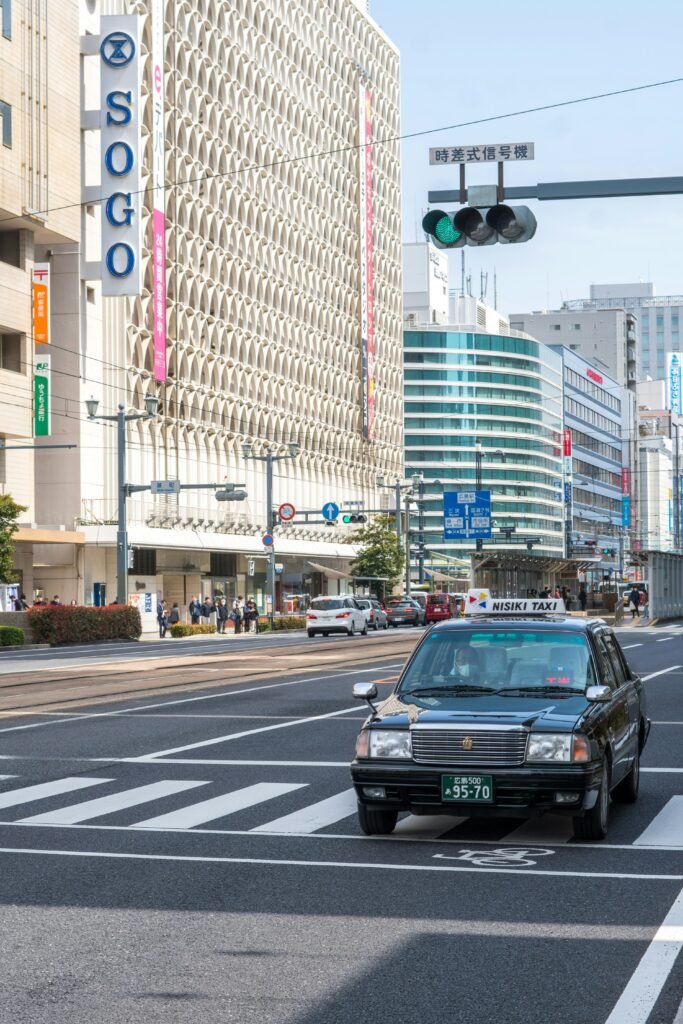
For short distances, especially in cities or late at night, taxis are always a convenient solution. They are extremely clean, reliable, and the drivers are friendly – however, they also come at a price. For example, a 15-minute ride in Tokyo costs about 1,500 to 2,000 yen (10 to 13 euros).
Our conclusion: It’s the mix that makes it work.
There’s no single perfect transportation solution for Japan – it all depends on how you want to travel. The Japan Rail Pass is a game-changer for frequent travelers and long-distance journeys, while subways and buses are essential in cities. For remote adventures, a rental car is worthwhile , and long-distance buses offer a budget-friendly alternative.
Plan your route in advance and combine the modes of transport that best suit your needs. This way, you’ll experience Japan not only efficiently, but also exactly as you want.
FAQs: Is the Japan Rail Pass Worth It?
Is the Japan Rail Pass still worth it after the recent price increase?
It can be, but only for certain types of trips. The JR Pass usually pays off if you’re doing at least one or two long shinkansen return trips in a short time (for example, Tokyo–Kyoto–Osaka–Tokyo in 7–10 days). If your itinerary is mostly short hops or you’re staying around one region, separate tickets or regional passes often work out cheaper.
Is the JR Pass worth it for a 7-day Tokyo–Kyoto–Osaka trip?
Often yes, especially if you’re doing Tokyo ⇆ Kyoto/Osaka plus an extra side trip (Hiroshima, Kanazawa, Nagano, etc.) within those 7 days. If you only go Tokyo → Kyoto → Osaka (one way) and then fly out, separate tickets may be similar or cheaper. The more you bounce around on shinkansen, the more the pass makes sense.
Is the Japan Rail Pass worth it if I’m mainly staying in Tokyo?
Usually no. Within Tokyo you’re using a mix of JR lines, metro, and private railways, and the JR Pass doesn’t cover subways or most private lines. For Tokyo-focused trips with maybe one small day trip (Kamakura, Yokohama, Kawagoe), you’re usually better off with IC cards (Suica/PASMO) and cheap local tickets, not a nationwide JR Pass.
Does the JR Pass cover all shinkansen routes and trains?
It covers most shinkansen lines, but not every train type. On the Tokaido/Sanyo/Kyushu shinkansen, you cannot use Nozomi or Mizuho with the standard JR Pass—you’ll need to take Hikari/Sakura/Kodama instead. For most travelers the time difference is small, but if every minute counts, this is something to factor in when comparing value.
Is the JR Pass worth it for regional travel, like just Kansai or just Kyushu?
Usually, regional JR passes (Kansai Area Pass, Kansai–Hiroshima Pass, JR East Pass, JR Kyushu Pass, etc.) are better value if you’re staying in one broad area. They’re cheaper than the nationwide pass and tailored to specific routes. The full JR Pass makes more sense if you’re crossing big distances between regions within a short time.
Is the Green Car (first class) JR Pass worth the upgrade?
Green Car is lovely—more space, quieter cars, comfier seats—but the upgrade is only “worth it” if:
- You’re tall, easily tired, or have sensory issues and really value extra space and quiet, or
- You’ll be doing lots of long rides and want that comfort every time.
If you’re on a tighter budget, the ordinary JR Pass is already very comfortable, and most travelers are perfectly happy in standard class.
Is the JR Pass good value for families with kids?
It can be. Children aged 6–11 pay about half, and under-6s can often ride free without their own seat (as long as they sit with you). If you’re doing multiple long-distance rides with a family, a JR Pass can be easier to manage than buying separate tickets each time—and may save money overall. Just be sure your itinerary actually uses the pass on enough long routes to justify the cost.
If I don’t buy the JR Pass, what’s the best alternative?
For many itineraries, the best combo is:
- IC card (Suica/PASMO/ICOCA) for cities and short hops
- Single shinkansen tickets or e-tickets for a few long journeys
- Regional JR passes for area-focused trips (Kansai, Tohoku, Hokkaido, etc.)
This setup can be cheaper and more flexible if you’re not racing around the whole country.
- Nagoya rainy day with kids in 2026 (Cool Indoor Things to Do )

- Best Gachapon in Tokyo (2026): 20 Places to Find Capsule Toys

- All Japanese KitKat Flavours List: The Ultimate Japan KitKat Guide
- Sapporo rainy day with kids (2026): 7 Cool Indoor Things to Do

- What To Do In Arashiyama With Kids: A Realistic One-Day Family Itinerary