I spill travel tips , and show you the Japan that tourists usually miss.
Do you want to know what to do in Arashiyama? It’s a destination packed with charms—gorgeous views like Togetsukyo Bridge and the bamboo groves, famous shrines and temples (especially stunning in autumn), and endless street food. But with so much to do, it’s easy to wonder, “Where do I even start?” I put together my favorite must-know spots and ways to spend your time in Arashiyama, plus how to get there.
At the end, you’ll also find a one-day model itinerary that stitches these highlights together so you can truly savor Arashiyama. Use it as a friendly nudge to make your day here feel effortless and memorable.
Planning more time in Kyoto? Read these next
Table of Contents
Classic ways to spend time in Arashiyama & must-see spots
① Fall in love with the panorama from Togetsukyo Bridge

This long bridge spans the Katsura River and sits beautifully within Arashiyama’s grand natural setting—it’s the symbol of the area. In spring, cherry blossoms; in autumn, flame-colored leaves—it’s all framed by a 155-meter landmark that has watched over the valley for ages. The first bridge was built by the monk Dosho in 836 (Jōwa 3). The current steel-reinforced concrete bridge dates to 1934 (Showa 9), but its exterior is finished to look wooden to protect the scenery.
Views of Arashiyama flanking both ends of the bridge are painting-worthy and continue to captivate visitors.
North of the bridge you’ll find Randen (Keifuku) Arashiyama Station, Arashiyama Park (Kameyama area), and lively Nagatsuji-dori with street eats and souvenir shops. The south side faces Hankyu Arashiyama Station and Arashiyama Park (Nakanoshima area). The north is always buzzing; the south is calmer and great for a slower pace.
② Tour the UNESCO World Heritage Site, Tenryu-ji
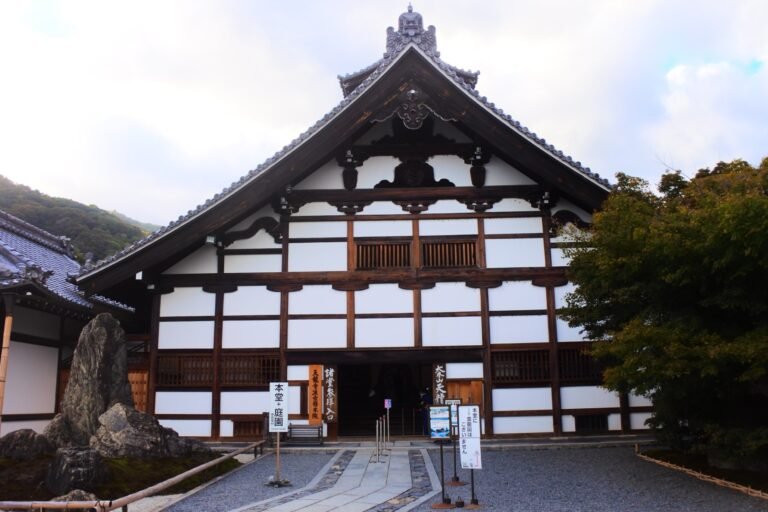
Founded by Ashikaga Takauji with the Zen master Muso Soseki as founding abbot, Tenryu-ji is the head temple of the Tenryu-ji branch of the Rinzai sect (formal name: Reigisan Tenryu Shishō Zen-ji) and has been a UNESCO World Cultural Heritage site since 1994. It was established to pray for the repose of Emperor Go-Daigo (d. 1339). The principal image is the seated Shakyamuni Buddha in the Great Hojo (Important Cultural Property).
The Sogenchi Garden, Japan’s first Site of Special Historic and Scenic Significance, preserves the feel of Muso Soseki’s original design from ~700 years ago. It’s a strolling pond garden that borrows the scenery of Arashiyama across the Ōi (Katsura) River and Kameyama to the west—breathtaking in any season.
Don’t miss the Hattō ceiling painting, Unryu-zu (Cloud Dragon) by Kayama Matazō—an ink dragon filling a circular frame that looks ready to swoop down.
Hours (Garden): 8:30–17:00 (last entry 16:50; garden & North Gate receptions)
Special early opening (mid-Nov–early Dec): Garden from 7:30 (garden reception only; North Gate from 8:30)
Fees
- Garden (Sogenchi & Hyakka-en): High school and up: ¥500
- Temple halls (Great Hojo, Study, Tahō-den): +¥300 on top of garden fee
(8:30–16:45, last entry 16:30) - Hattō “Cloud Dragon” special viewing: ¥500 (separate), 9:00–16:30 (last entry 16:20)
Open Sat/Sun/holidays; daily in some spring/summer/autumn periods. No photography.
③ Stroll the old bamboo path
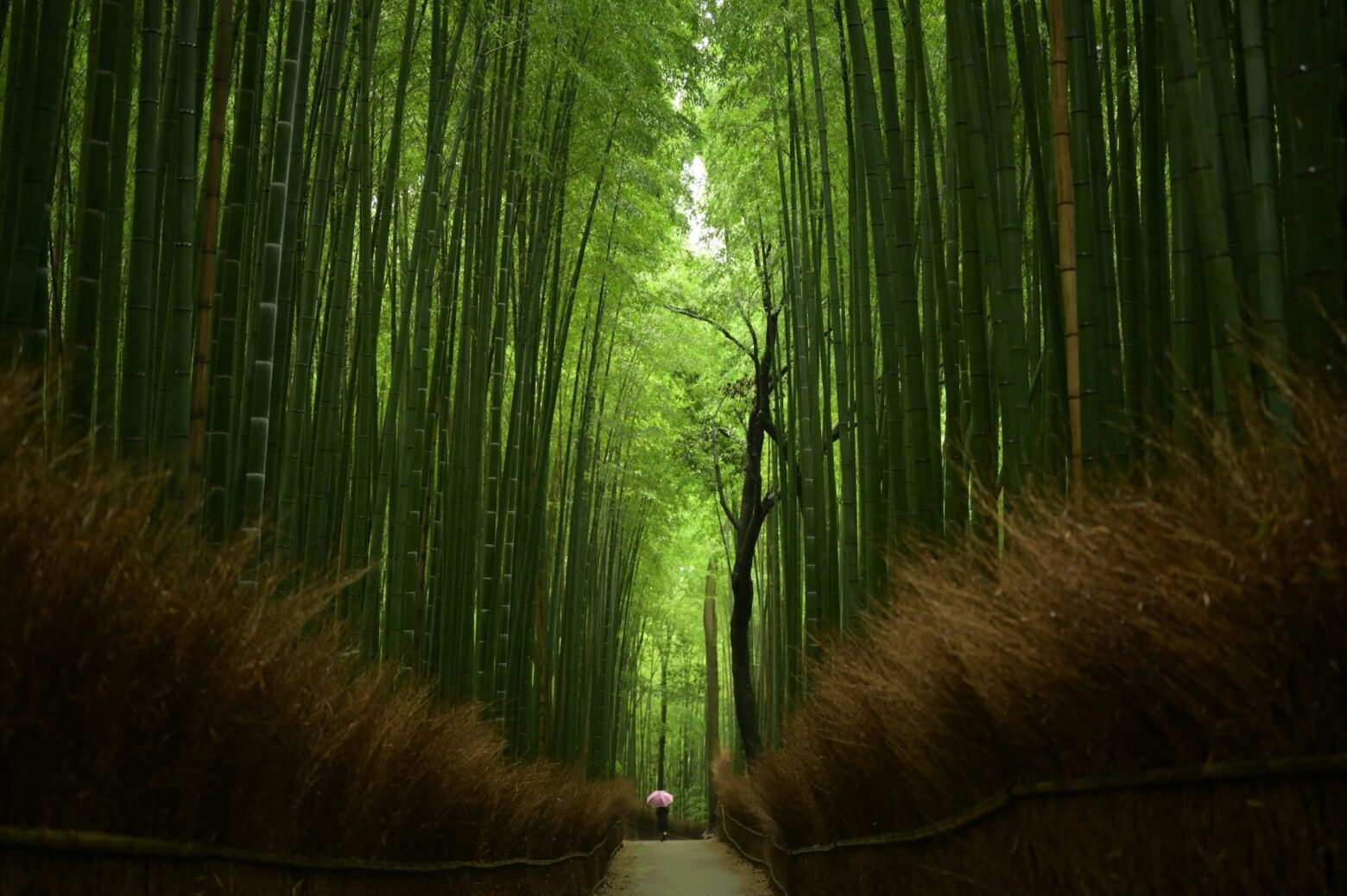
Alongside Togetsukyo, this is Arashiyama’s other icon—one of the most photographed Japanese scenes. The ~400 m path runs from Nonomiya Shrine through Tenryu-ji’s North Gate toward Ōkōchi Sansō, with rustling bamboo leaves and soft wind that calm the mind. In Heian times, this was aristocrats’ villa country.
It’s wildly popular now, so it fills up even on weekday mornings. If you want that poster-perfect empty path, go at dawn. (The photo shown was taken on a Saturday around 6:00 AM in May 2024.)
To dodge crowds, try the “Bamboo Forest Trail” just north of Nonomiya Shrine’s entrance, or ride a rickshaw, which uses dedicated routes away from the throng.
④ Graze along Nagatsuji-dori, the main food street
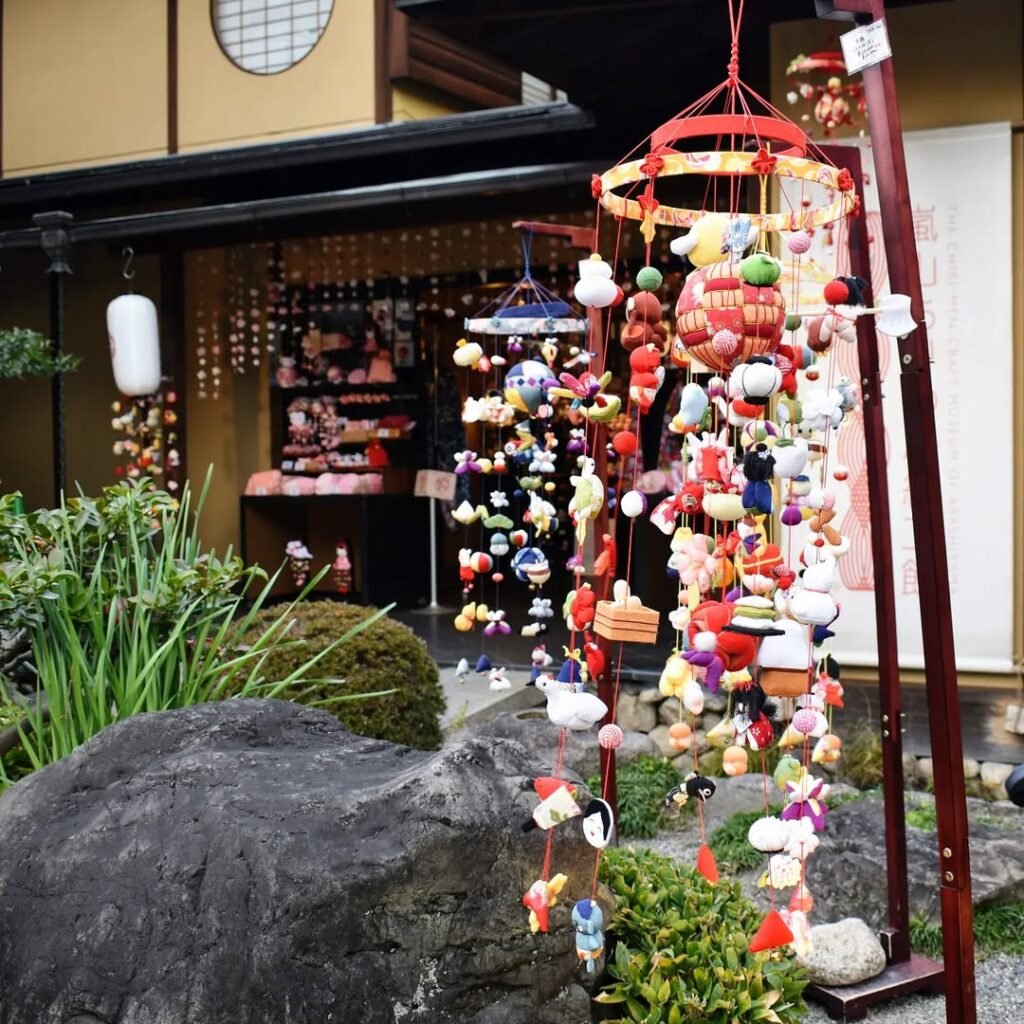
This is Arashiyama’s busy main drag, lined with eateries and souvenir shops, connecting the north side of Togetsukyo, Randen Arashiyama Station, Tenryu-ji’s entrance, and the bamboo path entrance. It’s perfect for quick bites—from croquettes to sweets—so you can taste Kyoto flavors on the go. Young travelers love this strip.
Popular stops include:
- Kyoto Arashiyama Yuba Cheese Honpo (Main)
- Sagano Croquette
- Koto-Imo Honpo
- Kawakatsu Sohonke
- Zarame Arashiyama Main Store
Hunt down your favorite nibble and wander happy.
READ ALSO: 7 Best Ryokan with Private Onsen in Kyoto: Luxury Japanese Inns for a Relaxing Stay
⑤ Pray for love, fertility, and academic success at Nonomiya Shrine
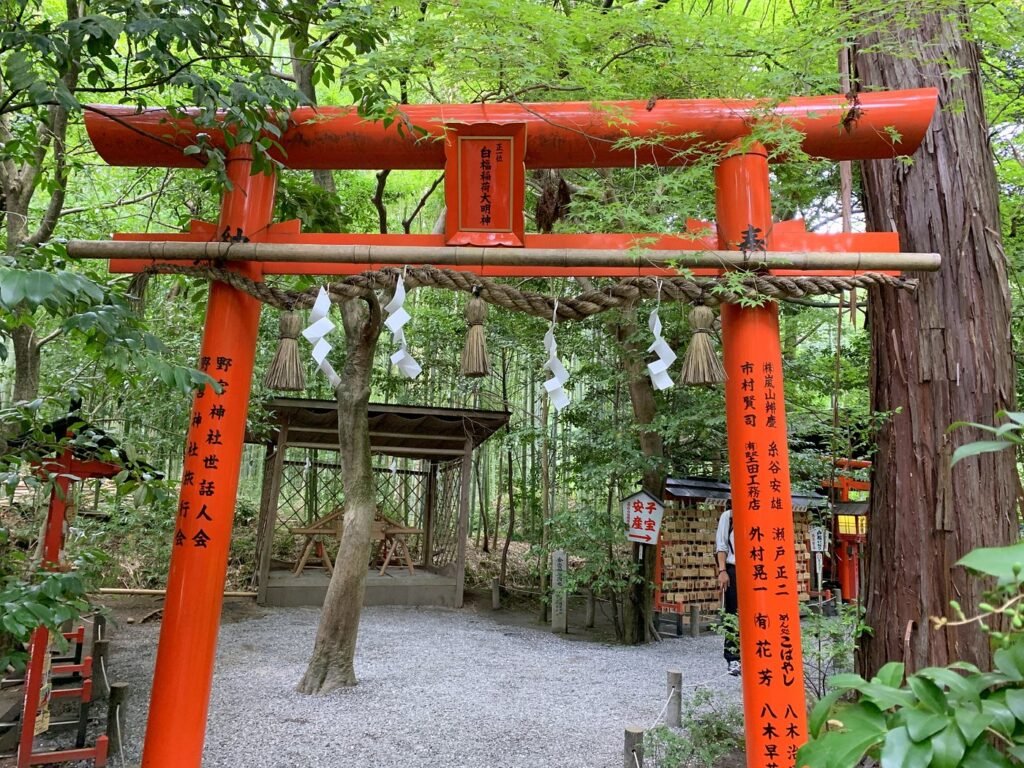
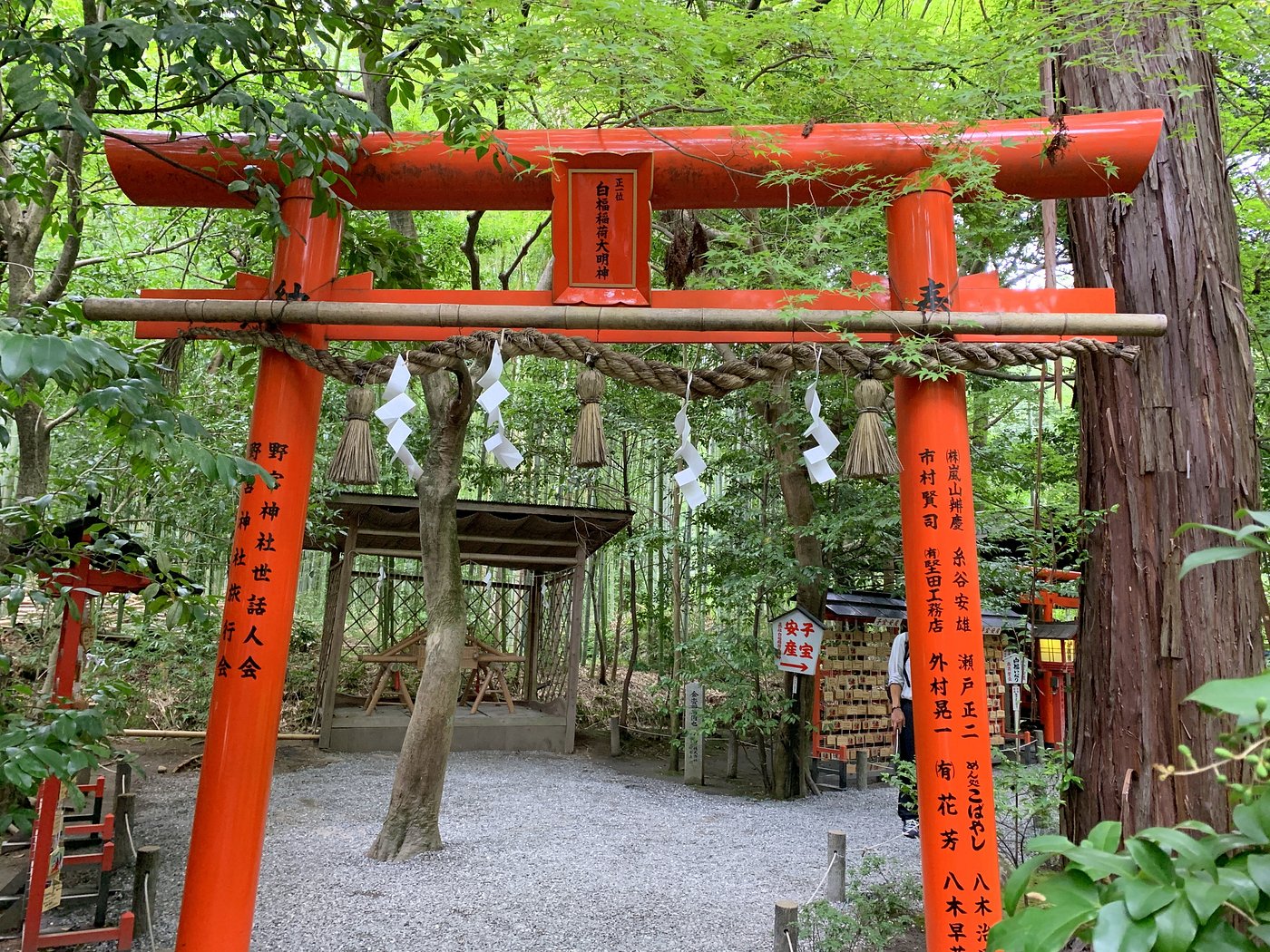
A small shrine tucked inside the bamboo path, Nonomiya is a power spot also known from The Tale of Genji. Long ago, imperial princesses (Saiō) serving at Ise Grand Shrine purified themselves here before departure. Its black-bark torii and brushwood fences preserve Heian-era atmosphere, described beautifully in Genji’s “Sakaki” chapter.
As the “Genji Shrine” in Sagano, it draws many visitors at the start of a Sagano walk and is revered nationwide for match-making, safe childbirth, and academics.
Each October, the Saikū Procession reenacts the journey of the Saiō from the capital to Ise: about a hundred people in brilliant court robes evoke a splendid past. If you’re in town, don’t miss it.
⑥ Slow down in a beloved old-house or Japanese-style café
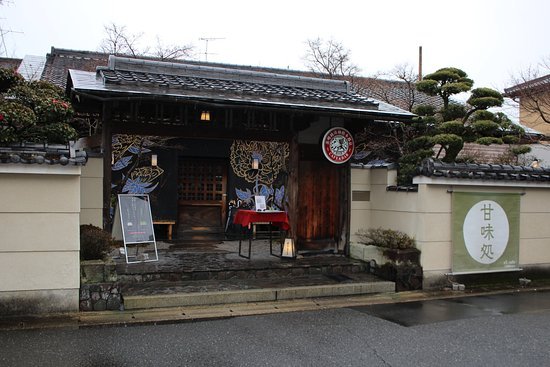
Arashiyama involves a lot of walking, so slipping into a calm, traditional-style café is part of the joy.
Two especially famous, high-demand picks:
- eXcafe Arashiyama Main Store (near Randen Arashiyama Station on Nagatsuji-dori): an “artist’s wa-café” known for tranquil Japanese sweets like grill-your-own dango over a small charcoal brazier, plus striking fusuma art by muralist Kimura Hideki.
Hours: 9:00–18:00 (L.O. 17:30) - Bread to Espresso to Arashiyama Teien “Espresso-to” (near Tenryu-ji): an atmospheric old-house café with a tiny garden and a take-away bakery—great for breakfast, light lunch, or snacks on the move.
Hours: 8:00–18:00, irregular closures
Tip: It’s comparatively quiet just after opening or toward late afternoon.
⑦ Savor renowned Japanese restaurants
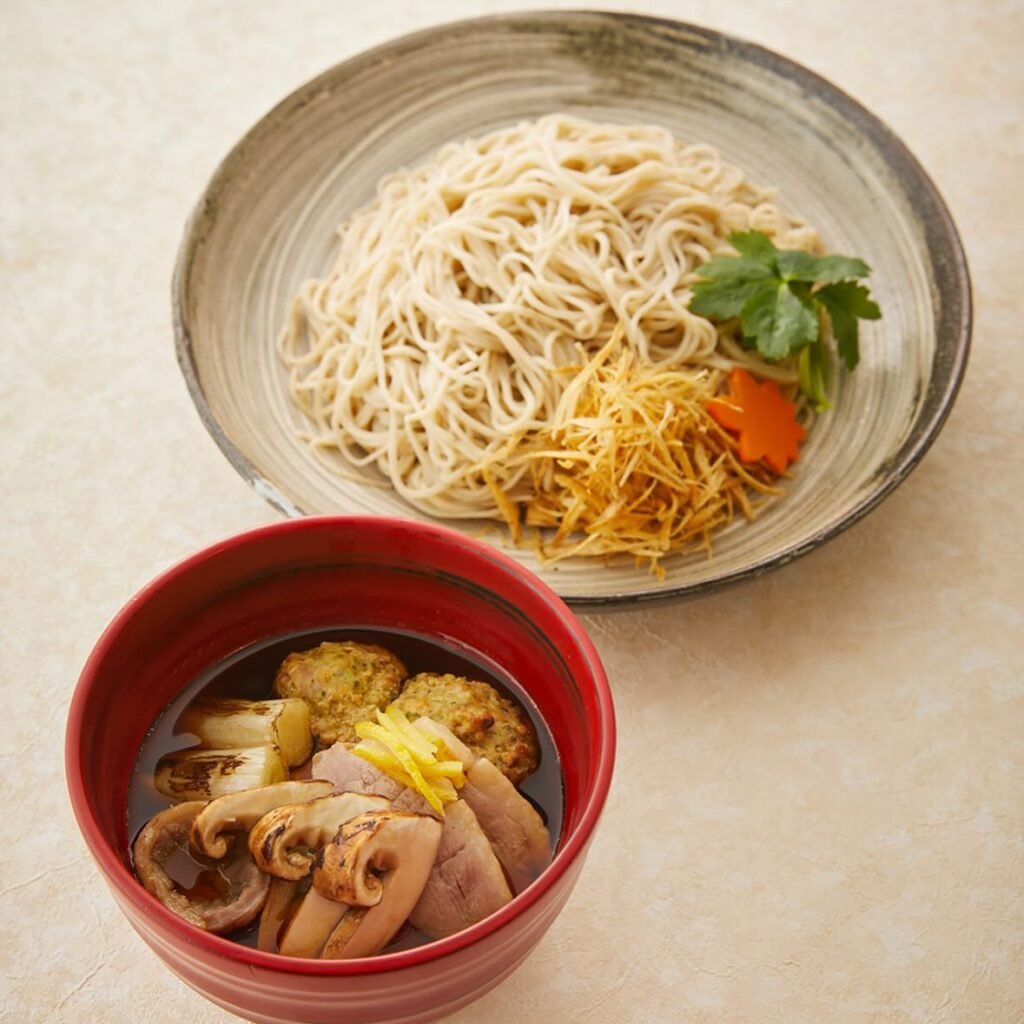
Arashiyama has long hosted cultural figures and business leaders, so you’ll find historic venues and inventive standouts. Classic Japanese dishes shine here—perfect for soaking up Kyoto’s mood.
Recommended:
Arashiyama Yoshimura
Right by Togetsukyo and the Katsura River, enjoy hand-cut soba (from domestic buckwheat) and refined soba dishes with seasonal scenery. A handwritten “Busshō” calligraphy by Kitaoji Rosanjin greets you at this former literary salon.
Hours: 11:00–17:00 (sometimes to 16:30 on weekdays; 10:30– in peak seasons). Open daily.
Site: yoshimura-gr.com/arashiyama/shop/
Yudofu Sagano
Near Tenryu-ji, opposite Hogon-in. A long-loved yudofu specialist using carefully selected Kyoto ingredients and traditional Saga tofu. Views of Hogon-in’s autumn leaves from the 2F; a Japanese garden on site; take-out matcha soy lattes and more.
Hours: 11:00–17:30 (L.O. 16:30), irregular closures
Site: kyoto-sagano.jp/
Kyoto KICHI
A Japanese restaurant with a Western façade on Nagatsuji-dori. Try the wagyu steak rice box or bluefin tuna bowl. There’s also a café menu with sweets using matcha from long-standing tea shop Chikiriya (first to serve matcha ice cream in Japan). Seasonal bar hours, plus breezy terrace seating.
Hours: Restaurant/Café 10:00–18:00; Bar 18:00–21:00
Site: kyoto-kichi.jp/
⑧ Sip a meticulous cup at % Arabica Coffee
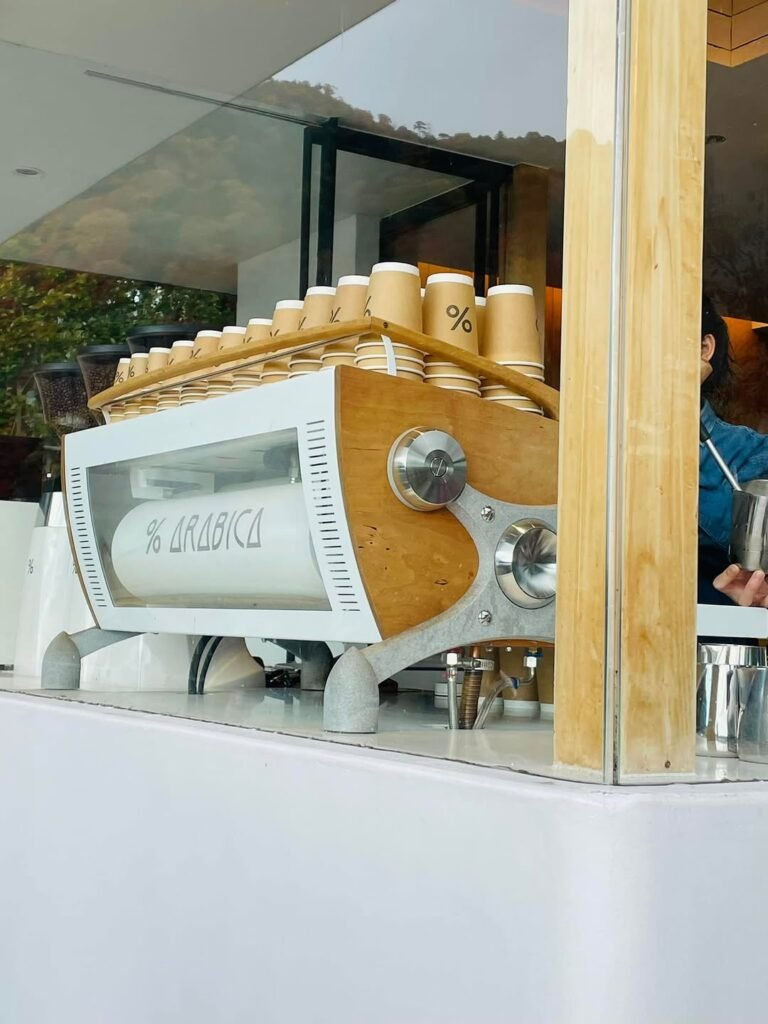
% Arabica Kyoto Arashiyama opened in 2015 as the second Japan location after the brand’s original Higashiyama shop. It serves timelessly excellent coffee and is a hit with locals and visitors alike.
This branch is take-out only on the north side of Togetsukyo. The best move? Sit on the stone embankment, gaze at the bridge and mountains, and linger over your cup. Pair it with bread from “Pan to Espresso to Arashiyama Teien” for an ideal Arashiyama breakfast.
Hours: 9:00–18:00
⑨ Snap photogenic shots at “Kimono Forest”
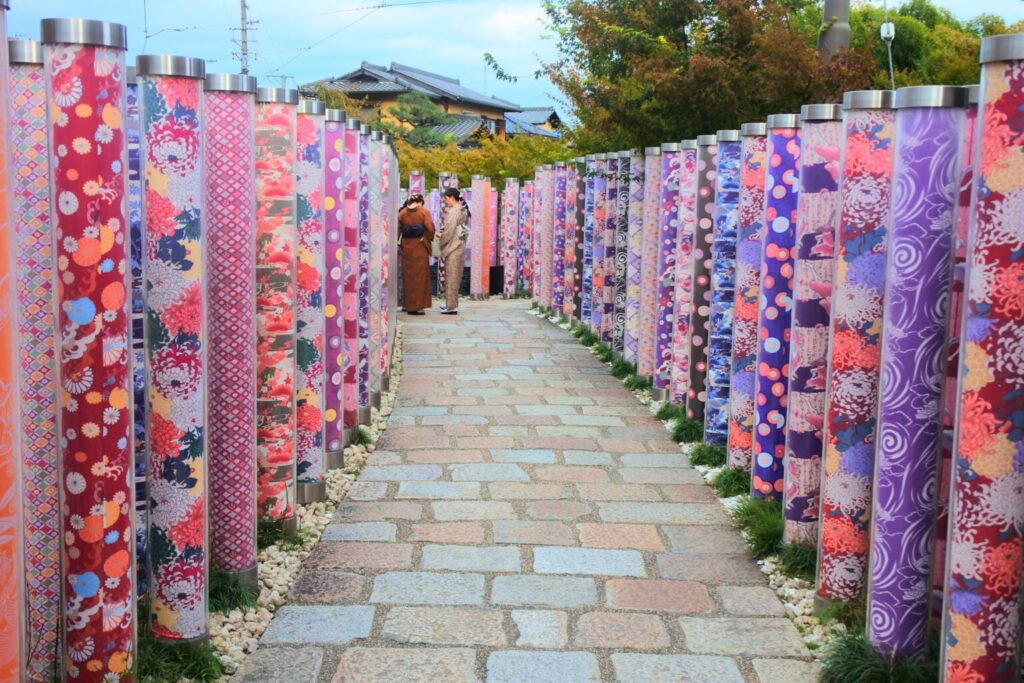
Created during the 2013 renovation of Randen Arashiyama Station, Kimono Forest lines the station and tracks with around 600 acrylic pillars (about 2 m high) wrapped in Kyo-yuzen fabrics—like walking through a grove of silk. It’s vivid by day and dreamlike when lit up at night, and it’s free. Allow about 10 minutes: small but unmissable and highly Instagrammable, especially if you’re wearing kimono.
⑩ Soak up classic Kyoto from a rickshaw
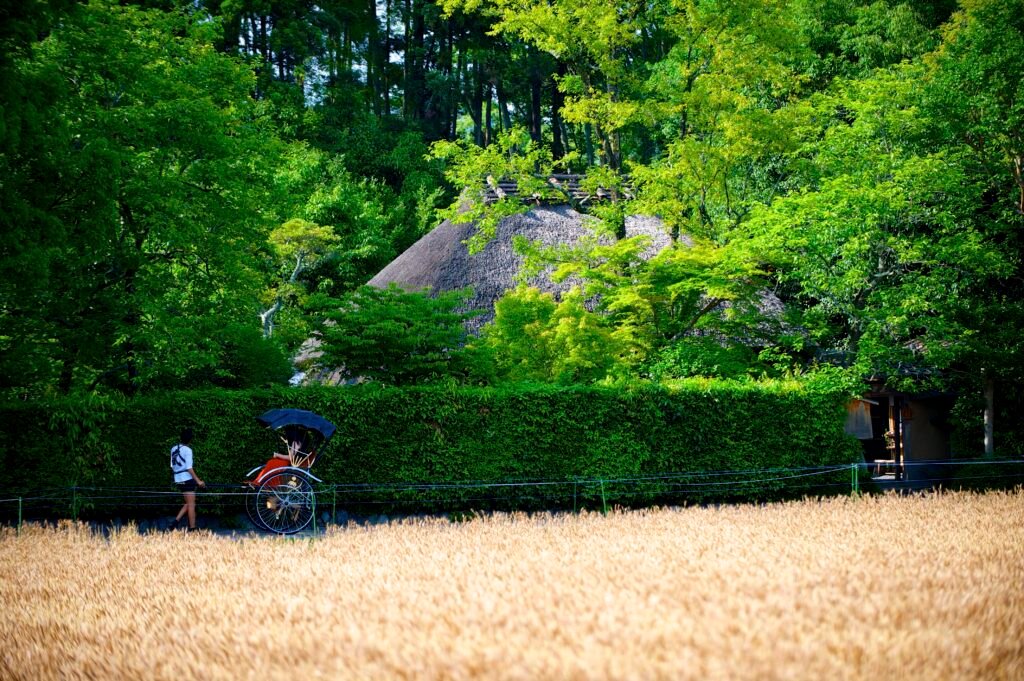
Let an expert rickshaw puller guide you through Arashiyama as you sway comfortably and see the scenery from a different height. Shade in summer, warm blankets in winter—plus exclusive routes (even through the crowded bamboo path) and great photo ops while seated.
Basics
Prices: From ¥4,000 (1 person) / ¥5,000 (2 people) / ¥9,000 (3 people) — varies by route and duration.
More details: Ebisuya website
⑪ Ride the Sagano Scenic Railway (Torokko)

A sightseeing train linking Kameoka and Arashiyama in western Kyoto. It covers 7.3 km at a breezy pace in about 25 minutes, hugging the Hozu Gorge with cherry blossoms in spring and maple colors in autumn. From nearby stations you can even take a horse-drawn carriage to Torokko Kameoka; the gentle horses are friendly to approach.
In foliage season, there are special evening runs where roughly 1,000 lights bathe the valley, river, and forests in color—an almost otherworldly spectacle.
Basics
Fare (one way): Adults (12+) ¥880 / Children ¥440 (under 1 free; disability discounts available)
Main stations:
- Torokko Kameoka: ~10 min walk from JR San-in (Sagano) Line Umahori Station
- Torokko Arashiyama: ~20 min walk from Randen Arashiyama Station (near the bamboo path)
Site: sagano-kanko.co.jp/
⑫ Float the traditional Hozugawa River boat
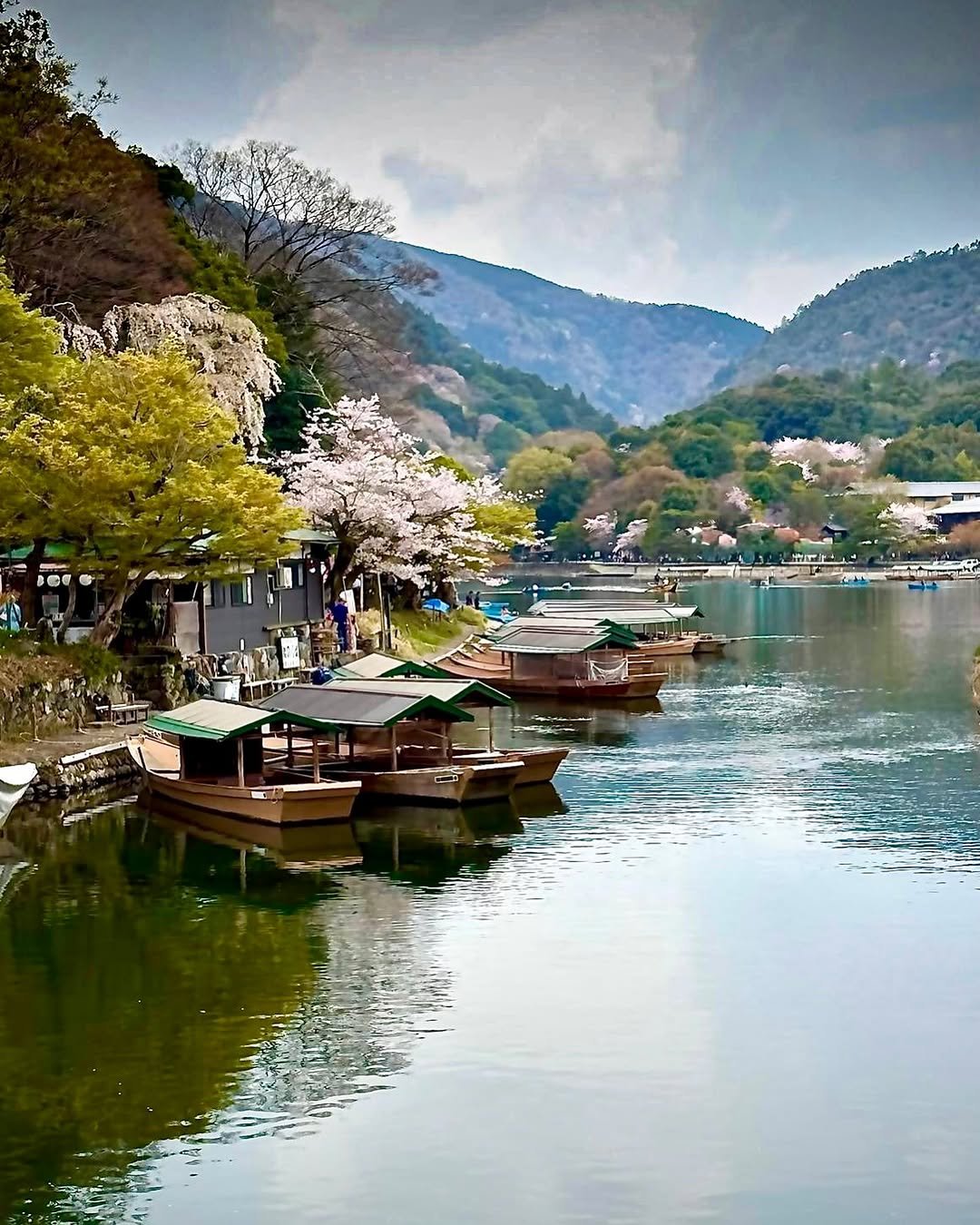
A two-hour journey through a dramatic 16 km gorge from Kameoka to Saga-Arashiyama. The Hozu River rises in the Tamba Highlands, winds to Sonobe and Kameoka, then cuts through the mountains to the famed Arashiyama, eventually joining the Kamo and flowing into the Yodo. Today, about 300,000 people a year ride this worldwide-known boat trip, enjoying four seasons of scenery and a touch of thrill.
Fish darting below, waterfowl gliding above, veteran boatmen reading the current—this is two luxurious hours of play and peace. Let the current carry you for a while.
Basics
Reservation/Fare: Adults ¥6,000 / Children (infant–elementary) ¥4,500 (capacity 24)
Access: ~8 min walk from JR Kameoka Station to the departure point
⑬ Drift on the Katsura River by boat or rowboat
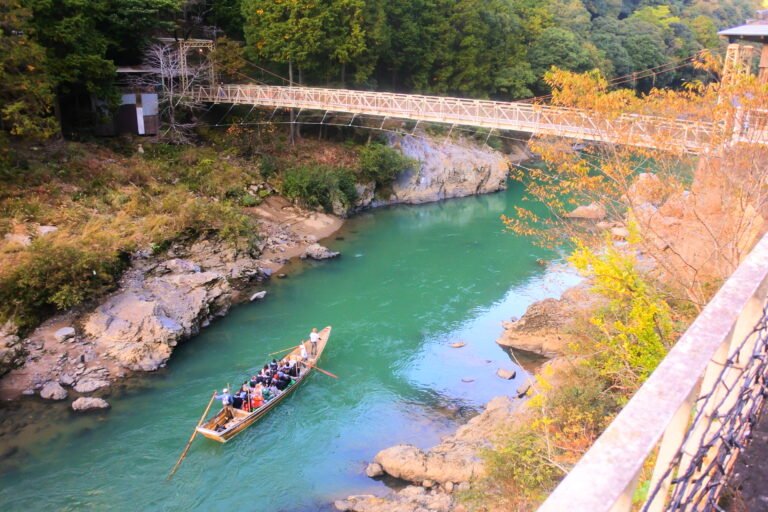
Want a graceful way to dodge crowds and still revel in nature? Arashiyama’s boats are the answer. The yakatabune tradition goes back to Heian-era aristocrats’ pleasure cruises. Today you can rent a rowboat for a small group or board a larger roofed boat—and you can even buy snacks from vendor boats that pull alongside (think dango, amazake, and more).
Note: Signs say it gets busy after 14:00, so go earlier if you can.
Basics
Hours
- 9/24–12/16 & 3/11–6/30: 9:00–15:30
- 12/18–3/10: 10:00–15:00
- 7/1–9/23: 12:00–16:00
Fees
- Rowboat: up to 1 hour, 3-seater, ¥2,000 per boat
- Yakatabune cruise: ~30 min
1–2 people ¥4,000 total; then +¥1,500 per additional adult, +¥1,000 per child (4 years–elementary); infants free
Boarding: Under Togetsukyo Bridge, one dock on each of the north and south banks, View on Google maps
Deeper-cut Arashiyama experiences
⑭ Autumn reflections at “Arashiyama Yusai-tei”
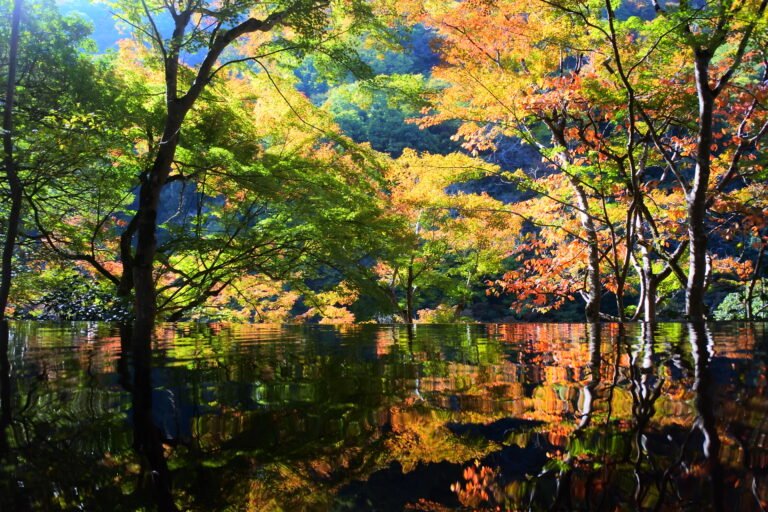
A photogenic space devoted to showcasing Japanese beauty—viral on social media. Yusai-tei stands on the site of Kameyama-den, a villa built ~800 years ago for Emperor Go-Saga and Emperor Kameyama, in a Meiji-era structure ~150 years old.
It was once the restaurant inn Chidori, beloved by maiko and geiko; Nobel laureate Kawabata Yasunari stayed here and wrote The Sound of the Mountain. Inside, you’ll find:
- “Kawabata’s Room”, where autumn leaves reflect on long tables through double-height windows
- The “Round-Window Room,” with four connected circular windows framing the view
- A “Panorama Terrace” over the garden and Arashiyama
It’s a serene art-space where seasonal nature and spatial beauty are curated to perfection.
View on Google Maps
Hours: 10:00–17:00 (closed Thu). In foliage season, often 8:00–17:30
Fee: Usually ¥2,000 (reservation required); foliage season ¥3,000
Site: yusai.kyoto/
Access: ~10 min walk from Randen Arashiyama Station
⑮ Leaf-peeping at the famed Hogon-in Temple
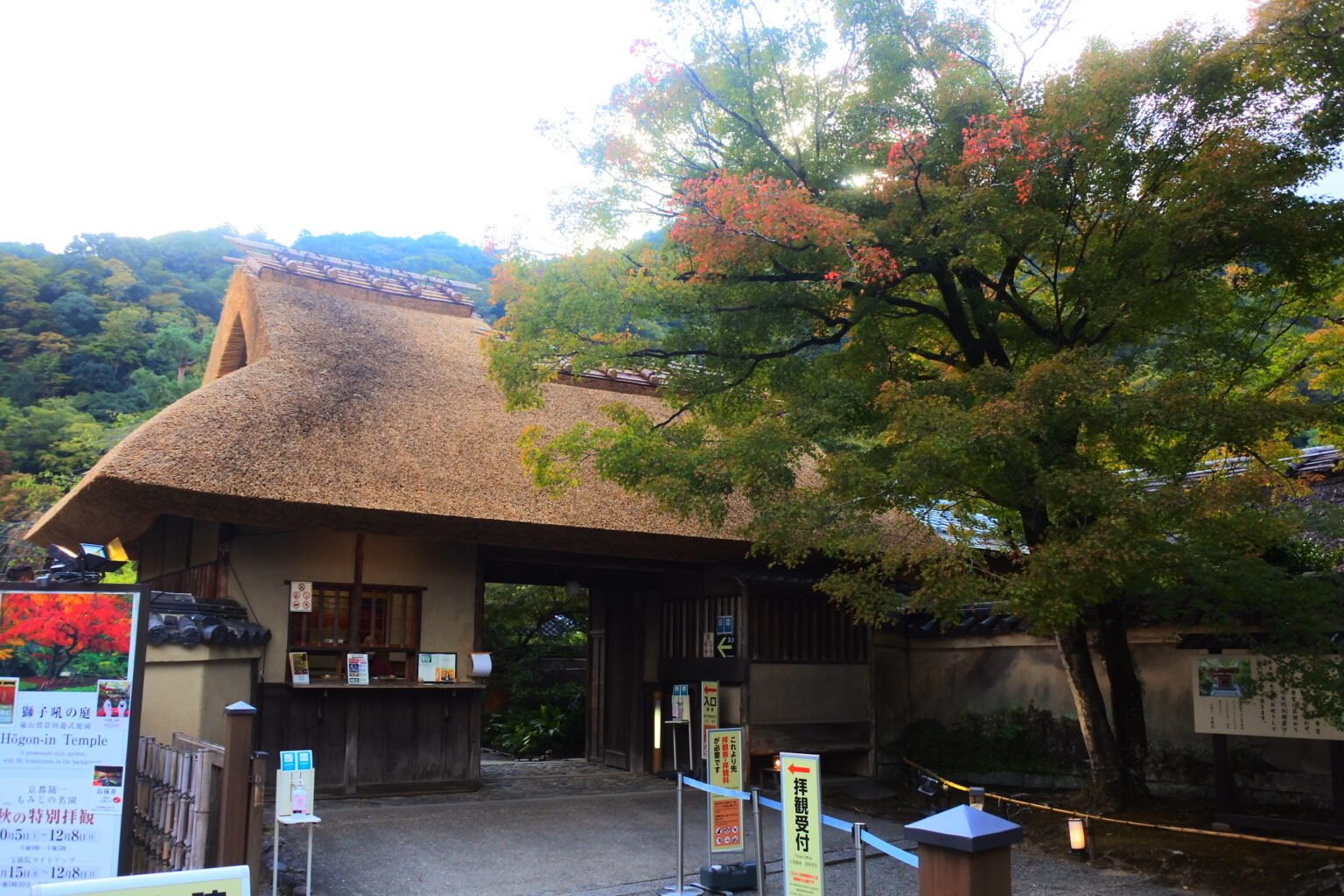
A sub-temple of Tenryu-ji (Daikizan Hogon-in), founded in 1461 by the shogunate regent Hosokawa Yoriyuki, inviting the third-generation dharma heir of Muso Soseki, Shōchū Eikō Zenji, as founding abbot.
The principal image is the Eleven-Faced Kannon; the side hall enshrines 33 Kannon and a Jizō statue said to have been worshipped by Ashikaga Takauji. Pilgrimage here is said to equal visiting the 33 temples of Saigoku.
The garden, “Shishiku-no-niwa” (Lion’s Roar Garden), was laid out by the Zen monk Sakugen Shuryō (who traveled to China twice) and is a strolling garden that borrows Arashiyama’s scenery, accented by striking boulders like the “Lion Rock.” “Shishiku” means “Buddha’s preaching;” as you walk and listen to birds and wind, you absorb right path and truth with all five senses.
Open only for special viewings, it’s beloved for its beauty—especially mid-November night illuminations.
⑯ Views from the Arashiyama Park Kameyama area lookout
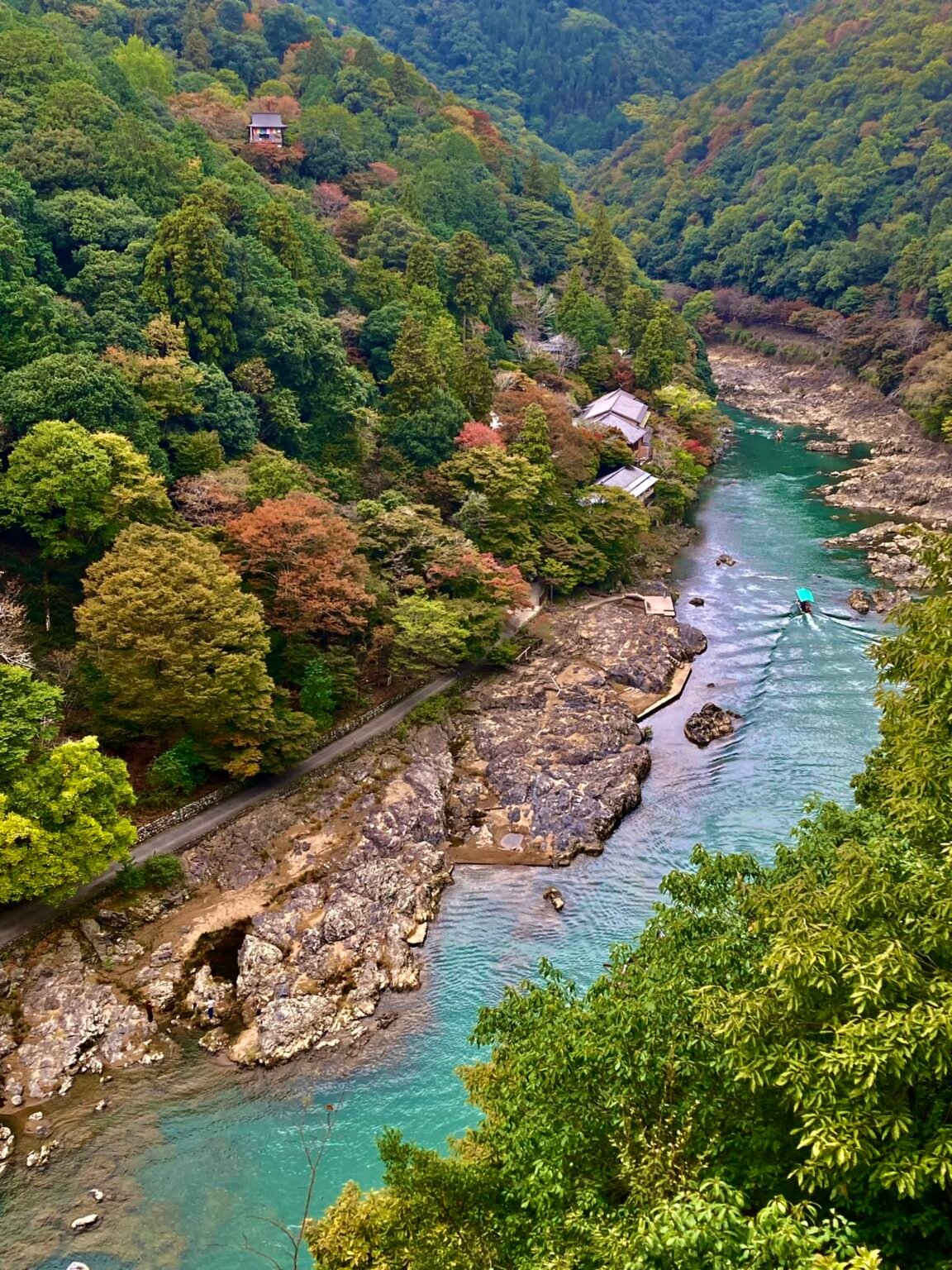
Just north of Togetsukyo, Arashiyama Park (Kameyama area) is a pocket of calm close to the crowds. Thick with trees (gorgeous in autumn), it’s ideal for picnics, quiet walks, and a lookout near the top where you can see mountains across the river, Senko-ji on the far slope, and Hozu River boats gliding below. Come for forest bathing, views, or a blissful blank stare into nature.
⑰ Climb to Senko-ji and take in the vista from “Daihikaku”
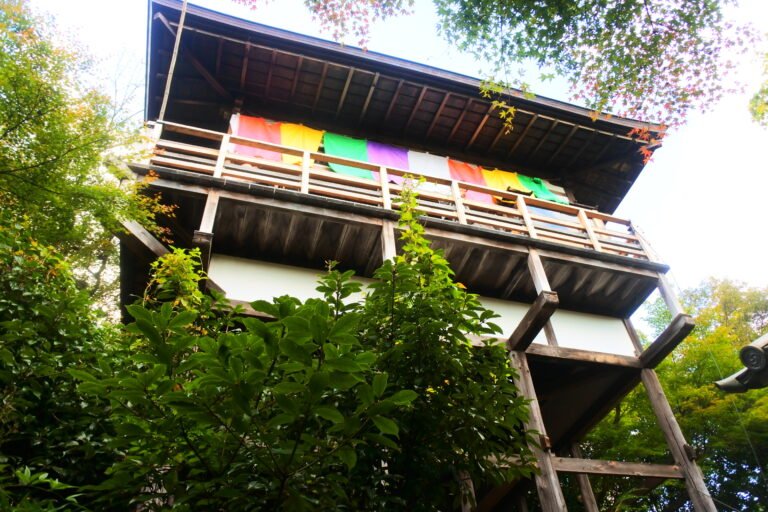
A true hidden gem. Daihikaku Senko-ji sits about 1+ km upstream from the south side of Togetsukyo. The Edo-period merchant Suminoe Ryo’i moved the temple here to mourn those who died building the Ōi River canal. The principal image is the Thousand-Armed Kannon (attributed to Genshin).
The guest hall “Daihikaku” clings to the rock face above the Ōi River and peers out over a superb panorama of Arashiyama’s colored hills. The path is a bit steep, but the crowds melt away and the short hike is its own reward—peace, nature, and space to breathe.
Fee: ¥400
Hours: 10:00–16:00
Access: (on foot from south side of Togetsukyo; signage on site)
⑱ Art (and a café view) at the Fukuda Art Museum
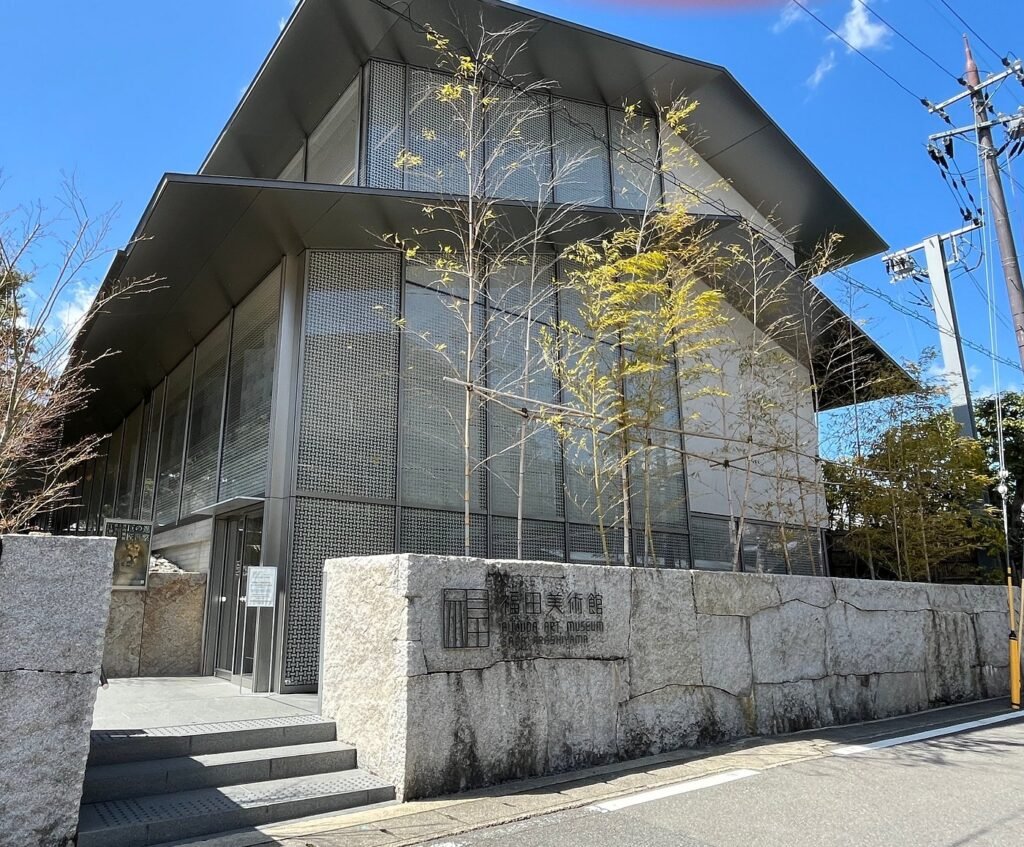
Holds ~2,000 works by major Japanese painters from the Edo period to modern times. The concept: even those unfamiliar with art will feel moved. The galleries evoke a storehouse, the corridor feels like a veranda, and the whole museum invites casual, joyful viewing—especially works from the Kyoto school.
There’s also the museum-users-only café “Pan to Espresso to Fukuda Art Museum,” famed for the best view of Togetsukyo—perfect for unwinding after the exhibits.
Hours: 10:00–17:00 (last entry 16:30). Closed for exhibit changes and New Year’s.
Fees: Adults ¥1,500 / HS ¥900 / ES–JHS ¥500 / Infants free
Site: fukuda-art-museum.jp/
Access: ~4 min walk from Randen Arashiyama Station
⑲ Soak away the day at a day-use hot spring
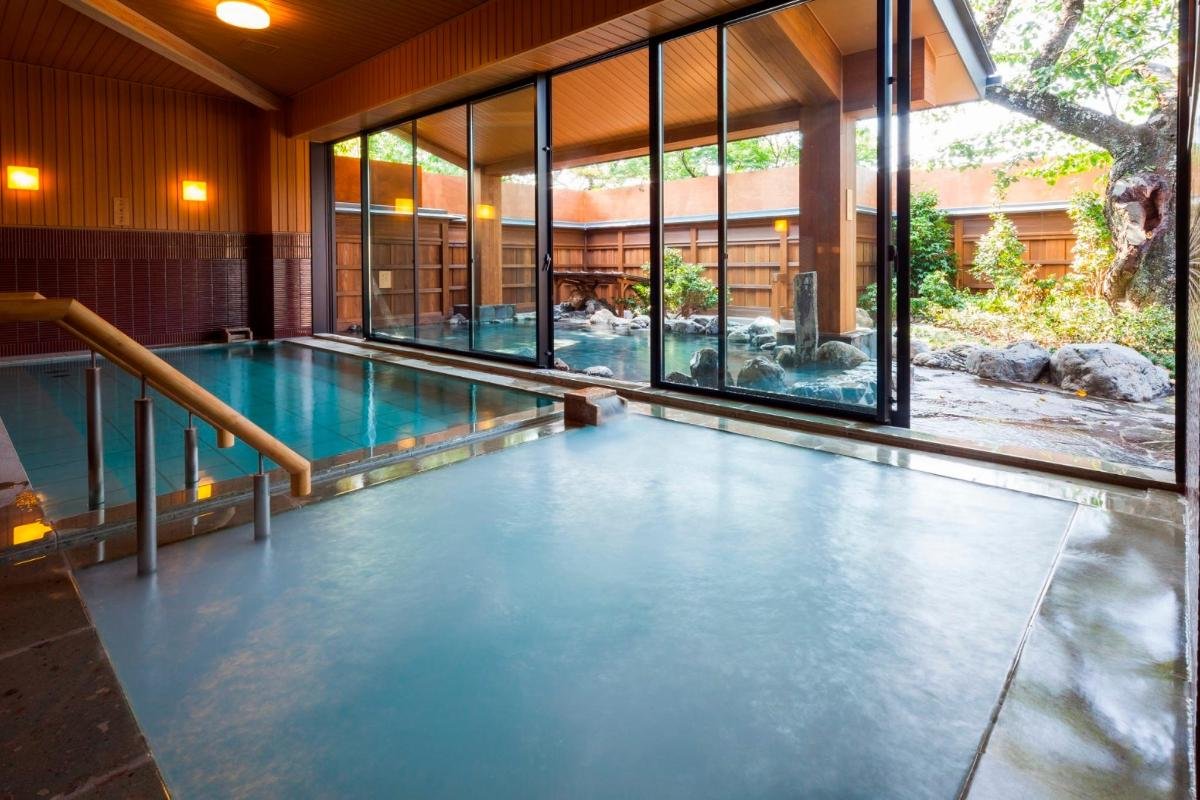
Arashiyama’s first day-use onsen, Fufu-no-Yu onsen, is known as a “beauty bath” for recovery, health, and skin benefits. There’s a rest area, manga corner, and shop. Towels + admission sets make hands-free visits easy—ideal for a summer freshen-up or to thaw out on a cold autumn/winter day.
Hours: 12:00–22:00 (last entry 21:30). No fixed closed day
Fees: From ¥1,100 weekdays / ¥1,300 weekends & holidays (middle school and up)
Site: booking.com/fu-fu-no-yu-onsen
Access: 1 min walk from Hankyu Arashiyama; ~10 min from Randen Arashiyama
⑳ Meet the locals at Arashiyama Monkey Park Iwatayama
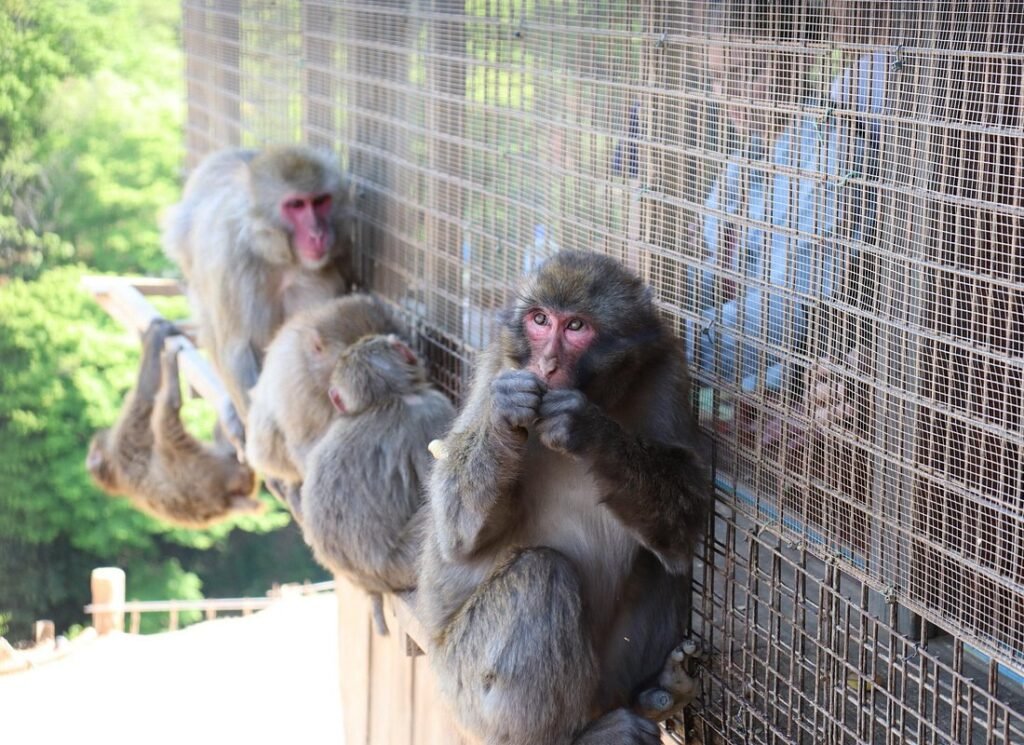
On a hill in Arashiyama you can observe wild Japanese macaques—a huge hit with visitors of all ages. As of 2024, about 120 monkeys live here naturally. At the summit rest house you can even feed them (from inside).
From the 160 m-high rest area, you get a full sweep of Kyoto City—on clear days, you can spot Kyoto Tower. There’s also a playground with a wonderfully long slide, bars, seesaws, and swings—great for families.
Hours: 9:00–16:00 (summit to 16:30). May close early if the monkeys head back to the mountain.
Fees: Adults (16+) ¥600 / Children (4–15) ¥300 / Under 3 free
Site: http://www.monkeypark.jp/index.html#eigyo
Access: ~7 min from Hankyu Arashiyama; ~10 min from Randen Arashiyama
Nearby options toward Sagano and beyond
The Sagano/Okusagano area to the north has autumn stunners like Nison-in, Jojakko-ji, and Gio-ji. Head south for Matsuo Taisha and Suzumushi-dera. These areas are usually less crowded than central Arashiyama—well worth a detour.
One-day model itinerary to enjoy Arashiyama to the fullest
Arashiyama’s busiest spots—Tenryu-ji, the bamboo path, Nagatsuji-dori, and Togetsukyo—are best tackled in the morning. Spend the afternoon where crowds thin out. Here’s a practical, real-world day plan.
① Bamboo path + Nonomiya Shrine first
Time: Crack of dawn – 8:00 / Duration: 30–60 min
Arrive by your chosen route, head to the east entrance of the bamboo path from Nagatsuji-dori, and walk to Nonomiya Shrine. If it’s already jammed, switch to the Bamboo Grove Walking Path. The earlier the better.
↓
② A relaxed breakfast
Time: 8:00–8:40 / Duration: ~30–40 min
Try Pan to Espresso to Arashiyama Teien near Tenryu-ji. Or grab bread there and coffee from % Arabica to enjoy with a Togetsukyo view.
↓
③ Tenryu-ji
Time: 8:40–10:00 / Duration: ~60–80 min
Retrace from the bamboo path to Nagatsuji-dori, then south to Tenryu-ji. Mornings are quieter—perfect for unhurried viewing.
↓
④ Kimono Forest photos
Time: 10:00–10:15 / Duration: 10–15 min
Before crowds swell, cross to Randen Arashiyama Station opposite Tenryu-ji for a quick photo stop.
↓
⑤ Explore around Togetsukyo & scout Nagatsuji-dori
Time: 10:15–11:00 / Duration: 30–45 min
Enjoy the scenery, then note which snack shops and lunch spots you’ll hit (most open at 11:00).
↓
⑥ Early lunch / street-food start
Time: 11:00–12:00 / Duration: ~60 min
When doors open, go straight to your target restaurant or food stalls.
↓
⑦ Arashiyama Yusai-tei for autumn reflections
Time: 12:00–13:00 / Duration: ~60 min
With a reservation, head to Yusai-tei. In my experience, around noon can be relatively calm.
↓
⑧ Beat the crowds by boat or rickshaw
Time: 13:00–14:00 / Duration: ~60 min
Afternoons get intense. Slip into a rowboat/yakatabune or take a rickshaw tour to glide past the bustle.
↓
⑨ Big views at Arashiyama Park (Kameyama) or Senko-ji
Time: 14:00–15:00 / Duration: ~60 min
Choose the lookout or the hike to Senko-ji for hush and scenery.
↓
⑩ Resume temple/shrine visits (e.g., Hogon-in)
Time: 15:00–16:00 / Duration: ~60 min
Add Hogon-in or nearby Nison-in, Fukuda Art Museum + café, street-food & souvenirs on Nagatsuji-dori, or Monkey Park—mix to taste.
↓
⑪ Final stroll & snack run
Time: 16:00–17:00 / Duration: ~60 min
Pick up last bites or souvenirs, or savor one more museum/café moment.
↓
⑫ Sagano Scenic Railway to Kameoka → Kyoto Station
Time: 17:00–18:30 / Duration: ~90 min
Cap the day with the 17:13 departure from Torokko Arashiyama, ride to Kameoka, then continue to Kyoto Station (or back to your hotel). If it’s foliage season, consider an evening illumination run for a magical finale.
Where to stay in Arashiyama — hotel picks for every budget
Arashiyama sleeps beautifully. River haze at dawn, mountains folding into the sky, bamboo creaking like a metronome. Here’s a tight, no-nonsense shortlist—from big splurges to easy wins—so you can pick a base that matches your vibe (and wallet).
Splurge (iconic stays)
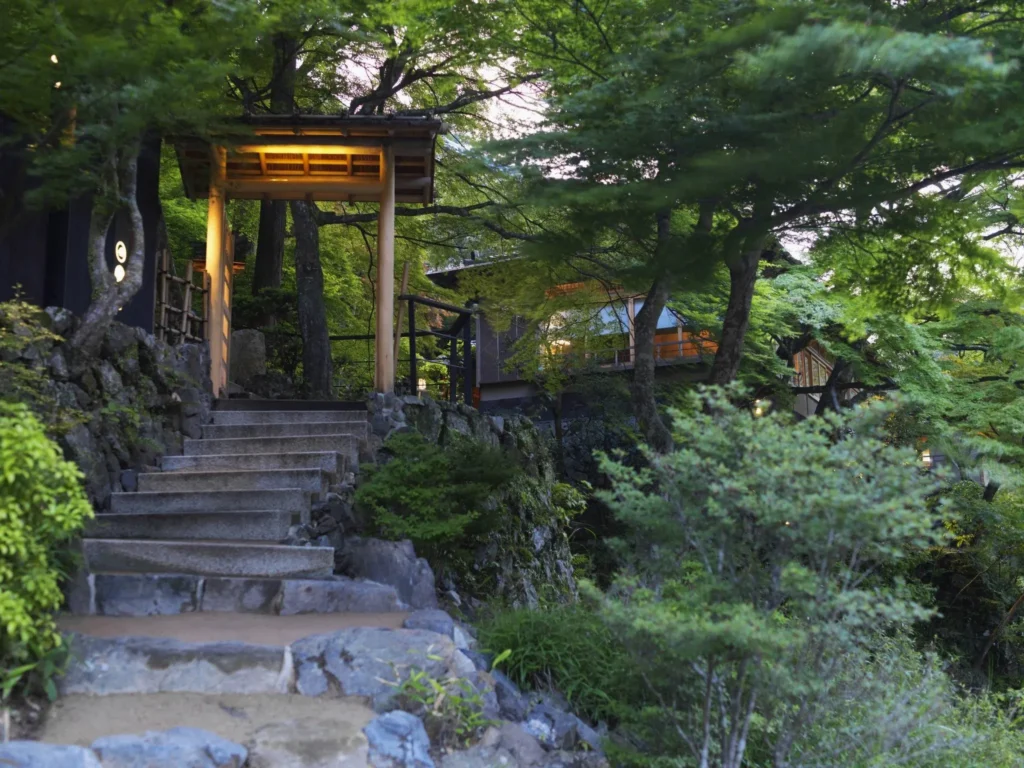
HOSHINOYA Kyoto (luxury ryokan, boat access only)
Private boat from Togetsukyo, rooms cantilevered over the river, hushed gardens, seasonal kaiseki, spa programs, even a private yakata boat experience. It’s the “old Kyoto dream” fully produced. Check-in by river, check out blissed. Book here
Suiran, a Luxury Collection Hotel, Kyoto (5★ hideaway)
A low-rise estate tucked beside the jade-green Hozu River—some rooms with open-air baths, on-site spa, and gardens that feel like a private park. Steps to Tenryu-ji and the Bamboo Grove; serenity after the crowds. Book here
MUNI KYOTO (design-forward, by Togetsukyo Bridge)
21 generous rooms (about 50–70㎡), quietly plush, with a gastronomic restaurant and café; wake up, cross the street, and Arashiyama is your front yard. Location for walkers, aesthetics for minimalists.
Upper-mid (classic ryokan & roomy boutiques)
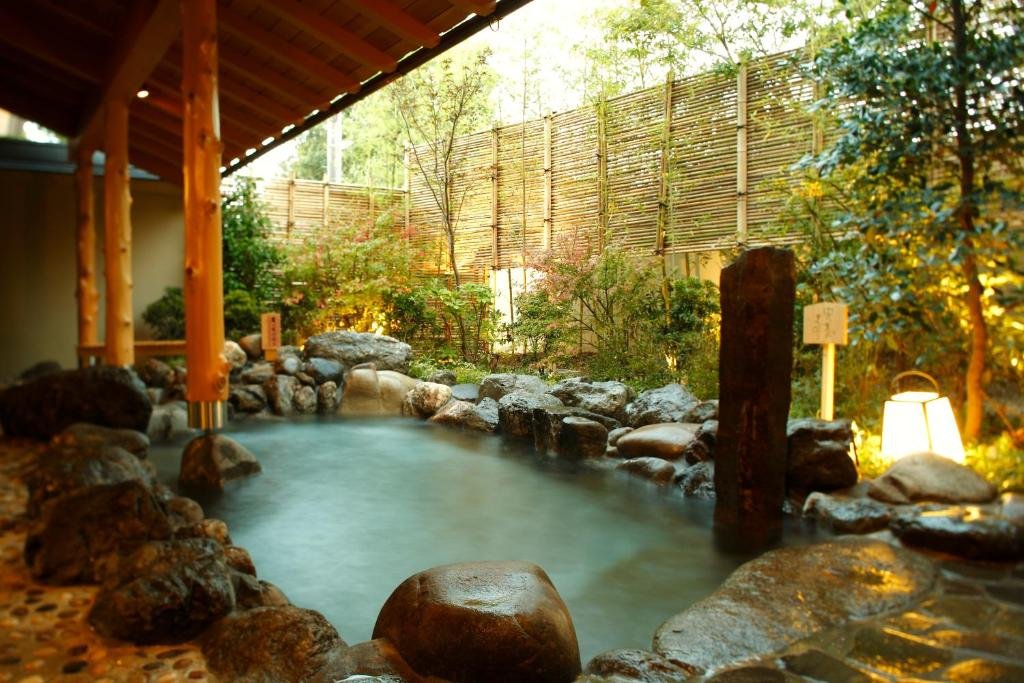
Arashiyama Onsen Kadenshō (ryokan with multiple private baths)
Right by Hankyu Arashiyama Station. Public onsen plus reservable private baths; dinner-inclusive plans typically start around the low ¥20,000s per person. Great “first ryokan” if you want hot springs + easy access.
Ranzan (calm, walkable, good value for space)
Understated rooms, garden paths, and a handy address near the river, park, and bamboo path. A solid middle lane when you want room to breathe without 5★ rates.
The GrandWest Arashiyama (suite-style, family-friendly)
Ten suites, many with kitchenettes; sleeps families comfortably. Five minutes to Hankyu Arashiyama, quiet at night, plenty of space to spread out snacks and map the next day.
Budget (simple, clean, near the action)
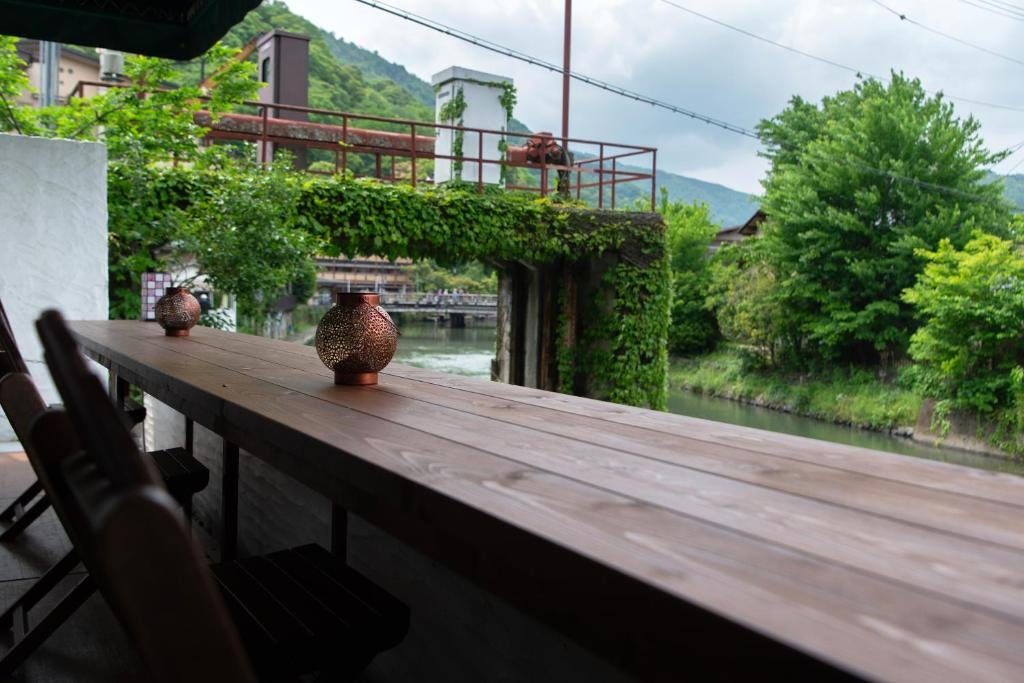
Hotel Arashiyama (no-frills, river views in some rooms)
Small, practical, with free bikes and easy walking to the bridge; a dependable base when you’ll be out all day.
Guesthouse Kyoto Arashiyama / Saga Arashiyama Guesthouse (wallet-friendly, local feel)
Basic rooms, shared facilities in some categories, and good proximity to Nonomiya Shrine/Bamboo Grove—save your yen for sweets and souvenirs.
Hanaikada (small onsen ryokan by the bridge; good off-season value)
Traditional rooms, rooftop/open-air baths (note: not every bath uses natural hot spring water), and that “right-at-Togetsukyo” location—handy when you want to beat morning crowds.
- Nagoya rainy day with kids in 2026 (Cool Indoor Things to Do )
- Best Gachapon in Tokyo (2026): 20 Places to Find Capsule Toys
- All Japanese KitKat Flavours List: The Ultimate Japan KitKat Guide
- Sapporo rainy day with kids (2026): 7 Cool Indoor Things to Do
- What To Do In Arashiyama With Kids: A Realistic One-Day Family Itinerary