

Travel photojournalist and landscape hunter with experience across 89 countries, all 47 prefectures of Japan, 30 remote islands, and 60+ mountains. I focus on overlooked landscapes, mossy hidden corners, and places beyond the usual guidebooks — sharing photography and stories that inspire people to travel.
Gion is the Kyoto many of us picture before we arrive: narrow lanes, wooden machiya houses, glowing lanterns, quiet shrines, and the occasional glimpse of a geiko or maiko hurrying to an evening appointment. But this historic district is not simply somewhere to photograph and leave. There are temples to visit, traditional streets to wander, small shops to browse, and plenty of good places to stop for matcha or dinner. Here is what to do in Gion Kyoto, including the famous sights and a few quieter corners worth slowing down for.
Exploring Gion and Kyoto? Read these next
Table of Contents
What to Do in Gion Kyoto: Best Places To Visit
Kiyomizu-dera Temple: Kyoto’s Classic Temple View
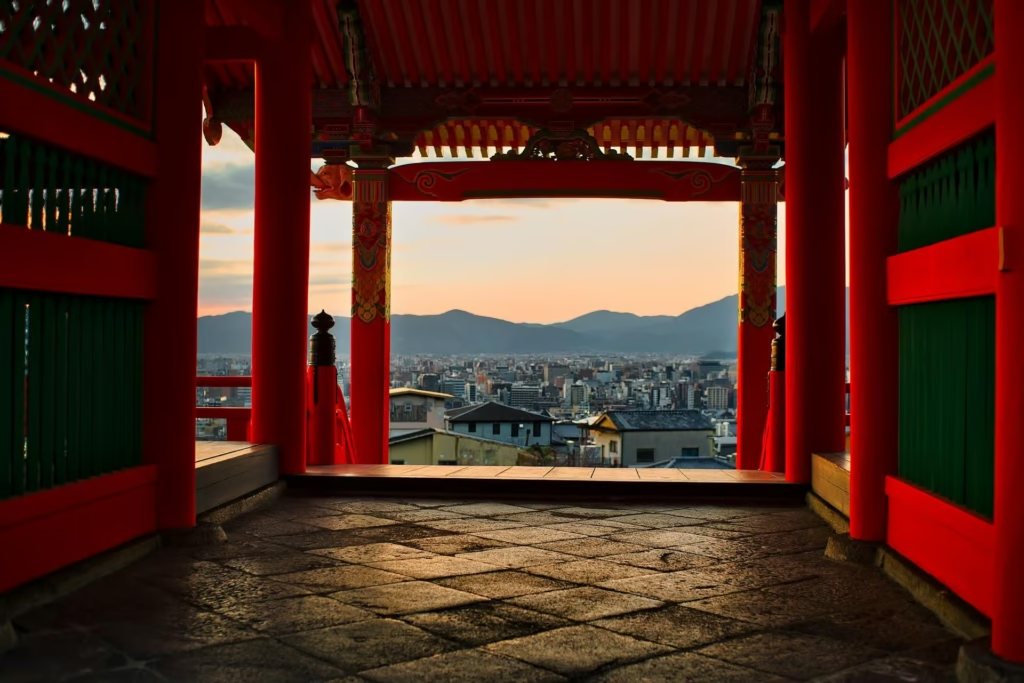
Kiyomizu-dera Temple is one of Kyoto’s most famous landmarks, and for many visitors, it is exactly the kind of place they picture before arriving in the city. The large wooden temple buildings, the hillside setting, and the views over Kyoto make it one of the essential stops in Higashiyama.
The temple has a history of around 400 years and has been repaired and restored many times. Thanks to careful restoration work, it still keeps much of its original beauty and atmosphere. The scenery also changes beautifully with the seasons, from cherry blossoms in spring to autumn leaves later in the year.
If you have never been to Kyoto before, Kiyomizu-dera is worth including in your itinerary. It is also a lovely place to revisit in a different season, because the mood changes so much throughout the year.
- Address: 1-294 Kiyomizu, Higashiyama-ku, Kyoto City, Kyoto Prefecture
- Access: 10-minute walk from Gojozaka bus stop
- Opening hours: 6:00 AM–6:00 PM, until 9:00 PM during some events
- Closed: None
- Admission: Adults 400 yen; elementary and junior high school students 200 yen
Sanjusangen-do Temple: 1,001 Kannon Statues
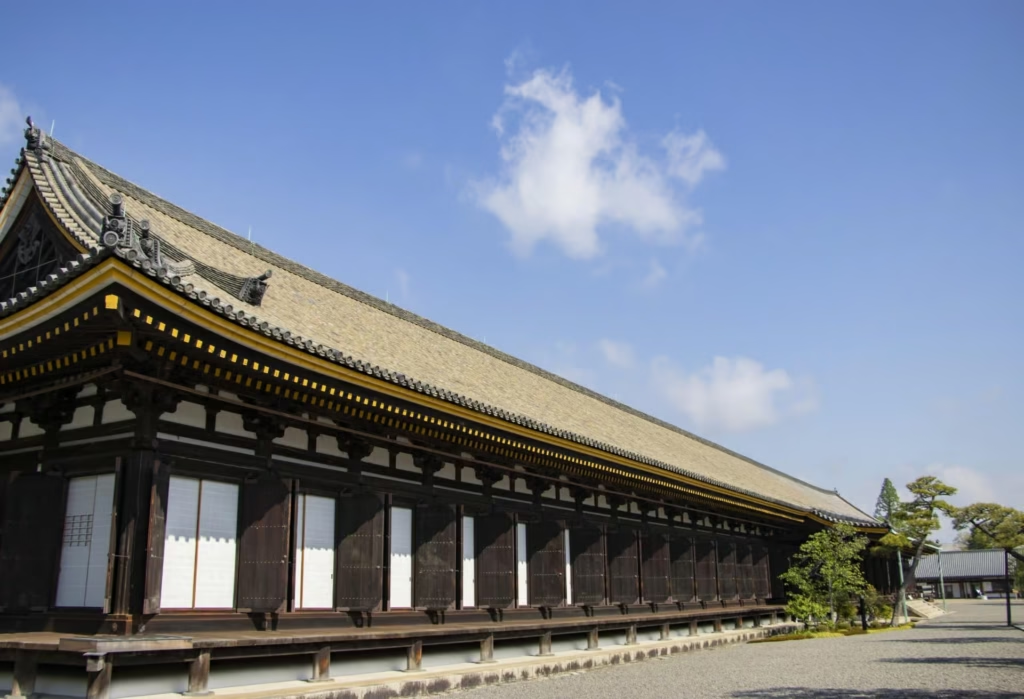
Sanjusangen-do Temple is one of Kyoto’s most memorable temple experiences. The main highlight is the long hall filled with 1,001 Kannon statues, each with a slightly different face.
There is a well-known saying that among the statues, you may find one that resembles yourself or someone you know. It gives visitors a reason to slow down and look more carefully, rather than just walking through quickly.
This is a good stop if you enjoy quiet, atmospheric places with a strong sense of history. It also works well with nearby attractions such as Kyoto National Museum and Kiyomizu-dera.
- Address: 657 Sanjusangen-do-mawari, Higashiyama-ku, Kyoto City, Kyoto Prefecture
- Access: Immediately accessible from Sanjusangen-do Museum bus stop
- Opening hours: 8:30 AM–5:00 PM; 9:00 AM–4:00 PM from November 16 to March 31
- Closed: None
- Admission: University students and above 600 yen; junior and senior high school students 400 yen; children 300 yen
Fushimi Inari Taisha: Kyoto’s Famous Red Torii Gates
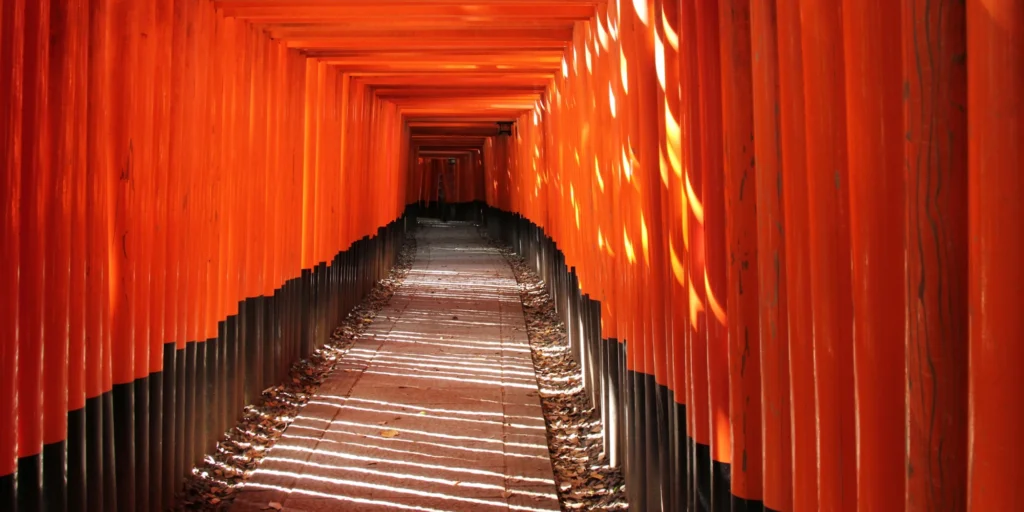
Fushimi Inari Taisha is one of Kyoto’s most famous shrines and one of the city’s best-known photo spots. The long rows of vermilion torii gates create a striking path up the mountain and make this one of the most recognizable places in Japan.
The shrine has long been worshipped as a place for blessings related to business prosperity and abundant harvests. Visitors also come to pray for safe childbirth, recovery from illness, and academic success.
You can visit the lower shrine area quite quickly, but if you have more time and energy, it is worth walking farther up the mountain. The higher you go, the quieter it usually becomes.
- Address: 68 Fukakusa Yabunouchi-cho, Fushimi-ku, Kyoto City, Kyoto Prefecture
- Access: 7-minute walk from Fushimi Inari Taisha bus stop
- Opening hours: 24 hours
- Closed: None
- Admission: Free
Maruyama Park: Kyoto’s Oldest Park
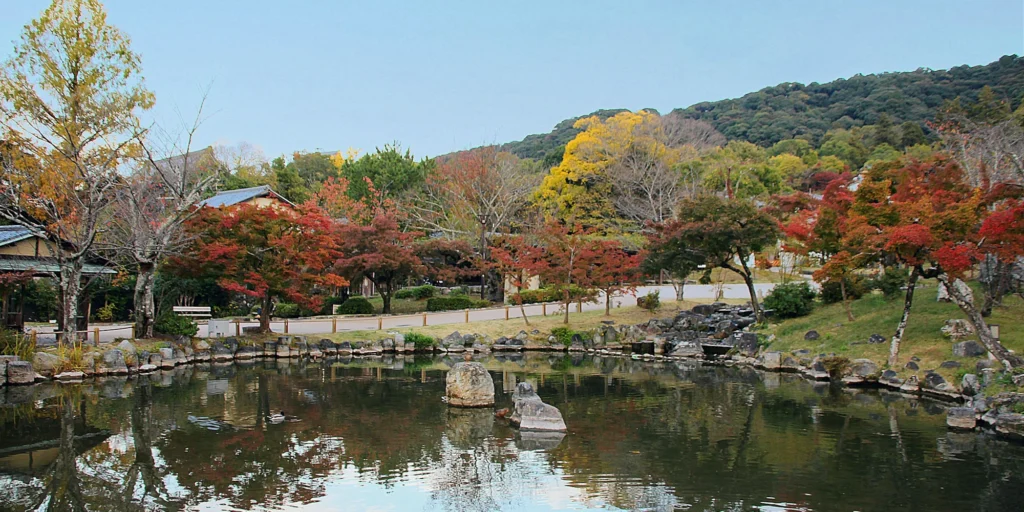
Maruyama Park is Kyoto’s oldest park and a relaxing place to visit while exploring Gion and Higashiyama. It is especially famous in spring, when its large weeping cherry tree becomes one of the area’s main seasonal highlights.
During the cherry blossom season, the park is lively during the day and beautifully atmospheric at night when the blossoms are illuminated. The current weeping cherry tree is the second generation after the original died in 1947, but it is still an impressive sight.
If you are visiting Gion in spring, Maruyama Park is an easy and worthwhile stop, especially before or after Yasaka Shrine.
- Address: Maruyama-cho, Higashiyama-ku, Kyoto City, Kyoto Prefecture
- Access: Immediately accessible from Gion bus stop
- Opening hours: 24 hours
- Closed: None
- Admission: Free
Hanamikoji Street: Traditional Gion Atmosphere
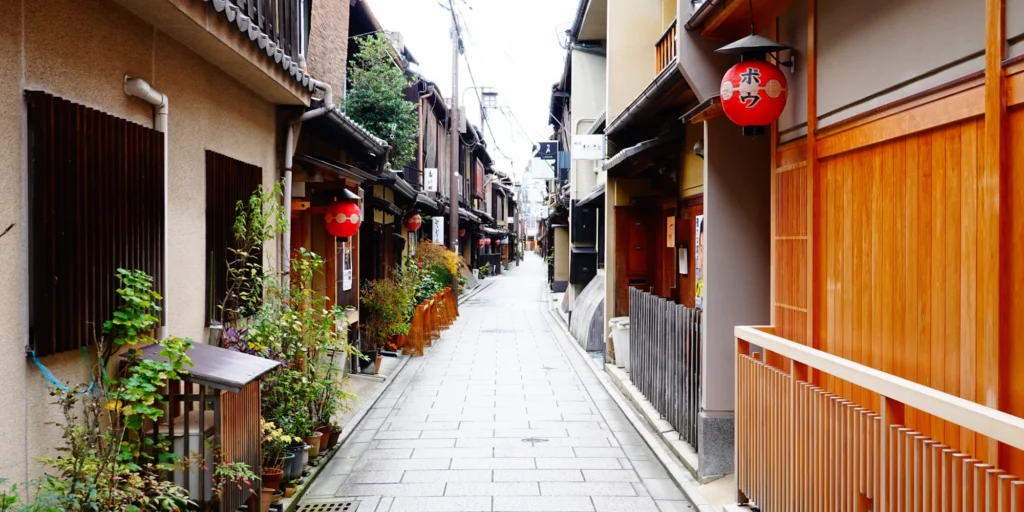
Hanamikoji Street is one of the most atmospheric streets in Gion. It is lined with traditional teahouses, wooden facades, red lattice windows, and stone paving, giving visitors a strong sense of old Kyoto.
This is a lovely area for a slow walk, especially in the late afternoon or early evening. You may see maiko or geiko heading to appointments, but it is important to remember that they are working. Do not stop them, follow them, or ask for photos. Just enjoy the atmosphere respectfully.
Hanamikoji is also close to many restaurants and teahouses, so it is easy to combine with dinner in Gion.
- Address: Gionmachi Minamigawa, Higashiyama-ku, Kyoto City, Kyoto Prefecture
- Access: Immediately accessible from Gion bus stop
- Opening hours: Varies by store
- Closed: Varies by store
Kodai-ji Temple: Gardens and History Near Gion
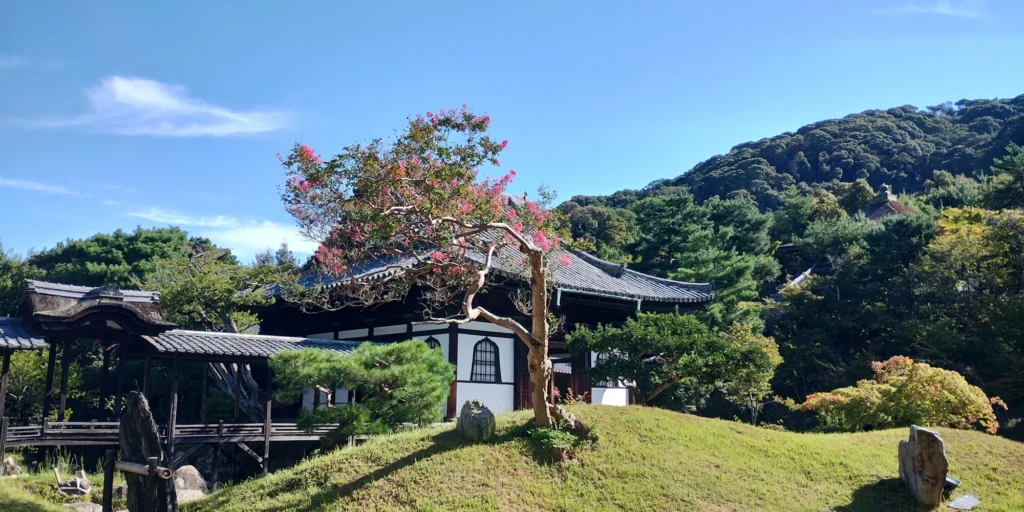
Kodai-ji Temple is closely connected with Nene, the principal wife of Toyotomi Hideyoshi. It is a beautiful temple to visit if you want a quieter historic stop near Gion and Higashiyama.
The temple became an impressive complex with the support of Tokugawa Ieyasu, although many buildings were later lost to fire. Several important structures remain, including the founder’s hall, mausoleum, tea houses, main gate, and moon-viewing platform.
The gardens are one of the main reasons to visit. They preserve much of the atmosphere of the Azuchi-Momoyama period and are especially pleasant if you enjoy Kyoto’s more peaceful temple landscapes.
- Address: Kodaiji Shimogawara-cho, Higashiyama-ku, Kyoto City, Kyoto Prefecture
- Access: 7-minute walk from Higashiyama Yasui bus stop
- Opening hours: 9:00 AM–5:00 PM
- Closed: None
- Admission: Adults 600 yen; junior and senior high school students 250 yen
Pontocho: A Narrow Dining Street by the Kamo River
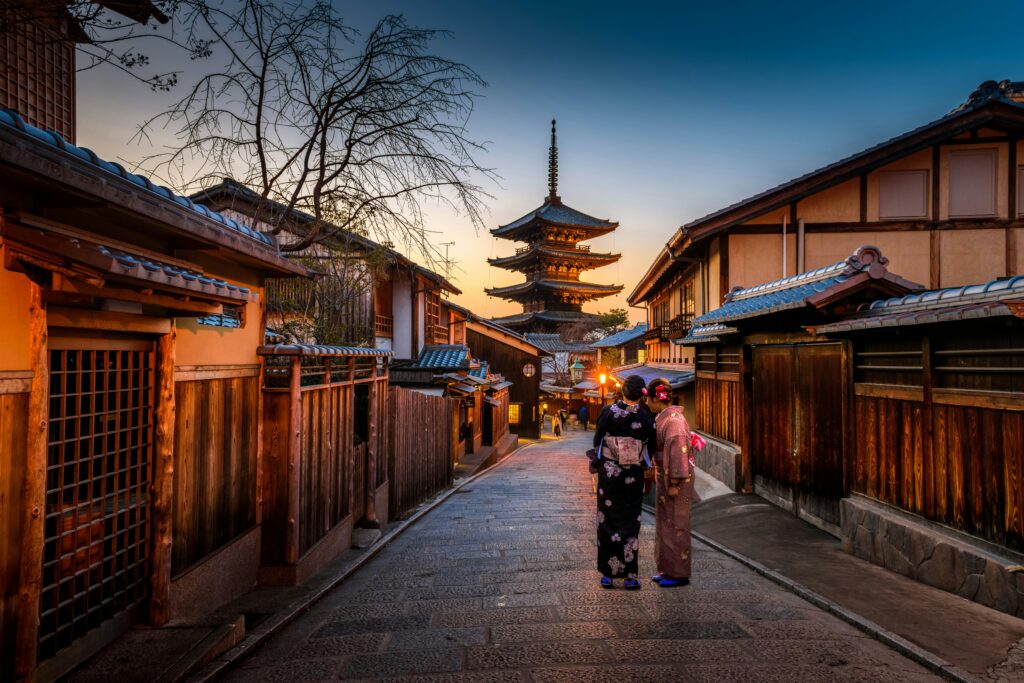
Pontocho is a narrow 500-meter street running along the Kamo River. It is one of Kyoto’s traditional entertainment districts and a great place to visit in the evening for food, drinks, and atmosphere.
The street has Japanese restaurants, bars, traditional sweets shops, cafes, and international dining options. It is a good choice if you want dinner somewhere with a strong Kyoto feeling, especially after exploring Gion or Kawaramachi.
Pontocho is also known as an area where geiko and maiko may pass through, so the same respectful approach applies here: look quietly, do not interrupt, and let people do their work.
- Address: Wakamatsu-cho, Nakagyo-ku, Kyoto City, Kyoto Prefecture
- Access: 5-minute walk from Sanjo Station on the Keihan Main Line
- Opening hours: Varies by store
- Closed: Varies by store
Kyoto National Museum of Modern Art: A Good Break from Temples

If you want a break from temples, shrines, and historic streets, the Kyoto National Museum of Modern Art is a good place to add to your itinerary. It regularly holds exhibitions of modern and contemporary art, with a focus on works from Kyoto and western Japan.
The museum also has a shop and cafe, so it works well as a slower indoor stop, especially on rainy days or during very hot weather. It is located in the Okazaki area, close to Heian Shrine and several other cultural attractions.
- Address: 26-1 Okazaki Enshoji-cho, Sakyo-ku, Kyoto City, Kyoto Prefecture
- Access: 5-minute walk from Okazaki Park/Museum/Heian Shrine bus stop
- Opening hours: 9:30 AM–5:00 PM
- Closed: Mondays, or the following day if Monday is a public holiday; New Year holidays
- Admission: Varies by exhibition
Honnoji Temple: A Historic Site Connected to Oda Nobunaga
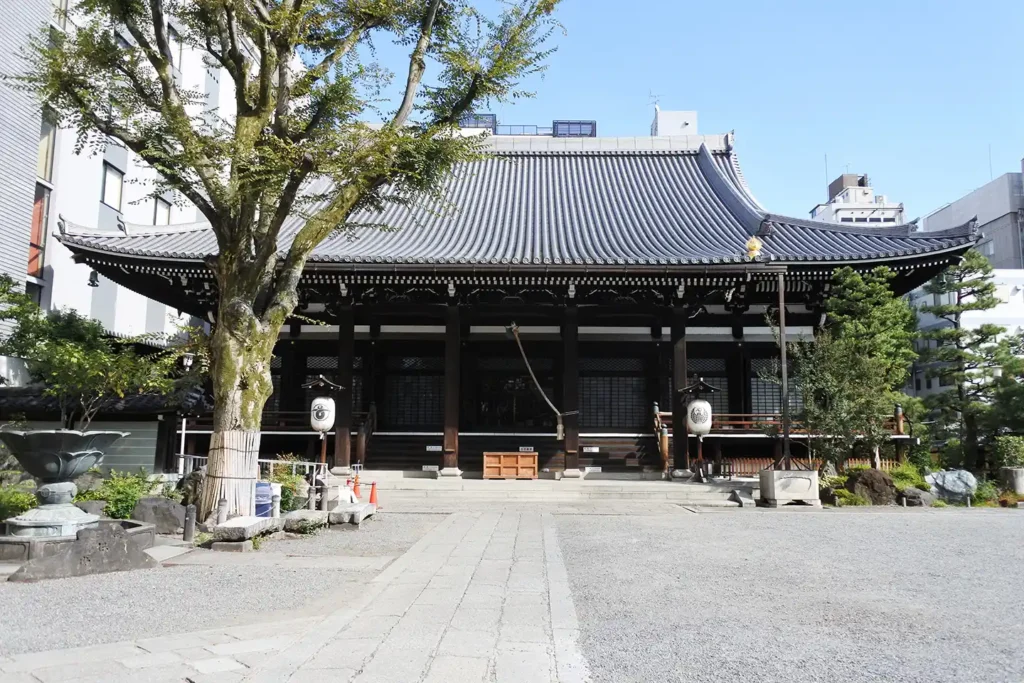
Honnoji Temple is best known for its connection to Oda Nobunaga and the Honnoji Incident. Records show that Nobunaga stayed at Honnoji several times during his life, including the time of the famous incident.
The temple can be visited free of charge and is easy to reach from Kyoto City Hall Station. It is a worthwhile stop if you are interested in Japanese history, especially the Sengoku period.
It is not as visually dramatic as some of Kyoto’s larger temples, but the historical connection makes it interesting if you enjoy places with a strong story behind them.
- Address: 522 Shimohonnoji-mae-cho, Teramachi-dori Oike-sagaru, Nakagyo-ku, Kyoto City, Kyoto Prefecture
- Access: Right next to Kyoto City Hall Station
- Opening hours: 6:00 AM–5:00 PM
- Closed: None
- Admission: Free
Kyoto City Zoo: A Family-Friendly Stop in Okazaki
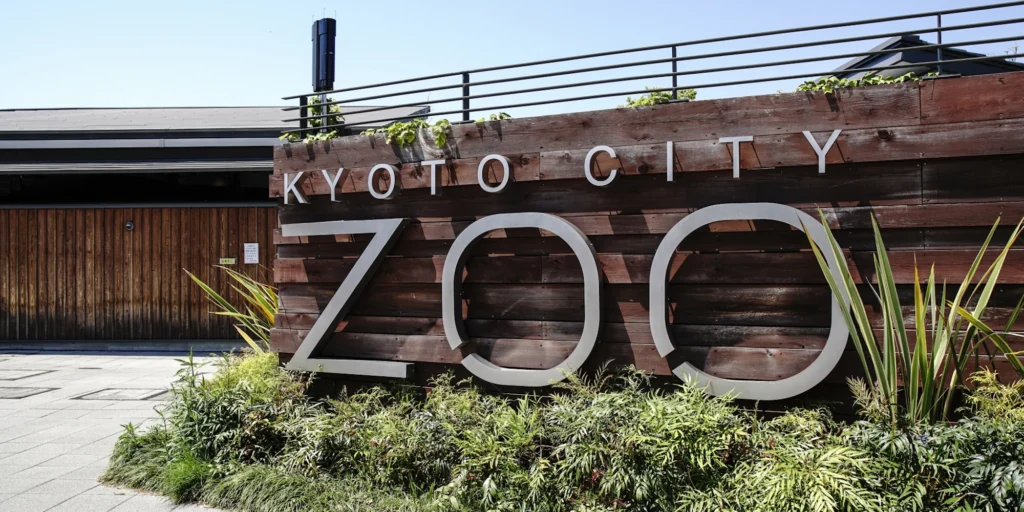
Kyoto City Zoo is a good option if you are visiting Kyoto with children or simply want a relaxed break from temples and museums. It is located in the Okazaki area, close to Heian Shrine and several cultural sites.
The zoo is home to animals such as Indian flying foxes, Cape hyraxes, mandrills, guinea pigs, and fennec foxes. It is not the most traditional Kyoto attraction, but it can be a useful and enjoyable stop for families, especially if children need something lighter between historic sights.
- Address: Okazaki Park, Okazaki Hoshoji-cho, Sakyo-ku, Kyoto City, Kyoto Prefecture
- Access: 5-minute walk from Keage Subway Station
- Opening hours: 9:00 AM–4:30 PM; until 4:00 PM from December to February
- Closed: Mondays, or the following weekday if Monday is a public holiday; New Year holidays
- Admission: Adults 750 yen; free for junior high school students and younger
Heian Shrine: A Striking Vermilion Shrine in Kyoto
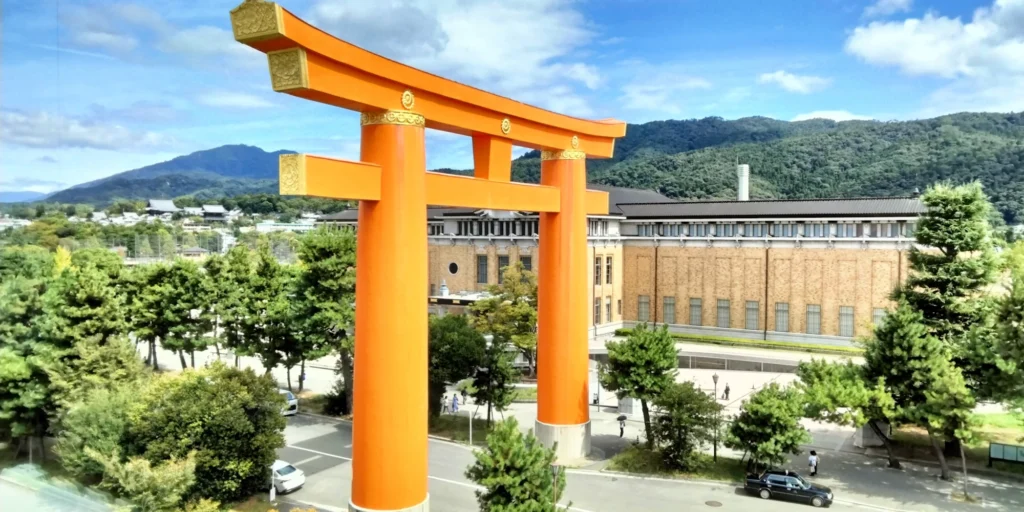
Heian Shrine was founded in 1895 to commemorate the 1,100th anniversary of the capital’s move to Heian-kyo, now Kyoto. It enshrines Emperor Kanmu, the 50th emperor of Japan.
The shrine is known for its grand buildings and strong vermilion-and-green color scheme. The Daigokuden, Otenmon Gate, Soryuro, Byakkoro, surrounding corridors, and other structures create a very impressive scene.
The main shrine grounds are free to visit, while the shrine garden usually requires an admission fee. The garden is opened to the public for free on June 1 and September 19, so those dates can be useful to know if they fit your trip.
- Address: Okazaki Nishitennocho, Sakyo-ku, Kyoto City, Kyoto Prefecture
- Access: Immediately accessible from Okazaki Park, Museum of Art, and Heian Shrine bus stop
- Opening hours: 8:30 AM–5:30 PM
- Closed: None
- Admission: Free; shrine garden 600 yen
Keage Incline: Old Railway Tracks and Seasonal Scenery
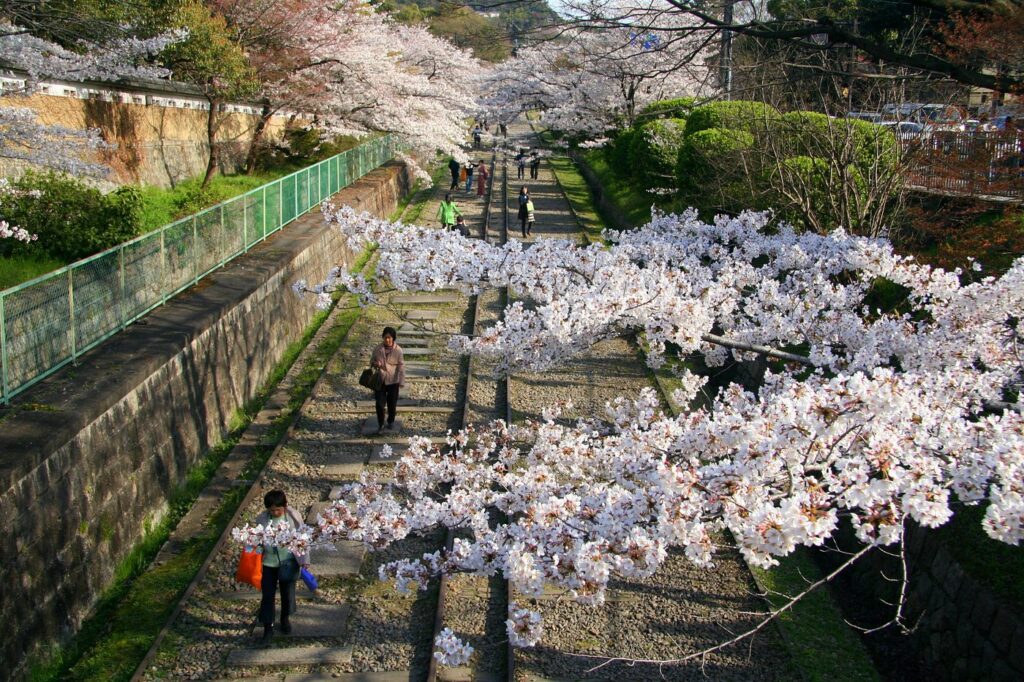
Keage Incline is a disused railway line near Nanzenji Temple. The 582-meter track was used from 1891 to 1948 and is now designated as a cultural property of Kyoto City.
Today, it is especially popular in spring, when cherry trees bloom along the old railway tracks. The combination of tracks, trees, and gentle slope makes it one of Kyoto’s most photogenic walking spots.
It is also pleasant outside cherry blossom season, particularly if you are already visiting Nanzenji, Eikan-do, or the Okazaki area.
- Address: Nanzenji Fukuchi-cho, Sakyo-ku, Kyoto City, Kyoto Prefecture
- Access: Right next to Keage Subway Station
- Opening hours: 24 hours
- Closed: None
Nishiki Market: Kyoto’s Food Market Street
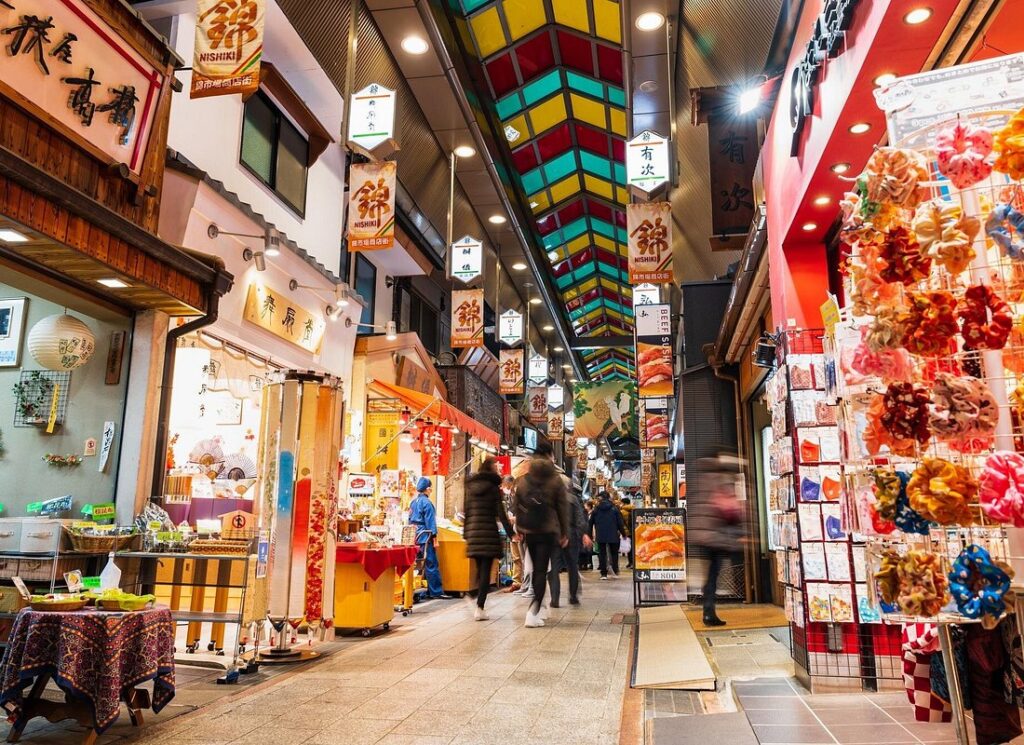
Nishiki Market is one of the best places in Kyoto to explore local food. The shopping street stretches for about 390 meters and is lined with food stalls, small shops, local ingredients, sweets, pickles, seafood, and Kyoto specialties.
The market has around 400 years of history and is often called “Kyoto’s kitchen.” It is a good place to sample different foods in one compact area, especially if you enjoy casual grazing rather than sitting down for a full meal.
Opening hours vary by shop, and it can get crowded, so visiting earlier in the day is usually more comfortable.
- Address: 609 Nishidaimonji-cho, Tomikoji-dori Shijo-agaru, Nakagyo-ku, Kyoto City, Kyoto Prefecture
- Access: 2-minute walk from Ichiba Takakura bus stop, in front of Daimaru Department Store
- Opening hours: Varies by store
- Closed: Varies by store
Kyoto National Museum: Kyoto’s Major History and Art Museum
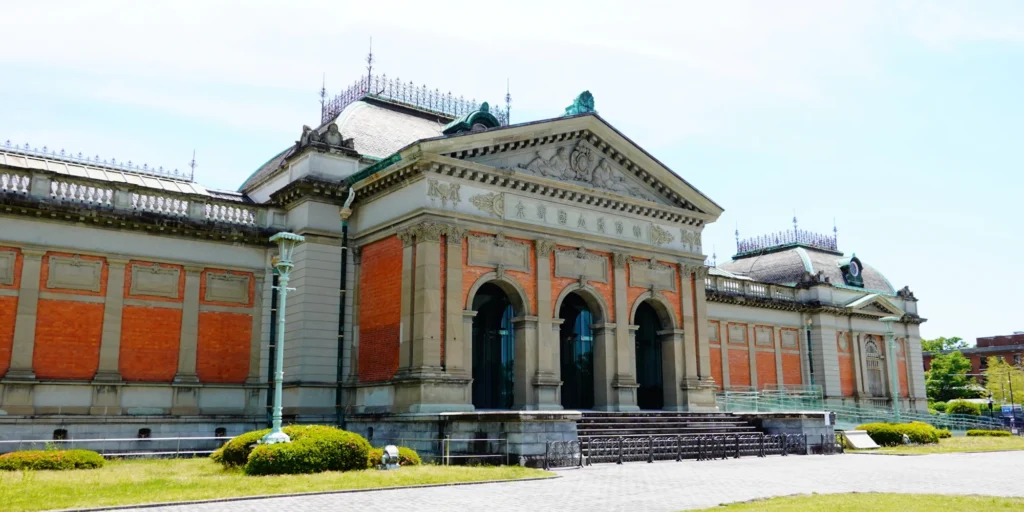
Kyoto National Museum opened in 1897 and has more than 120 years of history. It is one of the city’s most important cultural museums and a strong choice if you want to understand Kyoto beyond temples and street scenery.
The museum has different periods for special exhibitions, collection displays, and garden-only openings. Because opening hours and admission fees can vary depending on the exhibition, it is best to check the official website before you go.
There are also outdoor exhibits on the grounds, so leave a little extra time to look around the museum area itself.
- Address: 527 Chaya-cho, Higashiyama-ku, Kyoto City, Kyoto Prefecture
- Access: Immediately accessible from Museum/Sanjusangen-do bus stop
- Opening hours: Varies by exhibition and period
- Closed: Mondays, or the following day if Monday is a public holiday; New Year holidays
- Admission: Varies by exhibition and period
Zenrinji Eikan-do Temple: A Famous Autumn Leaves Spot
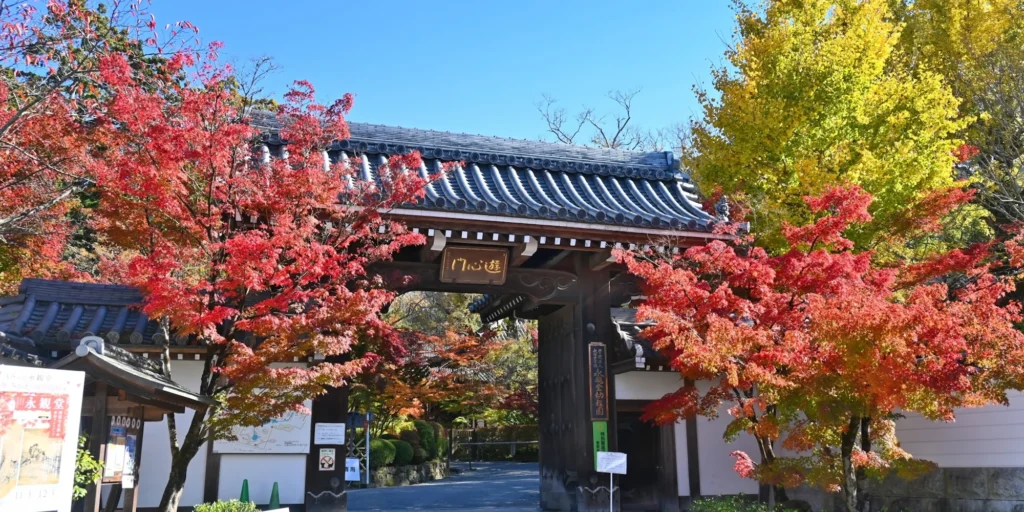
Zenrinji Eikan-do Temple is one of Kyoto’s most famous places for autumn leaves. It is the head temple of the Jodo-shu Seizan Zenrinji sect, and its history dates back to 853.
Over the centuries, the temple has experienced fires, earthquakes, and other disasters, but it has been restored and expanded into its present form. While autumn is the most famous season to visit, the temple is also interesting for its long history and architecture.
If you are visiting during fall foliage season, this is one of the classic Kyoto spots to consider. It can be busy, but the scenery is beautiful enough to justify the attention.
- Address: 48 Eikando-cho, Sakyo-ku, Kyoto City, Kyoto Prefecture
- Access: 3-minute walk from Nanzenji Eikando-michi bus stop
- Opening hours: 9:00 AM–5:00 PM
- Closed: None
- Admission: Adults 600 yen; elementary, junior high, and high school students 400 yen
Yasui Konpira Shrine: For Cutting Bad Ties and Finding Good Ones
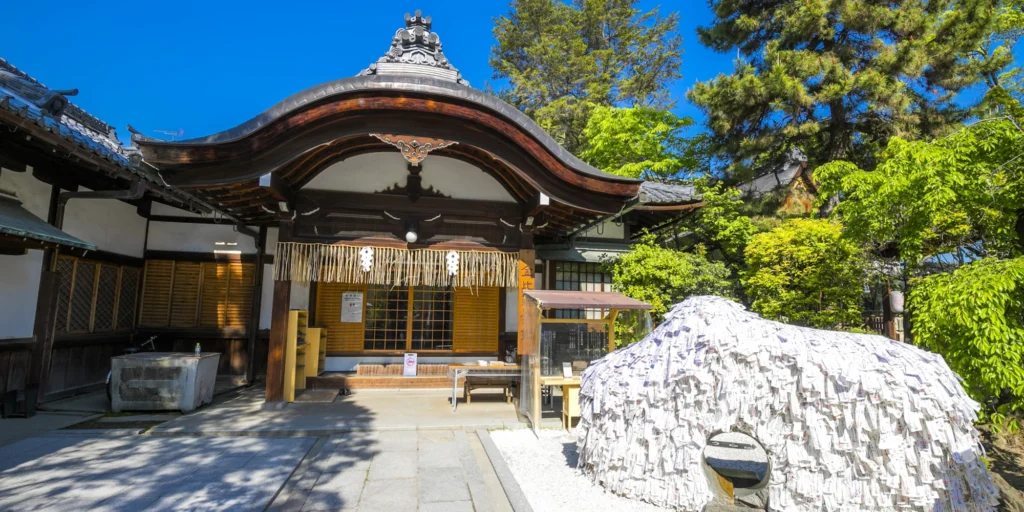
Yasui Konpira Shrine is often discussed as a shrine connected with relationships, especially the idea of cutting bad ties and forming better ones. Many visitors come here to pray for freedom from unhealthy relationships, difficult situations, or negative patterns.
The shrine is also associated with blessings for finding love and good connections, so it is not only about endings. Still, because it has such a strong reputation, many people approach it with a serious mindset.
It is close to Gion and Higashiyama, making it easy to include during a walk through the area.
- Address: 70 Shimobentencho, Higashiyama-ku, Kyoto City, Kyoto Prefecture
- Access: 1-minute walk from Higashiyama Yasui bus stop
- Opening hours: 24 hours
- Closed: None
- Admission: Free
Kyoto Tower: Modern Views by Kyoto Station
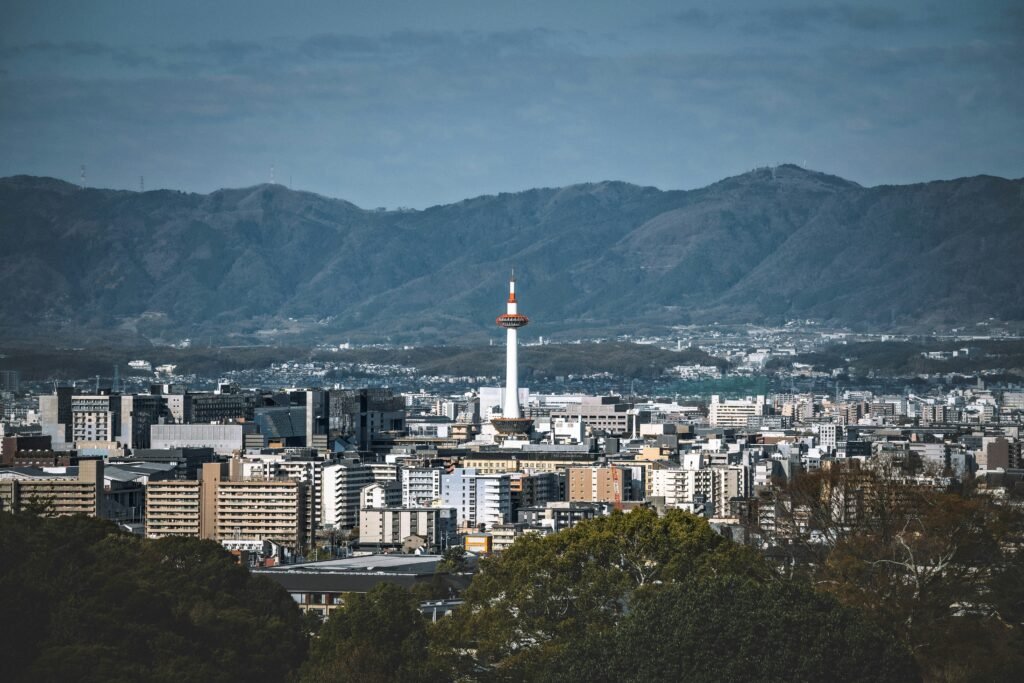
Kyoto Tower is one of the city’s most recognizable modern landmarks. Located close to JR Kyoto Station, it is often one of the first major sights visitors see when arriving by Shinkansen.
The tower has a 360-degree observation deck, sky lounge, hotel, and restaurants. The observation deck is the main reason to visit, especially if you want a view over Kyoto and a better sense of how the city is laid out.
It is an easy stop at the beginning or end of a Kyoto trip, especially if you are staying near the station or waiting for a train.
- Address: 721-1 Higashi-Shiokoji-cho, Shichijo-sagaru, Karasuma-dori, Shimogyo-ku, Kyoto City, Kyoto Prefecture
- Access: 2-minute walk from JR Kyoto Station
- Opening hours: 9:00 AM–9:00 PM
- Closed: None
- Admission: Adults 900 yen; high school students 700 yen; elementary and junior high school students 600 yen; infants 200 yen
Philosopher’s Path: A Quiet Walk with Cafes and Seasonal Views
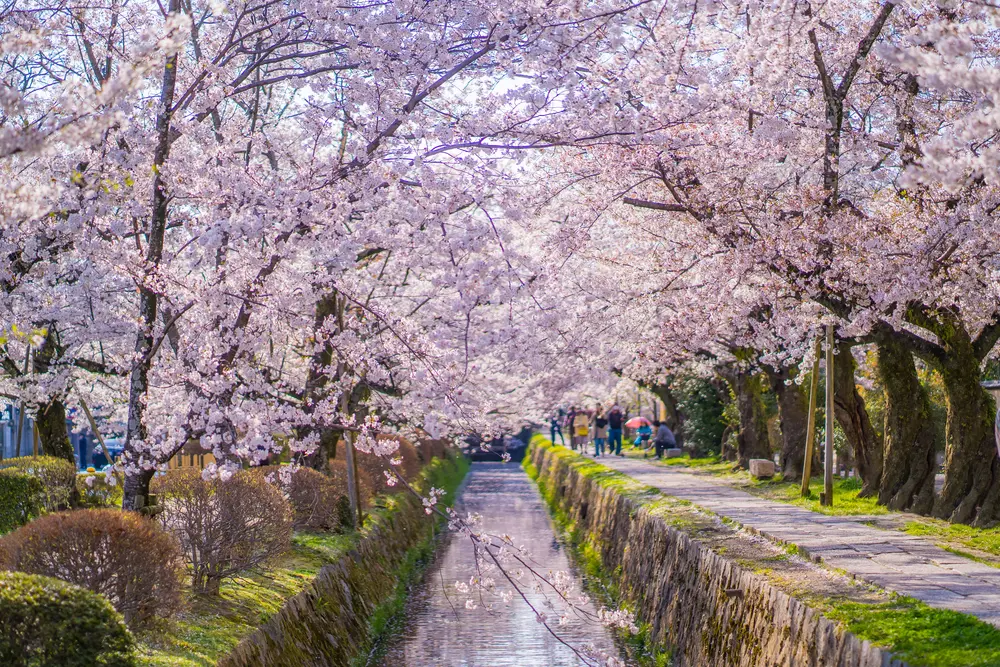
Philosopher’s Path is a 2-kilometer walking route along a canal between Wakaoji Bridge and Jodoji Bridge. It is known for cherry blossoms, autumn leaves, azaleas, small shops, and cafes.
This is a good place to slow down between busier attractions. It works especially well if you enjoy gentle walks, small cafes, and quieter neighborhood scenery.
The path is lovely in spring and autumn, but it can also be pleasant outside peak seasons if you want a more relaxed Kyoto walk.
- Address: Shishigatani Nishiteranomae-cho, Sakyo-ku, Kyoto City, Kyoto Prefecture
- Access: Near Ginkakuji-michi or Nanzenji Eikando bus stops
Nijo Castle: A UNESCO World Heritage Site
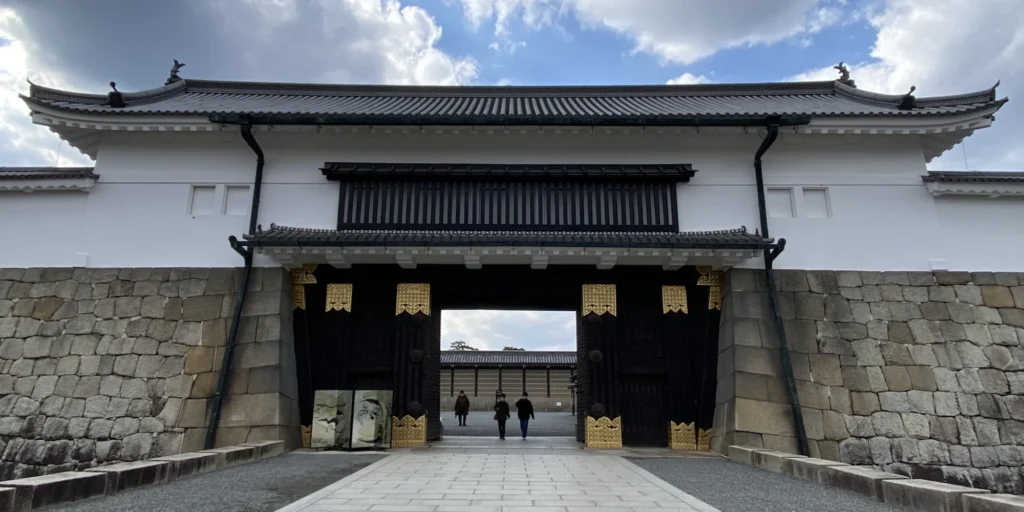
Nijo Castle was built in 1603 and is now a UNESCO World Heritage Site. It was originally used to protect the Kyoto Imperial Palace and as lodging for the shogun when visiting Kyoto.
The castle is also historically important because the restoration of imperial rule was announced here in 1867. For visitors interested in samurai history, politics, architecture, or major turning points in Japanese history, it is one of Kyoto’s most important attractions.
Nijo Castle is a good contrast to Kyoto’s temple-heavy sightseeing routes and is easy to reach by subway.
- Address: 541 Nijojo-cho, Nakagyo-ku, Kyoto City, Kyoto Prefecture
- Access: Right next to Nijojo-mae Subway Station
- Opening hours: 8:45 AM–4:00 PM
- Admission: Adults 800 yen; junior and senior high school students 400 yen; elementary school students 300 yen. If visiting Ninomaru Palace, adults 1,300 yen
Shinsen-en Garden: A Historic Garden from the Heian Period
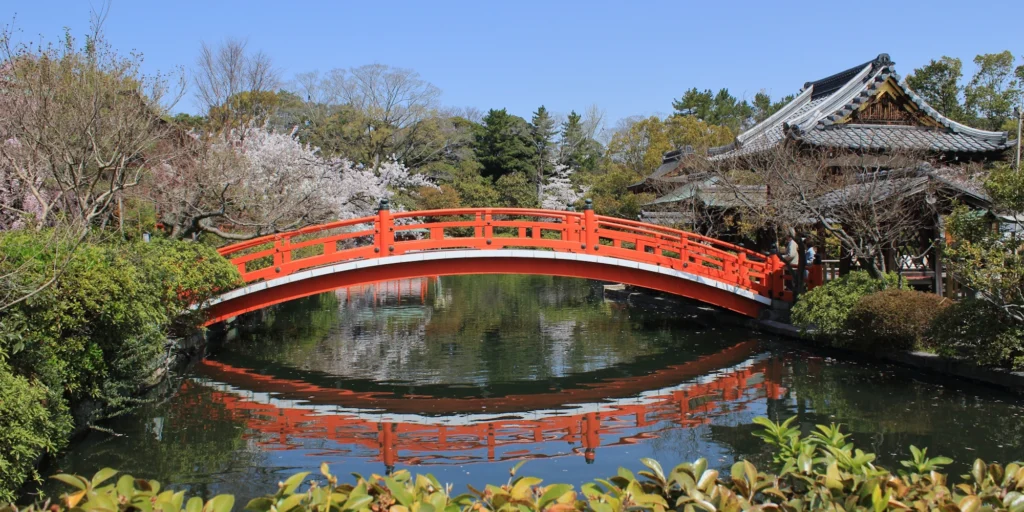
Shinsen-en Garden was built in 794 by Emperor Kanmu. It is a historic garden where emperors and nobles are said to have gathered for leisure, games, and seasonal events.
The garden includes water features and a natural landscape that help visitors imagine how Kyoto’s aristocratic spaces may once have felt. There is also said to have been a landing stage by the stream, suggesting the garden may have been connected with boat use.
It is a quieter stop than many of Kyoto’s famous attractions and can be a pleasant addition if you are exploring the area around Nijo Castle.
- Address: 167 Monzen-cho, Higashi-iru, Oike-dori, Nakagyo-ku, Kyoto City, Kyoto Prefecture
- Access: Immediately accessible from Shinsen-en bus stop
- Opening hours: 7:00 AM–8:00 PM
- Closed: None
- Admission: Free
Shimogamo Shrine: One of Kyoto’s Oldest Shrines
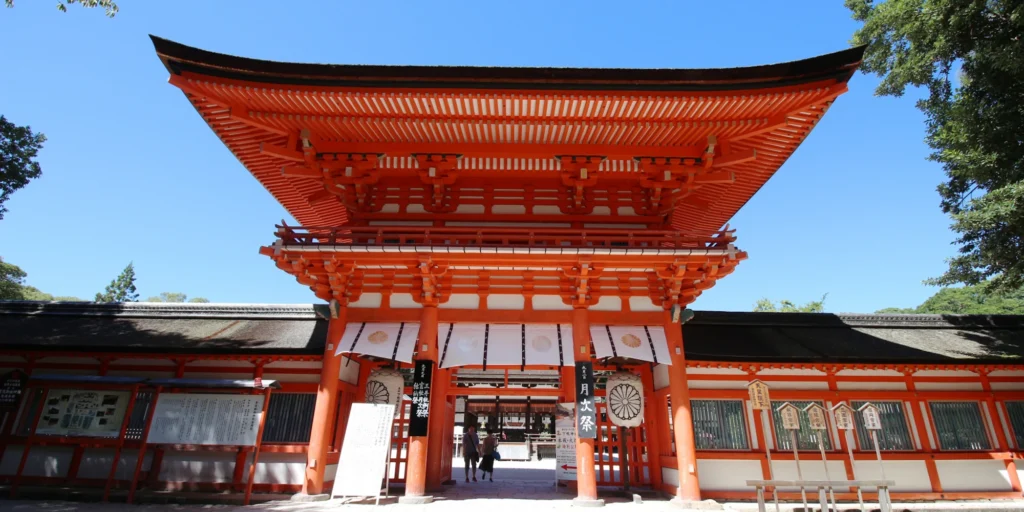
Shimogamo Shrine, officially called Kamo Mioya Shrine, is one of Kyoto’s oldest shrines and a UNESCO World Heritage Site. Its vermilion buildings stand among lush greenery, creating a peaceful and photogenic setting.
The shrine has several areas connected with different prayers, including matchmaking, beauty, and purification. It is a good place to visit if you want a historic shrine that feels slightly less crowded than some of Kyoto’s most central spots.
Shimogamo Shrine also works well with a walk through northern Kyoto or a visit to the nearby Demachiyanagi area.
- Address: 59 Shimogamo Izumikawa-cho, Sakyo-ku, Kyoto City, Kyoto Prefecture
- Access: Immediately accessible from Shimogamo Shrine bus stop
- Opening hours: 10:00 AM–4:00 PM
- Closed: None
- Admission: Free
Toji Temple: Five-Story Pagoda and Cherry Blossoms
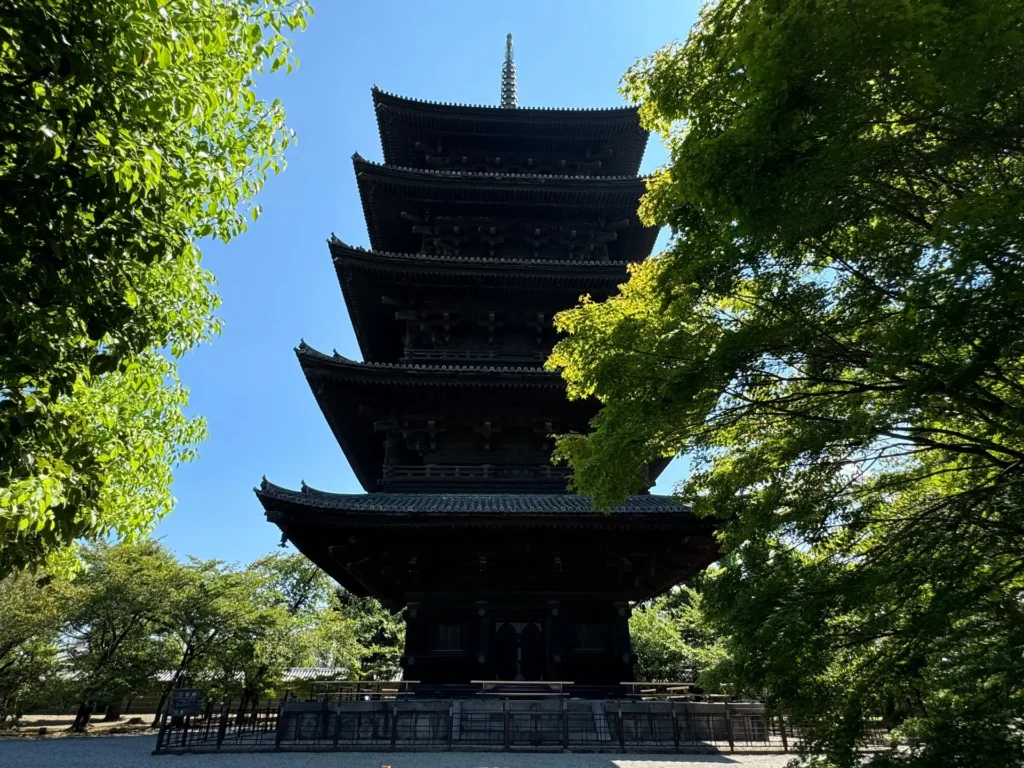
Toji Temple is one of Kyoto’s most famous temples and is especially known for its five-story pagoda. In spring, the combination of weeping cherry blossoms and the pagoda makes it one of the city’s most beautiful seasonal scenes.
The temple was established around the time the capital moved to Heian-kyo and became Japan’s first esoteric Buddhist temple. It is also listed as a World Heritage Site, making it important both historically and culturally.
Toji is easy to visit from the Kyoto Station area, so it is a practical choice if you want a major temple stop without traveling far across the city.
- Address: 1 Kujo-cho, Minami-ku, Kyoto City, Kyoto Prefecture
- Access: Near Toji Higashimonmae, Toji Minamimonmae, Kujo Omiya, and Toji Nishimonmae bus stops
- Opening hours: 5:00 AM–5:00 PM
- Closed: None
- Admission: Free
Yasaka Shrine: Gion’s Symbolic Shrine
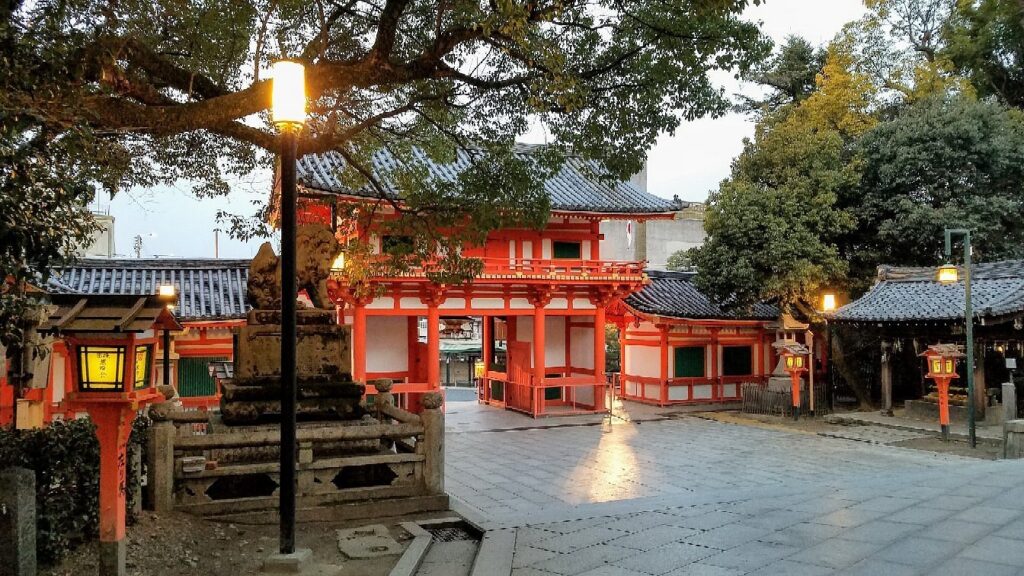
Yasaka Shrine is one of the most important landmarks in Gion. It has existed since before the Heian period and has long been loved by locals as “Gion-san.”
The shrine enshrines several deities, including Susanoo-no-Mikoto, who is associated with protection from misfortune and calamity. It is also the head shrine of thousands of Yasaka Shrines throughout Japan.
Because it sits right beside Maruyama Park and close to many Gion streets, it is very easy to include in a walking route through the area.
- Address: 625 Gionmachi Kitagawa, Higashiyama-ku, Kyoto City, Kyoto Prefecture
- Access: Immediately accessible from Gion bus stop
- Opening hours: 24 hours
- Closed: None
- Admission: Free
Yasaka Pagoda: A Classic Higashiyama Photo Spot
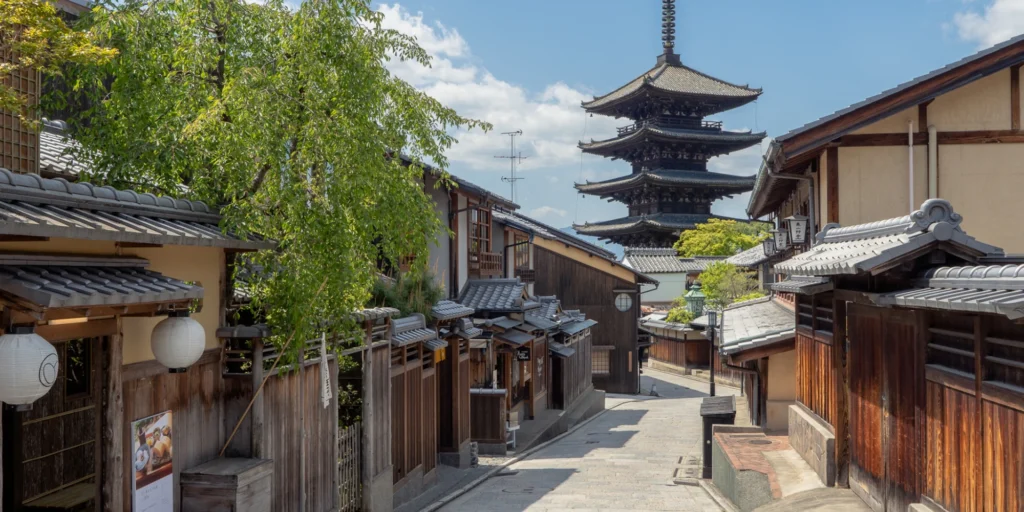
Yasaka Pagoda, located at Hokan-ji Temple, is one of the most famous sights in the Higashiyama area. The five-story pagoda is said to be one of the oldest in Kyoto and stands around 46 meters tall.
You can see the pagoda up close, but it is also beautiful from the surrounding streets. The view from Yasaka Street, with the pagoda rising above traditional buildings, is one of Kyoto’s classic photo scenes.
It is easy to combine Yasaka Pagoda with Ninenzaka, Kiyomizu-dera, Yasaka Koshindo, and other Higashiyama stops.
- Address: 388 Kiyomizu Yasaka Kamimachi, Higashiyama-ku, Kyoto City, Kyoto Prefecture
- Access: 5-minute walk from Kiyomizu-do bus stop
- Opening hours: 10:00 AM–3:00 PM
- Closed: Irregular days
- Admission: 500 yen for junior high school students and older
Yasaka Koshindo Temple: Colorful Kukuri-Zaru Charms
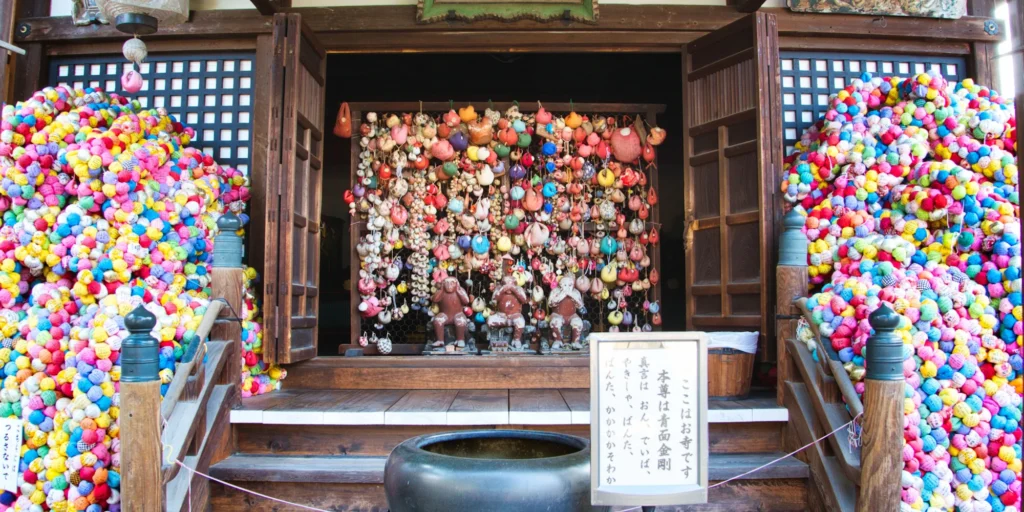
Yasaka Koshindo Temple is a small temple that has become especially popular for its colorful kukuri-zaru charms. The bright charms tied around the temple grounds make it one of the more cheerful photo spots in Higashiyama.
The temple is dedicated to Koshin-san, associated with the monkey in the Chinese zodiac. You can see monkey-inspired objects around the grounds, and visitors often write wishes on kukuri-zaru before hanging them at the temple.
It is a quick and easy stop while walking between Yasaka Pagoda, Ninenzaka, and Kiyomizu-dera.
- Address: 390 Kanazono-cho, Higashiyama-ku, Kyoto City, Kyoto Prefecture
- Access: 3-minute walk from Shimizu-do bus stop
- Opening hours: 9:00 AM–5:00 PM
- Closed: None
- Admission: Free
Gion Tatsumi Bridge: A Pretty Riverside Photo Spot
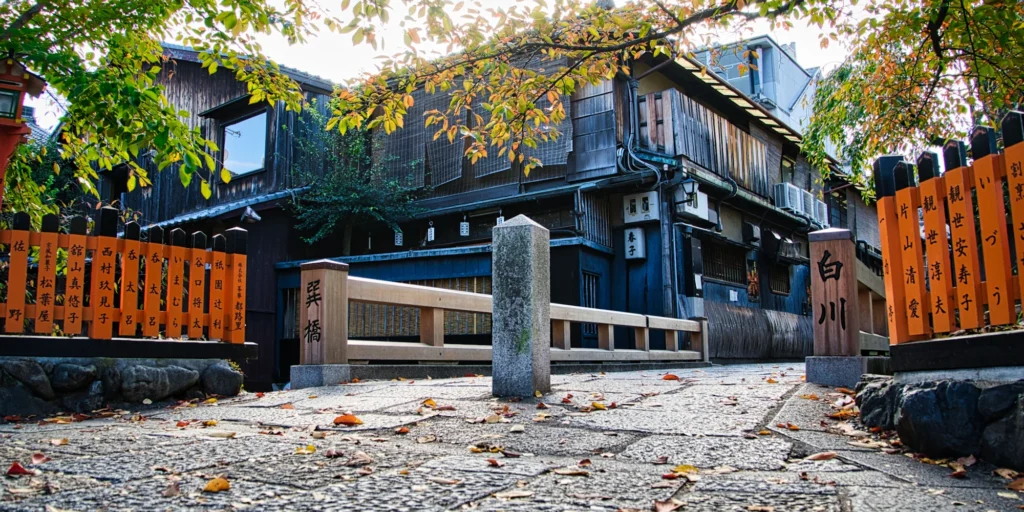
Gion Tatsumi Bridge is a small but beautiful bridge over the Shirakawa River. The surrounding area has cobblestone streets, traditional townhouses, and seasonal scenery, making it one of Gion’s most photogenic corners.
The bridge has appeared in commercials and dramas, and it is especially popular in spring when the cherry blossoms bloom nearby. It does not take long to visit, but it is well worth adding to a Gion walking route.
- Address: 372 Kiyomoto-cho, Higashiyama-ku, Kyoto City
- Access: 5-minute walk from Keihan Gion-Shijo Station
Chion-in Temple: One of Japan’s Largest Wooden Gates
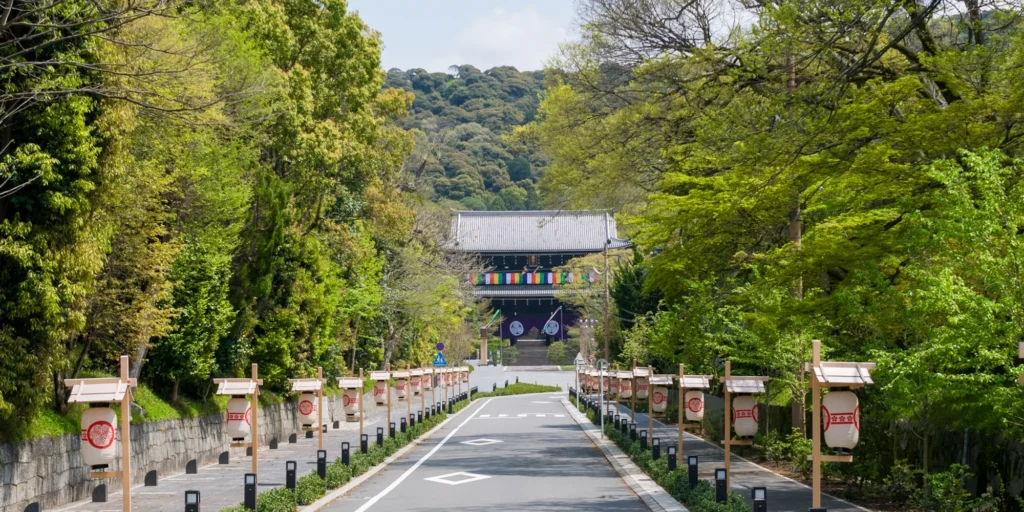
Chion-in Temple is the head temple of the Jodo sect and has been important since 1133. There are several sights within the temple grounds, but the Sanmon Gate is the main highlight for many visitors.
The gate is one of the largest wooden gates in Japan, standing around 24 meters high and 50 meters wide. It uses approximately 70,000 roof tiles, which gives you an idea of its scale before you even see it in person.
Chion-in is close to Maruyama Park and Yasaka Shrine, so it fits naturally into a Gion and Higashiyama route.
- Address: 400 Hayashishita-cho, Higashiyama-ku, Kyoto City, Kyoto Prefecture
- Access: 5-minute walk from Chion-in-mae bus stop
- Opening hours: 5:30 AM–4:00 PM; 6:00 AM–4:00 PM from December to February; 5:00 AM–4:00 PM from June to August
- Closed: None
- Admission: High school students and older 500 yen; elementary and junior high school students 250 yen
Minamiza Theatre: Japan’s Oldest Existing Theatre
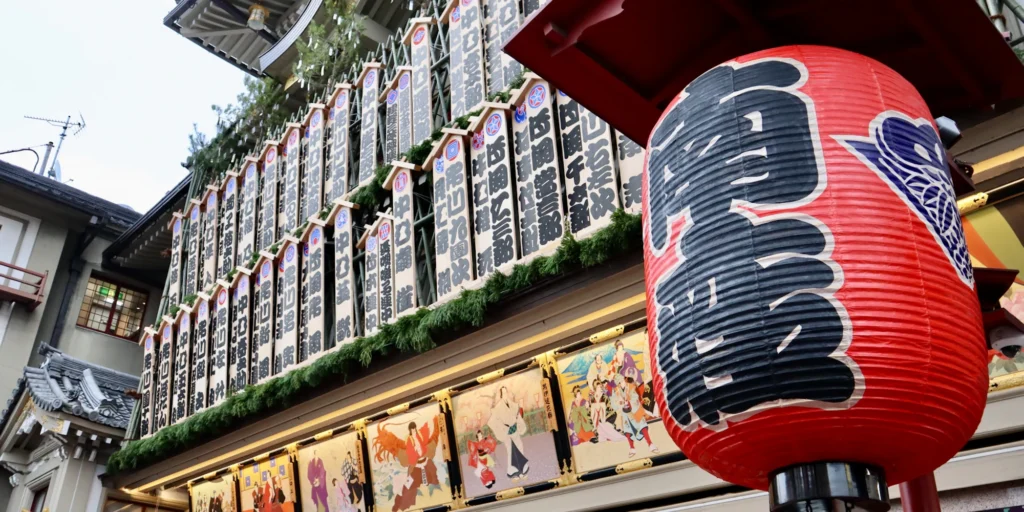
Minamiza Theatre is the oldest existing theatre in Japan and one of the most distinctive buildings near Gion-Shijo. The exterior alone is worth seeing, especially in the evening when the building is lit up.
The theatre hosts different performances depending on the date, including traditional Kabuki, modern Kabuki, and comedy events. If you are interested in Japanese theatre, it is worth checking the schedule before your trip.
Even if you do not attend a performance, Minamiza is an easy landmark to include while walking around Gion, Shijo, or Pontocho.
- Address: Higashizume, Shijo Ohashi, Higashiyama-ku, Kyoto City, Kyoto Prefecture
- Access: Right next to Keihan Gion-Shijo Station
- Opening hours: Varies by performance
- Closed: Varies by performance
- Admission: Varies by performance
Ninenzaka: Shopping, Street Food, and Traditional Streets
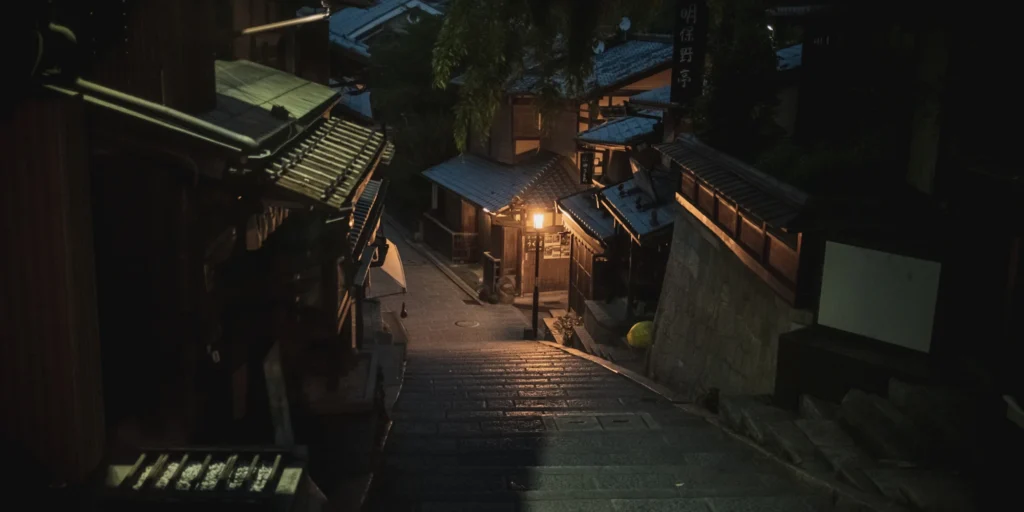
Ninenzaka is one of the best places in Kyoto for a scenic walk with shops, snacks, and traditional street views. The sloping street has a nostalgic atmosphere and is especially popular with visitors heading toward or away from Kiyomizu-dera.
You will find shops selling Kyoto-style goods, sweets, souvenirs, and casual food. One of the most famous modern stops here is the Starbucks inside a traditional Japanese house, which has become part of the area’s scenery.
Ninenzaka can be very busy, so visiting earlier in the day is usually more comfortable if you want photos or a slower walk.
- Address: 2-chome, Shimizu, Masuya-cho, Higashiyama-ku, Kyoto City, Kyoto Prefecture
- Access: 5-minute walk from Shimizu-do bus stop
- Opening hours: Varies by store
- Closed: Varies by store
Nene’s Path: A Calm Walk Near Kodai-ji
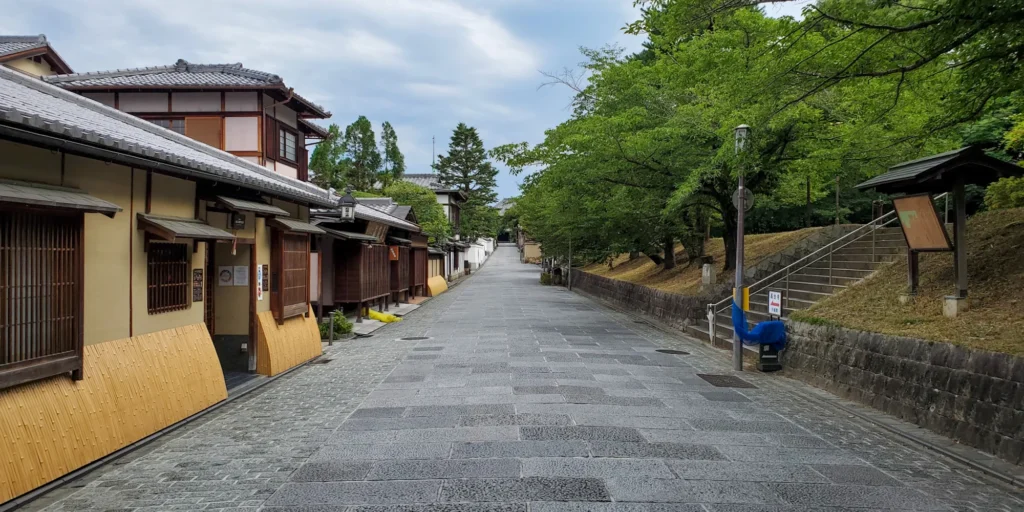
Nene’s Path, or Nene no Michi, is associated with Kita-no-Mandokoro Nene, who spent the last 19 years of her life in this area. It is now a pleasant walking route near Kodai-ji Temple.
The street was once known as Kodaiji Road. After power lines were moved underground and the area was paved with granite stones, it became one of the more polished and atmospheric lanes in this part of Kyoto.
This is a good place for a slow stroll, especially if you are already visiting Kodai-ji, Yasaka Shrine, or the surrounding Higashiyama streets.
- Address: Shimogawara-cho, Higashiyama-ku, Kyoto City, Kyoto Prefecture
- Access: 5-minute walk from Higashiyama Yasui bus stop
Keibunsha Ichijoji Store: A Lovely Stop for Book Lovers
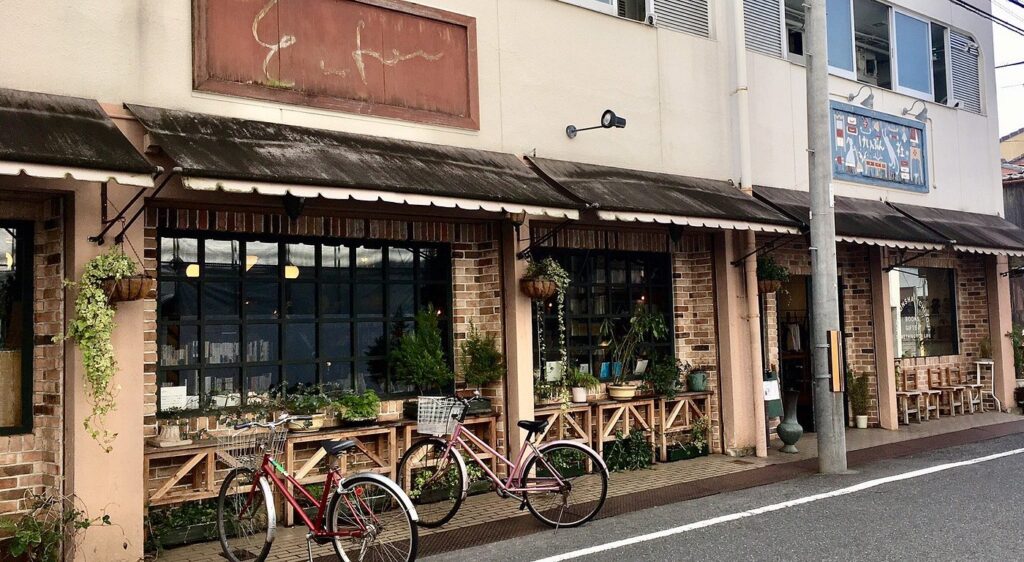
Keibunsha Ichijoji Store is a bookshop selling books and book-related goods. It has a quiet, nostalgic atmosphere and is a good stop if you enjoy independent bookshops, paper goods, design items, or slower local browsing.
The shop has a Showa- or Taisho-era feeling, making it a nice contrast to Kyoto’s bigger tourist attractions. It is not in the middle of the main Gion route, but it can be worth the trip if you like bookshops with character.
- Address: 10 Ichijoji Haraidencho, Sakyo-ku, Kyoto City, Kyoto Prefecture
- Access: 3-minute walk from Ichijoji Station on the Eizan Electric Railway Eizan Main Line
- Opening hours: 11:00 AM–7:00 PM
- Closed: New Year’s Day
Kyoto International Manga Museum: A Must-Visit for Manga Fans
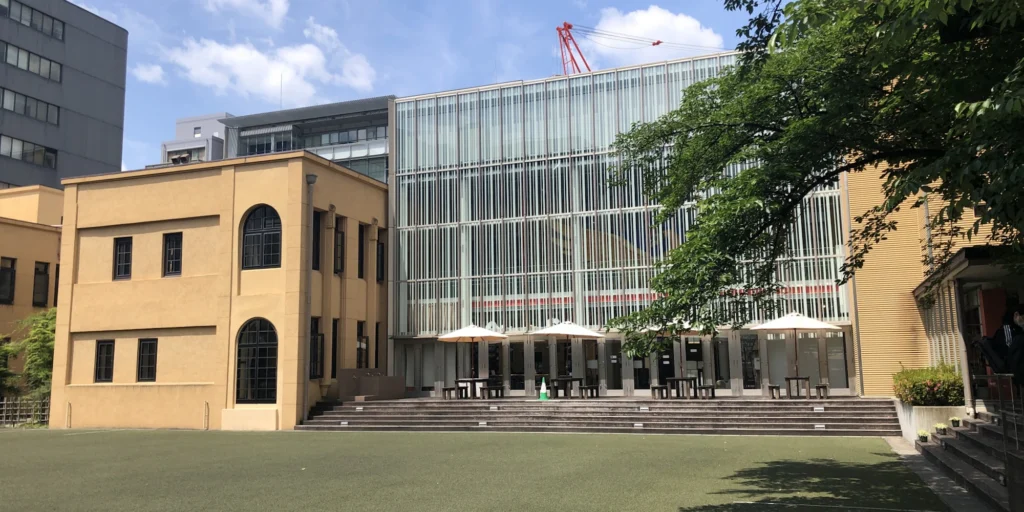
Kyoto International Manga Museum is a great stop for manga fans, art lovers, and families with older children or teens. The museum features manga from Japan and abroad, along with permanent displays, special exhibitions, events, and workshops.
There are also production demonstrations, portrait drawing, and picture-story shows among the permanent attractions. If you love manga, this is the kind of place where you may want more time than expected.
Its location near Karasuma Oike makes it easy to combine with central Kyoto sightseeing.
- Address: Karasuma-dori Oike-agaru, Nakagyo-ku, Kyoto City, Kyoto Prefecture
- Access: Right next to Karasuma Oike Subway Station
- Opening hours: 10:30 AM–5:30 PM
- Closed: Wednesdays, New Year holidays, and maintenance periods
- Admission: Adults 900 yen; junior and senior high school students 400 yen; elementary school students 200 yen
Recommended Hotels Around Gion
Staying around Gion or nearby Higashiyama gives you easy access to Kyoto’s traditional streets, major temples, evening walks, and restaurants. It is a particularly good area if you want Kyoto atmosphere close to your hotel rather than having to travel across the city every evening.
Fufu Kyoto
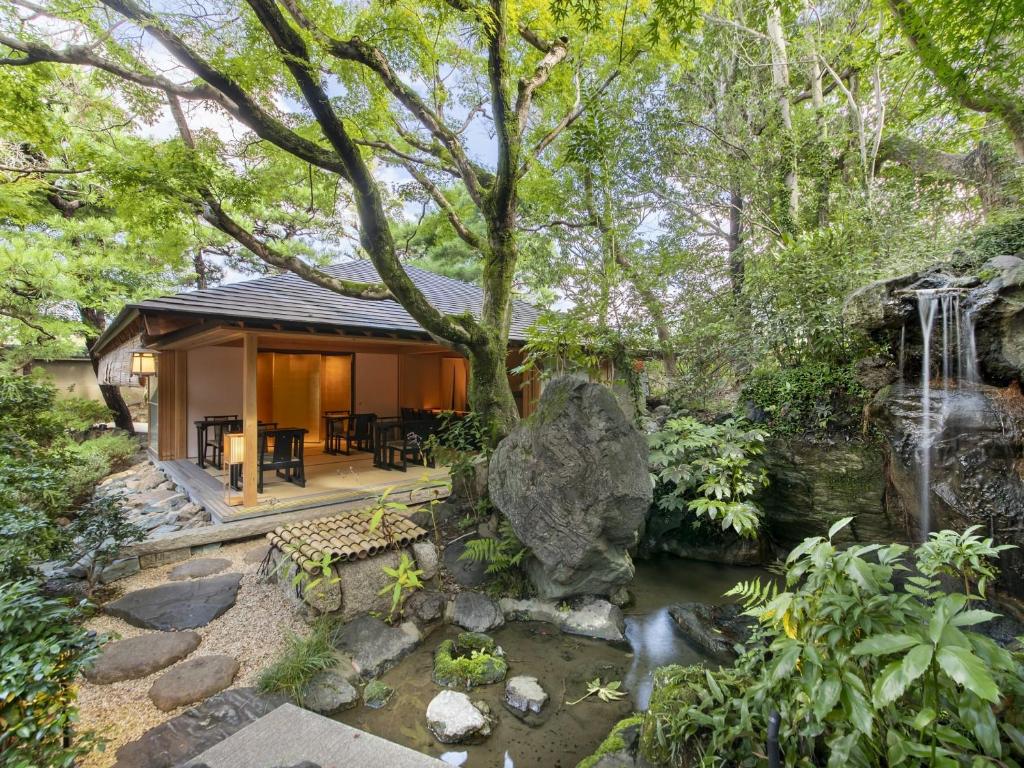
Fufu Kyoto is a peaceful Japanese-style resort with hot springs and a strong sense of Kyoto design. It is a good option if you want a more refined stay where the hotel itself feels like part of the travel experience.
- Address: 41 Nanzenji Kusakawacho, Sakyo-ku, Kyoto City, Kyoto Prefecture
- Access: 7-minute walk from Keage Station
More info: Fufu Kyoto
Riverte Kyoto Kamogawa
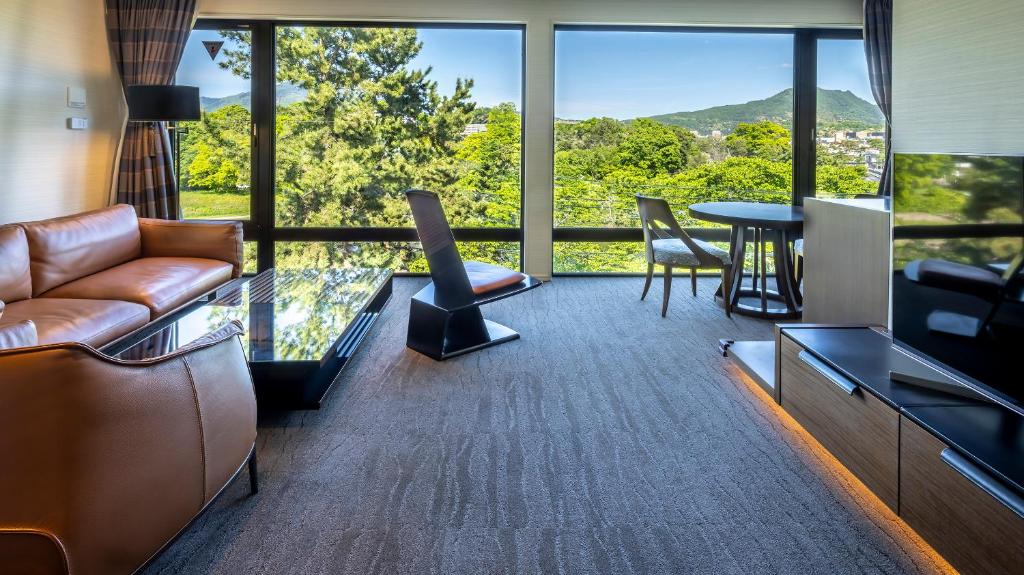
Riverte Kyoto Kamogawa is a privacy-focused hotel where guests can enjoy Kyoto cuisine in their rooms. The interiors have some Western-style elements, but the food and service reflect Kyoto’s local character.
- Address: 202 Seiryu-cho, Kamigyo-ku, Kyoto City, Kyoto Prefecture
- Access: 5-minute walk from Demachiyanagi Station on the Keihan Main Line
More info: Riverte Kyoto Kamogawa
Make Your Gion Walk More Special with Kimono Rental
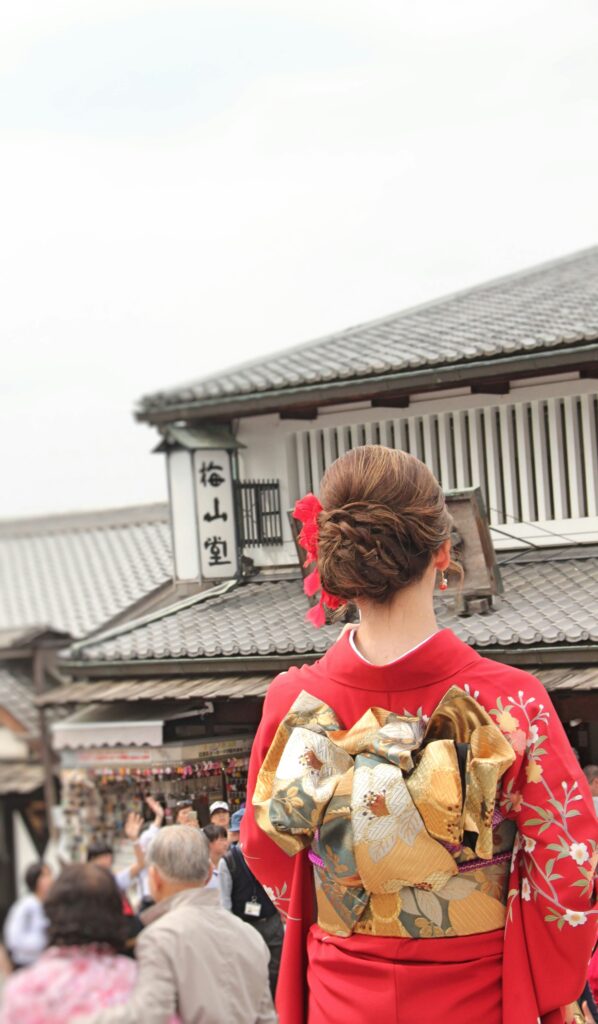
Gion is one of the best areas in Kyoto to try a kimono or yukata rental. The traditional streets, wooden buildings, teahouses, shrines, and stone-paved lanes all make a beautiful setting for photos and a more memorable sightseeing day.
Wearing a kimono or yukata also helps the experience feel more connected to the place. It is especially nice if you plan to walk around Gion, Ninenzaka, Yasaka Pagoda, Kiyomizu-dera, or the surrounding Higashiyama streets.
Bringing your own kimono and dressing yourself can be difficult, so using a rental service such as Momoka Kimono Rental makes the experience much easier. You can rent an outfit and get help dressing for the day, then return it after your walk.
Best for: couples, solo travelers, friend trips, family photos, and anyone who wants a more atmospheric Kyoto sightseeing day without packing formal clothing.
More info: Momoka Kimono rental on GetYourGuide
Final Thoughts on Visiting Gion and Kyoto
Gion and the surrounding Kyoto neighborhoods are some of the best places to experience the city’s history, culture, and traditional atmosphere. Around this area, you can visit famous temples, quiet shrines, old streets, markets, theatres, gardens, museums, and scenic walking routes without constantly moving across the city.
The best way to explore is to choose a few main sights and leave time for slow wandering. Kyoto is not a city that works well when every minute is packed. Some of the nicest moments happen between attractions: a quiet side street, a small shop, a seasonal view, or a peaceful temple corner you did not plan in advance.
Before visiting, check official websites for current opening hours, admission fees, events, and temporary closures, especially for museums, theatres, seasonal illuminations, and temple gardens. Then wear comfortable shoes, start early when you can, and give yourself enough time to enjoy the area properly.
- Nagoya rainy day with kids in 2026 (Cool Indoor Things to Do )
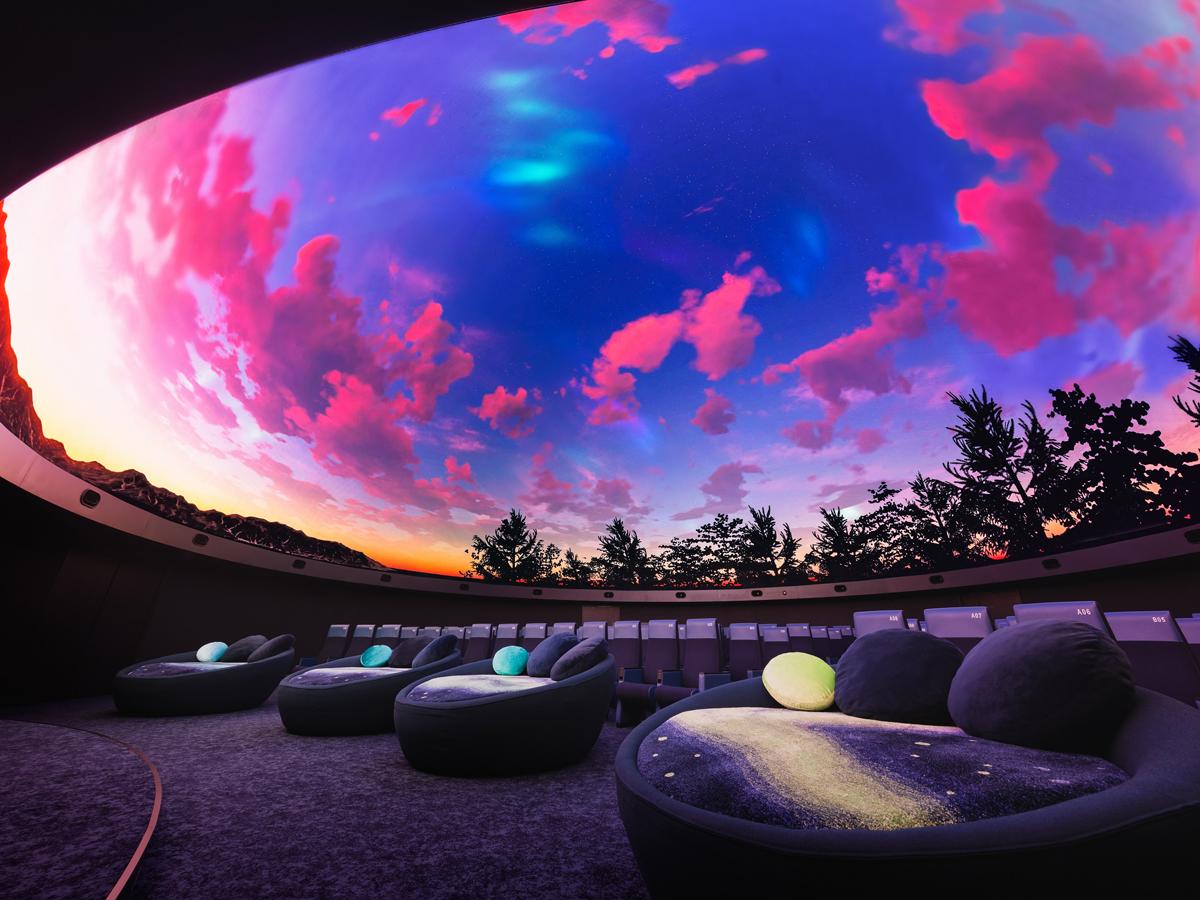 Rain in Nagoya does not have to mean surrendering the day to the hotel room. In fact, Nagoya is unusually good at indoor sightseeing. You have one of Japan’s best science museums, enormous aquariums, real Shinkansen trains, hands-on industrial museums, planetariums, covered shopping streets, and enough underground passages around Nagoya Station to lose an entire… Read more: Nagoya rainy day with kids in 2026 (Cool Indoor Things to Do )
 - Best Gachapon in Tokyo (2026): 20 Places to Find Capsule Toys
 You start with one. A tiny plastic capsule rolls out of the machine containing a miniature ramen bowl, sleepy cat or suspiciously realistic washing machine. Then you notice the machine next to it. And the one next to that. Twenty minutes later, you’ve somehow spent ¥3,000 and are emotionally invested in completing a collection of… Read more: Best Gachapon in Tokyo (2026): 20 Places to Find Capsule Toys
 - All Japanese KitKat Flavours List: The Ultimate Japan KitKat Guide
 Walk into a Japanese convenience store looking for a KitKat and things can get out of hand surprisingly quickly. You came for chocolate. Five minutes later, you’re holding matcha, strawberry, sake and something involving sweet potato, wondering whether wasabi chocolate is a terrible idea or exactly the souvenir your friends deserve. Welcome to Japanese KitKats.… Read more: All Japanese KitKat Flavours List: The Ultimate Japan KitKat Guide
 - Sapporo rainy day with kids (2026): 7 Cool Indoor Things to Do
 You wake up in Sapporo, pull back the curtains, and there it is: rain. That does not mean the family sightseeing day is ruined. Sapporo is actually very good at bad-weather entertainment, with science museums, aquariums, indoor play areas, shopping complexes, museums, and even a chocolate factory where children can watch one of Hokkaido’s most… Read more: Sapporo rainy day with kids (2026): 7 Cool Indoor Things to Do
 - What To Do In Arashiyama With Kids: A Realistic One-Day Family Itinerary
 Arashiyama looks peaceful in photos: tall bamboo, forested hills, a wide river, and one of Kyoto’s most famous bridges. In reality, it is lively, busy, and full of families trying to fit a surprising number of things into one day. The good news? Arashiyama works brilliantly with kids when we keep the plan simple. The… Read more: What To Do In Arashiyama With Kids: A Realistic One-Day Family Itinerary