I spill travel tips , and show you the Japan that tourists usually miss.
Traditional Japanese art is a living cultural inheritance carried across centuries, shaped by Shinto, Zen Buddhism, and the occasional well-timed outside influence. And because Japan’s local culture prizes elegance, restraint, and respect for craft, these arts aren’t just “nice things people do.” They’re philosophy with sleeves rolled up. When you practice them, you’re not only making something—you’re learning how to stand in the world.
Ikebana, tea ceremony, calligraphy, Japanese prints, tattooing, kintsugi, martial arts… let’s wander through the big ones—and the mindsets that come stapled to them.
Table of Contents
Traditional Japanese Art: Japanese prints
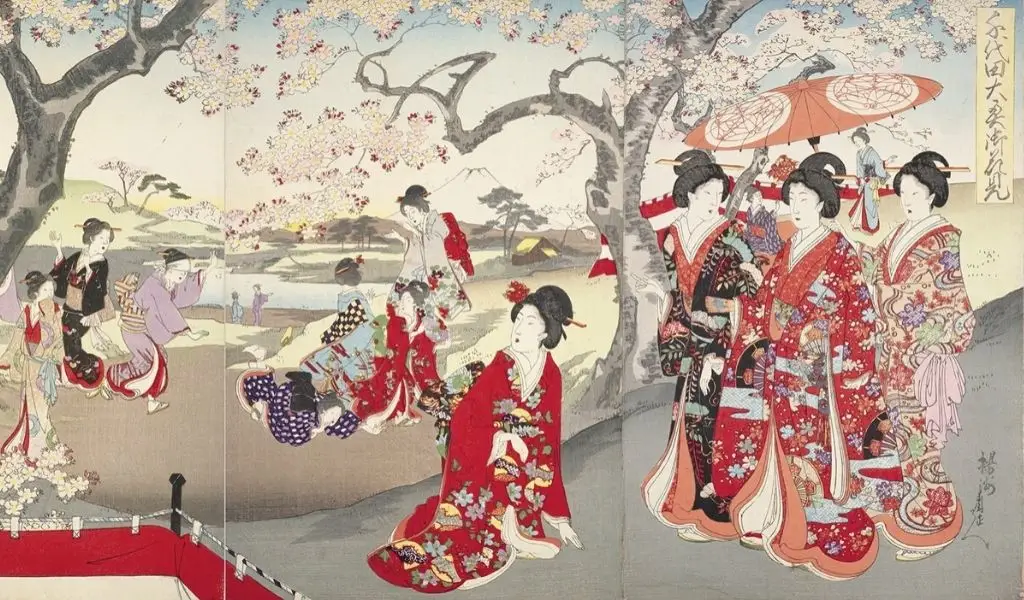
We duck into a shop to shelter from a sudden Tokyo drizzle, and—bam—there it is: a wave mid-roar, a mountain pretending to be calm. Japanese prints have that effect. They look simple, then they grab your collar and whisper, “Nothing lasts. Isn’t that gorgeous?”
Japanese culture has a long-standing appreciation for the plain joys of life and the sacred bond between humans and nature. During the Edo period, prints exploded via the ukiyo-e movement—art infused with Buddhist undertones, echoing the impermanence of a floating, fleeting world.
Created with woodblock printing techniques, these works often depict everyday scenes and obsessions: elegant courtesans, kabuki actors, animals and natural elements, fantastical creatures… and yes, erotic scenes known as shunga. The subjects weren’t random; they mirrored the tastes of a rising urban bourgeoisie under the Tokugawa shogunate.
Printmaking became wildly popular in Edo, then ran into trouble. By 1790, political provocation and racy themes were banned, and censorship tightened under the bakufu (the military government). By the end of the 19th century, prints were sometimes dismissed in Japan as vulgar—mass-produced, censored, occasionally “too ordinary.” And then the plot twist: the West fell in love. With Japan opening to the world, Japonism swept through Europe, and artists like Cézanne and Gauguin pulled ideas from these compositions, colors, and daring viewpoints.
And of course, the celebrity of the genre: Hokusai’s The Great Wave off Kanagawa, a global icon that still manages to look freshly dangerous, as if it might splash out of the frame and soak your shoes.
Pro tip: If you want to “read” ukiyo-e better, look for the tiny details—hands, fabric patterns, the angle of wind. That’s where the story hides.
Ikebana, the traditional art of flower arranging
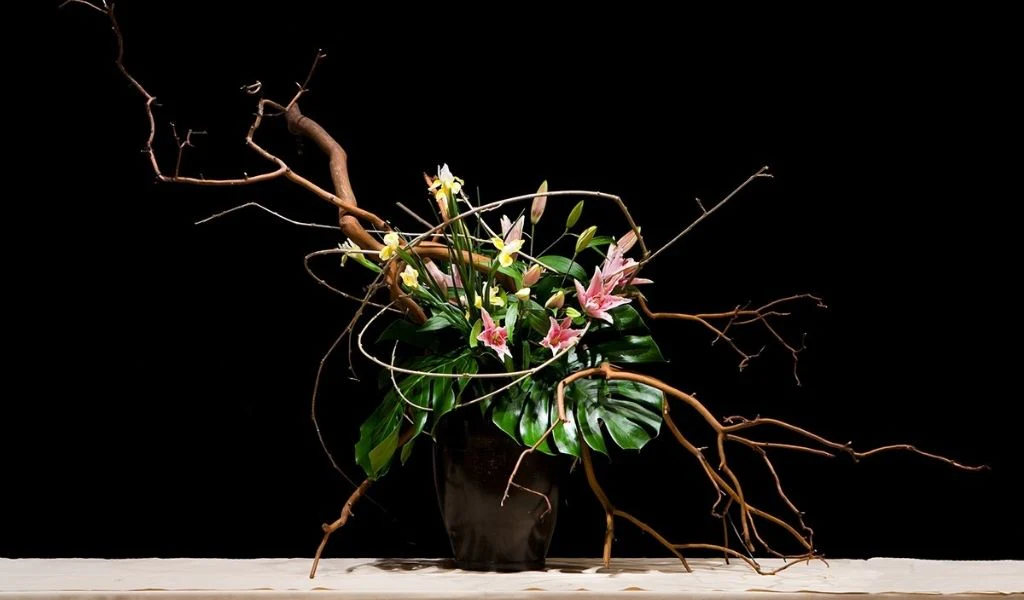
If you think flower arranging is “just putting pretty things in a vase,” ikebana will politely destroy that assumption. We watch an arrangement come together and realize the main character isn’t even the bloom—it’s the space around it.
Ikebana began with Buddhist rituals: flowers offered during ceremonies. Over time, the practice moved into homes, gained an aesthetic life of its own, and became a daily art form—respected, practiced, and quietly fierce about its rules.
Meaning “the way of flowers,” ikebana highlights the entire presence of the plant: stem, foliage, angle, balance, and even the vessel. You don’t need a massive bouquet or loud colors. Japanese floral art leans into minimalism, restraint, and the kind of elegance that doesn’t beg for compliments.
This is a highly codified practice built on three pillars: line, asymmetry, and simplicity. A successful composition celebrates natural elements without overpowering them. Traditionally, arrangements also symbolize a triad: heaven, earth, and humanity.
To create an ikebana-style bouquet, you’ll want a vase, a flower frog (kenzan), pruning shears, and carefully chosen seasonal plants. It’s craft, yes—but it’s also a way of thinking: noticing what’s essential, and letting the rest breathe.
Pro tip: Ikebana loves “negative space.” If you’re tempted to add one more stem—don’t. That pause is the point.
Traditional Japanese Art: Japanese tattooing (Irezumi)
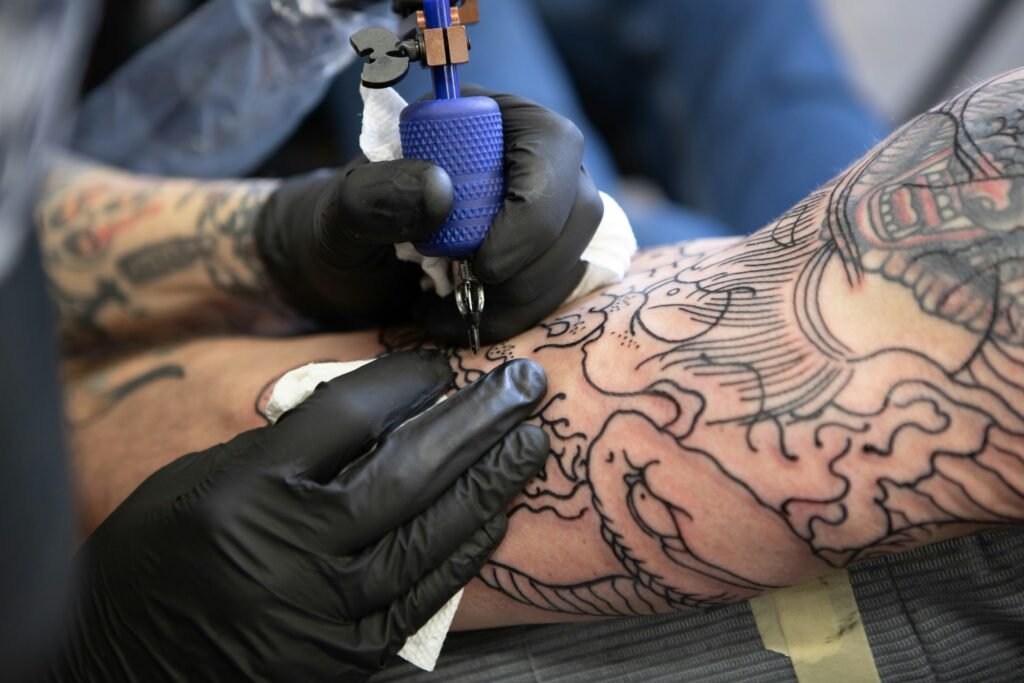
Japanese tattooing is a story with a complicated reputation and a ridiculously rich visual language. We catch a glimpse of a sleeve in the summer heat—koi scales like armor, a dragon curling into clouds—and suddenly we want the entire mythology syllabus.
Often criticized in Japanese society, irezumi is an ancient practice dating back to prehistoric times. Early indigenous tribes tattooed as markers of social belonging, spiritual protection, or aesthetic identity.
In the Edo period, tattooing split into different meanings: punitive tattoos used to mark criminals, and honorary tattoos that celebrated bravery. Literature and art fed the trend, and tattoos spread through certain professions and subcultures.
Then the yakuza claimed the aesthetic—large-scale designs covering significant portions of the body became associated with organized crime. That shadow stuck. Tattooing was banned in 1872, and the prohibition lasted until the American occupation after World War II.
Today, the irony is sharp: while tattoos still carry stigma in parts of Japan, Japanese tattoo artists are renowned worldwide, and visitors adore the bold, colorful symbolism. Koi carp, dragons, cherry blossoms, snakes—each motif is loaded with meaning drawn from myth, folklore, and belief.
Pro tip: In Japan, tattoos can affect access to onsens, pools, and gyms. Plan for cover-ups (or tattoo-friendly facilities) so your holiday doesn’t turn into an awkward apology tour.
Japanese martial arts
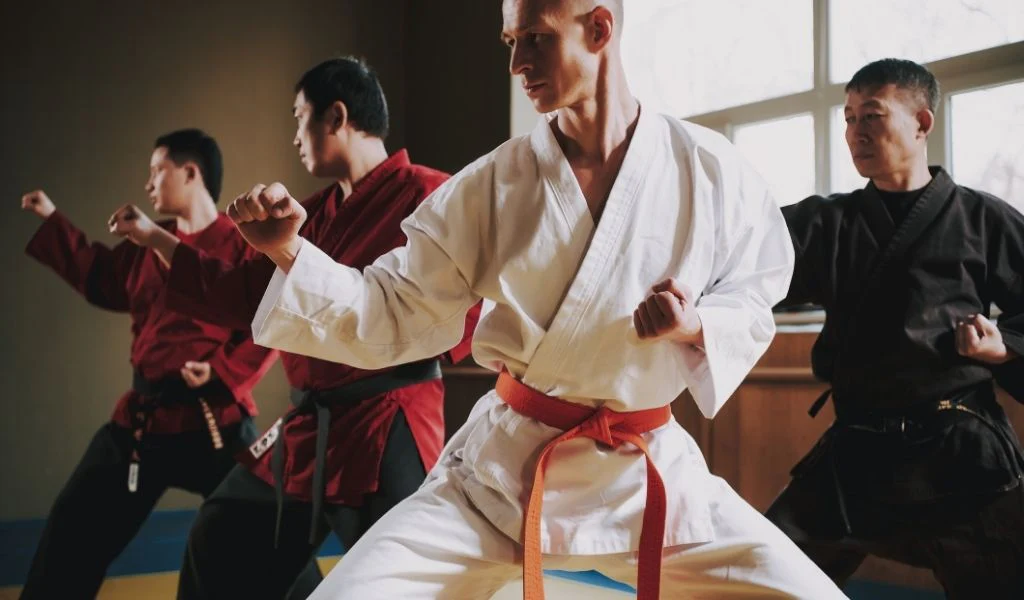
Martial arts in Japan aren’t just about winning. They’re about polishing the self—like the soul is a blade and daily practice is the whetstone. We step into a dojo and understand, in about five seconds, that posture is a worldview.
These combat traditions are part of the samurai legacy. Whether weapons-based (sword, bow) or unarmed, the end goal is complete mastery of body and mind.
Spectacle and spirituality share the mat. Japanese martial arts are deeply connected to Bushido, the moral code emphasizing honor, respect, honesty, and loyalty. Judo, karate, aikido—each carries technique, discipline, and an internal compass.
Pro tip: If you’re trying a class, arrive early, bow when others bow, and watch before you act. In a dojo, manners are part of the technique.
Japanese calligraphy
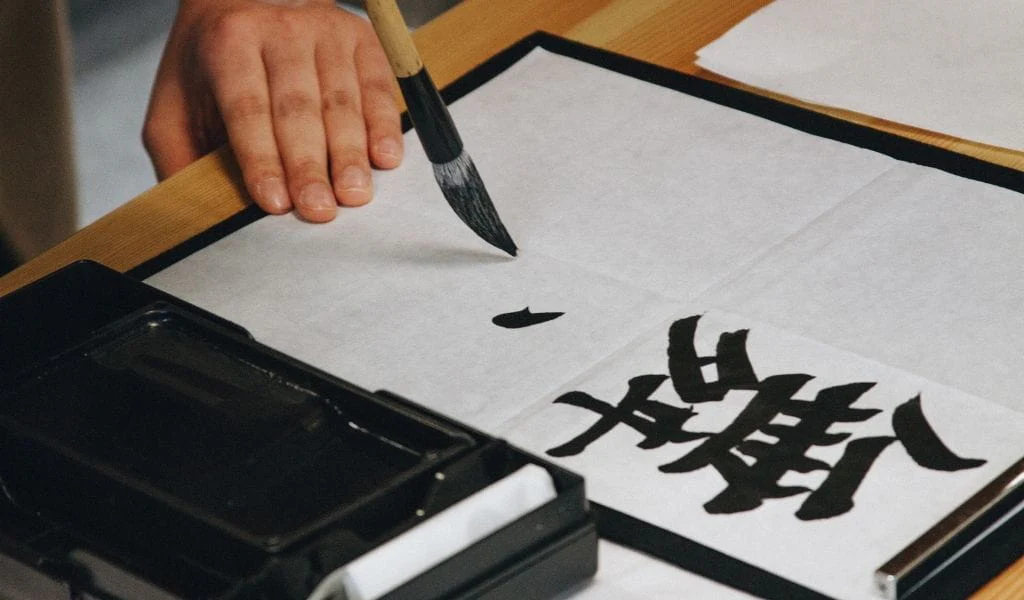
Calligraphy looks like writing until you watch someone do it—then it becomes movement, breath, and attention made visible. The brush pauses, presses, lifts. One line and it’s suddenly… a weather report of the mind.
Originating in China, calligraphy holds a major place in Japanese culture. Writing ideograms with a brush and ink stretches back thousands of years. More than communication, it’s an art form with its own aesthetic rules and spiritual weight.
Many Japanese believe calligraphy can elevate consciousness. Buddhist monks have long used it as meditation—one stroke at a time, returning to the present. Historically, it was reserved for elites and aristocrats; today, it’s recognized worldwide for its elegance and meaning. Each character carries not only definition, but also mood, rhythm, and intent.
Pro tip: Don’t chase perfection. The “mistakes” are often the most honest part of the line.
Japanese tea ceremony, a highly codified ritual
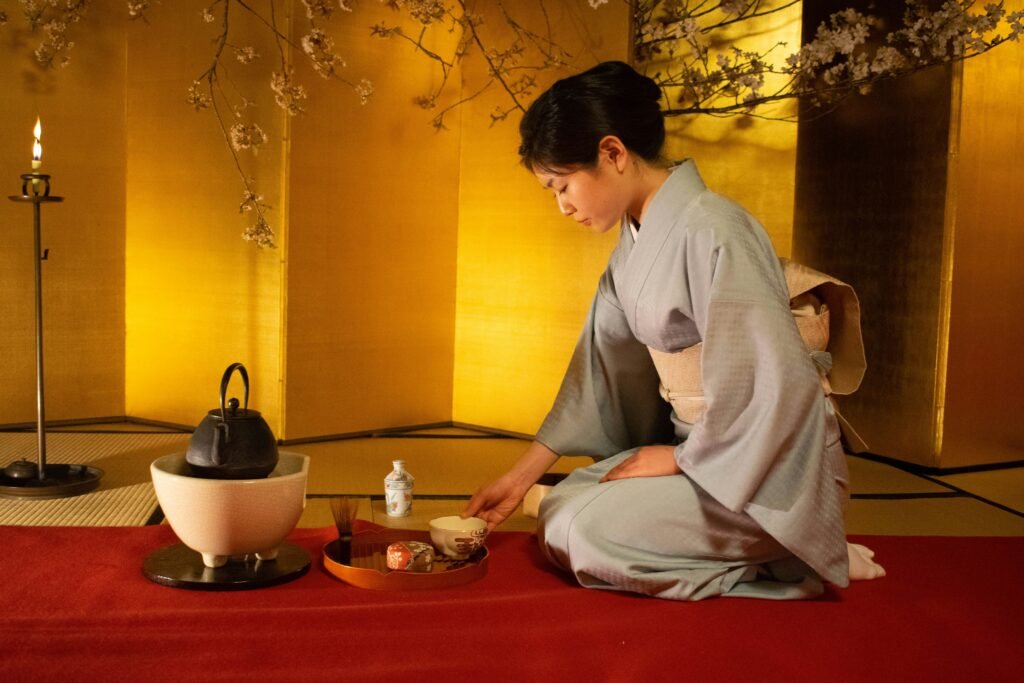
The tea ceremony is the kind of experience that makes you realize how loud your usual life is. We sit. We watch. We breathe at someone else’s pace. And the matcha arrives like a tiny green universe.
A cornerstone tradition in Japan, the tea ceremony—chanoyu—is rooted in Zen Buddhism. Matcha is prepared and served with refined calm to a small group of guests. You’ll usually get sweets alongside it (and a gentle expectation of good manners).
Tea came from China and was adopted by Buddhist monks to stay awake during meditation. It reached Japan in the 9th century, brought by the monk Eishu, and caught on with the aristocracy before spreading across social classes. The ceremony evolved through to the 16th century, drawing influence from samurai rituals and codes of conduct.
Chanoyu is extremely codified: spiritual preparation by the host, welcoming guests, cleaning tools, preparing tea, serving, and cleaning again. Practitioners study for years. Guests, too, are expected to know gestures, polite formulas, and appropriate attire.
If you want excellent matcha and a uniquely concentrated moment in Japan, learning how to prepare for the tea ceremony is half the experience.
Pro tip: Your job as a guest is attention. Watch the hands, the tools, the pauses. This is choreography for the mind.
Kintsugi, a traditional Japanese art that sublimates cracks
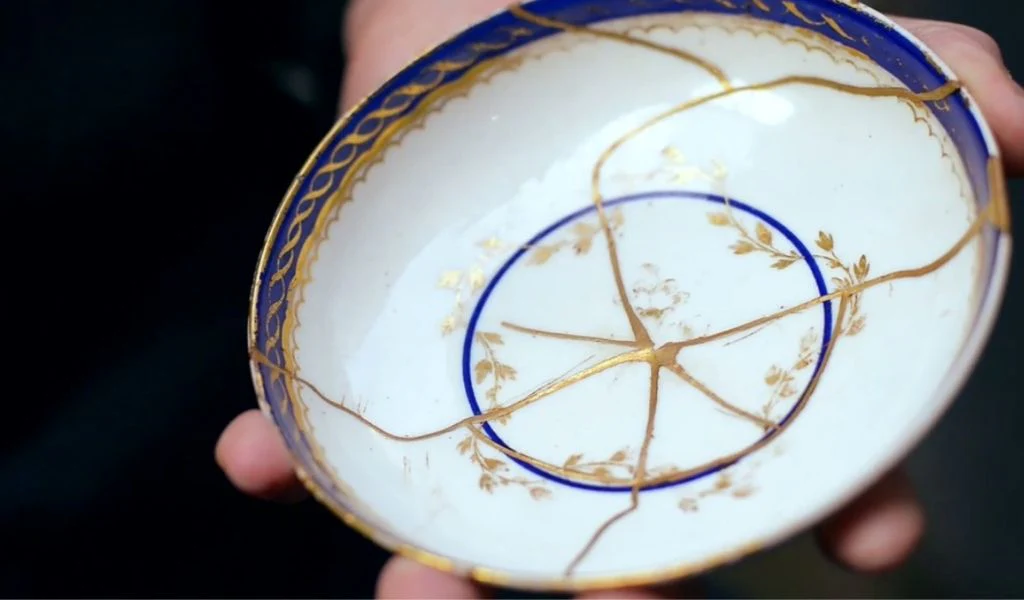
Kintsugi is the moment Japan looks you in the eye and says: “Stop hiding what happened.” We see a repaired bowl—gold threading through fractured lines—and it’s strangely emotional for an object you’ve never met before.
This technique—repairing broken ceramics with lacquer and gold powder—is a specialty of Japanese lacquer artisans. It demands patience, precision, and a steady willingness to honor damage rather than deny it.
Spiritually, kintsugi symbolizes healing and rebirth. Philosophically, it aligns with wabi-sabi, the idea that beauty lives in the imperfect, the simple, the incomplete. Kintsugi doesn’t erase cracks; it elevates them. Some practitioners even break valuable porcelain intentionally to practice—because the repair becomes the art.
If you love hands-on, quietly meditative work, kintsugi is one of the most meaningful souvenirs you can “learn” instead of buy.
Pro tip: Kintsugi is not a speed hobby. If you’re in a hurry, choose something else—or accept that the bowl is teaching you the lesson.
Traditional Japanese theatre
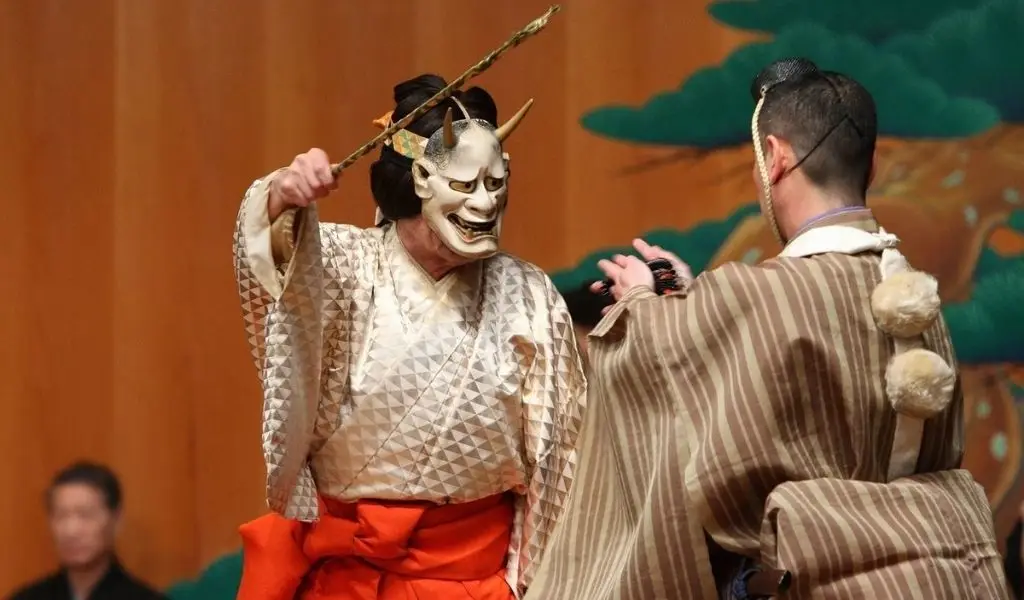
Traditional theatre in Japan doesn’t “start” when the curtain rises. It starts in the costume, the face, the mask—before a single line is spoken. We watch and realize the performance is happening in layers we weren’t trained to notice.
Inspired by legends and mythology, traditional Japanese theatre is a must-see. You’ll encounter masks, makeup, and striking costumes representing humans, ghosts, creatures, and demons.
The two major forms are Noh and Kabuki. Noh is poetic, slow, and ceremonially beautiful—supported by music, dance, and chant. The wooden masks have expressions that shift with angle and light, and the entire form resonates with samurai aesthetics and emotional discipline.
Kabuki is the extravagant sibling: dramatic, popular, and packed with legends, epic stories, and religious dances. Gestures are exaggerated, characters are bold, and special effects can be delightfully theatrical. Some performers are genuine stars.
Pro tip: Read a short plot summary beforehand. Noh especially can feel like a dream—knowing the outline helps you appreciate the details.
Traditional Japanese dolls
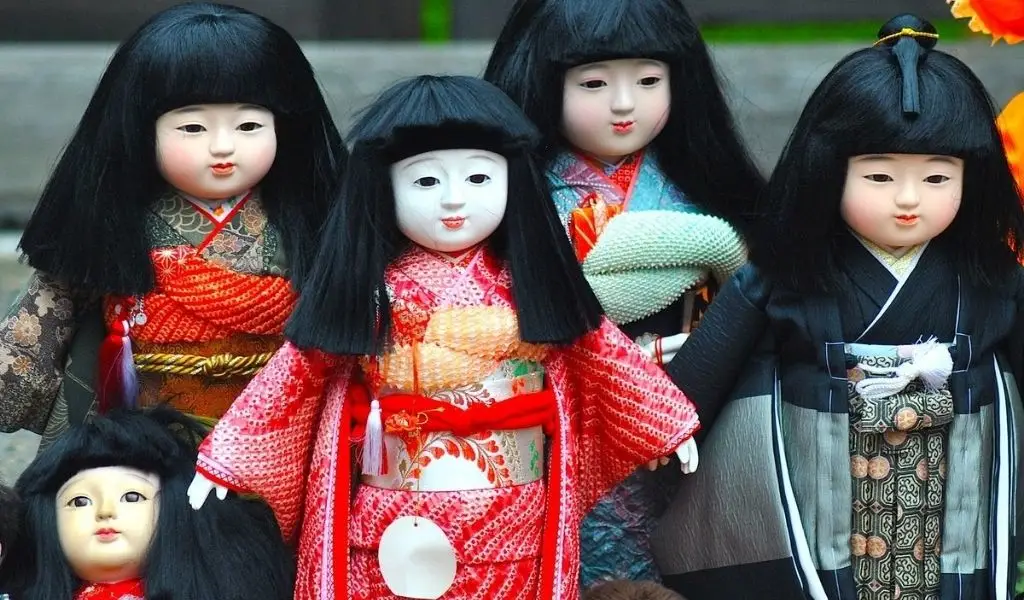
We wander into a shop and suddenly feel watched—by dozens of serene wooden faces. Traditional dolls in Japan are more than decoration; they’re objects of memory, protection, and story.
These lacquered and painted wooden sculptures—especially associated with the northeast of Japan—are often recognized by round heads and cylindrical bodies decorated with flowers and geometric patterns.
They appear in homes as decor, religious objects, amulets, and children’s toys. Many are believed to hold healing powers or protective virtues. Some dolls carry darker history too, serving as memorials for children lost during famines, while others function as talismans for the health of offspring. Daruma, Hina, Musha—each has its own role, season, and symbolism.
Pro tip: If you’re buying a doll as a gift, learn the meaning first. In Japan, symbolism is part of the packaging—whether it says so or not.
Japanese motifs and their meanings

Patterns in Japan aren’t just “pretty.” They’re portable folklore—stitched onto sleeves, printed onto paper, carved into objects. We start spotting motifs everywhere and can’t stop (your camera roll will suffer).
Traditional motifs appear on kimono, yukata, and countless crafts, each with unique symbolism: hemp leaves, feathers, sharkskin, waves, tortoise shell, climbing plants, and geometric patterns with deep histories. Some reflect superstition, some reflect fashion, some are signals of rank and distinction.
For example, the Asanoha pattern on babies’ clothes is believed to strengthen them and encourage growth. The Kikkō motif symbolizes good fortune and longevity. Once you start learning these, you read Japan like a quietly coded map.
Pro tip: When you buy a patterned item, ask (or look up) the motif meaning. You’re not just buying a design—you’re adopting a wish.
The samurai, actors of art
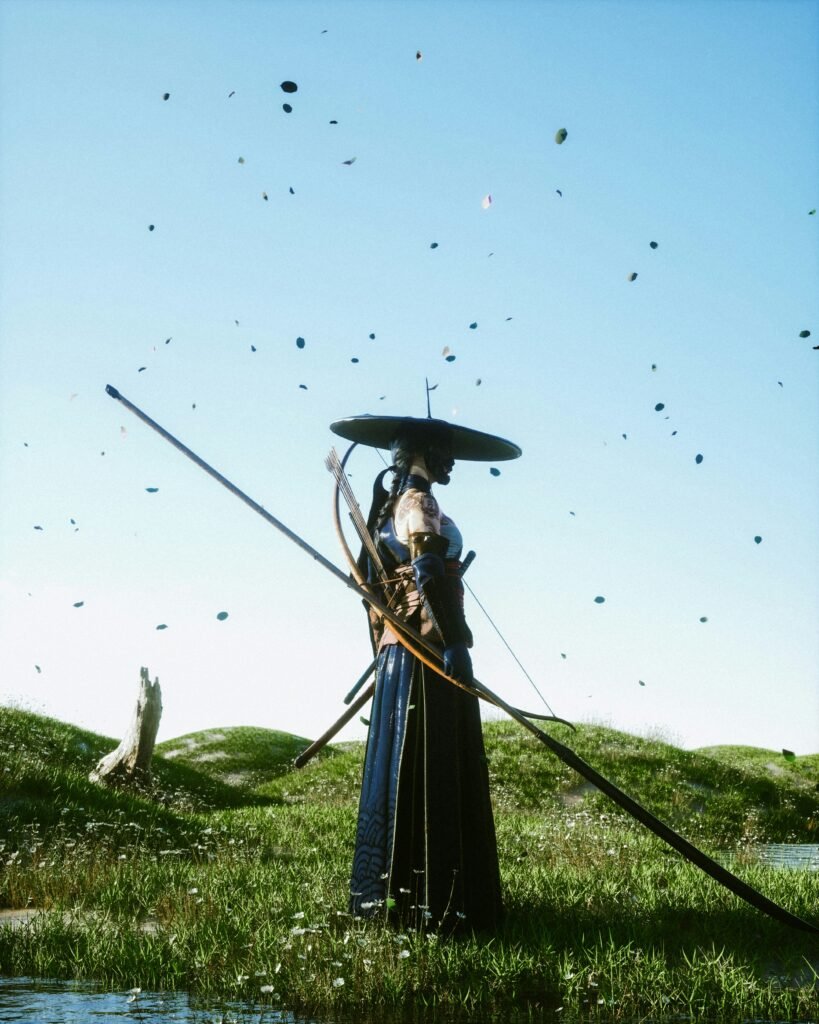
Samurai weren’t only warriors. They were curators of refinement—people who trained for violence yet cherished the soft power of beauty and discipline. Contradiction? Or the whole point?
These medieval figures left an immense cultural legacy, especially through martial arts. Their lifestyle was shaped by Zen principles: restraint, presence, and a sharpened appreciation for fleeting moments. Many arts flourished under samurai patronage: Noh theatre, calligraphy, the tea ceremony, and decorative crafts.
When we understand that, Japanese arts make even more sense. They’re not escape from life—they’re training for it.
Pro tip: Samurai culture isn’t only weapons. Look for the “daily discipline” thread—how they lived, not just how they fought.
Geishas, guardians of traditional Japanee arts
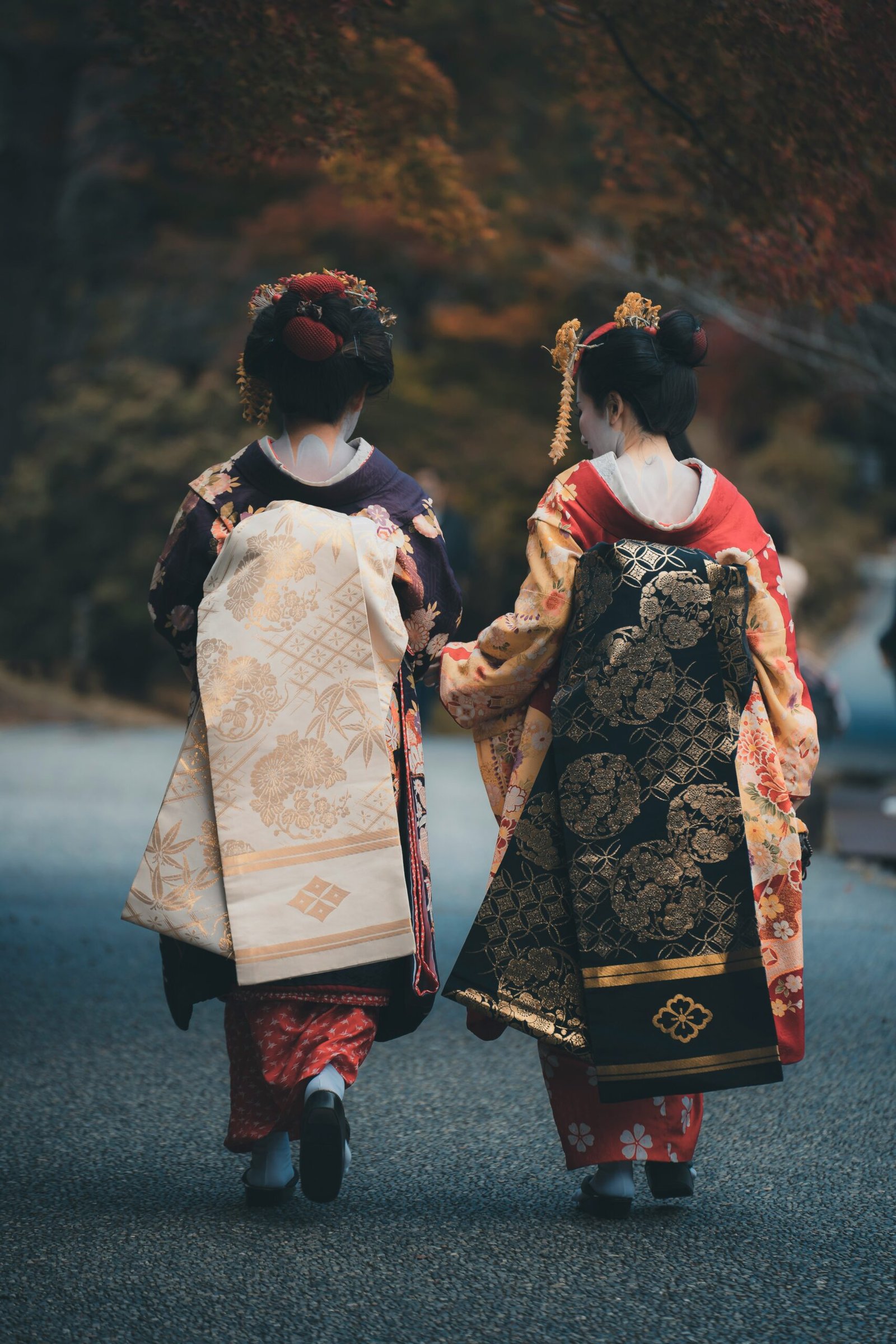
“Geisha” translates as “person who practices the arts,” and that’s exactly what they do—professionally, intensely, and with a level of polish that makes the rest of us look like we got dressed in the dark.
Geishas are highly respected guardians of tradition. Their talents come from long training and devoted practice within traditional values. Music, song, dance, poetry, and the tea ceremony are part of their daily world, and their role has long been tied to preserving cultural arts in living form—not as museum pieces.
The mystery around geishas in popular imagination is huge, but at the core is craft: performance, etiquette, and the patient mastery of detail.
Pro tip: If you’re visiting traditional districts, keep your curiosity polite. In Japan, respect is not optional—it’s the entrance fee.
The Western fascination with Japanese arts
When Japan opened to the West in 1854, Europe essentially blinked and discovered a whole aesthetic universe. The result? A creative obsession called Japonism, where Western artists borrowed composition, color, subject matter, and perspective from Japanese art—often with obvious admiration, sometimes with clumsy misunderstanding, but always with impact.
Put a Hokusai print next to a Monet and you’ll spot the echoes: the framing, the flattened planes, the bold angles, the love of nature without melodrama. Japanese arts captivated Westerners because they differed so sharply from familiar traditions—less about grand declarations, more about distilled meaning.
And that’s the recurring theme: in Japan, art isn’t only aesthetic. It’s philosophy you can hold in your hands. If you let it, it teaches you how to look—at objects, at nature, at yourself—without rushing to fill the silence.
- Nagoya rainy day with kids in 2026 (Cool Indoor Things to Do )
- Best Gachapon in Tokyo (2026): 20 Places to Find Capsule Toys
- All Japanese KitKat Flavours List: The Ultimate Japan KitKat Guide
- Sapporo rainy day with kids (2026): 7 Cool Indoor Things to Do
- What To Do In Arashiyama With Kids: A Realistic One-Day Family Itinerary