I spill travel tips , and show you the Japan that tourists usually miss.
Onsen in Japan (hot springs) are far more than just a way to warm up: they’re woven into the country’s landscape, history, and daily rhythm. From volcanic villages tucked deep in the mountains to seaside spas with panoramic views, soaking is a ritual of renewal that the Japanese have perfected over centuries.
Whether you’re dreaming of a dramatic winter dip in a snow-covered pool, a serene soak beneath maple leaves, or a private rotenburo attached to your ryokan suite, Japan has a hot spring experience for every traveler. In this guide, we’ll dive into the country’s most legendary onsen towns, share our favorite baths worth the journey, and decode the etiquette so you can slip into the water like a seasoned local. Grab your towel — we’re going on a steamy adventure.
More Japan Onsen Guides Worth Opening Next
Still plotting your way toward steaming baths, mountain views, and that deeply smug post-onsen feeling? These guides pair neatly with our Onsen in Japan post, whether you want a private soak, a ryokan stay, or a classic hot-spring destination to build into the trip.
- Want more privacy with your hot spring bliss? Start with these best private onsen in Tokyo
- Prefer the full traditional experience? Browse the most beautiful ryokan in Japan
- Planning a Kyoto stay with a private bath? Try these best ryokan with private onsen in Kyoto
- Want an easy onsen getaway from the city? Build it into this Hakone travel guide
- Prefer an urban soak between sightseeing days? Unwind at the best spas in Tokyo
- Turning relaxation into romance? Add these most romantic places in Japan
Table of Contents
Visiting an Onsen in Japan: Information and Tips
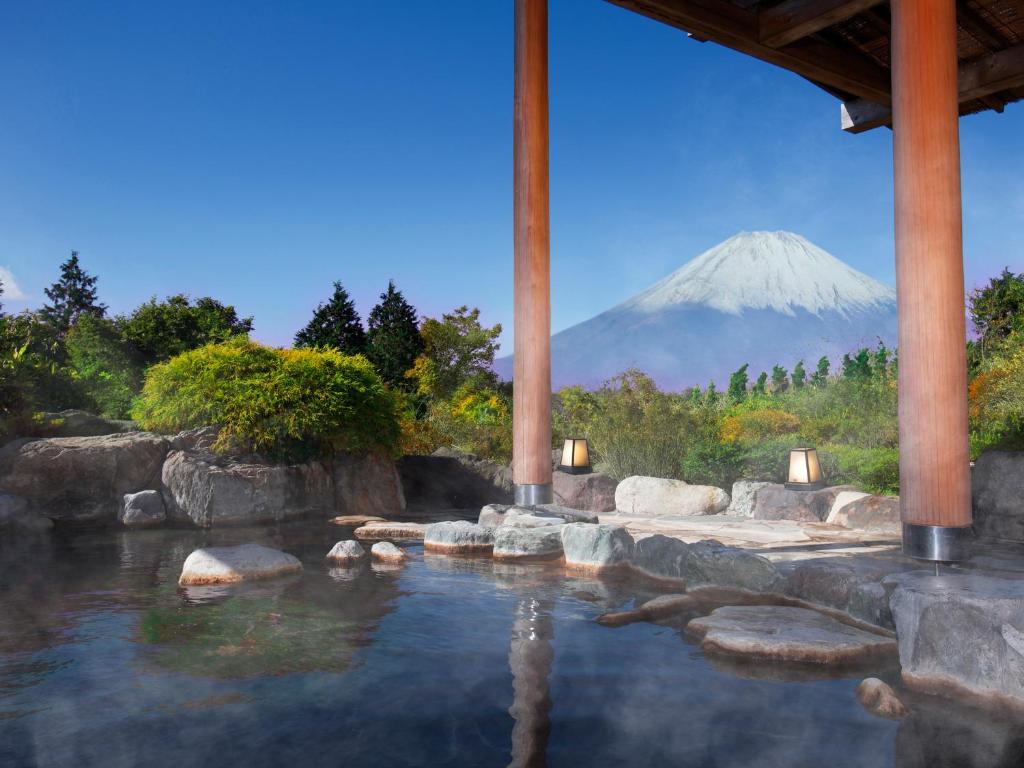
In Japan, onsen (温泉) refers to the natural hot springs found throughout the country. Onsen are extremely popular with the Japanese, and many tourists also enjoy a visit to the hot spring bath. You can relax wonderfully in the hot water and forget the world around you. In addition to its relaxing effect on body and mind, the mineral-rich bath also offers numerous health benefits.
Precisely because it is such a special experience, a visit to an onsen in Japan should be definitely on your bucket list!
1. What is an onsen?
As I briefly mentioned above, onsen are “natural hot springs .” They are formed by volcanic activity triggered by plate movements on the Pacific Ring of Fire, in which Japan is located. This releases hot, mineral-rich water to the surface—the quintessential onsen.
2. How do I recognize an onsen?
You can easily identify an onsen by its kanji , or characters. It’s usually written as温泉, but on maps or signs, it’s often written as 湯 or ゆ ( yu stands for hot water).
3. How should I behave in the onsen?
If you have decided on an onsen or your accommodation offers one, you are probably asking yourself next: “How do I behave without doing something wrong or inappropriate?”
So that you can relax in the Onsen and not have to worry about it, you will find the step-by-step instructions here :
Step 1
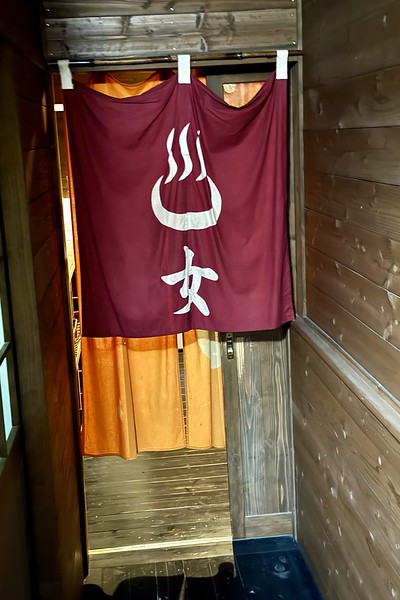
Before you start relaxing in the onsen, it’s time to find the right changing room . Onsen in Japan are always gender-segregated. You can usually identify the men’s and women’s changing areas by the curtains:
➡️ Blue curtain with this kanji (character)男is for men.
➡️ Red curtain with this kanji女is the onsen for women.
Is everything clear so far? The image below shows you what it all looks like:

Step 2
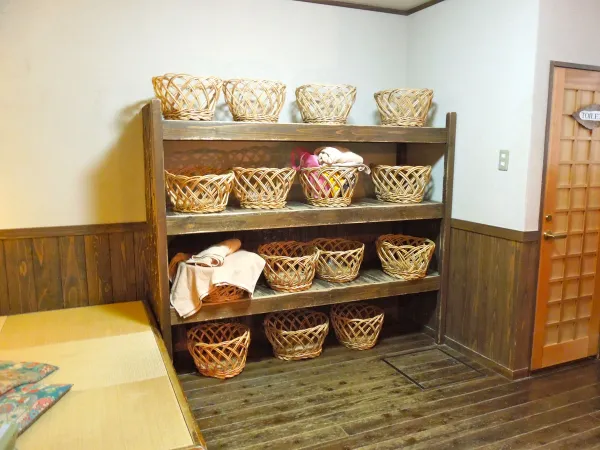
Once you enter the room behind the curtain, you must take off your shoes and store them in the designated shoe rack. Then, barefoot or in socks, you proceed to the area where you remove your clothes . Because the onsen is entered completely naked , you’ll find shelves, baskets, and often lockers for storing your belongings while bathing. This room also contains a sink, hairdryer, and facial cream.
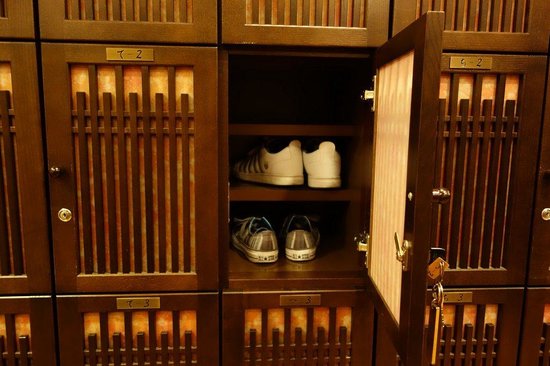
After you’ve stowed all your clothes, valuables, and towels, head to the entrance door to the onsen area . If you have a key for the locker, you can take it with you into the onsen (it’s best to tie it around your wrist).
Small hint:
There are two types of bath towels for the onsen:
- You can take the small bath towel with you into the onsen. You can use it to wash your body in the bath or to cover yourself for a bit of privacy.
- You leave the large bath towel in the changing room and only use it to dry yourself after bathing in the onsen.
If you stay in a ryokan or hotel, bath towels are provided free of charge in the room or onsen.
Step 3
Before you can relax in the onsen, you must thoroughly wash your body and hair . To do this, find a free space and use the showers, which are plentiful. You can also sit comfortably on the stool and wash yourself that way.
The following care products are usually available at each seat:
- Soap (Japanese: Body Soap = ボディソープ)
- Shampoo (Japanese: シャンプー)
- Conditioner (Japanese: conditioner = コンディショナー)
- Facial peeling (Japanese: sengan-ryō = 洗顔料)
After washing, make sure you rinse thoroughly so that no soap residue gets into the onsen water . If you have long hair, it’s best to pin it up or tie it back so it doesn’t get into the onsen.
Remember that “washing/showering” isn’t the real reason for visiting an onsen. Visiting an onsen is purely for relaxation —so head to the onsen and relax!
Step 4
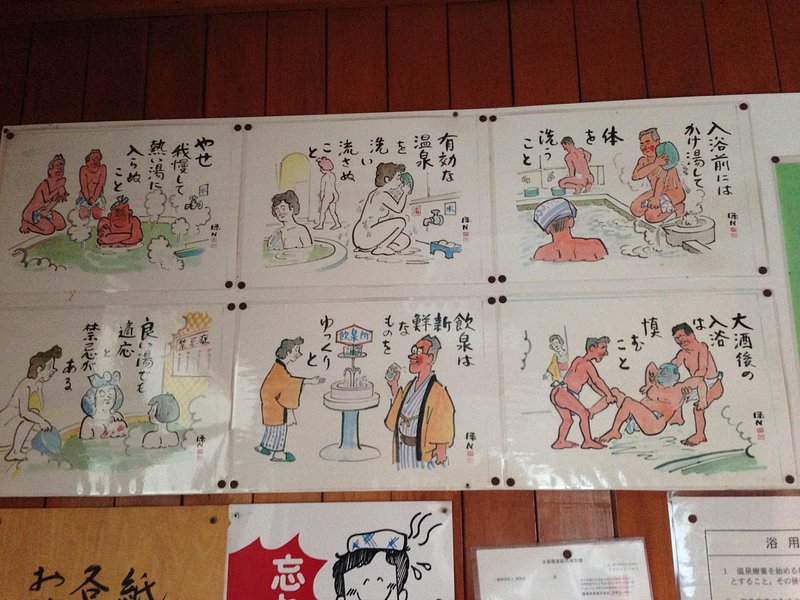
In the onsen itself, there are also some “little rules” that you should follow. I’ve also listed some useful tips for you:
- Don’t drop the small towel into the water! You can place it on your head or on the edge of the onsen pool, for example.
- Don’t “swim” in the onsen. It’s not a swimming pool.
- Stay calm and avoid talking loudly.
- Tattoos must be covered ! Some onsen don’t allow this either. A list of tattoo-friendly onsen is below .
- Caution: Slippery surfaces can occur in the onsen and shower areas!
- Caution: It’s hot! The water in the onsen has an average temperature of 41°C .
Little tip:
Check out my article DOs & DON’Ts in Japan if you want to know more about this topic.
Step 5
Have you relaxed and are ready to leave the onsen? Then go back to the shower area and give yourself a quick rinse. You can use the small towel to dry yourself again . You can also skip the rinse altogether and go straight to getting dressed. This way, the minerals from the onsen will stay on your body longer.

4. What types of onsen are there?
Indoor pool
Indoor baths (Japanese: uchiburo = 内風呂) are the most common type of onsen. They range from traditional wooden baths to elegant modern facilities.
outdoor pool
Many facilities also offer one or more outdoor baths (Japanese: rotemburo = 露天風呂). It’s a wonderful experience to be able to bathe while contemplating the sky. However, what counts as an outdoor bath varies greatly. In extreme cases, the baths are completely exposed to nature, and you have to hike a long distance to reach the onsen.
Private bathrooms
Private baths (Japanese: kashikiriburo = 貸切風呂) or “family baths” (Japanese: kazokuburo = 家族風呂) are ideal for families , couples and for those who do not feel entirely comfortable in public baths .
This type of onsen is often found in ryokan (traditional Japanese hotels) and public onsen facilities. Private baths must be reserved in advance, and use may incur a fee (around 2,000–3,000 yen for about 40 minutes). However, some ryokan offer private onsen baths free of charge to their hotel guests.
Foot bath
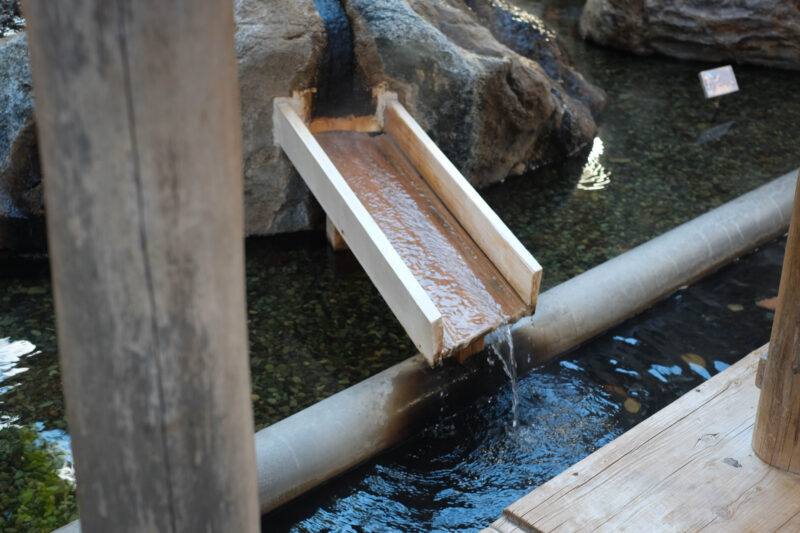
Foot baths (Japanese: ashiyu = 足湯) are shallow hot spring baths with benches for soaking feet. They are often located along the streets of hot spring resorts and are usually free to use. However, there are also facilities that specialize in foot baths, which charge a fee (up to 500 yen).
A foot bath is especially beneficial after a long hike. Definitely give it a try!
Sand and mud baths
As an alternative to bathing in an onsen, you can also try sand or mud baths in Japan. Sand baths (Japanese: sunaburo = 砂風呂) are particularly popular in Ibusuki and Beppu . You are buried up to your neck in naturally heated sand (for about 10-20 minutes). Afterwards, you wash off the sand and visit a regular onsen.
A mud bath (Japanese: doroyu = 泥湯), on the other hand, is less common. Either the entire pool you enter is filled with mud, or it consists of hot water baths where mud is drawn from a trough and applied to the skin. Among the few places where mud baths are offered are Kirishima , Beppu , and Goshogake .
5. How much does an onsen visit cost?
If you ‘ve booked a ryokan with an onsen , you don’t have to pay extra for the onsen . Many ryokan open their baths not only to overnight guests, but also to day visitors .
Day visitors pay an entrance fee of between 500 and 2000 yen for the onsen visit .
6. How long do you stay in an onsen?
The length of your bath depends on the water temperature, but generally lasts about 3-10 minutes at a time . With a short break in between, you can extend your bath to 15-20 minutes . Just listen to your gut feeling and enjoy your time in the onsen.
The frequency of bathing varies from person to person, but for an onsen beginner, I would recommend 1-2 baths per day . Once you get used to onsen, you can enjoy it 2-3 times per day.
7. Where are the most beautiful onsen in Japan? Our Hot Springs Hit List
We’ve soaked under snow, in cedar tubs, inside cave baths, and beside rivers where steam hangs like a curtain. Japan has thousands of hot onsens; these are the ones we’d cross prefectures for — the heavy hitters with soul, scenery, and that “I-live-here-now” energy.
Kusatsu Onsen (Gunma) — The Mineral Powerhouse

Why we love it: Scalding, sulfur-rich waters (cooled the old-school way), a steaming central yubatake, and wooden bathhouses that make every soak feel medicinal and mythic.
- Close to: Yubatake, Sainokawara Park open-air bath.
- How to get there: JR to Naganohara-Kusatsuguchi → bus 25–30 min to Kusatsu.
- Best for: Serious soakers, winter trips, classic town vibes.
- Pro tip: Try a soto-yu (public neighborhood bath) for a hyper-local experience — super cheap, very hot.
Check the location here
Kinosaki Onsen (Hyōgo) — Seven Baths, One Yukata Town
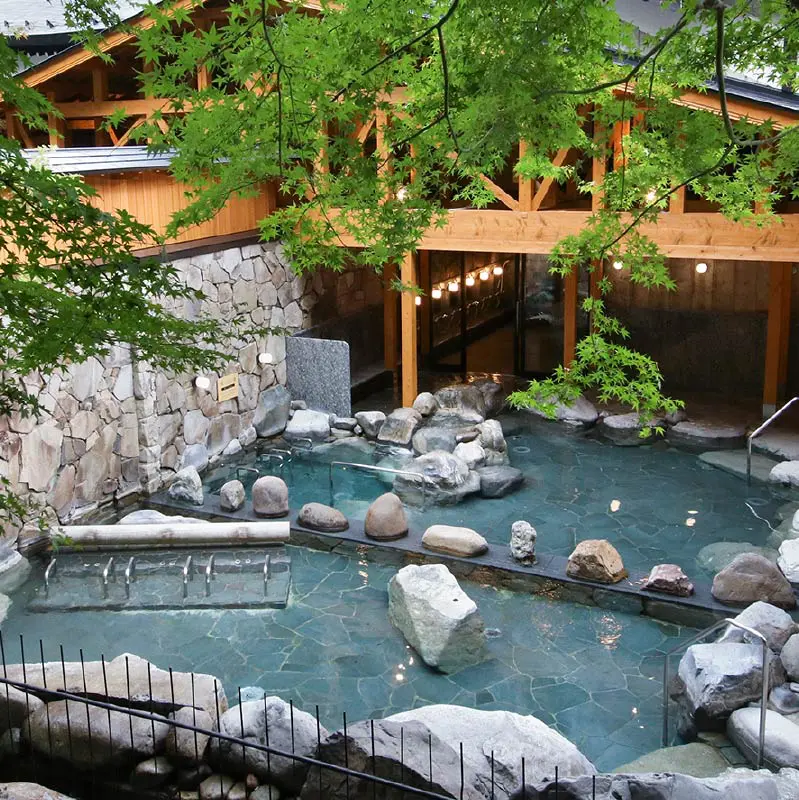
Why we love it: A willow-lined canal and onsen-hopping culture: throw on your yukata and wooden geta, then loop seven unique public bathhouses like you’re collecting achievement badges.
- Close to: All seven sotoyu baths, Old Town eateries.
- How to get there: Limited Express from Osaka/Kyoto to Kinosaki Onsen Station.
- Best for: First-timers, couples, walkable weekends.
- Pro tip: Stay at a ryokan that includes bath passes — it’s the most fun “bar crawl” you’ll ever do (minus the hangover).
Check the Kinosaki website
Nyūtō Onsen (Akita) — Snowy Mountain Baths in Thatched Inns
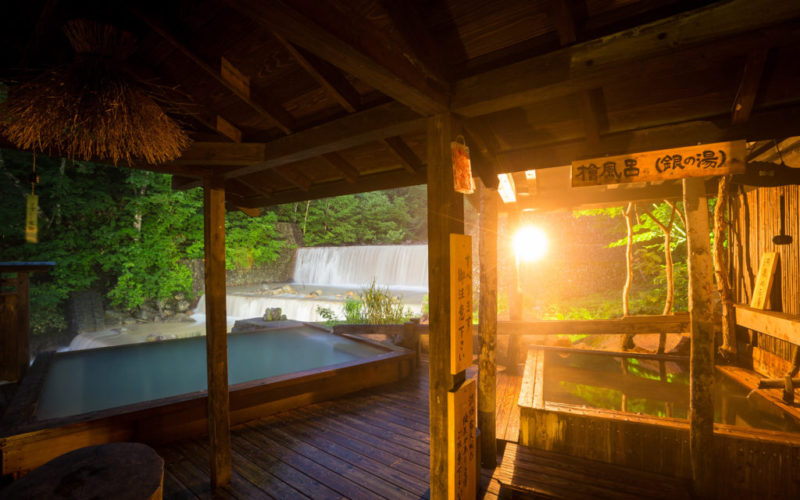
Why we love it: A cluster of rustic ryokan hidden in the beech forests; milky pools dusted by snowfall in winter. Pure storybook stuff.
- Close to: Tazawa Lake, Akita mountain trails.
- How to get there: Akita Shinkansen to Tazawako → bus/shuttle to each ryokan.
- Best for: Winter wonderland seekers, photographers, onsen romantics.
- Pro tip: Book dinner + breakfast — remote means limited dining nearby, and the kaiseki here is half the joy.
Check the onsen here
Ginzan Onsen (Yamagata) — Taishō-Era Dreamscape
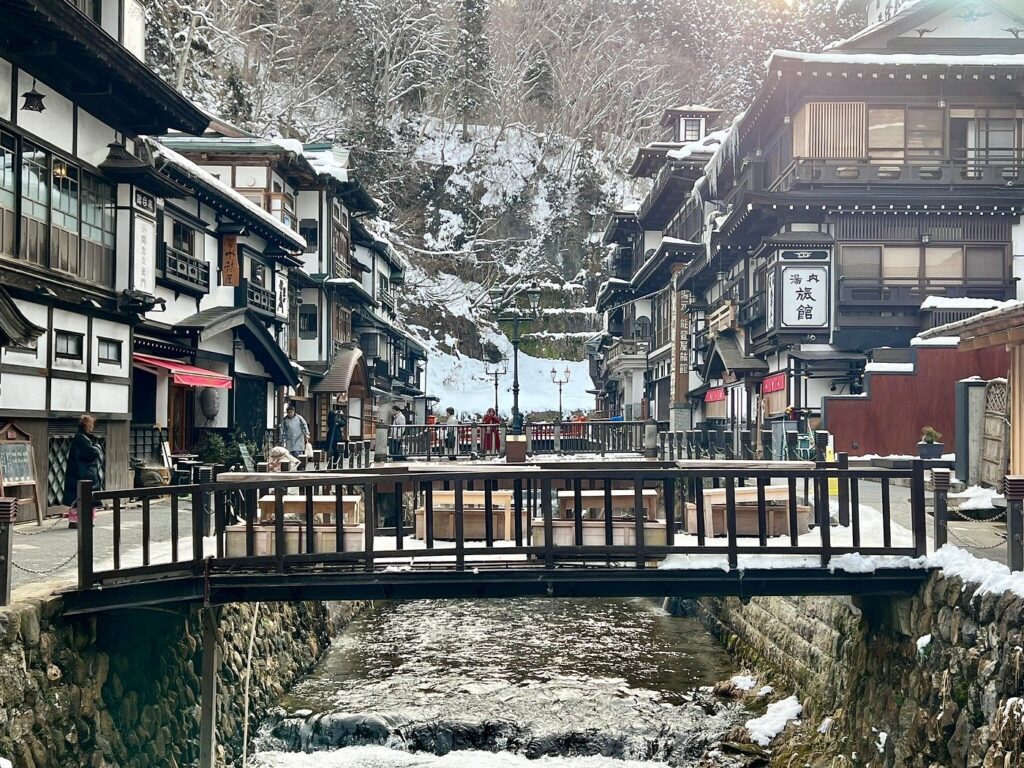
Why we love it: Gas-lit streets, timber facades, and riverside baths bracketed by footbridges. When snow falls, it’s time travel.
- Close to: Shirogane Falls, scenic riverside strolls.
- How to get there: Yamagata Shinkansen to Ōishida → bus to Ginzan Onsen.
- Best for: Aesthetic chasers, cozy winter getaways.
- Pro tip: Day-trippers: arrive early; streets get packed by mid-afternoon in peak season.
Check the location here
Kurokawa Onsen (Kumamoto) — Forest Village of Baths
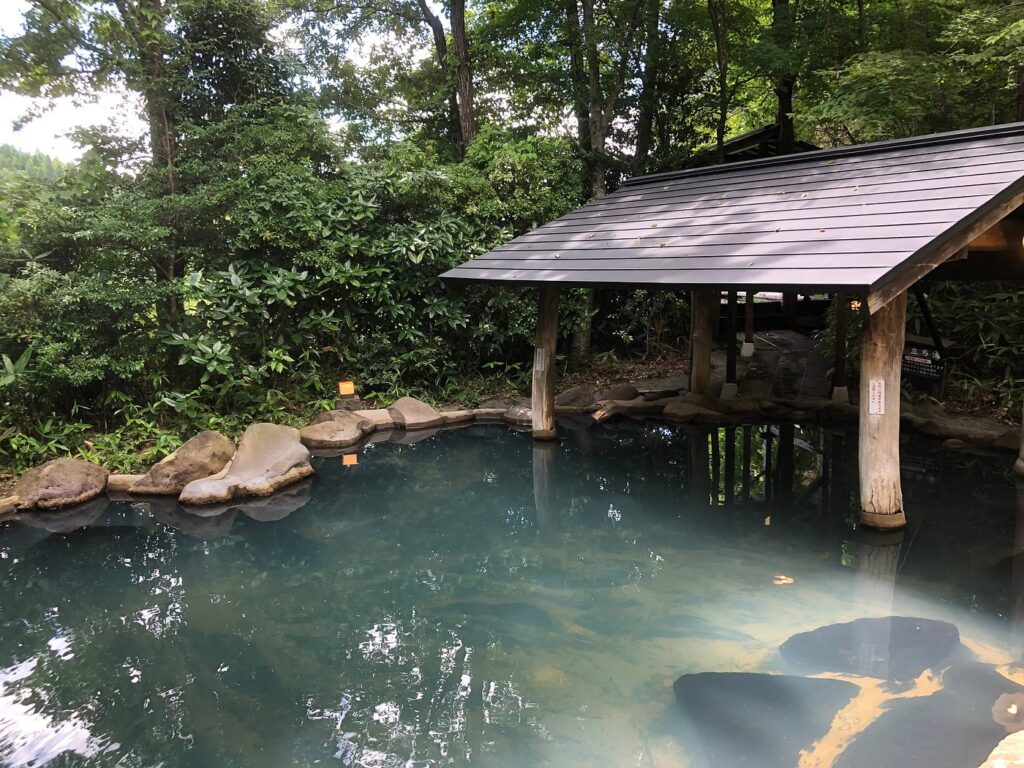
Why we love it: A river-threaded hamlet with uniform wooden signage and a focus on atmosphere. Pick up a wooden tegata pass and sample three different outdoor baths across town.
- Close to: Aso region drives, small cafés, riverside footpaths.
- How to get there: Buses from Kumamoto/Beppu; best with a car.
- Best for: Slow travelers, road-trippers, mixed friend groups.
- Pro tip: Prioritize outdoor rotenburo — the forest setting is the headline act.
Check the location here
Beppu (Ōita) — Steam Capital of Japan

Why we love it: Hot springs everywhere — sand baths, mud baths, and iconic “hells” (jigoku) for sightseeing. A geothermal playground.
- Close to: Takegawara sand bath, Beppu Jigoku, seaside baths.
- How to get there: JR Sonic/ Nichirin to Beppu Station; airport bus from Ōita Airport.
- Best for: Variety hunters, families, first-timers to Kyūshū.
- Pro tip: Book a private family bath (kazokuburo) if you’re tattooed or traveling with kids.
Check the location here
Noboribetsu (Hokkaidō) — Volcanic Theme-Park Energy
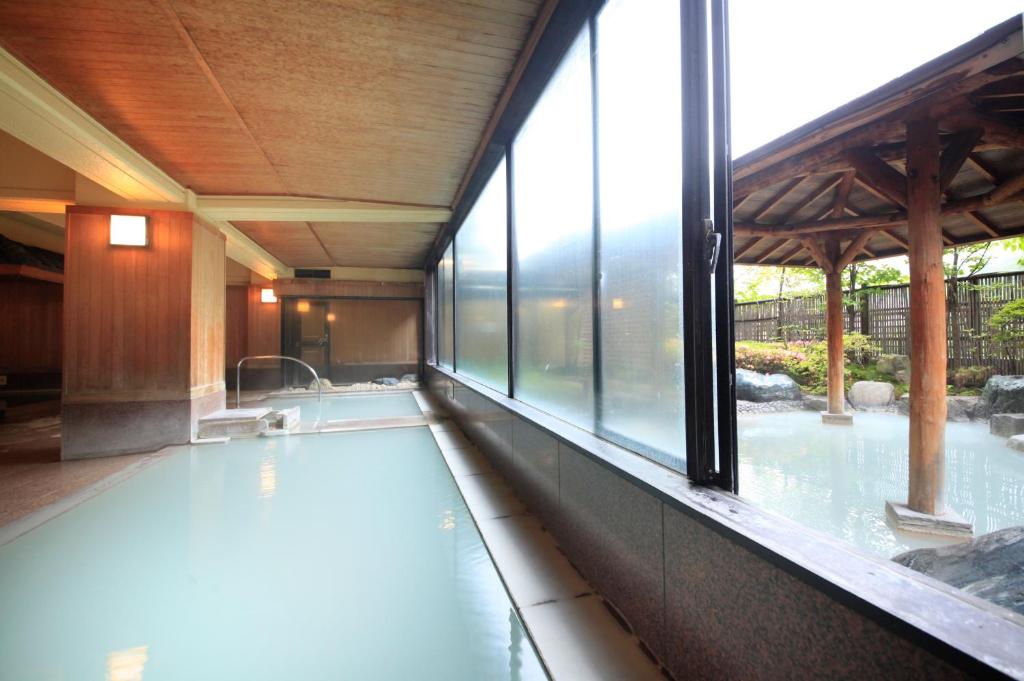
Why we love it: Nine types of hot spring water, “Hell Valley” geothermal scenery, and grand hotels with bath complexes that feel like water museums.
- Close to: Jigokudani boardwalks, Oyunuma thermal pond.
- How to get there: JR to Noboribetsu → bus to Onsen area.
- Best for: Families, big-bath collectors, winter/summer breaks.
- Pro tip: Try alternating sulfur and salt baths — your skin will applaud.
Check the location here
Dōgo Onsen (Ehime) — Legendary Bathhouse with Literary Pedigree
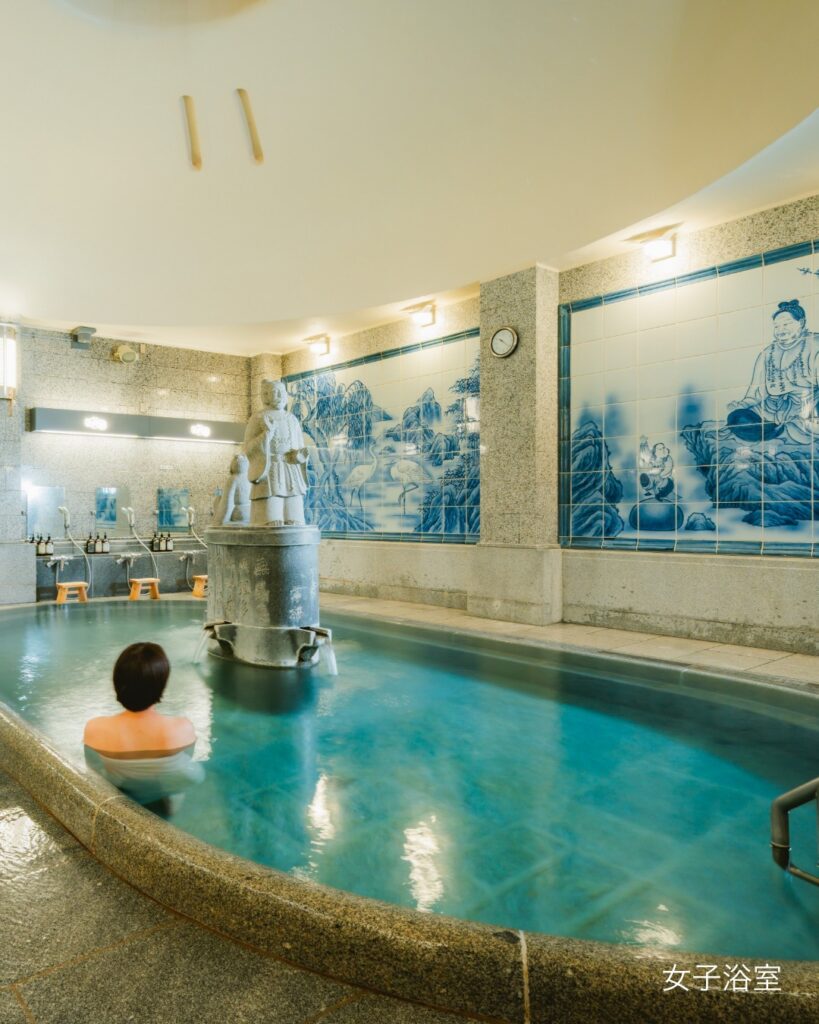
Why we love it: One of Japan’s oldest hot springs, with a storied main bathhouse that inspired artists and novelists. Matsuyama’s castle-town charm is the bonus prize.
- Close to: Dōgo Arcade, Botchan Karakuri Clock, Matsuyama Castle (tram ride).
- How to get there: Tram from Matsuyama Station/Airport bus → Dōgo Onsen area.
- Best for: Culture lovers, history buffs, architecture fans.
- Pro tip: Book renovated annex baths if the main hall is under restoration; the atmosphere remains magical.
Check the onsen location here
Takaragawa Onsen (Gunma) — River Rotenburo with Epic Scale

Why we love it: Massive outdoor riverside pools under wooden bridges — cinematic in every season, especially with snow-draped banks.
- Close to: Minakami outdoor activities (rafting, hiking).
- How to get there: JR Jōetsu Line/ Shinkansen to Minakami/ Jōmō-Kōgen → bus/taxi.
- Best for: Scenic soaks, couples’ trips, winter photos.
- Pro tip: Mixed bathing areas often have modesty options; check current rules and grab a bath towel wrap if offered.
Check the onsen here
Yufuin Onsen (Ōita) — Pastel Mornings & Boutique Ryokan

Why we love it: A valley town framed by Mount Yufu, with chic cafés, art museums, and lovely ryokan that prize design and quiet over spectacle.
- Close to: Yufuin Floral Village, Lake Kinrin.
- How to get there: JR from Beppu/Ōita; scenic buses from Fukuoka.
- Best for: Relaxed couples, café crawlers, soft itineraries.
- Pro tip: Book a room with private rotenburo — sunrise steam + mountain silhouette is the move.
Check the location here
Hakone Onsen (Kanagawa) — Iconic & Easy from Tokyo

Why we love it: A classic weekend escape: lake views, ropeways over volcanic vents, and every onsen style imaginable — from heritage inns to sleek design hotels.
- Close to: Lake Ashi, Ōwakudani, Open-Air Museum.
- How to get there: Romancecar from Shinjuku or JR/Odakyu lines → local buses/train.
- Best for: First-time Japan itineraries, varied groups, no-car trips.
- Pro tip: Day-use baths (higaeri onsen) are plentiful — perfect if you’re short on time.
Check the traditional ryokan with private onsen we booked here
READ MORE :
➡️18 Top Hotels & Ryokans with Best Private Onsen in Tokyo
➡️7 Best Ryokan with Private Onsen in Kyoto: Luxury Japanese Inns for a Relaxing Stay
8. Tattoo-friendly onsen in Japan

If you have a tattoo (no matter how small or big), it’s unfortunately somewhat difficult to find a suitable onsen in Japan where you can bathe. The problem is that the Japanese associate tattoos with the Yakuza . The Yakuza is something like the “Japanese Mafia,” and its gang members primarily have large, body-covered tattoos. Therefore, all types of tattoos in Japan are associated with this gang, and conservative Japanese, in particular, do not tolerate them at all.
But that’s no reason to worry! Even if you have a tattoo, there are ways to still visit an onsen in Japan. I’ve compiled a list of great tattoo-friendly onsen throughout Japan for you:
- Kitahama Thermal Baths, Oita
- Yuya Ebisu, Oita
- Sansui Global Inn, Saga
- Dogo Onsen, Ehime
- Kinosaki Onsen, Hyogo
- Funaoka Onsen, Kyoto
- Tsubame Onsen, Niigata
- Hottarakashi no Onsen, Yamanashi
- Tenzan Tohji-Kyo, Hakone
- Uramigataki Onsen, Tokyo
- Sekizenkan Onsen, Gunma
- Ikaho Ishidan no Yu, Gunma
- Tsukiori Onsen Takimi no Yu, Ibaraki
- Yamato no Yu, Chiba
- Kagoiwa Onsen Ryokan, Tochigi
- Zao Onsen Dai Rotenburo, Yamagata
- Hoheikyo Onsen, Hokkaido
- Hyōtan Onsen ,Kannawa
- Kannawa Mushiyu, Beppa
- Takegawara Onsen, Beppa
- Shibaseki Onsen, Beppa
- Horita Onsen, Beppa
- Tanoyu Onsen, Beppa
- Kaimonji Onsen, Beppa
- Kitahama Onsen Termas
9. Family Special: Onsen visit with kids

I think a visit to an onsen is a great way for children to learn about Japanese culture. Our children looked forward to bathing in the onsen every evening after dinner.
For families with children, there are the private baths called Kazokuburo (家族風呂), as mentioned above, which are very popular with families. If your ryokan doesn’t offer a private onsen, you can also use the separate men’s and women’s baths. It doesn’t matter whether your son comes with you to the women’s bath or your daughter to the men’s onsen. As long as they’re children, it’s perfectly fine.
Now I would like to give you some useful tips for your family time in the onsen:
- It’s best to explain to your children beforehand that everyone in the onsen is naked. Pointing at other people or even laughing at them is also taboo.
- Make your children aware that the onsen water is very hot (approximately 40–42°C). Therefore, it’s best to gradually acclimate their bodies to the hot water and enter the bath slowly. You can also let the children sit on your lap first to help them get used to the water.
- While light splashing and mischief from toddlers is tolerated, they should not run around or scream, as this is not only disruptive to other guests who want to relax there, but also dangerous – wet floors are slippery!
- The same applies to children: an onsen is not a swimming pool. Water wings and the like are not permitted.
- Toddlers still in diapers should avoid entering onsen baths. It’s best to ask beforehand whether your child is still allowed to enter.
- Don’t forget to drink plenty of fluids after the onsen! The heat and steam dehydrate your body, so you need to replace the lost fluids. This applies to adults too.
- Nagoya rainy day with kids in 2026 (Cool Indoor Things to Do )
- Best Gachapon in Tokyo (2026): 20 Places to Find Capsule Toys
- All Japanese KitKat Flavours List: The Ultimate Japan KitKat Guide
- Sapporo rainy day with kids (2026): 7 Cool Indoor Things to Do
- What To Do In Arashiyama With Kids: A Realistic One-Day Family Itinerary