
I spill travel tips , and show you the Japan that tourists usually miss.
Fushimi Inari Shrine is more than a photo under vermilion gates. It’s a mountain of shrines, a fox-filled maze of side paths, and a hike that trades crowds for wind in the cedars. Go early, walk past the first tunnel, try the Omokaru Stone, sketch a fox on an ema, and push on to a viewpoint with Kyoto at your feet. It’s free, it’s open 24/7, and it rewards anyone who lingers a little longer.
Table of Contents
What Is Fushimi Inari Shrine
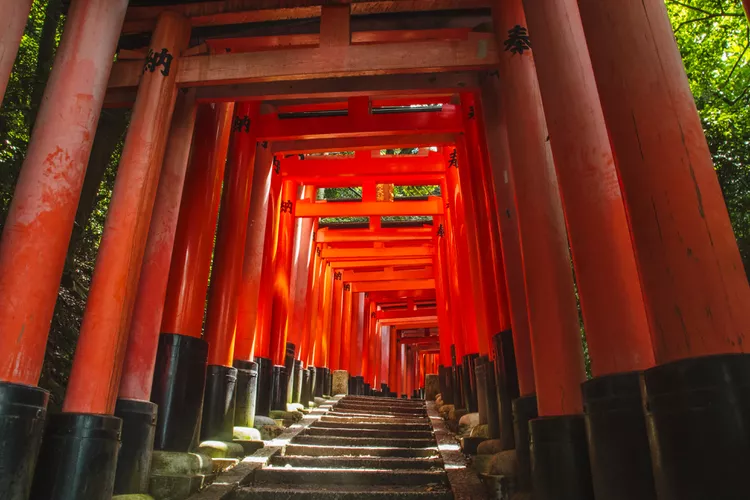
Set on sacred Mt. Inari in Kyoto’s Fushimi ward, Fushimi Inari Taisha is the head shrine of roughly 30,000 Inari shrines across Japan. The enshrined deities—collectively called Inari Ōkami—are five pillars: Ukanomitama no Ōkami, Satahiko no Ōkami, Ōmiyanome no Ōkami, Tanaka no Ōkami, and Shi no Ōkami. People visit to pray for bountiful harvests, business prosperity, household safety, and wish fulfillment.
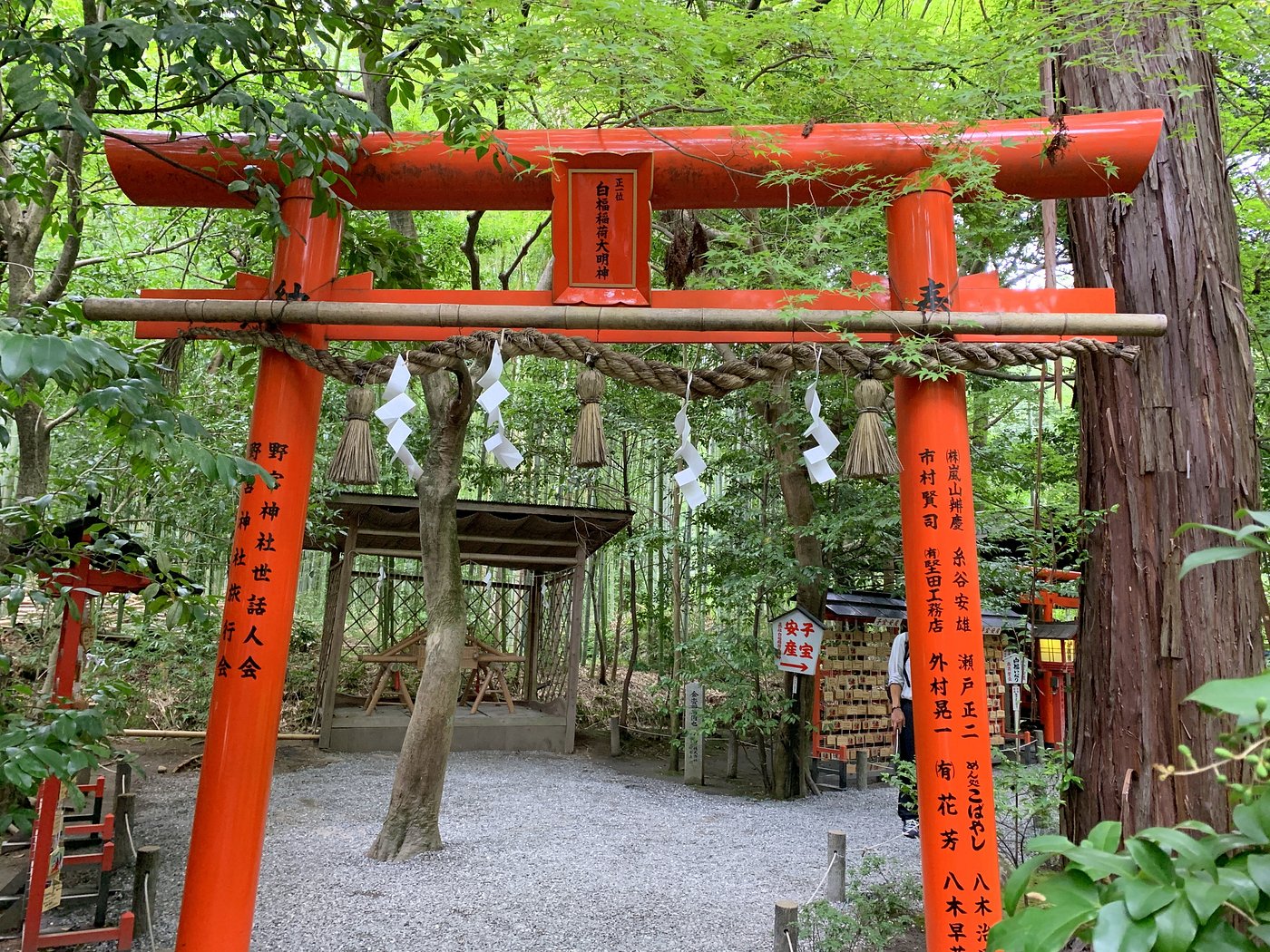
Its icon is the vivid vermilion tunnel of gates known as the Senbon Torii (“thousand torii”). You’ll also find the great Rōmon gate said to be donated by Toyotomi Hideyoshi, the Main Hall and the Oku-no-in (Inner Shrine), all designated Important Cultural Properties. Watch for the many fox statues around the grounds—each with a different expression or pose—and consider the “oyama-meguri” loop hike: the entire mountain is a sacred precinct dotted with power spots.
At dusk, the sun sets through the vermilion gates—an unforgettable view. If you visit toward evening, plan to return to the nearest station by around 18:00, as the mountain gets dark very quickly after sunset. The site is also known for supernatural tales and legends; some visitors come after dark seeking eerie experiences.
Origins of Fushimi Inari Shrine

In 711, Hata no Iroko, a descendant of the Hata clan (immigrants from the Korean Peninsula known for craft and commerce), enshrined Inari Ōkami on Mt. Inari and founded the shrine. The name “Inari” is traditionally linked to “ine ga naru” (“rice ripens”), reflecting its blessing of good harvests.
The shrine suffered heavy war damage in 1467, but all lost structures were rebuilt by 1499.
Know Before You Go: Fushimi Inari Shrine
At a glance
- Open: 24/7 (grounds)
- Fee: Free (prayers/amulets counters 08:30–16:30)
- Time needed: 60–90 min for lower grounds; 2–3 hrs for the full mountain loop
- Best time: Early morning (sunrise) or late afternoon (golden hour → exit by ~18:00 in fall/winter)
- Nearest station: JR Inari (1 min walk) or Keihan Fushimi-Inari (5–7 min)
Smart timing & crowd hacks
- Beat the buses: Arrive before 8:00 or after 16:30. Mid-day crushes the first Senbon Torii tunnel.
- Photo trick: Walk 10–15 minutes deeper—crowds thin fast; you’ll catch empty-gate moments between waves.
- Sunset rule: It gets dark fast on the mountain. If you’re not carrying a light, aim to be back near the base by ~18:00 (earlier in winter).
Route choices (pick your adventure)
- Lower loop (easy, ~45–60 min): Main shrine → Senbon Torii → Oku-no-in and back.
- Summit loop (moderate, 2–3 hrs): Full oyama-meguri past small sub-shrines, tea stops, and fox statues, up to Ichinomine (233 m). Steps, slopes, and lots of stairs.
What to wear & bring
- Shoes: Grippy, closed-toe—stairs can be slick after rain.
- Light & layers: A small flashlight/phone light for late visits; forests feel cooler than downtown.
- Water & snacks: Vending machines exist, but not everywhere on the upper trail.
Etiquette (little things that matter)
- At torii: Don’t sit or climb on gates; they’re sacred offerings.
- Purification: Rinse hands at the temizuya before approaching the main hall.
- Photos: Allowed in most outdoor spaces—avoid blocking worshippers; no drones.
- Offerings: Coins at boxes; bow twice, clap twice, pray, bow once.
Accessibility & families
- Strollers/wheelchairs: The lower precincts are mostly manageable; the mountain trails are stairs-heavy.
- Restrooms: Near the base; far fewer higher up—go before you climb.
- Kids: Gamify the hike—fox statue hunt and the Omokaru Stone “light-or-heavy” wish test are hits.
Money & services
- Cash wins: Some amulet counters take cards, many don’t. Carry small coins for offerings.
- Amulets & stamps: Omamori and goshuin (stamp) desks run roughly 08:30–16:30.
- Food street: Inari-zushi, kitsune-udon, grilled eel, and fox-themed sweets line the approach.
Safety notes
- Night hiking: Atmospheric, but paths are dim; go with a buddy and a light.
- Weather: Stone steps get slick—watch footing in rain or leaf fall.
Little extras you’ll love
- Kitsune ema: Draw a fox face before hanging your wish—great keepsake photos.
- Hidden calm: Side paths off the main ridge deliver quiet shrines and forest soundscapes.
- Viewpoints: Mid-trail rest stops offer peeks over southern Kyoto—perfect tea-and-photo breaks.
Getting there (from Kyoto Station)
- JR Nara Line → Inari (local only) | ~5 min ride + 1 min walk. Rapids don’t stop at Inari.
- Keihan Line → Fushimi-Inari if you’re coming from Gion/Ponto-chō side.
Bottom line: Go early, climb a little farther than everyone else, bring small coins and good shoes, and let the vermilion glow do the rest.
Best Time to Visit
Autumn is spectacular. Maples blaze across the mountain, and the vermilion Senbon Torii glows against the reds and golds. In typical years there’s an evening light-up from the main approach to the Main Hall, with illuminated foliage and occasional projection mapping.
Peak foliage: Mid-November to early December (varies by year). Combine with other Kyoto fall spots for a perfect leaf-peeping itinerary.
7 Must-See Highlights
1) Senbon Torii — The Icon
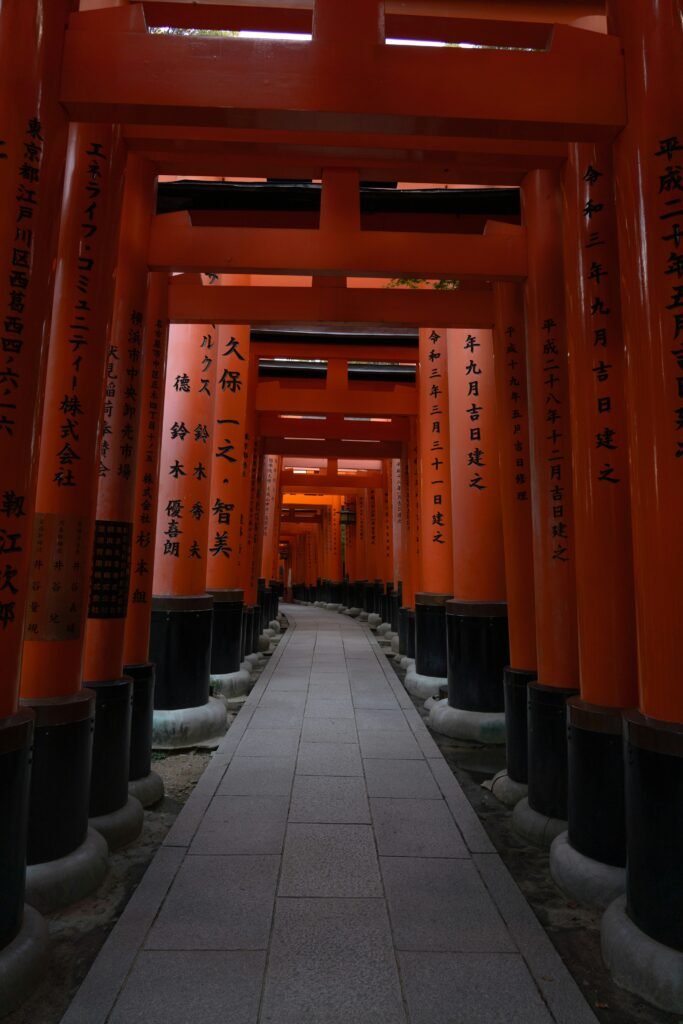
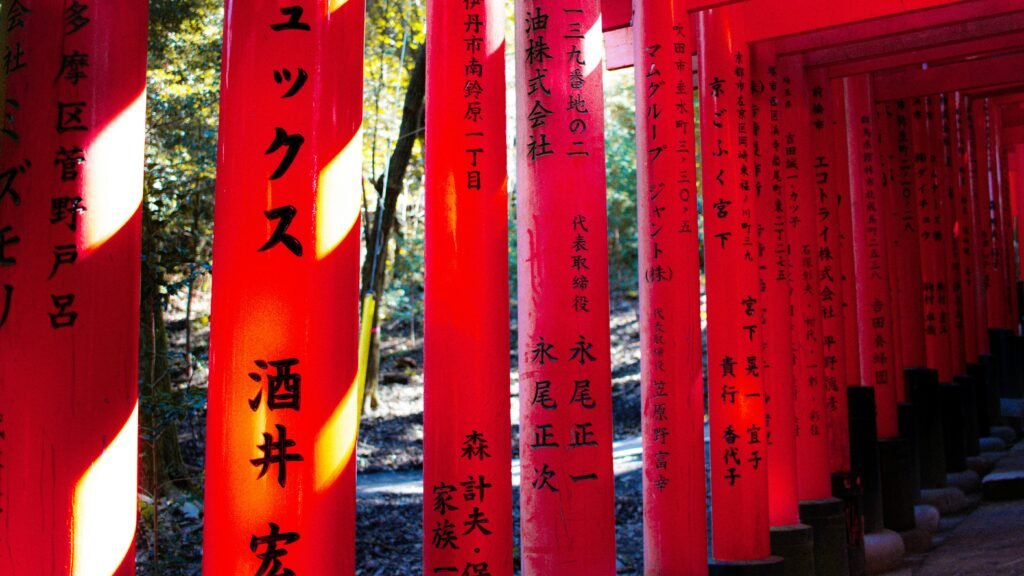
Around 800 torii line up like a tunnel. Worshippers have long donated gates in thanks when wishes “tōru” (come to pass)—a wordplay with “torii.” The custom began in the Edo period and continues today. Inside the tunnels, the light and shadows feel otherworldly; after dark, the atmosphere turns intriguingly mysterious.
2) Rōmon — Toyotomi Hideyoshi’s Grand Gate
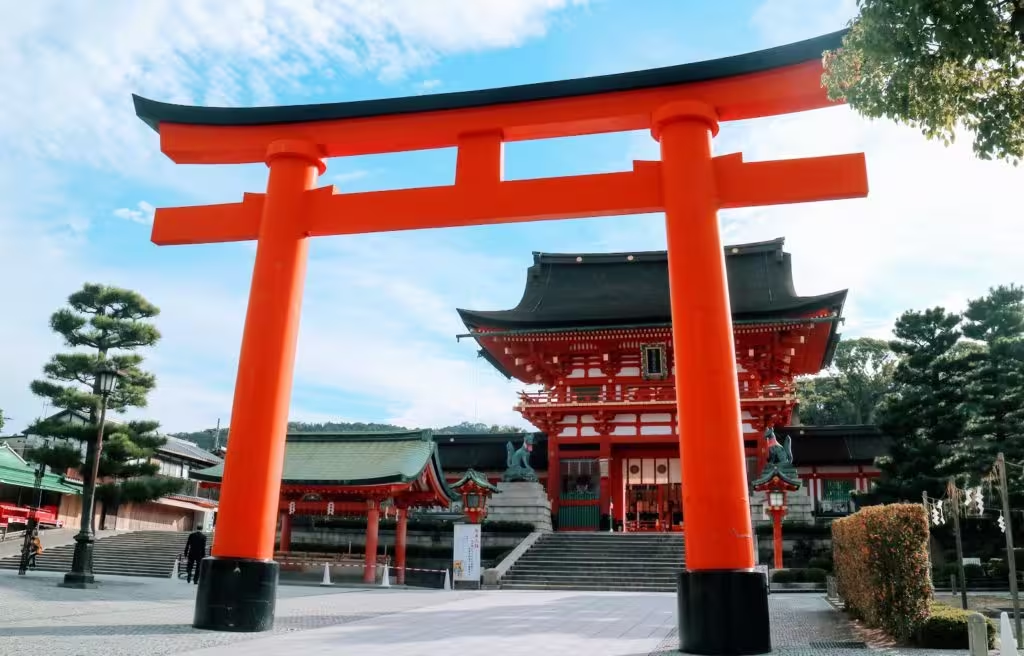
Built in 1589 by Toyotomi Hideyoshi in gratitude for his mother’s recovery, this two-storied gate with an open first level is the shrine’s main entrance. It’s Kyoto’s oldest and largest rōmon and an Important Cultural Property.
3) Main Hall (Honden) — Inari Architecture & Carvings
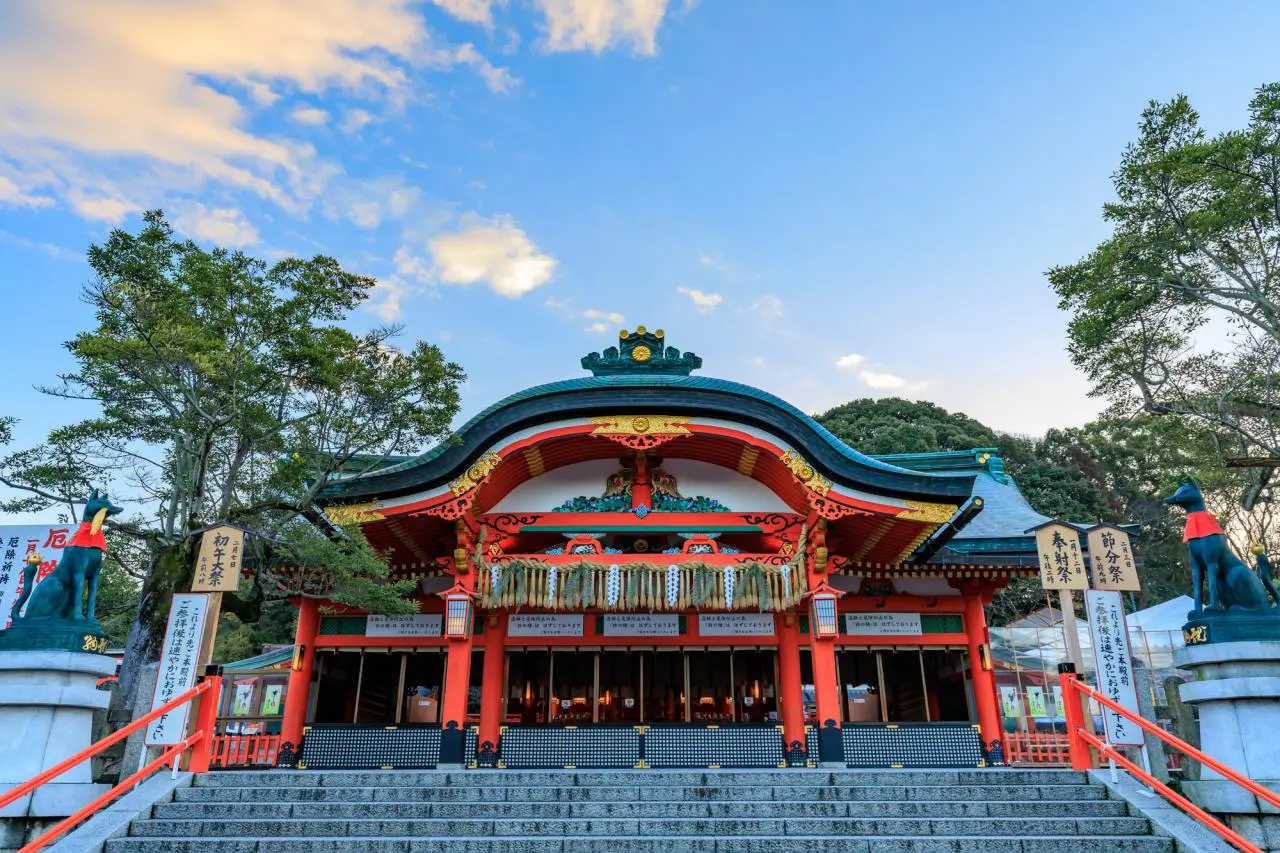
The Honden is the head of all Inari shrines in Japan, enshrining the five deities of Inari Ōkami. Note the distinctive “Inari-zukuri” style with its long forward-projecting roof and the lavish carvings under the eaves. The present structure dates to 1499 after a post-war rebuild and is an Important Cultural Property.
4) Ichinomine (Kami-sha Shinseki) — Highest Power Spot
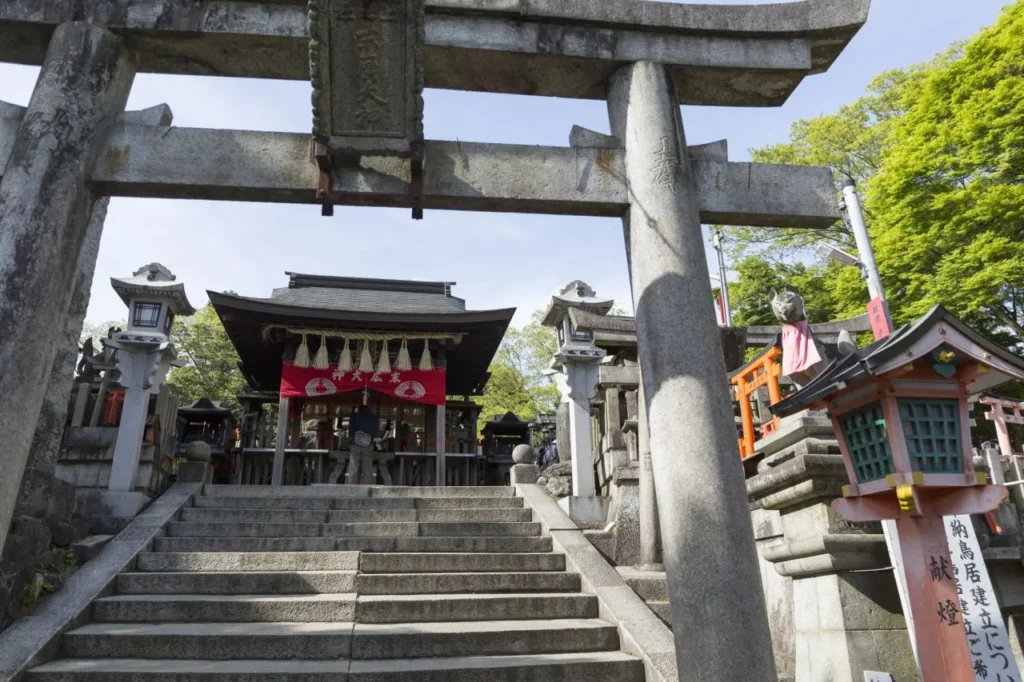
At 233 m, Ichinomine is Mt. Inari’s highest peak and the most potent power spot, dedicated to Ōmiyanome no Ōkami. People pray here for business prosperity, family safety, healing, and protection. There’s even a free omikuji—try your luck at one of Kyoto’s top spiritual sites.
5) Oku-no-in — Facing the Three Peaks
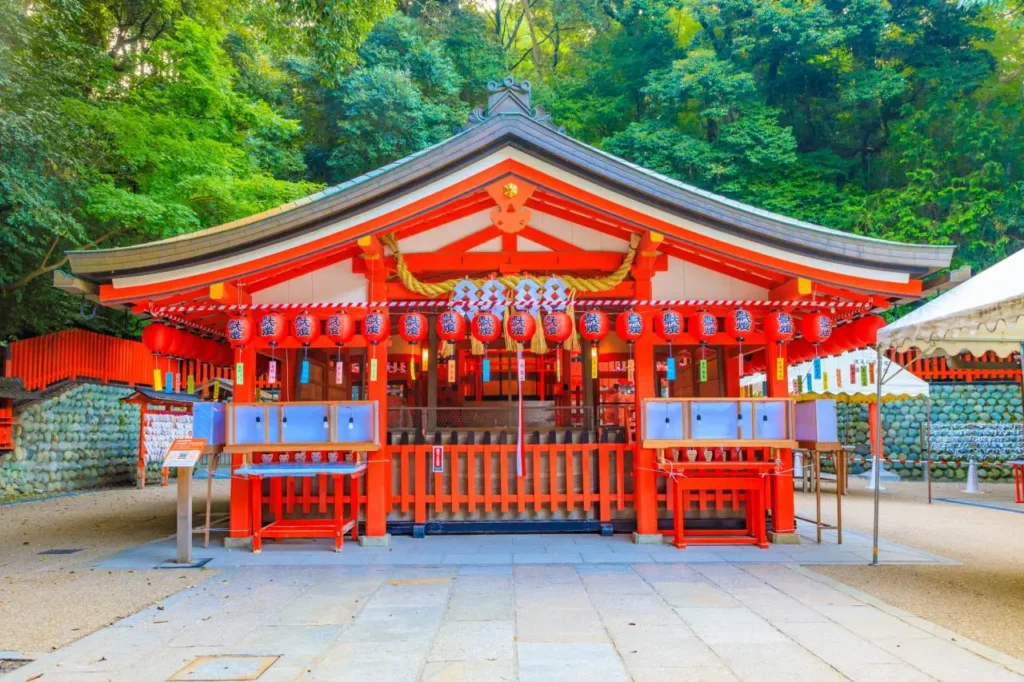
Beyond the Senbon Torii lies the Oku-no-in, a place to worship the three peaks of Mt. Inari where the deities descended. The current hall was built in 1794 and moved slightly in 1975, adding a forecourt for worship. The backdrop of the sacred peaks gives the area a solemn, numinous feel.
6) Kitsune Ema — Fox-Shaped Prayer Plaques
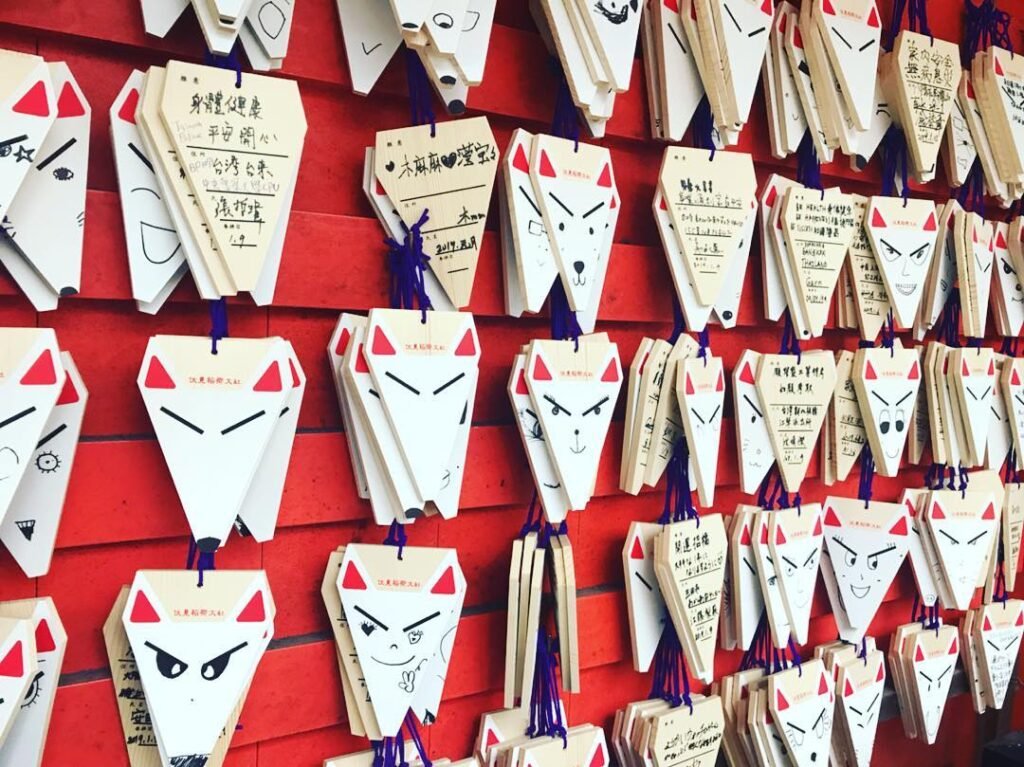
Instead of the usual house-shaped ema, Fushimi Inari offers fox-shaped ema (foxes are Inari’s messengers). Visitors draw unique faces on them before dedicating—fun to browse the wall of expressions.
7) Omokaru-ishi — The “Light or Heavy?” Fortune Stone
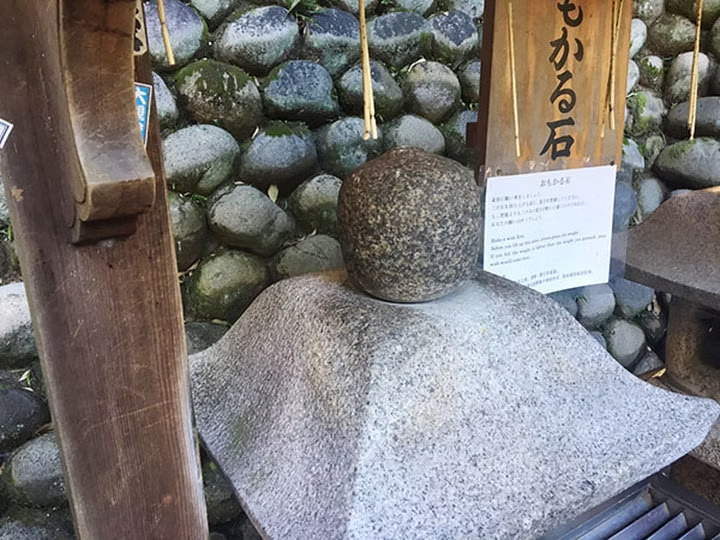
To the right of the path toward Oku-no-in, a round stone sits atop a stone lantern. Make a wish, guess the weight, then lift it. If it feels lighter than expected, your wish may be granted; heavier, and it may take more effort. It’s an easy, charming fortune-telling ritual—give it a try.
3 Top Places To Eat Near Fushimi Inari Shrine Kyoto
1) Teuchi Udon Kendonya
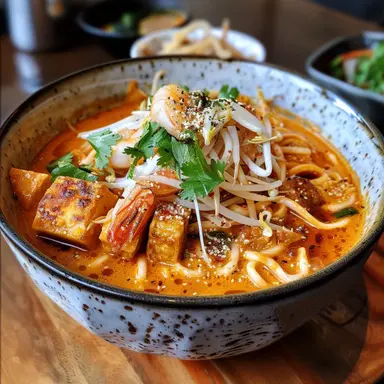
Steps from Keihan Fushimi-Inari Station, this hand-made udon shop has been beloved for 25+ years since opening in 1995 after a decade of training by the owner. House-made noodles (original flour blend) are pressure-cooked for that chewy-slippy bite; the broth uses carefully selected ingredients. A classic local favorite.
2) Nezameya
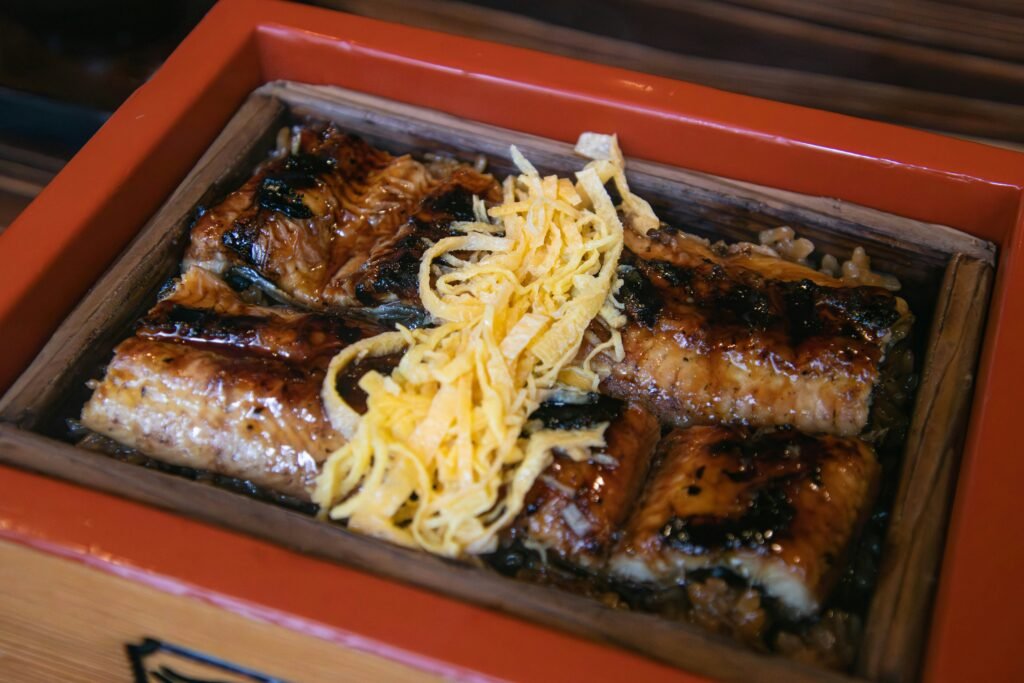
Right by the torii at the back approach. The aroma of grilled eel greets you out front; there’s eel fillet and more affordable unadon bowls. The secret house tare also flavors their quail yakitori. As befits a shrine town, inarizushi is popular too. Tradition says Toyotomi Hideyoshi named the shop.
3) Ramen Hi wa Mata Noboru
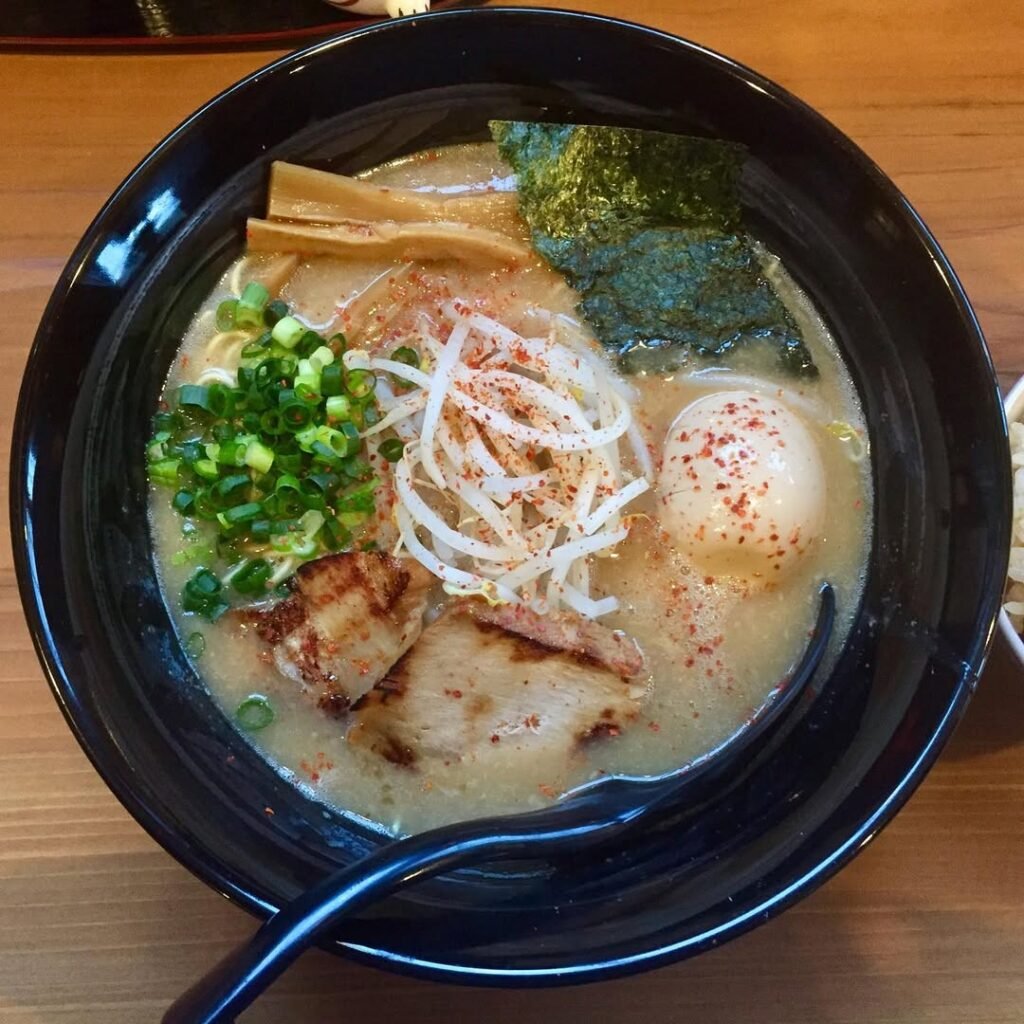
A minute from Keihan Fushimi-Inari Station, this ramen house draws queues at lunch—even with Kyoto’s fierce ramen scene. Order the signature “Tori-Tonkotsu”: a rich, slow-simmered chicken-pork broth (two days) with house noodles, topped with roasted chashu, Kujo negi, and menma. Creamy, satisfying—perfect after the hike.
Souvenir ideas: fox-face inarisenbei, bell-miso crackers with tucked-in omikuji, and shrine-linked treats like inarizushi or kitsune udon (to eat on the spot).
READ ALSO: 15 Hidden Gems in Kyoto That Locals Love (But Tourists Miss )
3 Easy Add-On Sights from Fushimi Inari
1) Tōfuku-ji
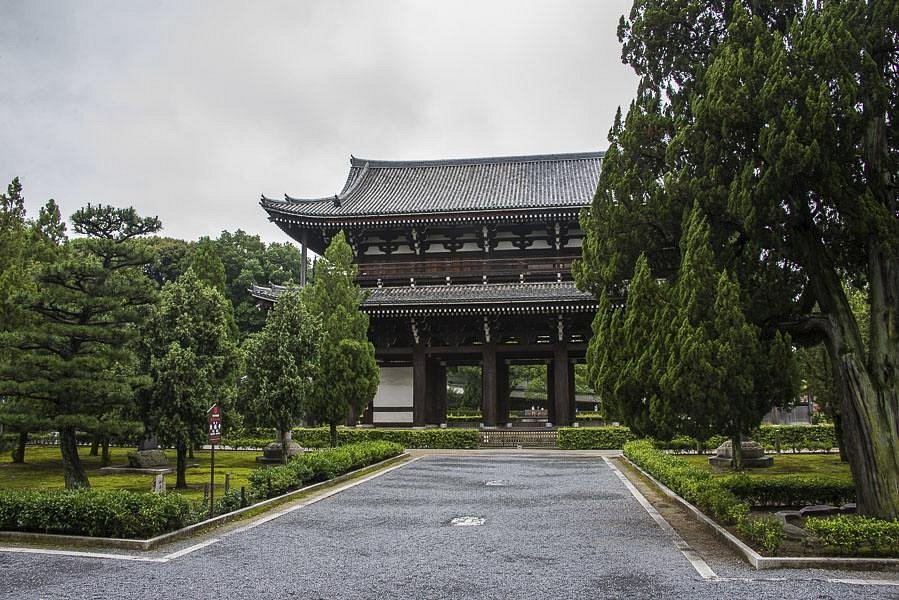
Head temple of the Rinzai Tōfuku-ji sect, founded over 19 years from 1236–1255. One of the Five Great Zen Temples of Kyoto. The current sanmon (main gate) was rebuilt in 1425 and is Japan’s oldest surviving Zen temple gate, designated a National Treasure, soaring 22 m high. In autumn, the ravine maples blaze scarlet—one of Kyoto’s most famous foliage views.
2) Kamo River (Kamo-gawa)
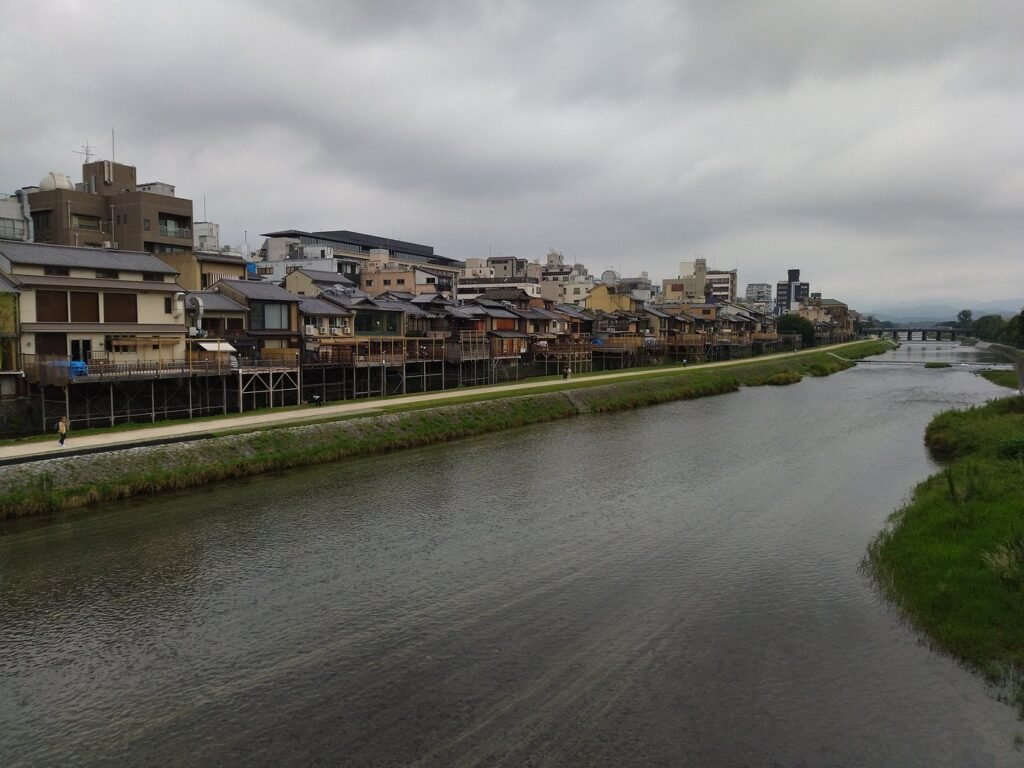
Rising near Mt. Sasayama, the river runs through central Kyoto to join the Katsura River at Toba. Around Shijō, Gion lies to the east and Kawaramachi to the west—Kyoto’s lively core. Riverside scenes here are quintessential Kyoto.
3) Kyoto Tower
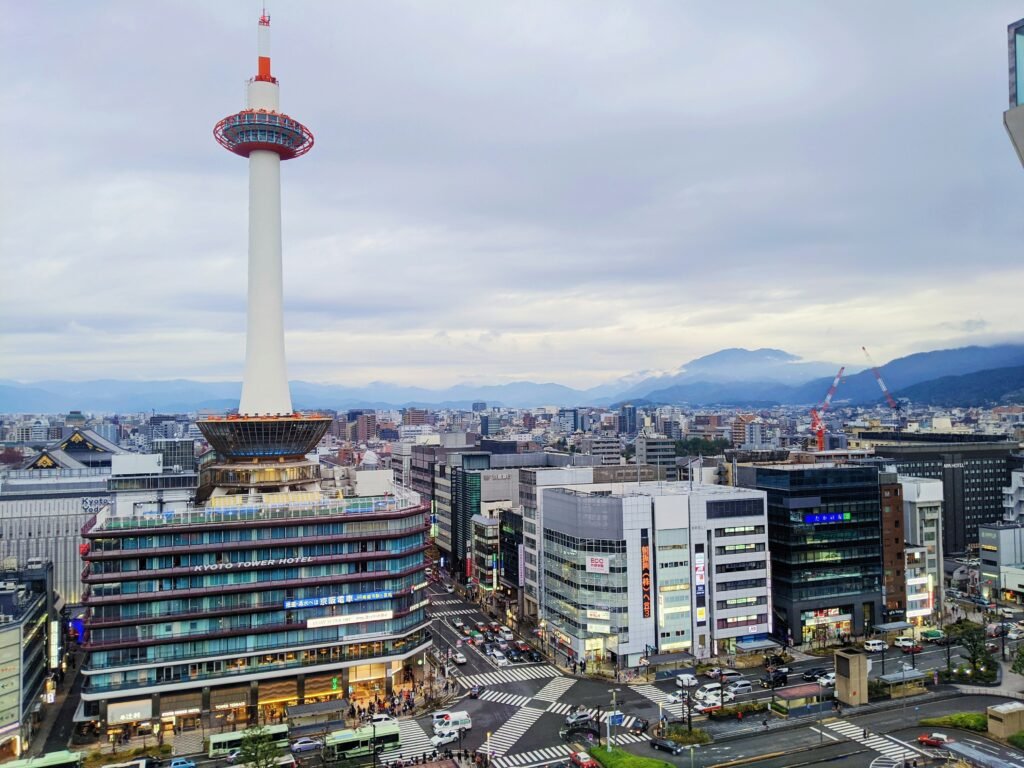
Right outside Kyoto Station, built in 1964 as a “lighthouse” for the city, standing 131 m (Kyoto’s tallest building). Over 32 million visitors have come since opening. From the 100 m observatory you can view Kyoto in the round—and on clear days, even Osaka through the free telescopes.
Top Hotel Picks for every budget
Budget — clean, easy, zero-stress
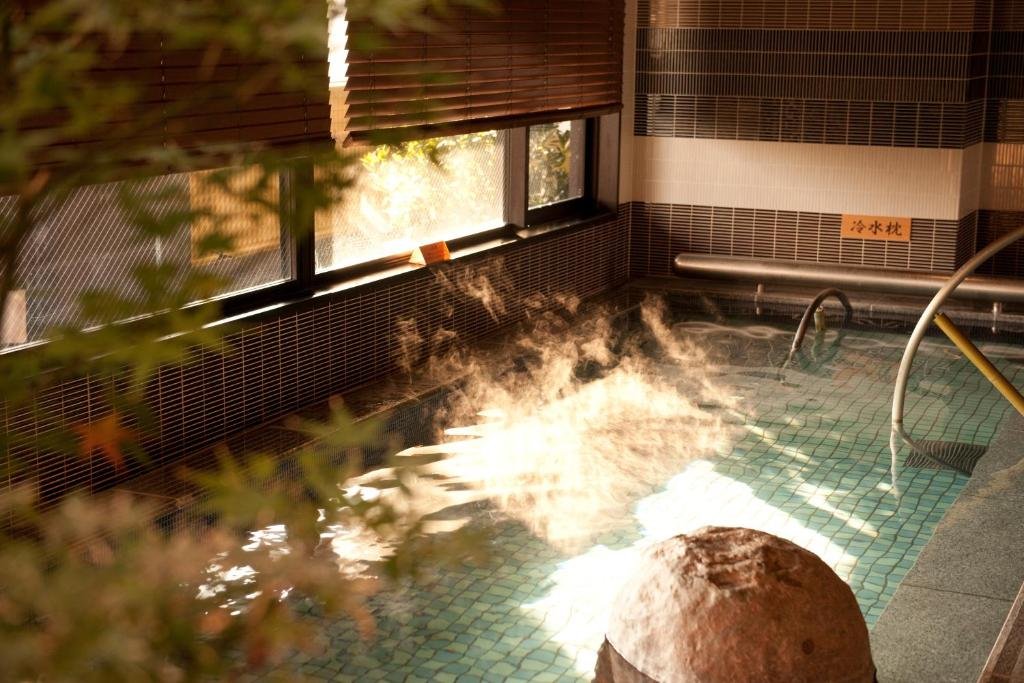
- Dormy Inn Premium Kyoto Ekimae (Kyoto Station)
If you’re arriving late and just want a hot soak and quiet, this is no-brainer. The onsen is small but soothing, staff are kind, and the free late-night ramen hits after a train ride.
Why you’ll like it: reliable, tidy, coin laundry, painless check-in.
To Inari: JR Nara Line local from Kyoto Station → Inari (~5 min) + 1 min walk.
- Super Hotel Kyoto Shijo-Kawaramachi (Downtown)
Wallet-friendly without feeling dreary. Rooms are compact, beds are comfy, breakfast is surprisingly good, and the team’s genuinely friendly. You step outside and you’re already in the shopping grid.
Why you’ll like it: everything you need, nothing you don’t.
To Inari: Walk to Keihan Gion-Shijo → Fushimi-Inari (~10–12 min) + 5–7 min walk.
- Sakura Terrace The Gallery (Kyoto Station)
Designy on a budget. Calm lounge, public bath, outdoor nooks, and coin laundry—very “we thought about travelers.” I like it for longer stays.
Why you’ll like it: stylish yet simple; great base for day trips.
To Inari: JR Nara Line local from Kyoto Station → Inari (~5 min).
Midrange — a little polish, still grounded

- Kyoto Granbell Hotel (Gion)
Modern-meets-machiya. Step out into lantern-lit lanes at night, then glide to the shrine in the morning. Rooms run compact but smart.
Why you’ll like it: location with mood; easy evening strolls.
To Inari: Keihan Gion-Shijo → Fushimi-Inari (~9–12 min) + short walk.
- NOHGA Hotel Kiyomizu Kyoto (Higashiyama)
Sleek rooms, quiet energy, and a lobby that makes you want to linger with a coffee. Feels considered, not corporate.
Why you’ll like it: thoughtful details, excellent staff, good food downstairs.
To Inari: Short hop to Keihan Kiyomizu-Gojo → Fushimi-Inari (~7–10 min) + walk.
- Mitsui Garden Hotel Kyoto Kawaramachi Jokyōji (Downtown)
A gentle, temple-adjacent hush even though you’re central. Small public bath, serene interiors, easy access to shops.
Why you’ll like it: calm in the middle of everything.
To Inari: Stroll to Keihan Sanjo/Gion-Shijo → Fushimi-Inari (~10–15 min).
Luxury — splurge and float through your day
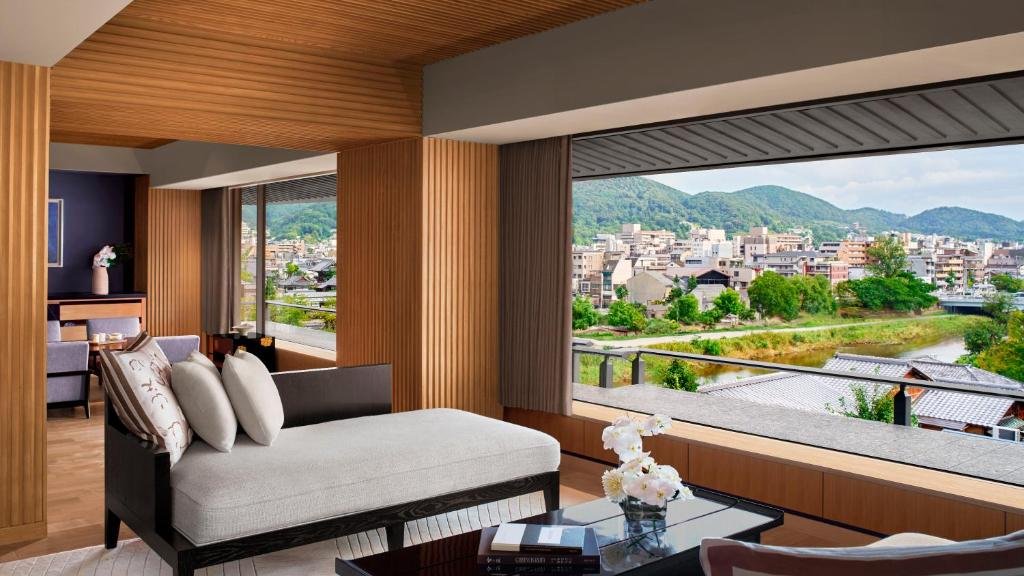
The Ritz-Carlton Kyoto
- Four Seasons Hotel Kyoto (Higashiyama)
If you want serenity in capital letters: garden pond, spa that actually unwinds you, and rooms that make you forget emails exist.
Why you’ll like it: restorative stay, flawless service.
To Inari: 10–15 min taxi or Keihan hop via Kiyomizu-Gojo → Fushimi-Inari.
- The Ritz-Carlton, Kyoto (Kamogawa Riverside)
Morning river walks, big windows, quiet luxury. Concierge will time your visit for golden hour and it actually helps.
Why you’ll like it: spacious rooms, polished everything.
To Inari: Walk to Keihan Sanjo → Fushimi-Inari (~12–15 min) + walk.
- The Shinmonzen (Gion, 9 suites)
Artful, intimate, Tadao Ando lines—all soft light and tailored service. Feels like Kyoto whispering “slow down.”
Why you’ll like it: hyper-personal, design-forward, memorable breakfasts.
To Inari: 8–10 min stroll to Keihan → Fushimi-Inari (~10 min) + walk.
Ready to Plan Your Kyoto Adventure?
Keep exploring with our other insider guides — each one crafted from real wanderings through Japan’s cultural heart. ✨
FAQs: What to Do at Fushimi Inari Shrine Kyoto
What are the absolute must-dos?
Walk the Senbon Torii, visit the Main Hall, continue to Oku-no-in, try the Omokaru Stone, and—if you have time—hike the oyama-meguri loop to Ichinomine (the summit).
When should I go for fewer crowds and best light?
Sunrise to ~8:00 or after 16:30. Sunset is gorgeous, but paths darken quickly—aim to be near the base by ~18:00 in fall/winter.
How long do I need?
Lower loop: 45–90 min. Full summit loop: 2–3 hrs with photo stops and tea breaks.
Is it really free and open 24 hours?
Yes. Grounds are open 24/7 and free. Prayer/amulet counters run roughly 08:30–16:30.
Where do I find the Omokaru Stone and how do I use it?
Near Oku-no-in. Make a wish, guess the weight, then lift. Lighter than expected = good omen.
What’s the fox ema and where do I get one?
A fox-shaped wooden plaque you draw on and dedicate. Sold at shrine stalls near the base; it’s a fun, symbolic keepsake.
Can I reach the summit easily?
It’s a stair-heavy loop with steady climbs. Wear grippy shoes, bring water, and take tea breaks at small rest stops along the ridge.
Any photo tips for the torii tunnels?
Walk 10–15 minutes beyond the first tunnel; gaps appear between waves. Shoot portrait orientation to frame the tunnel, or step to the side to avoid blocking worshippers.
Is it safe to visit after dark?
Atmospheric but dim. Bring a light, go with a buddy, and watch your footing on damp stone steps.
How do I get there from Kyoto Station?
JR Nara Line → Inari (local only; rapids don’t stop). 1-minute walk from Inari Station. From Gion/central east side, use Keihan → Fushimi-Inari.
What should I eat nearby?
On the approach: inarizushi, kitsune udon, grilled eel. For a sit-down bowl, try ramen spots by Keihan Fushimi-Inari.
Is it stroller/wheelchair friendly?
The lower precincts are mostly manageable; the mountain trails are not—they’re stair-heavy with uneven stone.
Any etiquette I should know?
Don’t sit on torii, keep voices low, don’t block worship lines, rinse hands at the temizuya, and follow the bow-clap-pray bow sequence.
What if it rains?
It’s beautiful—but slick. Wear treaded shoes, use the handrails where available, and pack a light rain shell.
- Nagoya rainy day with kids in 2026 (Cool Indoor Things to Do )
- Best Gachapon in Tokyo (2026): 20 Places to Find Capsule Toys

- All Japanese KitKat Flavours List: The Ultimate Japan KitKat Guide
- Sapporo rainy day with kids (2026): 7 Cool Indoor Things to Do
- What To Do In Arashiyama With Kids: A Realistic One-Day Family Itinerary