
I spill travel tips , and show you the Japan that tourists usually miss.
Kyoto does that thing where you’re quietly minding your own business—wandering past a shrine gate at sunrise, sipping matcha, pretending you’re totally unfazed by the elegance—then bam: you realize this city deserves a hotel that matches the mood. Not “big shiny tower with a lobby the size of an airport,” but a place that feels like Kyoto: calm, deliberate, a little dramatic (in the best way).
Luxury here can mean a garden-view suite where the outside world fades to birdsong, a ryokan-style stay with a deep bath that resets your personality, or a polished five-star base where you can glide from breakfast to temples like you’re starring in your own travel documentary.
In this guide, we’ll walk you through the best luxury hotels in Kyoto.
Table of Contents
Best Luxury Hotels in Kyoto: Quick Comparison
No time to emotionally spiral through 24 beautiful Kyoto hotels? Fair. Here is the fast version: where to stay, who each hotel is best for, and why it might be the one worth checking first.
| Best for | Hotel | Area | Why book it |
|---|---|---|---|
| Classic Higashiyama luxury with onsen energy | Banyan Tree Higashiyama Kyoto | Gion / Higashiyama | Cypress tubs, in-room hot spring options, Kyoto views, a Noh stage, and serious spa credentials. |
| Heritage stay near Kiyomizu-dera | The Hotel Seiryu Kyoto Kiyomizu | Gion / Higashiyama | A former school turned luxury hotel, close to Yasaka Pagoda and Kiyomizu-dera, with lounge perks and Kyoto atmosphere for days. |
| Gion convenience with a polished public bath | Hotel The Celestine Kyoto Gion | Gion | Great for travelers who want old Kyoto mood, Kennin-ji nearby, a guest lounge, public bath, and easy Kyoto Station shuttle access. |
| Wellness-first luxury | Six Senses Kyoto | Higashiyama Shichijo | Best for spa lovers, wellness travelers, healthy dining, serene interiors, and a reset-your-nervous-system Kyoto stay. |
| Iconic garden luxury | Four Seasons Hotel Kyoto | Higashiyama Shichijo | An 800-year-old pond garden, tea ceremony setting, refined rooms, and a very strong “yes, we deserve this” argument. |
| Reliable high-end Kyoto base | Hyatt Regency Kyoto | Higashiyama Shichijo | Opposite Kyoto National Museum, close to key temples, with classic service, garden views, and practical Kyoto Station transfer perks. |
| Kamo River plus Pontocho convenience | Dhawa Yura Kyoto | Sanjo | Best for travelers who want river walks, Gion/Pontocho access, easy station logistics, and boutique comfort without going fully remote. |
| Autumn foliage and hot spring splurge | The Westin Miyako Kyoto | Keage | Ideal for Nanzenji, Eikando, museums, foliage season, and the Kasuien annex rooms with natural hot spring baths. |
| Creative city-base energy | Ace Hotel Kyoto | Karasuma Oike | Art, music, design, ShinPuhKan location, social lobby energy, and a central base that does not feel bland. |
| Central Kyoto with lounge perks | The Royal Park Hotel Iconic Kyoto | Karasuma Oike | Best if you want an easy central location, calming interiors, balcony-room potential, and afternoon tea/cocktail lounge perks. |
| Smart polished stay with craft details | Mitsui Garden Hotel Kyoto Sanjo Premier | Sanjo / Karasuma Oike | A good choice for travelers who want modern Kyoto design, practical room features, good breakfast, and a central-but-calm stay. |
| Families and groups who need space | MIMARU SUITES Kyoto CENTRAL | Karasuma Oike | Huge 85㎡ suites, 2–3 bedrooms, kitchens, living space, and sanity-saving layouts for families or friends. |
| Riverfront ultra-luxury | The Ritz-Carlton Kyoto | Kamo River / Central Kyoto | Best for polished service, large rooms, Kamo River views, and a Kyoto luxury stay that knows exactly how expensive it is. |
| Paris-meets-Kyoto indulgence | Fauchon Hotel Kyoto | Gojo | French luxury food brand energy, sweet treats, Fauchon Lounge access in higher categories, and a playful city-luxury mood. |
| Thai spa elegance in Kyoto | Dusit Thani Kyoto | Gojo / Nishi Honganji | Best for travelers who want Thai hospitality, Kyoto calm, spa treatments, refined design, and a slightly different luxury angle. |
| Minimalist Nijo Castle hideaway | Garrya Nijo Castle Kyoto | Nijo | A small Banyan Group hotel with only 25 rooms, castle views, garden calm, and minimalist adult-hideaway energy. |
| World-class Japanese luxury | HOTEL THE MITSUI KYOTO | Nijo | One of Kyoto’s most serious luxury stays, facing Nijo Castle, with garden-centered dining, thermal spa energy, and top-tier design. |
| Classic comfort near Kyoto Imperial Palace | Kyoto Brighton Hotel | Marutamachi / Kyoto Imperial Palace | Large rooms, experienced concierge help, shuttle access, kaiseki dining, and a calmer base near Kyoto Gyoen. |
| Romantic machiya inn with private bath | Nazuna Kyoto Gosho | Kyoto Imperial Palace area | Only seven rooms, renovated townhouse atmosphere, sweet-themed interiors, private gardens, and semi-open-air cypress baths. |
| Kyoto Station convenience without chaos | THE THOUSAND KYOTO | Kyoto Station | Two minutes from Kyoto Station, but calm and elegant inside — great for early trains, late arrivals, and polished transport convenience. |
| Forest retreat near Kinkaku-ji | Aman Kyoto | Rakuhoku / Takagamine | Best for total quiet, mossy forest paths, private garden atmosphere, kaiseki, spa, and once-in-a-lifetime Kyoto calm. |
| Nature, thermal pool, and modern retreat energy | ROKU KYOTO, LXR Hotels & Resorts | Rakuhoku / Takagamine | Spacious rooms, nature views, some private hot spring options, thermal pool access, and a resort-like stay in northern Kyoto. |
| Arashiyama riverside luxury | Suiran, a Luxury Collection Hotel, Kyoto | Arashiyama | Best for Hozu River views, open-air hot spring baths, romantic scenery, and a stay right in Kyoto’s most cinematic area. |
| Arashiyama design and food lovers | MUNI KYOTO | Arashiyama | Minimalist riverside design, big windows, Togetsukyo Bridge location, and Alain Ducasse-linked dining. |
Booking tip: Kyoto luxury hotels change price dramatically by season. Cherry blossom, autumn foliage, Golden Week, and long weekends can turn “expensive” into “did the room come with a small temple?” expensive. If your dates are flexible, compare a few options before you commit.
Gion & Higashiyama
This is the Kyoto you came for. The Gion/Higashiyama stretch is where the old townscape refuses to disappear—quiet lanes, creaking machiya façades, temple bells in the distance, and that “wait, is this real?” feeling when you turn a corner and the whole scene looks like a postcard that learned how to breathe.
And here’s the hack: stay nearby and walk at dawn. You’ll be minutes from Kiyomizu-dera and Ninenzaka, and you can do the iconic stroll before the tour buses unload their optimism (and selfie sticks). This is one of the best bases in Kyoto if you want atmosphere first, logistics second—and still want both.
Banyan Tree Higashiyama Kyoto
First thing you notice? The entrance—a bold wooden façade that looks like it was designed to make you slow down and behave.
Banyan Tree is a 52-room luxury property perched on the Higashiyama hills, near Kiyomizu-dera, with views over Kyoto that make you want to narrate your own life like a film.
The master architect is Kengo Kuma, and the whole concept leans into “yūgen”—that mysterious, understated beauty from Zeami’s “Fūshi Kaden.” Translation: nothing shouts, everything glows. The architecture melts into the surrounding nature instead of trying to out-flex it.
And yes—on the grounds you’ll find the only Noh stage in Kyoto City. It’s the kind of detail that quietly wrecks your standards for other hotels.
Rooms: cypress tubs, tatami calm, gold-leaf flickers
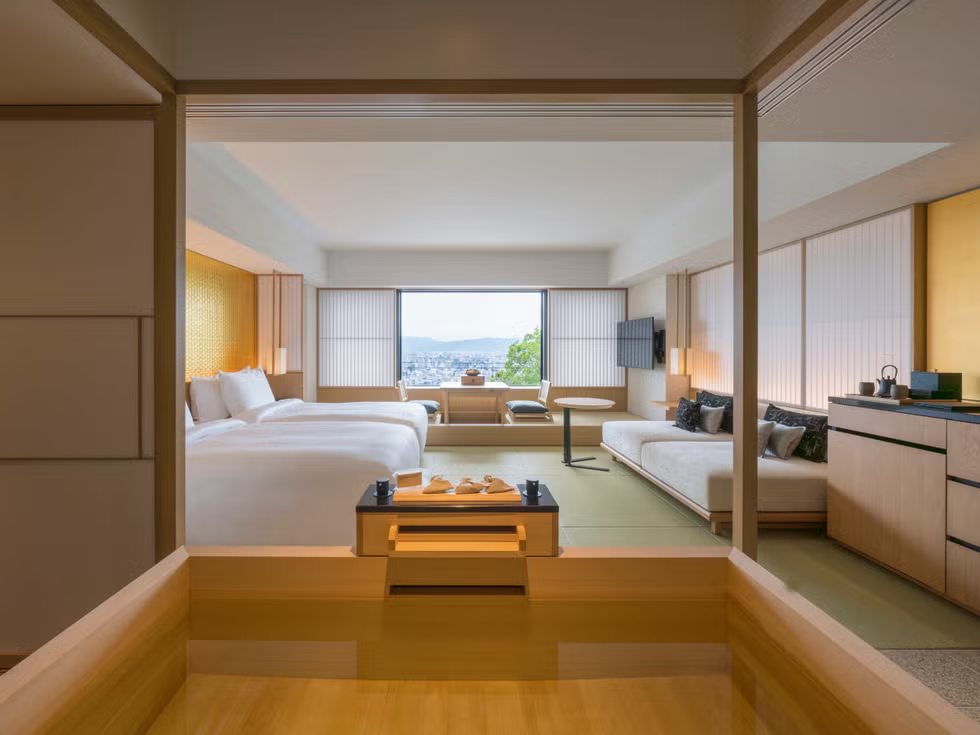
Inside, the rooms go full Kyoto-aesthetic without turning into a museum. Designed by interior designer Yukio Hashimoto, you’ll get tatami, natural wood, and gold-leaf accents, with those large cypress bathtubs that basically demand a long soak.
Because the hotel sits high, some rooms give you the kind of skyline view people chase across half the city: Kyoto Tower in the distance, Yasaka Pagoda punctuating the scene, and a wide sweep of rooftops you can enjoy without sharing with 300 strangers.
Onsen: public bath + in-room hot spring options
You can soak in natural hot springs that well up on the property in the large public bath—or go full “main character” with an in-room onsen bath.
Look for these room types if you want private hot spring time:
- ONSEN Retreat
- Grand ONSEN Retreat
- Banyan ONSEN Retreat (55m² – 74.5m²)
Some of these let you soak while facing a small garden, bamboo grove, and even glimpses of the Noh stage. Yes, it’s as blissfully extra as it sounds.
Food: real-deal kaiseki (and a terrace breakfast with a Noh-stage view)
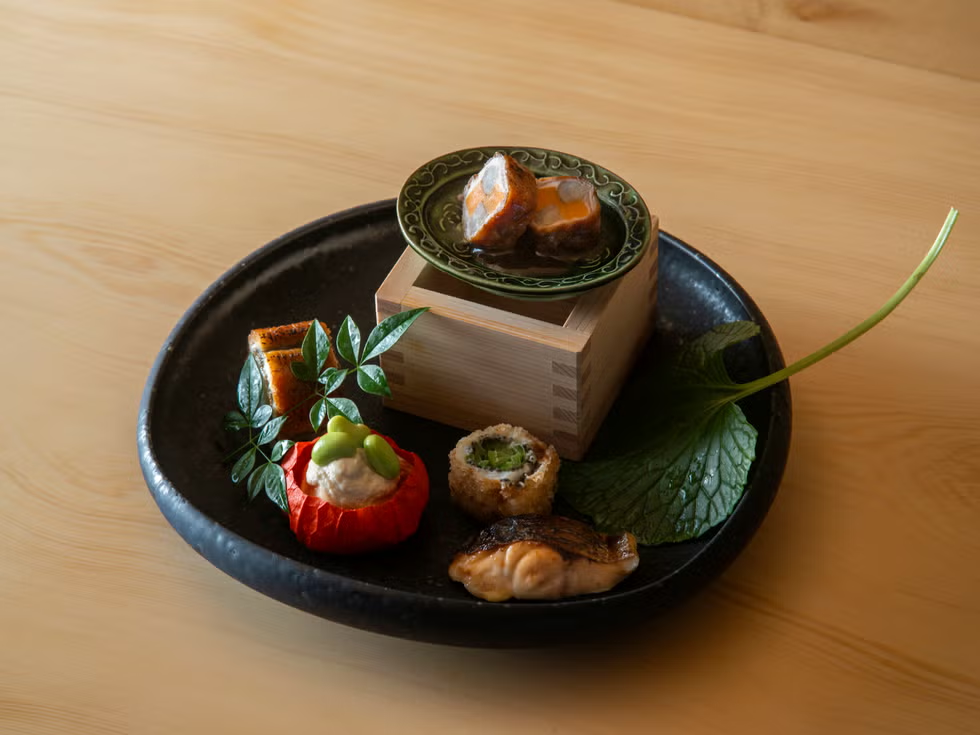
Even though it’s foreign-owned, the hotel leans hard into authentic Japanese kaiseki. The signature course “Fūshi Kaiseki” starts from ¥22,000, using local seasonal ingredients with that art-gallery-level precision.
Also: don’t skip the Japanese breakfast on the terrace, where you can see the Noh stage up close. You’ll feel very cultured… even if you’re still half asleep.
Spa: the famous Banyan Tree Spa (yes, the one celebrities love)
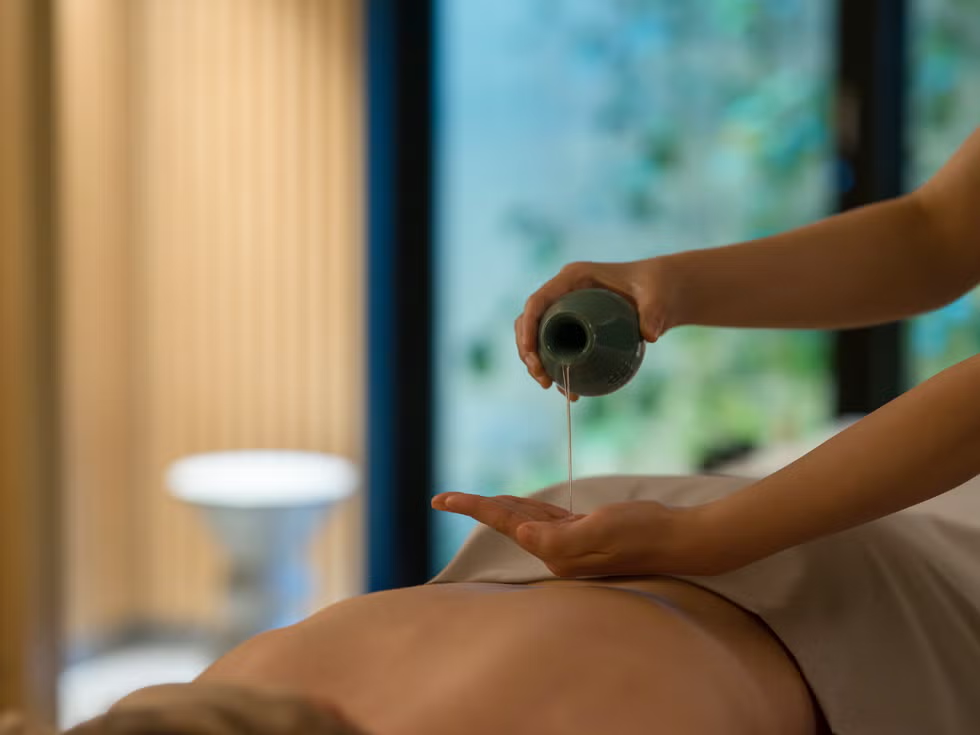
The Banyan Tree Spa is a major part of why you stay here. Award-winning, globally famous, and staffed by trained therapists who know exactly where your travel-stiff shoulders are hiding the tension.
Treatments pull from Thai/Indonesian traditions and beyond—and the hot-spring-water treatments are the “do not leave without” move.
The Hotel Seiryu Kyoto Kiyomizu
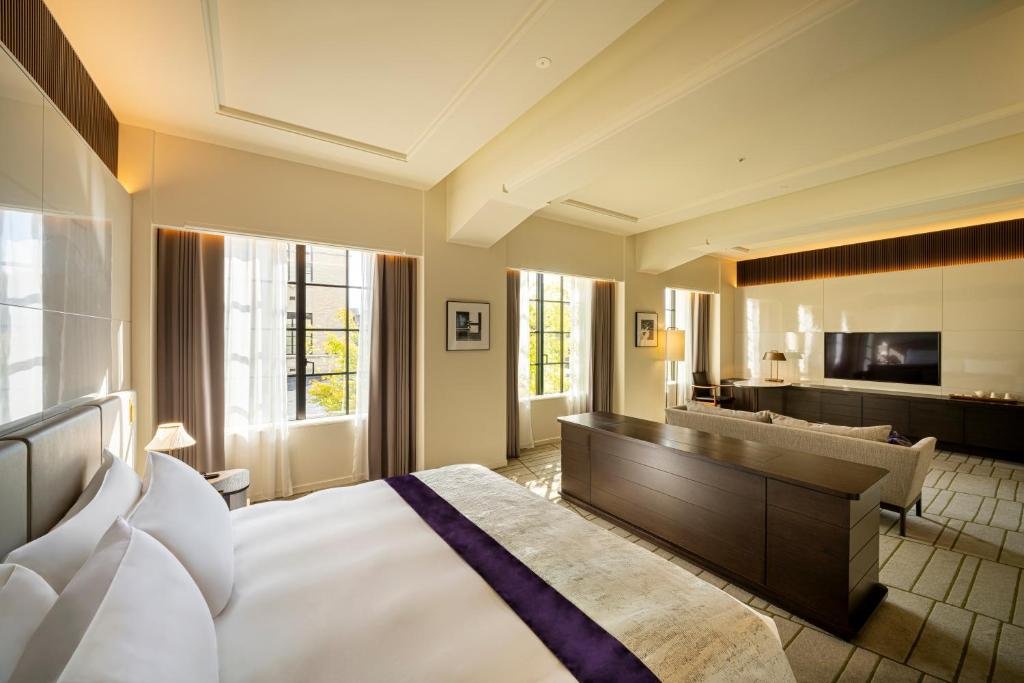
If you like your hotels with a story this one hits. The Hotel Seiryu Kyoto Kiyomizu is a secluded heritage property renovated from the former Kiyomizu Elementary School—a building with about 80 years of history.
Location-wise:
- Yasaka Pagoda / Hōkan-ji Temple right in front of you
- 8-minute walk to Kiyomizu-dera
With only 48 rooms across an approximately 7,000 m² site, it feels calm, spacious, and quietly luxurious—like Kyoto told the crowds to wait outside.
Rooms: old-school charm vs new-build sleek
Part of the fun is choosing your vibe:
- Rooms that retain the school building structure (hello, nostalgia)
- Newly added rooms with a more modern, polished feel
A standout is “Deluxe Twin DEN (55.6㎡)”, which keeps retro window frames and that “we’re sleeping somewhere with history” atmosphere.
Guest lounge perks + weekly maiko event
The guest lounge (hotel guests only) is a serious treat: depending on the time of day, you can expect things like sweets, coffee, hors d’oeuvres, and sake, while you stare out at seasonal Kyoto scenery like you’re practicing for a lifestyle magazine cover.
And once a week, they host a popular event inviting a maiko from Miyagawachō—which is exactly the kind of Kyoto moment you’ll remember longer than your camera roll.
Dining: Alain Ducasse’s Benoit Kyoto + pagoda views
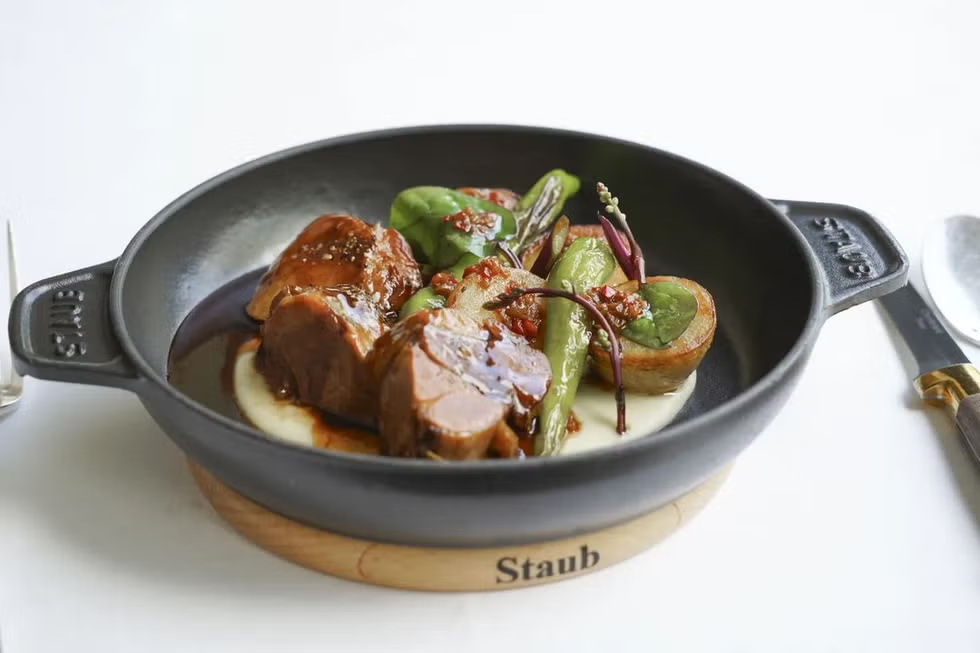
On the first floor of the annex, you’ve got “Benoit Kyoto”, a restaurant by Alain Ducasse carrying the name and spirit of the long-running Paris bistro Benoit.
Expect modern French cuisine that weaves in Kyoto seasonal flavors—with that Yasaka Pagoda view doing half the emotional work for your dinner date. Dinner course pricing starts around ¥8,000 (example dish: Kyoto Pork Shank Ragout with Fushimi chili peppers and new potatoes).
Note: Benoit Kyoto is operated by a different company than the hotel.
Hotel The Celestine Kyoto Gion
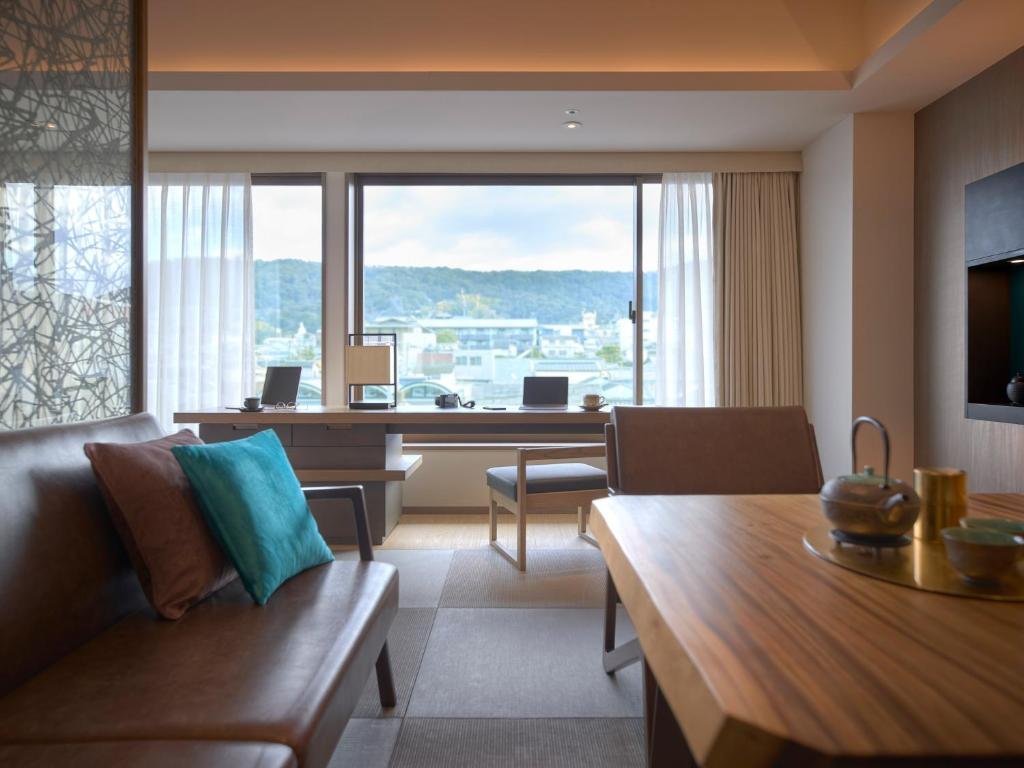
Right along Yasaka Street, next to historic Kennin-ji Temple, Hotel The Celestine Kyoto Gion is the kind of place that gives you instant Kyoto immersion without asking you to sacrifice comfort.
And yes, it has receipts: it became Asia’s first hotel to receive a “1 Michelin Key” rating from the Michelin Guide.
Bonus logistics: a free daily shuttle bus from Kyoto Station, which is quietly huge in Kyoto.
Rooms: modern Japanese, high-end beds, and a proper wind-down setup
The “Junior Suite Celestine Higashiyama (63.8㎡ – 66.2㎡)” is themed around the “spirit of Kyoto,” mixing calm tones with modern Japanese design. Beds are top-tier Serta, and the details are all about making you feel looked after rather than impressed.
There’s also:
- A large public bath for guests
- A guest-only lounge serving coffee/tea
Food & nightcap: tempura by a Gion institution + bar until 1 a.m.
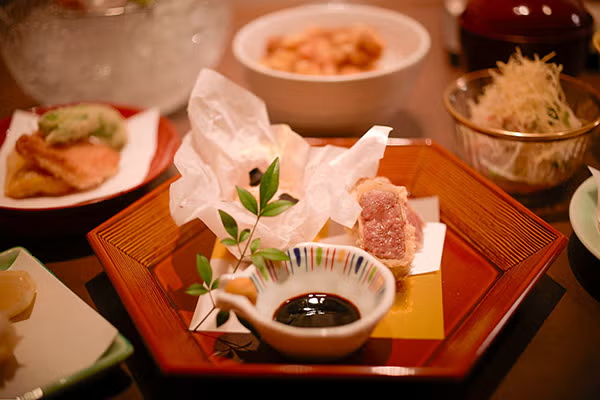
Dinner happens at Yasaka Endō THE CELESTINE KYOTO GION, run by Yasaka Endō—a beloved Gion name with nearly 100 years behind it.
You’ll get Kyoto-style tempura and an original course grounded in Kyoto kaiseki. The Tempura Course “Sagano” starts from ¥16,500. Seating options are varied—counter, table, sofa, private rooms—so you can choose your mood.
Afterwards: BAR Omi Sakae stays open until 1:00 a.m. (because Kyoto can do nightlife—just quietly).
Gion / Higashiyama: the “old Kyoto” mood, with a side of convenience
Kyoto does this thing where you turn one corner and it’s incense, lanterns, and wooden townhouses… then you turn the next and it’s a sleek lobby with a spa menu that reads like a novel. If you want that classic Kyoto atmosphere (without living on a bus timetable), Gion/Higashiyama is where we plant our flag.
Below are the best sub-areas—plus the hotels that actually match the hype.
Higashiyama Shichijo: temples, museums, and a calmer home base
This pocket of Kyoto is packed with cultural heavy-hitters like Sanjusangendo Temple, the Kyoto National Museum, and Chishaku-in Temple. It’s a little removed from the downtown bustle (good for sleep, bad for “let’s pop out for late-night shopping”), but it’s convenient from Kyoto Station, which is the kind of practical detail you’ll thank yourself for later.
Six Senses Kyoto
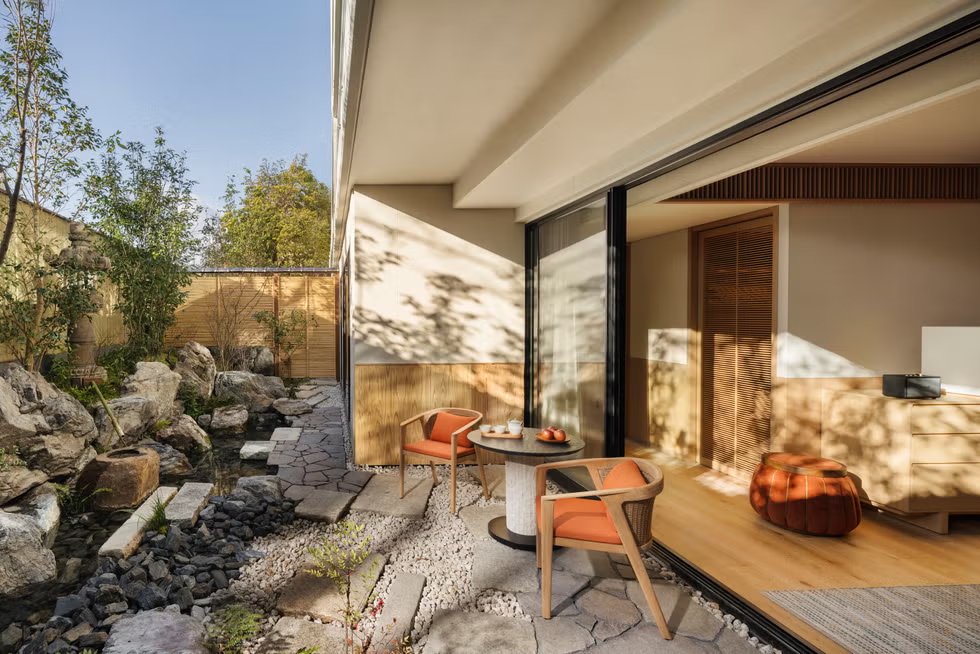
This one slides into Kyoto’s cityscape like it’s always been there—quietly confident, very “natural luxury,” and very, we came here to reset our nervous systems. It’s the first Six Senses in Japan, and the design leans into Heian-period elegance with bright, light-filled interiors.
Wellness and sustainability aren’t just marketing here: think healthy meals, serious spa treatments, and an overall vibe of “your shoulders drop the second you check in.” It also picked up a Michelin Key rating in July.
Rooms we’d brag about:
- Premier Suite Garden King (72㎡) in a detached building, with a private Japanese garden (yes, it’s as dreamy as it sounds).
- Other rooms and suites run 42㎡ to 238㎡, with views ranging from a seasonal courtyard to adjacent shrine gardens to Kyoto’s cityscape.
Food situation (aka: you will eat well):
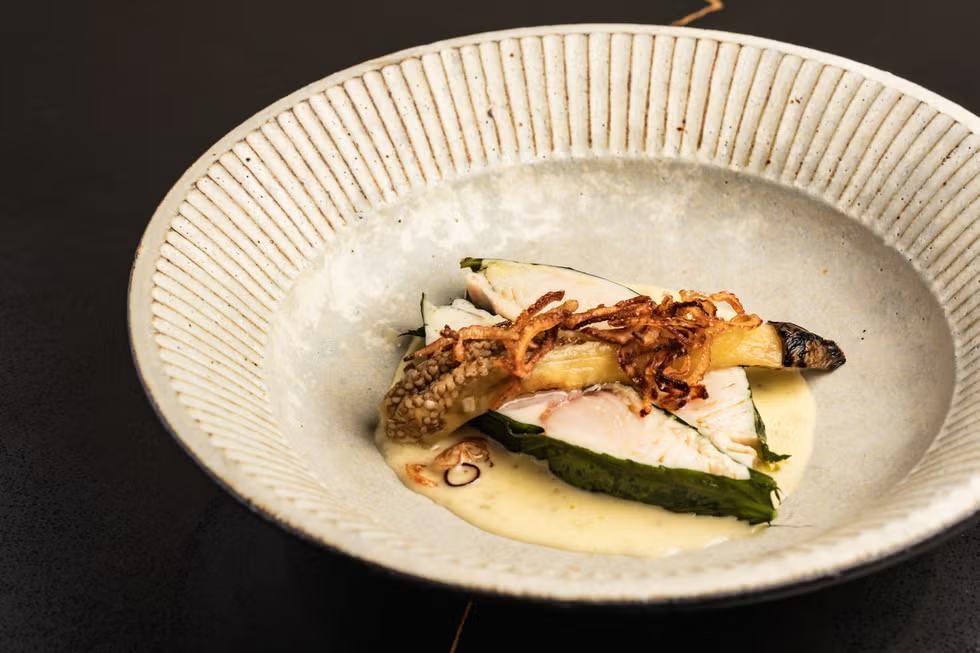
At the all-day dining restaurant “Sekki”, the menu runs on the 24 solar terms and changes every two weeks—seasonal dishes, afternoon tea, and lots of local, sustainable ingredients (including pesticide-free vegetables from Yamada Farm in Fushimi). There are also vegetable-heavy courses and plant-based vegan courses.
Example dish: Spanish mackerel and scallops steamed in bamboo leaves with white onion and white miso (from the “Dinner 5 Course” at ¥15,800).
And if you’re feeling sushi-forward, there’s Sushi Oga Higashiyama (a branch of a popular Osaka spot).
Four Seasons Hotel Kyoto
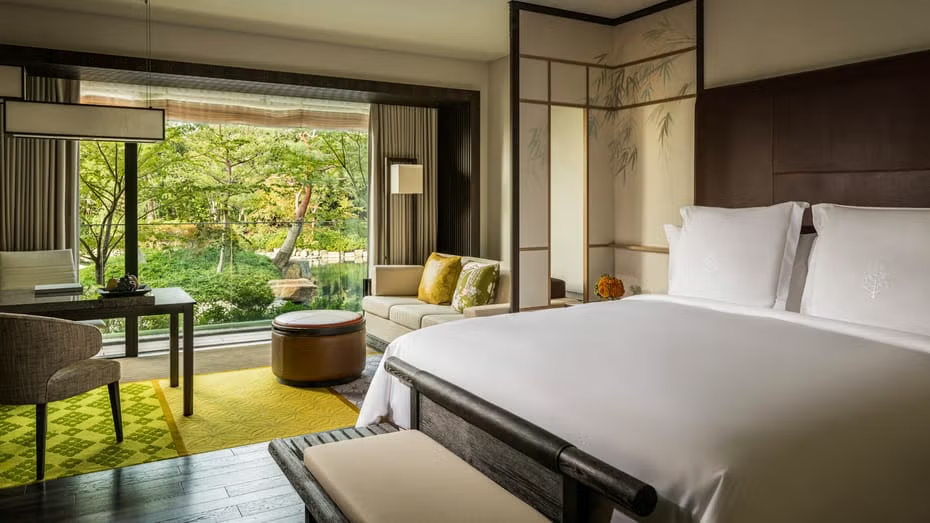
If you want Kyoto luxury with deep roots, this is it. The star of the show is Shakusuien, an 800-year-old pond garden—a strolling garden with a 3,000㎡ pond, spread across roughly 10,000㎡ of grounds. The garden’s history ties back to the estate of Taira no Shigemori, and yes, it’s even referenced in The Tale of the Heike. In the sukiya-style lounge by the pond, you can do a tea ceremony while staring into the kind of scenery that makes you forget your phone exists.
Room we’d pick:
- Premier Heritage Garden Room (52–53㎡) with floor-to-ceiling windows facing Sekisuien Garden—cherry blossoms, summer green, autumn foliage, winter snow… the whole seasonal carousel.
Big foodie news:
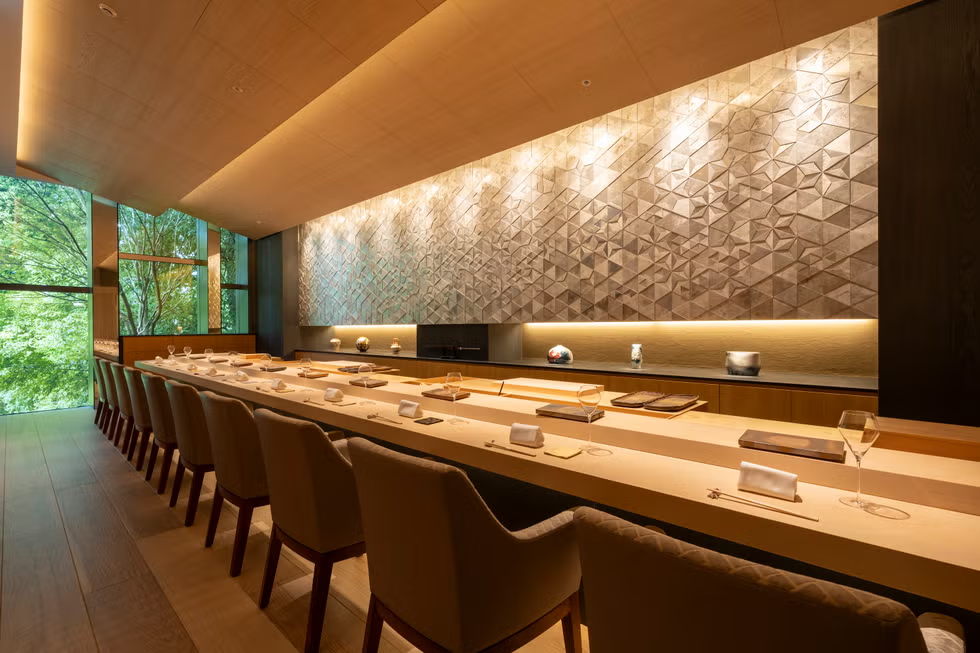
Sushi Ginza Onodera opened inside the hotel in 2024. Expect Edomae sushi with ingredients selected from Kyoto, Toyosu, Hokkaido, and beyond—plus their famous tuna. The counter seats are crafted from 400-year-old cypress, and you’re eating with a panoramic view of the garden (casual). Drink pairings go beyond sake: think wine and Japanese tea too. Dinner is two chef’s-choice courses starting from ¥37,500.
Hyatt Regency Kyoto
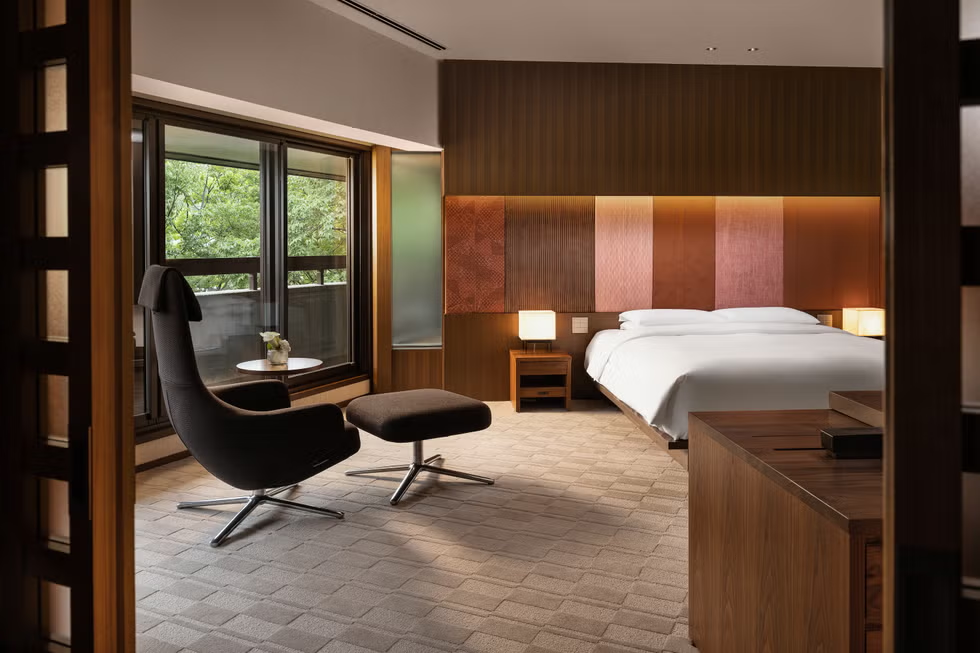
Right in Higashiyama Shichijo, opposite the Kyoto National Museum, and excellent if you want classic, high-level service without a “we’re hiding in the mountains” commute. It opened in 2006 as Kyoto’s first Hyatt brand hotel, and the interiors aim for “contemporary Japanese”—traditional cues, modern execution—overseen by interior designer Takashi Sugimoto.
Bonus points for a Japanese garden on-site (some suites look out onto it) and a free taxi service from Kyoto Station to the hotel. Yes, free. Yes, that matters after a long travel day.
Suite we’d eye:
- KYOTO Suite Twin (88㎡) on the top floor, with a balcony and that “finally, air” feeling. Japanese touches show up in details like a headboard made from old kimono fabric and lantern-inspired lighting. The bathroom has a large cypress bathtub, because of course it does.
Eat & drink:
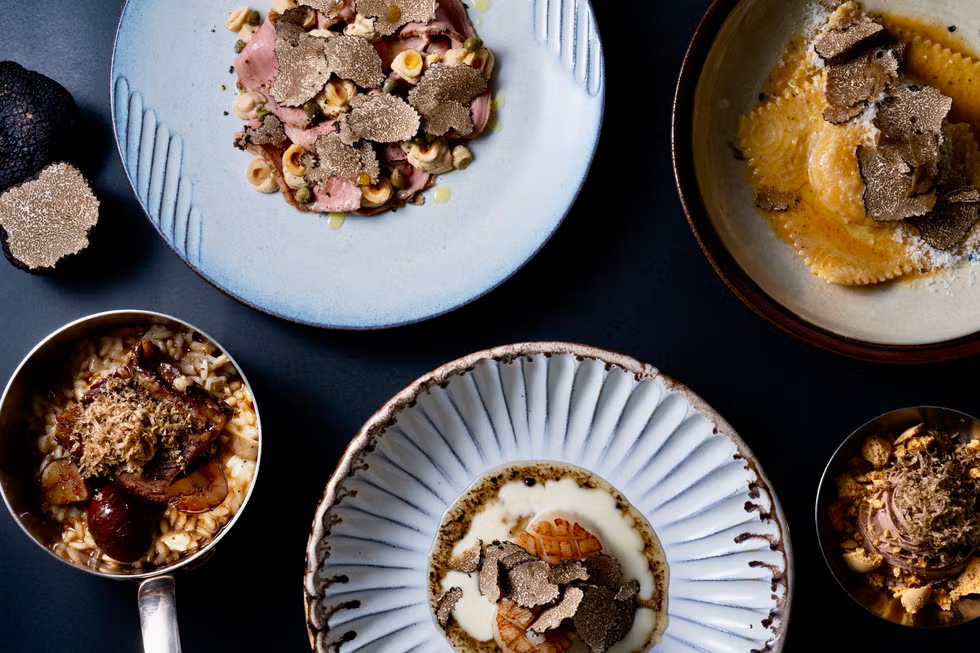
Trattoria Sette is known for authentic Italian and runs a truffle-focused menu October to December. You’ve also got Touzan for seasonal kaiseki, Café 33 for all-day dining, and Touzan Bar for local Kyoto sake.
Gion / Higashiyama: Sanjo — river views + Pontocho vibes
Sanjo is where Kyoto starts flirting with you properly: Kamo River views, the retro charm of Pontocho, and you’re within walking distance of Shijo Kawaramachi and Gion (aka the busiest shopping-and-strolling zone).
Dhawa Yura Kyoto
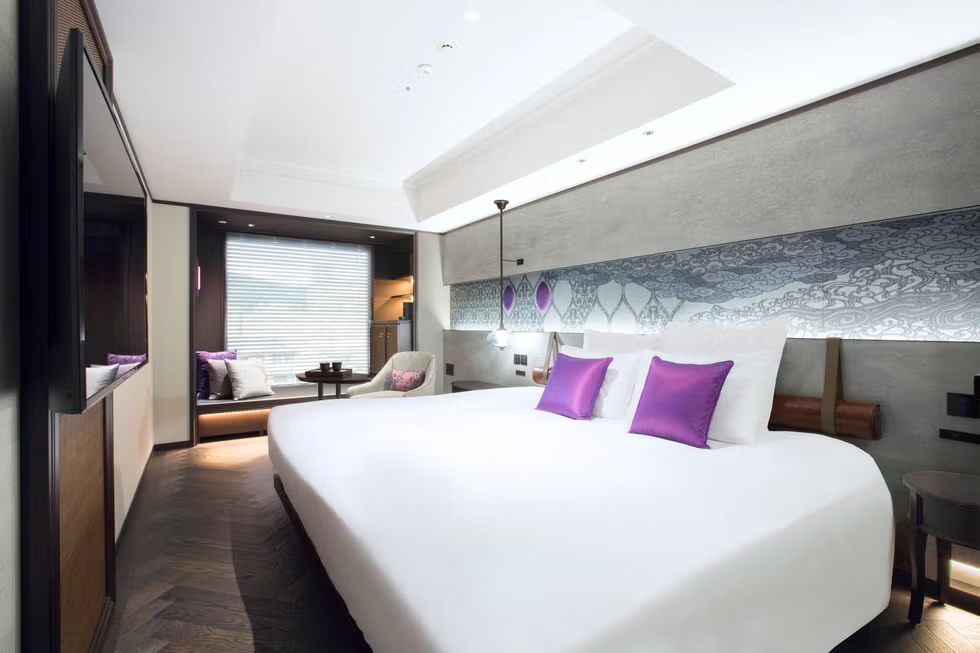
A boutique hotel by the river, and a sister brand of Banyan Tree—so you already know it takes comfort seriously. It’s a 138-room property right by the Kamo River, and it’s an easy 1-minute walk from Sanjo Keihan Station. Translation: you can do big sightseeing days without turning transit into a second job.
If your legs give up after temple-hopping, the on-site Elements Spa (a Banyan Group signature) is your rescue plan.
Room highlight:
- Premier Room (26㎡) with a modern Japanese design—Nishijin-ori headboard, Japanese-Western harmony, and a tatami seating area by the window (the perfect “we’re decompressing” corner).
Food:
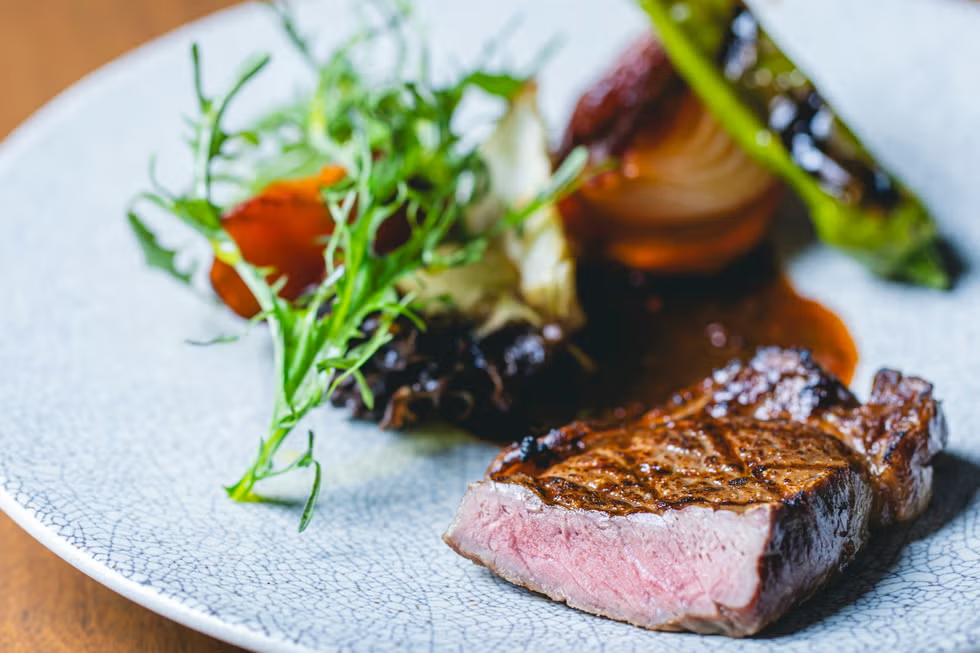
The main restaurant is GRILL 54TH, a stylish open-kitchen grill spot serving grilled wagyu, seafood, and Kyoto vegetables across breakfast/lunch/dinner. There’s also Lounge & Bar 1867, named for the year of the Meiji Restoration, for a more classic bar feel.
Gion / Higashiyama: Keage — foliage, temples, and museums (the “seasonal postcard” zone)
If your Kyoto fantasy includes autumn leaves and temple gardens, Keage is your lane. You’ve got Nanzenji and Eikando for seasonal scenery, plus art stops like the Kyoto City Kyocera Museum of Art and the National Museum of Modern Art, Kyoto .
The Westin Miyako Kyoto
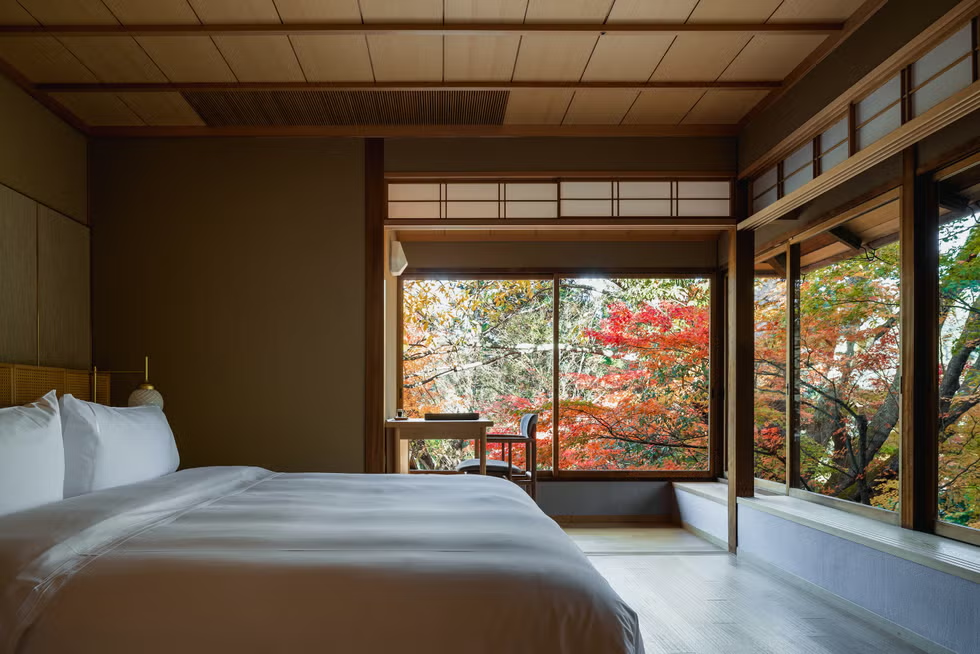
A long-established luxury hotel sitting at the foot of Mount Kacho, revamped in 2021 with renovated rooms and facilities—modern comfort, deep history, and service that aims to feel effortless.
Where we’d splurge:
- The sukiya-style annex “Kasuien” (12 rooms, 52–101㎡), designed by architect Togo Murano. It’s built around a white sand courtyard and Kasuien Garden, and the renovated rooms average about 70㎡. Best part: every room has a natural hot spring bath. That’s the kind of detail that turns “nice stay” into “we’re never leaving.”
Dinner worth dressing up for:
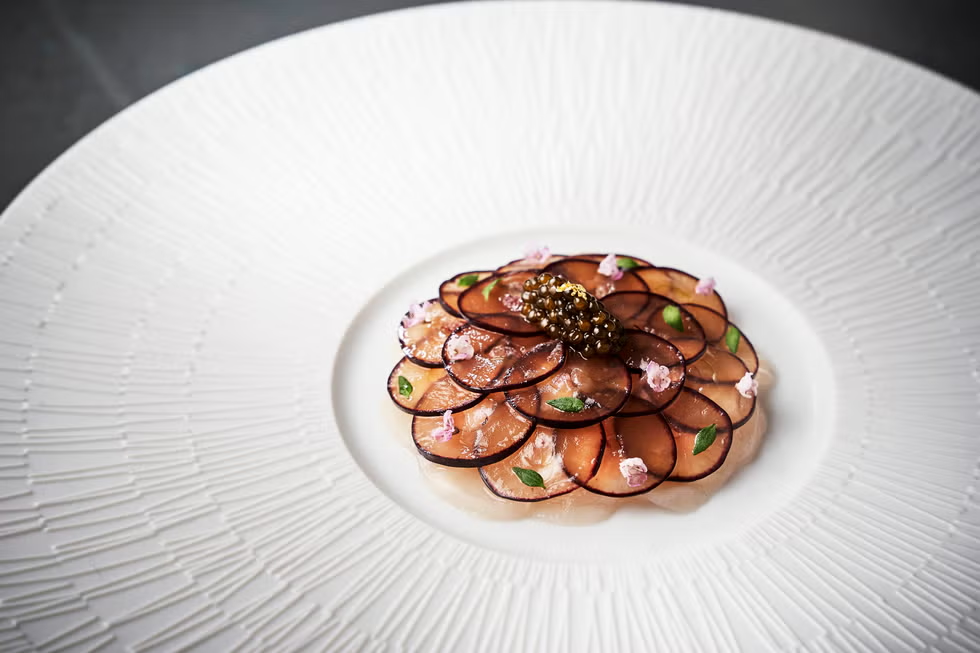
Le RESTAURANT by Dominique Bouchet Kyoto serves delicate French cuisine using seasonal Kyoto ingredients. In September–November, the menus lean into Kyoto autumn flavors (think Tamba chestnuts and Kyotanba Highland pork).
Example dish: Scallop and Kyoho grape carpaccio in the 7-course “HARMONIE” dinner (from ¥25,000).
Kawaramachi / Karasuma Base Camp: Karasuma Oike
Picture this: we’re wandering Kyoto’s central grid and—boom—Karasuma Oike hits us with that satisfying Kyoto contradiction. Old-school machiya townhouses shoulder-to-shoulder with red-brick Western-style buildings like they’ve agreed to coexist for your Instagram and your convenience.
Logistically? It’s perfect. You’ve got both the Karasuma Line and Tōzai Line right here, plus Kyoto Shiyakusho-mae (City Hall) Station is walkable. Translation: we can bounce around Kyoto City and slide out to surrounding areas without sacrificing half our day to transport.
Ace Hotel Kyoto
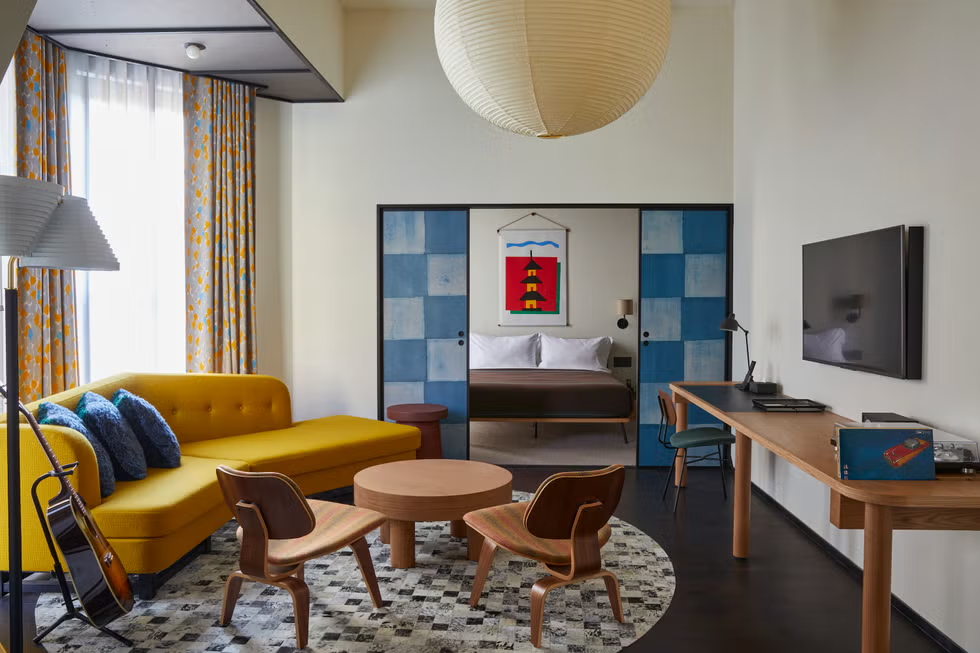
We’re staying inside ShinPuhKan, a complex built around the former Kyoto Central Telephone Exchange—a proper brick building with history in its bones. Ace does what Ace does: art + music + design in a space that feels like it was made for creative people who drink coffee like it’s a ritual.
And the best part? The first-floor lobby café is genuinely open and social—locals pop in, which makes the whole place feel less “hotel bubble” and more “Kyoto living room.” In a city where inbound demand is constantly high, it’s still wildly popular with Japanese guests too (always a good sign).
Ace Suite (78㎡): old office turned into a proper flex
There are 213 rooms split between a preservation building (classic architecture kept intact) and a newly added wing. The standout is the Ace Suite in the preservation building—renovated from what used to be the director’s office of the old telephone exchange.
Inside, we get that satisfying mix of Japan-meets-modern:
- Sliding doors separating living area and bedroom (instant calm)
- Bold art by dyeing craftsman Samiro Yunoki and textiles by minä perhonen (yes, it pops)
- And because Ace takes music seriously: record players and guitars in the rooms. Not a gimmick—an actual vibe.
Food: American chef, Italian soul, Kyoto ingredients
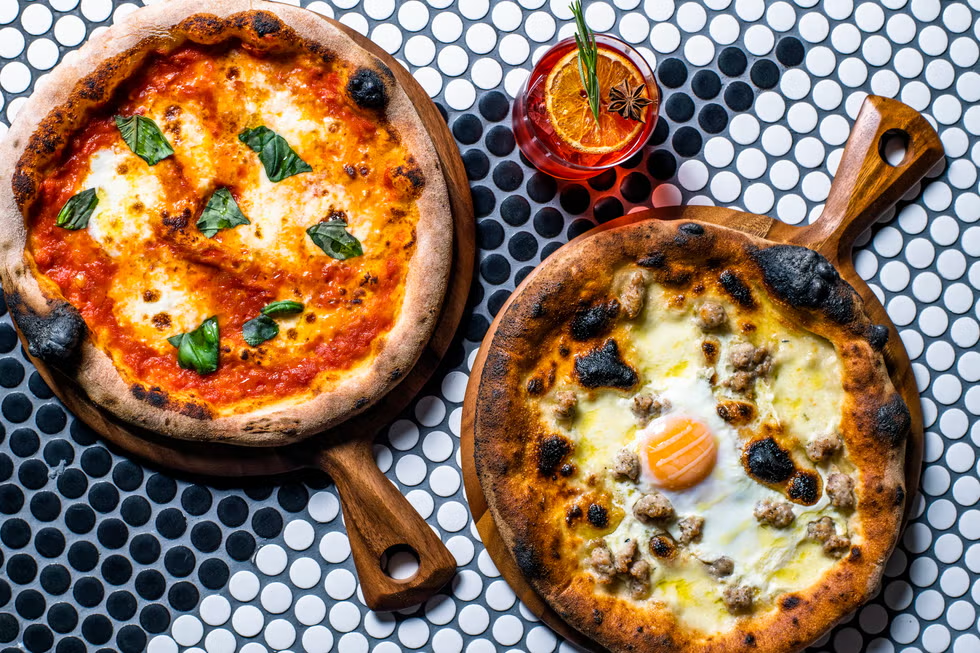
On the third floor, Mr. Maurice’s Italian is an osteria run by a popular, award-winning American chef. Expect:
- Handmade pasta that tastes like someone cared
- Wood-fired pizza with Kyoto ingredients
- Plus a rooftop area that feels like a clean breath of air in the middle of the city.
The Royal Park Hotel Iconic Kyoto (Oike-dori)
Opened 2022, and it’s designed for people who want Kyoto without the chaos. It faces Oike-dori, with big windows and an open structure that basically dares you to slow down.
If you time it right, you can watch Kyoto’s seasonal pageantry from a “special seat” vibe—think Gion Matsuri in summer and Jidai Matsuri in autumn—without elbowing through crowds.
And then there’s the lounge: guests can enjoy afternoon tea and cocktails for free, which is why this place has a reputation as a “stay-at-home hotel” (the kind where the hotel is the activity).
Corner Balcony (50.0㎡): Kyoto skyline + festival views
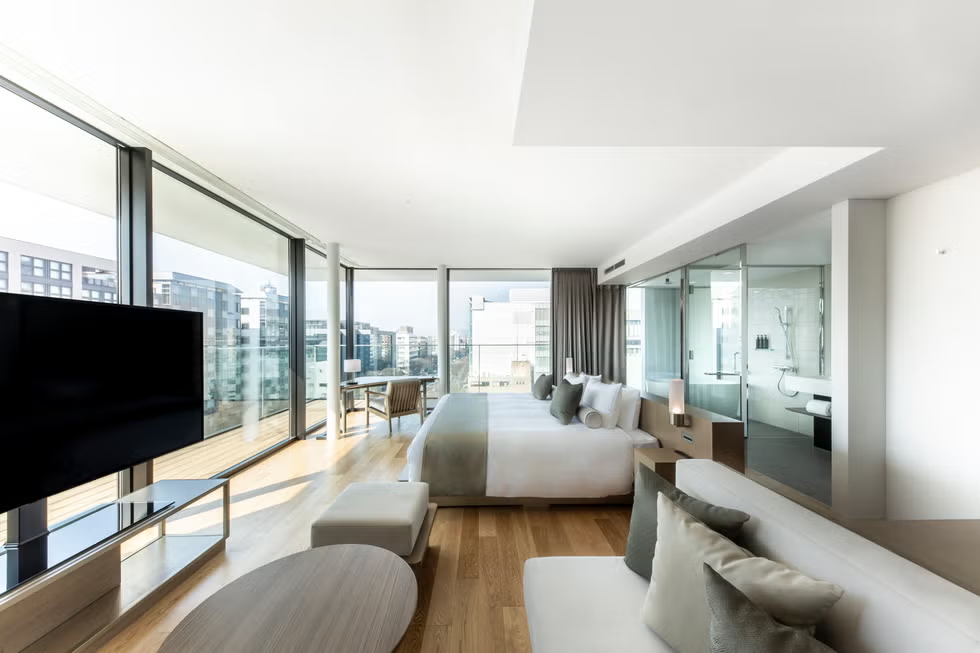
There are 125 rooms, all 25㎡+. The Corner Balcony in the southwest corner is the one we’d grab if we want:
- A balcony that opens up the cityscape
- A front-row view for seasonal events
- Calm interior tones that don’t shout at your nervous system
- Aromatherapy oils + meditation guide videos supervised by professionals (Kyoto said: “breathe.”)
Dining + sweets + bar, all in-house
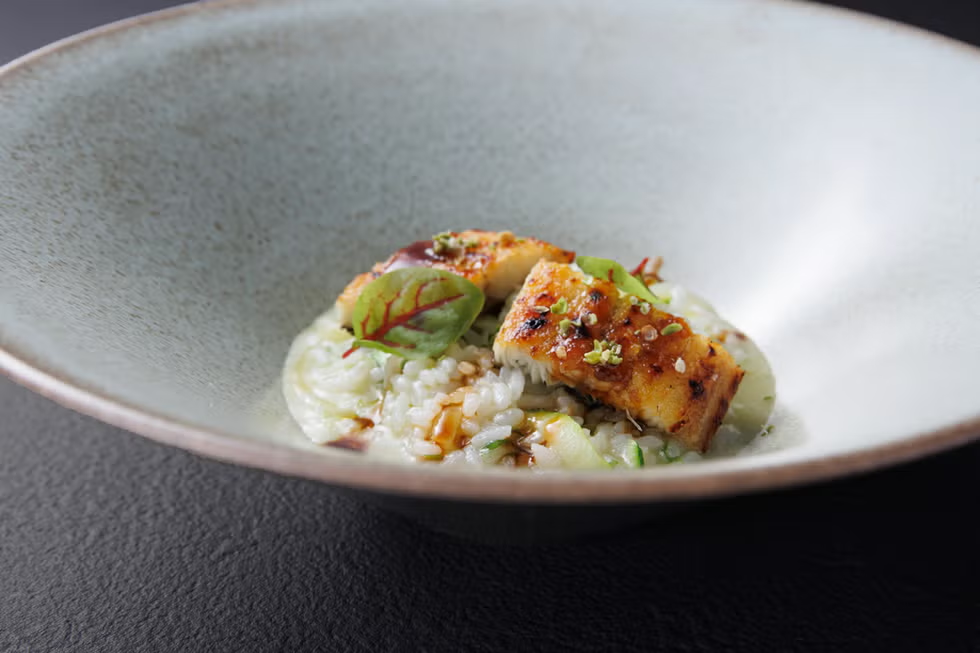
On the first floor, Synchronia di Shinji Harada is overseen by Shinji Harada, owner-chef of Aroma Fresca Ginza in Tokyo. The cuisine leans “new Italian” with tradition and modern taste blending together.
Also inside:
- Sadaharu Aoki Paris Karasuma Oike (patisserie branch)
- THE BAR (because sometimes you need a nightcap to recover from temple overload)
Mitsui Garden Hotel Kyoto Sanjo Premier
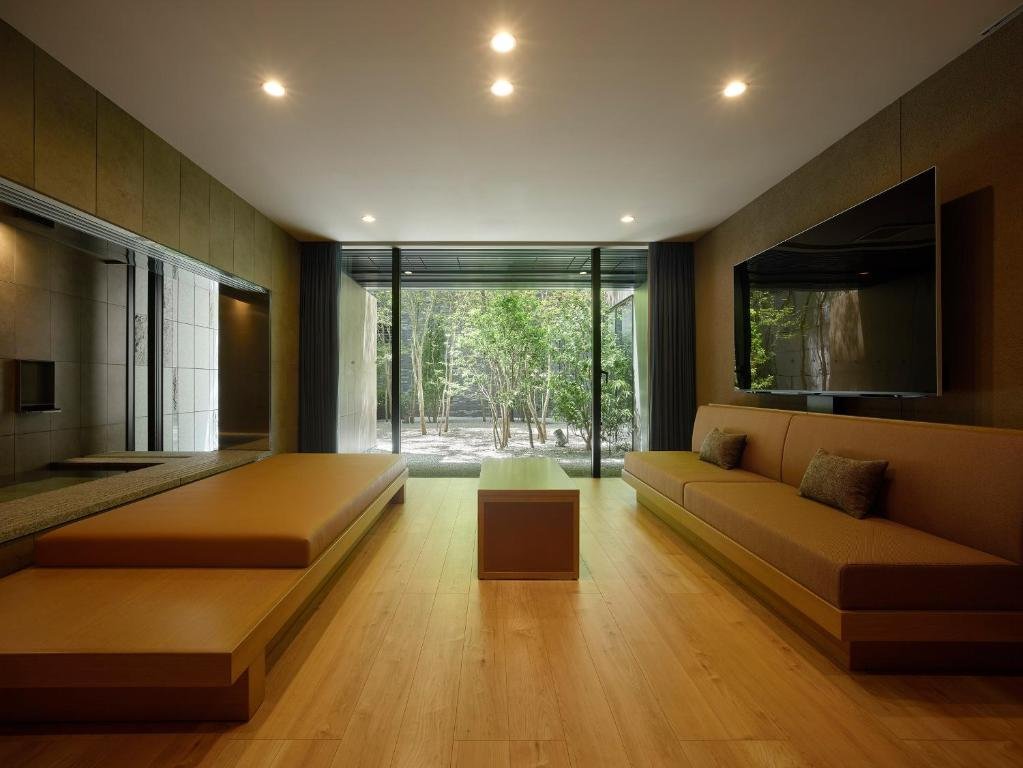
This is the first Premier series hotel to open in Kyoto, right on traditional Sanjo Street. The exterior is modern and sharp, but it still respects the Meiji-era traces in the neighborhood (no loud “look at me” tower energy).
Inside, the layout feels like a Kyoto townhouse: street-facing liveliness, then a garden that gently guides you into a quieter, more private back space. It’s that Kyoto “layers” concept in architecture form.
Superior King (Daybed) (32.4㎡): kimono-color palette, craft details
Rooms are unified in muted tones inspired by kimonos and textiles, built around the Japanese idea of layered colors.
Details we love:
- Wallpaper finished in ume-nezu (plum gray)
- Curtains in sei-on (blue-red)
- A style nodding to the site’s heritage: a kimono fabric store that’s been in business 300 years
- Tiered boxes and memo pads using Kyoto joinery, a traditional woodworking technique
- Rooms with washing machines for long stays (hello, sanity)
Breakfast & dining: French brain, Kyoto ingredients
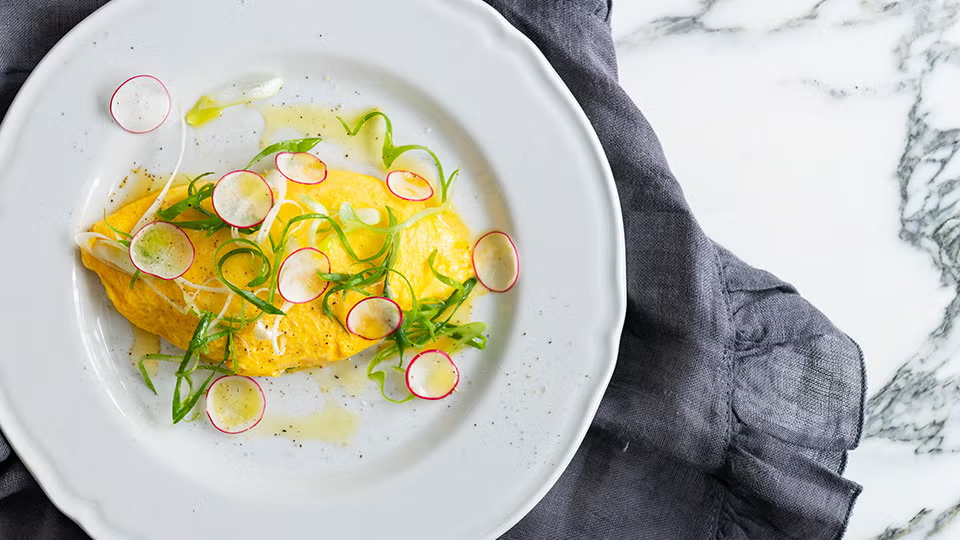
Curd, also the breakfast dining spot, is overseen by Kyohei Nishi, an innovative French chef who earned Michelin Guide Tokyo Bib Gourmand for five consecutive years.
Breakfast highlight: Kujo leek and ricotta omelette.
Half-buffet breakfast from ¥3,300.
Bonus: the hotel is known for fresh cheese made from raw milk delivered from a farm in Tamba.
And tucked in the back: Y bar, serving rare sake brands from local breweries.
MIMARU SUITES Kyoto CENTRAL
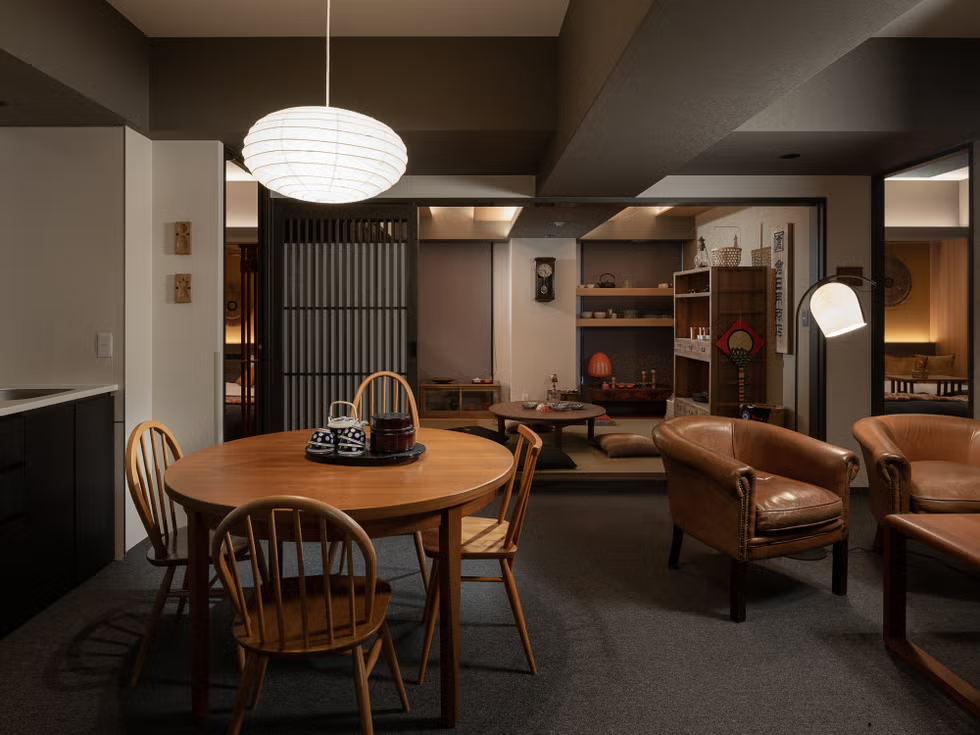
Opened June 2023, a glorious 3-minute walk from Karasuma-Oike Station. This is an apartment-hotel concept where the rooms are 85㎡ suites—and in this series, every single unit has two or more bedrooms.
Translation: perfect when you’re traveling with family, friends, or anyone you actually want to hang out with.
Premium 2-Bedroom Suite (85㎡): only one in the entire hotel
There are 19 suites, all 2–3 bedrooms, each 85㎡, sleeping 4–6 people with:
- Living room
- Kitchen + dining room
- Tatami space
- Two bathrooms
The unicorn is the Premium 2-Bed Suite—only one available. The interiors lean nostalgic, inspired by Taisho to early Showa eras. This is the one for:
- Friends’ reunions
- Multi-generational trips
- Kimono meetups where you need room to breathe (and twirl)
Meals
No meals are served, but every room comes with a kitchen, cookware, and dining table—so we can go full Kyoto-mode: local ingredients, department store bento, or takeaway feasts.
The Ritz-Carlton Kyoto
Now we’re going full “yes, we deserve this.” The Ritz sits on the Kamo River, looking toward Higashiyama—the kind of view that makes you stop mid-sentence.
Since opening, it’s been a pioneer among luxury hotels in Kyoto, known for extremely polished service. The exterior blends traditional Japanese architectural expressions with the historic surroundings—quiet luxury, not loud luxury.
Suite KAMOGAWA (126㎡): river views, library energy
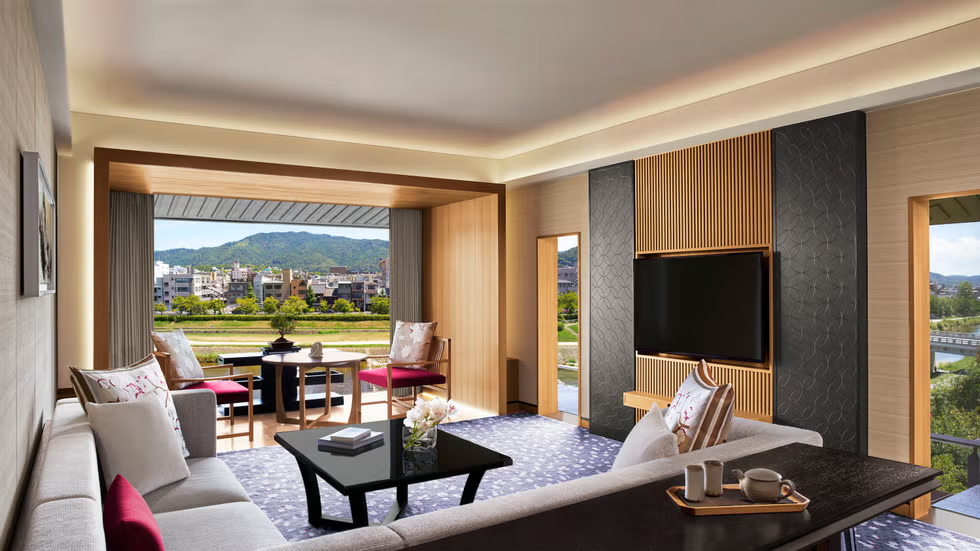
There are 134 rooms, including 17 suites, and the average room size is around 50㎡—huge for Kyoto.
The Suite KAMOGAWA is a 126㎡ executive suite with:
- Separate living room
- Big sofa
- Library
- Some suites with a terrace that feels like a Japanese home veranda
- A chic interior with black and navy contrasts against warm wood
Dining: Italian inside a relocated Japanese house (because Kyoto)
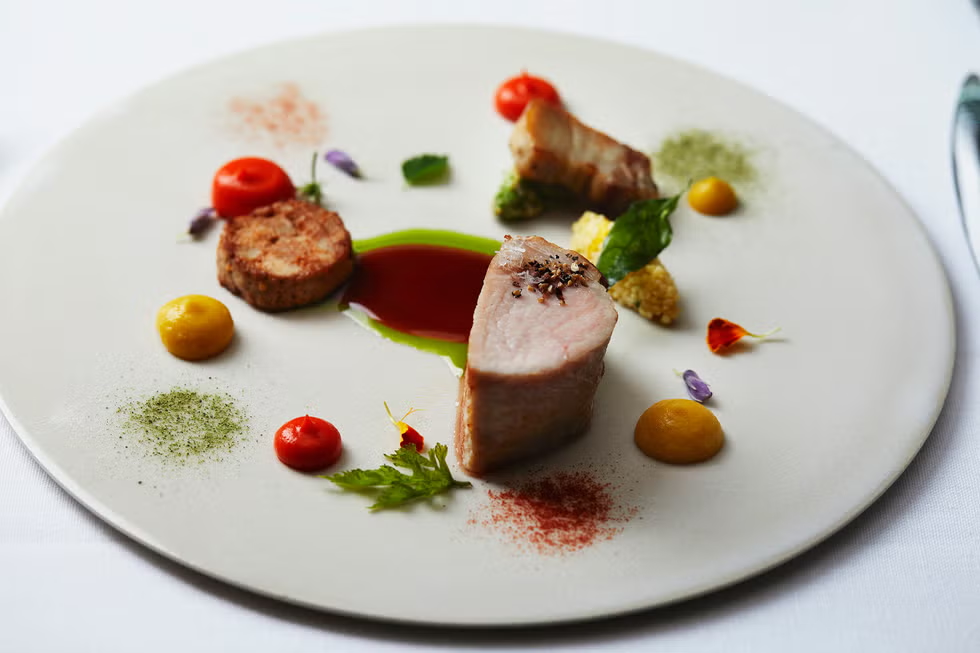
La Locanda is the Italian restaurant, and here’s the twist: it’s inside a Japanese house moved from the Kyoto villa of the Fujita zaibatsu, relocated as a private room called Ebisugawatei. So you’re eating modern Italian cuisine in a purely Japanese architectural setting. Kyoto, always extra.
Other options include:
- The Lobby Lounge
- Miki (four types of Japanese cuisine)
- The Bar
Kawaramachi / Karasuma Base Camp: Gojo
Gojo sits exactly halfway between Kyoto Station and Shijo Kawaramachi—the kind of central location that makes you feel smugly efficient. Add the Takase River flowing through the area and you get atmosphere and easy access from Kyoto Station. Ancient capital mood, modern logistics.
Fauchon Hotel Kyoto
This one is a concept hotel done properly. Created by French luxury food brand Fauchon, it opened in March 2021 as the first Fauchon hotel in Japan—and the second in the world after Paris.
The theme is “FAUCHON Meets Kyoto”, which sounds like marketing… until you see how elegantly the Paris palette and Kyoto craftsmanship actually blend.
The Suite (56.0㎡): Fauchon colors + Nishijin touches
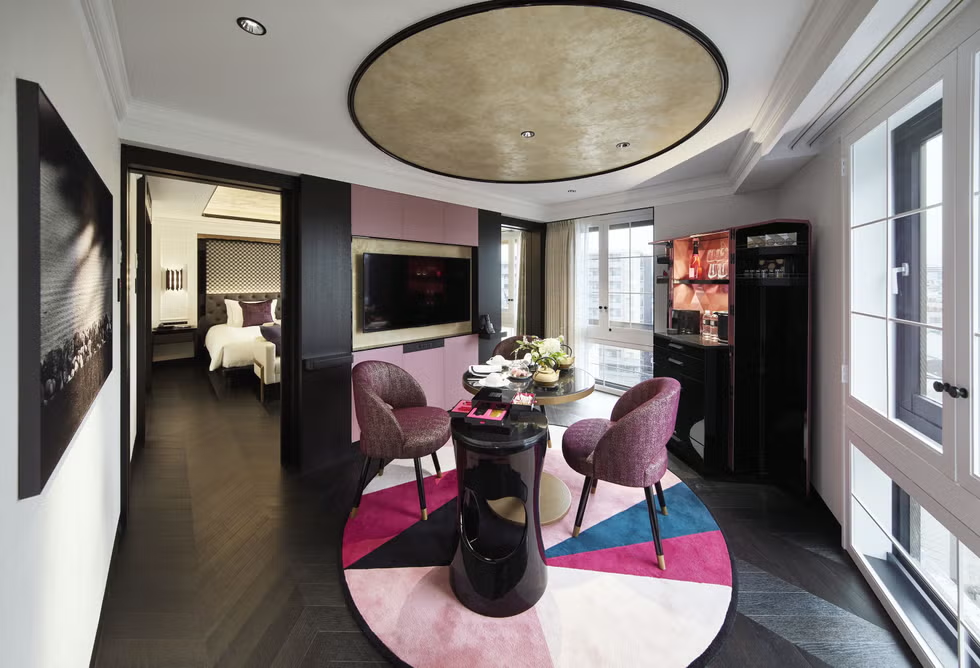
There are 59 rooms across five types. Interiors use Fauchon’s signature pink/white/black/gold, then mix in traditional Japanese crafts (like Nishijin-ori chairs).
Every room includes a Gourmet Bar—a champagne-pink closet stocked with sweets and pastries. That means you can snack at any hour like a happy, spoiled gremlin (we support this).
Suites and above include access to the Fauchon Lounge, where evenings roll into nights with:
- Alcoholic drinks
- Light meals
- Small desserts
…and an overall “we live here now” vibe.
Dining: French cuisine in Fauchon style, local ingredients
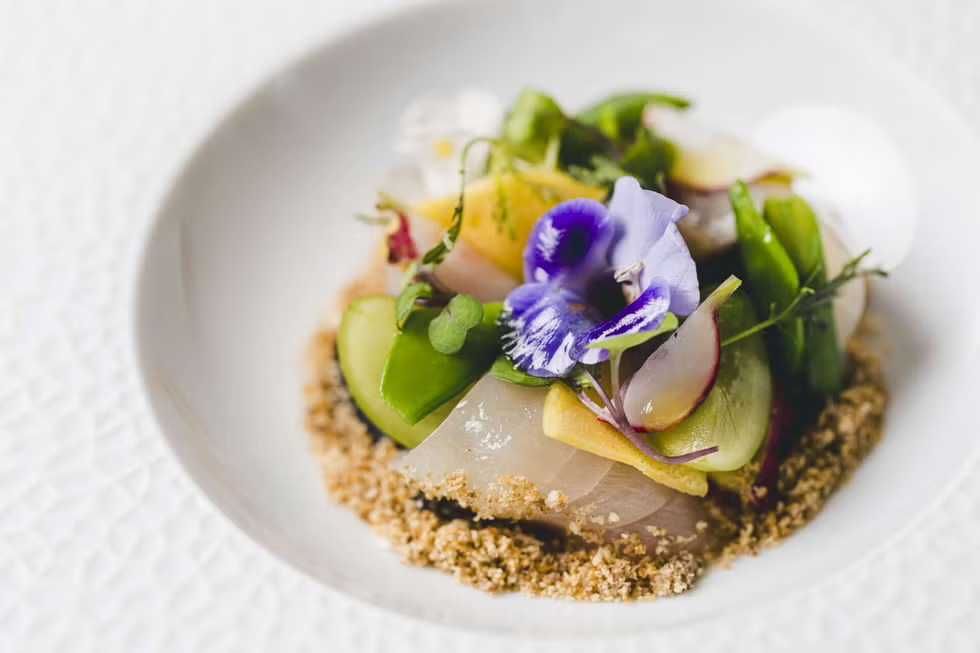
At Grand Café Fauchon, you get French cuisine prepared in the Fauchon approach using local ingredients. There are also signature dishes from Fauchon Paris, plus vegan options.
It’s on the 10th floor, so you’re eating while looking over Kyoto’s cityscape. Other facilities include:
- Pastry & Boutique (Paris-in-Kyoto energy)
- Tea Salon for signature teas
- Le Bar Fauchon
Dusit Thani Kyoto
This is the first time a luxury Thai hotel brand opens in Kyoto. It sits in the temple town around Nishi Honganji, with an exterior that blends into Kyoto’s cityscape instead of fighting it.
The concept is a hybrid: Thai elegance + Kyoto sophistication, and yes, you can also do Thai spa treatments here.
Premier Garden Room (40㎡): calm, designed by Thai designers
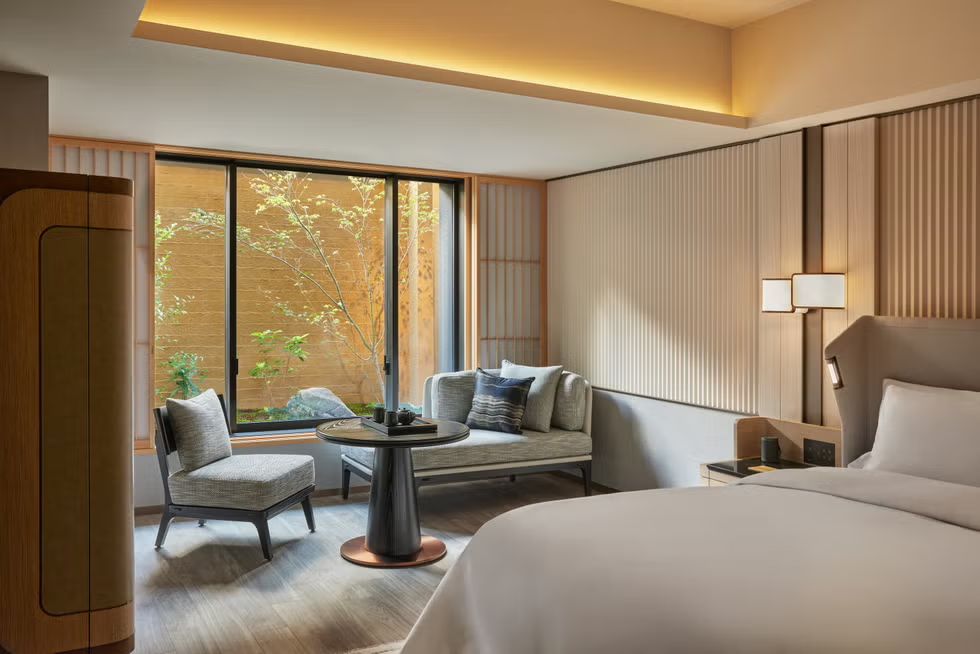
There are 147 rooms, designed by Thai designers in a calm, refined style.
The Premier Garden Room (Twin King) on the first floor has a small Japanese garden space in the back—tiny, but beautifully Kyoto.
Dining & events: Ayatana and the Bangkok connection
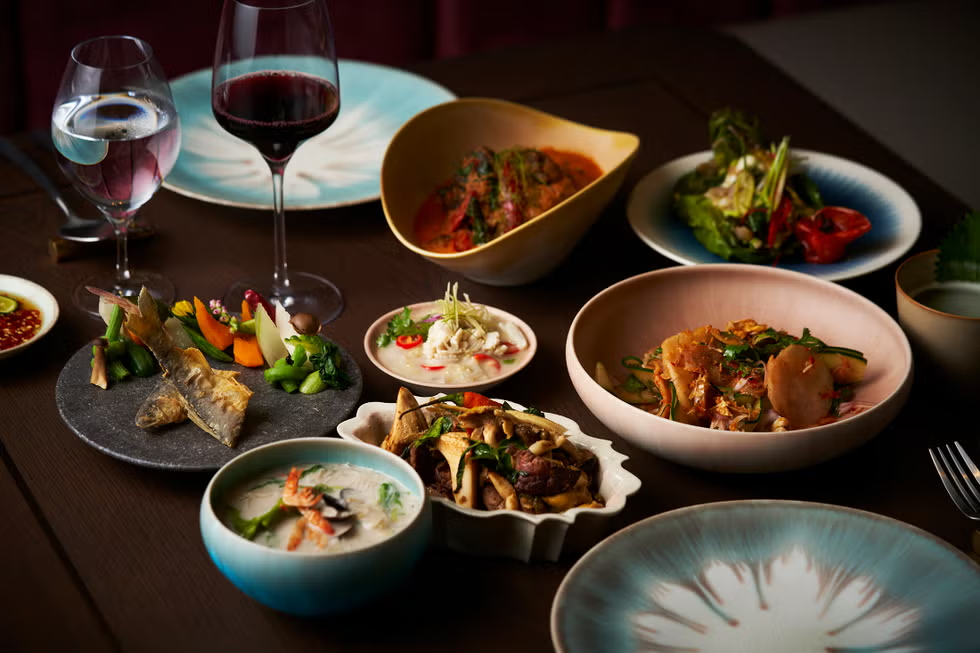
Ayatana is the fine-dining Thai restaurant overseen by a highly acclaimed chef in Bangkok.
Nijo Area
Quiet, historic, and deeply Kyoto—without the constant crowd pressure
The Nijo area is stacked: World Heritage Nijo Castle, traditional townscapes, and Kyoto food worth planning your day around. It’s also relatively calm—ideal when you want Kyoto to feel like Kyoto, not like a moving queue.
Garrya Nijo Castle Kyoto
Right south of Nijo Castle, Garrya is a small, modern luxury hotel created by the Banyan Group. Minimalist, compact, and focused on essentials—great for travelers who want comfort without extra fluff.
In July 2024, it earned 1 Michelin Key in the Michelin Guide Hotel Selection.
Rooms: floor-to-ceiling windows + garden + castle views
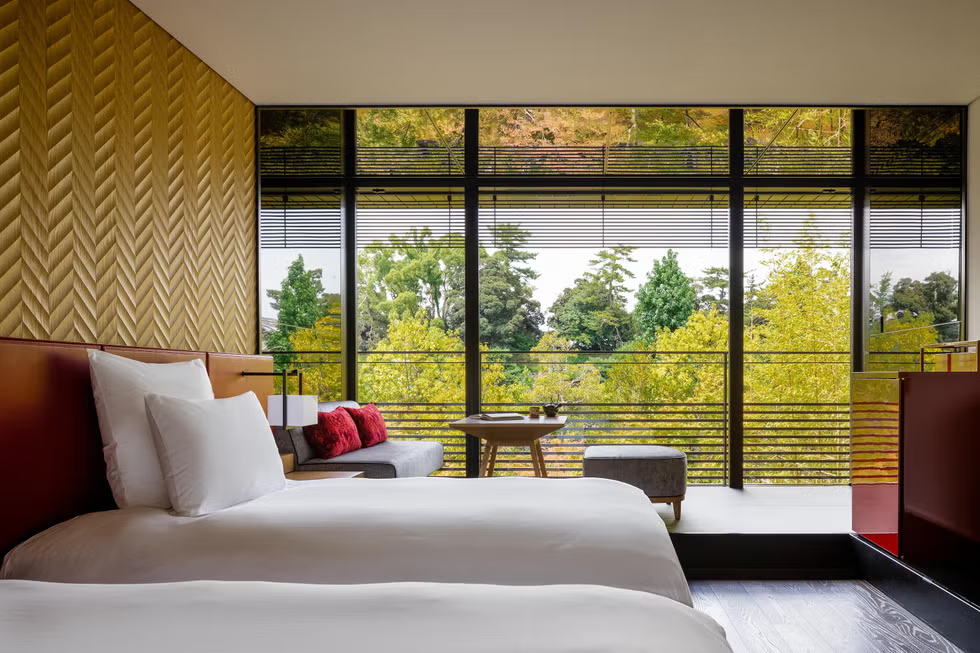
There are 25 rooms, designed to honor Kyoto’s history and traditional craft. Every room has big windows, and from the tatami seating area by the window you can soak up views of the Japanese garden and Nijo Castle in natural light.
Design notes: lacquered furniture with vermilion accents, plus Shoin-zukuri architectural beauty. It’s a calm hideout for adults who actually want to relax.
Dining: “Singular” innovative French course
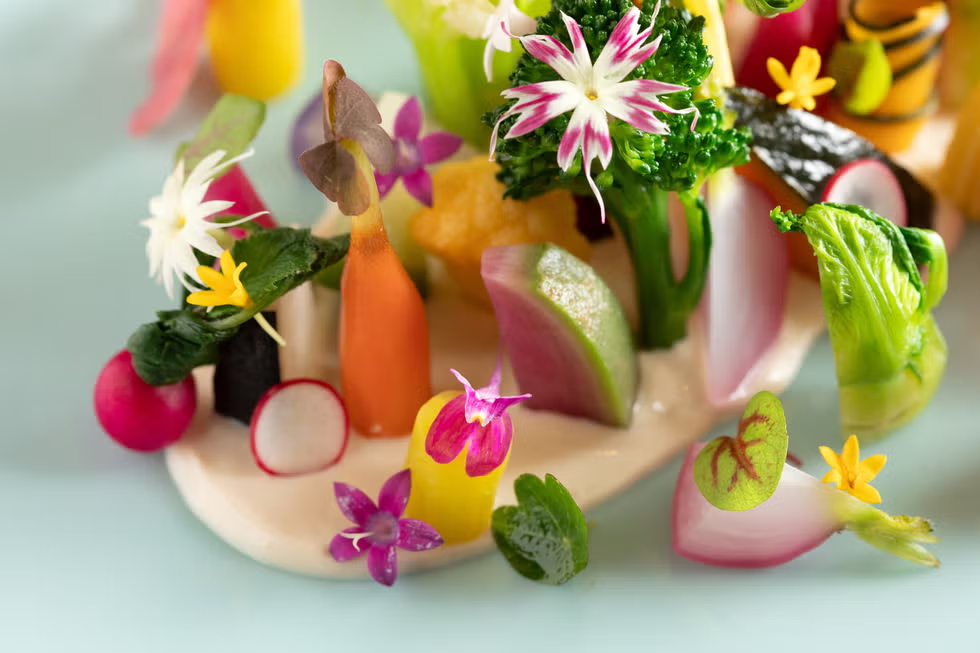
The main dining is Singular, an innovative French restaurant serving a course menu with ingredients sourced directly from Kyoto producers. The attached bar serves original cocktails.
HOTEL THE MITSUI KYOTO, a Luxury Collection Hotel & Spa
This is a five-star property facing Nijo Castle, tied to the legacy of the Mitsui family. Built over the remains of a structure passed down for 250+ years, it opened November 2020 as the group’s flagship.
It was awarded the top rating: 3 Michelin Keys in the Michelin Guide’s hotel selection. It’s also won numerous other awards—this is world-class Japanese luxury, with Kyoto soul.
Nijo Suite (112㎡): castle views + onsen-ready luxury
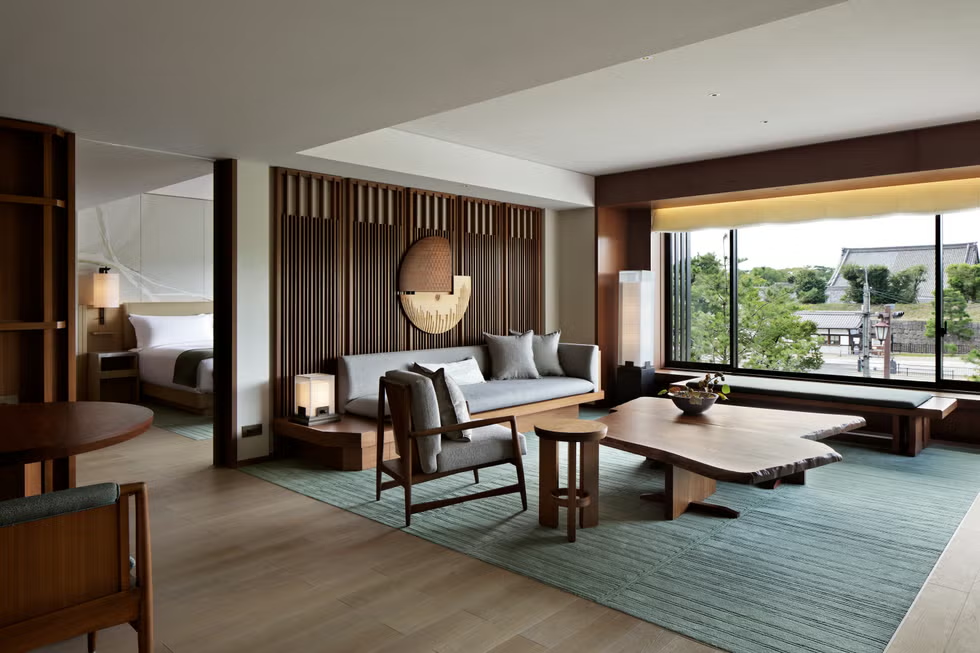
There are 160 rooms, designed as a modern interpretation of a Japanese tea room—hospitality as an art form. Materials and craftsmanship are meticulously chosen, and bathrooms feature stone tubs deep enough to actually relax in.
Some suites include natural hot springs bubbling up from the property.
Dining: garden-centered, seasonal Kyoto scenery
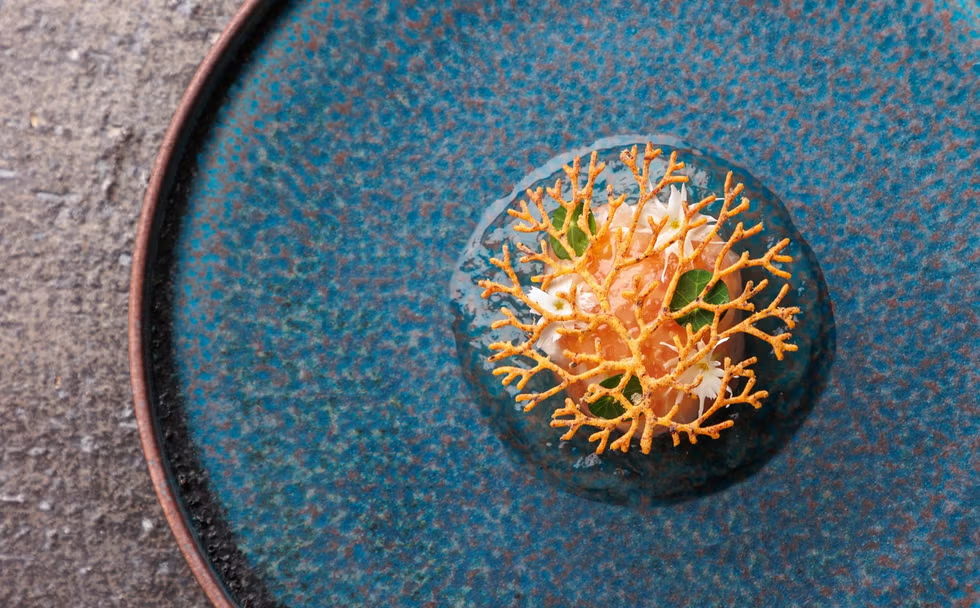
Restaurant and bar spaces wrap around the central garden, so you’re always eating with seasonal Kyoto scenery in view.
TOKI, the innovative Kyoto French restaurant, focuses on Kyoto ingredients and stock made with Kyoto water—a small detail that’s very, very Kyoto.
Karasuma Area: Marutamachi & Kyoto Imperial Palace
History nerds, architecture lovers, and people who enjoy green space: we found your zone
This area wraps around the Kyoto Imperial Palace and the lush Kyoto Gyoen National Garden, packed with historic sites and architecture with actual stories behind it.
Kyoto Brighton Hotel
With 36 years of history, this is a first-class hotel west of the Kyoto Imperial Palace, rooted in the community. The atrium lobby has an open ceiling stretching up to the sixth floor—bright, airy, and surprisingly calming.
A major win: an experienced concierge who can help with sightseeing planning, restaurant reservations, and more. Plus, there’s a shuttle bus from Karasuma-Oike Station to the hotel, making access easy.
Room en (42㎡): the “three en” concept (and it’s actually cute)
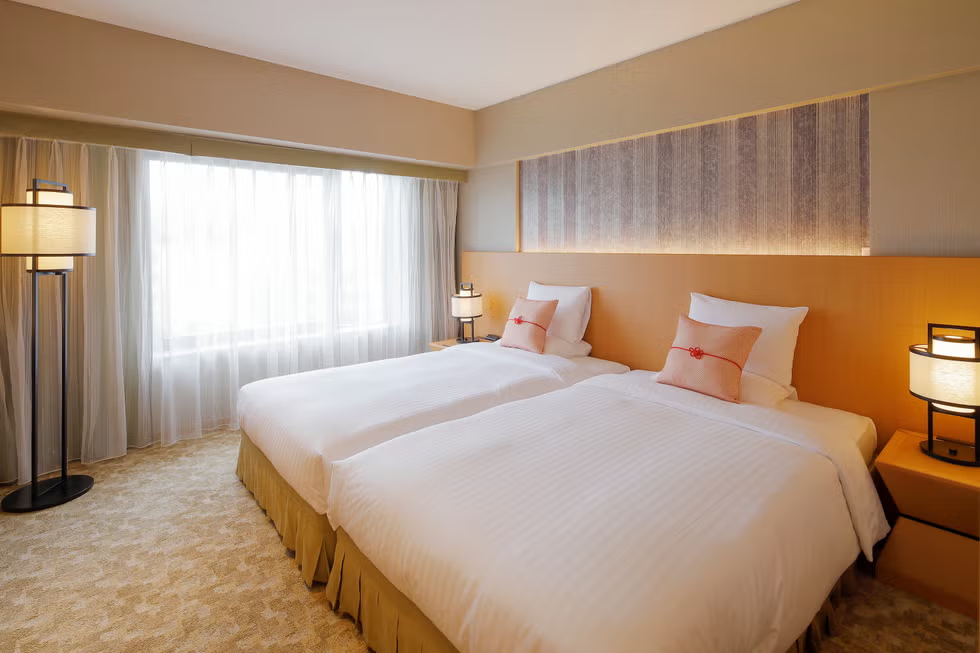
About 70% of the 182 rooms are 42㎡+, meaning you’re not living out of a suitcase on the floor.
Room en is built around three “en”: connection, gloss, and circle. The standout detail is a cushion with a mizuhiki design—symbolizing good fortune. The room has a bedroom plus separate living room, so couples can actually exist together without stepping on each other’s mood.
Kyoto Kaiseki “Hotaru”: autumn dinner that means business
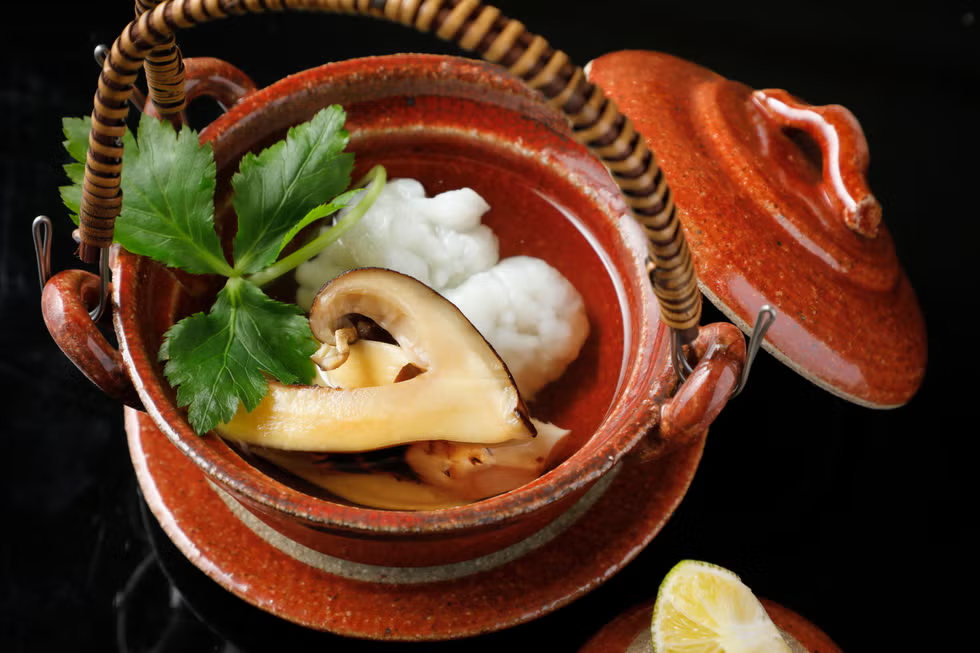
Clear soup earthenware pot—part of the autumn recommended dinner “Hotaru” from 15,500 yen (September through end of October). This is authentic Kyoto kaiseki that expresses seasonal flavors delicately and thoroughly.
Expect a full-course experience from appetizers to rice, with a focus on matsutake mushrooms, including elegant steamed dishes and freshly cooked matsutake rice.
Special tour perk: early morning autumn foliage viewing
Because they’re locally connected, the hotel offers cultural tours. The popular annual “Autumn Special Early Morning Viewing” plan lets you stroll famous foliage spots before the public arrives. Add detailed explanations from the head priest and Shinto priests, and it becomes genuinely memorable.
Nazuna Kyoto Gosho
Nazuna Kyoto Gosho is a luxury inn-style stay built from two renovated Kyoto townhouses, once used as a lumberyard. The old beams and fixtures mix with modern interiors for a space that feels both historic and fresh.
There’s also a very satisfying service: alcoholic and soft drinks plus light snacks, available in the Irori Lounge from check-in until late at night.
Luxury Room Kudzukiri (55㎡): semi-open-air cypress bath + private garden
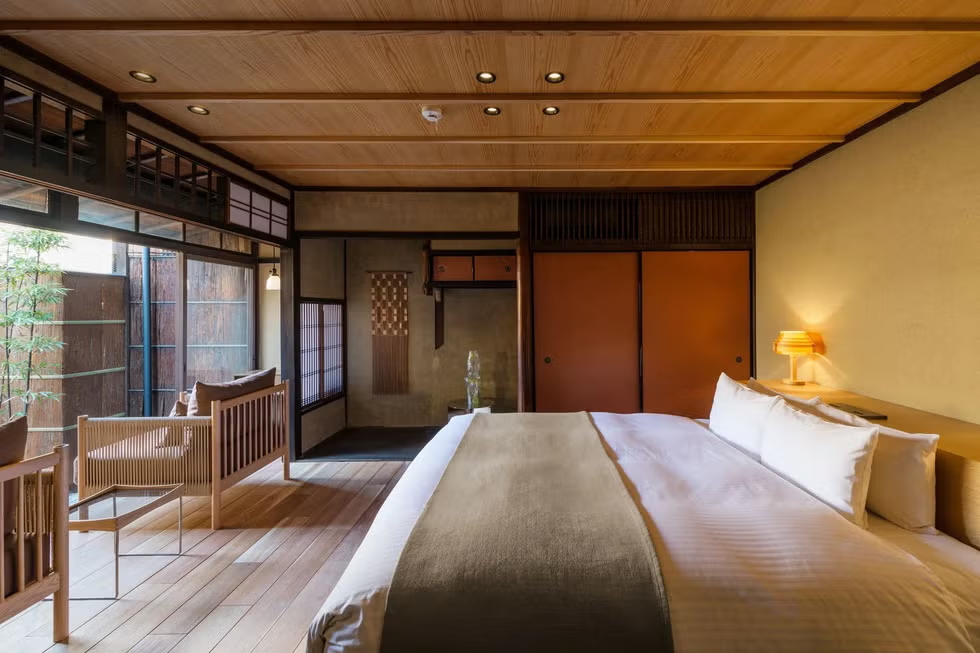
There are 7 rooms, each with a modern Japanese interior and a different Japanese sweets theme.
The Luxury Room Kudzukiri comes with:
- Semi-open-air cypress bath
- Private garden
- Big open-air windows so you can soak while staring into greenery
- An alcove that keeps the machiya atmosphere
- Original artwork inspired by kudzu (because theme commitment matters)
Dinner: Kyoto sukiyaki around the hearth
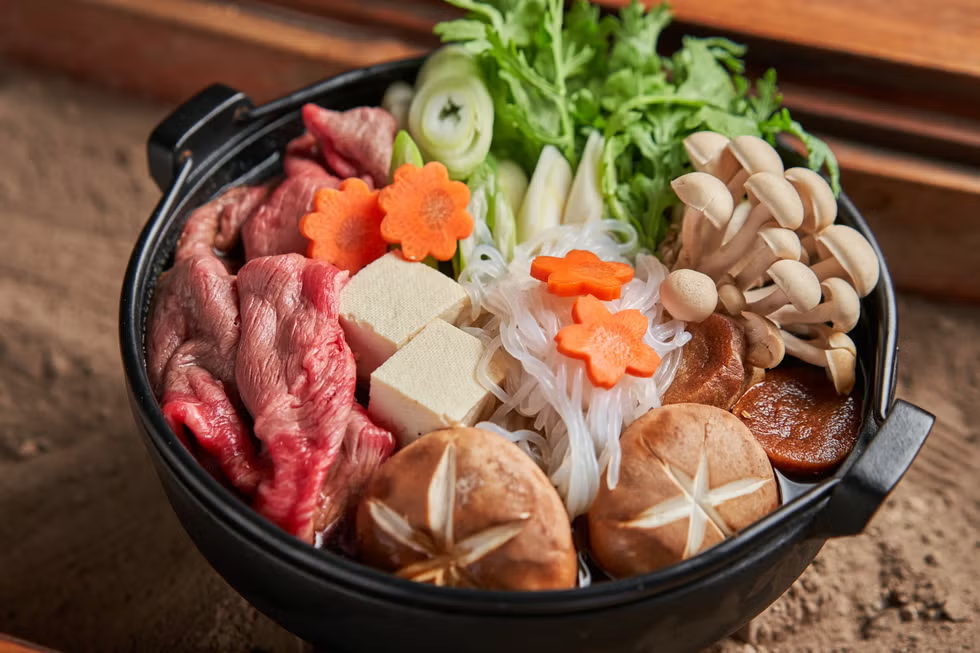
Dinner is the headline: top-tier sukiyaki served around the hearth. Expect A4-rank domestic Wagyu that melts softly, paired with glossy rice from Kyoto’s long-established Hachidaime Gihee, famous for bringing out rice’s natural flavor.
Kyoto Station Area
For early trains, late arrivals, and maximum transport convenience
Kyoto Station is the safest base if you’re arriving late, leaving early, or want every transport option at your feet: Shinkansen, subways, buses—everything.
THE THOUSAND KYOTO
Just a two-minute walk from Kyoto Station, yet you step inside and it’s instantly quieter. Guests are welcomed by:
- A big staircase under an open ceiling
- A front garden + street garden
- A sense of space that makes you forget the station chaos outside
They do modern sustainability and local culture too: rooftop urban beekeeping and exhibits by local artists. It’s a “next millennium” comfort concept with Kyoto restraint.
Garden Suite (56㎡ + terrace 89㎡): greenery + minimal Zen aesthetic
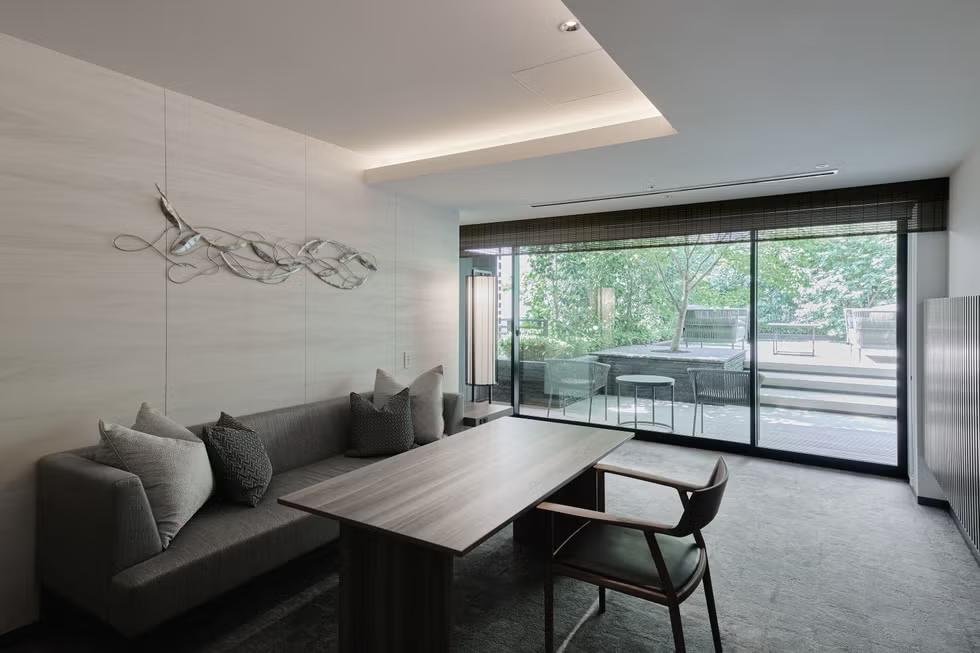
Rooms are simple and calming, built around minimalism reminiscent of Zen and tea culture.
The Garden Suite is the star: a huge terrace, seasonal greenery, nature-inspired art, and Kyoto cultural touches. Mattresses are custom-made by American company Sarta for comfortable sleep.
In-room dining breakfast is available (fees apply) and is popular.
Dining: “Plant-Forward” without being preachy
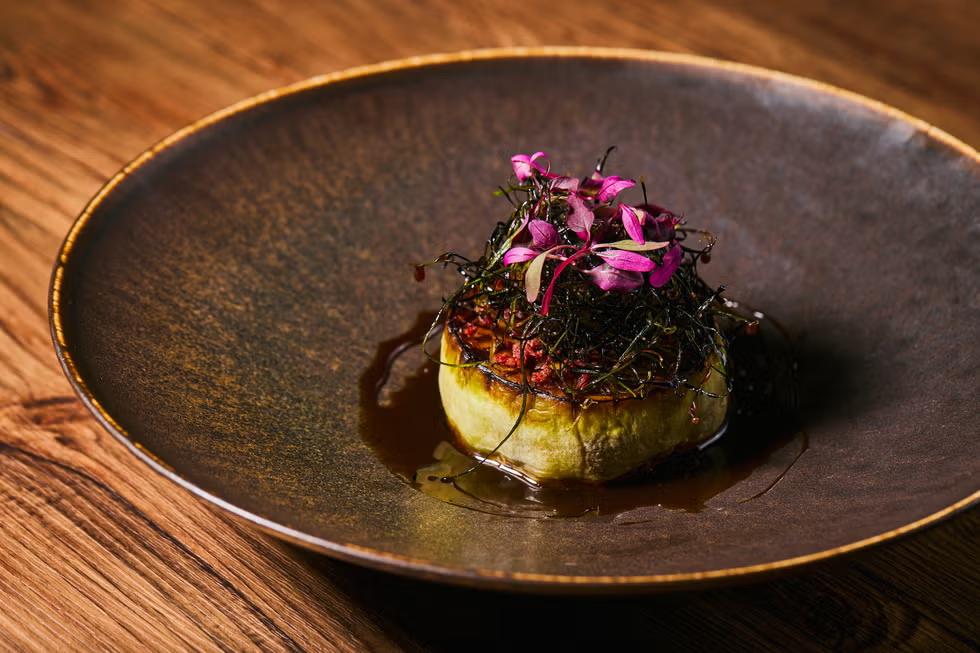
Italian restaurant SCALAE is known for its Plant Forward course—seasonal vegetables, including those harvested through agricultural support in Kyoto’s Nishigamo area.
It’s not strict vegan/vegetarian: animal-based ingredients show up in sauces and seasonings to deepen flavor. The vegetable-focused course is around eight dishes and is served at the counter on Fridays, Saturdays, and Sundays only.
Rakuhoku Area
Kyoto’s inner sanctum: nature, art history, and the Takagamine hills
Up in northern Kyoto, at the foot of the Takagamine Sanzan mountains, Rakuhoku feels like Kyoto’s secret breathing space. The Takagamine area (walkable to Kinkaku-ji) was also where Honami Koetsu, founder of the Rinpa school, lived about 400 years ago—an art village energy still lingers.
Aman Kyoto
Aman Kyoto sits quietly in a forest at the foot of Takagamine. It’s one of Kyoto’s most luxurious stays, inheriting a garden originally created by Asano Orimono, a renowned Nishijin textile manufacturer.
Think: moss-covered stone paving, shady gardens, and autumn foliage that feels private because… it is. Guests only.
Takagamine Pavilion (241㎡): rent the whole thing
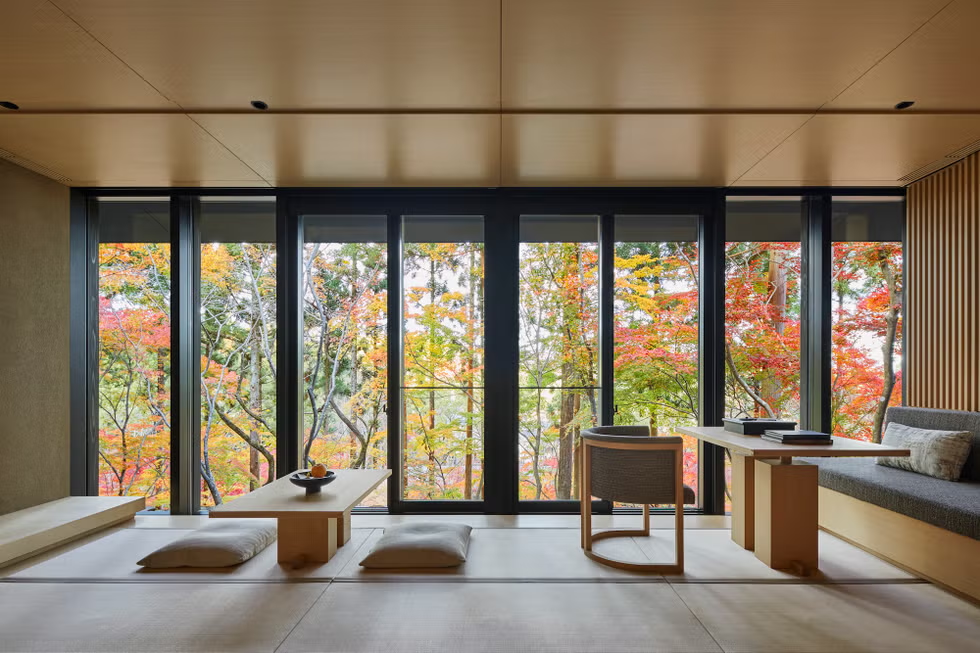
The grounds are huge—about 24,000㎡—with restaurants, spa, and accommodation buildings scattered to blend into nature.
The crown jewel is the Takagamine Pavilion, rented as a whole on a hilltop. Through wall-sized windows, you get the garden in all seasons—green maples in summer, blazing red leaves in autumn.
Inside:
- Living room
- Japanese-style room
- Dining room
- Two bedrooms with cypress baths
- Option to invite a chef for a private dinner in your room’s open kitchen (yes, really)
Dining: kaiseki + warm all-day dining
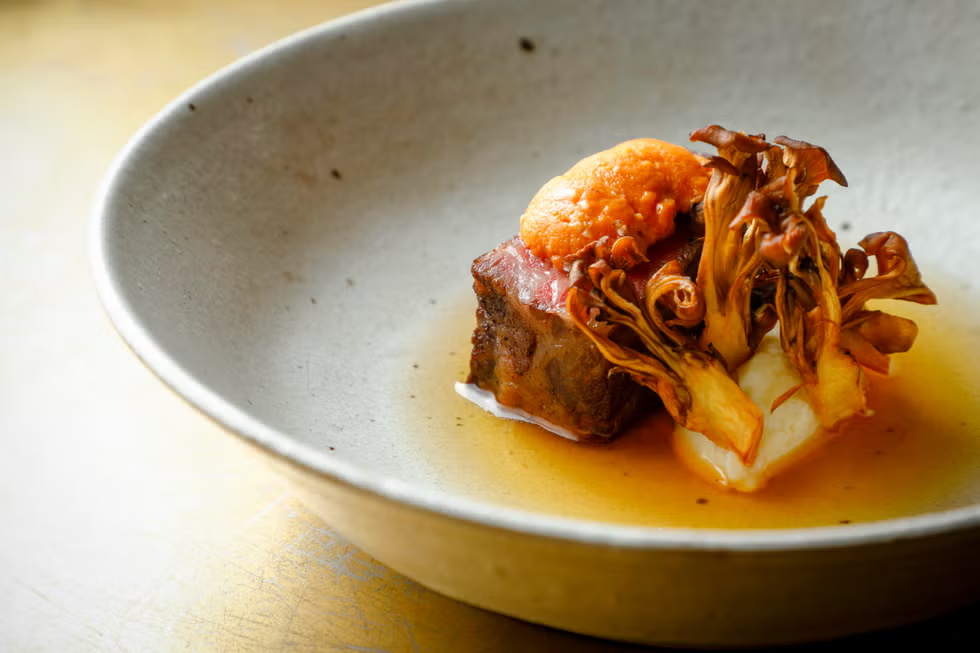
At Japanese restaurant Takaan, a skilled chef prepares kaiseki. The Living Pavilion by Aman overlooks the forest garden, serving innovative cuisine made with Kyoto ingredients in a warm, fireplace-lit atmosphere. Menus change about every two months.
ROKU KYOTO, LXR Hotels & Resorts
ROKU KYOTO is an LXR property under Hilton, opened September 2021 as the first LXR Hotels & Resorts in Asia. It’s all about nature + traditional culture—karakami paper, lacquerware, bamboo, pottery, artworks sprinkled throughout the spaces.
In July , it earned 1 Michelin Key.
ROKU Suite (100㎡): foothill views, Nishijin headboard, karakami wallpaper
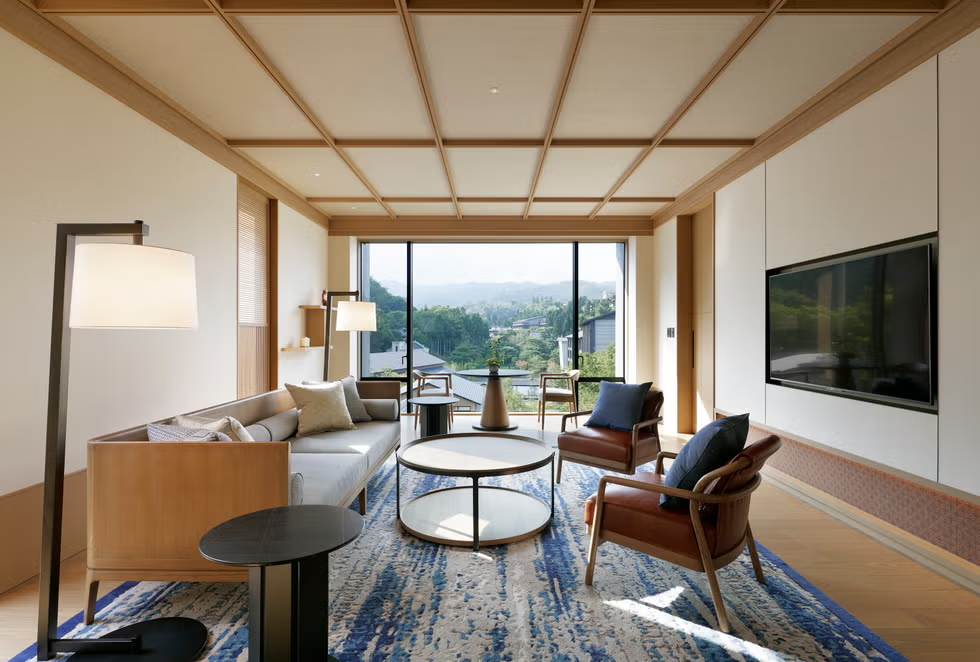
All 114 rooms are spacious, averaging 50㎡+, with big windows framing Takagamine’s natural scenery.
The ROKU Suite offers views across the Tenjin River, with:
- Nishijin-ori fabric headboard
- Traditional karakami wallpaper in an original hotel pattern
- Some rooms with private natural hot springs
- Some rooms with direct access to the thermal pool
Dining & drinks: TENJIN and “The Bar” by the water basin
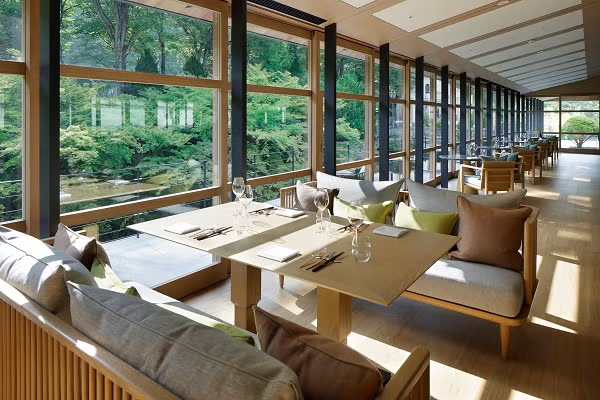
TENJIN is a French restaurant themed around nature, art, and cuisine. You’ve got multiple dining formats—Chef’s Table for dinner, all-day dining, and the atmospheric The Bar facing the water basin.
Autumn is the star here: river views, autumn leaves covering the landscape, and the whole place feels like a hidden retreat.
Arashiyama Area
Kyoto’s scenic showstopper: river, bridge, mountains, and seasonal drama
Arashiyama is one of Kyoto’s most cinematic areas—nature in all four seasons, historic buildings, the Hozu River, and Togetsukyo Bridge tying it together. This is the Kyoto you came for.
Suiran, a Luxury Collection Hotel, Kyoto
Opened in 2015 as Marriott International’s top-tier luxury brand in Kyoto, Suiran is a small luxury hotel with 39 rooms, including suites with private open-air hot spring baths.
The location is ridiculous: overlooking the Hozu River and Togetsukyo Bridge, with views that shift with the seasons. It earned 1 Michelin Key.
Suiran Presidential Corner Suite (94㎡): Arashiyama views from your bath
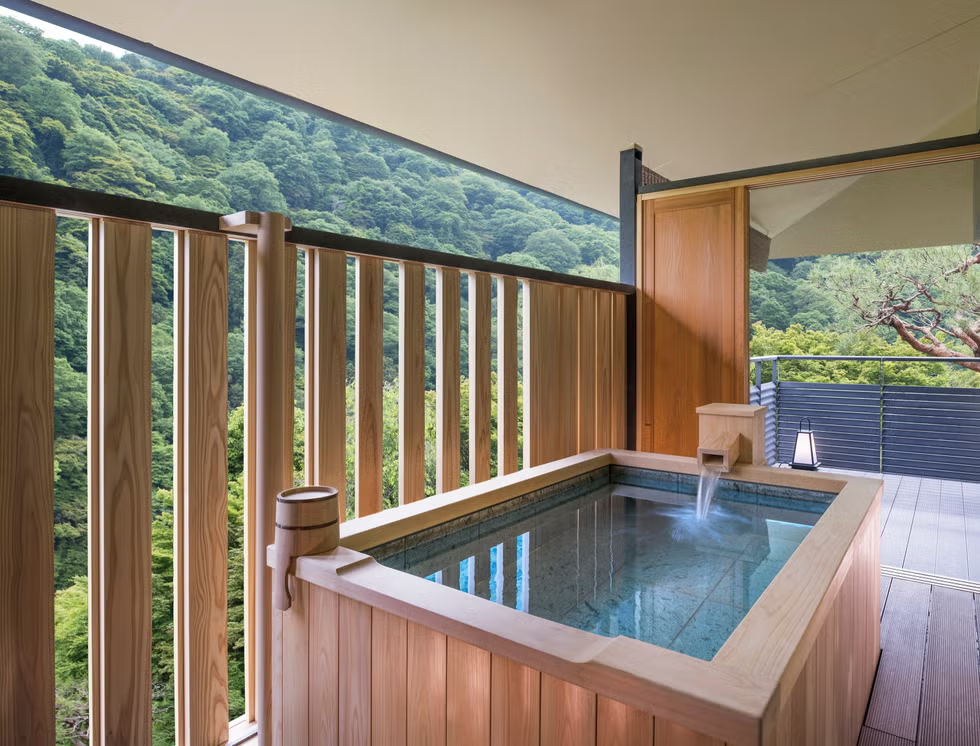
Seventeen rooms (including four suites) have open-air baths with natural hot spring water.
The top room is the Presidential Corner Suite—a big glass window + terrace framing Arashiyama. Interior key colors: jade green (Hozugawa River energy) and sparkling violet. The open-air bath is the main event: soak while Arashiyama performs.
Dining: French technique meets kaiseki aesthetics
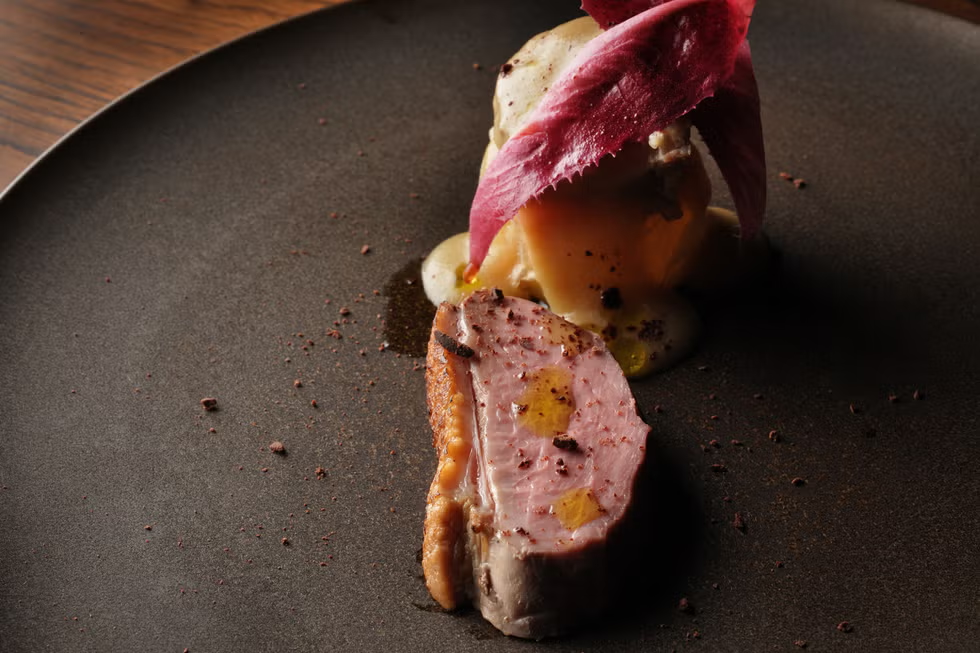
At Restaurant Kyo-Suiran, the cuisine blends kaiseki technique with French aesthetic sense. You dine in a traditional space inherited from the former villa of the founder of Kawasaki Heavy Industries.
Dinner course example: Duck, daikon radish, endive — from course “Kinshu” starting at 28,463 yen.
MUNI KYOTO
“MUNI KYOTO by Onkochishin” sits right in front of Togetsukyo Bridge, with 21 rooms wrapped in Arashiyama’s nature. Along with the adjacent Fukuda Art Museum, it’s modern architecture that doesn’t fight the landscape—it complements it.
Since opening in 2020, it’s built a reputation for high-quality service and standout food.
Garden View (50–60㎡): wall-to-wall window, nature like a painting
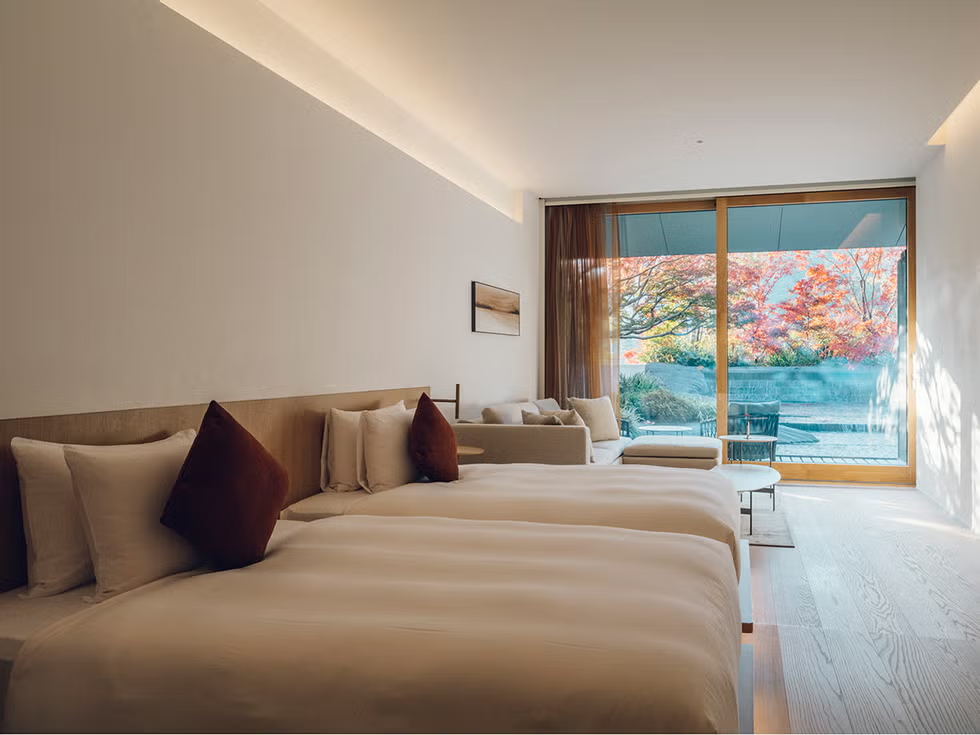
Rooms are big—50–70㎡—and the full-length windows deliver panoramic nature, especially in autumn when the leaves turn the view into a literal postcard.
Design is minimalist and organic: soft, pale tones, comfort-first, nothing trying too hard.
Dining: Alain Ducasse name, Kyoto ingredients
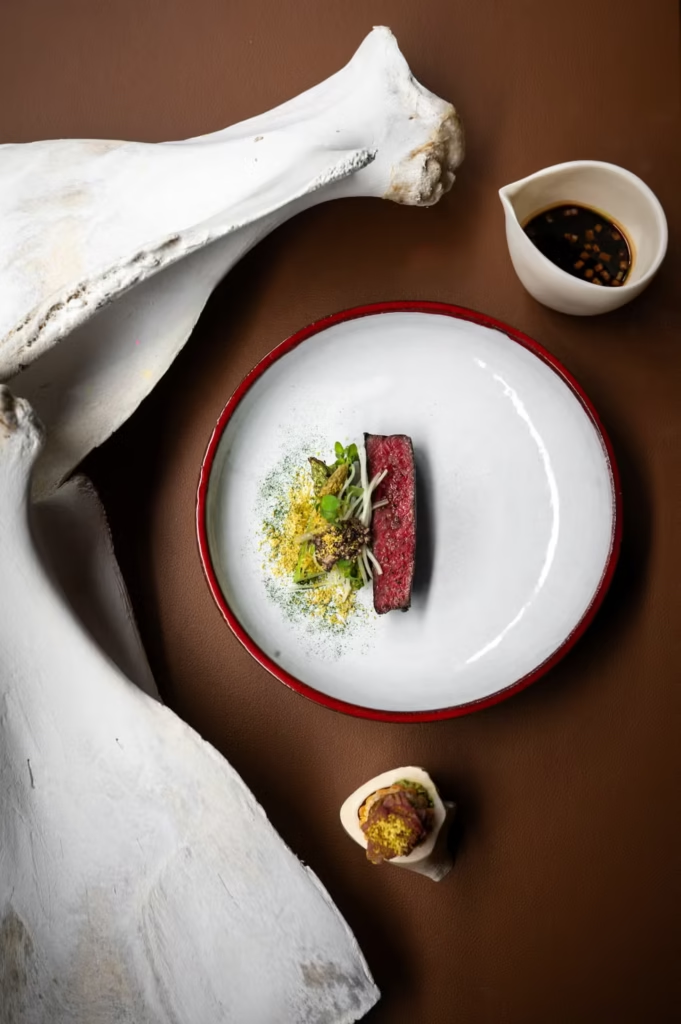
MUNI ALAIN DUCASSE serves contemporary French cuisine using Kyoto ingredients, linked to the world-famous chef Alain Ducasse.
Chef Alessandro Galdiani trained for 10 years in Alain Ducasse restaurants across Monaco, London, and Paris, and now runs the kitchen here.
Also worth it: MUNI LA TERRASSE for breakfast, lunch, or tea time overlooking the Katsura River.
Dish example: Charcoal grilled Kyoto Wagyu beef fillet with green asparagus and sea cucumber.
- 14 Best Day Trips From Kyoto: Hot Springs, Castles, Lakes and Easy Escapes
- What to Do in Gion Kyoto in 2026: Beautiful Streets, Shrines and Local Experiences
- Where To Eat In Kyoto (2026): 20 Famous Restaurants Perfect for Lunch or Dinner
- Best Bars In Kyoto (2026): 11 Sensational Spots to Experience
- What To Do in Kyoto (2026): Best Things to Do, Itinerary & Visiting Tips
