I spill travel tips , and show you the Japan that tourists usually miss.
Uncover the fascinating blend of innovation and heritage in mind-blowing architecture in Tokyo. Explore the city’s most striking structures and hidden design gems.
| ➡️Discover 10 iconic buildings that showcase the best of Japanese architecture, from the serene elegance of Kyoto’s historic temples to the dramatic silhouettes shaping Tokyo’s skyline. ➡️Here, we spotlight some of the most remarkable examples of Shinjuku architecture, from landmark towers to overlooked design statements, and explore what makes each one stand out in one of Tokyo’s most visually layered districts. |
Table of Contents
1. Crystal View Rest House / Kasai
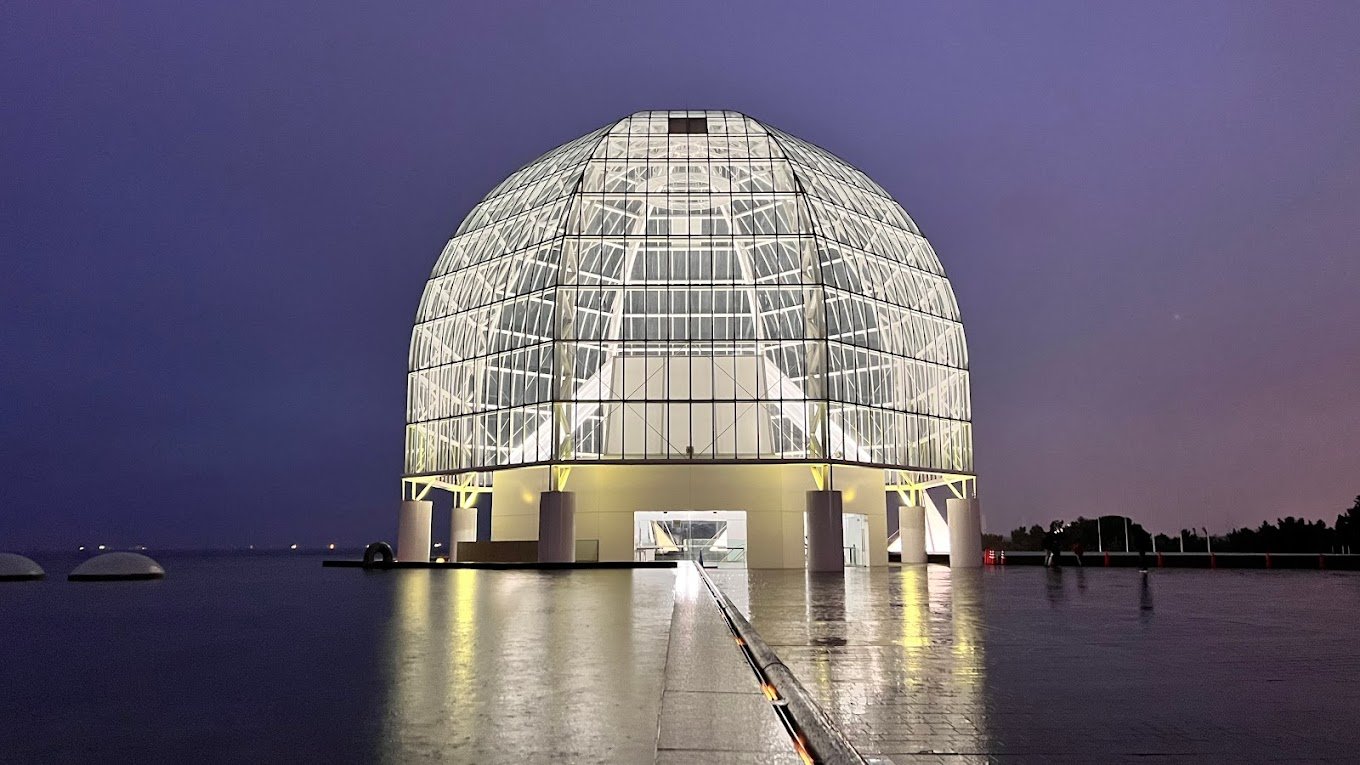
This shimmering glass box isn’t just a rest stop—it’s an ocean-front observatory with cinematic views. Designed to disappear into the seascape, it gives you an unfiltered window into Tokyo Bay’s horizon. Minimalist magic at its finest.
2. Mitaka Reversible Destiny House / Mitaka
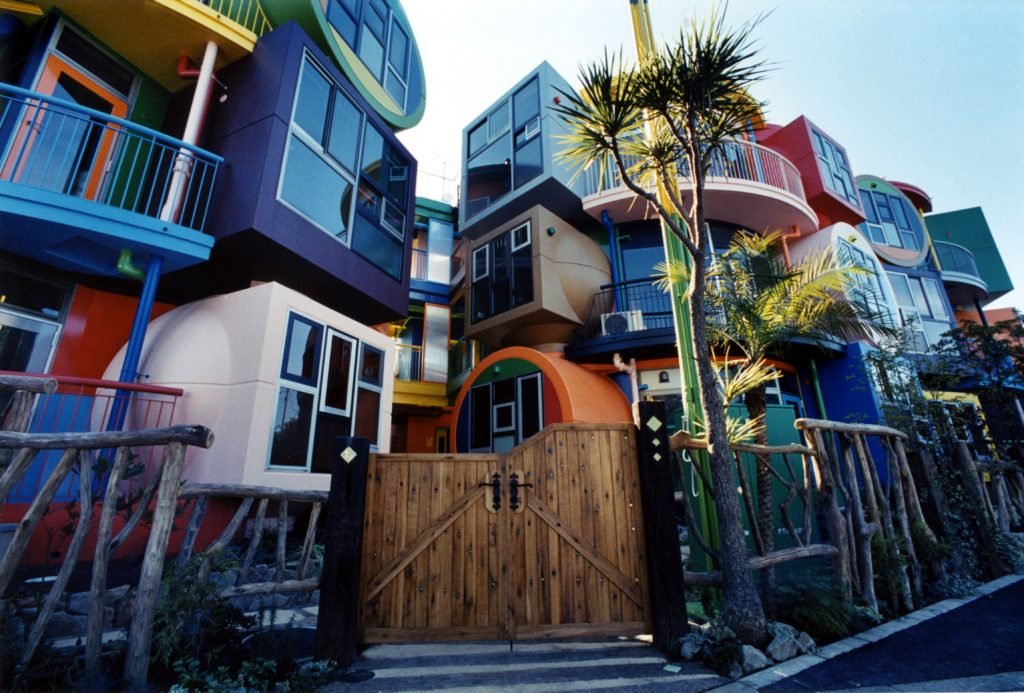
Living art? Architectural fever dream? Both. Designed to disorient and delight, this complex bursts with color and shape in ways that challenge logic. With 9 uniquely colored units and wild interior curves, it forces your brain and body to engage. You can take a guided tour, and yes—you can even book a night to sleep inside the madness. Definitely not your average Airbnb. Reservations are required for tours and accommodation, so we recommend checking their website before visiting.
3. Prada Aoyama / Aoyama

This diamond-grid glass building by Herzog & de Meuron feels like Tokyo’s answer to a futuristic beehive. Sunlight pierces through angular panes, warming its luxurious interior and hosting rotating exhibitions. It’s one of the city’s most visually distinctive retail spots.
4. Asakusa Culture Tourist Information Center / Asakusa

Kengo Kuma’s design mimics stacked wooden homes, wrapped in warm timber. Inside: a tourist hub, multipurpose hall, and free observation deck with panoramic views of Asakusa. It’s the perfect fusion of old-school charm and contemporary utility.
5. St. Mary’s Cathedral / Edogawa Bridge
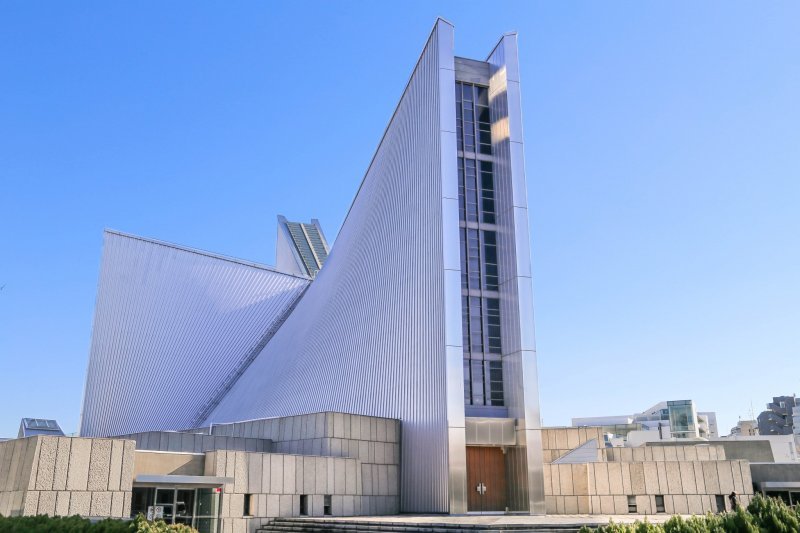
Just a short walk from Edogawabashi Station, this majestic stainless steel cathedral looks like it belongs in a sci-fi film. Designed over 50 years ago, its futuristic exterior still stuns today while maintaining the dignity of a sacred site.
6. The National Art Center / Roppongi
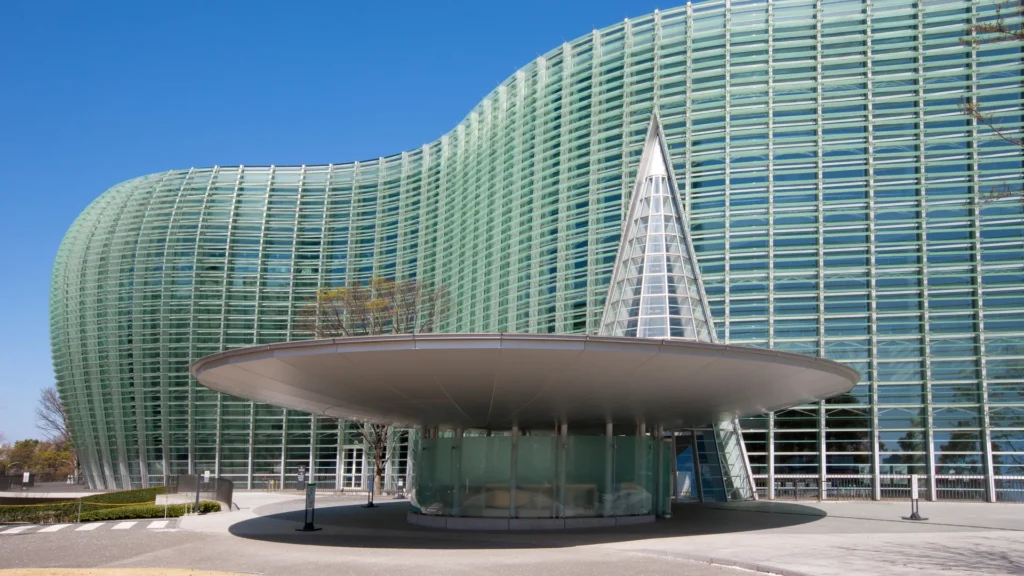
Nicknamed “an art museum in the forest,” this wave-like glass structure houses shops, cafes, and ever-changing exhibitions. Directly connected to Nogizaka Station, it’s easy to visit and hard to forget—a building that dazzles as much as the art inside.
7. Tokyo International Forum / Tokyo
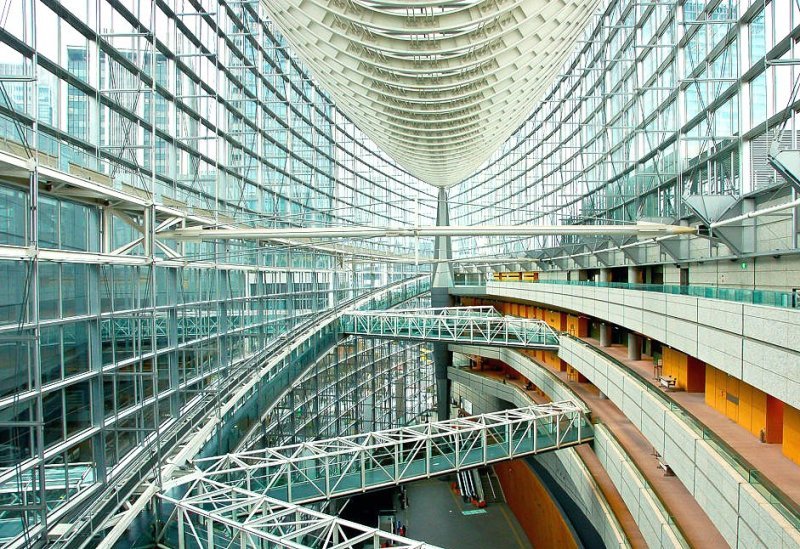
A massive glass atrium inspired by a ship, this venue is part cultural space, part architectural spectacle. With restaurants, art spaces, and public events, its light-filled corridors are perfect for photos—especially when sunbeams pour through the glass.
8. Sunny Hills Minami Aoyama / Omotesando
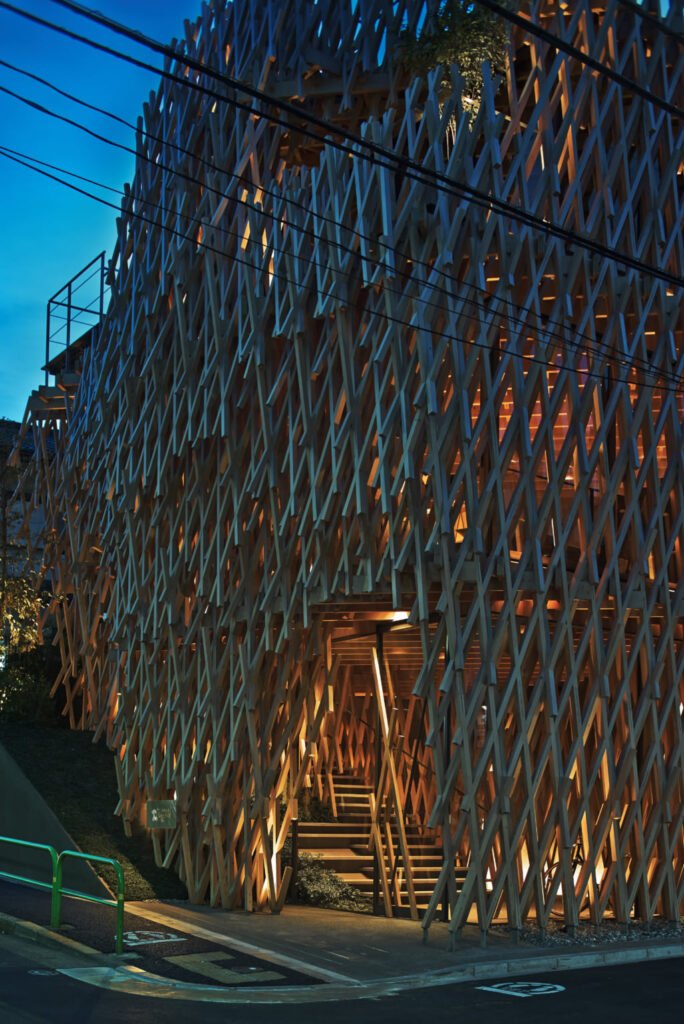
Taiwanese pineapple cake is a popular shop, but the design is very unique, and it is attracting a lot of attention. It is carefully made by craftsmen using a traditional braiding method called “Jigoku Gumi”.
You’ll be amazed by the one-of-a-kind design both inside and out. It was specifically created to give city dwellers a taste of the forest, a refreshing escape from the concrete jungle.
9. Harumi Passenger Ship Terminal / Toyosu
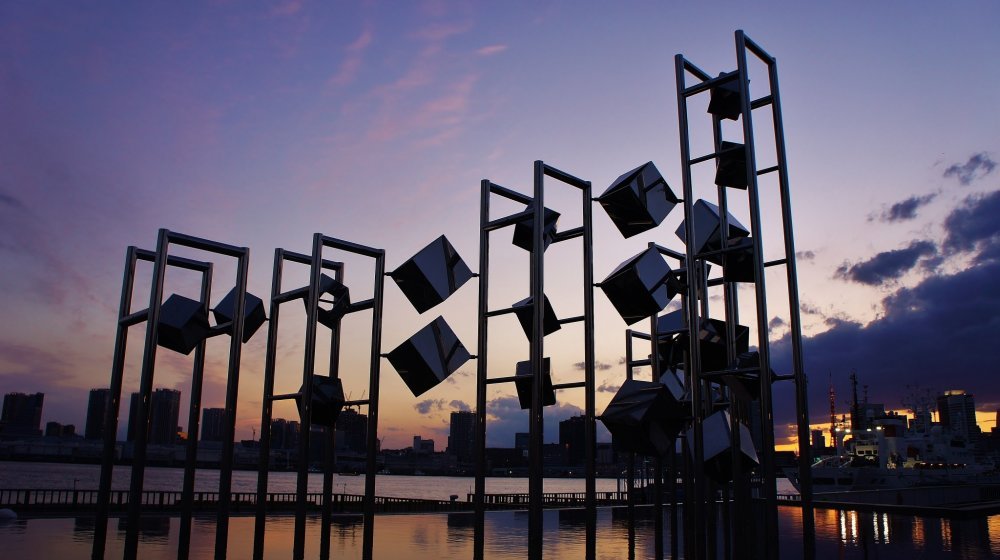
This maritime hub is also a design marvel—especially after dark. The geometric structure reflects beautifully on the water and frames Tokyo Bay with stunning silhouettes. Don’t miss Fuubai Ginran, an art piece inside the terminal.
10. Tokyo Gate Bridge / Tokyo Bay
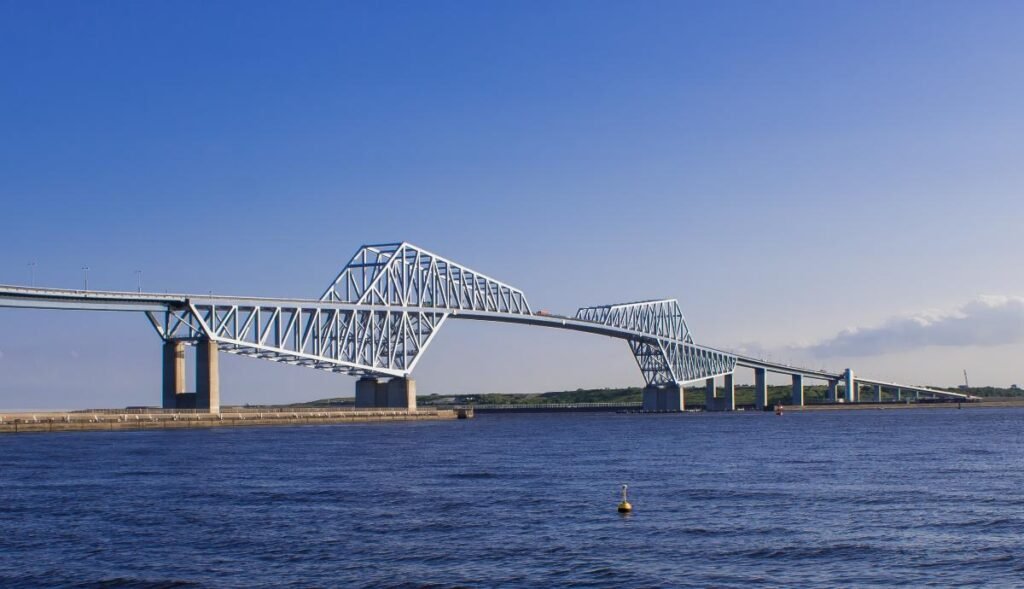
Stretching 2,600 meters across Tokyo Bay, this bridge connects Ota and Koto wards and offers pedestrian walkways with unbeatable views. Nicknamed “Dinosaur Bridge,” it’s best admired at dusk, when the sunset casts its salmon-pink glow over the water.
11. Apple Store Omotesando / Omotesando
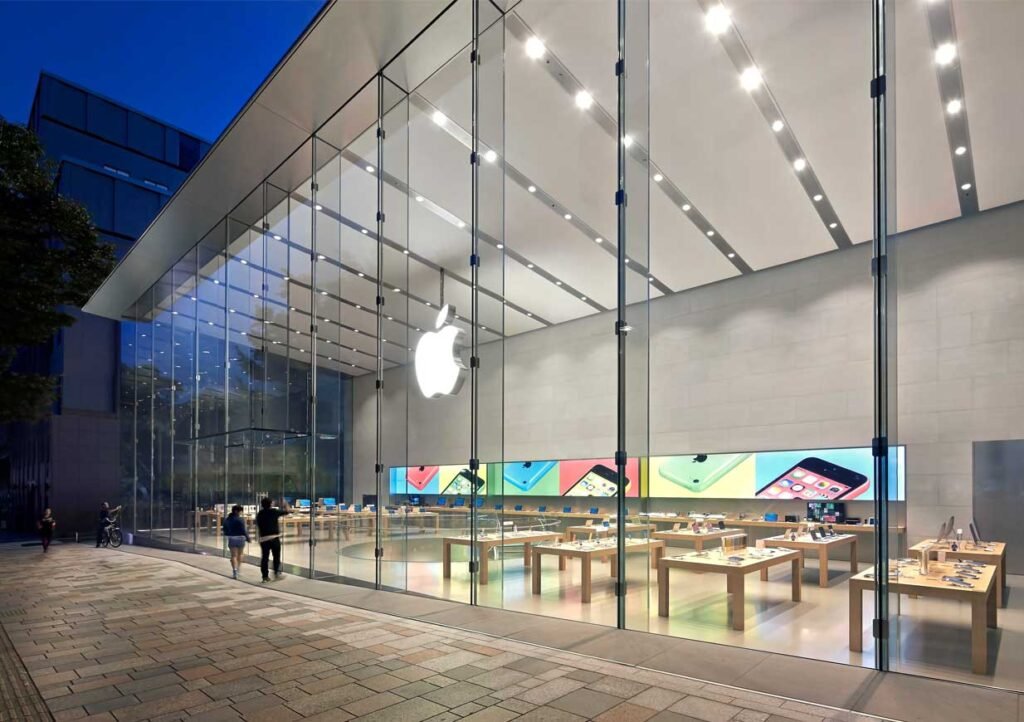
This shop, which faces the fashionable street of Omotesando, has a transparent design with a clear glass wall. The point is that the central Apple logo glows at night.
In the center is a stylish and sleek spiral staircase leading to the basement. The transparent design of this shop is similar to the store in New York.
12. Tokyu Plaza Omotesando Harajuku / Harajuku

A mirrored escalator entrance turns every step into a surreal light show. This visual trickery turns the mall’s front doors into a kaleidoscopic selfie magnet—an easy, free, and wildly photogenic Tokyo experience.
13. National Stadium / Sendagaya
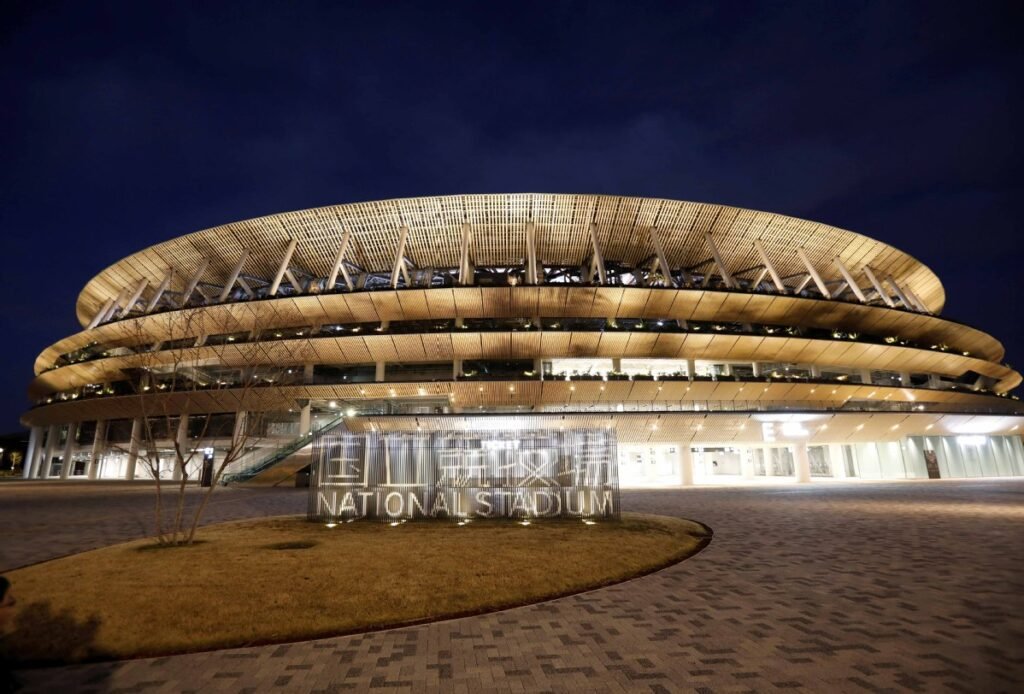
Kengo Kuma’s Olympic showpiece blends wood, steel, and greenery into a modern arena that feels alive. While you can’t enter at the moment, walking its perimeter offers a powerful sense of scale and harmony with nature.
14. Mode Gakuen Cocoon Tower (Shinjuku)
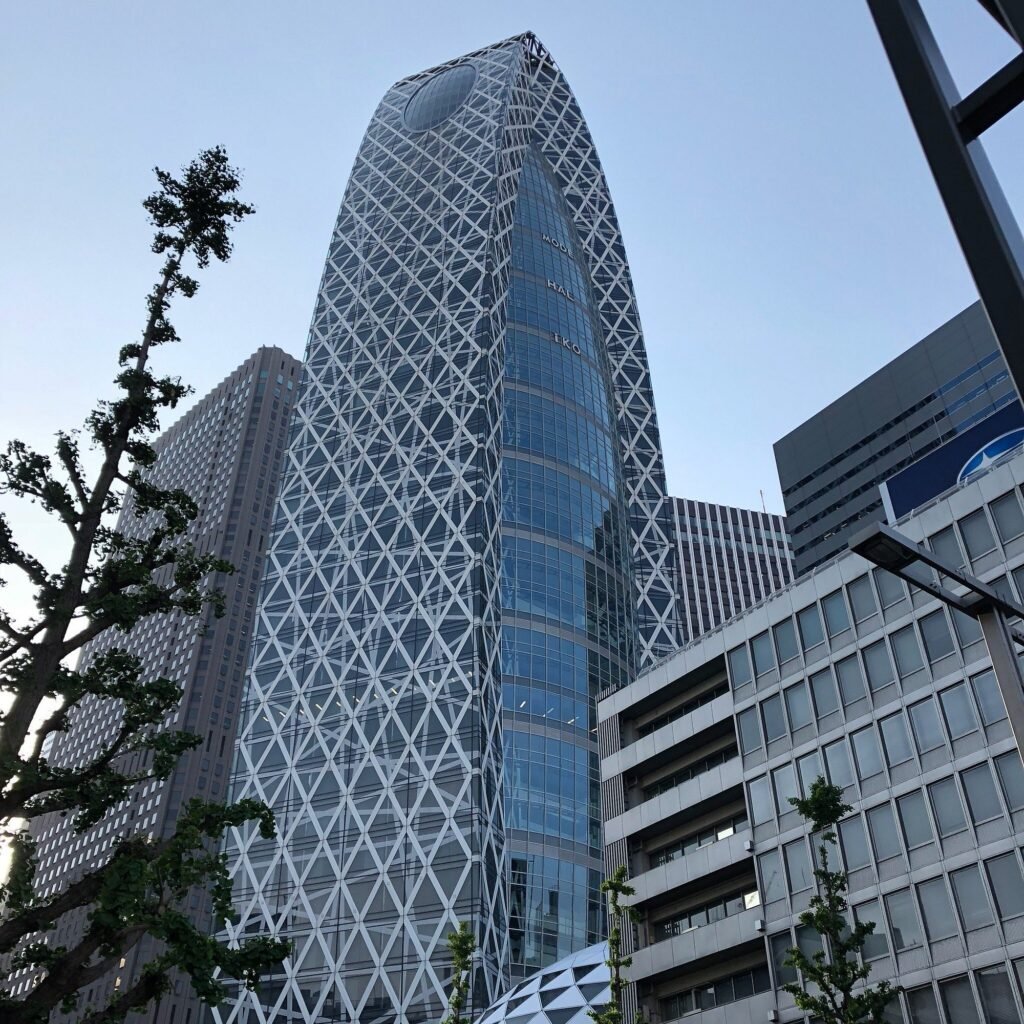
A skyscraper that doesn’t play by the rules, this 50-story academic tower twists like a woven cocoon piercing the Shinjuku skyline. Designed by Tange Associates, it houses three schools and symbolizes creativity bursting from constraint—form, function, and metaphor all wrapped in one.
Pro Tips:
- Want jaw-dropping photos? Go at sunset.
- Most of these spots are within walking distance of other must-see places, so map it out smartly.
- Bring a wide-angle lens or a phone with ultra-wide mode. You’ll thank us later.
FAQs: Architecture in Tokyo
What makes Tokyo’s architecture unique?
That jump-cut mix: wooden shrines, Meiji brick, concrete Metabolism, glassy flagships, micro-houses tucked into alleys, all stitched together by tight lots and earthquake-ready engineering.
Where should I go for traditional buildings?
Asakusa (Sensō-ji), Yanaka and Nezu’s old lanes, and Kagurazaka’s backstreets. Add Meiji Jingu’s forested precincts for shrine carpentry in context.
Best districts for contemporary starchitecture?
Omotesandō/Aoyama (flagship catwalk), Roppongi/Ark Hills (museums + towers), Marunouchi/Otemachi (polished corporate canyons), and Shibuya (scramble + sky decks).
Which architects should I keep an eye out for?
Kenzo Tange (post-war icon), Toyo Ito, Kazuyo Sejima & Ryue Nishizawa (SANAA), Kengo Kuma (warm timber), Shigeru Ban (paper & humanitarian), and Tadao Ando (light + concrete).
What is Metabolism, and where do I see traces?
A 1960s Tokyo movement imagining cities as living, expandable systems. Many works are gone/altered, but the idea echoes in megastructures, modularity, and exhibitions at places like TOTO GALLERY·MA or GA Gallery.
Classic buildings I shouldn’t miss?
Tokyo Station (red-brick Marunouchi), National Museum of Western Art (Le Corbusier core), St. Mary’s Cathedral (Tange), Nakagin Capsule Tower’s legacy (capsules preserved/exhibited), and Praemium Imperiale–tier museums in Roppongi Hills.
Where can I enjoy architecture with great city views?
Shibuya Sky, Tokyo City View (Roppongi Hills), Tokyo Skytree, and the free Tokyo Metropolitan Government Building observatories in Shinjuku.
Any architecture-focused museums or galleries?
TOTO GALLERY·MA, GA Gallery/GA Document, Waseda Architecture Gallery (check hours), and Mori Art Museum’s periodic architecture shows.
Are there good guided tours or events?
Yes—look for Open House Tokyo (annual), neighborhood walks in Omotesandō/Marunouchi, and university-led tours around landmark campuses.
Can I photograph buildings freely?
Outdoors, usually yes—respect private property, posted signs, and no-drone zones. Tripods can be restricted around stations/commercial sites; ask staff when in doubt.
What materials define “Tokyo style”?
Timber (old/new), textured concrete, ceramic tile, and ultra-clear glass. Recent trends lean to wood, screens, and porous façades (Kengo Kuma fans, rejoice).
Any memorable small houses to spot?
Absolutely—Kōenji, Nakameguro, and Setagaya hide inventive micro-homes on pocket lots; they’re private, so admire from the street only.
Tips for planning an architecture day?
Pick a spine (e.g., Omotesandō → Aoyama → Roppongi), pin 5–7 stops, weave in a museum, and end at a viewpoint for dusk-to-night skyline shots.
When’s the best season for building walks?
Spring and autumn for comfort and soft light; winter offers crisp air and long golden hour; summer heat demands shady routes and café pit-stops.
- Nagoya rainy day with kids in 2026 (Cool Indoor Things to Do )
- Best Gachapon in Tokyo (2026): 20 Places to Find Capsule Toys
- All Japanese KitKat Flavours List: The Ultimate Japan KitKat Guide
- Sapporo rainy day with kids (2026): 7 Cool Indoor Things to Do
- What To Do In Arashiyama With Kids: A Realistic One-Day Family Itinerary