

Travel photojournalist and landscape hunter with experience across 89 countries, all 47 prefectures of Japan, 30 remote islands, and 60+ mountains. I focus on overlooked landscapes, mossy hidden corners, and places beyond the usual guidebooks — sharing photography and stories that inspire people to travel.
Kobe is famous for its picturesque harbor, historic Western-style houses, and, of course, its rather expensive beef. But there’s much more to this Japanese port city than the attractions that appear in every travel guide.
Venture beyond the busy streets of Sannomiya, and you’ll discover peaceful botanical gardens, centuries-old sake breweries, unusual museums, and historic temples that many international visitors overlook.
Some of these hidden gems in Kobe are tucked away in residential neighborhoods. Others are hiding surprisingly close to Kobe’s main tourist areas, making them easy to squeeze into your itinerary.
And the best part? Several of these hidden gems in Kobe are completely free to visit.
Whether you’re returning to Kobe for a second visit, looking for somewhere quieter, or simply want to discover a different side of the city, here are nine lesser-known places worth adding to your plans.
Explore More of Kobe: Local Favorites, Food & Places to Stay
Found a few unexpected corners of Kobe? There’s plenty more to discover. From waterfront landmarks and excellent local restaurants to charming neighborhoods and memorable places to stay, these guides will help you plan the rest of your trip.
- 35 Best Things to Do in Kobe – Discover waterfront attractions, mountain escapes, gardens, and cultural landmarks.
- Where to Eat in Kobe – Find excellent Kobe beef restaurants, sushi spots, and local food worth trying.
- Where to Stay in Kobe – Compare the best neighborhoods and 18 hotel picks, from convenient city stays to luxury waterfront hotels.
- What to Buy in Kobe – Explore local sweets, unique souvenirs, and gifts you won’t find everywhere in Japan.
- Best Things to Do in Kobe With Kids – Family-friendly museums, animals, cable cars, and outdoor adventures.
Table of Contents
9 Hidden Gems in Kobe
1. Hyogo Prefectural Museum of Art – Architecture, Art, and a Seaside Escape
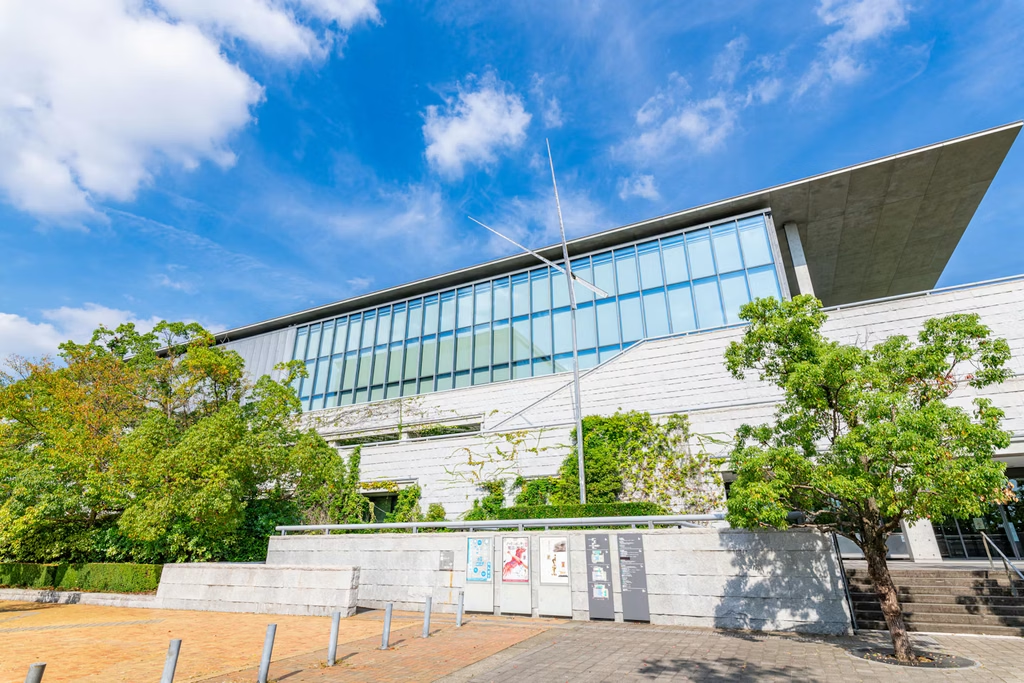
The Hyogo Prefectural Museum of Art might not be an actual secret, but it’s one of those places that deserves more attention from visitors exploring Kobe.
Located in the waterfront district of HAT Kobe, this impressive museum is worth visiting for its architecture alone.
Designed by renowned Japanese architect Tadao Ando, the building is a striking combination of exposed concrete, geometric staircases, glass corridors, and open spaces that play with natural light.
Opened in 2002, the museum was established as a symbol of cultural recovery following the devastating Great Hanshin-Awaji Earthquake of 1995.
Inside, you’ll find an extensive collection of Japanese and international modern and contemporary art, alongside regularly changing exhibitions.
But don’t rush straight into the galleries.
Take some time to explore the building itself, particularly the dramatic outdoor staircases and terraces overlooking the sea. Look out for Ando’s distinctive Green Apple sculpture on the Seaside Deck.
Architecture enthusiasts should also visit the Ando Gallery, which displays models, drawings, and other materials related to his work.
Even if contemporary art isn’t usually your thing, the building and its waterfront setting make this a rewarding stop.
Why visit? It combines architecture, contemporary art, and beautiful seaside surroundings without the crowds of Kobe’s main waterfront attractions.
Best for: Architecture lovers, art enthusiasts, photographers, and rainy-day sightseeing.
Plan your visit:
- Location: 1-1-1 Wakinohama Kaigan-dori, Chuo-ku, Kobe
- Getting there: Approximately 8 minutes on foot from Hanshin Iwaya Station or 10 minutes from JR Nada Station.
- Opening hours: 10:00 AM–6:00 PM, with last admission at 5:30 PM.
- Closed: Mondays (or the following day when Monday is a public holiday), certain holidays, and maintenance periods.
- Admission: ¥550 for adults for the collection exhibition; special exhibitions are priced separately. The Ando Gallery is free.
- Time needed: 1–2 hours.
Travel tip: Check the temporary exhibition schedule before visiting. Some special exhibitions are popular enough to make advance planning worthwhile.
Hyogo Prefectural Museum of Art – Official Website
2. Hakutsuru Sake Brewery Museum – Discover Kobe’s Traditional Sake Culture
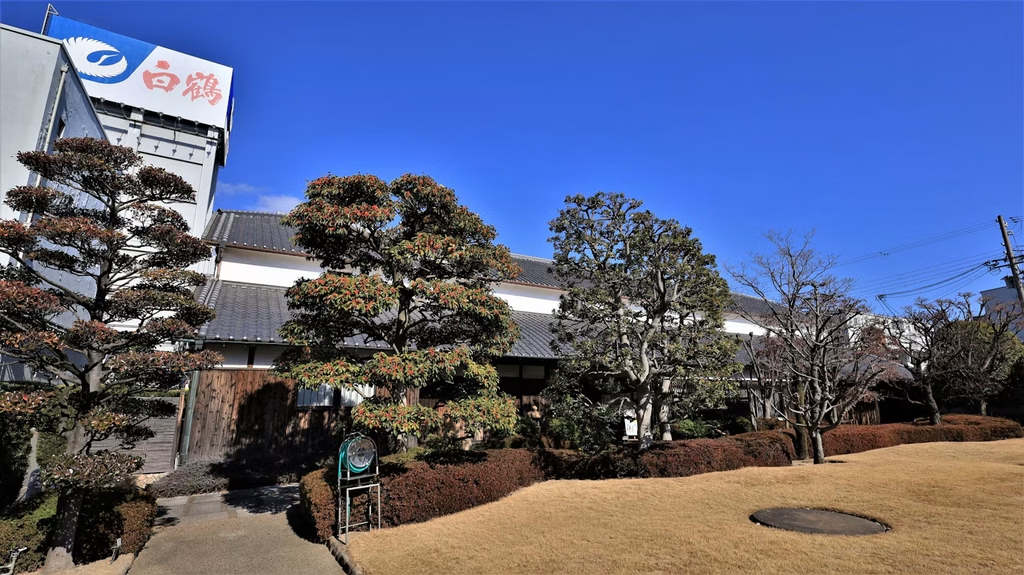
If you’ve ever wondered how Japanese sake is made, the Hakutsuru Sake Brewery Museum is an excellent place to find out.
Located in Kobe’s historic Nada sake-brewing district, the museum occupies a former brewery dating from the Taisho period.
The wooden building has been preserved and adapted to showcase traditional brewing methods, giving visitors a glimpse into an industry that has played an important role in Kobe’s history.
Inside, you’ll encounter enormous wooden fermentation vats, old brewing equipment, and displays illustrating the various stages of sake production.
The exhibits explain everything from washing and steaming rice to creating koji, fermenting the ingredients, and preparing the finished sake.
Life-sized figures and historical tools help bring the process to life, making the museum surprisingly engaging even if you know absolutely nothing about sake.
After exploring the exhibits, head to the museum shop.
There’s a sake-tasting area where adult visitors can sample selected products, including varieties that may be difficult to find elsewhere. You’ll also find brewery souvenirs and other sake-related products.
Since the museum is housed in a former working brewery, the experience feels quite different from visiting a conventional museum.
Why visit? It’s an accessible introduction to one of Kobe’s most important local traditions, and admission is free.
Best for: Cultural experiences, traditional Japanese crafts, sake enthusiasts, and budget travelers.
Plan your visit:
- Location: 4-5-5 Sumiyoshi Minamimachi, Higashinada-ku, Kobe
- Getting there: Approximately 5 minutes on foot from Hanshin Sumiyoshi Station or 15 minutes from JR Sumiyoshi Station.
- Opening hours: 9:30 AM–4:30 PM, with last admission at 4:00 PM.
- Closed: Selected holiday periods, including the New Year holidays.
- Admission: Free.
- Time needed: 45–60 minutes.
- Booking: Individuals and groups of fewer than 10 generally do not need reservations.
Travel tip: Nada is home to several historic sake producers. If you’re interested in Japanese brewing traditions, you can combine Hakutsuru with another local brewery museum.
Hakutsuru Sake Brewery Museum – Official Website
3. Kobe City Hall Observation Lobby – One of Kobe’s Best Free Views
You don’t necessarily need an expensive observation tower to enjoy spectacular views over Kobe.
In fact, one of the city’s most convenient viewpoints is hidden inside a government building.
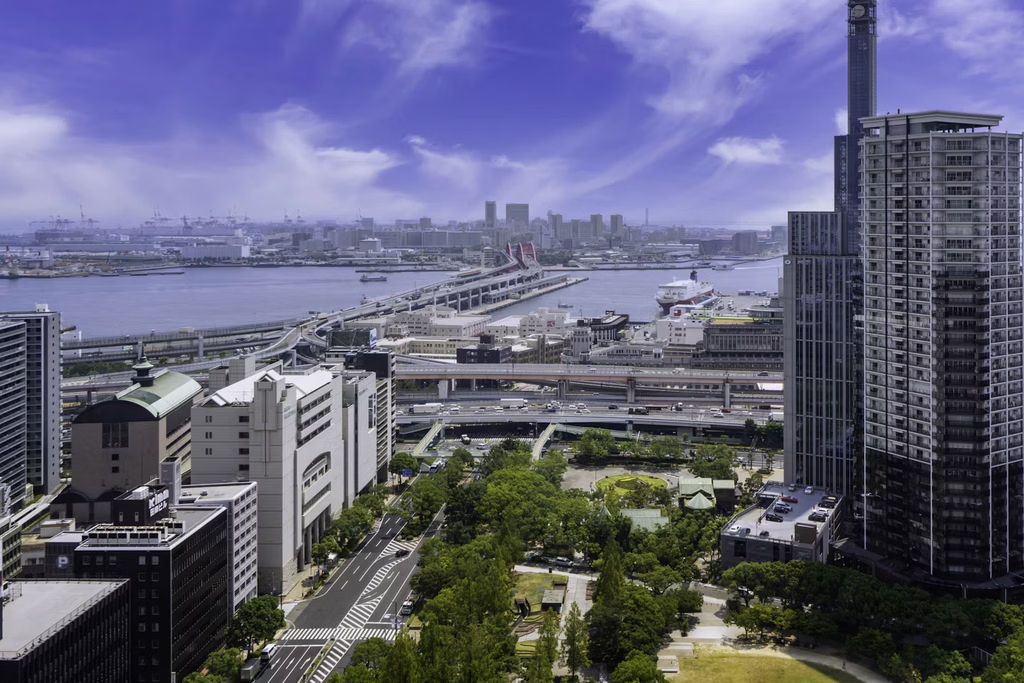
On the 24th floor of Kobe City Hall Building 1, you’ll find a public observation lobby offering sweeping views across the city from approximately 100 meters above ground.
From here, you can admire Kobe’s distinctive geography, with the Rokko Mountains rising behind the urban skyline and Osaka Bay stretching out toward the horizon.
On a clear day, it’s an excellent place to appreciate just how closely Kobe’s mountains and waterfront sit together.
The view changes throughout the day.
Morning visits are good for seeing the city’s buildings and surrounding landscape, while the late afternoon brings warmer light across the skyline.
After dark, the buildings, streets, and harbor lights create a completely different atmosphere.
Unlike dedicated observation attractions, Kobe City Hall’s observation lobby is free to enter, making it a particularly good stop if you’re sightseeing on a budget.
It’s also conveniently located near Sannomiya, so you don’t have to make a major detour to visit.
Why visit? An excellent elevated city view without paying an observation deck admission fee.
Best for: Budget travelers, city photography, couples, and visitors with limited time.
Plan your visit:
- Location: Kobe City Hall Building 1, 24th Floor, 6-5-1 Kano-cho, Chuo-ku, Kobe
- Getting there: Approximately 10 minutes on foot from the main Sannomiya stations.
- Opening hours: Weekdays 9:00 AM–10:00 PM; weekends and public holidays 10:00 AM–10:00 PM.
- Closed: December 29–January 3 and occasional inspection days.
- Admission: Free.
- Time needed: 20–40 minutes.
Travel tip: We recommend visiting around sunset if the weather is clear. You’ll have the opportunity to enjoy the transition from daylight to Kobe’s illuminated skyline.
Check Kobe City Hall Observation Lobby Information
4. Suma Rikyu Park – A Beautiful Garden Away from Central Kobe
If you need a break from shopping streets and busy railway stations, Suma Rikyu Park is one of the loveliest green spaces in Kobe.
Situated in the western part of the city, the park occupies land associated with a former imperial villa.
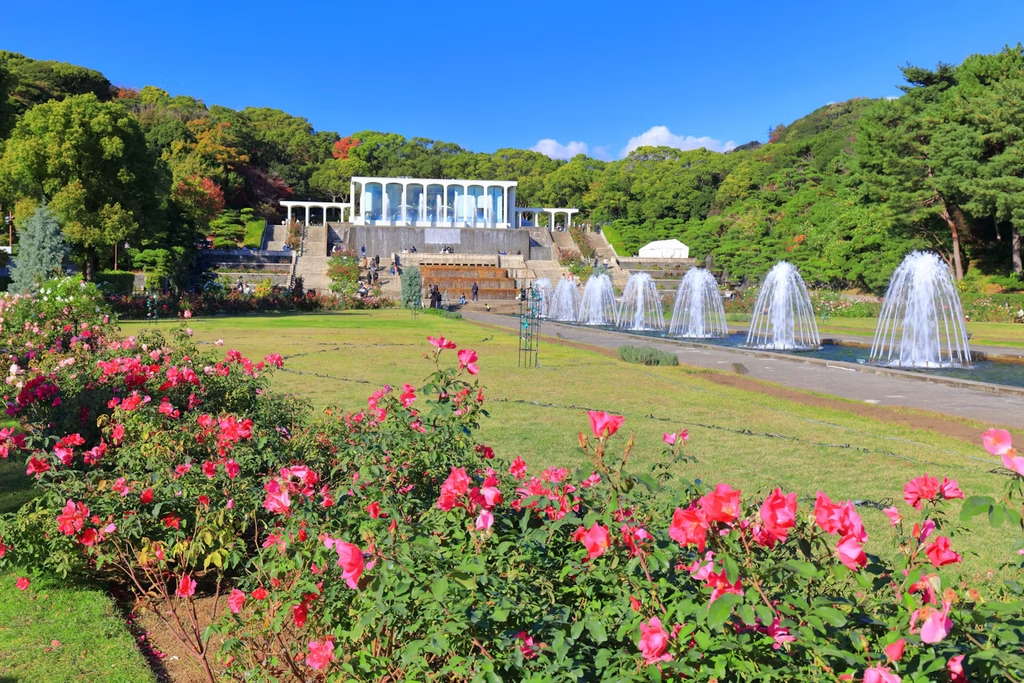
Today, it’s an expansive landscaped garden combining formal European-style design with woodland paths, seasonal flowers, and peaceful corners where you can slow down for a while.
The highlight is the Royal Rose Garden, where hundreds of roses create colorful displays during the main spring and autumn flowering seasons.
A long ornamental fountain, carefully maintained flower beds, and symmetrical garden paths give this part of the park a distinctly European atmosphere.
But there’s much more to explore beyond the roses.
The park also features landscaped grounds, a botanical garden area, and the Children’s Forest adventure playground, making it a good option for families.
If you’re visiting Kobe with children, it’s worth allowing extra time for the playground rather than treating the gardens as a quick photo stop.
Autumn is another beautiful season to visit, when changing leaves bring warm colors to the park.
Although Suma Rikyu Park isn’t unknown among local residents, it’s often overlooked by international tourists who spend most of their time around Sannomiya and the harbor.
Why visit? Beautiful seasonal gardens, relaxed surroundings, and space to escape the city for a few hours.
Best for: Nature lovers, families with children, couples, garden enthusiasts, and photography.
Plan your visit:
- Location: 1-1 Higashi-Suma, Suma-ku, Kobe
- Getting there: Approximately 10 minutes on foot from Sanyo Electric Railway’s Sumadera, Higashi-Suma, or Tsukimiyama stations.
- Opening hours: 9:00 AM–5:00 PM, with last admission at 4:30 PM.
- Closed: Thursdays (with holiday exceptions) and December 29–January 3.
- Admission: ¥400 for adults and ¥200 for elementary and junior high school students. Certain local residents qualify for free entry.
- Time needed: 1.5–3 hours.
Travel tip: Visit during the spring or autumn rose season if flowers are your main reason for coming. The park sometimes offers extended opening hours during special seasonal events.
Suma Rikyu Park – Official Website
5. Sawanotsuru Museum – Step Inside Kobe’s Sake-Brewing Past
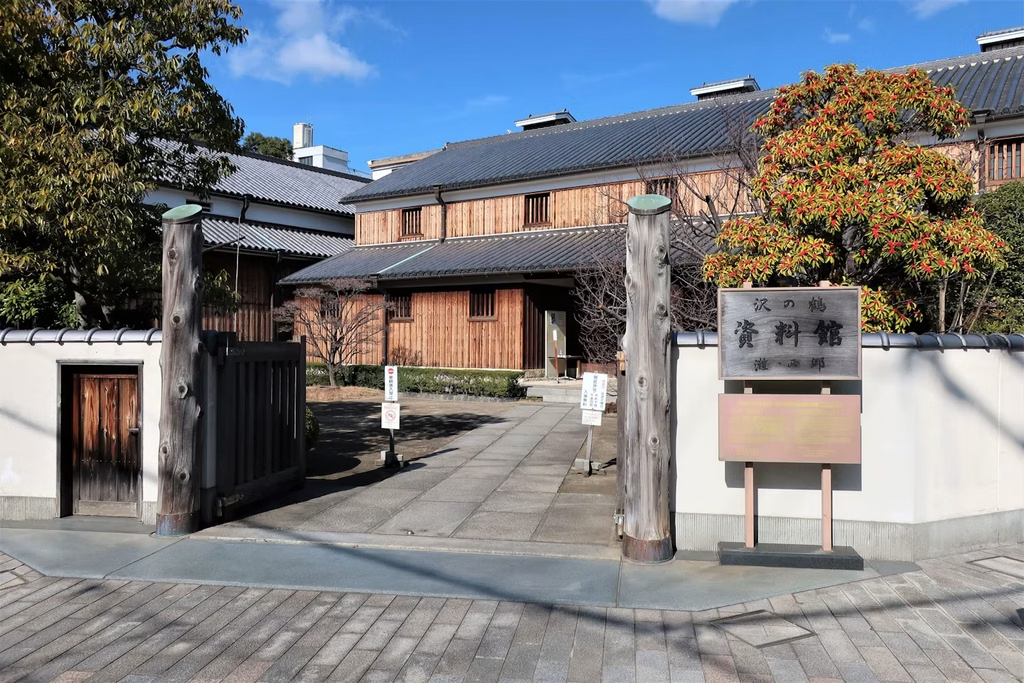
Kobe’s Nada district has a long history of sake production, and the Sawanotsuru Museum offers another fascinating opportunity to explore this tradition.
Operated by the historic Sawanotsuru sake producer, the museum recreates the atmosphere of an old Japanese brewery.
The original brewery building, dating from the late Edo period, was destroyed during the 1995 Great Hanshin-Awaji Earthquake. It was subsequently reconstructed using traditional architectural elements and modern earthquake-resistant technology.
Walking through the museum, you’ll find an impressive collection of wooden brewing equipment, large vats, and historical tools used to produce sake before modern machinery transformed the industry.
One particularly interesting feature is the preserved remains of the traditional sake-pressing area, where fermented rice mash was separated into liquid sake and solids.
There are also displays relating to the koji-muro, the specialized room used for cultivating koji, an essential ingredient in Japanese sake production.
These exhibits provide a fascinating look at the skill and labor involved in traditional brewing.
Afterward, you can browse the museum shop and, if you’re of legal drinking age, enjoy selected sake tastings.
Like the Hakutsuru museum, admission is free.
Why visit? You can explore authentic brewing history and learn more about the traditions that helped make Nada one of Japan’s best-known sake-producing regions.
Best for: Japanese history, traditional architecture, sake culture, and free attractions.
Plan your visit:
- Location: 1-29-1 Oishi Minamimachi, Nada-ku, Kobe
- Getting there: Approximately 10 minutes on foot from Hanshin Oishi Station.
- Opening hours: 10:00 AM–4:00 PM.
- Closed: Wednesdays, the Obon holiday period, and New Year holidays.
- Admission: Free.
- Time needed: 45–60 minutes.
- Booking: Reservations are required for groups of 10 or more.
Travel tip: If you only have time for one sake museum, Hakutsuru is particularly approachable for first-time visitors. Sawanotsuru is an excellent addition if you want to explore Nada’s brewing heritage in more depth.
Sawanotsuru Museum – Official Website
6. House of Fragrance, Holland House – Create Your Own Perfume in Kitano
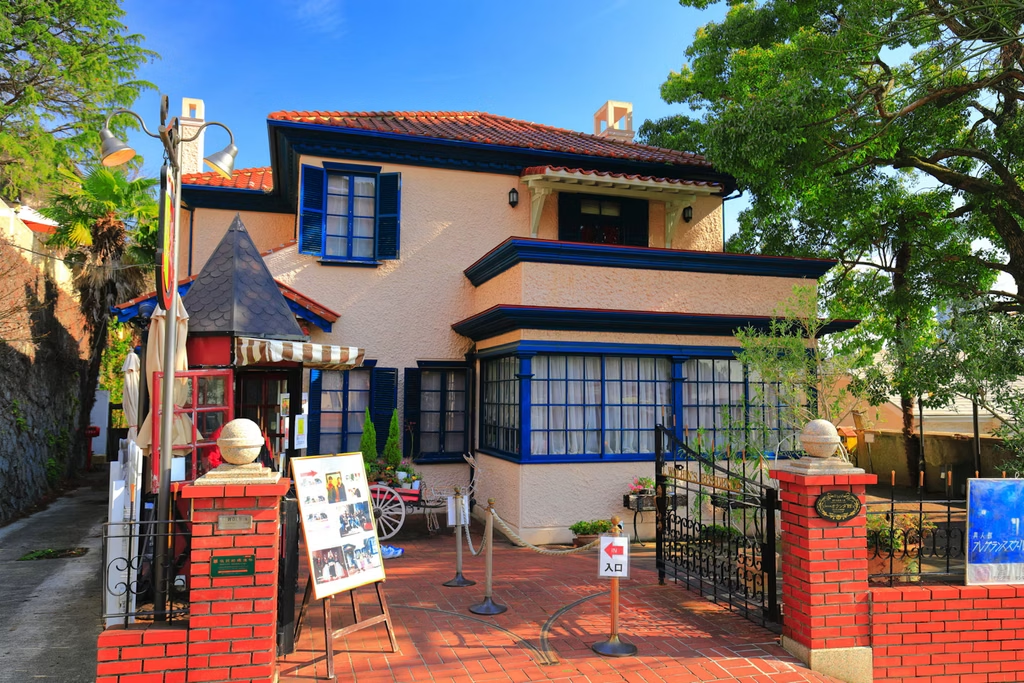
Kobe’s Kitano district is famous for its historic Western-style mansions, many of which were built during the period when foreign merchants and diplomats lived in the city.
While the better-known houses attract plenty of visitors, the House of Fragrance, Holland House, offers something a little different.
Originally used as the residence of the Dutch Consul General, this charming wooden building dates from the Taisho era and retains much of its nostalgic European character.
Its traditional furnishings, blue shutters, and cozy rooms provide a glimpse into Kobe’s international past.
However, what makes this particular house stand out is its connection to perfume.
Visitors can arrange to have an original fragrance created using personal preferences and information such as favorite flowers, fruits, and scents.
Rather than simply picking a fragrance from a shop shelf, the experience produces a perfume tailored to your preferences.
It’s a wonderfully unusual souvenir to take home from Japan.
Even if you decide to skip the fragrance experience, the historic interior and quiet surroundings make the house an enjoyable addition to a walking tour of Kitano.
Why visit? This is one of the more unusual things to do in Kobe, combining historic architecture with a personalized souvenir experience.
Best for: Couples, perfume lovers, unusual souvenirs, and visitors exploring the Kitano Ijinkan district.
Plan your visit:
- Location: 2-15-10 Kitano-cho, Chuo-ku, Kobe
- Getting there: Approximately 15–20 minutes on foot from Sannomiya or Shin-Kobe Station, or around 5 minutes from the Kitano Ijinkan City Loop bus stop.
- Opening hours: 10:00 AM–5:00 PM.
- Admission: ¥800 for adults, ¥600 for junior and senior high school students, and ¥300 for elementary school children.
- Perfume experience: Approximately ¥3,960 for a 9 ml personalized fragrance, charged separately from admission.
- Payment: Cash only.
- Time needed: 30–60 minutes, depending on the experience.
Travel tip: Contact the venue before visiting if creating a personalized perfume is your priority. It’s worth confirming availability rather than assuming you can walk straight into a fragrance session.
House of Fragrance, Holland House – Official Website
7. Kobe Municipal Forest Botanical Garden – A Peaceful Escape into the Rokko Mountains
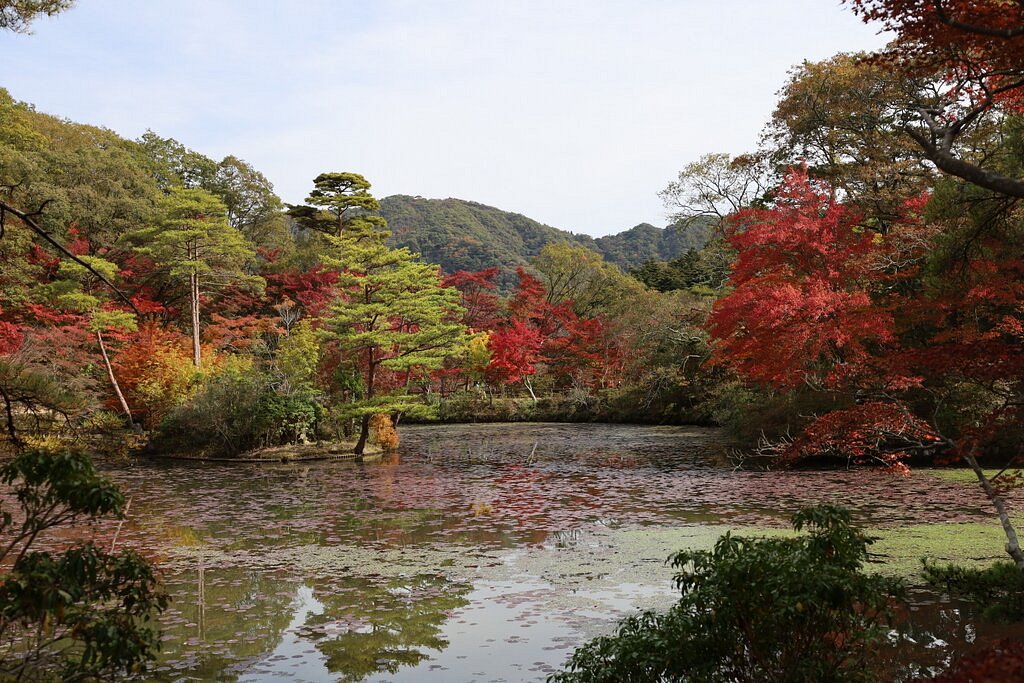
One of the most rewarding hidden gems in Kobe is also one of the greenest.
Located in the foothills of the Rokko Mountains, the Kobe Municipal Forest Botanical Garden offers a very different experience from the city’s bustling port and shopping districts.
Instead of crowded streets and tall buildings, you’ll find wooded trails, seasonal flowers, peaceful ponds, and an extensive collection of trees and plants.
The botanical garden covers a large forested area, making it an excellent destination for travelers who enjoy walking and spending time outdoors.
Spring brings fresh foliage and flowering trees, while early summer is particularly popular for its hydrangeas.
Autumn is another wonderful time to visit, when the surrounding forest transforms into shades of red, orange, and gold.
There are several walking routes, so you can choose between a relatively short stroll and a longer exploration through the gardens.
It’s also a pleasant place to slow down and enjoy nature without committing to a demanding mountain hike.
Although the gardens are popular with Kobe residents, they receive far less attention from international tourists than the city’s waterfront attractions.
Why visit? It’s an easy way to experience the natural side of Kobe without traveling far beyond the city.
Best for: Forest walks, autumn foliage, hydrangeas, nature photography, and peaceful sightseeing.
Plan your visit:
- Location: 1-2 Nagao, Kamitaniue, Yamada-cho, Kita-ku, Kobe
- Getting there: Take the Kobe Electric Railway to Kita-Suzurandai Station and use the garden’s free shuttle bus, which takes approximately 10 minutes. Direct bus 25 from Sannomiya operates on weekends and public holidays from April to November.
- Opening hours: Normally 9:00 AM–5:00 PM, with last entry at 4:30 PM.
- Closed: Wednesdays (or the following day when Wednesday is a public holiday), with exceptions during major flower and foliage events, and New Year holidays.
- Admission: ¥300 for adults and ¥150 for elementary and junior high school students.
- Parking: Charged separately.
- Time needed: 2–3 hours.
Travel tip: The gardens are especially attractive during hydrangea season and autumn foliage, but these are also the busiest periods. Check transport schedules and seasonal opening hours before setting off.
Kobe Municipal Forest Botanical Garden – Official Website
8. Kobe City Archaeological Center – Discover Kobe’s Ancient History for Free
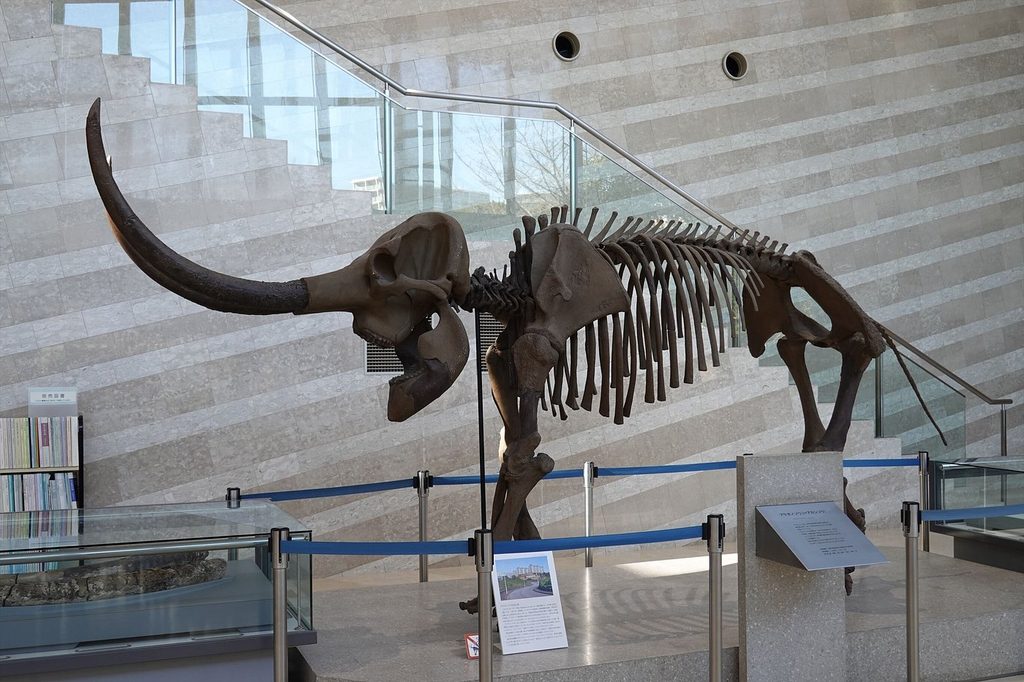
Kobe’s identity is closely connected to its modern port, but the city’s history stretches back thousands of years.
At the Kobe City Archaeological Center, visitors can discover what life looked like in this region long before the arrival of international trade and modern city development.
Located in Seishin-Chuo Park, the center showcases archaeological discoveries from sites across Kobe.
The exhibitions include ancient pottery, stone tools, burial-related objects, and other artifacts that reveal how people lived in the area during different periods of Japanese history.
Displays cover an extensive timeline, from prehistoric settlements through later historical periods.
One of the most interesting aspects of the center is the opportunity to see how archaeological objects are collected, preserved, and studied.
Depending on the schedule, you may also find temporary exhibitions and educational workshops exploring ancient crafts.
Activities such as pottery making and magatama bead crafting are occasionally offered, although these require checking the event calendar.
It’s not a large, flashy museum, but that’s part of its appeal.
For visitors interested in Japan’s ancient history, it offers a worthwhile experience away from the more obvious sightseeing routes.
Why visit? A free museum exploring Kobe’s much older history, with genuine archaeological artifacts and occasional hands-on activities.
Best for: History enthusiasts, curious families, educational experiences, and rainy days.
Plan your visit:
- Location: Seishin-Chuo Park, 6-1 Kojidai, Nishi-ku, Kobe
- Getting there: Take the Kobe Municipal Subway to Seishin-Chuo Station, then walk approximately 8 minutes.
- Opening hours: 10:00 AM–5:00 PM, with last admission at 4:30 PM.
- Closed: Mondays, certain days following public holidays, December 28–January 4, and occasional exhibition changeovers.
- Admission: Free for regular exhibitions; special exhibitions may have separate conditions.
- Time needed: 45–90 minutes.
- Parking: No dedicated visitor parking; use nearby paid parking if arriving by car.
Travel tip: If you’re traveling with children, look at the center’s workshop schedule before your visit. Hands-on archaeological activities can make this stop especially interesting.
Kobe City Archaeological Center – Official Website
9. Taisanji Temple – A Historic Temple Hidden in Western Kobe
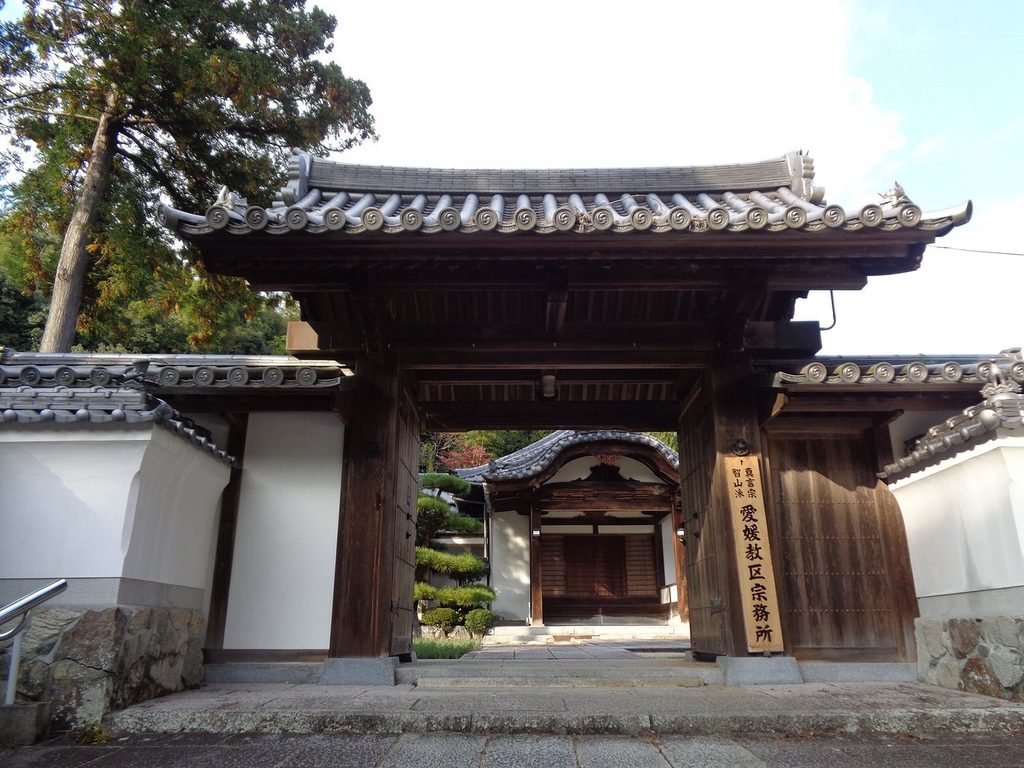
Kobe has plenty of impressive buildings, but if you’re looking for somewhere with a much older atmosphere, Taisanji Temple is well worth discovering.
Situated in the quieter western part of the city, this historic Buddhist temple is surrounded by greenery, away from Kobe’s main tourist districts.
Its origins are traditionally traced to the early eighth century, making it one of the area’s most historically significant religious sites.
The temple’s greatest treasure is its National Treasure-designated Main Hall, a magnificent example of medieval Japanese Buddhist architecture.
Rebuilt in the early 14th century, the hall is an impressive reminder of the region’s long religious history.
The temple complex also contains additional historic buildings, Buddhist statues, stone monuments, and a three-story pagoda.
Exploring the grounds feels quite different from visiting the busy temples of Kyoto.
There are wooded surroundings, traditional architecture, and a quieter atmosphere that encourages visitors to take their time.
Autumn is a particularly attractive season, when changing leaves add color to the historic buildings.
However, the grounds include stone steps and uneven surfaces, so comfortable walking shoes are recommended.
Why visit? Taisanji offers historic temple architecture and a peaceful setting without the crowds associated with Japan’s most famous religious attractions.
Best for: Japanese history, Buddhist architecture, photography, and travelers who enjoy off-the-beaten-path destinations.
Plan your visit:
- Location: 224 Maekai, Ikawadani-cho, Nishi-ku, Kobe
- Getting there: Use the Kobe Municipal Subway and a connecting Shinki bus toward Taisanji, or travel by bus from Akashi. Check the route and timetable before leaving.
- Visiting hours: 8:30 AM–5:00 PM, closing at 4:30 PM from December through February.
- Admission: ¥300 for regular temple admission.
- Time needed: 45–90 minutes.
Travel tip: Taisanji is further from central Kobe than most attractions in this guide. It’s better planned as a separate excursion rather than squeezed into an already busy sightseeing day.
Taisanji Temple – Visitor Information
How to Explore Kobe’s Hidden Gems Without Wasting Time
Although these attractions are all located in Kobe, they aren’t particularly close to one another.
Trying to visit all nine in one day would involve too much traveling and not enough actual sightseeing.
Instead, we recommend grouping them by location.
Central Kobe and Kitano
Start with the House of Fragrance in Kitano, where you can explore the historic mansion and perhaps arrange a personalized perfume experience.
Afterward, head back toward Sannomiya and visit the Kobe City Hall Observation Lobby.
This combination works well for a relaxed half-day outing and leaves time for shopping, cafés, and other central Kobe attractions.
HAT Kobe and the Nada Sake District
Spend some time exploring the Hyogo Prefectural Museum of Art before continuing east or west along the Hanshin Railway to visit the sake museums.
Hakutsuru and Sawanotsuru are both interesting, but if you’re short on time, choose one rather than rushing through both.
Allow approximately half a day for the museum and a sake brewery, including local transport.
Nature and Historic Sites Outside Central Kobe
Suma Rikyu Park, Kobe Municipal Forest Botanical Garden, Kobe City Archaeological Center, and Taisanji Temple are best treated as separate excursions.
They are spread across different parts of the city, so there’s little advantage in trying to combine all four into one itinerary.
If you love nature, prioritize the Forest Botanical Garden or Suma Rikyu Park.
If you’re more interested in history, choose Taisanji Temple or the Archaeological Center.
Are Kobe’s Hidden Gems Worth Visiting?
Absolutely, particularly if you’ve already seen Kobe’s most famous attractions.
What makes Kobe interesting is the contrast between its different neighborhoods and landscapes.
You can spend the morning exploring contemporary architecture beside the sea, discover centuries-old sake-brewing traditions in the afternoon, and finish with an excellent city view without paying an admission fee.
Or you can skip the busy urban areas entirely and head into the forests or gardens surrounding the city.
For first-time visitors, we’d still recommend seeing some of Kobe’s classics, especially its harbor and historic Kitano neighborhood.
But if you have an extra day, these lesser-known attractions are an excellent way to discover a more varied side of Kobe.
FAQs About Hidden Gems in Kobe
What are the best free hidden gems in Kobe?
Some of the best free attractions include the Kobe City Hall Observation Lobby, Hakutsuru Sake Brewery Museum, Sawanotsuru Museum, and Kobe City Archaeological Center. All offer interesting experiences without a regular admission fee.
What are the best hidden gems in Kobe for nature lovers?
Kobe Municipal Forest Botanical Garden is ideal for woodland walks, seasonal flowers, and autumn foliage. Suma Rikyu Park is another excellent choice, particularly during rose season.
Can you visit Kobe’s sake museums without making a reservation?
Yes. Individual visitors can generally explore both the Hakutsuru and Sawanotsuru museums without advance reservations. Groups of 10 or more must arrange visits in advance.
Are Kobe’s lesser-known attractions easy to reach by public transport?
Most are accessible using trains, buses, or a combination of both. The City Hall Observation Lobby, Holland House, and sake museums are relatively straightforward. Taisanji Temple and the Forest Botanical Garden require more transport planning.
How many days do you need to explore Kobe’s hidden gems?
One additional day is enough to visit several lesser-known attractions around central Kobe and the Nada district. Allow two or three days if you want to explore the gardens, forest, historic temple, and more distant museums without rushing.
Is Kobe worth visiting beyond a day trip from Osaka?
Yes. While you can see some of Kobe’s highlights in one day, staying overnight gives you more time to explore its quieter neighborhoods, local museums, gardens, and food culture. It’s particularly worthwhile if you prefer a slower pace of travel.
- 9 Hidden Gems in Kobe (2026): Unique Places Beyond the Usual Tourist Trail
- Nagoya rainy day with kids in 2026 (Cool Indoor Things to Do )
- Best Gachapon in Tokyo (2026): 20 Places to Find Capsule Toys
- All Japanese KitKat Flavours List: The Ultimate Japan KitKat Guide
- Sapporo rainy day with kids (2026): 7 Cool Indoor Things to Do