
I spill travel tips , and show you the Japan that tourists usually miss.
Cherry blossom Tokyo season is the sort of thing we imagine long before the plane lands—soft pink clouds, picnic sheets under old branches, that brief cinematic week when the whole city seems to exhale. Then we arrive, and so does everyone else. Suddenly the famous sakura addresses feel less like a delicate spring ritual and more like a beautifully managed human traffic jam
But Tokyo has never been a one-scene city. Cherry trees spill far beyond the headline spots: along sleepy canals, beside neighborhood shrines, behind apartment blocks, near stations so quiet you wonder whether you were meant to get off there at all. In those corners, spring behaves differently. The blossoms feel less staged, conversations drift softer, and the whole thing can seem less like attending an event and more like accidentally walking into a secret.
That is exactly why this list gathers 24 best places to see cherry blossom Tokyo from a slightly different angle—from famous parks worth timing carefully to quieter local pockets where the season still feels intimate, surprising, and wonderfully unhurried.
| ➡️Planning a trip to Tokyo? Discover top things to do in Tokyo, local eats, cultural spots, seasonal events, and day trips in this complete Tokyo travel guide—perfect for first-time visitors and returning travelers alike. ➡️Discover Tokyo like a local with best Tokyo tours—choose from immersive food tours in hidden alleys, guided temple walks in Asakusa, rooftop bar experiences with skyline views, and even day trips to Mount Fuji. Perfect for first-time visitors and returning Tokyo fans alike! |
Table of Contents
CHERRY BLOSSOM TOKYO IN 2026
Each of Japan’s 47 prefectures follows one symbolic cherry tree that officially announces the arrival of spring. In Tokyo, that tree stands at Yasukuni Shrine. Once five blossoms open, the official declaration is made: the season has begun. But anyone who has waited for peak bloom knows the announcement is only the opening note—most trees still need several more days before the city turns fully pink. In practice, Tokyo usually reaches its most beautiful stage five to seven days after the official start.
In recent years, bloom dates have shifted enough to keep everyone guessing. The 2026 cherry blossom season in Tokyo is expected to start with the first blooms (kaika) appearing around March 18–21, 2026. Due to warmer weather, the peak bloom (mankai) is predicted to occur roughly one week to ten days later, around March 26–29, 2026, that lovely week when Tokyo’s pavements will start looking as if someone quietly shook pink confetti over the whole city.
Start of the cherry blossom season in Tokyo in 2024: March 29, 2024
Start of the cherry blossom season in Tokyo in 2025: March 24, 2025
Start of the cherry blossom season in Tokyo in 2026: March 18, 2026
Once the first petals appear, Tokyo turns into a giant invitation to wander. The challenge is not finding blossoms—it is choosing where to stop. So instead of joining the obvious crowds, here are 24 quieter places where spring still feels wonderfully intimate, from riverside paths to forgotten neighborhoods and parks where locals still outnumber cameras.
[Shibuya Ward] Yoyogi Park: A long, lazy sakura season (yes, it starts in February)
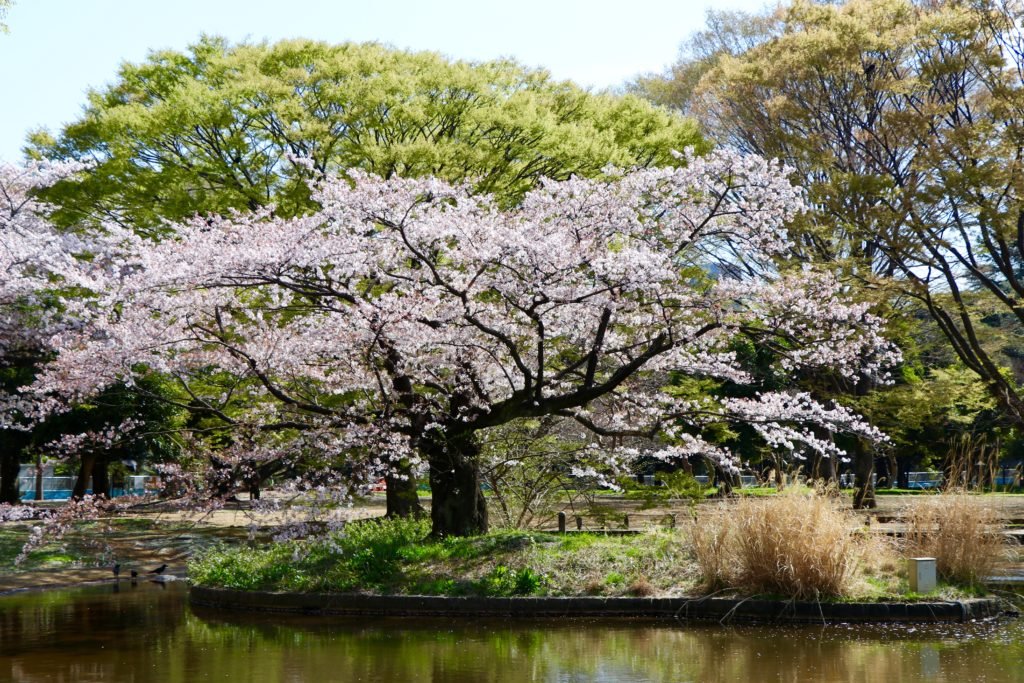
If Tokyo had a “deep breath” button, we’d argue Yoyogi Park is it. It’s a forest park with one of the widest, most open slices of sky you’ll get in the city center—so people drift in year-round to picnic, jog, nap, people-watch, and generally pretend emails don’t exist. But during cherry blossom season, it turns into a full-on pilgrimage site (in the best way).
The reason it works so well for you? Variety. Yoyogi mixes early bloomers like Kawazuzakura with classic Somei Yoshino and Oshimazakura, which means you can keep coming back and still catch something pretty. In a “normal” year, you’re looking at an unusually long window—from February through late April—for sakura sightings without that panicked “did we miss it?!” feeling.
Central Square
Want the low-effort, high-reward version of hanami? We head for Central Plaza, grab a patch of grass, and let the day happen (lying down is absolutely allowed here—thank you, Tokyo). More of a walker than a sprawler? Aim for the Cherry Blossom Garden near Shibuya Gate, where the vibe is “stroll slowly, look up, repeat.” And because Tokyo understands priorities, food trucks often roll in during peak season—so if you’re firmly in the “food over flowers” camp, you’ll still feel spiritually fulfilled.
Yoyogi Park
| address | : | 2-1 Yoyogi Kamizonocho, Shibuya Ward, Tokyo |
|---|---|---|
| Opening hours | : | 24 hours |
| Best time to see the flowers in the usual season | : | Mid-February to late April |
| access | : | Approximately 3 minutes on foot from Yoyogi-koen Station on the Tokyo Metro Chiyoda Line, approximately 3 minutes on foot from Meiji-jingumae (Harajuku) Station on the Tokyo Metro Chiyoda Line and Fukutoshin Line, approximately 6 minutes on foot from Yoyogi-Hachiman Station on the Odakyu Line |
| web | : | Yoyogi Park Official Website (Tokyo Metropolitan Park Association website) |
[Meguro Ward] Meguro River: The “we came for one photo” sakura tunnel that steals your whole evening
The cherry blossoms along the Meguro River go viral every year for a reason: it’s basically a 4 km sakura corridor, with around 800 Somei Yoshino lining both sides like they’re competing for “most extra.” When the blossoms peak, the river feels roofed over in pale pink—exactly the kind of scene that makes you forget you’re still in Tokyo.
From March 18th to March 30th, 2026, the lanterns along the river are scheduled to glow from 5:00 PM to 8:00 PM, and the whole area flips into a softer, dreamier mood. Add the cafes and restaurants nearby and—whether you call it a date or just a “we’re romanticizing our lives” walk—it’s a perfect evening plan. Festivals also tend to pop up around the river from late March to early April, timed right with peak bloom.
And if you want the main-character angle, the Meguro River Cherry Blossom Festival near Gotanda Station sometimes runs river cruises. The view from the boat hits differently—less “cute walk” and more “wow, the blossoms are literally looming over us.”
Cherry blossoms along Meguro River
| address | : | Around Higashiyama 3-chome, Meguro-ku, Tokyo – Around Nakameguro 2-chome, Meguro 1-chome |
|---|---|---|
| Best time to see the flowers in the usual season | : | Late March to early April |
| access | : | Approximately 2 minutes on foot from Ikejiri-Ohashi Station on the Tokyu Denentoshi Line, approximately 1 minute on foot from Nakameguro Station on the Tokyu Toyoko Line, approximately 10 minutes on foot from JR Meguro Station, approximately 5 minutes on foot from Gotanda Station on the JR and Tokyu Ikegami Lines |
[Meguro Ward] Komaba Park: The quiet local favorite (aka the escape hatch from Meguro River crowds)
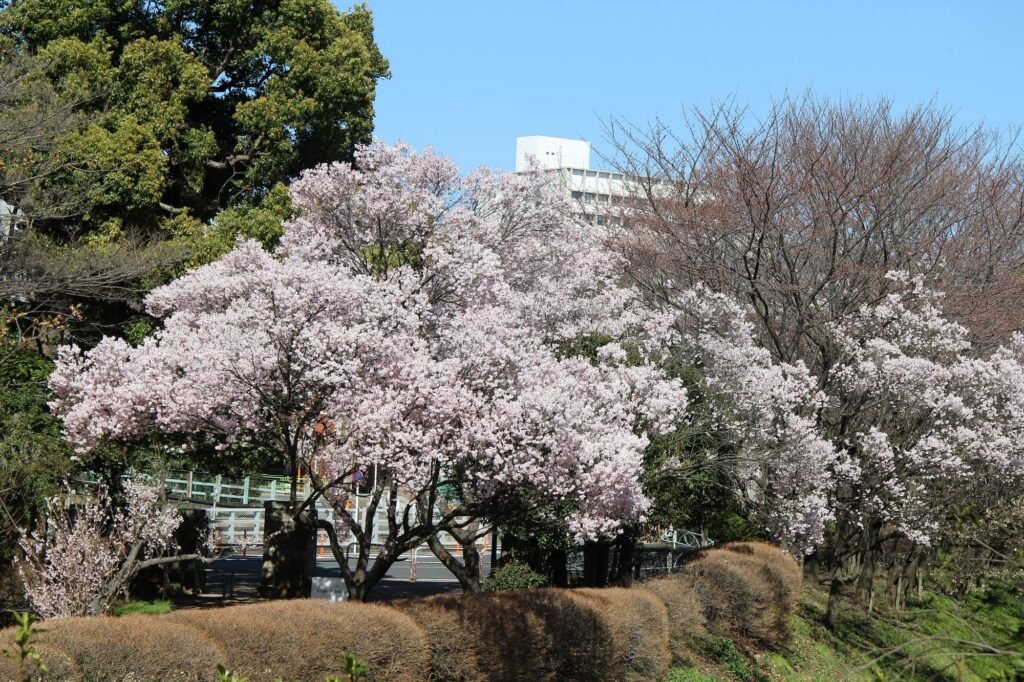
Meguro Ward is loaded with famous sakura spots—so yes, it can get busy fast. But Komaba Park stays refreshingly calm, like it didn’t get the memo about crowding. It’s one of those places where we can actually hear ourselves think while the blossoms do their thing.
The grounds still hold the former residence of Marquis Maeda Toshinari, and you’ll spot little hints of history tucked into the scenery. Spread out on the spacious lawn, take it slow, snack responsibly (or not), and enjoy the fact that you’re doing hanami at your own pace—no elbowing required.
Komaba Park
| address | : | 4-3-55 Komaba, Meguro-ku, Tokyo |
|---|---|---|
| Opening hours | : | 9:00-16:30 |
| Closed days | : | Every Monday, New Year’s holiday (December 29th to January 3rd) |
| Best time to see the flowers in the usual season | : | Late March to early April |
| access | : | 8 minutes walk from Komaba-Todaimae Station on the Keio Inokashira Line |
| web | : | Komaba Park Official Website (Meguro Ward website) |
[Chiyoda Ward] Hotel New Otani: A springtime Japanese garden… hiding in plain sight
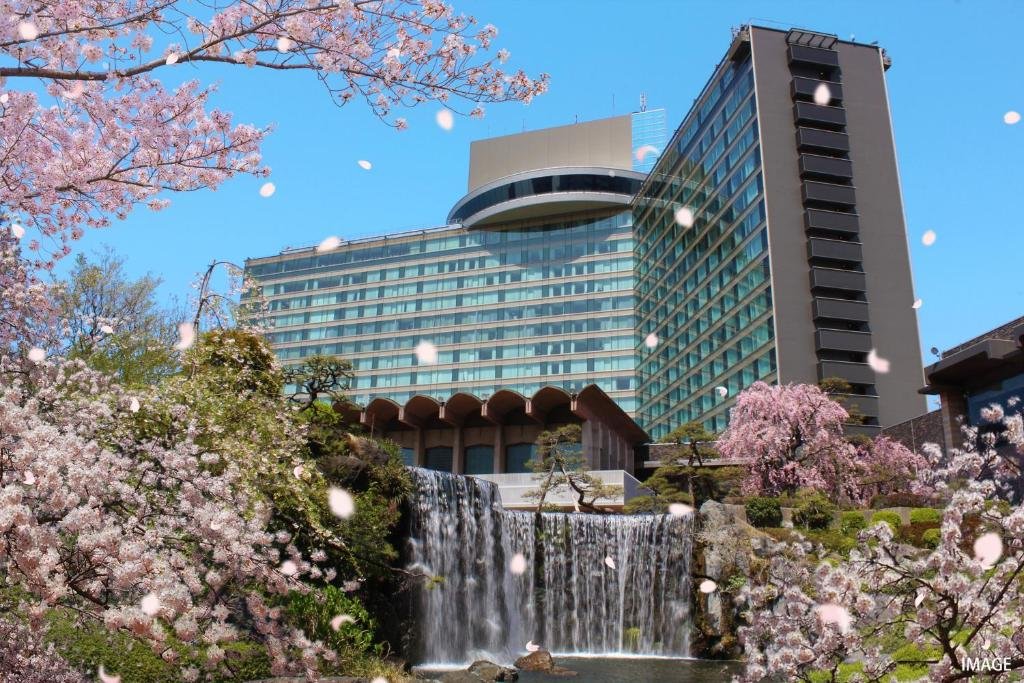
Hotel New Otani opened in 1964, right when Tokyo was in full “Olympics era” transformation mode. It’s one of the city’s classic prestige hotels—famous for hosting everything from family celebrations to serious international conferences (because why choose?).
The real flex, though, is the Japanese garden: about 10,000 tsubo (roughly 33,000 square meters), with a history stretching back over 400 years. During sakura season, it’s basically peak “Tokyo shouldn’t have this much nature” energy.
You’ll find 58 cherry trees across 19 varieties—wild cherry, weeping cherry, Yoshino, double cherry—scattered through a garden that feels like a soft, ceremonial version of spring. It’s central, but it doesn’t feel central (which is the whole magic).
From March 1st to April 19th, 2026, the garden is scheduled to be illuminated from 30 minutes before sunset until midnight. Daytime is pretty. Nighttime is the “okay, wow” version—quiet, glowing, and slightly unreal.
The hotel also leans into the season with takeout menus and accommodation plans, so if you’re craving a slower, more luxurious cherry blossom day (or night), this is an easy way to make it happen.
Hotel New Otani
| address | : | 4-1 Kioicho, Chiyoda-ku, Tokyo |
|---|---|---|
| Best time to see the flowers in the usual season | : | Mid-March to early April |
| access | : | Approximately 3 minutes on foot from Akasaka-mitsuke Station on the Tokyo Metro Ginza Line and Marunouchi Line, and approximately 3 minutes on foot from Nagatacho Station on the Tokyo Metro Hanzomon Line and Namboku Line |
| web | : | Hotel New Otani Official Website Hotel New Otani Cherry Blossom Tour (Special Site) |
[Chiyoda Ward] Kitanomaru Park: Cherry blossoms with a side of Edo Castle drama
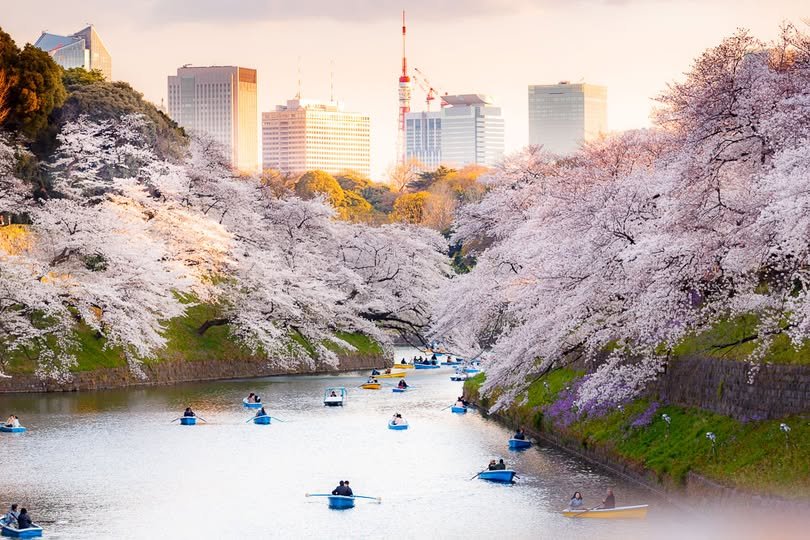
Kitanomaru Park, just north of the Imperial Palace, opened in 1969 to commemorate Emperor Showa’s 60th birthday. Today it’s one of Tokyo’s classic sakura scenes, with around 220 cherry trees plus the kind of history you can feel under your shoes.
You’ll see Edo Castle remnants everywhere—gates, stone walls, moats—yet the park still feels surprisingly mellow thanks to its lawn and greenery. And because you’re in Chiyoda, culture is basically next door: the National Museum of Modern Art, Tokyo and Nippon Budokan are nearby, so it’s easy to pair sakura with a museum stop or a wander.
Don’t skip the blossoms along Chidorigafuchi Greenway across the moat. The night illumination there is a whole separate mood—soft lights, dark water, and blossoms that look like they’re floating. From Kitanomaru, the view can be genuinely jaw-dropping.
Kitanomaru Park
| address | : | 1-1 Kitanomaru Park, Chiyoda-ku, Tokyo |
|---|---|---|
| Opening hours | : | 24 hours (lights off at 22:00) |
| Best time to see the flowers in the usual season | : | Late March to early April |
| access | : | Approximately 5 minutes on foot from Kudanshita Station on the Tokyo Metro and Toei Subway, approximately 7 minutes on foot from Takebashi Station on the Tokyo Metro |
| web | : | Kitanomaru Park Official Website (Ministry of the Environment website) |
[Chiyoda Ward] Sotobori Park: A slow riverside walk with cherry blossoms (and a train-window bonus)
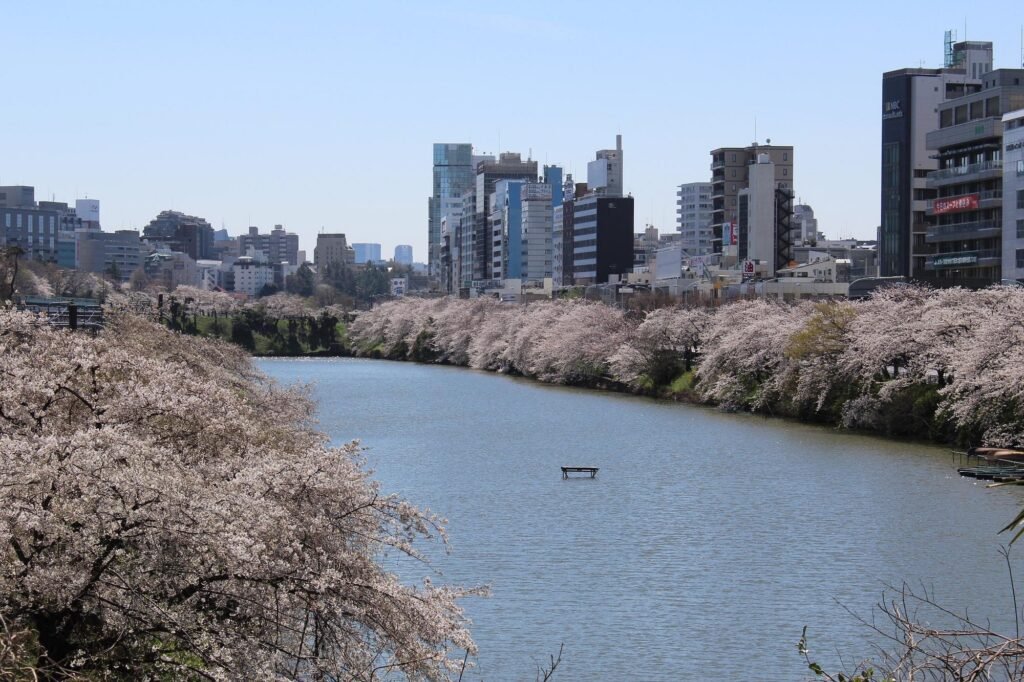
Provided by: Chiyoda Ward Tourism Association
Sotobori Park stretches for about 2 km from Iidabashi to Yotsuya, lined with cherry trees and a walking path that’s made for unhurried spring wandering. We usually budget about an hour to stroll end-to-end at a relaxed pace (with frequent “wait, this is pretty” pauses).
During peak bloom it’s lively, but still very walkable—and if you’ve got small kids with you, the playground equipment makes this one feel less like a “serious sakura mission” and more like a proper day out.
There’s also an open-air café nearby, which is basically Tokyo telling you to have lunch with a blossom view. And here’s the sneaky extra: ride the JR Chuo Line or Sobu Line along the bank during this season and you’ll get a quick spring postcard moment straight from the train window.
Sotobori Park
| address | : | From Fujimi 2-chome to Gobancho, Chiyoda Ward, Tokyo |
|---|---|---|
| Opening hours | : | 24 hours |
| Best time to see the flowers in the usual season | : | Late March to early April |
| access | : | Approximately 5 minutes on foot from Iidabashi Station, Yotsuya Station, or Ichigaya Station on the JR Sobu and Chuo lines |
| web | : | Sotobori Park Official Website (Chiyoda Ward website) |
[Taito Ward] Ueno Park: The famous one—crowds, lanterns, and a full-day plan
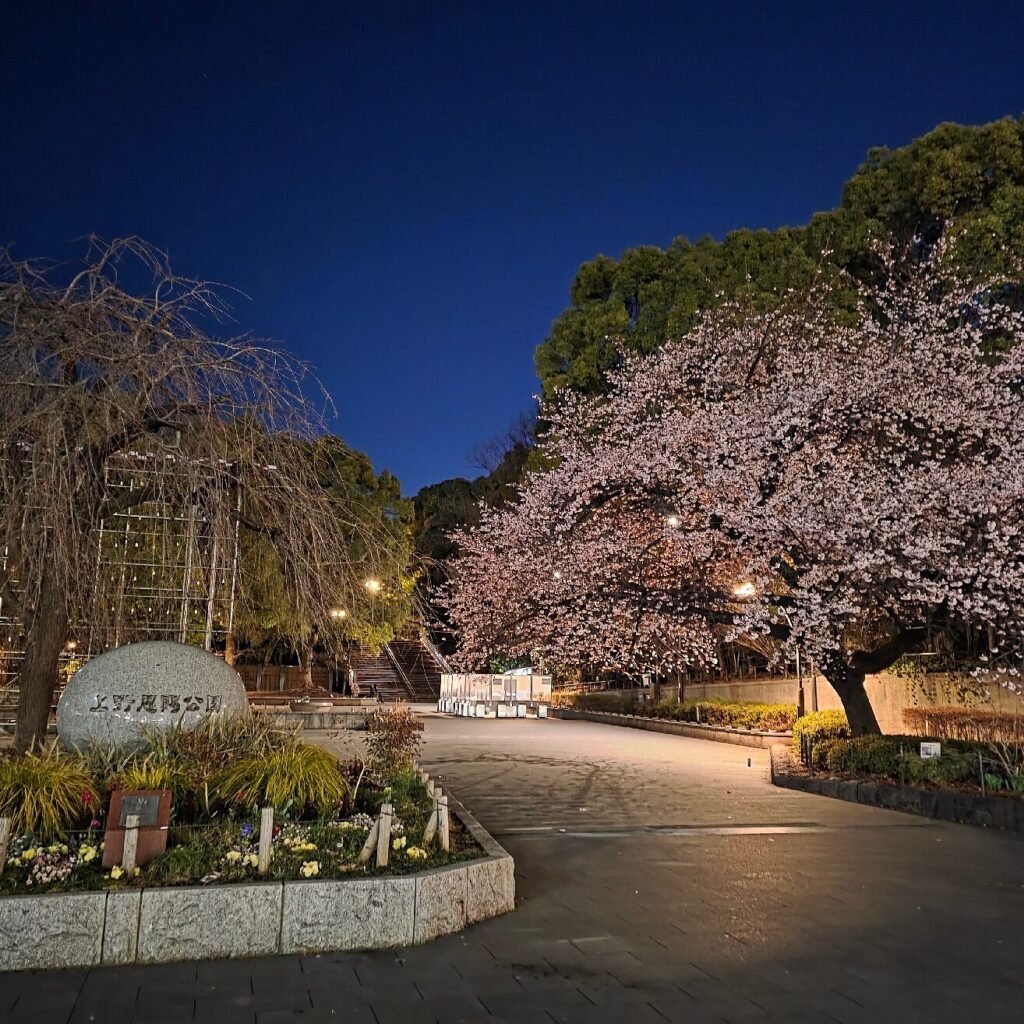
Ueno Park has been a cherry blossom legend since the Edo period, and it’s still the heavy hitter: a Tokyo staple that draws huge numbers every spring. It’s even listed among Japan’s famous sakura spots—and the vibe is exactly what you’d expect from something that popular: festive, busy, and extremely photogenic.
The Ueno Cherry Blossom Festival is scheduled for Friday, March 14th to April 5th, 2026. With around 800 cherry trees and about 1,000 lanterns, it’s designed to deliver both daytime beauty and nighttime glow. If you only have time for one “classic Tokyo sakura” experience, this is the obvious choice (just don’t pretend you’ll have it to yourself).
And because it’s Ueno, you can bundle it with Ueno Zoo, the National Museum of Western Art, or the Ueno Royal Museum. Our crowd-avoidance move: go on a weekday if you can—your stress levels will thank you.
Ueno Park
| address | : | Ueno Park, Ikenohata 3-chome, Taito Ward, Tokyo |
|---|---|---|
| Opening hours | : | 5:00-23:00 |
| Best time to see the flowers in the usual season | : | Late March to early April |
| Regular holidays | : | Approximately 2 minutes on foot from Ueno Station on the JR, Tokyo Metro Ginza and Hibiya lines, and approximately 1 minute on foot from Keisei Ueno Station on the Keisei Main Line |
| web | : | Ueno Park Official Website (Tokyo Metropolitan Government website) |
[Chuo Ward] Edo Sakura Street: Where Nihonbashi turns pink (and the buildings join in)
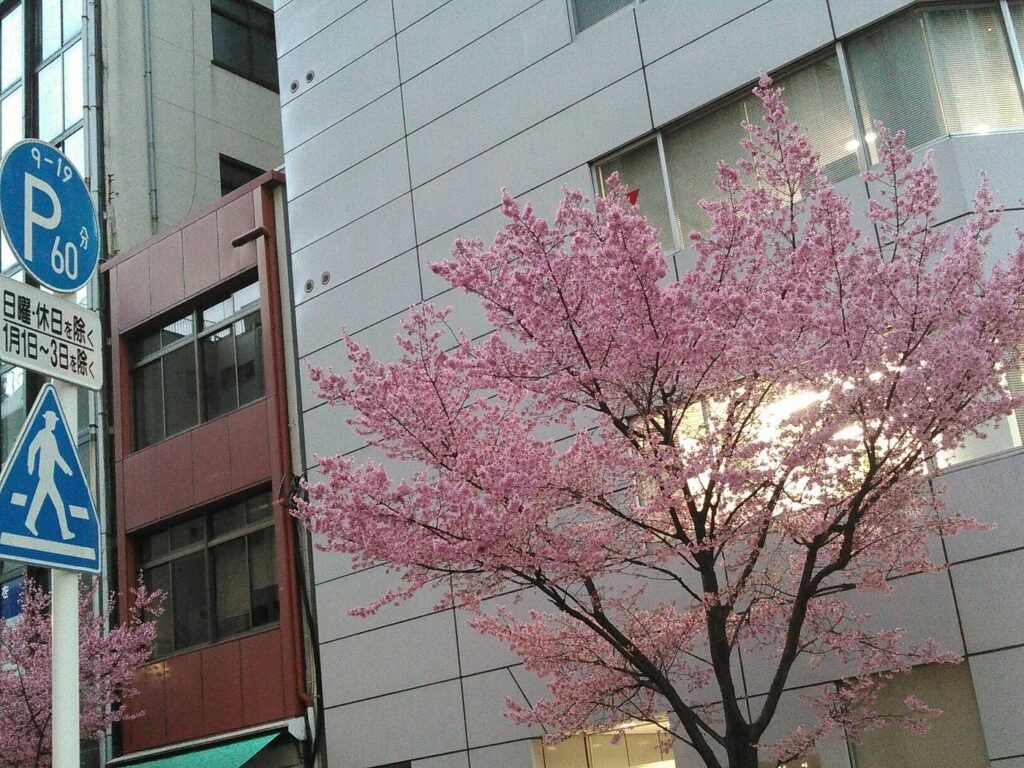
Edo Sakura Street sits in the Nihonbashi area around Mitsukoshi-mae Station, lined with around 80 Somei Yoshino and framed by those elegant stone buildings—think Nihonbashi Mitsukoshi Main Store and the Mitsui Main Building. It’s a rare Tokyo combo: old-school architecture + soft spring blossoms, all in one neat, walkable scene.
Every year, the wider Nihonbashi area runs a seasonal event where roughly 200 shops roll out spring-only menus and cherry-blossom-themed goods. Sweet things, snacky things, bento things, little souvenirs you absolutely did not need (but will buy anyway)—it’s basically a “welcome to spring” marketplace.
In 2026, SAKURA FES NIHONBASHI 2026 is scheduled from March 18th to April 5th.
The main event is after dark: the whole street gets lit in a soft cherry blossom color, and the pale pink trees play off the stone buildings in a way that feels almost unreal. Even the daytime details get in on it—street flags, noren curtains, little pops of “sakura palette” everywhere—aiming for a full Nihonbashi dyed in cherry blossom tones moment.
It’s also an easy add-on since it’s walkable from Tokyo Station and Nihonbashi Station. We’re big fans of pairing this with a meal or a shopping wander—low effort, high atmosphere.
Edo Sakura Street
| address | : | Nihonbashi Muromachi, Chuo Ward, Tokyo |
|---|---|---|
| Best time to see the flowers in the usual season | : | Mid-March to early April |
| access | : | Approximately 2 minutes walk from Mitsukoshimae Station on the Tokyo Metro Ginza Line |
| web | : | SAKURA FES NIHONBASHI Official Website |
[Sumida Ward] Sumida River: Cherry blossoms + Skytree, aka the Tokyo spring postcard
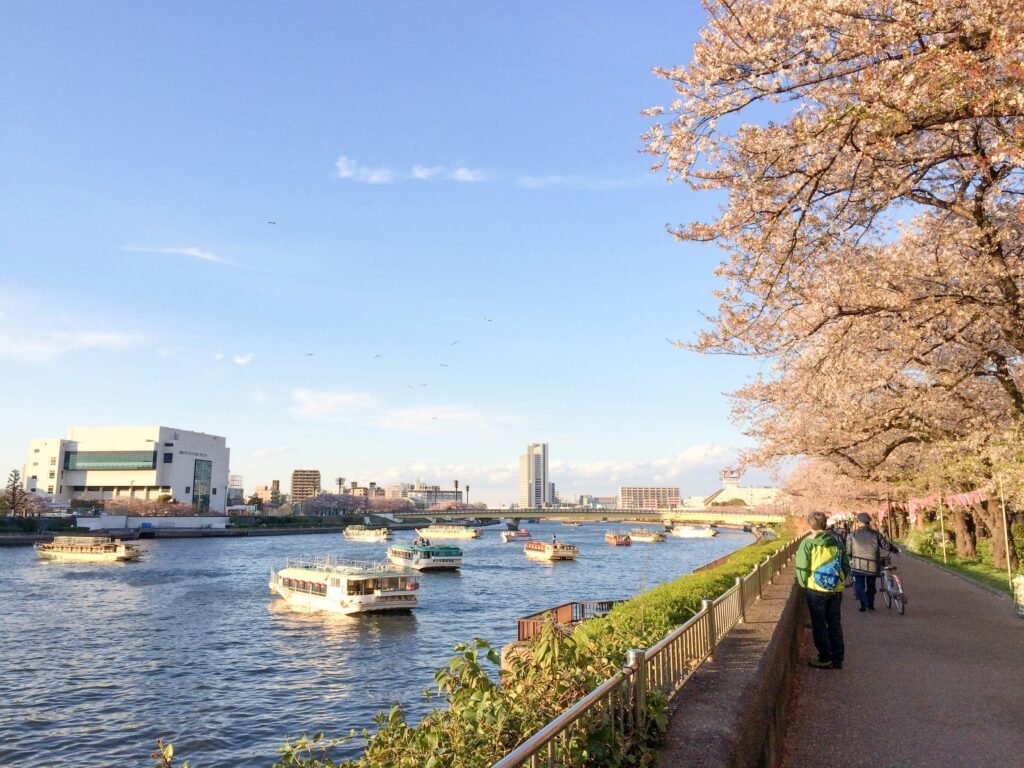
Sumida Park is one of those places that gets busy every year because the visuals are unfair. Along the river—on both the Sumida and Taito sides—around 1,000 cherry trees bloom in a long, joyful burst. And because Asakusa is within walking distance, it’s ridiculously easy to drop this into an Asakusa sightseeing day.
The photo everyone wants is the cherry blossoms with Tokyo Skytree. Blue sky, pale petals, that needle of a skyline icon—Tokyo really said, “Here, have your perfect spring shot.”
The Sumida River Cherry Blossom Festival is scheduled for March 15th to April 5th, 2026. Expect events that nod to old Edo vibes—like geisha teahouse culture—so it’s not just blossoms, it’s atmosphere.
And if you want something calmer than the riverside crowd flow, hop on one of the pleasure boats on the Sumida River. Viewing blossoms from the water feels oddly peaceful—open sky, slow movement, petals above you like a ceiling. It’s a very good decision.
Sumida Park
| address | : | 1-2-5 Mukojima, Sumida-ku, Tokyo |
|---|---|---|
| Best time to see the flowers in the usual season | : | Mid-March to early April |
| access | : | Approximately 5 minutes on foot from Asakusa Station on the Tokyo Metro Ginza Line, approximately 5 minutes on foot from Asakusa Station on the Tobu Isesaki Line, approximately 7 minutes on foot from Asakusa Station on the Toei Subway Asakusa Line |
| web | : | Sumida-Tsuji Sakura Festival Official Website (Sumida Ward Tourism Association website) |
[Bunkyo Ward] Koishikawa Korakuen Garden: A calm, classic garden moment (right next to Tokyo Dome)
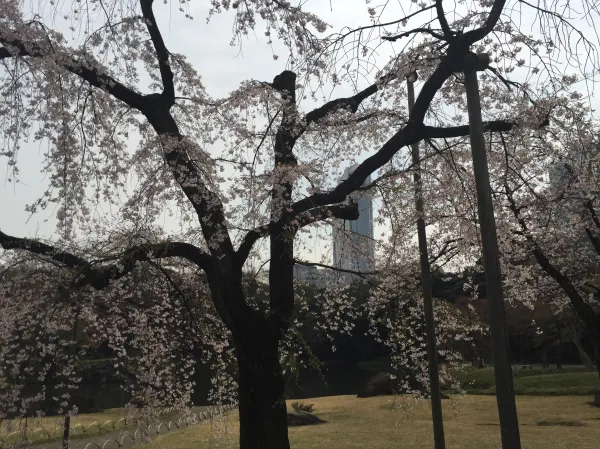
Koishikawa Korakuen has ties to the Mito Tokugawa family, and it shows—this is a garden with early Edo-period roots, officially designated as a Special National Historic Site and a Special Place of Scenic Beauty. The design pulls from both Japanese and Chinese landscape styles, and when cherry blossoms appear, the whole place gets an extra layer of elegance.
It’s a strolling garden, which means the fun is in moving slowly and comparing blossoms: you’ll spot weeping cherry trees alongside Somei Yoshino, Yamazakura, and Ukonzakura. And the location is wildly convenient—right next to Tokyo Dome—so you can easily swing by before or after sightseeing.
Koishikawa Korakuen Garden
| address | : | 1-6-6 Koraku, Bunkyo-ku, Tokyo |
|---|---|---|
| Opening hours | : | 9:00-17:00 (last admission 16:30) |
| Best time to see the flowers in the usual season | : | Late March to early April |
| Admission fee | : | Adults: 300 yen, 65 and over: 150 yen |
| access | : | [East Gate] Approximately a 5-minute walk from Suidobashi Station on the JR Sobu Line, approximately a 6-minute walk from Korakuen Station on the Tokyo Metro Marunouchi Line and Namboku Line, approximately an 8-minute walk from Suidobashi Station on the Toei Mita Line. [West Gate] Approximately a 3-minute walk from Iidabashi Station on the Toei Oedo Line, approximately an 8-minute walk from Iidabashi Station on the JR Sobu Line, Iidabashi Station on the Tokyo Metro Tozai Line, Yurakucho Line, and Namboku Line, and Korakuen Station on the Tokyo Metro Marunouchi Line and Namboku Line. |
| web | : | Koishikawa Korakuen Official Website (Tokyo Metropolitan Park Association website) |
[Bunkyo Ward] Rikugien Garden: The weeping cherry tree that basically owns the whole place
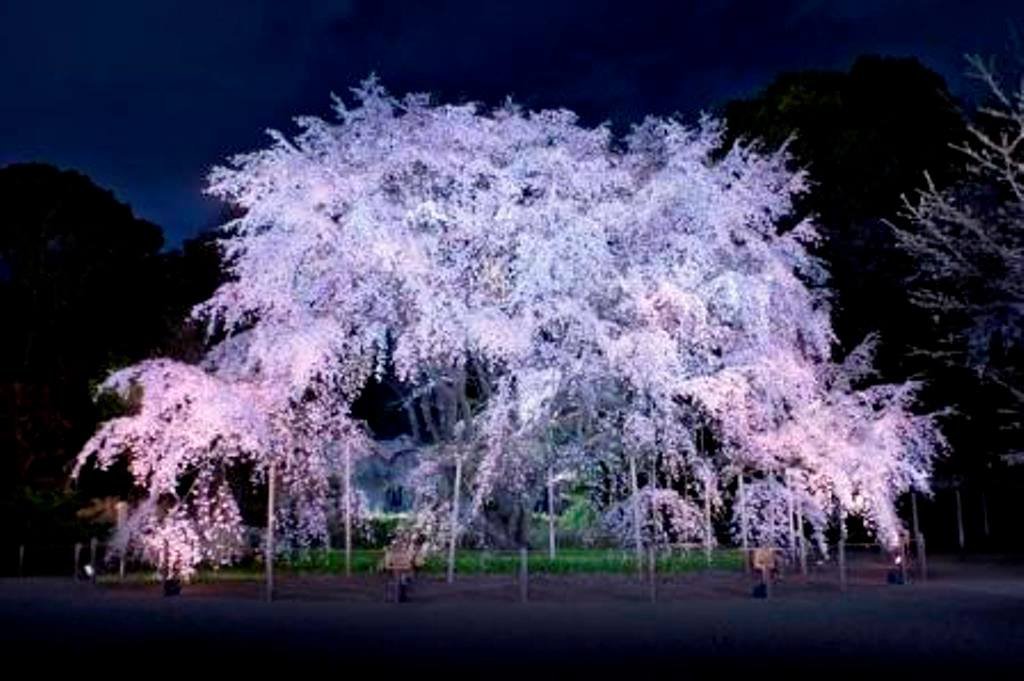
Rikugien is a daimyo garden from the Edo period—built by Yanagisawa Yoshiyasu, chamberlain to the fifth shogun, Tokugawa Tsunayoshi—and today it’s designated a Special Place of Scenic Beauty. It’s refined, literary, and carefully composed… until spring arrives and the sakura steal the show.
The garden’s icon is its huge weeping cherry tree, around 15 meters tall and 20 meters wide. Seeing it in bloom is one of those “photos don’t quite get it” moments—beautiful, delicate, and somehow powerful at the same time.
From March 14th to March 30th, 2026, the popular illumination event Spring Night Special Viewing of Rikugien Gardens is scheduled to run. Key spots like Nakanoshima, the ruins of Ginkatei, and Suikonoe are lit up, and there are even projections on the walls of a storehouse from the Iwasaki family era. If you want dynamic, dramatic sakura scenery, this is where we send you.
Rikugien Garden
| address | : | 6-16-3 Honkomagome, Bunkyo-ku, Tokyo |
|---|---|---|
| Opening hours | : | 9:00-17:00 (last admission 16:30) *During the special night viewing period, the park is also open from 18:30-21:00 (last admission 20:00) |
| Best time to see the flowers in the usual season | : | Mid to late March |
| access | : | Approximately 7 minutes on foot from Komagome Station on the JR Yamanote Line and Tokyo Metro Namboku Line. *Normally, only the main gate, which is a 7-minute walk from Komagome Station, is open, but during cherry blossom season, the Somei Gate, which is a 2-minute walk away, is also open. |
| web | : | Rikugien Garden Official Website (Tokyo Metropolitan Park Association website) |
[Bunkyo Ward] Hotel Chinzanso Tokyo: Buffets, blossoms, and the “Sea of Clouds” surprise
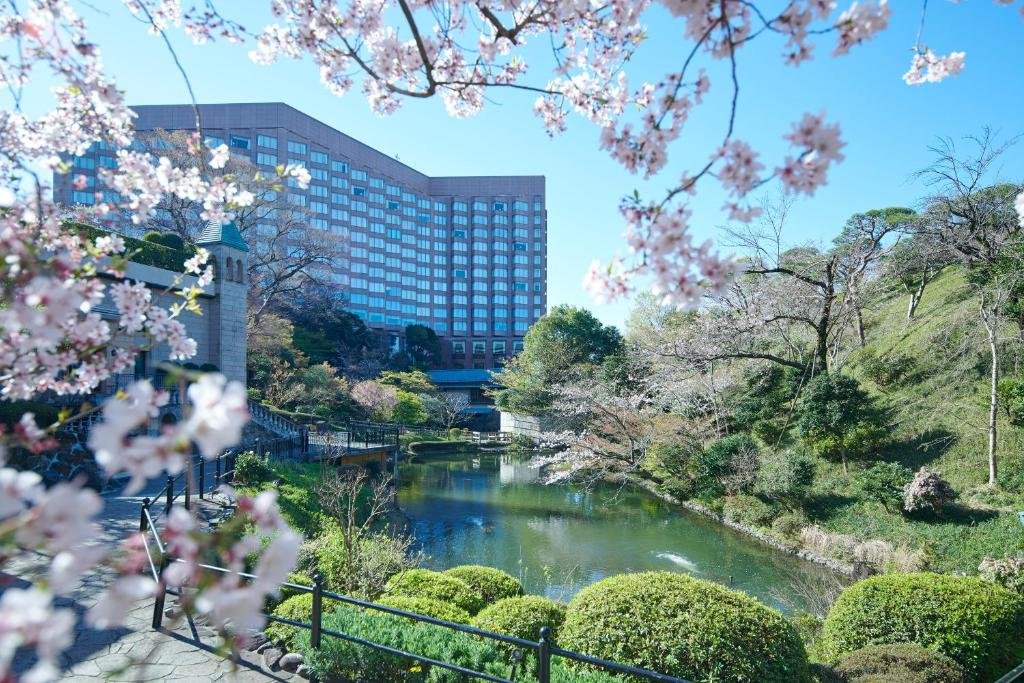
Hotel Chinzanso Tokyo opened in 1952, and its garden is the sort of place that makes you forget how close you are to the city. Inside the grounds you’ll find a forest-like landscape with around 100 cherry trees across 20 species—so yes, it’s a serious sakura location disguised as a hotel.
At night, the famous Tokyo Sea of Clouds effect teams up with cherry blossom lighting to create “Yozakura Unkai”—a dreamy “sea of night cherry blossoms” atmosphere you won’t find elsewhere. It’s wildly theatrical in the best way. Eat something luxurious, look out at the spectacle, and enjoy the fact you’re in Tokyo doing something that feels… not very Tokyo.
Hotel Chinzanso Tokyo
| address | : | 2-10-8 Sekiguchi, Bunkyo-ku, Tokyo |
|---|---|---|
| Opening hours | : | 6:00-23:00 (garden entrance time, limited to guests using hotel facilities) |
| Best time to see the flowers in the usual season | : | Mid-February to early April |
| access | : | Approximately 10 minutes walk from Tokyo Metro Edogawabashi Station |
| web | : | Hotel Chinzanso Tokyo Official Website |
[Koto Ward] Kiyosumi Garden: Coffee to-go, bench picnics, and early-blooming charm
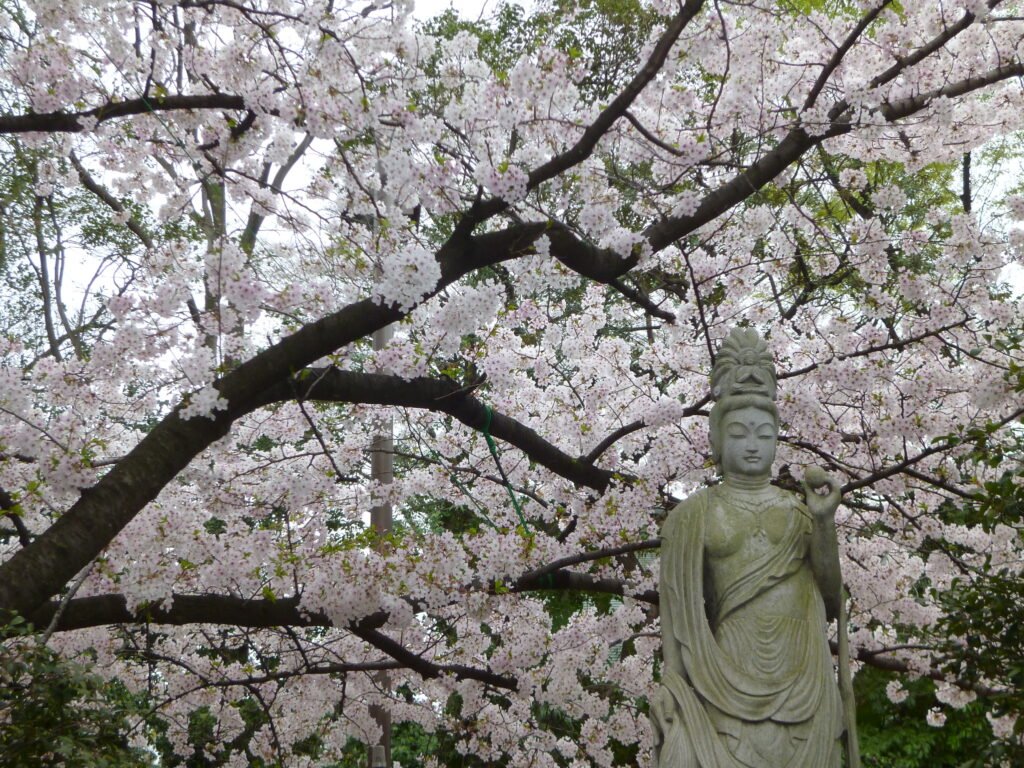
Kiyosumi Garden is a Japanese garden built around a pond—an urban oasis where we go to slow down and watch seasons change properly. People come year-round for flowers and wild birds, but spring is especially sweet here because the blossom timeline stretches nicely across weeks.
Kanhizakura in full bloom
Kanhizakura usually kicks things off in late February, followed by Somei Yoshino and Satozakura into April. The double-flowered Satozakura tends to bloom later and is absolutely worth timing your visit for. Bonus nerdy joy: keep an eye out for Japanese white-eyes and brown-eared bulbuls flitting in for nectar like they’ve got reservations.
Satozakura
One important detail: picnic sheets aren’t allowed inside the park, but you can eat and drink on the benches. That’s where the neighborhood comes in clutch—Kiyosumi Shirakawa has plenty of cafes, so we grab takeout coffee and a snack and make it a low-key blossom break.
Kiyosumi Garden
| address | : | 3-3-9 Kiyosumi, Koto-ku, Tokyo |
|---|---|---|
| Opening hours | : | 9:00-17:00 (last admission 16:30) |
| Best time to see the flowers in the usual season | : | Late February to mid-April |
| Admission fee | : | Adults: 150 yen, 65 and over: 70 yen |
| access | : | Approximately 3 minutes walk from Kiyosumi-Shirakawa Station on the Toei Oedo Line and Tokyo Metro Hanzomon Line |
| web | : | Kiyosumi Garden Official Website (Tokyo Metropolitan Park Association website) |
[Kita Ward] Asukayama Park: Family-friendly hanami with streetcars, history, and a proper festival
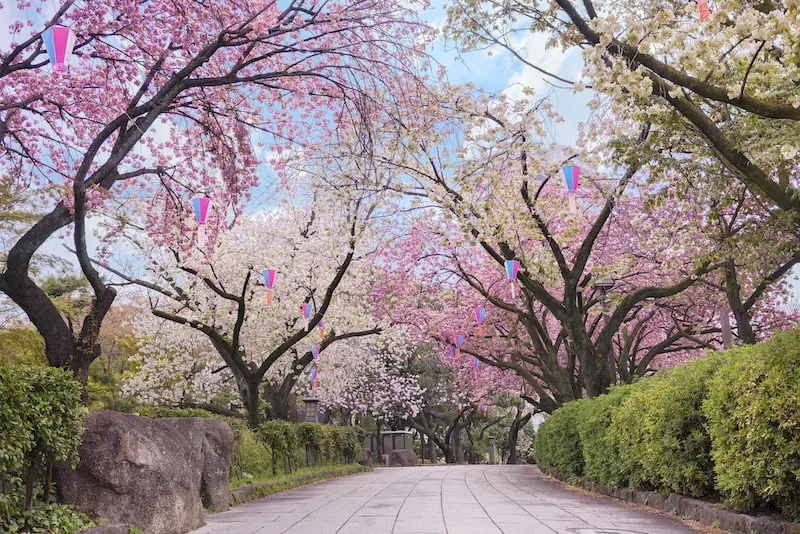
Asukayama Park is officially one of Japan’s first parks—designated back in 1873—but its cherry blossom history goes even further, back to the Edo period when Tokugawa Yoshimune (the eighth shogun) had wild cherry trees planted for the people of Edo. In other words: this place has been doing hanami for a very long time.
In late March, the Kita-ku Sakura SA*KASO Festival brings that old-school cherry blossom viewing spirit into modern Tokyo, with taiko drumming, street performances, and stalls from local restaurants. It’s very “bring the whole family,” and honestly, it works.
We also love it for the photos: the Tokyo Sakura Tram (Tokyo’s only streetcar) runs nearby, and catching it with blossoms in the frame is peak nostalgic Tokyo. The whole neighborhood keeps a local, slightly retro feel—like you’ve stepped out of the hyper-modern loop for a minute.
Asukayama Park
| address | : | 1-1-3 Oji, Kita-ku, Tokyo |
|---|---|---|
| Opening hours | : | 24 hours |
| Best time to see the flowers in the usual season | : | Late March to early April |
| access | : | A short walk from JR Oji Station |
| web | : | Asukayama Park Official Website (Kita Ward website) |
[Edogawa Ward] Komatsugawa Senbonzakura: Two kilometers of blossoms, plus a festival and family-friendly energy
Provided by: Edogawa Ward
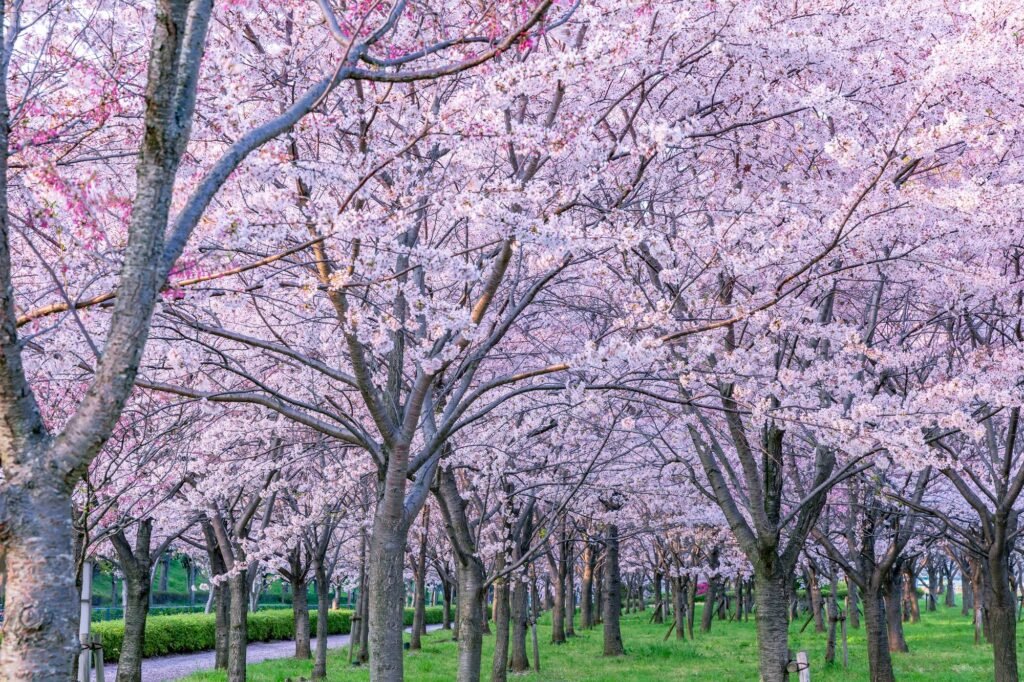
Komatsugawa Senbonzakura runs for about 2 km along the Arakawa River in Tokyo’s eastern wards, and it’s one of those “why isn’t this talked about more?” spots. As you walk the river path, you’ll see around 30 varieties—including Somei Yoshino, Oshima cherry, and Yamazakura—layering the season with different shapes, shades, and bloom timing.
Provided by: Edogawa Ward
Nearby Oshima Komatsugawa Park is scheduled to host the Komatsugawa Senbonzakura Festival on April 5, 2026, with food stalls, stage events, and BBQs (reservation required). Add athletic facilities and open space, and you’ve got a solid family day—blossoms first, running around second, snacks always.
Komatsugawa Senbonzakura
| address | : | 1-3 Komatsugawa, Edogawa Ward, Tokyo |
|---|---|---|
| Best time to see the flowers in the usual season | : | Mid-March to early April |
| access | : | Approximately 5 minutes walk from Higashi-Ojima Station on the Toei Shinjuku Line |
| web | : | Komatsugawa Senbonzakura Official Website (Edogawa Ward website) |
[Minato Ward] Tokyo Midtown: Illuminated blossoms, shopping, and a very strategic dinner plan
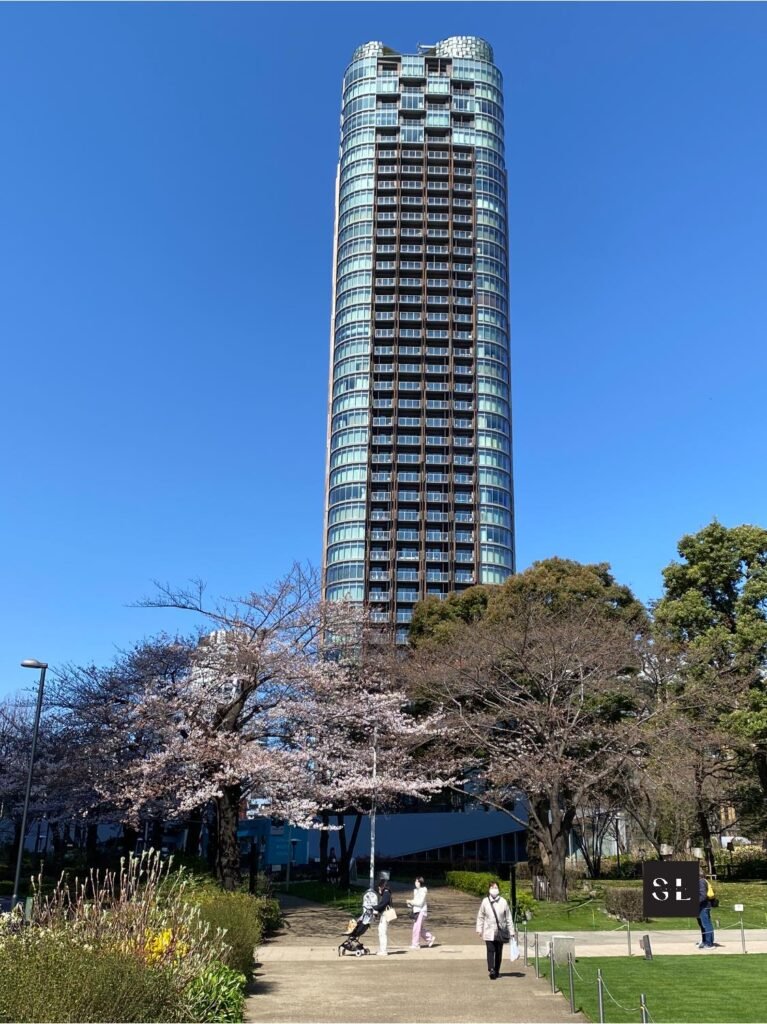
Tokyo Midtown in Roppongi runs MIDTOWN BLOSSOM every year, which is basically cherry blossom season packaged into a polished, easy-to-navigate experience. In 2026, it’s scheduled from March 13th to April 12th.
There are around 100 cherry trees in and around the complex—mostly Somei Yoshino—and the star is Midtown Garden, where the trees line up like a blossom tunnel. Look up and you’re surrounded. (It’s rude how pretty it is.)
At night, the trees are illuminated, and some restaurants have views—so our favorite move is a nighttime meal with blossoms outside the window. Effort: minimal. Reward: maximum.
There’s also a limited-time “BLOSSOM CAFÉ” inside Midtown Garden with original cocktails and sweets created by The Ritz-Carlton Tokyo, plus food options from curry to paninis depending on your mood. If you want spring vibes with shopping and dining baked in (not just a park picnic), Midtown is your spot.
Tokyo Midtown
| address | : | 9-7-1 Akasaka, Minato-ku, Tokyo |
|---|---|---|
| Opening hours | : | 17:00-23:00 |
| Best time to see the flowers in the usual season | : | Late March to early April |
| access | : | Directly connected to Roppongi Station on the Toei Oedo Line and Tokyo Metro Hibiya Line, and approximately a 3-minute walk from Nogizaka Station on the Tokyo Metro Chiyoda Line |
| web | : | Tokyo Midtown Official Website MIDTOWN BLOSSOM Special Site |
[Minato Ward] Shiba Park: Cherry blossoms + Tokyo Tower, the ultimate “yes, we are in Tokyo” photo
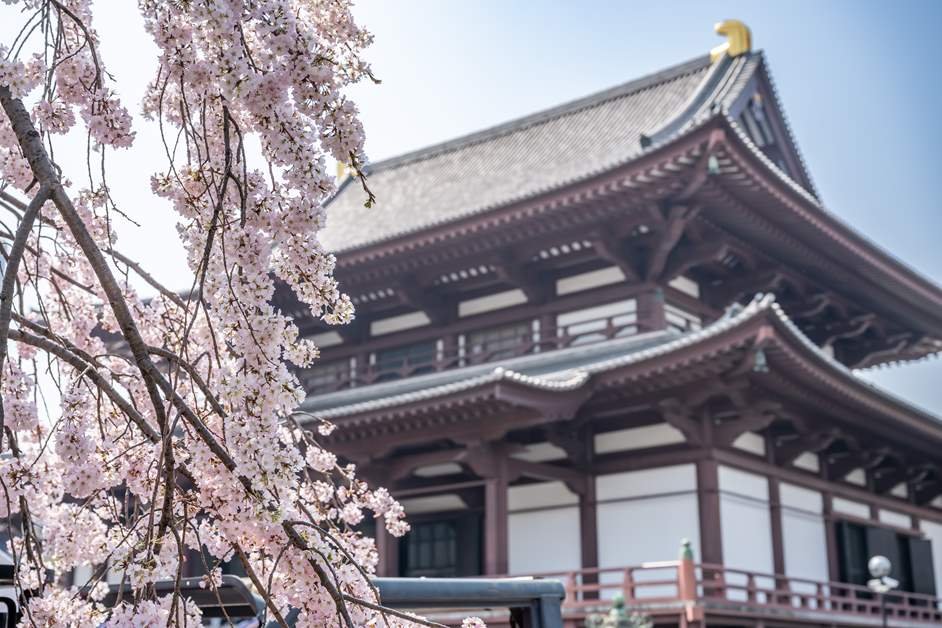
Shiba Park is historic (established around the same era as Asukayama Park) and sits right at the foot of Tokyo Tower, next to Zojoji Temple—which makes the whole area feel a little more powerful than your average park stroll. In spring, around 140 cherry trees—including Somei Yoshino, Yamazakura, and Satozakura—bloom from late March to early April.
The star moment is the Tokyo Tower + sakura combination. Daytime is crisp and iconic. Nighttime—when the tower lights up—turns it into a dramatic city-spring scene that feels like Tokyo showing off (again). If you want a single photo that screams “we did sakura season properly,” this one delivers.
Shiba Park
| address | : | 4-10-17 Shibakoen, Minato-ku, Tokyo |
|---|---|---|
| Opening hours | : | 24 hours |
| Best time to see the flowers in the usual season | : | Late March to mid-April |
| access | : | Approximately 2 minutes on foot from Shibakoen Station and Onarimon Station on the Toei Mita Line and Akabanebashi Station on the Toei Oedo Line, approximately 5 minutes on foot from Daimon Station on the Toei Asakusa Line and Oedo Line, and approximately 12 minutes on foot from JR Hamamatsucho Station |
| web | : | Shiba Park Official Website (Tokyo Metropolitan Park Association website) |
[Minato Ward] Grand Prince Hotel Takanawa: Wake up to blossoms (and then do it again at night)
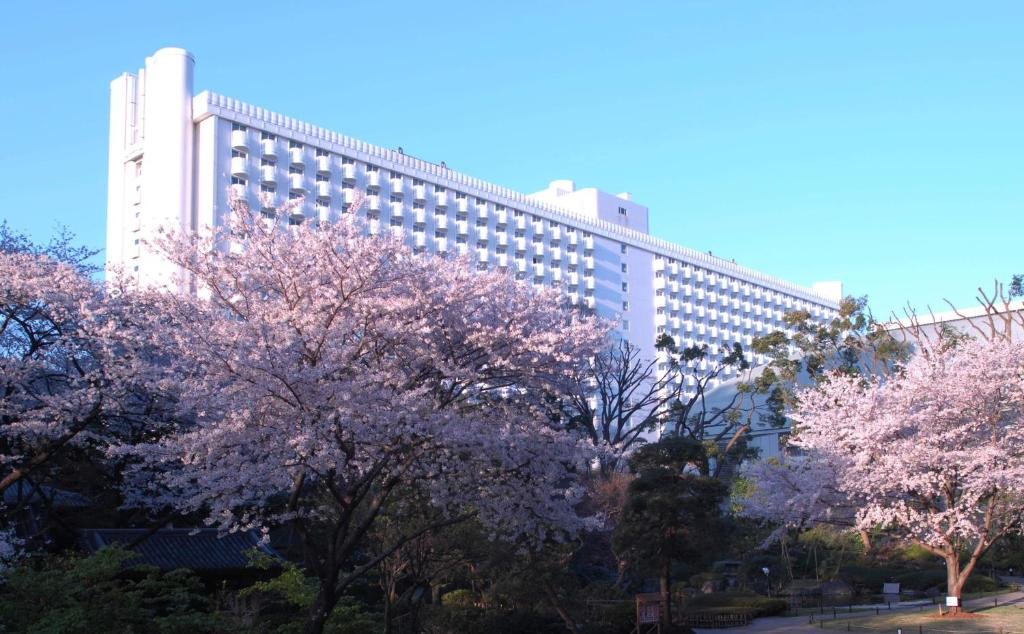
The Grand Prince Hotel Takanawa is a five-minute walk from Shinagawa Station, which already makes it extremely convenient. But the real reason people come during sakura season is the Japanese garden—about 20,000 square meters—with around 210 cherry trees across 17 species. The bloom season here can stretch for nearly three months, so you’re not gambling everything on a single weekend.
The luxury move is booking a room facing the garden and enjoying blossoms from your own private space. No crowds. No rushing. Just you, the view, and the gentle realization that this is a very good idea.
Takanawa Cherry Blossom Festival 2026 is scheduled for March 6th to April 19th, 2026, with events like morning yoga, seasonal menus, and plenty of spring-themed programming.
At night, the garden glows with over 400 bamboo lanterns, creating an atmosphere that’s soft, warm, and memorable—like being wrapped in cherry blossoms from morning to midnight.
Grand Prince Hotel Takanawa
| address | : | 3-13-1 Takanawa, Minato-ku, Tokyo |
|---|---|---|
| Best time to see the flowers in the usual season | : | Late March to early April |
| access | : | Approximately 5 minutes on foot from the Takanawa Exit of JR/Keikyu Line Shinagawa Station, approximately 3 minutes on foot from Takanawadai Station on the Toei Subway Asakusa Line |
| web | : | Grand Prince Hotel Takanawa Official Website |
[Ota Ward] Ikegami Honmonji Temple: History, a five-story pagoda, and blossoms everywhere
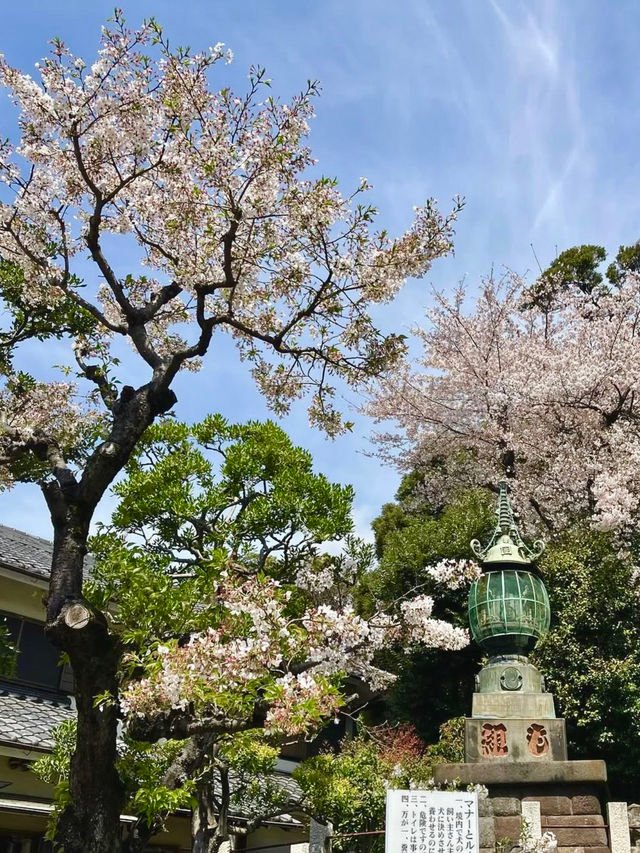
Ikegami Honmonji Temple is one of Ota Ward’s best-known cherry blossom spots—and it’s not just “pretty temple + blossoms.” It’s a major Nichiren-sect temple, one of the four main temples, and the place where Saint Nichiren is said to have died. In other words: the history here runs deep (over 700 years deep).
There are around 300 cherry trees across the grounds, and the headline scene is the blossoms paired with the five-story pagoda, a nationally designated Important Cultural Property. Another special detail: the rare Sasabe cherry blossoms, planted near the Niomon Gate. The Ikegami Honmonji Temple Spring Festival is scheduled for Saturday, April 4th and Sunday, April 5th, 2026, so if you want blossoms + festival energy, that’s your timing.
Ikegami Honmonji Temple
| address | : | 1-1-1 Ikegami, Ota-ku, Tokyo |
|---|---|---|
| Opening hours | : | 9:00-16:30 |
| Best time to see the flowers in the usual season | : | Mid-March to early April |
| access | : | Approximately 10 minutes on foot from Ikegami Station on the Tokyu Ikegami Line, or approximately 12 minutes on foot from the south exit of Nishi-Magome Station on the Toei Asakusa Line |
| web | : | Ikegami Honmonji Temple Official Website |
[Tachikawa City/Akishima City] Showa Memorial Park: Cherry blossoms + rapeseed blossoms, a color combo worth the trip
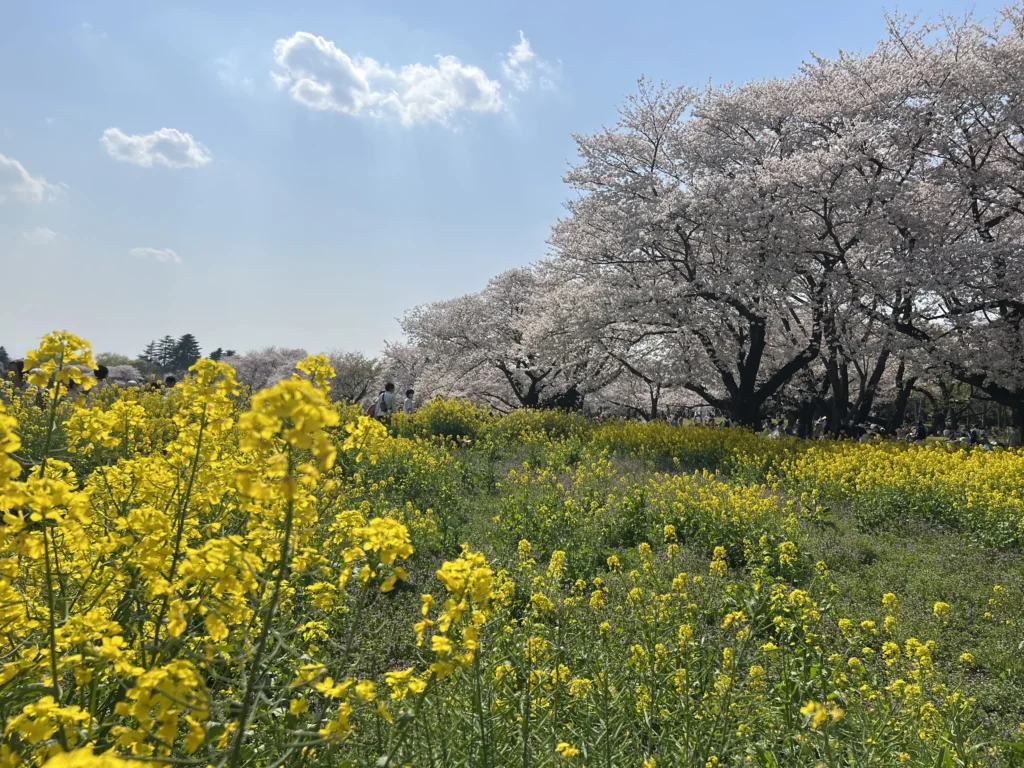
Showa Memorial National Government Park is enormous—about the size of 39 Tokyo Domes—and it packs in around 1,500 cherry trees across 31 varieties. One of the most beloved areas is the Cherry Blossom Garden, where some trees are around 50 years old and their branches dip so low you feel like you’re standing inside the blossoms, not just under them.
Provided by: Beautiful Tama River Forum
Then there’s the spring plot twist: rapeseed blossoms bloom around the same time, so you get pale pink cherry blossoms against bright yellow flowers. It’s dreamy, slightly surreal, and absolutely a “yes, we’re taking 47 photos” situation.
To cover ground without collapsing, rent a bicycle or even a Segway and tour the park properly. This place is big enough to make “just walking” feel like a workout plan you didn’t sign up for.
Showa Memorial Park
| address | : | 3173 Midoricho, Tachikawa City, Tokyo |
|---|---|---|
| Opening hours | : | March 9:30-17:00 (free area 9:30-17:00), April 9:30-17:00, until 18:00 on weekends and holidays (free area 8:30-18:00) |
| Best time to see the flowers in the usual season | : | Mid-March to late April |
| access | : | Approximately 10 minutes on foot from JR Chuo Line “Tachikawa Station”, approximately 8 minutes on foot from Tama Toshi Monorail “Tachikawa-Kita Station” |
| Admission fee | : | Adults (high school students and above): 450 yen, those 65 and over: 210 yen, junior high school students and below: free |
| web | : | Showa Memorial National Government Park Official Website |
[Musashino City] Inokashira Park: Boat-under-the-blossoms energy (and it’s ridiculously good)
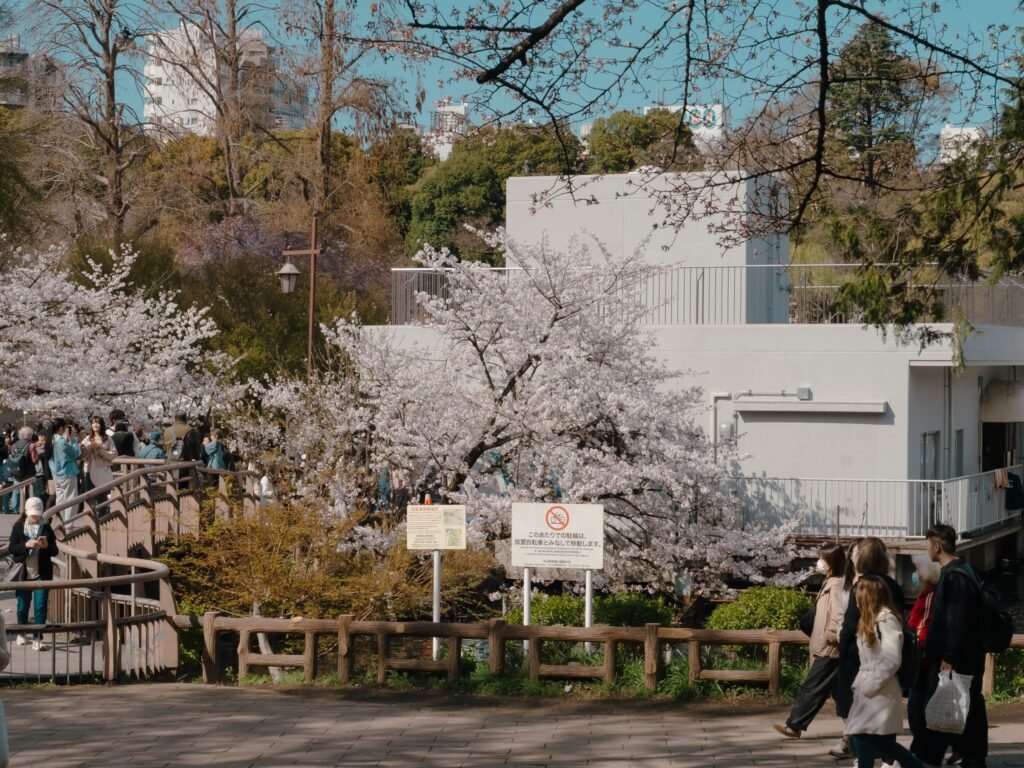
Inokashira Park is one of Japan’s classic cherry blossom parks, and the big reason is the pond. There are around 400 cherry trees in the park, with roughly 200 clustered around the water—many with branches hanging right over it.
The signature experience is renting a boat and gliding through what feels like a tunnel of cherry blossoms. You also get that lovely detail of blossoms reflected in the pond, plus petals scattered on the surface like spring confetti. It’s romantic, yes—but it’s also just genuinely fun, even if you’re not in a romantic mood at all.
Inokashira Park
| address | : | 1-18-31 Gotenyama, Musashino City, Tokyo |
|---|---|---|
| Opening hours | : | 24 hours |
| Best time to see the flowers in the usual season | : | Late March to early April |
| access | : | Approximately 1 minute walk from Inokashira Park Station on the Keio Inokashira Line, and approximately 5 minutes walk from Kichijoji Station on the JR Chuo Line and Keio Inokashira Line |
| web | : | Inokashira Park Official Website (Tokyo Metropolitan Government website) |
[Inagi City] Yomiuri Land: High-speed cherry blossom viewing (yes, that’s a thing)
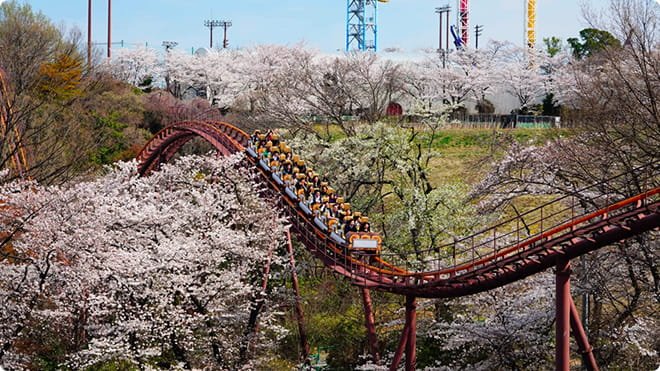
Yomiuri Land spans Inagi City in Tokyo and Kawasaki City in Kanagawa, and it’s sprinkled with cherry blossom viewing spots—including a 180-meter-long row of cherry trees that looks fantastic in bloom.
What it will be like in 2026
The most chaotic-fun option is “high-speed hanami”: hopping on a roller coaster that reaches a max speed of 110 km/h and letting spring blur into pink-and-white streaks. It’s thrills + blossoms in one go, and yes, roller coaster fans will love it.
Prefer your sakura with fewer screams? Take the gondola from Keio Yomiuriland Station to the park entrance and float above a carpet of blossoms like you’re in a studio Ghibli cutscene (minus the talking soot sprites).
What it will be like in 2026
After sunset, the park runs the Night Cherry Blossom Jewel Illumination, transforming the rows of trees into a sparkly, fantastical scene—like someone sprinkled the entire place with gemstones. If you want cherry blossoms with maximum variety (rides, views, illumination), this is a very solid pick.
Yomiuriland
| address | : | 4015-1 Yanokuchi, Inagi City, Tokyo |
|---|---|---|
| Opening hours | : | 9:00 – 20:30 (Please check the official website as hours may vary depending on the day) |
| Best time to see the flowers in the usual season | : | Mid-March to early April |
| access | : | Approximately 5 minutes by bus or 5-10 minutes by gondola from Keio Yomiuriland Station on the Keio Line, or approximately 10 minutes by bus from Yomiuriland-mae Station on the Odakyu Line |
| Admission fee | : | Adults: 1,800 yen, Junior and senior high school students: 1,500 yen, 3-year-olds to elementary school students and those 65 and older: 1,000 yen (One-day passes also available) |
| web | : | Yomiuriland official website |
[Tama Area] Tama River breakwater: Long rows of blossoms, best enjoyed by bike or car
Provided by: Beautiful Tama River Forum
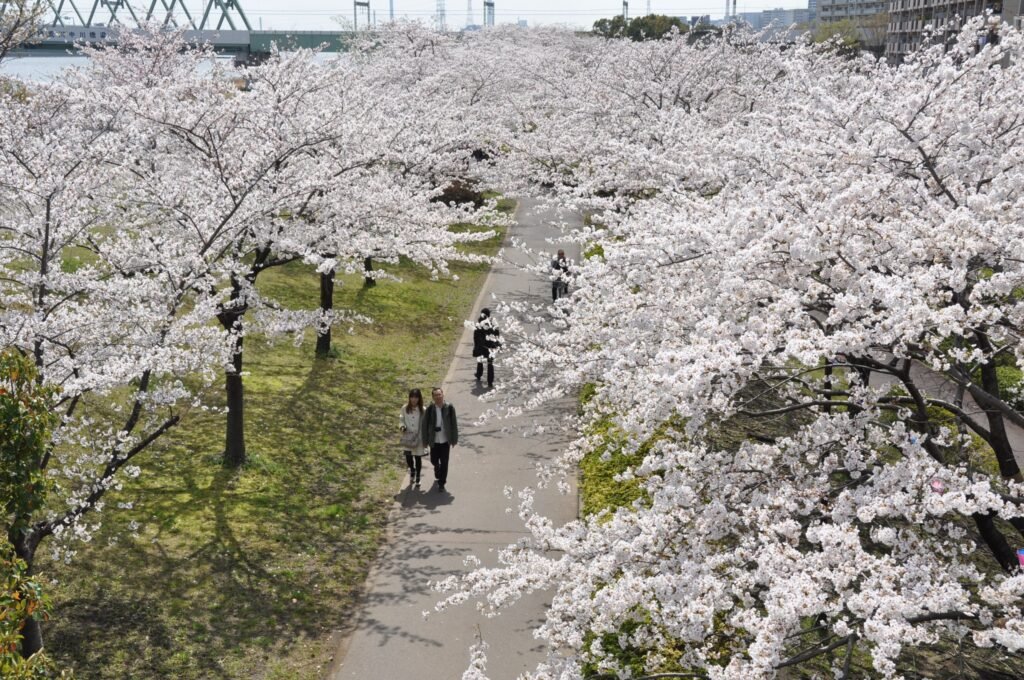
The Tama River threads through the Tama area with plenty of scenic stretches—but one of the most famous is the breakwater between Nagata Bridge and Mutsumi Bridge in Fussa City.
Along about 2.5 km, you’ll find roughly 500 Somei-Yoshino planted in a long, satisfying line. Get close to the blossoms, or stand back on a bridge and take in the “endless row” perspective—either way, it’s a proper spring spectacle.
Another perk: the river space is wide and open, so it’s ideal for cycling—or even a slow drive along side streets—when you want maximum blossoms without the stop-start of crowded sidewalks.
Provided by: Beautiful Tama River Forum
The Fussa Cherry Blossom Festival is scheduled from March 20th to April 19th, 2026, with performances like folk dance parades and Japanese drumming—local specialties that add a festive layer to the viewing.
Cherry blossoms along the Tama River, along the breakwater between Nagata Bridge and Mutsumi Bridge
| address | : | Minamiden area, Fussa City, Tokyo |
|---|---|---|
| Best time to see the flowers in the usual season | : | Late March to early April |
| web | : | Fussa City Official Website |
[Koganei City] Koganei Park: Late-blooming sakura, big lawns, and family-friendly everything
Provided by: Koganei City Tourism and Revitalization Association
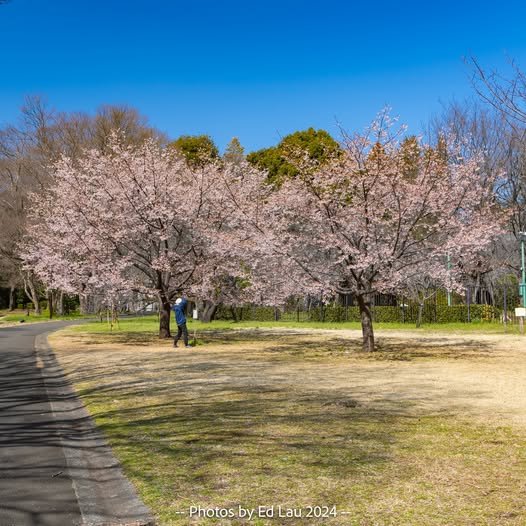
Koganei Park sits about a 30-minute train ride from Shinjuku and is basically designed for a full family day: big playground equipment, a cycling course, and a barbecue area for when your group inevitably decides “we should eat here too.”
It’s also a serious sakura park, with around 1,400 cherry trees across roughly 50 varieties—including Yamazakura, Satozakura, and Oshimazakura. The best bloom timing tends to run from late March to late April, and lots of trees bloom late, making it a hero spot for anyone who missed peak week elsewhere.
The Koganei Cherry Blossom Festival is scheduled for Saturday, March 28th and Sunday, March 29th, 2026, with local performing arts, music, and food stalls. Right next door, the Edo-Tokyo Open Air Architectural Museum adds extra spring atmosphere with tea ceremonies and flower seating—perfect if you want your hanami to feel unhurried and a little more old-world.
Koganei Park
| address | : | 1-13-1 Sekinocho, Koganei City, Tokyo |
|---|---|---|
| Opening hours | : | 24 hours |
| Best time to see the flowers in the usual season | : | Late March to late April |
| Regular holidays | : | Bus from JR Chuo Line “Musashi-Koganei Station” or “Higashi-Koganei Station” or Seibu Shinjuku Line “Hana-Koganei Station” |
| web | : | Koganei Park Official Website (Tokyo Metropolitan Park Association website) |
Tokyo is scattered with cherry blossom spots, each with its own personality—so rather than gambling everything on one “perfect” place, we’re fans of building a little sakura circuit. A park picnic here, a river stroll there, a garden illumination when you feel fancy. Cherry blossoms don’t last forever, but your spring memories absolutely can.
- 23 Most Unique Stores in Tokyo (2026): Sweets, Character Goods and Tokyo-Only Gifts
- Things to Do in Tokyo With Teenagers Who Love Anime (2026)

- 17 Best Family Hotels Near Tokyo Disneyland for an Easy Disney Trip (2026)

- 10 Best Hotels for Solo Travelers in Tokyo in 2026: Safe, Stylish & Easy to Explore From

- 2026 Best Budget Stays in Tokyo for Couples Who Want Cute, Central & Affordable