
Travel photojournalist and landscape hunter with experience across 89 countries, all 47 prefectures of Japan, 30 remote islands, and 60+ mountains. I focus on overlooked landscapes, mossy hidden corners, and places beyond the usual guidebooks — sharing photography and stories that inspire people to travel.
Kyoto tends to pull all the attention in this corner of Japan. Then you travel a few minutes east, the city gives way to an enormous sheet of blue, and Shiga quietly asks why everyone has been rushing past it.
That blue is Lake Biwa, Japan’s largest lake and the feature around which much of Shiga life revolves. Its shores hold castle towns, centuries-old shrines, mountain viewpoints, freshwater wildlife, art museums and walking routes where the loudest thing you may hear is water running through a canal. Shiga is not a single-attraction day trip. It is a whole prefecture of very different landscapes, wrapped around one remarkably photogenic lake.
You can still visit Shiga easily from Kyoto, but it is worth resisting the urge to cram everything into one day. Otsu works well for a first visit, Hikone and Nagahama make a strong history-focused trip, and the western shore is best when you want mountain scenery, lakeside views and places such as Shirahige Shrine or the Metasequoia Avenue.
Below, we have organized the best things to do in Shiga by area, with realistic transport notes, time estimates and the practical details you actually need.
Exploring Shiga and the Kansai region?
Shiga is an easy addition to a Kyoto-based trip, so explore more nearby destinations with our guide to the best day trips from Kyoto. Continue your journey with the best things to do in Kyoto, escape the busiest tourist routes with these hidden gems in Kyoto, and simplify your journeys with our guide to getting around Kyoto.
Table of Contents
Shiga at a Glance: Which Places Should You Prioritize?
| If you want… | Our best pick | Allow |
|---|---|---|
| The classic first-time Shiga experience | Hikone Castle and Genkyu-en Garden | 2–3 hours |
| A memorable Lake Biwa view | Biwako Valley and Biwako Terrace | Half to full day |
| A relaxed historic town | Hachimanbori in Omihachiman | 2–4 hours |
| A family-friendly rainy-day attraction | Lake Biwa Museum | 2–3 hours |
| Anime and manga connections | Omi Jingu Shrine | 45–90 minutes |
| Art and architecture | MIHO MUSEUM | Half day |
| An easy evening walk from central Otsu | Nagisa Park and the Biwako Flower Fountain | 1–2 hours |
| Autumn color | Hiyoshi Taisha or Metasequoia Avenue | 1–3 hours |
| A quieter summer escape | Samegai and the Jizo River | 1–2 hours |
How Many Days Do You Need in Shiga?
For a first trip, two days is the sweet spot. Spend one day around Otsu or the western shore, then use the second for Hikone, Nagahama or Omihachiman. With three or four days, you can slow down and include one of the less central museums or nature attractions without spending the entire trip checking train times.
Shiga is possible without a car, but the experience varies by area. Otsu, Hikone, Nagahama, Samegai and central Omihachiman are straightforward by train. Biwako Valley has a bus connection from Shiga Station, while MIHO MUSEUM and Blume no Oka require more planning. A car becomes genuinely useful—not merely convenient—if you want to combine several rural sights in one day.
Best Things to Do in Shiga: Places To Visit
Important: Opening hours, admission fees, ropeway operations and seasonal schedules can change. The details below were checked in August 2026, but always confirm them on the linked official website before traveling—especially for Biwako Valley, museums and seasonal flower spots.
1. Omi Jingu Shrine: Shiga’s Competitive Karuta Shrine
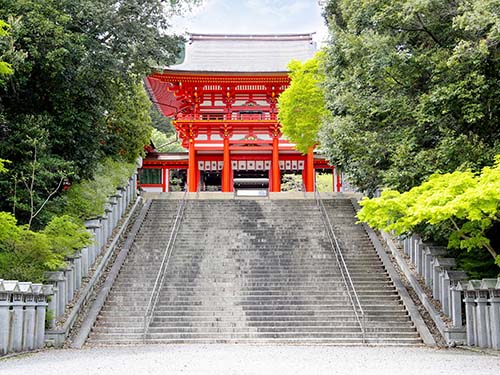
Omi Jingu is not the kind of shrine you stumble across between souvenir shops. Set against the wooded hills above Otsu, it feels calm and spacious, with vermilion buildings appearing through the trees as you approach. It is a rewarding stop even if you know nothing about classical Japanese poetry—but if you are a fan of competitive karuta or Chihayafuru, this is one of Shiga’s essential places.
The shrine is dedicated to Emperor Tenji, whose poem opens the Ogura Hyakunin Isshu, the anthology of 100 classical poems used in karuta. That connection made Omi Jingu an important center for competitive karuta, and major tournaments are held here. Fans come to see the setting, buy themed charms and stand in the same atmospheric spaces associated with the manga and anime.
Omi Jingu has another, less expected speciality: timekeeping. Emperor Tenji is associated with Japan’s first water clock, or rokoku, and the grounds contain sundials and a working water-clock display. The Clock Museum and Treasure Hall adds antique Japanese and Western clocks to the story. It is small rather than blockbuster-sized, but that is part of the charm. You come for a shrine and leave having learned that timekeeping has a surprisingly dramatic history.
Several buildings below the main sanctuary are registered tangible cultural properties and are excellent examples of modern shrine architecture. Allow enough time to walk rather than simply photograph the main gate and leave.
Best for: Chihayafuru fans, competitive karuta, quiet shrine visits and unusual small museums.
Omi Jingu Practical Information
- Address: 1-1 Jingucho, Otsu, Shiga 520-0015
- Shrine hours: 6:00 AM–6:00 PM
- Charms and goshuin: 9:00 AM–4:30 PM
- Clock Museum and Treasure Hall: 9:30 AM–4:30 PM; last entry at 4:00 PM
- Time needed: Around 45 minutes for the shrine; 60–90 minutes if you visit the museum and timekeeping displays
- By train: About 9 minutes on foot from Omi-jingu-mae Station on the Keihan Ishiyama-Sakamoto Line. From JR Otsukyo Station, take a short taxi ride or allow extra time to walk.
- Parking: Usually free, except during the busy New Year period when special charges and restrictions apply
- Accessibility: A slope provides wheelchair access from beside the Clock Museum to the outer worship hall; an accessible toilet is also available nearby
- Official website: Omi Jingu
2. Hiyoshi Taisha: Forest Paths, Sacred Monkeys and Autumn Color
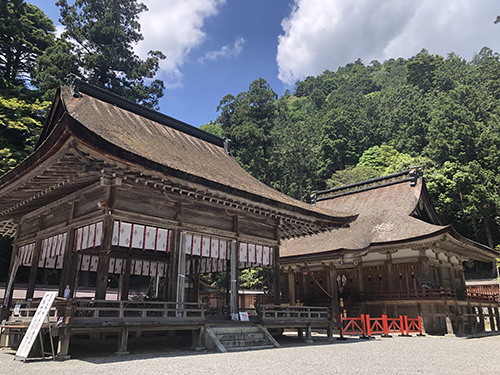
At the foot of Mount Hiei, Hiyoshi Taisha feels less like a single shrine and more like a sacred landscape. Water runs through the enormous wooded grounds, stone bridges cross narrow streams, and shrine buildings emerge one after another as you follow the paths uphill. It is the head shrine of roughly 3,800 Hiyoshi, Hie and Sanno shrines across Japan, but the atmosphere is far from institutional. It is green, quiet and pleasantly easy to wander.
The West Main Shrine and East Main Shrine form the heart of the complex. Hiyoshi Taisha has two National Treasure buildings and 17 Important Cultural Properties, so this is a place where taking the longer route pays off. The grounds cover around 468,000 square meters; if you only allow 20 minutes, you will spend most of them wondering where everything is.
Look out for masaru, the sacred monkeys believed to act as divine messengers. The name carries associations with overcoming misfortune and surpassing obstacles, and monkey designs appear on ema, fortunes and charms. They add personality without turning the shrine into a gimmick.
Autumn is the most famous season. Maples spread across the grounds, making Hiyoshi Taisha one of the Kansai region’s strongest autumn-color destinations. It is also one of the busiest times, so arrive early if you want that contemplative forest-shrine mood rather than a patient queue of photographers waiting for the same red branch to stop moving.
Best for: Autumn foliage, shrine architecture, peaceful walks and travelers who prefer large, atmospheric grounds.
Hiyoshi Taisha Practical Information
- Address: 5-1-1 Sakamoto, Otsu, Shiga 520-0113
- General visiting hours: 9:00 AM–4:00 PM
- Main shrine gate hours: 6:00 AM–4:00 PM from April to September; 7:00 AM–4:00 PM from October to March
- Admission contribution: Adults ¥500; junior and senior high school students ¥300; elementary-school children and younger enter free
- Time needed: 90 minutes to 2 hours for a relaxed circuit
- By train: About 10 minutes on foot from Sakamoto-hieizanguchi Station on the Keihan line, or around 20 minutes from JR Hieizan-Sakamoto Station
- Parking: Available; check the official access page for current restrictions during festivals and peak foliage periods
- Official website: Hiyoshi Taisha
3. Mii-dera Temple: National Treasures and One Very Famous Bell
Photo courtesy of Mii-dera Temple
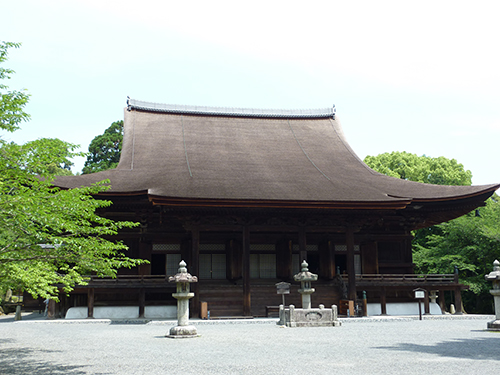
Mii-dera, formally Onjo-ji, spreads across the slopes of Mount Nagara above Otsu. It is the head temple of the Tendai Jimon school, but you do not need to arrive with a working knowledge of Buddhist history. The pleasure here is physical and immediate: old halls among trees, stone steps climbing the hillside and occasional openings that reveal Lake Biwa below.
The temple holds an extraordinary collection of cultural properties, including 10 National Treasures and numerous Important Cultural Properties. Its main hall is the obvious anchor, but the site rewards unhurried exploration. This is not a temple where the entrance gate and main hall tell the whole story.
The best-known sound in the complex comes from the Evening Bell of Mii, one of the Eight Views of Omi and one of Japan’s celebrated soundscapes. Visitors can usually pay a small separate fee to ring the bell. It is louder and more resonant than people expect; stand back after the strike and let the sound roll away through the grounds.
Mii-dera also offers bookable activities such as Zen meditation and other temple experiences. These require advance arrangements and may pause during ceremonies or busy periods, so do not arrive assuming you can join on the spot. Even without an activity, allow at least 90 minutes. The site is large, hilly and far more rewarding when it does not become a race back to the station.
Best for: Buddhist art, temple architecture, photographers and travelers who enjoy quieter heritage sites.
Mii-dera Practical Information
- Address: 246 Onjoji-cho, Otsu, Shiga 520-0036
- Hours: 8:00 AM–5:00 PM
- Admission: Adults ¥800; junior and senior high school students ¥500; elementary-school children ¥300
- Time needed: 90 minutes to 2.5 hours
- By train: About 10 minutes on foot from Mitsui-dera Station or about 12 minutes from Otsu-shiyakusho-mae Station on the Keihan Ishiyama-Sakamoto Line
- From JR Otsu Station: Take a local bus towards the temple area; check the current route before traveling
- Parking: Available for a fee
- Booking tip: Temple experiences need advance reservations and cost extra
- Official website: Mii-dera Temple
4. Biwako Valley and Biwako Terrace: The Big Lake View
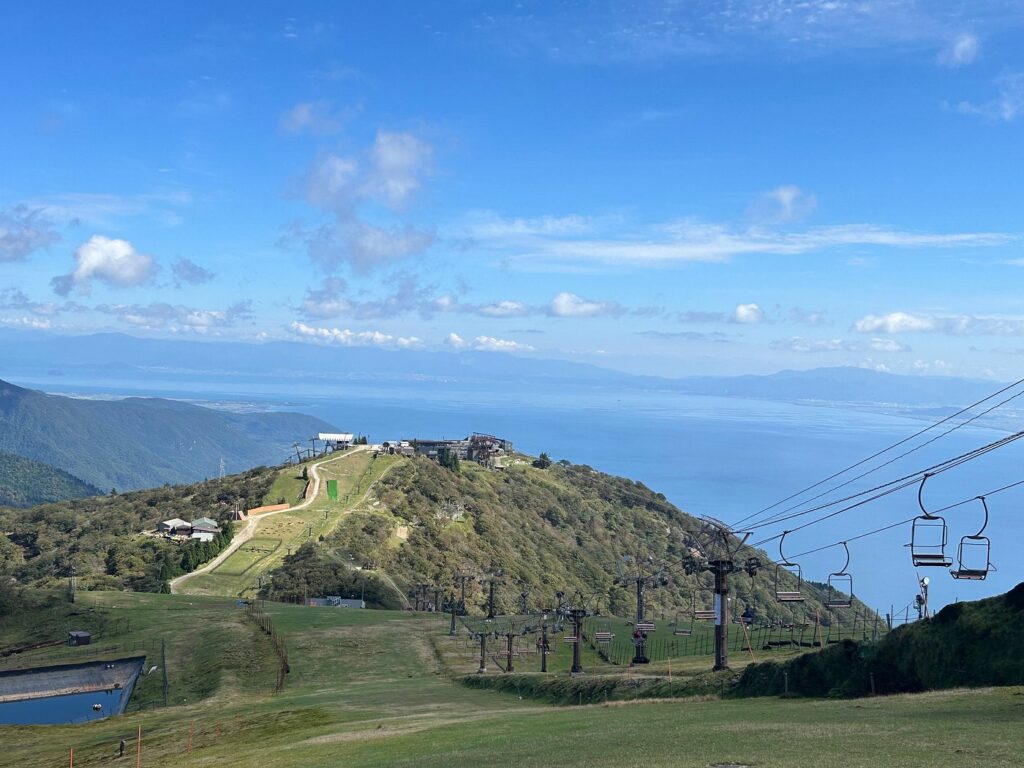
The ropeway rises quickly from the foot of the Hira Mountains, and Lake Biwa keeps getting larger behind you until it no longer looks like a lake at all. From the upper station at roughly 1,100 meters, the water fills the landscape, with towns and fields reduced to fine detail around its edge. This is one of Shiga’s genuine big-view moments.
Biwako Terrace is the main reason many visitors come. Its viewing areas, cafés and water features are designed to frame the lake, and on a clear day the panorama is superb. Continue by sightseeing lift towards Mount Horai and Café 360 for an even broader sense of the terrain. The mountain is often noticeably cooler than Otsu below, which makes it particularly attractive in humid summer weather.
The resort is not just an observation deck. Depending on the season and current operating schedule, you may find zipline activities, puzzle trails, a dog run, children’s play areas and winter skiing. A new 220-meter Sky Bridge is scheduled to open fully on September 14, 2026, after a preview period beginning in late August. Because mountain attractions are vulnerable to wind, cloud and maintenance closures, check the live operations page on the morning of your visit.
The main disadvantage is cost: ropeway tickets, activities, food and transport can turn this into one of the more expensive days in Shiga. It is worth it in good visibility. In heavy cloud, the famous panorama can become a very stylish view of white mist, so keep your schedule flexible if possible.
Best for: Panoramic views, couples, older children, summer cooling-off and travelers who want an easy mountain experience without a serious hike.
Biwako Valley Practical Information
- Address: 1547-1 Kido, Otsu, Shiga 520-0514
- Season: Green season and winter season have different calendars, prices and facilities; maintenance closures occur between seasons
- Hours and fees: Variable. Check the live information and ticket page before departure.
- Time needed: At least 3–4 hours; allow a full day if you add activities or travel from Kyoto
- By train and bus: From JR Shiga Station, take the connecting bus to Biwako Valley, then walk a short distance to the ropeway station
- By car: Roughly 5 minutes from the Shiga Interchange on the Kosei Road; parking fees vary by date
- Weather tip: Check the live camera as well as the forecast. Conditions at the summit can be very different from lakeside Otsu.
- Booking tip: Buy time-sensitive activities in advance during weekends and school holidays
- Official website: Biwako Valley and Biwako Terrace
5. Biwako Flower Fountain: An Easy Otsu Evening Stop
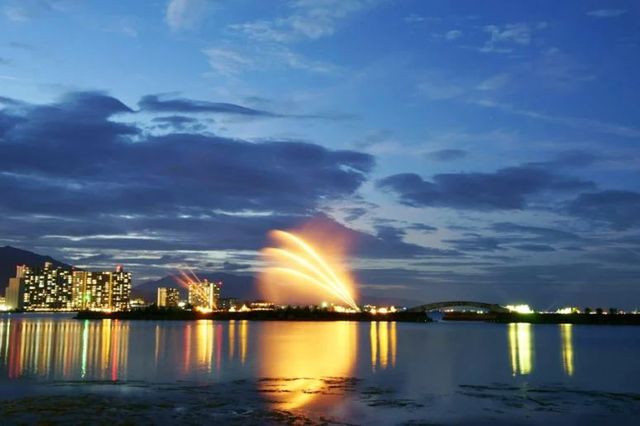
After a day of temples and museums, the Biwako Flower Fountain offers something agreeably simple: find a place along Otsu Port, look out across the water and wait for the show. Installed on a breakwater about 180 meters offshore, the fountain stretches for roughly 440 meters. Its tallest jets reach around 40 meters—the height of a ten-storey building—and the changing angles create a surprisingly varied display.
The evening illumination is the main event. Clear, orange and green lights turn the moving water into shifting fans and arcs against the dark lake. It is not worth crossing Shiga solely for the fountain, but paired with Nagisa Park, an Otsu dinner or a cruise, it makes an excellent end to the day.
Do check the operating schedule rather than relying on an old blog post. The fountain stops for scheduled inspection on the second and fourth Wednesday of each month, or the following day when Wednesday is a public holiday. Bad weather, power-saving measures and maintenance can also cancel or shorten a performance. In summer 2026, energy-saving arrangements reduced operations on many days to an evening slot, so timing matters.
Best for: Evening walks, couples, families and anyone staying near central Otsu.
Biwako Flower Fountain Practical Information
- Location: Otsu Port, Hamaotsu, Otsu, Shiga 520-0047
- Admission: Free
- Operating hours: Change by season and energy-saving schedule; check the official timetable on the day
- Scheduled closure: Second and fourth Wednesday of each month, or the following day when Wednesday is a public holiday
- Time needed: 20–40 minutes, longer if combined with the lakeside promenade
- By train: About 5 minutes on foot from Biwako-hamaotsu Station, or around 20 minutes from JR Otsu Station
- Parking: Use nearby paid parking
- Official information: Shiga Prefecture’s Biwako Flower Fountain page
6. Otsu Lakeside Nagisa Park: The Lake Biwa Walk You Can Do for Free
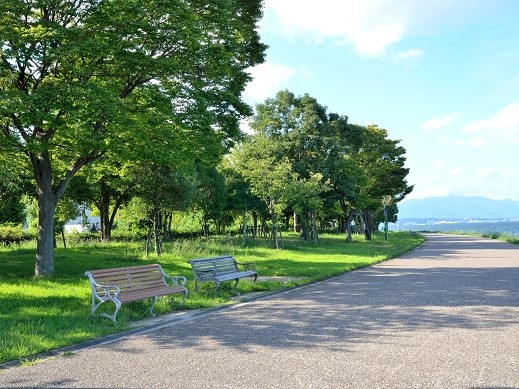
Nagisa Park runs for about 4.8 kilometers along the Otsu shoreline, connecting a series of lawns, beaches, promenades and event spaces. It is less a conventional fenced park than a long green pause between the city and Lake Biwa. You can walk for ten minutes, stop for coffee and leave, or follow the shore for hours.
Different sections have different personalities. Festival Plaza is close to central Otsu and hosts events. The Nagisa Promenade brings you near the water and seasonal planting, while Sunshine Beach opens into a broader recreation area. The Zeze and Seiran section continues the route farther south. On a clear day, the mountains across the lake give even an ordinary walk a proper sense of place.
This is one of the best things to do in Shiga when your schedule needs breathing room. There is no entrance queue, no fixed circuit and no pressure to admire a nationally designated object at the correct angle. Bring snacks, let children run on the grass or pair the central section with the Biwako Flower Fountain after dark.
Because the park is long, choose your starting point before you go. Searching only for “Nagisa Park” can leave you farther from your intended section than expected.
Best for: Free things to do, lake views, picnics, families and an easy break between Otsu attractions.
Nagisa Park Practical Information
- Location: Lake Biwa shoreline from central Hamaotsu towards Omi Ohashi Bridge
- Admission: Free
- Hours: Open public space; individual facilities and car parks have their own hours
- Time needed: 30 minutes to half a day
- By train: The central section is about 10 minutes on foot from JR Otsu Station or a few minutes from Shimanoseki Station on the Keihan line
- Parking: Paid parking is available in several sections; rates and vehicle restrictions vary
- Official website: Otsu Lakeside Nagisa Park
7. Seta no Karahashi Bridge: A Historic Crossing with a Famous Proverb
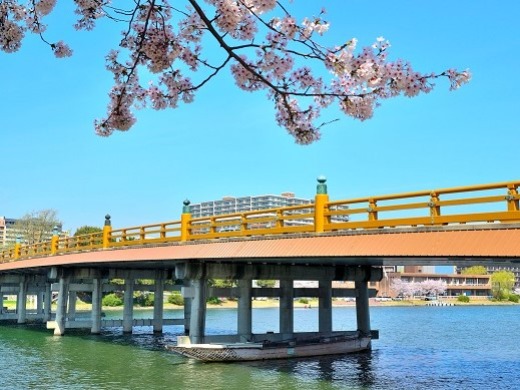
Seta no Karahashi is one of those places that looks modest until you learn how much history has passed over it. The bridge crosses the Seta River at the southern end of Lake Biwa, where the lake’s water begins its route towards Kyoto and, eventually, Osaka Bay. For centuries, controlling this crossing meant controlling a vital approach to Kyoto, so armies, travelers and political ambitions repeatedly converged here.
The bridge appears in old chronicles and is traditionally counted among Japan’s three famous bridges. It is also associated with Seta no Sekisho, the sunset view included in the Eight Views of Omi. The present structure dates from 1979, so do not expect an untouched medieval bridge, but its warm color, curved line and ornamental finials preserve the visual character of earlier versions.
You may also encounter the saying “Haste makes waste” in connection with Seta. The longer Japanese expression suggests that even when traveling to Kyoto, a hurried shortcut can be less reliable than taking the solid bridge at Seta. The wording is more geographically specific than the English proverb, but the lesson is familiar: rushing tends to invent extra work.
This is best treated as a short stop rather than a half-day attraction. Walk across, look along the river and combine it with nearby Takebe Taisha, the southern stretch of Nagisa Park or lunch around Ishiyama. Early morning and late afternoon bring softer light and less traffic.
Best for: History, riverside photographs, short free stops and travelers exploring southern Otsu.
Seta no Karahashi Practical Information
- Location: Between Karahashi-cho and Seta 1-chome, Otsu, Shiga
- Admission: Free
- Time needed: 20–40 minutes
- By train: About 5 minutes on foot from Karahashimae Station on the Keihan Ishiyama-Sakamoto Line
- By car: Roughly 5 minutes from either Seta-nishi or Seta-higashi Interchange on the Meishin Expressway
- Parking: There is no dedicated bridge parking; use a legitimate nearby car park
- Official information: Seta no Karahashi on the Otsu tourism website
8. Lake Biwa Museum: The Best Shiga Attraction for Curious Kids
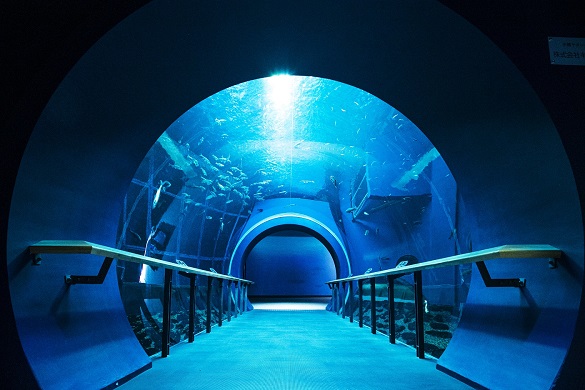
Image provided by Lake Biwa Museum
If Lake Biwa is the center of Shiga, the Lake Biwa Museum is where the prefecture explains what that actually means. Its theme is the relationship between lakes and people, but the museum avoids turning that into several floors of dry labels. Fossils, reconstructions, freshwater aquariums, hands-on displays and social history all work together to show how a four-million-year-old lake shaped the wildlife and communities around it.
The freshwater aquarium is one of the biggest draws. It focuses on Lake Biwa and other freshwater environments rather than borrowing the usual line-up of tropical marine celebrities. Baikal seals link the story to another ancient lake, while native fish and underwater habitats make the local ecosystem easier to understand. It is genuinely interesting for adults, not merely somewhere to shelter while children press every available button.
Families should look for the Discovery Room, a hands-on area where children and adults can investigate objects and natural materials together. Entry is managed in timed sessions, with same-day tickets distributed near the room, and capacity is limited. Go there early if it is a priority. The museum also has outdoor areas where you can look directly at Lake Biwa and surrounding plant life.
The source article described advance reservations as compulsory, but this is no longer the general rule. Standard and online tickets are available, while particular spaces or busy events may use their own controls. The permanent exhibition ticket is valid for the day, so you can leave and re-enter.
Best for: Families, science-minded travelers, rainy days and anyone who wants to understand Shiga rather than simply photograph it.
Lake Biwa Museum Practical Information
- Address: 1091 Oroshimo-cho, Kusatsu, Shiga 525-0001
- Hours: 9:30 AM–5:00 PM; last admission at 4:00 PM
- Closed: Mondays, except when Monday is a public holiday; additional temporary closure days occur
- Permanent exhibition admission: Adults ¥840; university students ¥470; high-school students and younger enter free
- Special exhibitions: Charged separately; prices vary
- Time needed: 2–3 hours, or longer with younger children
- By public transport: From the west exit of JR Kusatsu Station, take the Ohmi Railway Bus to the Lake Biwa Museum stop; the ride is about 25 minutes
- By taxi: Roughly 20 minutes from Kusatsu, Moriyama or Katata Station, depending on traffic
- Parking: Parking is charged on entry but is free for museum visitors after validation; follow the current on-site procedure
- Family tip: The Discovery Room closes for lunch and uses limited same-day entry tickets
- Official website: Shiga Prefectural Lake Biwa Museum
9. Blume no Oka: Animals, Flowers and Hands-On Family Activities
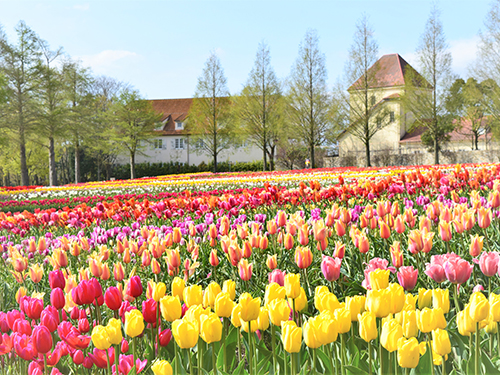
Blume no Oka is a dairy-farm-themed park in rural Hino, with flower fields, animals, play areas and a townscape loosely inspired by Germany. If that description sounds like several different day trips pushed together, that is essentially the idea. It is a place for families to spend a full day moving between activities rather than touring one headline attraction.
The flower displays change with the season, while the animal areas and dog run make the park popular with local families. Depending on the date, workshops may include food making, crafts or harvest activities. Some experiences cost extra and fill up early, so check the day’s program before arriving. It is frustrating to promise a child sausage making only to discover that the final session began 20 minutes ago.
There are also outdoor play facilities and seasonal water areas. In 2026, selected summer dates have extended evening hours, but normal opening times vary through the year. Treat the live calendar as the authority rather than copying a fixed schedule into your travel plan.
Blume no Oka is dog-friendly under specific conditions. Only dogs are admitted as pets, and the park requires proof of rabies and combination-vaccine inoculation. A dog admission charge applies. That makes the park a useful option for travelers with a pet, but only if the paperwork is already in order.
Public transport is possible, though not especially elegant. If you are traveling with young children, a car will save considerable time and energy.
Best for: Families with younger children, animal lovers, seasonal flowers and travelers with a dog.
Blume no Oka Practical Information
- Address: 843 Nishioji, Hino, Gamo District, Shiga 529-1628
- Standard admission: Adults and children aged 13 or older ¥1,500; children aged 4 through elementary school ¥800; children aged 3 and younger free; dogs ¥500
- Hours and closing days: Seasonal and sometimes extended for events; confirm the current calendar
- Time needed: Half to full day
- By public transport: Buses run from JR Omihachiman Station and Ohmi Railway Hino Station to the Haba-cho area, followed by a walk; check connections carefully because frequency is limited
- By car: Around 20 minutes from Yokaichi Interchange or Gamo Smart Interchange, and roughly 25 minutes from Koka-Tsuchiyama Interchange
- Parking: Free
- Dog requirements: Bring current proof of rabies and combination vaccination and read the park rules before traveling
- Official website: Shiga Agricultural Park Blume no Oka
10. Hachimanbori Canal: The Prettiest Historic Walk in Omihachiman
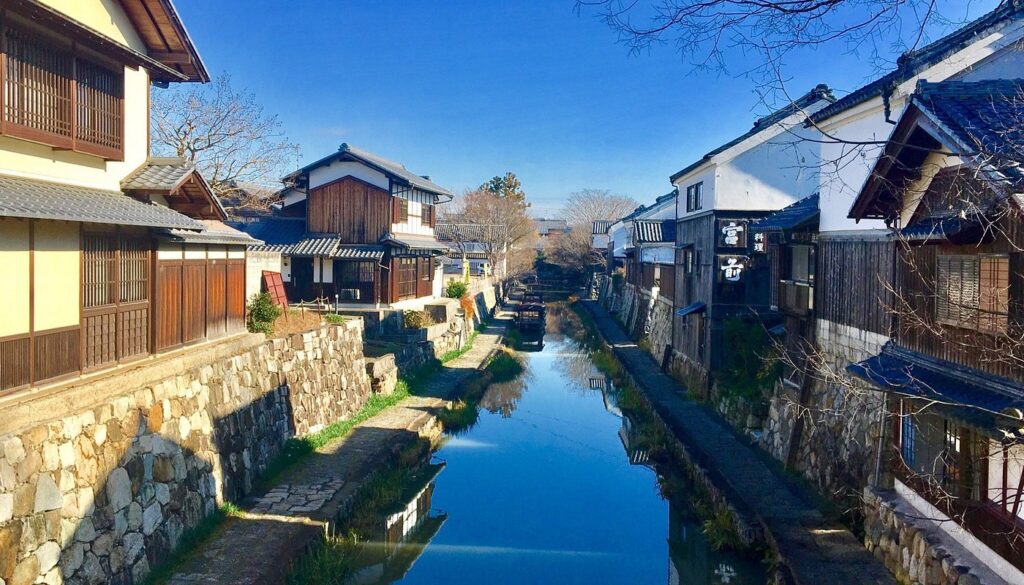
Photo courtesy of Biwako Visitors Bureau
Hachimanbori is the sort of place that makes a detour feel immediately justified. A narrow canal curves past stone banks, white-walled storehouses and old wooden buildings, with willows leaning over the water. It looks carefully cinematic because it is: the district has appeared in many Japanese historical dramas. Yet it is not a film set. The canal was once an essential piece of commercial infrastructure.
Built with the castle town below Mount Hachiman in the late 16th century, Hachimanbori linked the town to Lake Biwa’s transport network. That connection helped Omihachiman prosper and contributed to the rise of the influential Omi merchants. By the 20th century, road transport had made the canal less useful, and it deteriorated badly. Local preservation work saved it from being filled in and restored the landscape visitors see today.
Walking along the canal is free and atmospheric, particularly early in the morning before day-trip groups arrive. The stone edges and old buildings offer the classic view, but continue into the neighboring streets for merchant houses, cafés and small shops. A boat ride gives you the low water-level perspective and a break from walking. Several operators run cruises with different routes and schedules, so check where your chosen boat departs rather than assuming every sign points to the same pier.
Hachimanbori combines naturally with the ropeway to Mount Hachiman, Himure Hachimangu Shrine and the old merchant quarter. Together, they fill a relaxed half or full day.
Best for: Historic streets, photography, couples, boat rides and a gentle day trip from Kyoto or Osaka.
Hachimanbori Practical Information
- Location: Around Miyauchi-cho, Omihachiman, Shiga
- Admission: Free to walk; boat cruises and nearby attractions cost extra
- Hours: The canal is an open public area; shops, museums and cruises set their own hours
- Time needed: 1 hour for the canal alone; 3–5 hours for the wider historic district
- By public transport: From JR Omihachiman Station, take a local bus for about 7 minutes to Osugicho, then walk around 5 minutes
- By car: Roughly 30 minutes from Ryuo Interchange on the Meishin Expressway
- Parking: Municipal tourist parking is available for a fee
- Booking tip: Reserve a boat ride in advance during cherry-blossom season, autumn weekends and public holidays
- Official information: Hachimanbori on the official Shiga tourism website
11. MIHO MUSEUM: Come for the Art, Remember the Architecture
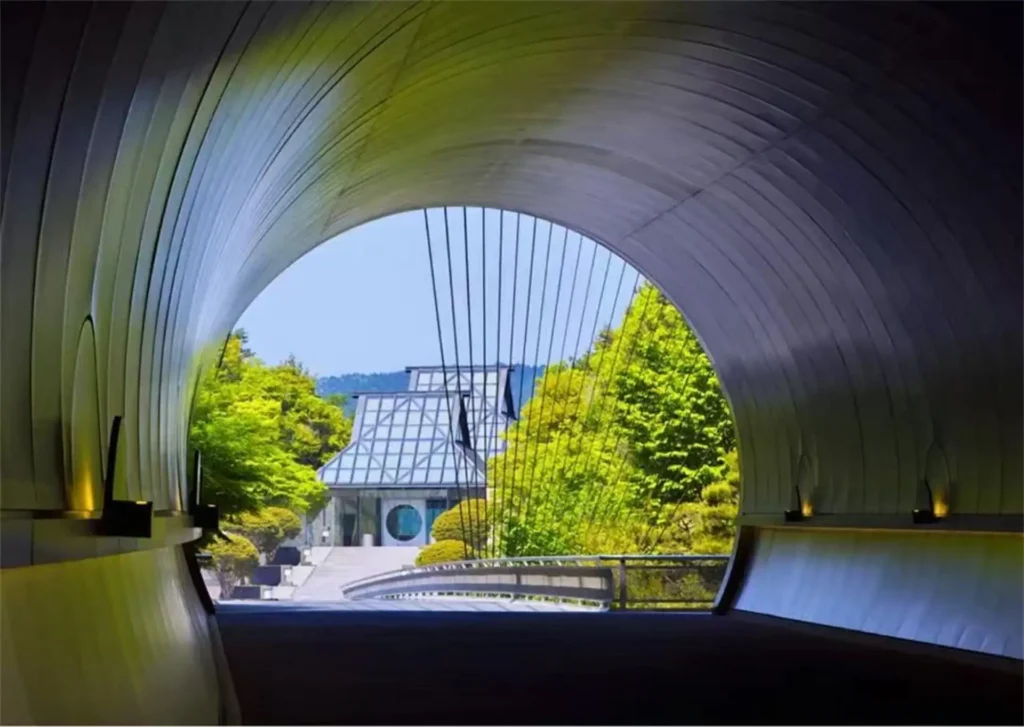
The approach to MIHO MUSEUM is part of the exhibition. From the reception building, a path curves through a silvery tunnel and across a suspension bridge before the museum appears against the forested hills. Designed by I. M. Pei, the architect behind the Louvre Pyramid, the building is largely embedded in the landscape. The transition from tunnel to bridge to geometric glass roof is so well staged that even visitors who insist they are “not really museum people” tend to go quiet for a moment.
Inside, the collection moves across ancient cultures, including works from Japan, Egypt, Greece, Rome and several parts of Asia. The permanent collection and special exhibitions share the ticket, but the exact objects on display change. MIHO is not a museum where you should arrive chasing one guaranteed artifact. The architecture, light and relationship with the surrounding mountains are the constants.
The remote setting creates both its magic and its main practical problem. The bus from Ishiyama Station takes about 50 minutes, and the museum closes for long periods between its spring, summer and autumn exhibition seasons. Mondays are usually closed during open seasons, with the following weekday substituted when Monday is a public holiday. Check the annual calendar before building a day around it.
The restaurant and café are worth allowing time for, particularly because alternative lunch options are not close at hand. Families will find baby-changing areas, nursing rooms and loan wheelchairs or strollers. A small electric vehicle normally connects the reception and museum buildings for visitors who need it, though service can pause when conditions are crowded.
Best for: Architecture lovers, ancient art, slow travel and anyone who wants a museum day that feels like an excursion.
MIHO MUSEUM Practical Information
- Address: 300 Tashiro Momotani, Shigaraki, Koka, Shiga 529-1814
- Hours: 10:00 AM–5:00 PM; last entry at 4:00 PM
- Closed: Mondays during open exhibition seasons, or the following weekday when Monday is a public holiday; long exhibition-change closures also apply
- Admission: Adults ¥1,300; high-school and university students ¥1,000; elementary and junior-high students free
- Time needed: 2–3 hours at the museum, plus transport; allow half a day from Otsu or Kyoto
- By public transport: From JR Ishiyama Station, take the Teisan bus bound for MIHO MUSEUM; journey time is about 50 minutes
- By car: Around 15 minutes from Shigaraki Interchange or 20 minutes from Kusatsu-Tanagami Interchange on the Shin-Meishin Expressway
- Parking: Free
- Photography: Photography is not permitted in the exhibition rooms; tripods and selfie sticks are not permitted on the grounds
- Official website: MIHO MUSEUM
12. Sagawa Art Museum: Contemporary Design on a Water Garden
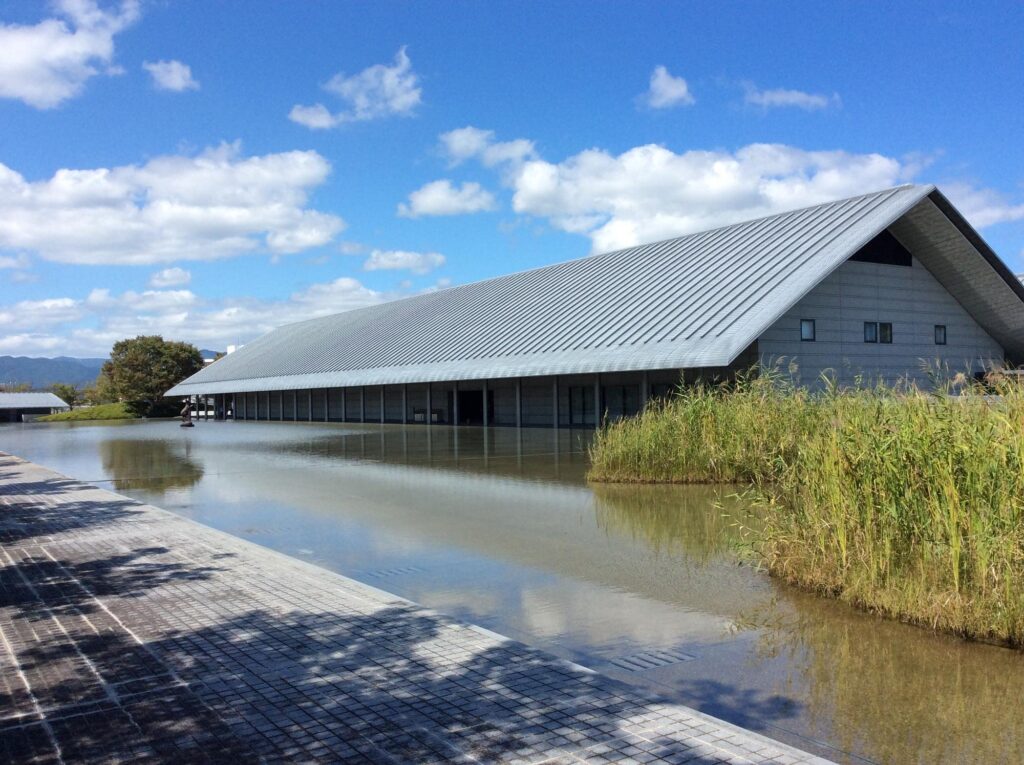
Sagawa Art Museum appears to float. Long, low buildings sit within a broad water garden, their roofs and concrete lines reflected in the still surface. Before you have seen a painting or sculpture, the architecture has already slowed the pace. It is one of Shiga’s best choices for travelers who enjoy the museum building as much as the collection inside it.
The core collection focuses on three major Japanese artists: painter Ikuo Hirayama, sculptor Churyo Sato and ceramic artist Raku Kichizaemon XV. The Raku Kichizaemon wing is particularly immersive, using darkness, water and carefully controlled light to shape the experience. Special exhibitions range beyond the permanent collection, and may cover Western art, illustration, animation or interactive work.
Because the museum changes its exhibition program, admission is not a single permanent price. Some high-demand shows also use advance web reservations. Check the current exhibition page before traveling and book when the museum labels an exhibition reservation-only. Turning up to admire the water garden from outside is still aesthetically pleasing, but it is not an ideal use of a cross-lake bus ride.
Sagawa is calmer and more design-focused than the Lake Biwa Museum. Families can visit, and children of junior-high-school age and younger enter free, but the hushed galleries and reflective mood make it a better match for older children who already enjoy art.
Best for: Japanese art, contemporary architecture, quiet afternoons and design-focused travelers.
Sagawa Art Museum Practical Information
- Address: 2891 Kitagawa, Mizuho-cho, Moriyama, Shiga 524-0102
- Hours: 9:30 AM–5:00 PM; last entry at 4:30 PM
- Closed: Mondays, or the following day when Monday is a public holiday; also closed during exhibition changes and around New Year
- Admission: Varies with the current exhibition; junior-high-school students and younger enter free
- Time needed: 90 minutes to 2.5 hours
- By public transport: From JR Katata Station, take the Kojaku bus to the Sagawa Art Museum stop; a taxi takes around 10 minutes
- By car: Around 15 minutes from Mano Interchange or roughly 30 minutes from Seta-nishi or Ritto Interchange
- Parking: Free for museum visitors
- Booking tip: Check whether the current exhibition requires advance web reservations
- Official website: Sagawa Art Museum
13. Kurokabe Square: Glass Workshops and Retro Streets in Nagahama
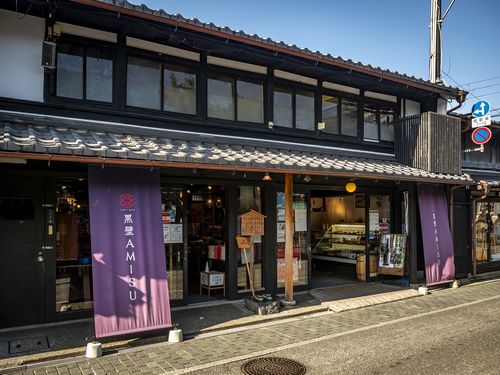
Kurokabe Square began with an old black-walled bank and grew into Nagahama’s best-known shopping and craft district. The surrounding streets contain glass shops, workshops, cafés, restaurants and galleries inside buildings dating from the late Edo period through the early Showa era. The result is polished enough to feel like a destination but still connected to the ordinary streets of the town.
Start at the Kurokabe Glass Museum, housed in the former bank building that gave the area its name. Contemporary glassware fills the elegant interior, and even travelers with no intention of buying tend to spend longer browsing than expected. From there, explore the surrounding shops for locally designed glass, stained glass, music boxes, ceramics and Shiga food products.
The hands-on workshops are the strongest reason to plan rather than simply wander through. Depending on the studio and date, options may include glassblowing, cut glass, sandblasting, stained glass or decorating a music box. Popular sessions can sell out during weekends and holiday periods, so reserve ahead if making something is central to your visit.
Come hungry. Kurokabe sits within Nagahama’s old town, where you can try local dishes such as noppei udon, a thick noodle soup with a silky, starchy broth, or stop for sweets and coffee. Individual shops keep different closing days and seasonal hours, which makes a single timetable for the whole district misleading. In practice, late morning through mid-afternoon offers the widest choice.
Best for: Souvenir shopping, crafts, couples, creative older children and relaxed town walks.
Kurokabe Square Practical Information
- Main address: 12-38 Motohama-cho, Nagahama, Shiga 526-0059
- Admission: The district is free to enter; museums and workshops may charge
- Typical shop hours: Many core facilities operate from around 10:00 AM to late afternoon, with seasonal variation
- Closed: Varies by individual shop and facility
- Time needed: 2–4 hours
- By train: About 5 minutes on foot from JR Nagahama Station
- By car: Roughly 10 minutes from Nagahama Interchange on the Hokuriku Expressway
- Parking: Use one of the paid public car parks around central Nagahama
- Booking tip: Reserve glass experiences during weekends, school holidays and the autumn travel season
- Official website: Kurokabe Square
14. Taga Taisha: Longevity Blessings and Itokiri Mochi
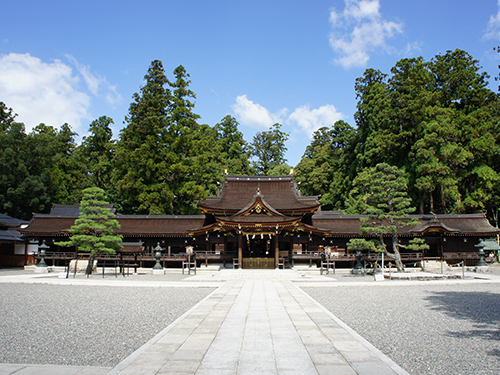
Taga Taisha is affectionately known as Otaga-san, a sign of how deeply it sits within local life. The shrine is traditionally associated with longevity, good relationships and protection, and pilgrims have traveled here for centuries. Compared with the castles and museums elsewhere in this guide, it is a softer kind of destination: a broad approach, an elegant bridge, shrine buildings backed by trees and a small town that developed around worshippers.
One of its most distinctive symbols is the Otaga ladle. According to shrine tradition, a ladle was connected with the recovery of Empress Gensho, and the object became associated with health and long life. You will see ladle-shaped ema and related charms around the grounds. The source text described the shrine as a “power spot,” but its appeal goes beyond collecting blessings. It is an attractive, historically rooted place to slow down between busier sightseeing days.
Before leaving, try itokiri mochi, the local sweet most strongly associated with Taga. The rice cake is decorated with colored lines and traditionally cut using thread rather than a knife. Shops along the approach sell it, and fresh pieces make a much more convincing souvenir than something chosen in a panic at the station kiosk.
General shrine entry is free. The fee listed in the source refers to formal prayer services, not a compulsory admission charge. If you want a prayer, goshuin or specific charm, visit during staffed hours and check the current reception schedule.
Best for: Shrine visits, traditional sweets, quieter towns and travelers interested in local religious customs.
Taga Taisha Practical Information
- Address: 604 Taga, Taga, Inukami District, Shiga 522-0341
- Admission: Free; formal prayers and special services cost extra
- Prayer reception: Commonly 8:30 AM–4:30 PM; confirm before traveling for a specific service
- Time needed: 45–90 minutes, longer with lunch or shopping on the approach
- By train: About 10 minutes on foot from Taga Taisha-mae Station on the Ohmi Railway
- By car: Around 10 minutes from Hikone Interchange or 15 minutes from Koto Sanzan Smart Interchange
- Parking: Available; charges or special controls may apply during the New Year period and major events
- Official website: Taga Taisha
15. Yumekyobashi Castle Road: Lunch and Shopping Beside Hikone Castle
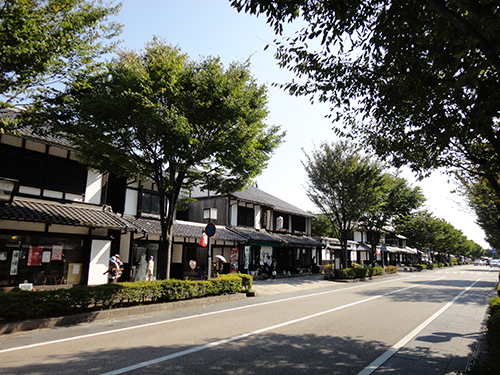
Cross the moat from Hikone Castle and the scenery shifts into a neat street of white walls, black latticework and tiled roofs. Yumekyobashi Castle Road is modern rather than an untouched Edo-period street, but its coordinated “old-new town” design gives the castle district a pleasing sense of continuity. It is an easy place to eat, browse and decompress after climbing the castle’s very steep staircases.
The road runs for roughly 350 meters and holds restaurants, sweet shops, craft stores and small experiences. Omi beef is the obvious local splurge, whether served as sukiyaki, steak, sushi or a less financially dramatic croquette. Matcha sweets and soft serve cover the other essential food group. Because the businesses are independent, opening hours and rest days vary.
Look out for maneki-neko, or beckoning-cat, imagery. Hikone’s connection comes through Ii Naotaka, the second lord of the Hikone domain, and the story of the cat that beckoned him towards Gotokuji Temple in Tokyo. The district leans into the association without overwhelming the streetscape.
Yumekyobashi is not a destination to prioritize over Hikone Castle, but it completes the visit. Plan lunch here, buy souvenirs after the castle rather than carrying them up 140 uneven stone steps, and continue towards the Yonbancho Square area if you still have energy.
Best for: Omi beef, souvenir shopping, an easy lunch stop and combining with Hikone Castle.
Yumekyobashi Castle Road Practical Information
- Location: Honmachi, Hikone, Shiga 522-0064
- Admission: Free; individual shops and experiences charge separately
- Hours: Vary by business; late morning to mid-afternoon is the safest visiting window
- Time needed: 1–2 hours
- By train: Around 20 minutes on foot from JR Hikone Station
- By car: Roughly 8–10 minutes from Hikone Interchange
- Parking: Use nearby paid tourist parking; Kyobashiguchi Parking is convenient for the shopping street and castle
- Official website: Yumekyobashi Castle Road
16. Hikone Castle: Shiga’s Essential Historic Sight
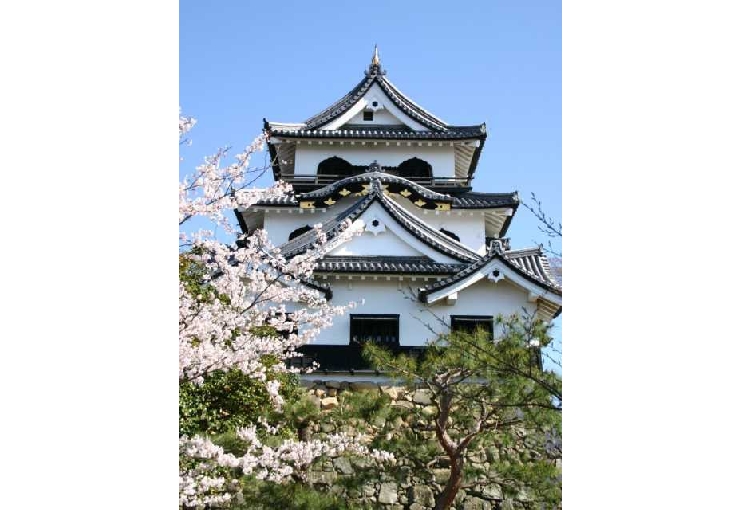
Hikone Castle is compact, elegant and real. Its keep is not a concrete reconstruction containing an elevator and gift shop, but one of Japan’s surviving original castle keeps and a designated National Treasure. Construction began in 1604 and the wider castle town was completed in 1622 for the Ii family, who governed Hikone throughout the Edo period.
The keep receives the attention, but the preservation of the wider site is what makes Hikone exceptional. Stone walls, moats, gates and turrets still reveal the defensive structure, while Genkyu-en Garden provides the composed, peaceful counterpoint below. From the garden, the castle rises beyond the pond in one of Shiga’s classic views.
Be prepared for the climb. Roughly 140 irregular stone steps lead towards the inner citadel, gaining about 50 meters in elevation. Inside the keep, the wooden staircases reach angles of around 60 degrees. They are closer to ladders than domestic stairs, and visitors remove their shoes before entering. Take your time, keep both hands free and avoid scheduling the castle on the day you decide to debut unsuitable new footwear.
The physical access limitations are real. The historic site does not have lifts or ramps up to the keep, and wheelchair access is limited mainly to the moat area, museum, pleasure boat and parts of Genkyu-en with stone or gravel surfaces. Free walking sticks are available at ticket booths for the outdoor climb, although standard sticks and umbrellas cannot be used on the steep interior stairs unless folded and carried.
Allow at least two hours. Add the museum, garden, boat or castle-road lunch and Hikone becomes an easy full-day trip.
Best for: First-time visitors, Japanese history, original architecture and one of the strongest day trips from Kyoto.
Hikone Castle Practical Information
- Address: 1-1 Konkicho, Hikone, Shiga 522-0061
- Hours: 8:30 AM–5:00 PM; general last admission is 4:30 PM
- Closed: The castle is open year-round, though individual facilities have separate closures
- Castle and Genkyu-en admission: Adults ¥1,000; elementary and junior-high students ¥300
- Combined castle, garden and museum ticket: Adults ¥1,500; elementary and junior-high students ¥550
- Time needed: 2–3 hours for the castle and garden; most of a day with the museum and town
- By train: Around 15 minutes on foot from JR Hikone Station; the Front Gate ticket office is the most convenient entrance from the station
- By car: Around 10–15 minutes from Hikone Interchange
- Parking: Several tourist car parks operate near the castle; standard cars are typically ¥1,000 per day at the main castle lots
- Accessibility: The main keep is not wheelchair accessible and requires steep stone and wooden stairs
- Official website: Hikone Castle
17. Hikone Castle Museum: The Ii Family Story Behind the Castle
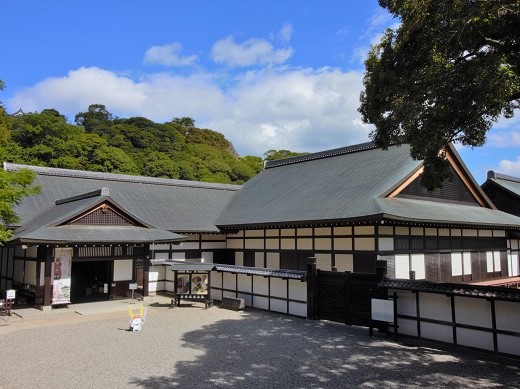
If Hikone Castle shows you the defensive face of the Ii family, the museum shows you how its lords lived, governed and represented themselves. The building reconstructs the Omote Goten, the former palace and administrative center of the Hikone domain, on its original site beside the castle entrance.
The collection includes armour, swords, Noh masks and costumes, tea utensils, calligraphy, paintings, furnishings and historical documents passed down through the Ii family. Displays rotate, so the museum feels less like a fixed checklist and more like a window into a very large archive. The famous Hikone folding screen and other fragile works are not necessarily on view at all times; check the current exhibition if a particular object matters to you.
The reconstructed residential section is just as useful as the glass cases. Rooms, corridors, a tea space and garden clarify how the palace functioned, while the central Noh stage preserves a living link with the performing arts of the domain. Noh and kyogen performances still take place here on selected dates.
This museum is also a practical addition for visitors who cannot access the castle keep. It is on flatter ground and offers a much richer account of Hikone than a distant view of the tower alone. For everyone else, visit the museum first if you want context, or save it for after the castle when the weather is hot or wet.
Best for: Samurai history, decorative arts, rainy weather and visitors who want depth beyond the castle exterior.
Hikone Castle Museum Practical Information
- Address: 1-1 Konkicho, Hikone, Shiga 522-0061
- Hours: 8:30 AM–5:00 PM; last entry at 4:30 PM
- Admission: Adults ¥700; elementary and junior-high students ¥350
- Combined castle, garden and museum ticket: Adults ¥1,500; elementary and junior-high students ¥550
- Closed: Selected dates for exhibition changes and at year-end; consult the annual calendar
- Time needed: 60–90 minutes
- By train: Around 15 minutes on foot from JR Hikone Station
- Parking: Use the paid tourist car parks serving Hikone Castle
- Official website: Hikone Castle Museum
18. Samegai: Clear Water and Tiny Summer Flowers
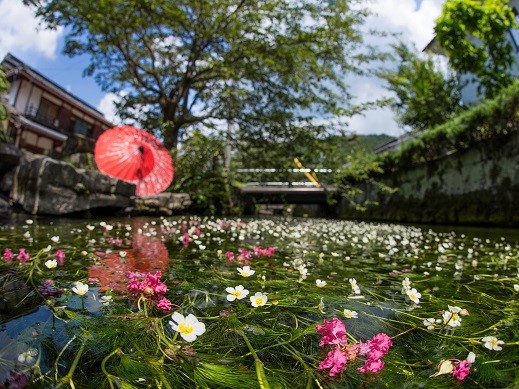
Photo courtesy of Maibara City
Samegai was the 61st post town on the Nakasendo road, but the first thing most modern visitors notice is the water. The Jizo River runs directly through the settlement, fed by springs that keep it clear and cool throughout the year. Old houses, stone edges and small bridges follow the stream, giving the town a gentle, lived-in beauty rather than the more formal atmosphere of a preserved museum district.
The best-known seasonal sight is baikamo, or water crowfoot. This freshwater plant grows in cool, clean running water and produces tiny white flowers that resemble plum blossom. The plants flower from early to late summer, with the usual peak from late July through late August. Conditions vary with water level and weather, so nature does not guarantee a perfect bloom because a travel calendar requested one.
Samegai also retains traces of its post-town role, including a reconstructed toiyaba, the office that organized horses and porters for official travelers. Follow the water, notice the architecture and keep the pace slow. This is a place to experience in detail rather than a destination with one dramatic viewpoint.
The river passes through a residential community. The local tourism authority specifically asks visitors not to drive into the post-town streets and to use public transport whenever possible. Do not enter the water, touch the plants or block narrow paths while taking photographs.
Best for: Summer flowers, clear streams, slow travel, history and quiet photography.
Samegai Practical Information
- Location: Samegai, Maibara, Shiga 521-0035
- Admission: Free to walk through the post town
- Best season for baikamo: Usually late July to late August, with some flowers possible earlier or later
- Time needed: 60–90 minutes
- By train: Around 10 minutes on foot from JR Samegai Station
- By car: About 5 minutes from Maibara Interchange, but visitors are asked not to drive into the residential post-town area
- Parking: Use parking near Samegai Station and walk
- Official information: Nakasendo Samegai-juku
19. Metasequoia Avenue: Shiga’s Four-Season Tree Tunnel
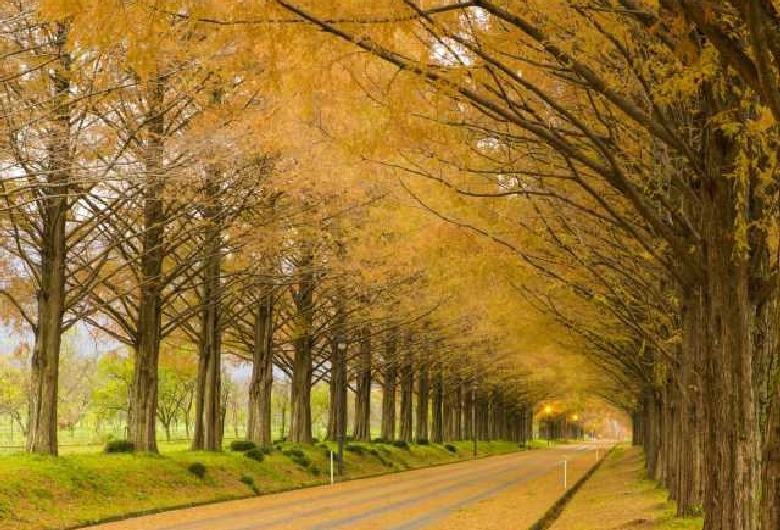
Photo courtesy of Biwako Takashima Tourism Association
Around 500 metasequoia trees line the straight road between Makino Pick Land and Makino Highland, creating a 2.4-kilometer corridor with the Nosaka Mountains in the distance. The scale is what makes it work. A short row of trees can be pretty; this one pulls the eye towards the horizon until the road seems to disappear.
Each season changes the atmosphere. Spring brings delicate new leaves, summer deepens the avenue into green, autumn turns it copper and rust, and winter strips the branches into a graphic pattern that becomes especially striking with snow. Autumn is the most famous period and consequently the least peaceful. If you visit then, go early on a weekday or accept that the road will contain cars, people and several attempts at exactly the same photograph.
This is an active public road and part of the local community—not a pedestrian photo set. Do not stop a car on the road, stand in a traffic lane or step backwards for a picture without checking what is behind you. The official guidance explicitly warns against roadside stopping and asks visitors to watch for passing vehicles.
Use Makino Pick Land as your base. Its free car park, bus stop, café and facilities make the visit easier, and you can combine the trees with lunch or seasonal fruit picking. Walking a section is more enjoyable than trying to capture the whole 2.4 kilometers.
Best for: Seasonal scenery, photography, road trips and combining with Makino Pick Land.
Metasequoia Avenue Practical Information
- Location: Hiruguchi to Makino, Makino-cho, Takashima, Shiga 520-1836
- Admission: Free
- Hours: Open public road; visit in daylight
- Time needed: 45–90 minutes, longer with Makino Pick Land
- By public transport: From JR Makino Station, take the Makino Kogen Line bus for about 6 minutes to Makino Pick Land
- By car: Set Makino Pick Land as the destination rather than stopping along the avenue
- Parking: Free parking at Makino Pick Land
- Safety: Never park or pose in the road; watch continuously for moving traffic
- Official information: Metasequoia Avenue on the Takashima tourism website
20. Shirahige Shrine: Lake Biwa’s Floating Torii
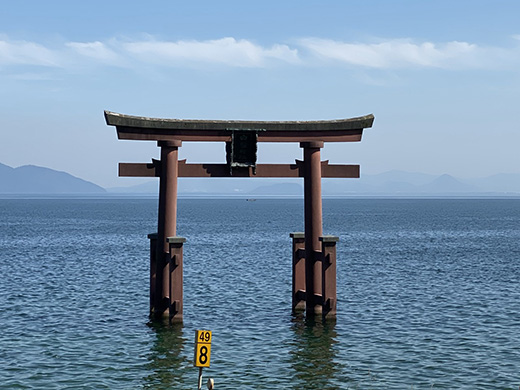
Shirahige Shrine sits between a wooded hillside and Lake Biwa, with its vermilion torii standing offshore in the water. The view has earned it the nickname “Itsukushima of Omi,” and at sunrise the gate can appear suspended between lake and sky. It is one of Shiga’s most recognizable images.
The shrine is far more than its photograph. Traditionally regarded as Omi’s oldest major shrine, Shirahige is dedicated to Sarutahiko-no-Mikoto, a deity associated with guidance. Worshippers seek blessings connected with longevity, safe travel, good fortune, relationships and the many transitions of ordinary life. The main sanctuary and smaller hillside shrines deserve attention even if the lake is what brought you here.
There is one rule you must take seriously: do not cross National Route 161 to approach the torii. The road separates the shrine from the lakeshore, has fast traffic and no safe pedestrian crossing at the gate. Dangerous crossings have caused serious accidents, and physical barriers and warning markings have been installed. Use the shrine’s viewing platform, Ai-ko Shirahige-dai, in front of the office. It was built to give visitors a safe view and photograph of the torii.
Public transport takes planning. The shrine is about three kilometers from Omi-Takashima Station. You can walk for around 40 minutes, rent a bicycle when available, take a taxi or use the reservation-based shared taxi service. Confirm return transport before setting off, especially late in the day.
Best for: Sunrise scenery, lakeside shrines, photography and travelers exploring Lake Biwa’s western shore.
Shirahige Shrine Practical Information
- Address: 215 Ukawa, Takashima, Shiga 520-1122
- Admission: Free
- Shrine office hours: Generally 9:00 AM–5:00 PM
- Time needed: 30–60 minutes
- By public transport: About 40 minutes on foot from JR Omi-Takashima Station; rental bicycles, taxis and a reservation-based shared taxi may also be available
- By car: Access is directly from National Route 161; traffic can be heavy
- Parking: Limited shrine parking is available, subject to event closures and congestion
- Critical safety rule: Do not cross the highway. Photograph the lake torii only from the shrine’s designated viewing platform.
- Official website: Shirahige Shrine
How to Group These Shiga Attractions Without Exhausting Yourself
Shiga looks compact on a map because Lake Biwa gives it a clear center. In practice, traveling around the lake takes time. These combinations keep the route realistic.
One Day in Otsu
Start at Omi Jingu or Mii-dera, continue to central Otsu for Nagisa Park, then see the Biwako Flower Fountain in the evening if it is operating. Hiyoshi Taisha can replace one of the temples, but trying to visit all three major religious sites and Biwako Valley in the same day will turn a pleasant trip into transport administration.
One Day in Hikone
Visit Hikone Castle when it opens, add Hikone Castle Museum and Genkyu-en Garden, then have lunch on Yumekyobashi Castle Road. If you move quickly, continue to Taga Taisha, but staying in Hikone for the afternoon gives you more time for the garden, moat and town.
One Day in Omihachiman and Moriyama
Spend the morning around Hachimanbori, the old merchant quarter and Mount Hachiman. In the afternoon, drive or take a carefully timed route towards Sagawa Art Museum. Without a car, it is usually more relaxed to give Hachimanbori most of the day.
One Day on the Western Shore
Choose two main stops from Biwako Valley, Shirahige Shrine and Metasequoia Avenue. Biwako Valley can easily take most of the day once the ropeway, lifts and activities are included. Shirahige and the Metasequoia Avenue combine more naturally by car, with Omi-Takashima or Makino as the public-transport base.
One Day in Northern Shiga
Combine Samegai in the morning with Kurokabe Square and central Nagahama in the afternoon. This works particularly well in late July or August when baikamo flowers are visible in Samegai. Both places are accessible by JR train, making this one of the easier car-free combinations.
Frequently Asked Questions About Visiting Shiga
Is Shiga worth visiting from Kyoto?
Yes. Otsu is just beyond Kyoto’s eastern mountains, and several Shiga destinations are easy day trips by JR train. Shiga is especially worthwhile if you want lake scenery, quieter historic towns or major heritage sites without central Kyoto’s crowd levels. For a first day trip, choose Hikone, Otsu or Omihachiman rather than trying to travel around the whole lake.
What is Shiga best known for?
Shiga is best known for Lake Biwa, Japan’s largest lake. It is also home to Hikone Castle, Omi beef, the merchant history of Omihachiman, important temples and shrines, and several strong art and science museums.
Can you visit Shiga without a car?
Yes, but choose your destinations carefully. Otsu, Hikone, Nagahama, Samegai and central Omihachiman are manageable by train and local bus. A car is more useful for Blume no Oka, MIHO MUSEUM, Shirahige Shrine and combinations along the northern or western shore. Always check the final bus connection as well as the train.
Which part of Shiga is best for families?
The Lake Biwa Museum is the strongest all-weather family attraction. Blume no Oka works well for a full outdoor day, while Biwako Valley suits families with older children who enjoy lifts and activities. Hikone Castle is memorable, but the steep interior stairs are difficult for toddlers and anyone with mobility limitations.
When is the best time to visit Shiga?
Spring and autumn bring comfortable temperatures and strong scenery. Summer is good for Samegai’s baikamo flowers, mountain escapes and lake activities, though lowland Shiga can be hot and humid. Winter is quieter and can create beautiful snow scenes around Makino and Hikone, but seasonal transport and attraction closures require more checking.
Where should you stay in Shiga?
Stay in Otsu for fast access from Kyoto and southern Lake Biwa, Hikone for the castle and eastern shore, or Nagahama for northern Shiga. Omihachiman is a good slower base for merchant-town atmosphere. If your itinerary focuses on Biwako Valley, Shirahige Shrine or Makino, staying on the western shore reduces backtracking.
Final Thoughts: Shiga Deserves More Than a View from the Train
Shiga rarely shouts for attention. Its best places unfold more gradually: the ring of Mii-dera’s bell, water threading through Samegai, the castle keep above Genkyu-en, or Lake Biwa expanding beneath the Biwako Valley ropeway.
That is exactly why the prefecture works so well as a break from a crowded Japan itinerary. Pick one area, leave some empty time between attractions and let the lake set the pace. Kyoto will still be there tomorrow.
- Sapporo rainy day with kids (2026): 7 Cool Indoor Things to Do
- What To Do In Arashiyama With Kids: A Realistic One-Day Family Itinerary
- 20 Best Things to Do in Shiga (2026): Lake Biwa, Castles, Shrines and More
- 15 Best Things to Do in Sapporo With Kids: Parks, Aquariums, Views, and Family Restaurants
- Where to Stay in Kobe For The First Time (2026): 6 Best Areas and 18 Hotel Picks