
Travel writing based on first-hand experience
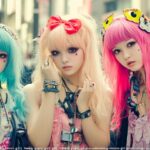
Black lace, powder-pink ribbons, impossibly chunky shoes, and enough frills to make a Victorian doll jealous. Welcome to jirai kei fashion, one of Japan’s most fascinating alternative fashion trends.
At first glance, it’s all sweetness and innocence. Look a little closer, though, and you’ll notice something darker lurking beneath those oversized bows. That’s exactly the point.
Born from Tokyo’s nightlife culture and popularized through social media, jirai kei has developed into a recognizable Japanese fashion aesthetic, blending feminine silhouettes with gothic details and an unmistakable dark-cute influence.
But what does jirai kei actually mean? How is it different from Lolita fashion? And, most importantly, where can you buy jirai kei clothes in Japan?
We’re breaking down the meaning, outfits, makeup, brands, and best shops to visit in Tokyo, plus how to get your hands on Japanese jirai kei fashion if you live overseas.
Love Jirai Kei? Discover More Japanese Fashion & Shopping Guides!
Jirai Kei is just one corner of Japan’s wonderfully eccentric fashion scene. From dreamy Lolita dresses to edgy Harajuku streetwear and vintage treasures, there’s a whole wardrobe of Japanese styles waiting to be explored.
- Japanese Lolita Fashion: Styles, Brands & Where to Shop – Discover Gothic Lolita, Sweet Lolita, beautiful dresses, and the best shops for authentic pieces.
- Japanese Fashion Styles: Your Guide to Tokyo’s Most Iconic Looks – From Gyaru to Mori Kei and alternative Harajuku fashion, explore the subcultures shaping Japanese street style.
- Where to Buy Clothes in Japan: Best Fashion Stores & Boutiques – Find Japanese clothing brands, affordable fashion chains, independent boutiques, and secondhand gems.
- Harajuku Shopping Guide: Fashion Boutiques & Quirky Shops – Explore Tokyo’s famous fashion district, from Takeshita Street to stylish boutiques and hidden vintage stores.
- Vintage Clothes in Tokyo: Best Thrift & Secondhand Shops – Hunt down unique fashion pieces in Shimokitazawa, Koenji, Harajuku, and beyond.
- What to Buy at GU Japan: Affordable Japanese Fashion Finds – Stylish everyday clothing, trendy pieces, and budget-friendly accessories worth adding to your suitcase.
Tokyo shopping tip: If alternative Japanese fashion is your thing, start in Harajuku for independent boutiques and head to Shibuya for trend-driven fashion. Leave some room in your suitcase. You’ll need it.
Table of Contents
What Is Jirai Kei Fashion?

Jirai kei (地雷系) is a Japanese fashion aesthetic characterized by a mixture of dark and feminine elements: think black-and-pink dresses, lace-trimmed blouses, oversized ribbons, platform shoes, and doll-like makeup.
The style is sometimes described as sickly cute or dark kawaii, reflecting the contrast between its delicate appearance and slightly melancholic undertones.
Unlike Japan’s famously colorful Harajuku fashions, jirai kei favors a relatively restrained color palette. Black is everywhere, frequently softened with dusty pink, white lace, or the occasional burgundy accent.
You’ll recognize the style by its signature combination of:
- Black, white, and muted pink clothing
- Lace blouses with oversized collars and ribbon details
- High-waisted mini skirts and frilly dresses
- Chunky Mary Jane shoes or platform loafers
- Long hair ribbons, twin tails, and straight bangs
- Soft, doll-like makeup with pink or reddish tones beneath the eyes
The overall effect is deliberately contradictory: innocent but edgy, romantic yet a little unsettling. And while the clothes are undeniably cute, there’s an interesting cultural story behind the name.
What Does Jirai Kei Mean in Japanese?
The Japanese word jirai (地雷) literally means landmine, while kei (系) means type, category, or style. Put them together, and you get landmine style.
Not exactly the name you’d expect for an outfit covered in satin bows.
Originally, jirai was used as derogatory slang for someone perceived as emotionally unpredictable or difficult in relationships. The implication was that interacting with the person could be like stepping on a landmine.
Over time, the term became associated with a particular appearance and eventually developed into a recognizable fashion category. Today, many fashion enthusiasts use jirai kei simply to describe an aesthetic, without necessarily identifying with the original stereotype.
Still, it’s worth remembering that the term has historically carried negative associations with mental health and behavior. Wearing jirai kei clothing says nothing about someone’s emotional stability or personality.
How Do You Pronounce Jirai Kei?
Jirai kei is pronounced roughly jee-rah-ee keh, with the sounds spoken fairly evenly rather than heavily stressing one syllable.
In Japanese, it’s written 地雷系 — Jirai Kei. This is also the most useful phrase to remember when shopping online. Searching for 地雷系 on Japanese websites generally produces more relevant results than typing the English spelling.
Where Did Jirai Kei Fashion Originate?
Jirai kei became particularly visible around 2019–2020, emerging from Japanese youth culture and gaining attention through social media. The style is closely associated with Kabukicho, Tokyo’s famous nightlife district in Shinjuku.
Kabukicho is better known for its neon-lit streets, host clubs, karaoke bars, and entertainment venues than for delicate pink dresses. Yet the contrast between this nightlife environment and overtly feminine clothing helped shape the aesthetic.
As the trend gained attention, fashion brands began producing clothing that reflected its distinctive look. Social media accelerated its popularity. Outfit photographs, makeup tutorials, and carefully coordinated coords—the Japanese fashion term for complete outfits—made the style relatively easy to recognize and recreate.
What began as an aesthetic associated with particular nightlife and online subcultures eventually expanded into mainstream Japanese youth fashion. Today, you can find jirai kei influences in everything from boutique collections and accessories to Sanrio merchandise and casual streetwear.
And you certainly don’t need to spend your evenings wandering around Kabukicho to wear it.
How to Dress Jirai Kei: Essential Clothes and Accessories
One of the appealing things about jirai kei fashion is that you don’t need an enormous wardrobe to achieve the look. A few carefully selected pieces can create a recognizable outfit, especially if you stick to the signature colors and silhouettes.
1. Black, White, and Dusty Pink: The Jirai Kei Color Palette
If there’s one thing jirai kei loves, it’s black and pink together. Not neon pink, though. We’re talking about muted, powdery shades—colors that look as though they’ve been borrowed from an antique porcelain doll.
Black provides contrast and adds a gothic edge, while white lace and pale pink soften the overall appearance. A typical outfit might combine a black blouse with a dusty-pink skirt, finished with black platform shoes and matching hair ribbons.
Burgundy, gray, and occasionally lavender also appear, especially in darker or more experimental interpretations of the style.
Style tip: If you’re building your first outfit, stick to black and dusty pink. These two colors alone make it much easier to create a coordinated look.
2. Lace Blouses, Ruffled Skirts, and Frilly Dresses
The blouse is one of the most recognizable elements of jirai kei fashion. Look for designs featuring oversized collars, delicate lace trim, puffed sleeves, and prominent ribbons tied at the neckline.
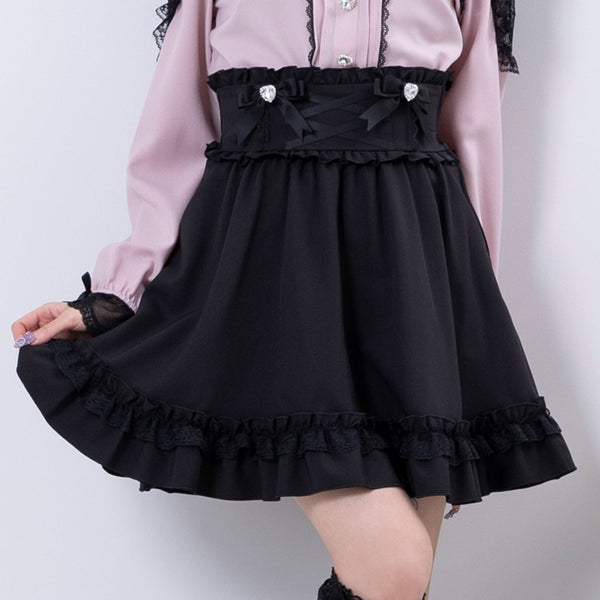
These are frequently paired with short, high-waisted skirts decorated with layered ruffles, bows, or lace-up details. Another popular option is a one-piece dress that incorporates several of these features into a complete outfit.
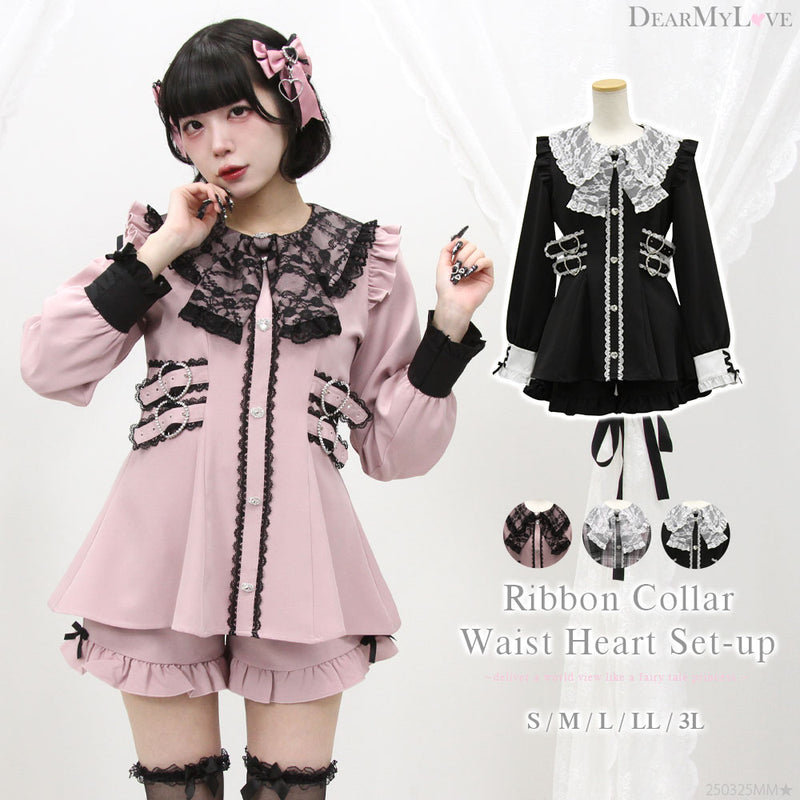
Jirai kei dresses often have fitted waists and flared skirts, creating a distinctly feminine silhouette without the dramatic petticoats associated with traditional Lolita fashion. For cooler weather, oversized cardigans, cropped jackets, and lace-trimmed knitwear are easy additions.
Best beginner purchase: A black-and-pink one-piece dress. It creates most of the look in a single purchase and eliminates the challenge of matching separate pieces.
3. Platform Mary Janes and Chunky Shoes
Forget delicate ballet flats. Jirai kei footwear usually comes with some serious height. Platform Mary Janes, chunky loafers, and thick-soled ankle boots are among the most popular choices.
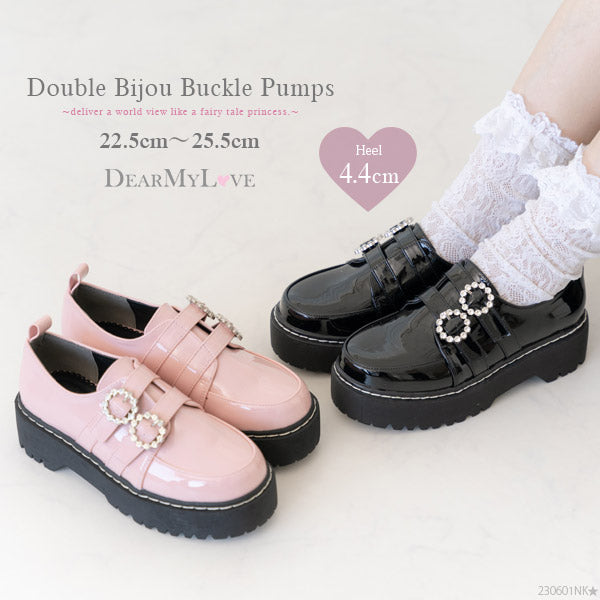
Black patent leather is particularly common, sometimes decorated with oversized buckles, bows, or heart-shaped details. The exaggerated soles help balance short, flared skirts and oversized upper-body details. Pair your shoes with lace-trimmed ankle socks, white loose socks, or dark tights.
Shopping tip: When trying on platforms in Japan, pay attention to the shoe’s weight and stability. Some look fabulous in photographs but are less enjoyable after several hours walking around Tokyo.
4. Oversized Hair Bows, Chokers, and Sanrio Accessories
Jirai kei isn’t particularly interested in subtle accessories. Large satin ribbons, lace hair clips, heart-shaped bags, and decorative chokers are all part of the aesthetic.
Twin-tail hairstyles are especially associated with the style, usually decorated with matching black or pink bows. You’ll also frequently encounter accessories featuring Japanese Sanrio characters.
Kuromi and My Melody are particularly popular because their designs fit so naturally into the dark-versus-sweet contrast. Kuromi, with her black jester-style hood and pink skull, practically looks ready-made for a jirai kei outfit.
If you’re experimenting with the fashion but don’t want to commit to an entire wardrobe, start with a pair of oversized ribbons and a small Kuromi accessory. They’re relatively inexpensive and work with clothes you may already own.
Jirai Kei vs. Lolita, Ryosangata, and Yami Kawaii
Japanese alternative fashion is wonderfully diverse, but the terminology can get confusing. Several styles share similar clothing details, and online shops sometimes mix the labels together. Here’s how to tell them apart.
Jirai Kei vs. Lolita Fashion
Jirai kei and Lolita fashion both make enthusiastic use of lace, ribbons, and elaborate dresses. The biggest difference is the silhouette.
Traditional Lolita fashion emphasizes structured, voluminous skirts, often supported by petticoats. It also draws heavily on historical European clothing, particularly Victorian and Rococo-inspired aesthetics.
Jirai kei usually has a more contemporary silhouette, with shorter skirts, less volume, and a stronger emphasis on black-and-pink combinations. It’s generally easier to mix jirai kei pieces with ordinary everyday clothing.
Jirai Kei vs. Ryosangata
Ryosangata (量産型) translates roughly as mass-produced type. Despite the slightly unflattering-sounding name, it refers to a recognizable Japanese girly fashion aesthetic.
The two styles overlap considerably, especially when it comes to bows, lace, and fitted dresses. However, ryosangata tends to favor a sweeter, more polished look, featuring pale pink, cream, beige, white, and occasionally tweed.
Jirai kei is usually darker, with stronger contrasts and more gothic influences. Both are closely associated with Japanese fandom and oshi-katsu, or activities related to supporting a favorite idol, character, or performer.
Many Japanese fashion brands sell clothing suitable for both aesthetics, so don’t be surprised if they appear together in the same store.
Jirai Kei vs. Yami Kawaii
Yami kawaii can be translated as dark cute or sickly cute. It’s another Japanese aesthetic combining adorable designs with unsettling themes.
While jirai kei frequently emphasizes lace dresses, structured collars, and romantic silhouettes, yami kawaii often incorporates more playful or provocative graphics. These can include medical imagery, bandage motifs, cartoon characters, and brightly colored illustrations.
The boundaries aren’t rigid, and fashion enthusiasts frequently combine elements of both styles.
Jirai Kei and Menhera: Are They the Same Thing?
Not quite. Menhera originated as Japanese internet slang associated with mental health difficulties and can carry derogatory implications.
It isn’t simply another name for a fashion style, even though the word sometimes appears in discussions of alternative Japanese aesthetics. Clothing inspired by yami kawaii and related subcultures may use imagery associated with emotional vulnerability, but wearing these clothes doesn’t indicate anything about someone’s mental health.
The most useful distinction is that jirai kei describes a recognizable fashion aesthetic, while menhera has a more complicated history as a label applied to people.
How to Create Jirai Kei Makeup
Clothing is only half the story. Jirai kei makeup is just as distinctive, particularly around the eyes.
The goal is a soft, doll-like appearance with slightly drooping eyeliner, pinkish under-eye shading, and understated lips. It’s sometimes described as crying makeup because of the intentionally flushed appearance around the lower eyelids.
Here’s how to recreate the look without needing an entire Japanese beauty counter.
Step 1: Create a Smooth, Soft-Matte Base
Start with a foundation or skin tint that matches your complexion and provides a smooth, even finish. Jirai kei makeup often favors a pale-looking aesthetic, but there’s no need to use foundation that’s noticeably lighter than your natural skin tone.
A subtle matte or satin finish is usually more flattering than heavy, shiny coverage. Keep bronzer and strong contouring to a minimum, allowing the eye makeup to take center stage.
Step 2: Add Pink or Red Eyeshadow Beneath the Eyes
This is the most recognizable part of the look. Apply a small amount of muted pink, rose, or reddish eyeshadow along your lower lash line. Blend it gently outward and downward, concentrating the color beneath the outer portion of your eyes.
The result should look soft and slightly flushed rather than like a sharply defined stripe. You can also emphasize the natural fullness beneath your eyes, known in Japanese makeup as namida bukuro, using a subtle highlight and shadow.
Step 3: Create Drooping Eyeliner
Instead of drawing dramatic upward-facing wings, extend your eyeliner slightly downward at the outer corners. This creates the characteristic tareme or droopy-eyed effect.
Dark brown eyeliner works particularly well if you want a softer appearance, while black creates more contrast. Keep the line relatively delicate and build the intensity gradually.
Step 4: Add Defined Lashes
False lashes are popular in jirai kei makeup, especially designs that emphasize the outer corners or create a wide-eyed appearance. Apply mascara to both upper and lower lashes, taking care not to make them overly clumpy.
Some enthusiasts also wear circle contact lenses to enhance the doll-like effect. If you choose to try colored lenses, buy properly fitted lenses from a reputable optical provider rather than treating them as ordinary fashion accessories.
Step 5: Finish with Soft Gradient Lips
Complete the look with a muted pink, rose, or berry lip color. Apply slightly more color toward the center of your lips and blend it outward for a gentle gradient.
Gloss is optional, although a little shine can complement the soft, youthful aesthetic. The finished makeup should look delicate from a distance, with the dramatic details becoming more apparent up close.
Can Men Wear Jirai Kei Fashion?
Absolutely. Although jirai kei is strongly associated with feminine clothing, its colors, accessories, and darker streetwear influences can easily work in masculine or gender-neutral outfits.
You may encounter the term jirai danshi (地雷男子), loosely meaning landmine boy, although it isn’t as clearly established as a separate fashion category.
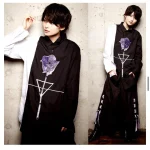
Masculine interpretations often feature oversized black tops, pink accents, decorative chains, chunky shoes, and layered streetwear. Rather than lace-heavy dresses, you might see graphic hoodies, loose trousers, black boots, and accessories influenced by visual kei.
There’s also considerable overlap with subculture jirai, sometimes called subcul jirai, which incorporates more relaxed streetwear pieces. Brands such as Amilige are worth exploring for these darker and more gender-neutral outfits.
Where Can You Buy Jirai Kei Clothes in Japan and Online?
So, you’ve fallen in love with the black lace, gigantic bows, and chunky platforms. Now comes the important question: where can you actually buy jirai kei clothes?
Unlike mainstream Japanese fashion, authentic jirai kei clothing isn’t available in every shopping mall. Some of the best brands concentrate on online sales, while others have boutiques in Tokyo’s major fashion districts.
Fortunately, there are options for different budgets, clothing sizes, and personal interpretations of the style. Here are the shops and brands worth checking out in 2026.
1. Dreamvs and DearMyLove – Best Overall for Jirai Kei Clothes Online
Best for: Complete jirai kei outfits, affordable Japanese fashion, and a wide selection of sizes.
If you’re only going to explore one Japanese fashion website, make it Dreamvs (Yumetenbo). This well-established Japanese retailer has dedicated categories for both jirai kei and ryosangata clothing, making it considerably easier to find exactly what you’re looking for.
Its popular DearMyLove range is particularly appealing if you love fitted dresses, extravagant lace collars, decorative ribbons, and pastel-and-black combinations.

You’ll find everything from elaborate one-piece dresses to frilly blouses, mini skirts, platform shoes, and matching accessories. Another significant advantage is the availability of extended sizes.
Its DearMyLove Whip range caters to shoppers who struggle with the limited sizing offered by many Japanese fashion brands, with selected pieces available up to Japanese size 6L. Prices vary by collection, but dresses commonly sit around ¥8,000–¥13,000.
Why we recommend it: Dreamvs is one of the easiest places to build a complete coordinated outfit without hunting through dozens of unrelated websites.
Website: Dreamvs Official Online Store
2. JIRAPI – Best Specialty Online Store for Jirai Kei Fashion
Best for: Browsing a huge variety of jirai kei-inspired clothing in one place.
If you’ve ever searched for jirai kei clothing online, you’ll know how frustrating it can be to sort through unrelated gothic outfits, cosplay costumes, and random fashion listings. That’s where JIRAPI, a Japanese online store specializing in jirai kei fashion, becomes useful.
Rather than making you search an entire fashion marketplace, JIRAPI organizes its inventory around the aesthetic itself. Its categories include dresses, blouses, skirts, hoodies, shoes, bags, and accessories.
Whether you’re after a lace-covered black mini dress, a pink ribbon blouse, or an oversized hoodie with gothic details, there’s plenty to browse.
Many pieces fall into a relatively accessible mid-budget price range, with blouses and casual tops often priced around ¥4,000–¥7,000 and more elaborate dresses costing more. The website is in Japanese, so using your browser’s translation function is helpful.
Why we recommend it: The specialized categories make it an excellent place to discover different interpretations of jirai kei, from romantic and frilly to darker streetwear-inspired outfits.
Website: JIRAPI Official Store
3. Avail – Best Budget-Friendly Option
Best for: Affordable jirai kei-inspired clothes, accessories, and seasonal collaborations.
Not everyone wants to spend ¥15,000 on a dress, especially when they’re still experimenting with a new style.
Fortunately, Japan’s Avail, part of the Shimamura retail group, occasionally releases clothing and accessories influenced by jirai kei and ryosangata fashion.
Avail is a casual fashion retailer with stores across Japan, selling everything from everyday clothing and footwear to bags and seasonal accessories. Its majoretty collections and collaborations with Japanese fashion influencers are particularly worth watching.
Depending on the release, you might find frilly blouses, ribbon-covered bags, mini skirts, cute hoodies, or coordinated sets for considerably less than boutique prices. The catch? Not every Avail store carries the same products, and some jirai kei collaborations are online-only or available for a limited time.
Although selected items may have extended sizes, don’t assume every design is available in 3L or above.
Shopping tip: Check Avail’s latest collections before visiting. Popular collaborations can sell out, and traveling to a branch without checking availability may lead to disappointment.
Store locator: Shimamura Group Official Store Search
4. Amilige – Best for Darker, Gender-Neutral Jirai Kei
Best for: Alternative streetwear, darker designs, and unisex outfits.
If traditional jirai kei feels a little too sweet for your taste, take a look at Amilige. This Japanese alternative fashion brand combines cute and dark elements with a noticeably edgier attitude.
Rather than concentrating exclusively on delicate pink dresses, Amilige also offers oversized tops, bold prints, layered details, and gender-neutral clothing. It’s especially appealing if your personal style leans toward visual kei, gothic streetwear, or subculture-inspired fashion.
Expect statement designs rather than understated everyday basics. One of the best things about Amilige is that you can visit its physical shop at Laforet Harajuku, one of Tokyo’s best-known alternative fashion shopping destinations.
The store is currently listed on basement level B1F, where you can browse the collection in person.
Location: Laforet Harajuku, B1F, 1-11-6 Jingumae, Shibuya, Tokyo.
Nearest station: Meiji-jingumae Station, Exit 5, approximately one minute on foot.
Shopping tip: Allow extra time to explore the surrounding floors. Laforet is packed with Japanese fashion brands that are difficult to find outside Japan.
5. MA*RS – Best for Classic Black-and-Pink Jirai Kei
Best for: Dramatic black-and-pink outfits, gothic-girly pieces, and statement accessories.
If your ideal jirai kei outfit involves black lace, pink ribbons, and perhaps a few heart-shaped details for good measure, MA*RS deserves a place on your shopping list.
This Japanese fashion brand is closely associated with the darker side of girly fashion. Its designs frequently incorporate striking color contrasts, feminine silhouettes, and bold decorative details.
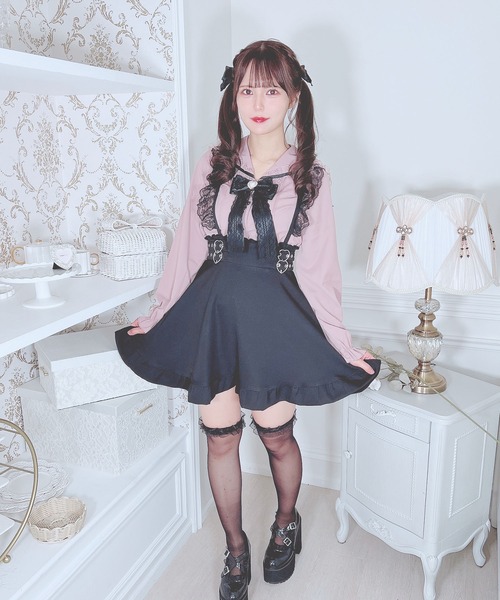
It’s an appealing choice if you want something a little more dramatic than conventional pastel fashion without abandoning the recognizable jirai kei aesthetic.
For visitors to Tokyo, MA*RS has a shop at SHIBUYA109, one of the most famous fashion shopping centers in Japan. Even better, several other brands associated with jirai kei and ryosangata are located in the same building.
Location: SHIBUYA109, 6F, Shibuya, Tokyo.
Nearest station: Shibuya Station.
Website: MA*RS / LiLimPark
6. LIZ LISA – Best for Romantic and Feminine Jirai Kei
Best for: Elaborate dresses, lace details, feminine silhouettes, and sweeter jirai kei outfits.
LIZ LISA is one of Japan’s most recognizable feminine fashion brands. While it doesn’t exclusively sell jirai kei clothing, plenty of its darker designs fit beautifully into the aesthetic.
Think puffed sleeves, decorative collars, elaborate ribbons, lace-trimmed dresses, and beautifully coordinated accessories.

Its softer designs also work well for ryosangata fashion, so this is an excellent store if you enjoy both styles.
LIZ LISA is particularly worth visiting if you’re looking for a standout dress that feels distinctly Japanese. The details often make these pieces memorable, from embroidered collars to carefully placed bows and layered ruffles.
Where to shop in Tokyo: Laforet Harajuku, 5F; SHIBUYA109, 6F.
Shopping tip: Look for darker colorways if you want a more traditional jirai kei outfit. The same dress can feel completely different in black-and-pink rather than cream-and-pastel.
7. Ank Rouge and Jamie ANK – Best for Romantic and Dark-Girly Outfits Online
Best for: Elaborate dresses, distinctive statement pieces, and mixing jirai kei with ryosangata fashion.
Ank Rouge and Jamie ANK are two recognizable names in Japanese girly and alternative fashion. Although the brands share some aesthetic influences, their collections have traditionally offered different interpretations of feminine clothing.
Ank Rouge generally leans toward romantic, elaborate designs, with bows, lace, delicate patterns, and highly feminine silhouettes.
Jamie ANK has a darker, more alternative personality, with black clothing, bolder details, and subculture influences. If you prefer the sweeter side of jirai kei, start with Ank Rouge. If you’d rather lean into darker styling, browse Jamie ANK.
Both brands are available through the official Ailand online store.
Important 2026 update: The former Jamie ANK and Ank Rouge boutiques at Laforet Harajuku have closed. Do not plan a shopping trip around those old locations.
Ailand’s current shipping policy also states that it doesn’t offer direct overseas delivery, so international shoppers need to arrange a Japanese forwarding service.
Website: Ailand Official Online Store
8. SPINNS – Best for Accessories and Casual Jirai Kei Inspiration
Best for: Affordable accessories, streetwear, and experimenting with different alternative Japanese styles.
Not every jirai kei outfit needs to involve an expensive boutique dress. Sometimes a black ribbon, a decorative choker, and the right pair of socks are enough to transform clothes you already own.
That’s why SPINNS is worth exploring. The Japanese youth fashion retailer is known for its playful, trend-driven clothing and accessories, often embracing different alternative fashion movements.

Its selection changes frequently, but it’s a useful place to look for hair clips, casual tops, layered accessories, and other pieces that work with darker Japanese street fashion.
SPINNS is also a good option if you want to explore jirai kei influences without committing to a very elaborate outfit.
Where to shop: SHIBUYA109, 7F, Tokyo.
Shopping tip: Start with the accessories. They’re often easier to work into your existing wardrobe than a complete coordinated outfit.
Best Places to Shop for Jirai Kei Fashion in Tokyo
If you’re visiting Japan specifically to shop for alternative fashion, we’d concentrate on Harajuku and Shibuya. You can explore some excellent brands in a relatively compact part of Tokyo without spending an entire day traveling between distant neighborhoods.
Laforet Harajuku
Best for: Alternative fashion boutiques, dark streetwear, and girly Japanese clothing.
Laforet Harajuku is one of Tokyo’s essential fashion destinations, especially if you enjoy styles that go beyond everyday high-street clothing.

For jirai kei enthusiasts, the main attractions include Amilige on B1F and LIZ LISA on 5F. Take your time exploring the other floors, too. You’ll find a mix of Japanese designer labels, alternative fashion, accessories, and more unusual pieces.
- Address: 1-11-6 Jingumae, Shibuya-ku, Tokyo
- Opening hours: Generally 11:00–20:00
- Nearest stations: Harajuku or Meiji-jingumae
- Recommended time: 1–2 hours
SHIBUYA109
Best for: Visiting several jirai kei and ryosangata brands in one building.
If we had to choose just one shopping center for a first-time jirai kei shopping trip, SHIBUYA109 would be a strong contender.

The sixth floor is especially useful, with brands such as MA*RS, LIZ LISA, BUBBLES, and ROJITA. You’ll also find additional girly fashion and accessory shops elsewhere in the building.
It’s an excellent place to compare different interpretations of the style and discover which brands suit you best.
- Location: Shibuya, Tokyo
- Opening hours: Generally 10:00–21:00
- Nearest station: Shibuya Station
- Recommended time: 1–2 hours
Our shopping tip: Visit SHIBUYA109 first if you’re mainly interested in dresses and classic jirai kei outfits. Choose Laforet Harajuku first if your taste is more experimental, alternative, or gender-neutral.
How to Buy Authentic Jirai Kei Clothes from Japan if You Live Overseas
Here’s where things get slightly more complicated. Although Japanese jirai kei fashion has become increasingly popular internationally, not every Japanese brand ships overseas.
Some retailers have international checkout options, while others only deliver to Japanese addresses. And if you’ve found a rare dress on a Japanese resale marketplace, there’s a good chance the seller won’t ship internationally.
Fortunately, that doesn’t mean you need to book a flight to Tokyo every time you want another frilly blouse.
Use a Japanese Proxy Shopping Service
A Japanese proxy shopping service helps international customers buy products from Japanese websites. One option is Neokyo, which supports purchases from Japanese online retailers and marketplaces.
The process is straightforward:
- Find your item. Search a Japanese fashion store or marketplace for the clothes you want.
- Submit the product link. Request the purchase through the proxy service.
- Pay for your order. The service purchases the item in Japan.
- Combine your purchases. Items can be stored and packed together, which may reduce shipping costs.
- Choose international delivery. Pay the shipping fees and have your package delivered to your country.
As of October 2026, Neokyo lists a standard service fee of ¥350 per purchase request, packaging fees starting at ¥500, and up to 45 days of free storage for individual purchases.
International shipping, possible domestic delivery charges, and any applicable import taxes are additional.
Shopping tip: Always check the final estimated cost before ordering. A cheap secondhand dress can become significantly less cheap once delivery and import charges are included.
Website: Neokyo
Search for Jirai Kei Clothes Using Japanese Keywords
One of the easiest ways to find more authentic Japanese listings is to search in Japanese. Try these phrases:
| Japanese keyword | What it means |
|---|---|
| 地雷系 | Jirai kei fashion |
| 地雷系 ワンピース | Jirai kei dresses |
| 地雷系 ブラウス | Jirai kei blouses |
| 地雷系 スカート | Jirai kei skirts |
| 地雷系 靴 | Jirai kei shoes |
| 量産型 | Ryosangata fashion |
| サブカル地雷 | Subculture jirai fashion |
| 地雷系 大きいサイズ | Plus-size jirai kei clothing |
Copy and paste the Japanese characters directly into online store search bars. You’ll often discover clothing that doesn’t appear when searching for the English term.
Where to Buy Secondhand Jirai Kei Fashion
If you’re shopping on a budget, secondhand Japanese clothing marketplaces are well worth checking. Mercari Japan is particularly useful for finding older collections, sold-out designs, and pre-owned pieces from brands such as LIZ LISA, DearMyLove, and Ank Rouge.
You may also encounter discontinued bags, platform shoes, and accessories that aren’t available through official shops anymore.
The downside is that stock is unpredictable, popular pieces sell quickly, and the condition of secondhand items varies. Check photographs carefully, read the item descriptions, and compare measurements before placing an order.
A proxy service may be necessary if the marketplace doesn’t accept international orders directly.
How Much Does a Jirai Kei Outfit Cost?
Jirai kei can be surprisingly accessible if you start with a few inexpensive pieces, but brand-new boutique outfits can become expensive.
Here are approximate shopping budgets for common items in Japan:
| Item | Typical budget |
|---|---|
| Lace blouse | ¥4,000–¥10,000 |
| Ruffled skirt | ¥3,000–¥9,000 |
| Jirai kei dress | ¥5,000–¥15,000+ |
| Platform shoes | ¥5,000–¥15,000 |
| Hair bows and accessories | ¥500–¥3,000 |
These are general planning ranges rather than fixed prices. Designer collections, limited releases, and collaborations may cost considerably more.
For a first outfit, we’d budget roughly ¥10,000–¥25,000, depending on the brands and whether you already own suitable shoes.
There’s no need to buy everything at once. A carefully chosen dress and two or three accessories can create a convincing outfit without stretching your budget.
Tips for Buying Jirai Kei Clothes in Japan
Before buying that irresistible black-and-pink dress, keep a few things in mind.
Check Japanese clothing sizes. Japanese brands frequently use different sizing standards from those in Europe and North America. Check garment measurements in centimeters rather than relying on S, M, or L labels.
Look for matching sets. Some brands sell coordinated blouses and skirts or dress-and-accessory combinations. These can make putting together an outfit much easier.
Compare the fabric and construction. Lace, ribbons, and elaborate details look beautiful in photographs, but quality varies between brands. If you’re shopping in person, inspect seams, fastenings, and fabric carefully.
Watch for seasonal releases. Many Japanese fashion brands introduce special collections, collaborations, and limited-edition items throughout the year.
Check tax-free eligibility. If you’re visiting Japan as an eligible foreign tourist, ask whether the shop participates in Japan’s tax-free shopping system. Rules and procedures can change, so check the requirements at the time of purchase.
And finally, don’t feel pressured to copy a particular outfit perfectly. Some of the most interesting looks come from mixing Japanese brand pieces with clothes you already love.
Frequently Asked Questions About Jirai Kei Fashion
Where can I buy jirai kei clothes in Tokyo?
The easiest places to start are SHIBUYA109 in Shibuya and Laforet Harajuku. SHIBUYA109 has brands such as MA*RS and LIZ LISA, while Laforet Harajuku carries Amilige and LIZ LISA. Both shopping centers are easy to reach by public transport.
Can I buy jirai kei clothes outside Japan?
Yes. Some international boutiques sell Japanese brands, and proxy shopping services can help you order from Japanese online stores and secondhand marketplaces. Always check international shipping fees, taxes, and return policies before ordering.
Is jirai kei the same as gothic Lolita?
No. Although the two styles share lace, ribbons, and darker colors, gothic Lolita generally emphasizes structured, voluminous skirts and historically inspired silhouettes. Jirai kei tends to use shorter skirts, contemporary clothing shapes, and black-and-pink combinations.
Are there plus-size jirai kei brands?
Yes. DearMyLove and its Whip range are particularly worth exploring, with selected designs available in extended Japanese sizes, including 6L. Always check individual garment measurements, since sizing can differ significantly between brands.
Can you wear jirai kei fashion every day?
Absolutely. You don’t need to dress in a complete, elaborate outfit. A ribbon blouse, black skirt, lace socks, or chunky shoes can introduce elements of jirai kei into your everyday wardrobe.
Is jirai kei fashion expensive?
It depends on where you shop. Budget retailers and secondhand marketplaces offer cheaper options, while Japanese boutique brands can be considerably more expensive. Starting with a single dress and a few accessories is usually the most economical approach.
Is jirai kei still popular in Japan in 2026?
Yes. Japanese retailers continue to offer jirai kei and related ryosangata collections, including new clothing, accessories, and collaborations. The aesthetic has also expanded into casual streetwear and darker, gender-neutral styles.
Final Thoughts: Discover Your Own Jirai Kei Style
Japan has an extraordinary talent for turning fashion into a form of storytelling, and jirai kei is a particularly interesting example.
It’s sweet, dark, feminine, theatrical, and sometimes wonderfully over the top. But behind the lace collars and oversized ribbons is a fashion aesthetic with a complicated cultural history—one that has gradually evolved beyond the stereotypes associated with its original name.
Whether you’re hunting for an extravagant dress in Shibuya, exploring alternative boutiques in Harajuku, or ordering your first Japanese fashion pieces online, there’s no single correct way to wear it.
Our recommendation? Start with Dreamvs or DearMyLove if you’re shopping online, and visit SHIBUYA109 if you’re in Tokyo. Both offer an accessible introduction to the style without making you search through dozens of unrelated shops.
And remember, you don’t need to embrace the darker associations of the name to appreciate the clothes. Sometimes, you just want a black lace dress, enormous pink bows, and shoes that make you several centimeters taller. And that’s reason enough.
- Best Shoes to Buy in Japan in 2026: 10 Japanese Brands Worth Shopping
- Mori Girl Fashion (2026): The Ultimate Guide to Japan’s Dreamy Forest-Girl Style
- Best Watches To Buy In Japan: From Affordable Classics to Luxury Timepieces (2026)
- Everything About Japanese Gyaru Fashion: History, Styles, Makeup & Where to Shop (2026)
- Visual Kei Fashion in Japan: Complete Guide to Styles, Brands & Where to Buy (2026)