I spill travel tips , and show you the Japan that tourists usually miss.
Tokyo is usually sold to us as neon, noodles, robot toilets, and perfectly organized chaos. Lovely. Accurate. But also incomplete. Because beneath all the glowing signs and vending-machine sorcery, there is another Tokyo waiting in raw concrete, sharp geometry, Olympic ambition, and wonderfully stubborn buildings that look like they were designed during a very serious conversation about the future.
This guide to brutalism in Tokyo takes us on a self-guided architectural walk through some of the city’s most fascinating modernist and concrete landmarks. We start around Harajuku and Yoyogi, where postwar experimentation meets Olympic-era drama, then continue to Ueno, Meguro, and Komazawa for museums, churches, towers, and stadiums that prove Tokyo has always been far stranger — and smarter — than its postcard image suggests.
You do not need to be an architecture scholar to enjoy this route. You just need comfortable shoes, a charged phone, and a willingness to look up from street level every five minutes like a delighted concrete detective. Expect Le Corbusier, Kenzo Tange, tiny houses on impossible plots, and enough exposed concrete to make your camera roll look suddenly very serious.
Table of Contents
Brutalism in Tokyo: An Architectural Walk
Tokyo is not all neon crossings, tiny ramen counters, and suspiciously perfect convenience-store egg sandwiches. Look closer — preferably while wandering slightly lost between train stations — and you’ll find another city hiding in plain sight: concrete, geometric, experimental, and wonderfully uncompromising.
This architectural walk takes us through some of Tokyo’s most interesting modernist and brutalist landmarks, from Harajuku and Yoyogi to Ueno, Meguro, and Komazawa. Some are grand Olympic-era icons. Others are tiny concrete oddities squeezed into impossible plots. All of them prove that Tokyo has been playing architectural chess while the rest of us were still trying to understand the subway map.
Villa Bianca
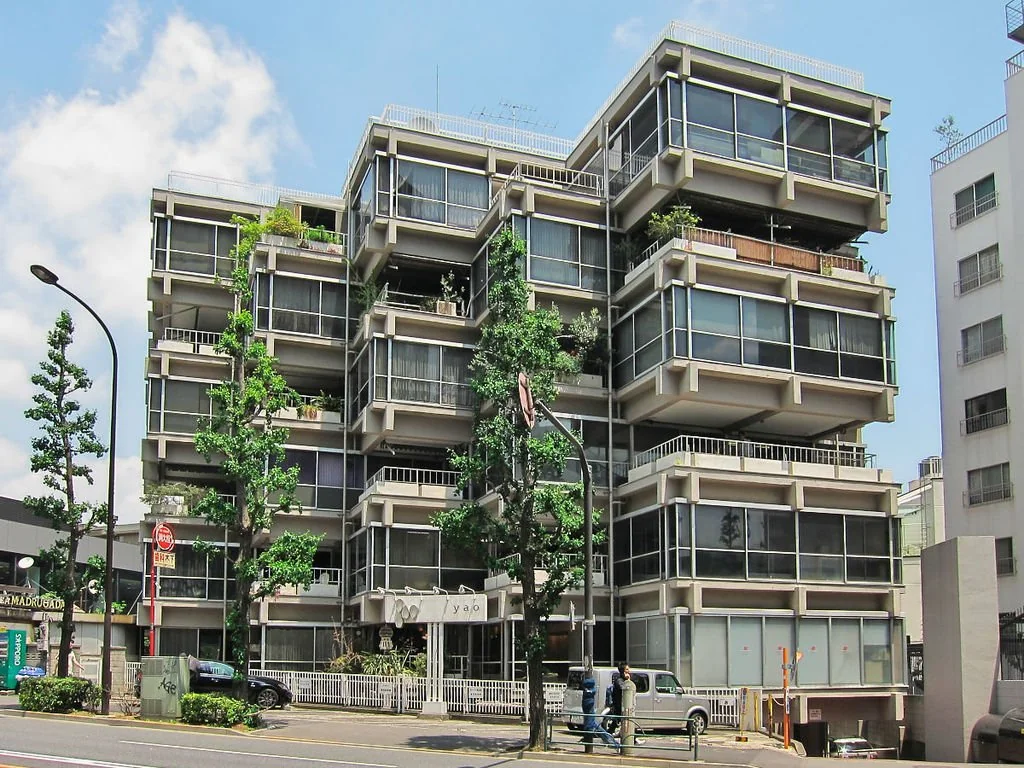
We begin at Harajuku Station, because obviously Tokyo would make us start an architectural walk somewhere surrounded by fashion chaos, teenagers with perfect hair, and crepes the size of your forearm. From the station, walk north along the Yamanote Line tracks, then take the first major avenue on the right. Soon, you’ll reach Villa Bianca at 2 Chome-33-12 Jingumae.
Built in 1964, the same year Tokyo hosted its first Olympic Games, this 40-unit condominium complex was designed by architect Eiji Hotta. It is a fascinating hybrid: part traditional Japanese post-and-beam logic, part modern concrete-and-glass experiment. The result feels lighter than you might expect, with a minimalist structure that plays with transparency, rhythm, and shadow rather than simply shouting “CONCRETE” at passing pedestrians.
The building itself is private, so no, we are not marching into someone’s condominium like architecture goblins. But the shops on the ground floor are open to the public, which gives you a perfectly respectable excuse to get close, look up, and appreciate the details without pretending you live there.
Tower House
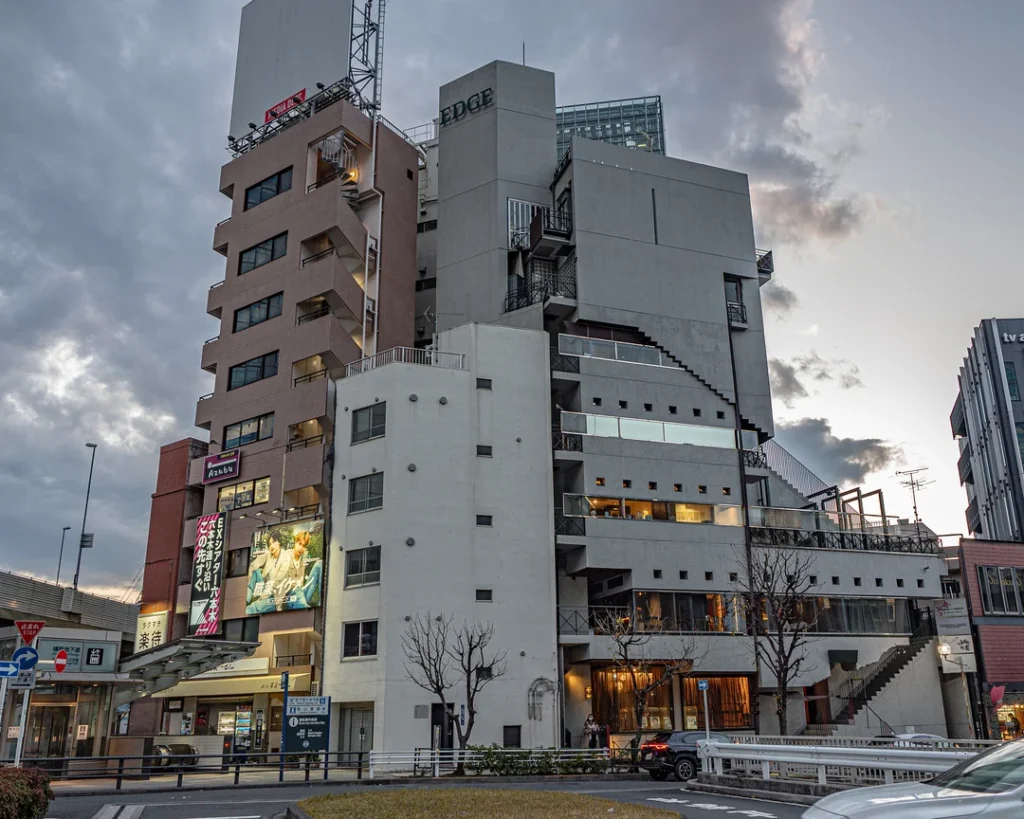
From Villa Bianca, walk about ten minutes toward Gaien Nishi-dori Avenue, where you’ll find one of Tokyo’s most stubborn little architectural miracles: Tower House. And yes, “little” is doing heroic work here.
Built in 1966 by architect Takamitsu Azuma, Tower House stands on a tiny 20-square-meter plot, which is less “generous family home” and more “architectural dare.” The house is made almost entirely of exposed concrete, inside and out, with a horizontal texture that emphasizes each stacked level.
Instead of spreading outward — impossible, this is Tokyo — the rooms climb vertically, one above the other, connected by a central concrete staircase that acts like the building’s spine. There are no traditional doors between rooms, just a tight vertical sequence of spaces. It is practical, extreme, and slightly absurd in the best way. Basically, Tokyo housing pressure turned into sculpture.
Yoyogi Olympic Gymnasium
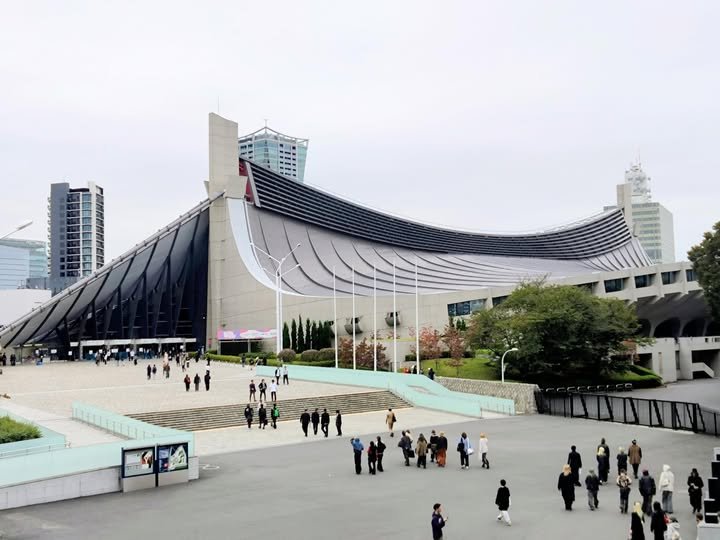
Now loop back toward Harajuku Station, then continue west and cross the pedestrian bridge over Yoyogi Avenue. This is where the walk stops being discreet and suddenly goes full architectural opera: Yoyogi Olympic Gymnasium.
Designed by Kenzo Tange for the 1964 Olympic Games, the gymnasium is one of Tokyo’s great modernist landmarks. Its suspended roof sweeps dramatically from two reinforced concrete pylons, held by a prestressed steel cable structure. Translation for the non-engineers among us: the building looks like it is floating, flexing, and possibly about to take flight.
The raised concrete base adds to the effect, giving the whole structure a surprising lightness despite its scale. This is not brutalism as a blunt object. It is concrete with movement, tension, and elegance — a reminder that massive buildings do not have to sit there like sulking refrigerators.
Recognized as a 20th-century architectural masterpiece, the gymnasium shows Tange’s genius for merging Western modernism with ideas drawn from traditional Japanese architecture. There are no regular guided tours, but events are held inside. If you want to see the interior, check the schedule and book a ticket to something. Architecture plus live event? Efficient tourism. We love efficiency when it comes with roof drama.
National Museum of Western Art
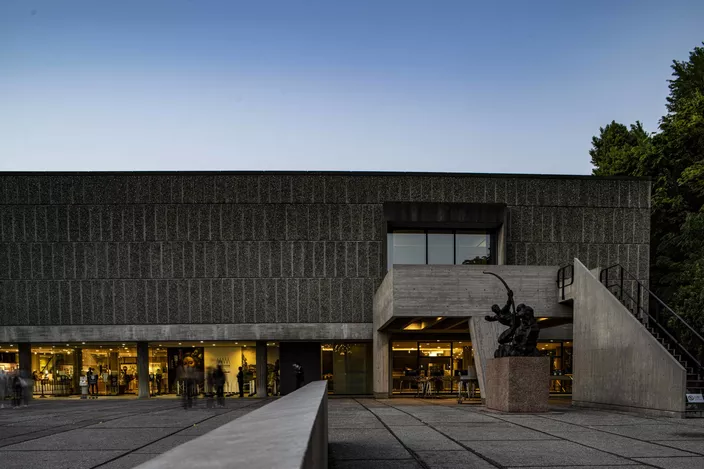
Next, hop on the Yamanote Line and ride clockwise to Ueno Station. Welcome to Ueno Park: museums, families, school groups, tourists, crows with attitude, and — during cherry blossom season — enough people to make you question every life choice that led you there on a weekend.
Before entering the park, stop in the plaza facing the station. On your right is the National Museum of Western Art, designed by Le Corbusier and completed in 1959. Yes, that Le Corbusier. Tokyo casually has one of his buildings sitting beside Ueno Park, because this city enjoys making architectural treasure hunts feel unfairly casual.
Designated a UNESCO World Heritage Site in 2016, the museum stands on pilotis and is organized around a central ascending ramp. The route creates a continuous visitor experience, allowing you to understand the building gradually as you move through it. Inside, you’ll find major works by Impressionist painters and sculptures by Rodin, which means the building is not the only reason to go in. Convenient.
The museum is open Tuesday, Wednesday, Thursday, and Sunday from 9:30am to 5:30pm, and Friday and Saturday from 9:30am to 8:00pm. It is closed on Mondays.
Metropolitan Festival Hall
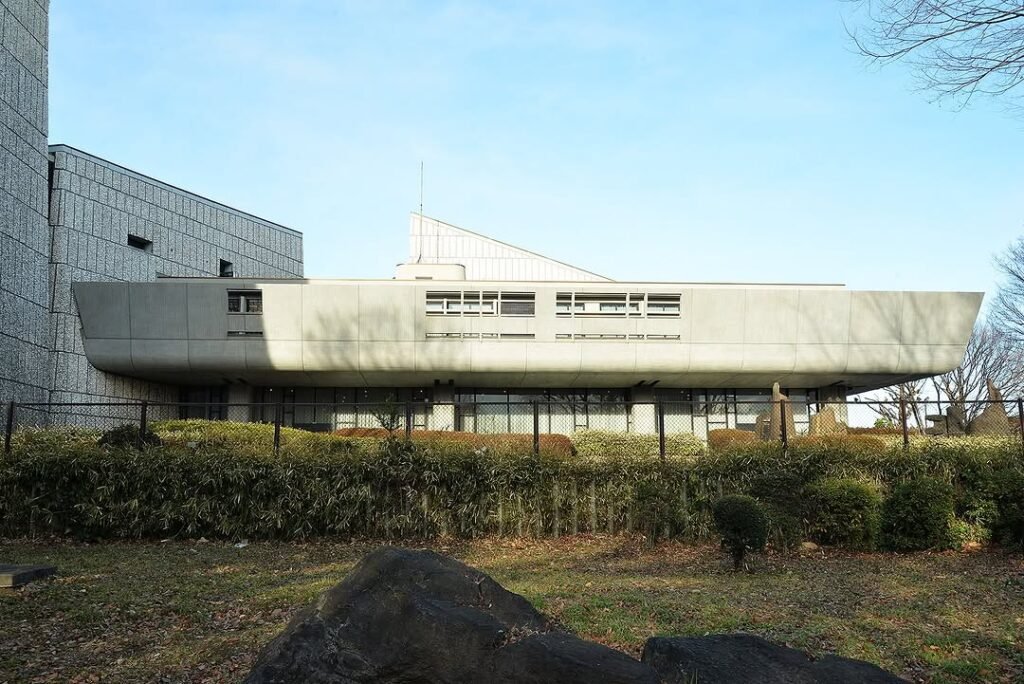
Opposite the National Museum of Western Art, look for the Tokyo Metropolitan Festival Hall. Designed by Kunio Maekawa and completed in 1961, it feels like it is quietly having a conversation with Le Corbusier’s museum across the plaza. Rectangular openings pierce the pediment, creating a rhythm that plays beautifully against the museum opposite.
Inside, the building was designed around a generous public hall intended to encourage social interaction. Today, it functions as a major concert venue, known for its excellent acoustics. It is open daily from 10am to 10pm, making it an easy architectural stop if you are already wandering around Ueno and pretending this whole day was planned with military precision.
To Go Further
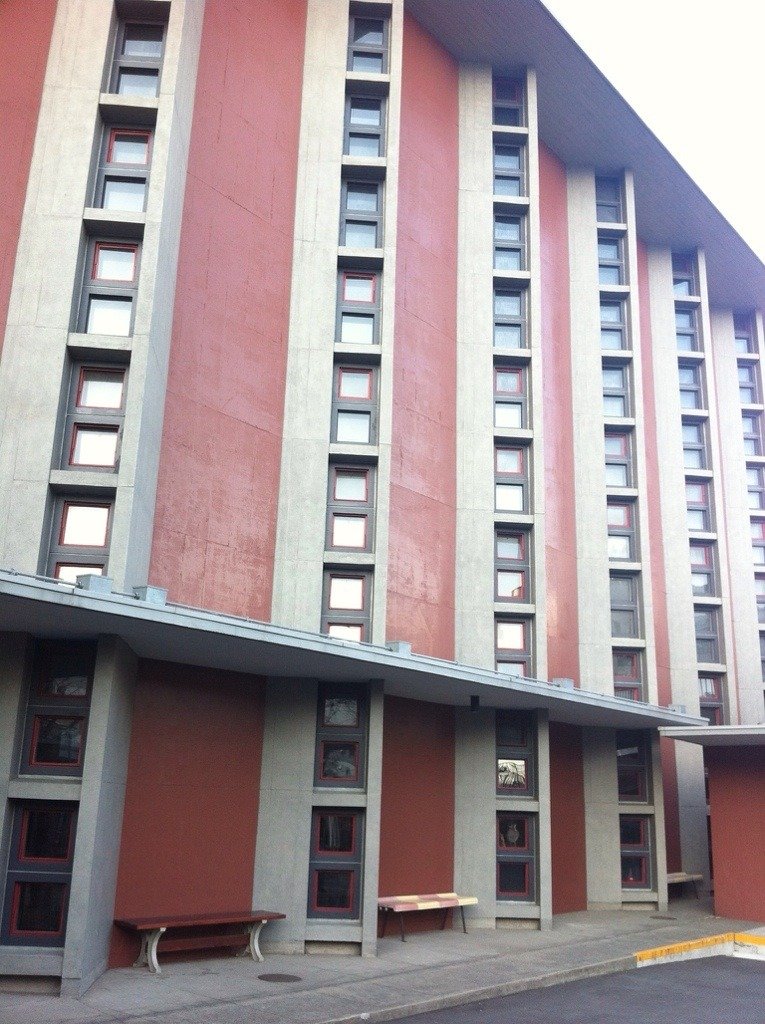
Still hungry for concrete? Excellent. We are now officially in niche-walk territory, and honestly, that is where Tokyo gets fun.
Take the Yamanote Line to Meguro Station. From there, it is about a five-minute walk to St. Anselm’s Church, designed by Czech architect Antonin Raymond in 1954. Inside, the nave uses a minimalist geometric structure to create a striking play of light across the ceiling. It is quiet, sharp, and far more moving than the phrase “concrete church” has any right to be.
After that, return to Shibuya Station and take the Den-en-Toshi Line to Komazawa-Daigaku Station. From there, walk about fifteen minutes through Komazawa Olympic Park, one of those large Tokyo parks where you suddenly remember the city does, in fact, contain breathing room.
Here, you’ll find two major brutalist works built for the 1964 Olympic Games. First, the Komazawa Control Tower, designed by Yoshinobu Ashihara to house a water reservoir and television transmission antenna. Its exposed beams evoke a pagoda, but stripped down into raw, angular, almost skeletal forms. Traditional reference, brutalist attitude. Very Tokyo.
Right nearby is the Olympic Stadium, which hosted athletics events in 1964. From the outside, it has the strange charm of a flying saucer that landed on the park’s central esplanade and decided to stay. The paint may be faded, but the walk beneath the concrete canopy designed by Masachika Murata is absolutely worth it. You can enter the stadium during sporting events, which is the perfect excuse to see the interior without loitering suspiciously around the gates.
- What to Buy at Bic Camera Japan in 2026: 24 Japanese Character Goods, Gadget & Quirky Souvenirs

- What to Buy at GU Japan in 2026: 17 Standout Pieces

- 15 Best Luxury Hotels in Kobe Japan (2026): Waterfront Suites, Five-Star Stays & Hot Spring Ryokans
- 9 Hidden Gems in Kobe (2026): Unique Places Beyond the Usual Tourist Trail
- Nagoya rainy day with kids in 2026 (Cool Indoor Things to Do )