I spill travel tips , and show you the Japan that tourists usually miss.
Gunma is the kind of place that makes you wonder why everyone keeps stampeding toward Tokyo, Kyoto, and Osaka like Japan only has three buttons. Here, we get steaming hot spring towns, volcanic mountains, old silk-mill history, lavender fields, gorge walks, castle cosplay, and waterfalls that arrive with nicknames like “Niagara of the East.” Subtle? Not always. Fun? Very.
Sitting northwest of Tokyo, Gunma is landlocked, mountainous, and gloriously good at the things Japan does best when it is not trying too hard: onsen culture, seasonal flowers, forested trails, local food, and scenic train-and-bus adventures. This is where we can soak in Kusatsu Onsen, climb around Mount Akagi, wander the historic Tomioka Silk Mill, chase “Shima Blue” lake views, and still have time to eat something strange and wonderful at Konnyaku Park.
So, what are the best things to do in Gunma? We would start with the big names — Kusatsu Onsen, Ikaho Onsen, Mount Haruna, Mount Myogi, Oze Marsh, and Tomioka Silk Mill — then add the oddballs and scenic extras that make the prefecture feel properly memorable. Because yes, Gunma is a little underrated. And yes, that usually means we get more space to enjoy it.
Table of Contents
Best Things to Do in Gunma: Maebashi/Kiryu Area
This part of Gunma stretches from the center of the prefecture toward the east, with Mount Akagi looming in the background like it knows it is one of the famous Three Mountains of Joshu. The area also includes Ikaho Onsen, the atmospheric hot spring town known for its stone stairway, plus plenty of flower-filled spots that change with the seasons. Mild climate, mountain scenery, hot springs, flowers — yes, Gunma is quietly showing off here.
Mount Akagi
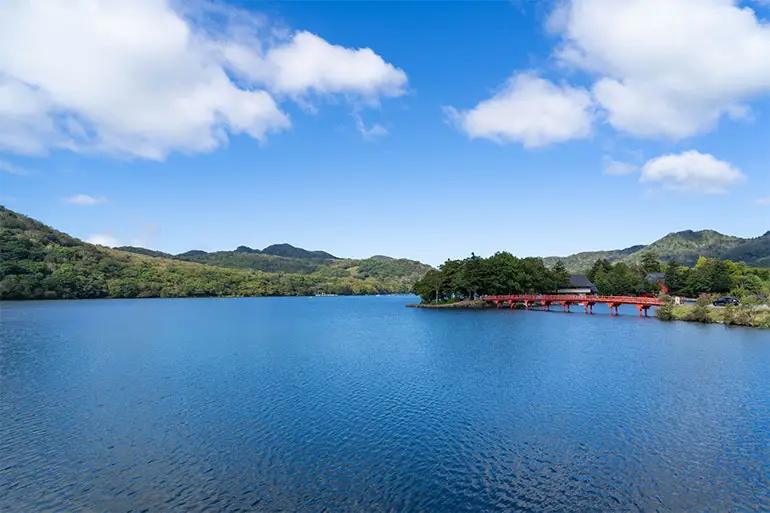
Mount Akagi is one of the Three Famous Mountains of Joshu, along with Mount Haruna and Mount Myogi. But plot twist: there is no single lonely peak called “Mount Akagi.” Instead, it is the collective name for a complex volcanic area made up of several peaks surrounding a central caldera. Mount Kurobi, at 1,828 meters, is the main peak, joined by Mount Komagatake, Mount Jizodake, Mount Arayama, Mount Nabewariyama, Mount Suzugatake, and Mount Choshichiroyama.
The mountain spreads across a huge foothill area covering Maebashi, Kiryu, Midori, Numata, Shibukawa, and Showa Village in Tone District. In other words, Akagi is not just a mountain you casually “pop over to.” It is a whole landscape — volcanic, forested, lake-dotted, and very ready to make your hiking boots feel useful.
Around Lake Onuma, the caldera lake near the summit, you can enjoy scenery that feels properly alpine without needing to disappear into the wilderness for three days. Boating, smelt fishing, lakeside camping, and peaceful walks are all on the menu. About 700 meters from Lake Onuma, Kakumanbuchi is a small wetland lake that was once part of Onuma, and it is a lovely place to spot skunk cabbage and alpine plants.
There are hiking trails for beginners and intermediate walkers, plus nature spots around the base of the mountain. Akagi Nature Park is known for dogtooth violets and Japanese anemones, while Green Flower Ranch Ogo roadside station is easy to recognize thanks to its Dutch-style windmill — the tallest of its kind in northern Kanto, because apparently even roadside stops in Gunma need a dramatic landmark.
Kaneko Seedling Gunma Flower Park
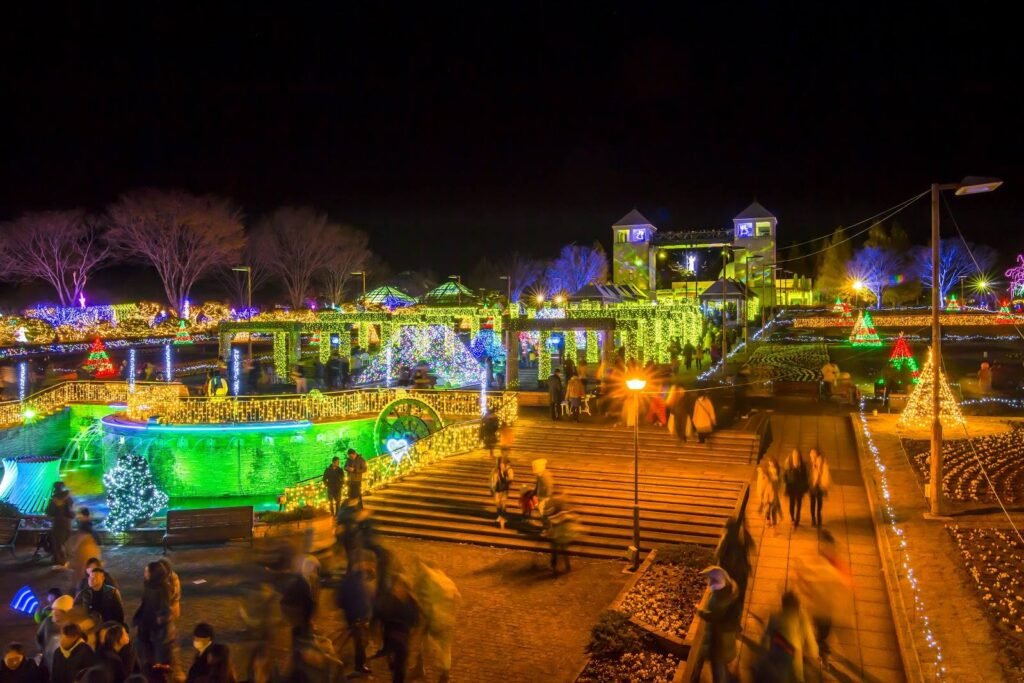
Set at the foot of Mount Akagi’s southern slope, Kaneko Seedling Gunma Flower Park is a sprawling flower theme park built for anyone who likes their sightseeing with a side of petals, greenhouses, and “wait, take one more photo.” The park includes the roughly 6,000-square-meter Fratopia Grand Flower Garden, greenhouses filled with orchids, tropical flowering trees, begonias, and cacti, plus seasonal event areas, gardens, and a kids’ zone.
In early spring, the park bursts into color with around 200,000 tulips. Later in the year, roses, dahlias, azaleas, and other seasonal flowers take their turn. The winter illuminations are also a major highlight and have been certified as a Japanese Night View Heritage site, which is exactly as fancy as it sounds.
Families will find plenty to do beyond admiring flowers politely. There is a 20-minute Choo-Choo Train ride, an athletic playground in the kids’ area, and an 18-meter park tower with panoramic views over the natural scenery at the foot of Mount Akagi. Tiny humans get space to run; adults get views and flowers. Everybody wins.
Ikaho Onsen
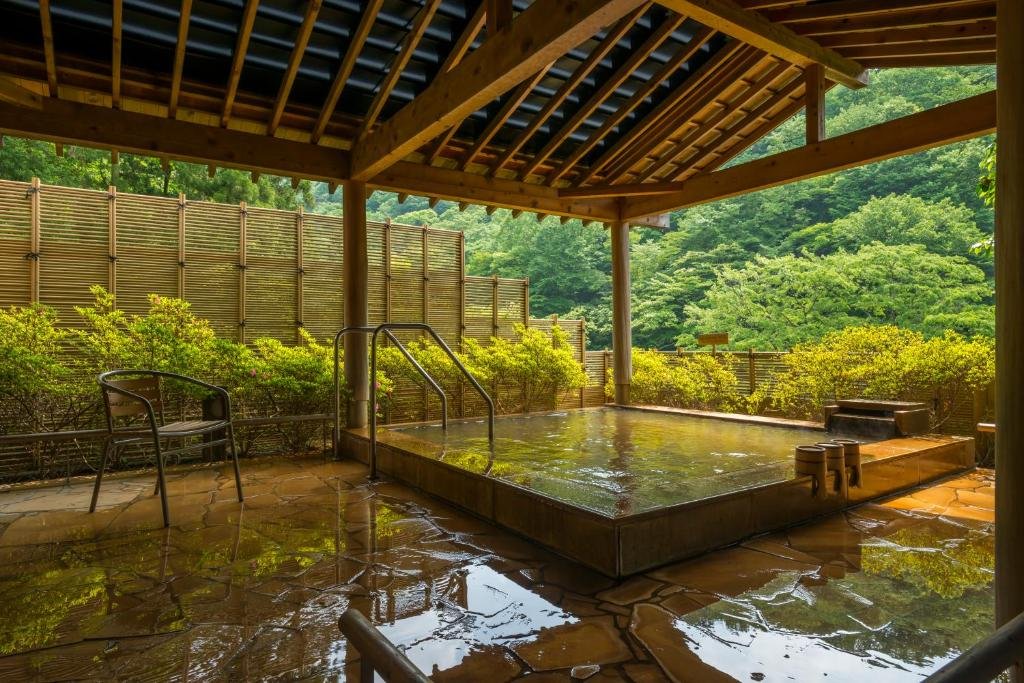
Ikaho Onsen sits on the slopes of Mount Haruna at around 700 meters above sea level, and it has the sort of history that makes modern spa towns look like toddlers. Its name appears in ancient Japanese poetry collections such as the Manyoshu and Kokinshu, and records show that people have loved this hot spring town since at least the Nanboku-cho period.
The town’s great symbol is its stone staircase, said to have first been built around 400 years ago. After two major renovations, it now has 365 steps — one for every day of the year, because apparently your calves also deserve a calendar.
On both sides of the steps, you’ll find traditional inns, souvenir shops, restaurants, retro amusement arcades, shops selling onsen manju buns, and even a free footbath. Visitors wander around in yukata and happi coats, giving the whole place that classic hot spring town atmosphere we secretly hope for when we book an onsen trip.
Around the staircase, you can also visit Ikaho Shrine, Kajika Bridge, Ishidan-no-yu, and the Ikaho Onsen Open-Air Bath. Come for the hot springs, stay for the nostalgic streets, then pretend the staircase counts as your workout for the week.
Hara Museum ARC
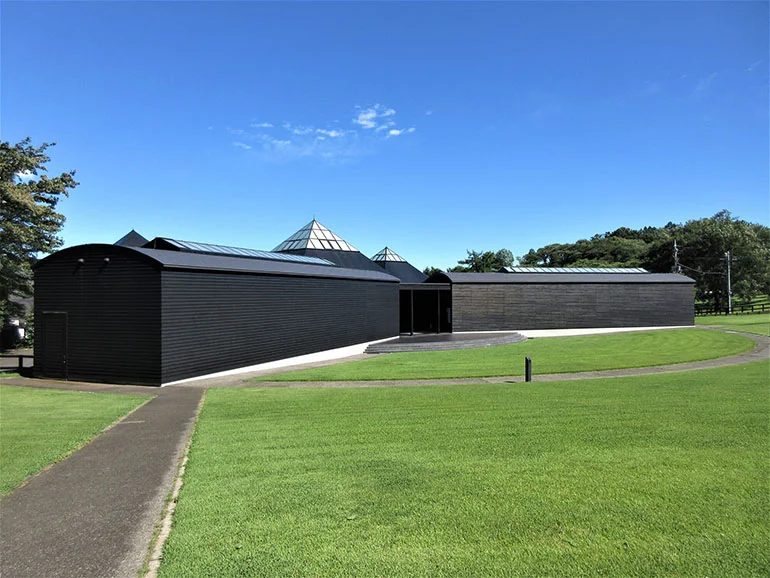
Hara Museum ARC is a contemporary art museum set on a spacious green site beside Ikaho Green Ranch. It was formed in April 2021, when the former Hara Museum in Shinagawa, Tokyo, closed and merged with its Gunma annex in Shibukawa. The result is a museum that feels calm, open, and slightly unexpected — art in the countryside, but make it architectural.
The museum mainly houses contemporary art from around the world from the 1950s onward, but its collection also includes early modern Japanese paintings, crafts, and Chinese art. Exhibits change several times a year, often alongside special exhibitions.
The building itself is a highlight, designed by Arata Isozaki with three exhibition areas. Outside, permanent installations by Japanese and international artists — including Andy Warhol and Jean-Michel Othoniel — are scattered around the grounds. It is the kind of place where we can wander slowly, look thoughtful, and pretend we fully understand contemporary art. Sometimes we even do.
The foundation that operates the museum is called Arc-en-Ciel, meaning “rainbow,” and “ARC” also stands for “art center.” The idea is to create a place where different people gather and new value is born. Big concept, peaceful setting, excellent excuse for an art stroll.
Best Things to Do in Gunma: Azuma Area
The Azuma area is Gunma at its most dramatic: valleys, plateaus, wetlands, volcanic landscapes, and hot spring towns that feel like they were built for slow wandering. This is where you’ll find Yamba Dam, which was completed after 50 years of construction, Onioshidashi Park with its surreal lava scenery, and two of Gunma’s most famous onsen towns: Kusatsu and Shima. Bring walking shoes. Bring a towel. Bring a healthy respect for volcanoes.
Lockhart Castle
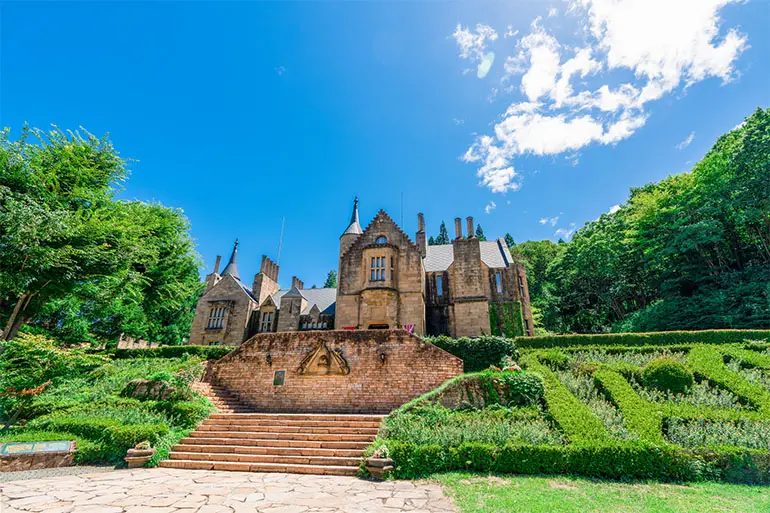
Located along the Japan Romantic Road, Lockhart Castle is a stone theme park spread across roughly 100,000 square meters. It recreates a medieval European townscape with castles, stone churches, galleries, gardens, and enough fairytale energy to make you question whether you accidentally took a wrong turn into Scotland.
The main attraction, Lockhart Castle, was originally built in Scotland in 1829. It was relocated and restored in Japan over a six-year period starting in 1987, becoming the first genuine European castle ever relocated to Japan. Today, its dramatic stone setting is used for weddings, live music, TV dramas, and filming locations.
Inside the park, you’ll find the castle, a church, a museum where visitors can touch dinosaur fossils, several galleries, a restaurant serving European country-style food and craft beer, and shops. There is also an English garden with seasonal flowers.
One of the most popular experiences is the “Princess Experience,” where you can choose from more than 500 dresses, wear a tiara, and take commemorative photos. Subtle? Absolutely not. Fun? Extremely.
Onioshidashien
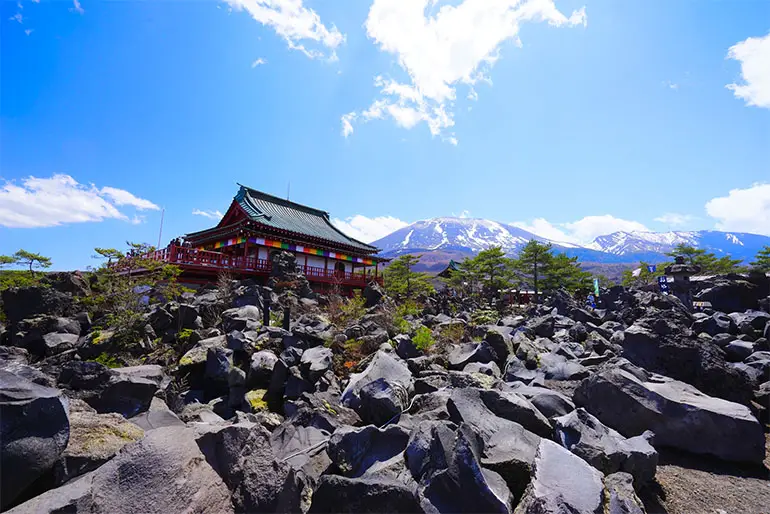
Onioshidashien is where Gunma goes full volcanic drama. The park showcases the strange, rugged scenery created by lava from the 1783 eruption of Mount Asama, which flowed out, cooled, and solidified into a landscape of jagged black rock.
The name comes from a legend that a demon rampaged inside the crater, pushing rocks out and causing the eruption. Is that geologically accurate? No. Is it a much better story than “lava cooled here”? Obviously.
Inside the park, marked routes include the 700-meter Alpine Plant Observation Course and the 1,200-meter Okunoin Pilgrimage Route. Both let you walk among massive lava rocks and surreal formations. In summer, alpine plants peek between the rocks, while autumn brings gorgeous foliage.
On clear days, the views stretch toward the Alps, the Tanigawa mountain range, and even Mount Nantai in Nikko. It is wild, stark, beautiful, and slightly apocalyptic — in the best sightseeing way.
Shima Onsen
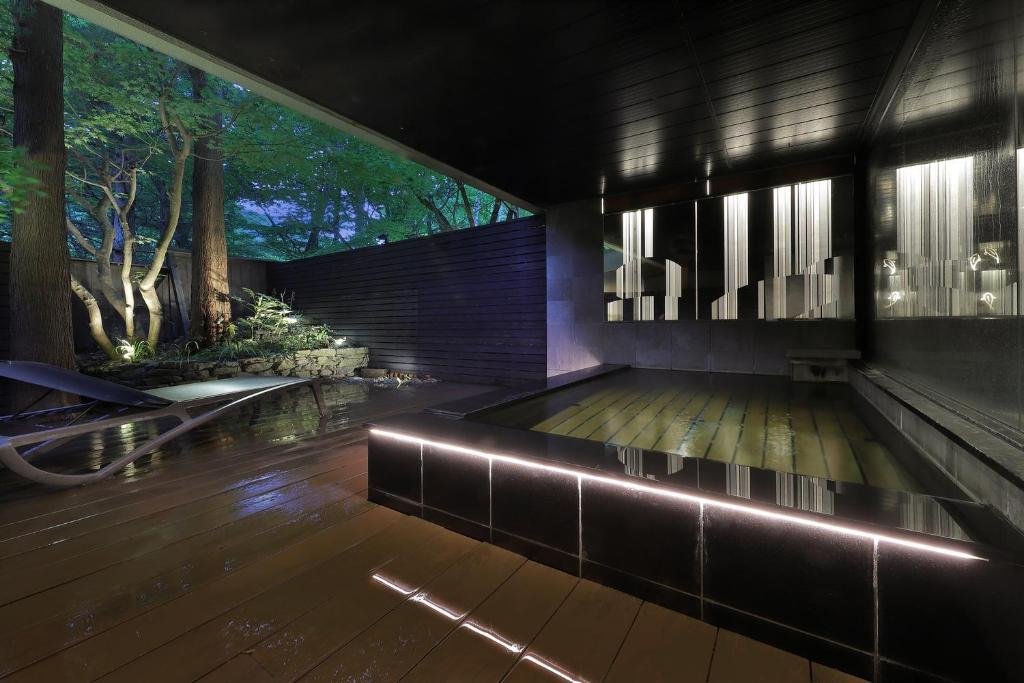
Shima Onsen is tucked inside Joshin’etsu Kogen National Park, surrounded by mountains and stretched along the clear waters of the Shima River. The town is long and narrow, divided into five districts: Hinatami, Yuzuriha, Shinyu, Yamaguchi, and Onsenguchi.
The name is said to come from a legend that the spring could heal 40,000 illnesses. That is a bold promise, and while we cannot verify every single one, Shima Onsen has long been known as one of Japan’s “Three Great Hot Springs for Stomach and Intestinal Diseases,” alongside Goga Onsen in Miyagi and Yunohira Onsen in Oita.
The town keeps a wonderfully traditional onsen atmosphere, with retro Showa-era cafés, amusement arcades, public baths, footbaths, and drinking springs dotted around the area. Try Hinatami Yakushi footbath, Yamaguchi Kawaoto footbath, Gomuso no Yu, or Shima Seiryu no Yu if you want to hop between hot spring spots like a very relaxed champion.
Shima is also famous for its unreal cobalt-blue water, known as “Shima Blue.” Okushima Lake, at the back of the hot spring area, and Shima Lake, near the entrance, are especially beautiful. Canoe tours are available, and autumn is spectacular when the surrounding broadleaf trees turn color all at once.
Kusatsu Onsen
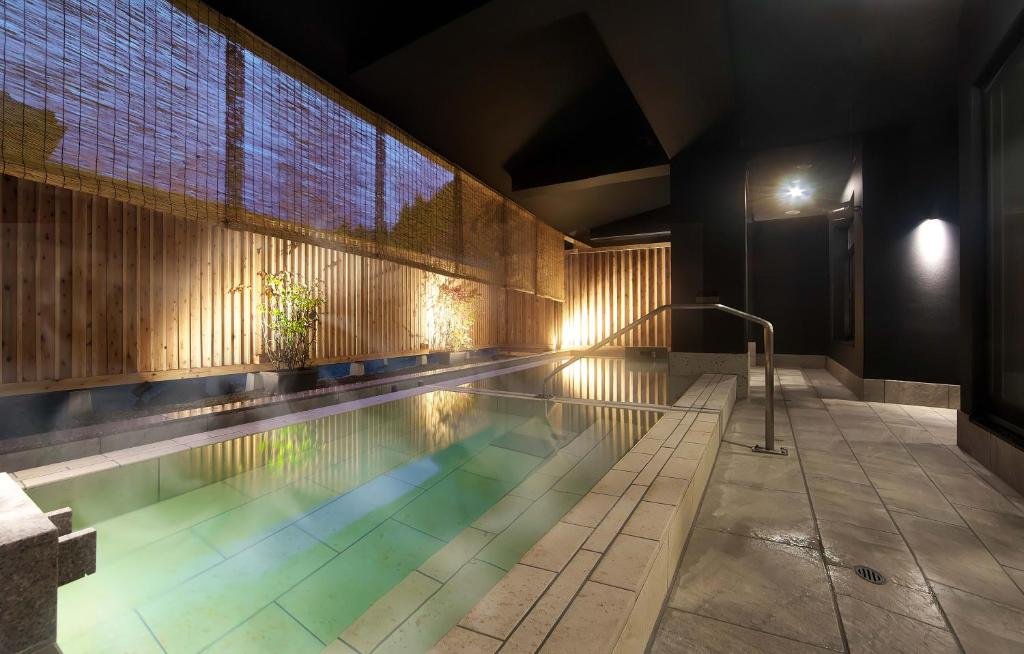
Kusatsu Onsen is one of Japan’s superstar hot spring towns — the kind that arrives with titles, legends, rankings, and a sulfur-scented confidence that says, “Yes, we know we are famous.” It is counted among Japan’s Three Great Hot Springs and has been well known since the Muromachi period. During the Edo period, it regularly topped hot spring rankings, and today it is a major resort area with more than 100 inns and hotels.
The town boasts a natural spring water flow of around 32,300 liters per minute, the largest volume in Japan. The symbol of all this bubbling abundance is the Yubatake, right in the heart of town, where steam rises from wooden channels and the smell of sulfur hangs in the air. Here alone, about 4,000 liters of hot spring water gush out every minute.
People used to say that Kusatsu could cure any illness except lovesickness. Dramatic? Yes. Very on-brand? Also yes. The waters are also known for their skin-beautifying qualities, and besides your accommodation bath, you can visit three famous public hot spring facilities: Ootaki-no-Yu, Goza-no-Yu, and Nishinokawara Open-Air Bath.
Ootaki-no-Yu lets you enjoy the rare Nikawa spring water and has excellent facilities, including a large public bath and open-air bath. Goza-no-Yu, near the Yubatake, recreates an Edo- to Meiji-era building and offers two types of spring water. Nishinokawara Open-Air Bath is a spacious outdoor bath surrounded by nature — ideal when you want your soak with a side of mountain air.
At Netsunoyu, you can watch Kusatsu’s famous yumomi performance, where hot spring water is stirred with long wooden boards to cool it down without diluting it. The whole thing is set to folk songs, and visitors can even try it themselves. Spa treatment or cultural performance? In Kusatsu, why not both?
Manga-do
▲Source: Gunma Tourism (URL)
A few minutes’ walk from Kusatsu’s famous Yubatake, the area around Jizo-no-Yu public bathhouse — known as Ura-Kusatsu Jizo — has been redeveloped into a relaxed little strolling zone. There is an observation deck, a 24-hour free bathhouse, a face bath, a foot bath, and a hand-washing bath. Yes, Kusatsu has baths for individual body parts now. We respect the commitment.
The face bath lets you bathe your face in steam rising from the hot spring source, and it is said to have beautifying effects. After that, head to Manga-do, one of the area’s most charming stops.
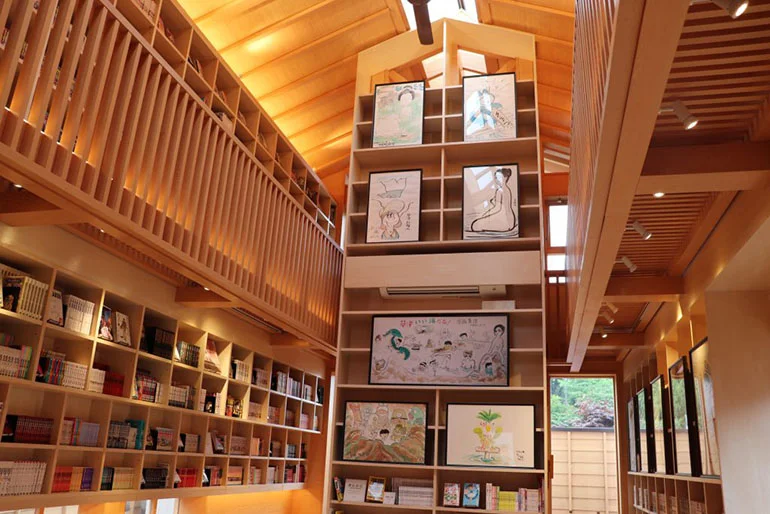
Manga-do holds around 10,000 manga books, including works by manga artists connected to Kusatsu Onsen. The two-story wooden building is warm and inviting, with wooden tables, chairs, high ceilings, and an airy layout that makes it dangerously easy to lose track of time.
The collection includes works by major artists such as Tetsuya Chiba and Fujio Akatsuka, as well as newer manga creators, so visitors of different ages can find something to enjoy. If you get hungry, you can take your manga to the adjoining café, Tsuki no Kao, or read outside on the lawn. Hot springs plus manga plus café time? Frankly, this is dangerously close to a perfect afternoon.
Azuma Gorge
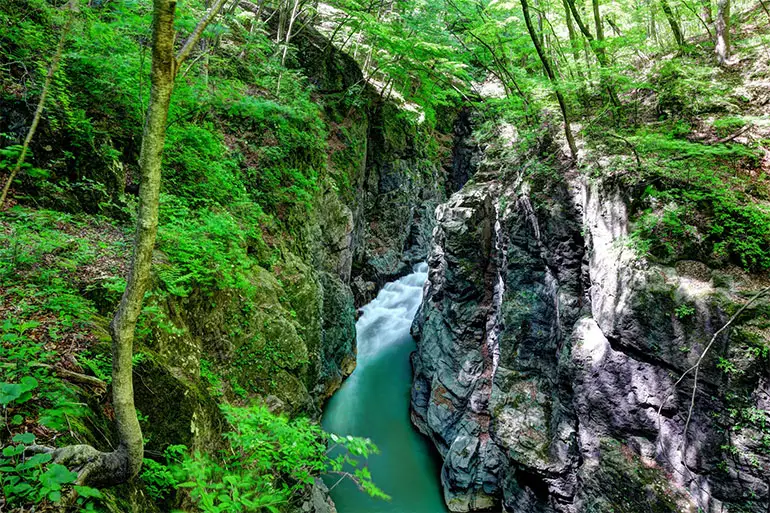
Agatsuma Gorge is a 2.5-kilometer valley stretching from Fureai Ohashi Bridge over the Agatsuma River to Shin-Horai upstream. It is registered as a nationally designated scenic spot and is believed to have been formed over a very long period as the Agatsuma River eroded ancient volcanic lava.
The gorge is sometimes called the “Yabakei of the Kanto region,” referring to the famous scenic area in northern Oita Prefecture. Big comparison? Yes. But Agatsuma Gorge has the cliffs, waterfalls, rock formations, and seasonal drama to carry it.
Well-maintained hiking trails make it easy to enjoy the scenery throughout the year. In early spring, azaleas bloom; around Golden Week, the fresh greenery looks especially vivid; and autumn is the star season, when maple, oak, and hornbeam trees change color all at once.
Nearby, you can ride the Agatsuma Gorge Railbike A-Gattan, a bicycle-style trolley that runs along part of the old JR Agatsuma Line track, which was rerouted during the construction of Yamba Dam. After the gorge, refresh yourself at Tengu no Yu hot spring at Roadside Station Agatsuma Gorge. Nature, railbike, hot spring — that is a very tidy Gunma day.
Yamba Dam
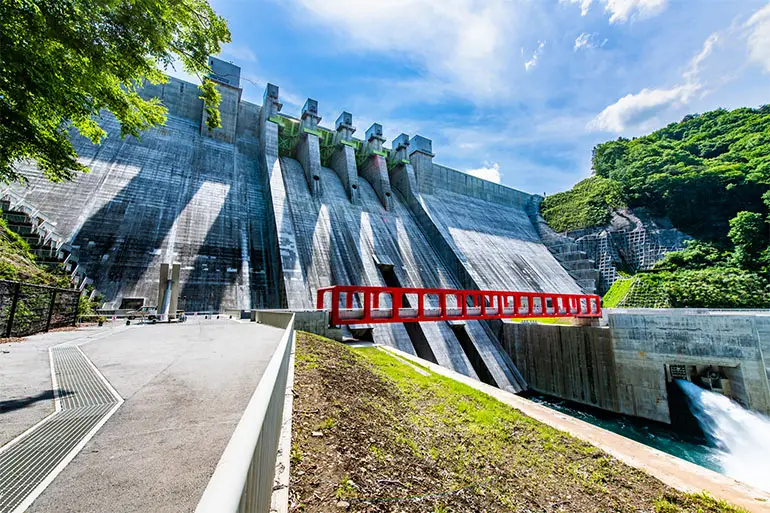
Yamba Dam is a concrete gravity dam on the middle reaches of the Agatsuma River, a tributary of the Tone River. Construction began in 1970 and was completed in 2020 — yes, 50 years later. The dam was built to help prevent flooding from the Tone River, secure water for daily life and industry in the Tokyo metropolitan area, and generate electricity.
The dam lake is called Yamba Agatsuma Lake, and since completion, the area has become a scenic spot where visitors can enjoy the lake, surrounding mountains, and dramatic dam views. From the Yamba Observation Deck, set on a hill, you can take in a panoramic view of the dam and Yamba Ohashi Bridge spanning the lake.
There is also a 4.6-kilometer walking course around the lake, which is ideal if you want a gentler outdoor stop rather than a full mountain adventure. Nearby attractions include Agatsuma Gorge and Kawarayu Onsen, which is said to have been discovered by Minamoto no Yoritomo and was relocated and rebuilt on the lakeshore after the dam was constructed.
Best Things to Do in Gunma: Takasaki/Fujioka Area
The Takasaki/Fujioka area sits in western Gunma and is packed with cultural heritage, mountain scenery, and historic sites. The headline attraction is Tomioka Silk Mill, a UNESCO World Heritage Site, but this region also includes Mount Myogi and Mount Haruna, two of the Three Famous Mountains of Joshu. So yes, this is where history buffs and mountain lovers can happily stop arguing and just go sightseeing together.
Mount Myogi
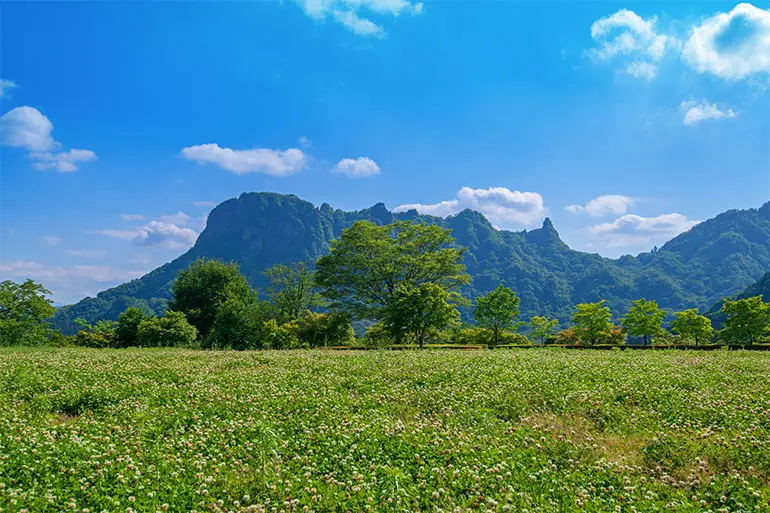
Mount Myogi stretches across Tomioka City, Annaka City, and Shimonita Town, and includes peaks such as Shirakumo-yama, Kindo-yama, Kinkei-yama, Soma-dake, and Ontake. Along with Mount Haruna and Mount Akagi, it is one of the Three Famous Mountains of Joshu.
Its jagged ridgeline is what makes it unforgettable. Mount Myogi is counted as one of Japan’s three most spectacular natural wonders, alongside Yabakei in Kyushu and Kankakei in Shikoku. Translation: this is not your gentle, polite little hill. This mountain came to make an entrance.
There are many maintained hiking and climbing routes, with views of rugged cliffs, strange rock formations, and the Kanto Plain. The scenery is especially beautiful during the fresh green season of early summer and the bright foliage of autumn.
In spring, Sakura no Sato is also popular, with around 5,000 cherry trees from about 45 varieties. At the eastern foot of Mount Shirakumo, the main peak of Mount Myogi, you’ll find Myogi Shrine, an ancient shrine founded in 537. Its ornate main shrine, main gate, and Chinese-style gate have earned it the nickname “Nikko of Joshu.” Not too shabby for a mountain shrine.
Mount Haruna
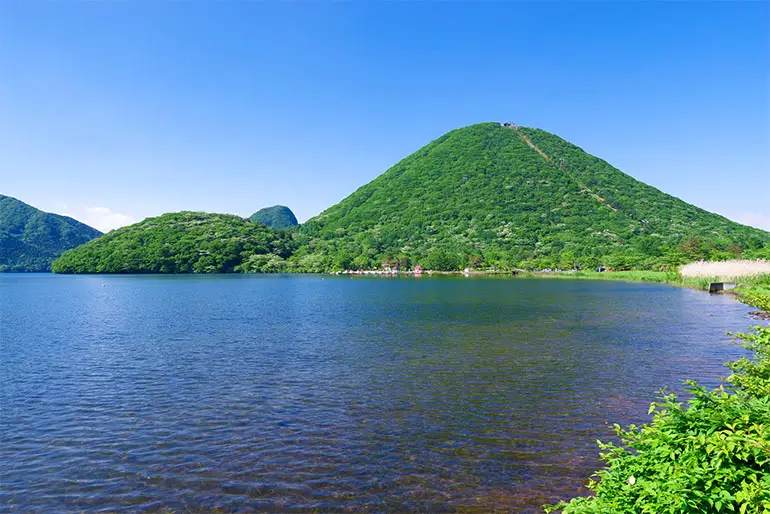
Mount Haruna is another of the Three Famous Mountains of Joshu, and it is affectionately known as Haruna Fuji because of its elegant shape. The mountain area includes several peaks, including Mount Kamongatake at 1,449 meters, with an outer rim surrounding Lake Haruna and Haruna Fuji rising from the central crater cone.
Lake Haruna sits at around 1,100 meters above sea level and is known as Japan’s second-highest-altitude lake. The scenery changes beautifully with the seasons, and the lake is popular for boating, sightseeing cruises, and auto camping.
The Haruna Mountain Ropeway runs from the lakeshore to the summit of Mount Haruna Fuji. The ride takes only about three minutes, which is perfect if you like mountain views but prefer not to earn every single one through sweating.
Also on the slopes of Mount Haruna is Haruna Shrine, often described as one of the most powerful spiritual spots in the Kanto region. Surrounded by unusual rock formations, the shrine has a mysterious atmosphere and is believed to grant wishes. We are not saying you should arrive with a full wish list, but also… why waste the opportunity?
Tomioka Silk Mill
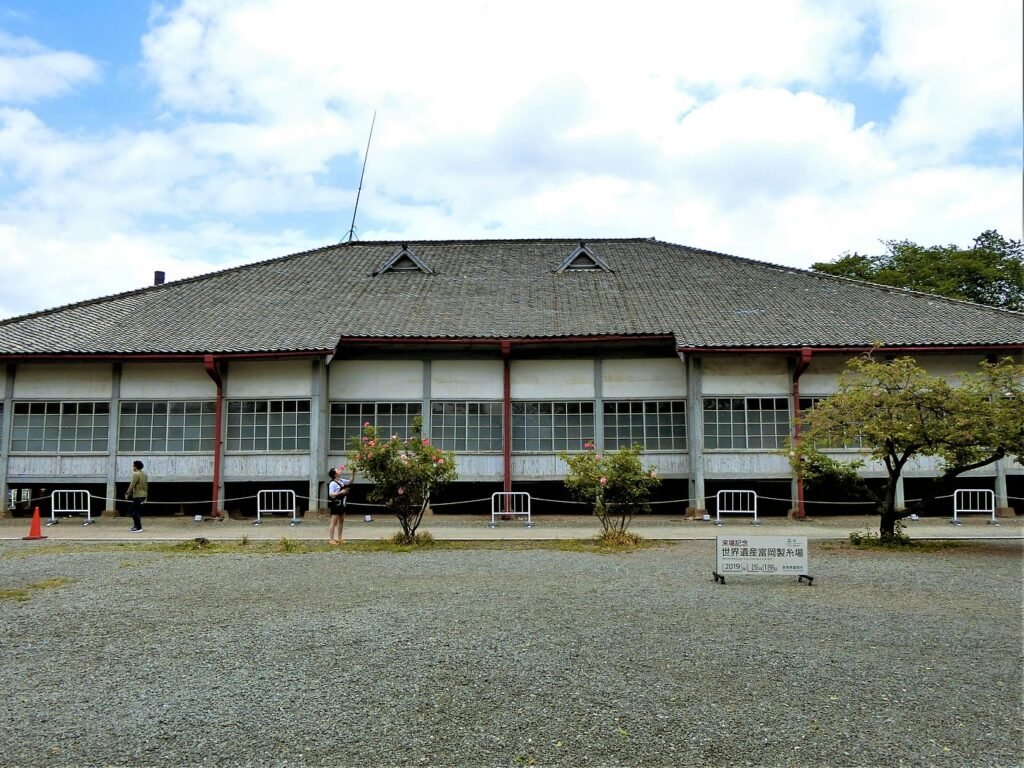
Tomioka Silk Mill was established in 1872 by the Meiji government as Japan’s first government-run model silk reeling factory. Built as part of the country’s modernization efforts, it was constructed under the guidance of French silk reeling engineer Paul Brunat.
The original buildings used a wooden-frame brick construction method, with brick walls built around a wooden frame, and much of the original structure remains intact today. If you enjoy industrial heritage, this is one of Gunma’s biggest must-sees. If you do not, it may still convert you. Historic brick buildings are sneaky like that.
The site was registered as a UNESCO World Heritage Site in 2014 as a birthplace of modern Japanese industry. Surviving facilities include the National Treasure Silk Reeling Factory and East Cocoon Storage Factory, as well as Important Cultural Properties such as the Chief’s Residence, Steam Boiler House, and Inspector’s Residence.
Visitors can take guided tours or use smartphone audio guides to understand the site’s history and the work of the people who helped shape Japan’s modern silk industry.
Konnyaku Park
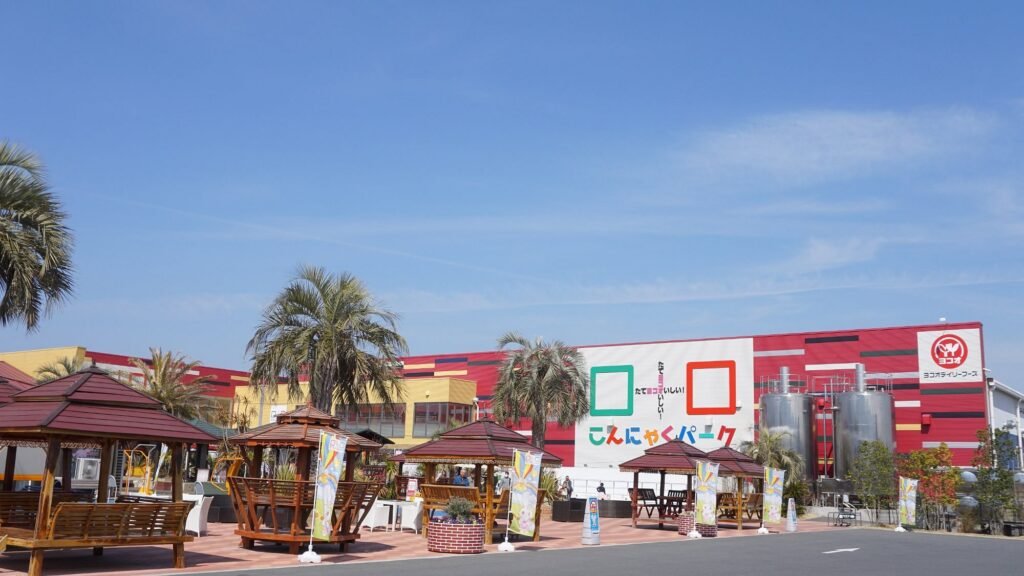
Konnyaku Park is exactly the kind of wonderfully specific attraction Japan does so well: a whole experience facility dedicated to konjac. It makes perfect sense in Gunma, which produces more konjac than anywhere else in Japan. The park is operated by Yokoo Daily Foods, one of the country’s leading konjac producers.
The facility is divided into three zones: a konjac and shirataki noodle factory area, a jelly factory area, and a buffet and souvenir zone. Factory tours cover three production lines — konjac sheets, shirataki noodles, and konjac jelly — and the automated process is surprisingly satisfying to watch.
After the tour, head to the Konjac Buffet, where you can try an all-you-can-eat selection of konjac dishes made at the park — free of charge. Yes, free. Gunma said, “Here, have unlimited konjac,” and honestly, who are we to argue?
There are also paid hands-on experiences, including handmade konjac jelly with fruit, konjac color magic, and handmade konjac courses. These are available for adults and children from elementary school age upward. Don’t miss the daily “all-you-can-fill konjac” and “all-you-can-fill jelly” events in the souvenir corner, because apparently leaving with a normal amount of konjac is not the mission here.
Best Things to Do in Gunma: Isesaki/Ota Area
The Isesaki/Ota area is one of Gunma’s main urban regions, but it still keeps plenty of old traditions and local legends tucked between its towns. This is where you’ll find Tsutsujigaoka Park, famous for azaleas since the Edo period, and Morinji Temple, known for the charming Bunbuku Chagama tale of a tanuki that transforms into a tea kettle. Yes, really. Gunma does not do boring folklore.
Tsutsujigaoka Park
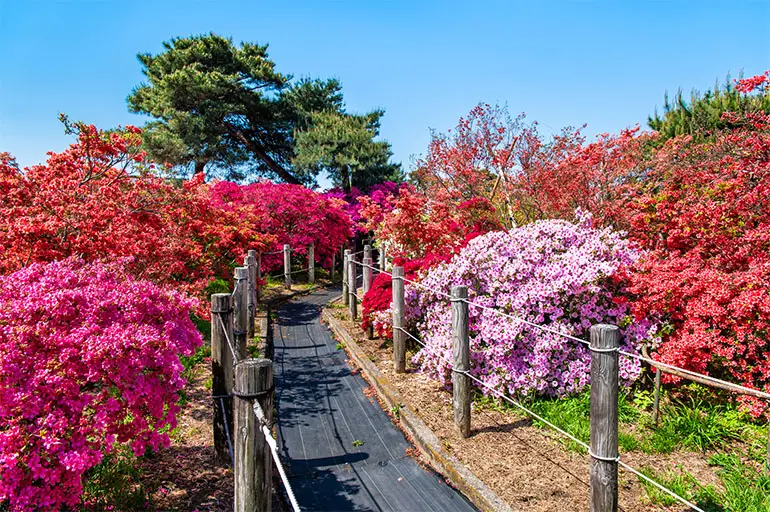
Tsutsujigaoka Park covers nearly 50,000 square meters and is one of Japan’s leading azalea parks, with more than 100 varieties and around 10,000 azalea bushes blooming every spring. The area has long been known as a habitat for wild mountain azaleas, and during the Edo period, successive lords of Tatebayashi Castle transplanted azaleas from different regions to develop the park.
Although the park fell into disrepair after the Meiji Restoration, it was later restored, and azalea planting and park development continued through the Meiji, Taisho, and Showa periods. The result is a floral landmark with serious historical roots — not just a pretty place to take spring photos, though yes, you will absolutely take spring photos.
The park is home to valuable azaleas, including giant mountain azaleas more than 800 years old, ancient Edo Kirishima azaleas, and even a “space azalea” that was carried aboard the Space Shuttle. Tatebayashi City has also registered its own original azalea variety.
Highlights include Hanayama, designated as a national scenic spot under the name Tsutsujigaoka; the Tsutsuji Video Learning Center, which has a 4D theater with 3D visuals, vibrations, mist, and wind; Jōnuma, where visitors can enjoy azaleas in spring and lotus flowers in summer from a sightseeing boat; and the Large Lawn Plaza, which covers about 10,000 square meters.
Morinji Temple
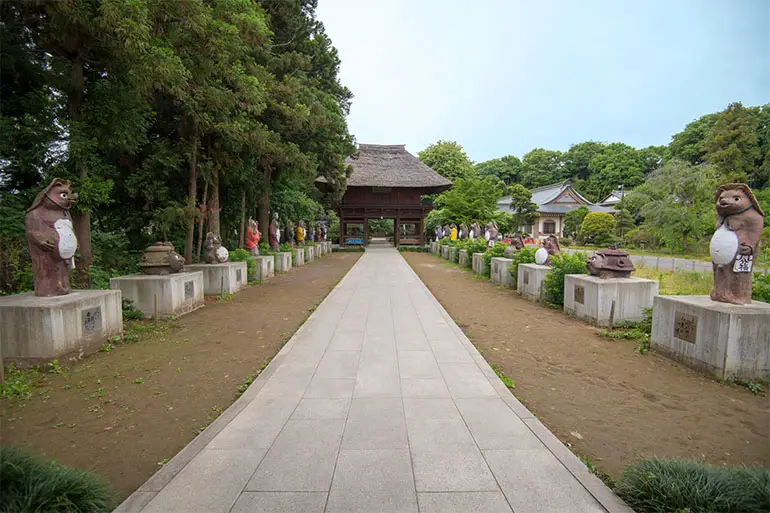
Founded in 1426, Morinji Temple is a Soto Zen temple best known for the fairy tale Bunbuku Chagama, in which a tanuki transforms into a tea kettle. The story is based on an old temple anecdote involving a hot water kettle used to serve guests during a thousand-person Buddhist service held at Morinji Temple in 1570.
The tale became widely known when Iwaya Sazanami, a writer from the Meiji and Taisho periods, turned it into the fairy tale Bunbuku Chagama. And yes, this means you are visiting a temple where tea-kettle folklore is part of the main attraction. Excellent.
The approach begins at the Kuromon gate, built in 1468, and is lined with 21 tanuki statues. Each one has its own humorous expression, greeting visitors like a tiny army of mischievous raccoon dogs. Inside the main hall, you can see the Bunbuku Chagama tea kettle up close.
You can also pick up good luck charms connected to the wordplay around tanuki, which sounds like a phrase meaning “to surpass others.” Nearby Morinji Park contains Morinji Marsh and Lowland Wetland, designated as a natural monument of Gunma Prefecture, so it is worth visiting both the temple and park together.
Morinji Temple | Experience, History and Culture
Address: 1570 Horikomachi, Tatebayashi City
URL: https://morinji.com/
Best Things to Do in Gunma: Tone-Numata Area
The Tone-Numata area sits in northwestern Gunma and is where the prefecture goes big on outdoor drama. Think the Tanigawa mountain range, Fukiware Falls, Oze Marsh, river sports along the upper Tone River, winter sports, and valley hot springs like Minakami Onsen. This is the area for people who like their travel with fresh air, big scenery, and a hot bath waiting at the end.
Tambara Lavender Park
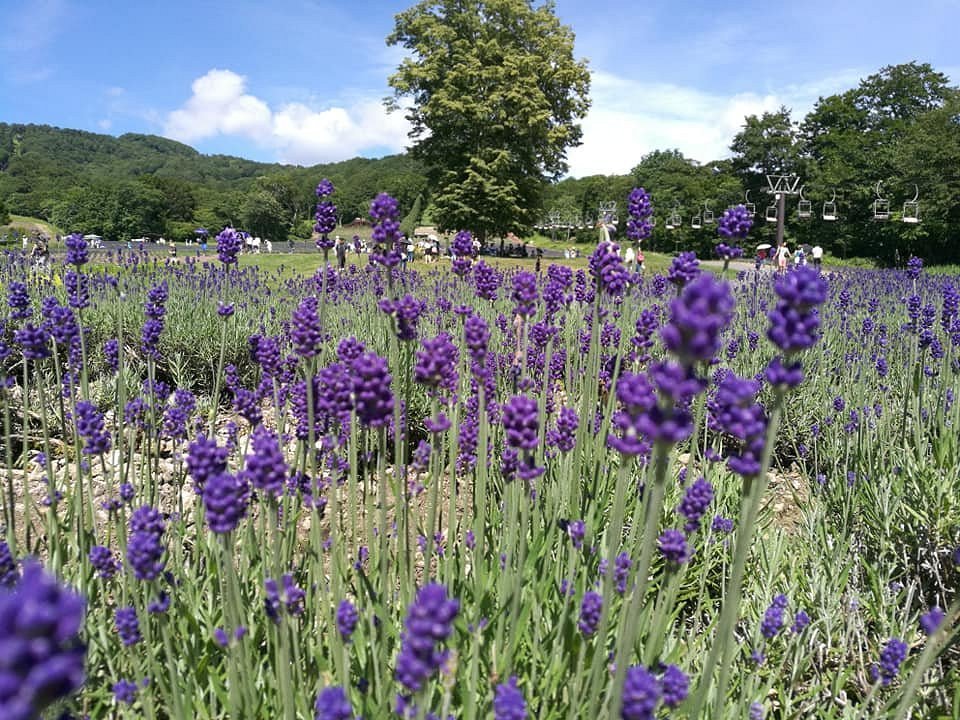
Located at around 1,300 meters above sea level, Tambara Plateau is known as a cool summer retreat and a winter ski resort. Every summer, the ski slopes transform into Tambara Lavender Park, where around 50,000 lavender plants bloom across a 200,000-square-meter area.
The park grows lavender varieties with different flowering times, so the season stretches longer than you might expect. Early-blooming Koimurasaki starts in early July, followed by mid-blooming Nananarisawa and then Grosso. Basically, the lavender takes turns being fabulous.
During the opening period, the lift operates, giving visitors an aerial view over the lavender fields and plateau trees. You can also enjoy flower picking, shop for lavender products, and try original lavender-themed menu items. Yes, lavender is pretty. Yes, you may leave smelling like a boutique candle. Accept it.
Minakami Onsen
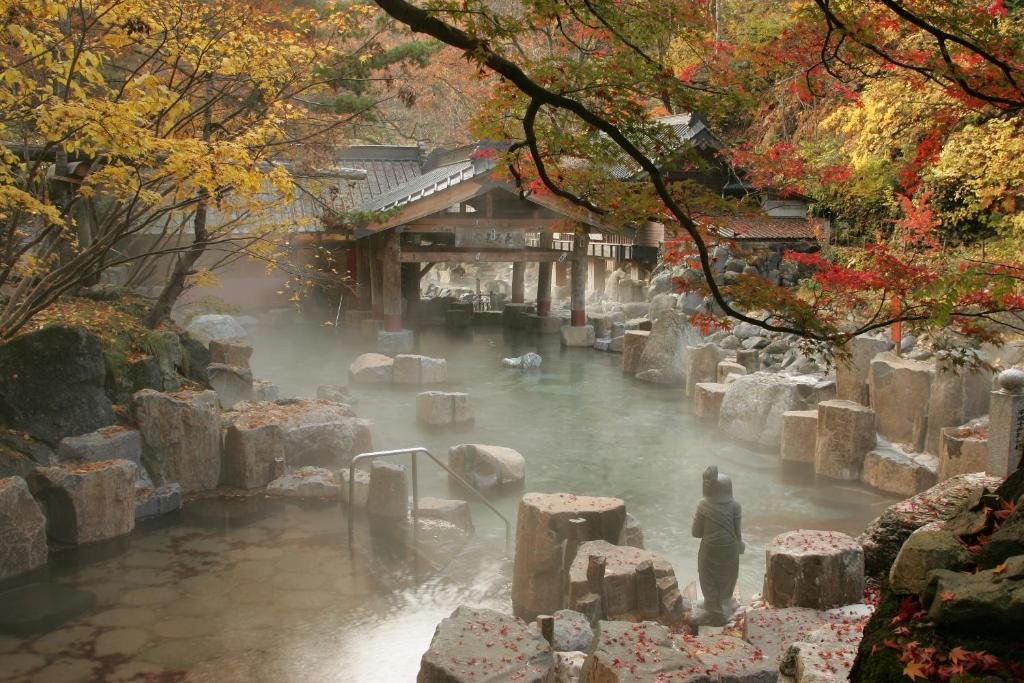
Minakami Onsen is nestled along the upper Tone River at the foot of Mount Tanigawa, with traditional inns gathered tightly in the valley. It is one of Gunma’s leading hot spring areas, alongside Kusatsu, Ikaho, and Shima.
The hot spring is said to have opened during the Eiroku era, from 1558 to 1570, making it a very old onsen with serious literary credentials. It became widely known through poet Wakayama Bokusui’s Minakami Travelogue, and has been visited by literary figures including Dazai Osamu, Kitahara Hakushu, and Yosano Akiko.
Minakami Onsen blends classic hot spring town atmosphere with the rugged beauty of the surrounding gorge. Nearby Suwa Gorge has unusual rock formations, literary monuments, and a walking path along the stream. In autumn, the foliage is gorgeous, while at night, Minakami Bridge and Yuhara Bridge over the Tone River are illuminated, creating a dreamy valley scene.
The spring water is a calcium sulfate spring, often called a “beauty spring” because it leaves the skin feeling smooth. You can enjoy it at inns, day-use hot spring facilities, and places like Fureai Koryukan, which has a footbath.
Oze Marsh
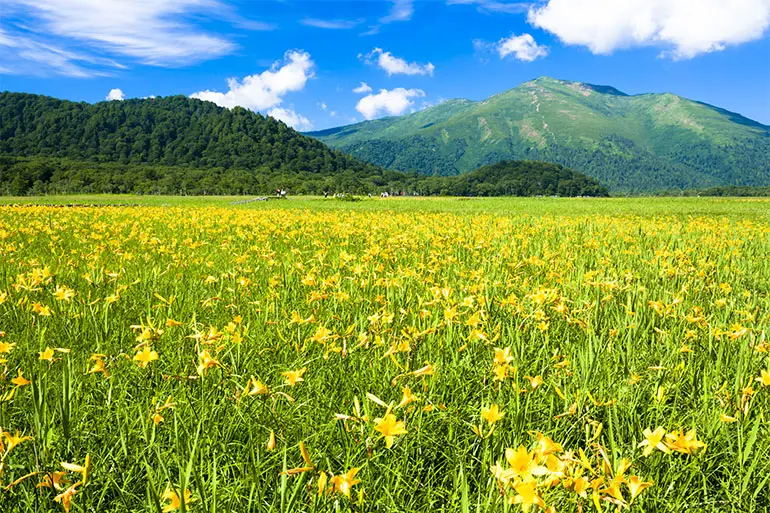
Oze refers to a broad basin spanning Gunma, Niigata, and Fukushima prefectures, centered around Ozegahara Marsh and Oze Marsh. Surrounded by mountains such as Mount Shibutsu and Mount Hiuchigatake, both counted among Japan’s 100 Famous Mountains, Oze is one of Japan’s most important high-altitude wetlands.
The area is designated as a national park, a national special natural monument, and a Ramsar Convention wetland. In other words, this is not just “a nice marsh.” This is nationally protected, internationally recognized, please-stay-on-the-boardwalk territory.
Ozegahara, in the western part of Oze, is a vast wetland stretching roughly 6 kilometers east to west and 2 kilometers north to south. It is a dream destination for hikers, with wooden paths crossing open marshland and mountain views all around.
The area is usually covered in snow until early May, with snowmelt beginning around mid-May and the first snowfall often arriving around late October. Through the hiking season, you can see skunk cabbage, cotton grass, rhododendrons, iris clusters, and autumn-colored grasses. Day hikes are possible, but spending the night in a mountain hut lets you experience Oze at dusk, dawn, and under the stars — which is where the magic really starts showing off.
Fukiware Falls
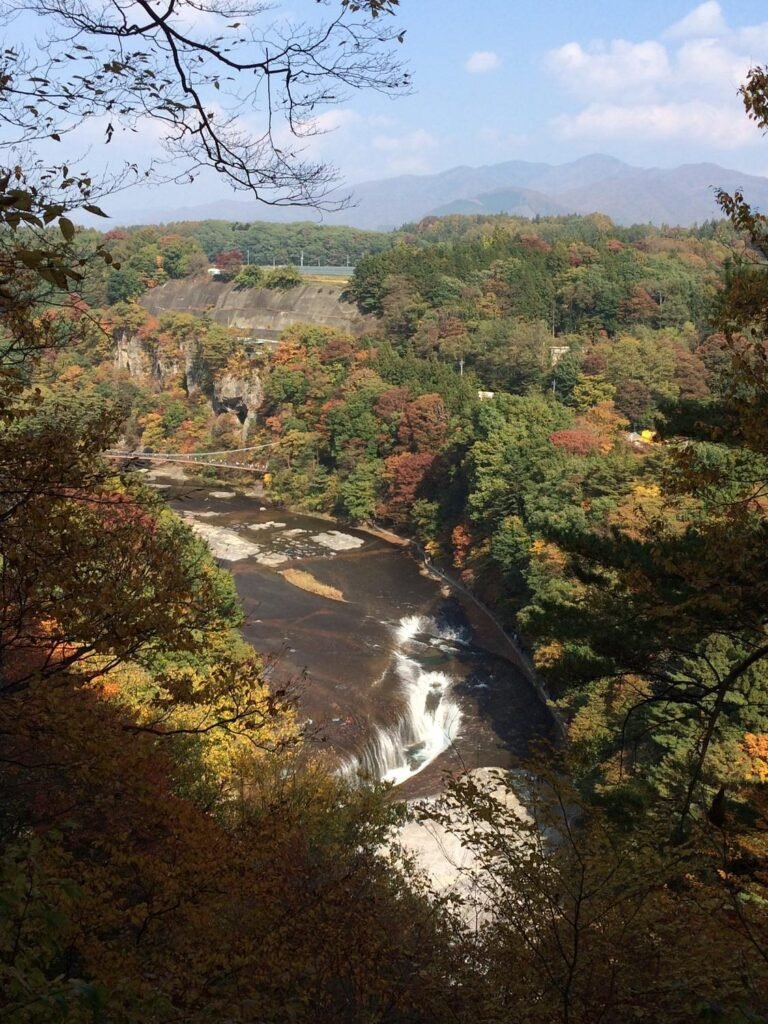
Fukiware Falls is a powerful waterfall in Katashina Gorge, where strangely shaped rocks stretch for about 1.5 kilometers. The waterfall is around 7 meters high and 30 meters wide, and it crashes into a V-shaped valley carved by erosion.
Because the water pours down from three directions with dramatic force, Fukiware Falls is nicknamed the “Niagara of the East.” Is it actually Niagara? No. But does it make a grand, roaring impression? Absolutely.
The name comes from the way the clear waters of the Katashina River flow over tuff and granite, eroding softer rock and creating cracks that make the riverbed look as if a giant boulder has been split apart.
Walking trails around the gorge lead to several scenic points, including Masutobi Falls, the Shishiiwa rock formations, the dramatic Hannya-iwa landscape, historic Ukishima Kannon-do, and views from Ukishima Bridge and Kanbakudai. It is an easy place to wander slowly — mostly because every few meters, the gorge demands another look.
Tanigawadake
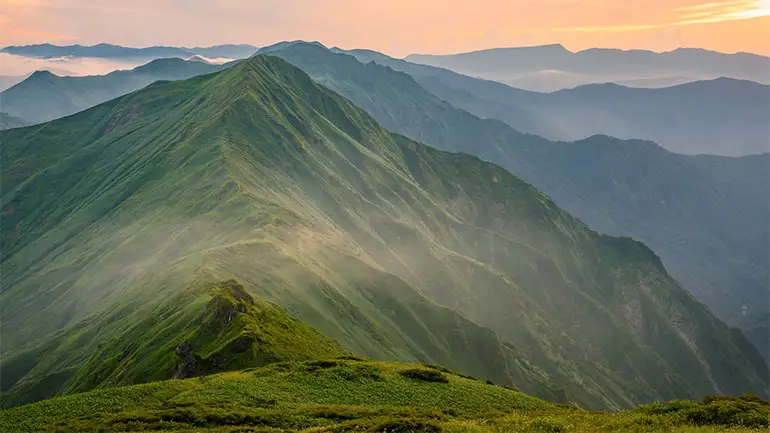
Tanigawadake sits on the border between Gunma and Niigata prefectures, also known as the Joetsu border. Part of the Mikuni Mountain Range, it is one of Japan’s 100 Famous Mountains and has two main peaks: Oki-no-mimi at 1,977 meters and Toma-no-mimi at 1,963 meters.
Seen from the south, the twin peaks are said to look like cat ears. Cute image, serious mountain. Tanigawadake is famous for its beauty, but also for its rugged terrain and quickly changing weather.
The area is accessible from JR Doai Station and draws hikers with routes ranging from beginner-friendly trails to advanced climbs. The steep Ichinokurasawa area is especially famous as a rock-climbing mecca.
Because weather conditions can change rapidly and some sections are dangerous, beginners should go with an experienced climber and bring proper equipment. This is not the place for “we’ll just wing it” energy. Tanigawadake is magnificent, but it expects respect.
FAQs About Visiting Gunma
Is Gunma worth visiting?
Yes, Gunma is absolutely worth visiting if you love hot springs, mountain scenery, hiking, waterfalls, flower parks, and quieter cultural spots. It is especially good for travelers who want a break from Japan’s major tourist cities without going completely off-grid. Kusatsu Onsen, Ikaho Onsen, Mount Akagi, Oze Marsh, and Tomioka Silk Mill are all strong reasons to add Gunma to a Japan itinerary.
What is Gunma best known for?
Gunma is best known for its hot springs, especially Kusatsu Onsen, Ikaho Onsen, Shima Onsen, and Minakami Onsen. It is also famous for mountain landscapes, including Mount Akagi, Mount Haruna, Mount Myogi, and Tanigawadake, plus cultural sites like Tomioka Silk Mill, a UNESCO World Heritage Site. Food-wise, Gunma is also known for konjac, which explains the wonderfully specific Konnyaku Park.
How many days do you need in Gunma?
For a quick taste of Gunma, one or two days is enough to visit one hot spring town and a nearby attraction. For a better trip, plan three to four days so you can combine Kusatsu or Ikaho Onsen with Mount Haruna, Mount Akagi, Tomioka Silk Mill, or a scenic nature spot. If you want to hike Oze Marsh or explore Minakami and Tanigawadake, give yourself extra time because the mountains do not care about your rushed itinerary.
Can you visit Gunma as a day trip from Tokyo?
Yes, parts of Gunma can be visited as a day trip from Tokyo, especially Takasaki, Tomioka Silk Mill, Maebashi, or Ikaho Onsen. However, for places like Kusatsu Onsen, Shima Onsen, Oze Marsh, or Minakami, staying overnight is much more enjoyable. Gunma is not difficult to reach, but some of its best spots are spread out, so a day trip can feel a bit like trying to eat a full kaiseki meal in five minutes.
What are the best onsen towns in Gunma?
The best onsen towns in Gunma include Kusatsu Onsen, Ikaho Onsen, Shima Onsen, and Minakami Onsen. Kusatsu is the most famous and has the dramatic Yubatake hot spring field in the town center. Ikaho is loved for its historic stone steps. Shima Onsen feels quieter and more nostalgic, with beautiful blue lake scenery nearby. Minakami Onsen is a great choice if you want hot springs plus outdoor activities around the Tone River and Mount Tanigawa.
What are the best things to do in Gunma with kids?
Some of the best things to do in Gunma with kids include Kaneko Seedling Gunma Flower Park, Konnyaku Park, Lockhart Castle, Tambara Lavender Park, Ikaho Green Ranch, and easy nature spots around Lake Haruna or Mount Akagi. Konnyaku Park is especially family-friendly because it offers factory tours, food tastings, and hands-on experiences. Lockhart Castle is fun for children who like dress-up, castles, dinosaurs, or anything vaguely fairytale-shaped.
When is the best time to visit Gunma?
The best time to visit Gunma depends on what you want to do. Spring is lovely for cherry blossoms, azaleas, and flower parks. Summer is good for highland escapes like Tambara Lavender Park, Oze Marsh, and mountain areas. Autumn is one of the best seasons for foliage around Agatsuma Gorge, Mount Haruna, Mount Akagi, and Shima Onsen. Winter is ideal for hot springs and snow scenery, especially if you want that classic “steaming onsen in cold air” experience.
Do you need a car to travel around Gunma?
You do not strictly need a car to visit Gunma, but having one makes the trip much easier, especially if you want to combine mountains, hot springs, flower parks, and rural attractions. Major cities and some onsen towns can be reached by train and bus, but public transport may be less frequent in mountain areas. If you are only visiting places like Takasaki, Tomioka, or Ikaho, public transport can work. For a wider Gunma road trip, a rental car is usually the smoother option.
What food should you try in Gunma?
In Gunma, try konjac dishes, local udon, onsen manju in hot spring towns, and regional mountain-style meals at inns and roadside stations. Konnyaku Park is the obvious stop if you want to try konjac in multiple forms, from savory dishes to jelly. Around Ikaho and Kusatsu, look for hot spring sweets, local snacks, and simple comfort food that tastes especially good after a long soak or a suspiciously ambitious staircase climb.
What is the most famous place in Gunma?
Kusatsu Onsen is probably the most famous place in Gunma, thanks to its powerful hot spring waters, central Yubatake, and long history as one of Japan’s top onsen destinations. Tomioka Silk Mill is also one of Gunma’s most famous attractions because it is a UNESCO World Heritage Site and an important symbol of Japan’s modern industrial history.
- Nagoya rainy day with kids in 2026 (Cool Indoor Things to Do )
- Best Gachapon in Tokyo (2026): 20 Places to Find Capsule Toys

- All Japanese KitKat Flavours List: The Ultimate Japan KitKat Guide
- Sapporo rainy day with kids (2026): 7 Cool Indoor Things to Do
- What To Do In Arashiyama With Kids: A Realistic One-Day Family Itinerary