

I spill travel tips , and show you the Japan that tourists usually miss.
In this guide, we’ll share plenty of ideas on what to do in Kanazawa so you can make the most of your stay—both in the city itself and in nearby destinations. If you combine Kanazawa with Takayama or Shirakawago in the heart of the Japanese Alps, your trip will be truly unforgettable.
Table of Contents
About Kanazawa
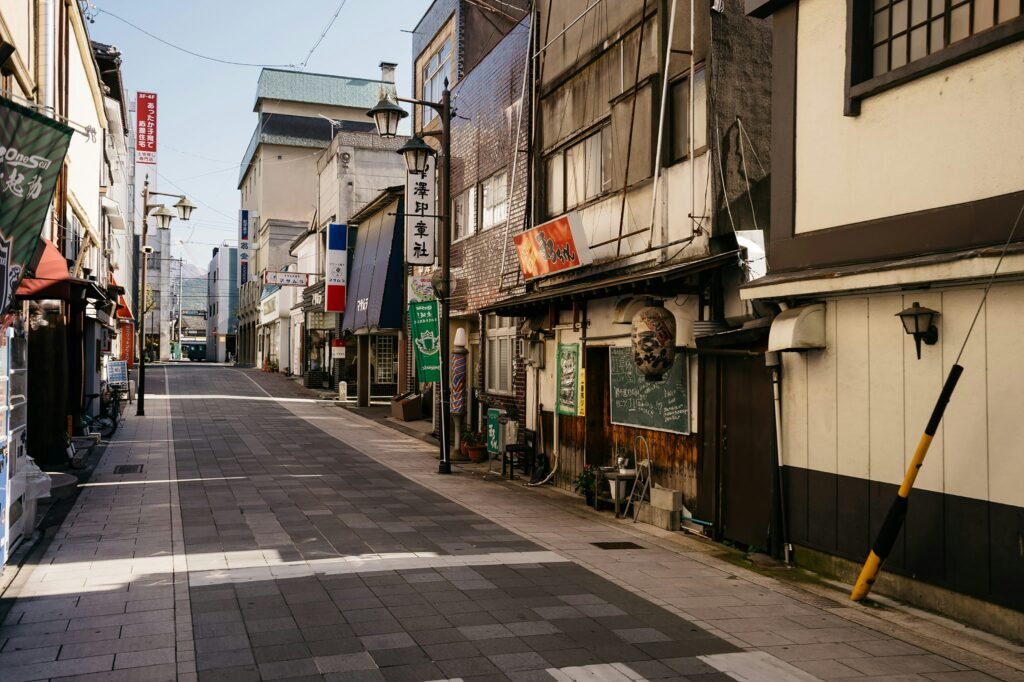
Kanazawa (金沢) is one of the most fascinating cities on the Sea of Japan coast, right in the heart of the Chubu region. Located in Ishikawa Prefecture, it was historically the seat of the powerful Maeda clan, one of the most influential feudal families of the Tokugawa period.
Until a few years ago, getting to Kanazawa meant several hours on the road or rails, and yet the city was already hugely popular with both Japanese and international visitors.
Thanks to the opening of the Hokuriku Shinkansen line, which now links Tokyo and Kanazawa by bullet train in just 2 hours and 28 minutes, tourism has grown dramatically. And honestly, Kanazawa absolutely deserves all the attention it’s getting.
How to get to Kanazawa
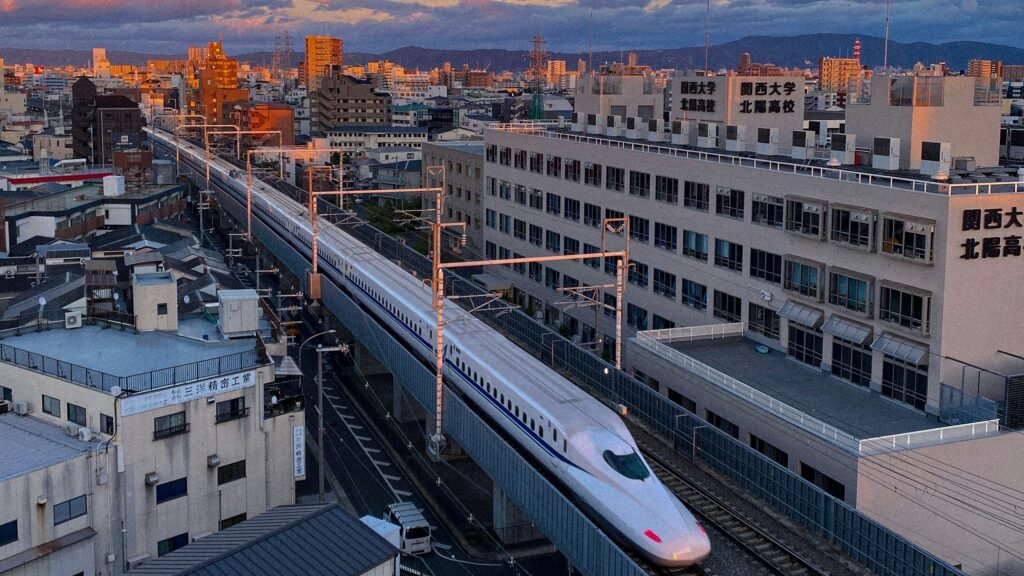
The easiest way to get to Kanazawa is by shinkansen from Tokyo, or by taking a limited express train followed by a shinkansen if you are coming from Kyoto.
The whole train journey is covered by the JR Pass and by the Hokuriku Arch Pass, so if you have either of them, you won’t need to pay extra. The nearest airport is Komatsu, which is useful if you’re coming from farther afield and want to reach Kanazawa quickly.
Purchase the Hokuriku Arch Pass
If you’re planning to follow the New Golden Route, the Hokuriku Arch Pass is your best ally, as it covers the bullet train from Tokyo to Kanazawa and the trains from there to Kyoto, Nara, and Osaka.
From Tokyo
From Tokyo, take a Hokuriku Shinkansen to Kanazawa (2.5 to 3 hours, covered by the JR Pass). On this line you do not need to reserve space for large luggage.
Alternatively, if you want to spend less and don’t have a JR Pass, you can take a highway bus from Tokyo to Kanazawa (about 8 hours, not covered by the JR Pass).
Another option is to fly: JAL and ANA operate flights between Haneda Airport and Komatsu Airport (about 1 hour). From Komatsu Airport, it’s around 45 minutes by bus to Kanazawa.
From Kyoto/Osaka
With the extension of the Hokuriku Shinkansen line from Kanazawa to Tsuruga, the way to reach Kanazawa from Kyoto has changed. Now, if you are traveling from Kyoto, take a Thunderbird limited express train to Tsuruga and transfer there to a Shinkansen to Kanazawa (around 1 hour and 46 minutes, covered by the JR Pass). Despite the transfer, the journey is now shorter than when the whole route was done only on the Thunderbird. You do not need a large-luggage reservation on these trains.
Alternatively, you can take a highway bus operated by Hokutetsu or Nishinihon JR Bus from Kyoto to Kanazawa (about 4 hours, not included in the JR Pass).
From Takayama/Shirakawago
Many travelers visit Takayama, Shirakawago, and Kanazawa on the same trip, so it’s useful to know how to move between these places.
From Takayama, take the Hida Limited Express train to Toyama (about 1.5 hours, covered by the JR Pass), then transfer to a Hokuriku Shinkansen to Kanazawa (23 minutes, also covered by the JR Pass). Total travel time is around 2 hours, fully covered by the JR Pass, and no large-luggage reservation is required.
Alternatively, there are highway buses that connect Kanazawa and Takayama via Shirakawago. The full journey takes about two hours.
Buy Takayama–Shirakawago–Kanazawa bus tickets
If you are planning a day trip to Shirakawago from Takayama or stopping there on your way to Kanazawa, you can book your bus tickets in advance online.
From the region of the five lakes and Mount Fuji
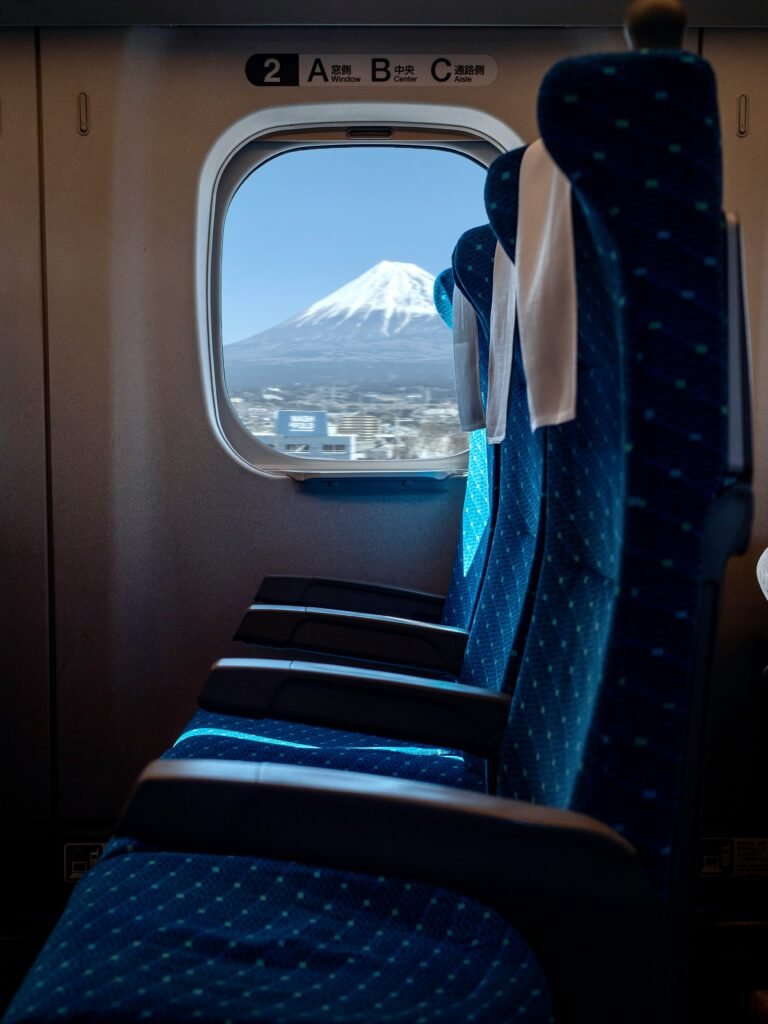
Other travelers choose to visit Kanazawa from the Fuji Five Lakes region, especially from Hakone or Kawaguchiko. We’ll explain how, although in most cases the route essentially involves returning to Tokyo and continuing on to Kanazawa from there.
From Hakone, take a Hakone Tozan train from Hakone-Yumoto to Odawara (15 minutes, not covered by the JR Pass), then a Tokaido Shinkansen to Tokyo (35 minutes, covered by the JR Pass). In Tokyo, follow the steps mentioned above. Only the bullet-train leg requires a reservation for large suitcases.
The total journey time is roughly 4 hours and is almost entirely covered by the JR Pass. You’ll only need to pay for the Hakone-Yumoto–Odawara segment.
From Kawaguchiko, take a Fujikyu private railway train to Otsuki Station (1 hour 5 minutes, not included in the JR Pass), then a Kaiji limited express train to Shinjuku Station (about 1 hour, covered by the JR Pass).
From Shinjuku, take a train on the JR Shonan-Shinjuku Line to Omiya (31 minutes, covered by the JR Pass). Finally, from Omiya, take a Hokuriku Shinkansen to Kanazawa (about 2.5 hours, covered by the JR Pass). In this case, you do not need a large-luggage reservation from Kawaguchiko.
The total journey time is around 5 hours and is almost entirely covered by the JR Pass. You will only need to pay for the train between Kawaguchiko and Otsuki.
Enjoy Kanazawa!
How to get around Kanazawa
Central Kanazawa is quite compact and easy to explore on foot. However, if you’d rather not walk too much, we recommend the following bus options:
- JR buses: These are covered by the JR Pass, the Hokuriku Area Pass, and the Kansai-Hokuriku Area Pass, making them an excellent option if you have one of these passes. There are two lines, both departing from bay number 5 at Kanazawa Station.
- Kanazawa Loop Bus: These sightseeing buses operate on circular routes around the main attractions. There are two lines departing from bay number 6 at Kanazawa Station. A single ride costs 200 yen, and a day pass costs 600 yen.
- Kenrokuen Shuttle: This bus takes you directly to Kenrokuen Gardens and the castle area. It departs from bay number 7 at the station and costs 200 yen per ride.
What to do in Kanazawa
The beautiful Kanazawa Station
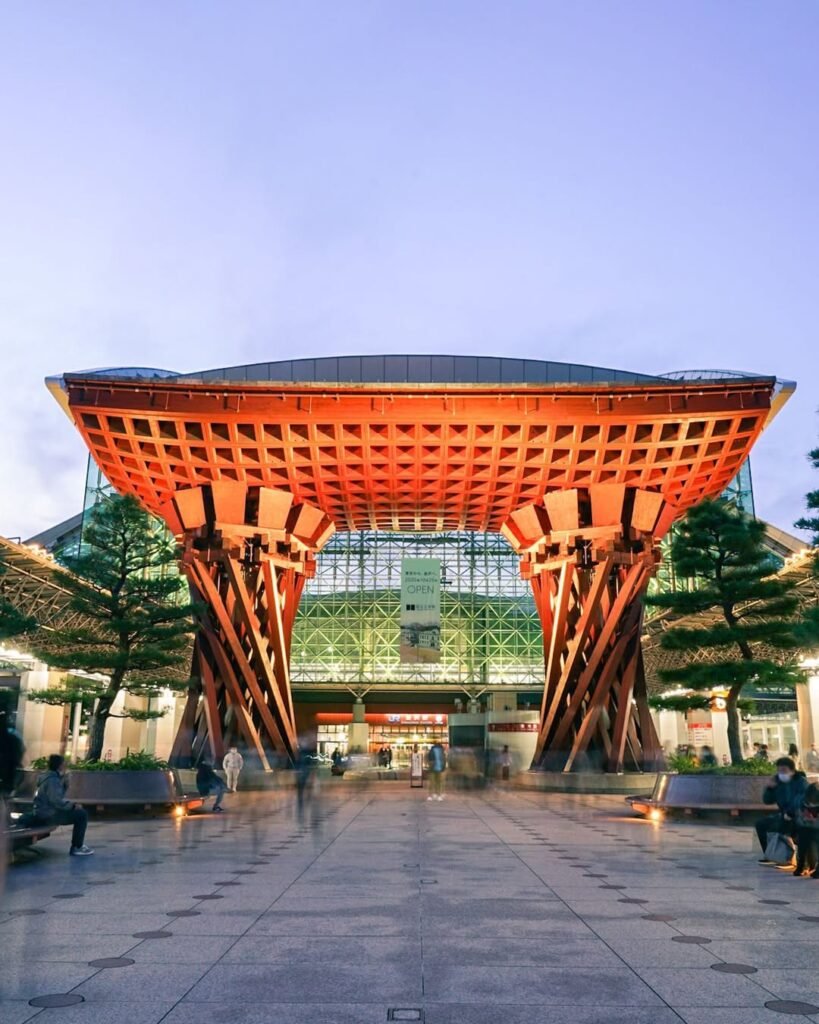
A great place to start your visit is the striking Kanazawa train station, now even more impressive since it became a stop for high-speed shinkansen trains on the Hokuriku line.
In March 1991, the commercial complex known as Kanazawa 100 Ban-gai opened inside the station. Later, on March 20, 2005, the iconic Tsuzumi Gate (on the east side of the station) and the Motenashi Dome were completed. These additions transformed the look of the station and made it instantly recognizable.
A tsuzumi is a Japanese drum of Chinese/Indian origin, with a distinctive hourglass shape. Given the size of the JR Kanazawa Station gate (13.5 meters high and 24 meters wide), the resemblance can feel a bit abstract—many people think it looks more like a gigantic torii gate.
The Motenashi Dome is the huge glass structure that stretches behind and around the gate, covering much of the station plaza and acting like a giant transparent umbrella that shelters visitors from rain and snow.
Another highlight in the square at the east exit is the fountain clock. Watching it display the time—and even messages in English and Japanese—by forming kanji characters with perfectly controlled jets of water is genuinely spectacular.
All of this was part of the JR Kanazawa Station redevelopment project, which took seven years, cost more than 17 billion yen, and was finally completed in 2005.
Geisha districts of Kanazawa
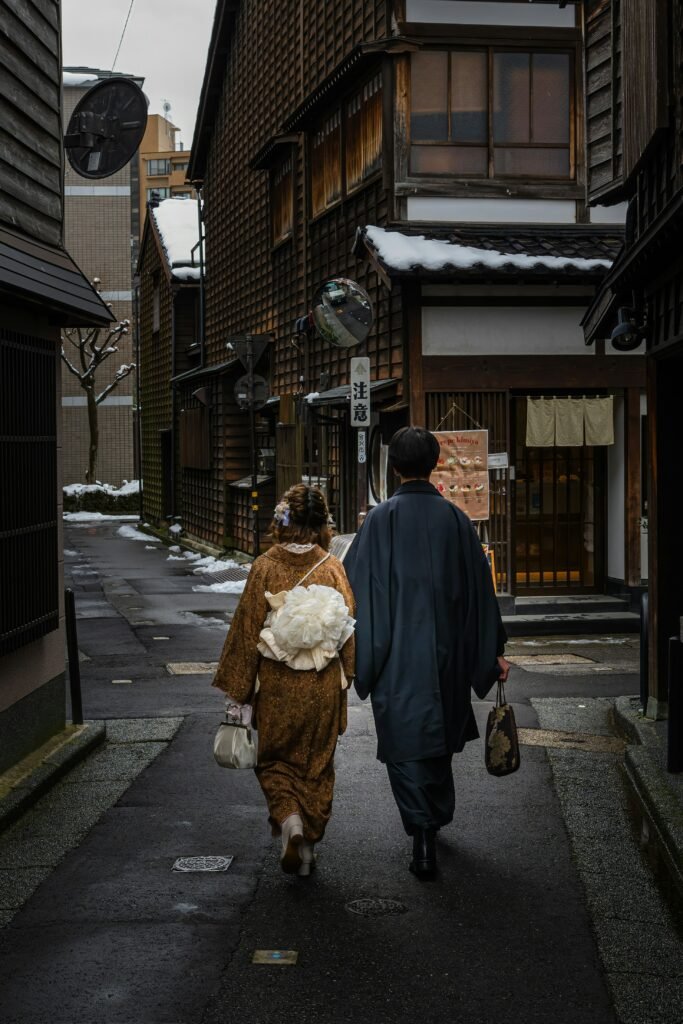
Another essential part of any visit to Kanazawa is the feeling of stepping back in time as you stroll through the geisha districts of Higashi Chaya and Kazuemachi.
As you explore the geisha districts, you can shop for pieces decorated with gold leaf, one of Kanazawa’s signature crafts, and sample local treats along the way—croquettes with unusual fillings, fragrant teas, and ice creams topped with gold leaf, for example.
It’s also a wonderful area to try local kaiseki-style cuisine at one of the traditional restaurants.
Omicho Market and its 180 stalls
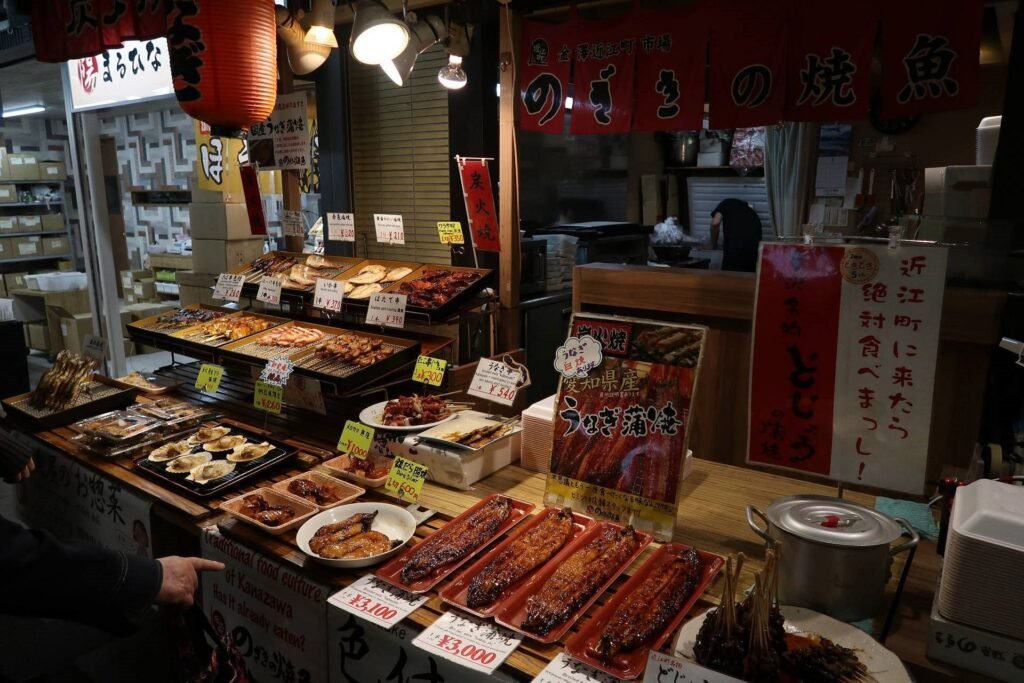
When it comes to food, Kanazawa offers temptations everywhere, but we especially recommend visiting Omicho Market. This is where many locals do their daily shopping, and it’s the perfect place to soak up the colors, aromas, and textures of fresh local produce.
You’ll find small stalls selling oysters, sushi, seasonal fruit, fish, meat, mushrooms… practically everything. With up to 180 stalls, you can graze your way through the market trying different bites, or sit down at one of the sushi restaurants for incredibly fresh seafood.
Kenrokuen Gardens, one of the three most beautiful gardens in Japan
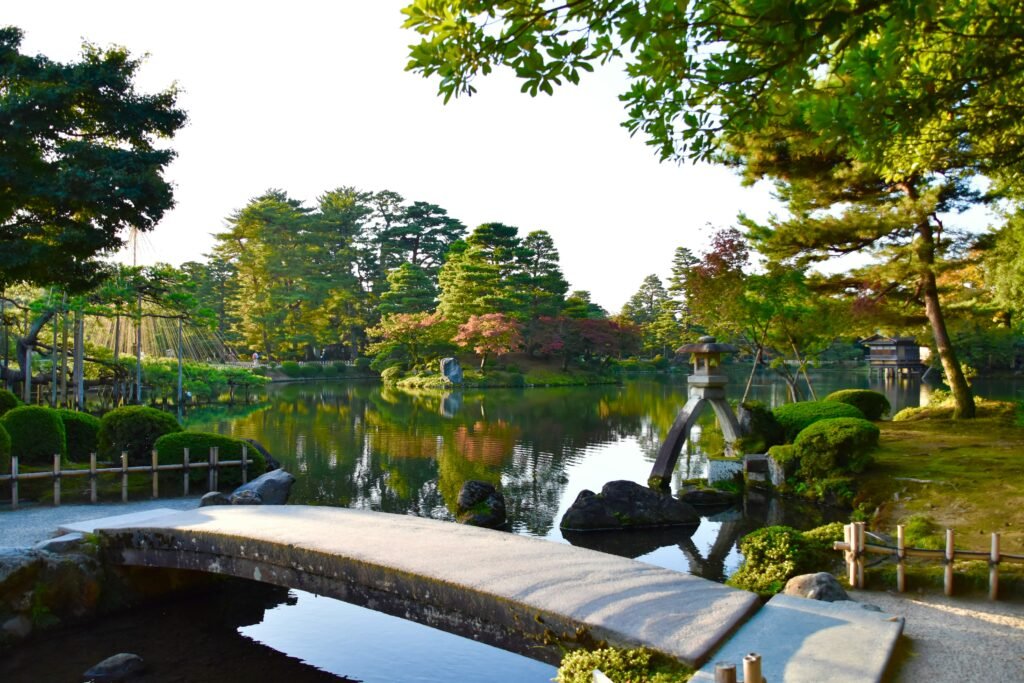
Strolling through one of the three most beautiful gardens in all of Japan (the so-called “Nihon Sanmei”) is a real privilege. We’re talking about Kenrokuen Gardens, one of Kanazawa’s star attractions for both Japanese and international visitors.
You can rent a kimono from one of the nearby shops and wander through the garden paths in traditional dress, or simply enjoy the scenery and seasonal views at your own pace.
Kanazawa Old Castle Park
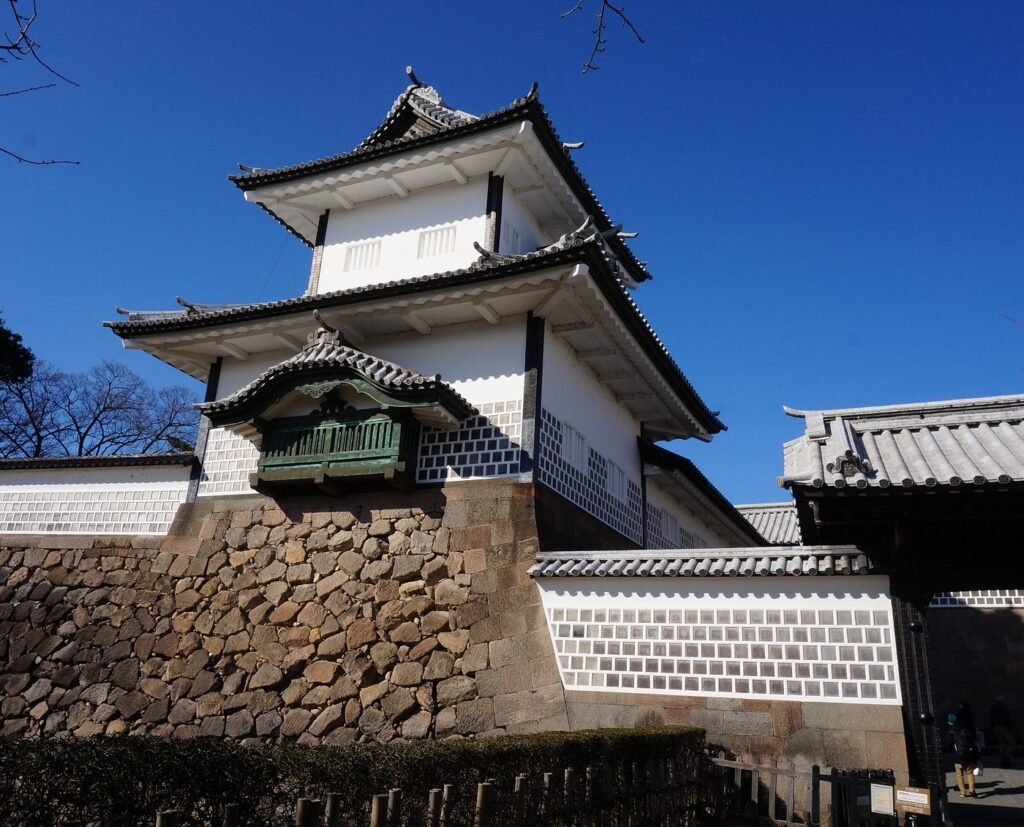
Very close to the gardens stands the famous and imposing Ishikawa Gate, which marks the entrance to the park of the former Kanazawa Castle, parts of which have been faithfully reconstructed.
Because it’s right next to Kenrokuen, it’s well worth taking some time to stroll through the castle park, pause for a breather between sights, or sit down with an onigiri and simply watch everyday life unfold around you.
You can also enjoy a bowl of matcha green tea and a traditional Japanese sweet at the Gyokusen’inmaru Gardens teahouse. Afterwards, wander through these beautiful gardens at the foot of the old Kanazawa Castle Park.
The original gardens were destroyed during the Meiji period, but in 2008 the city decided to restore them. Today they are a precious example of Edo-period landscape garden design.
Opposite the gardens stands Oyama Shrine, built in 1599 and dedicated to Maeda Toshiie, the first lord of the Maeda clan. If you’re nearby and have some time, it’s definitely worth a visit.
If you’re interested in art, we also recommend visiting the surrounding museums: from the crafts museum to the Honda family museum (dedicated to family heirlooms, not cars) and the prefectural history museum, all located around the gardens and the old castle park.
Perhaps the most famous of all is Kanazawa’s 21st Century Museum of Contemporary Art. Alongside its collections and exhibitions, the building itself is a work of art. It opened in 2004 and was designed by architects Sejima Kazuyo and Nishizawa Ryue of SANAA.
Samurai neighborhood
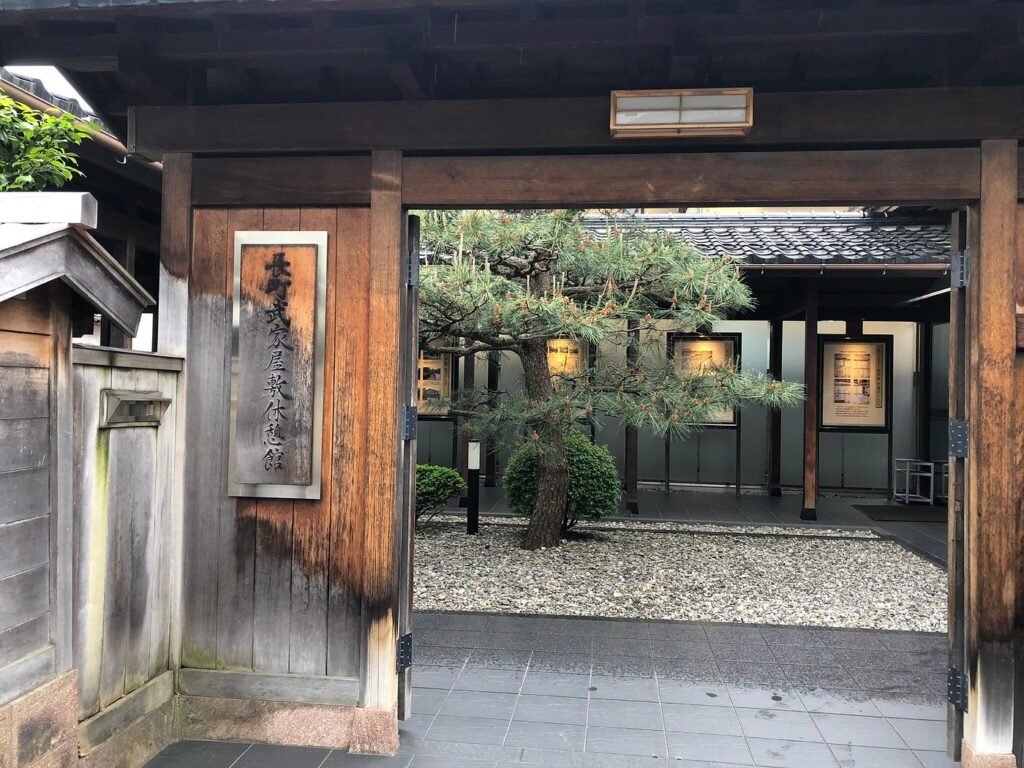
You can feel like a real samurai as you wander through the well-preserved old samurai quarter of Nagamachi.
If you enjoy historical tourism at authentic samurai sites, this is the perfect area for you. Several of the old residences are open to visitors, giving you a glimpse of what life was like for samurai families in that era.
Retro-style taverns and restaurants in Chuo Mishokugai
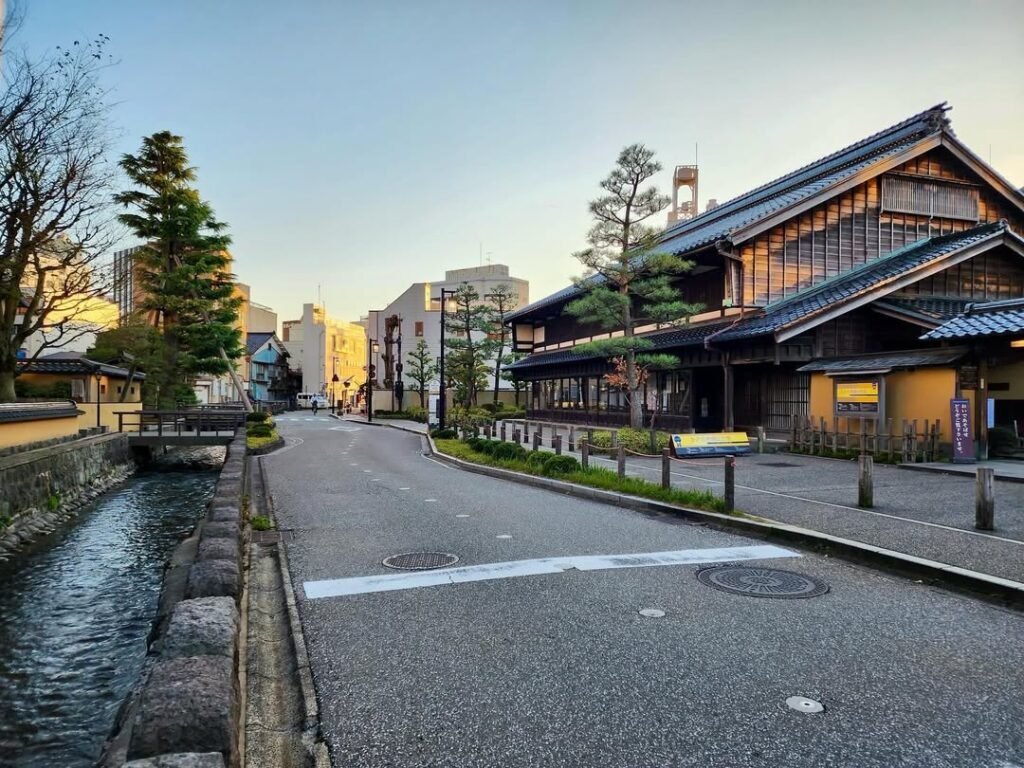
Not far from Kanazawa Castle Park lies Katamachi, the city’s main entertainment district. Here you’ll find several narrow alleyways with a retro, nostalgic atmosphere, packed with izakaya-style bars and tiny restaurants—this area is known as Chuo Mishokugai.
These bars and eateries are full of character, partly because they’re usually very small and intimate. Most only have a few seats around the counter, so it’s a good idea to go early or at off-peak hours if you want to avoid queues.
They’re the kind of places where it feels completely natural to end up chatting (even with limited Japanese) to regulars and owners. Dropping into one of these bars will make your stay in Kanazawa feel much more authentic.
Kanazawa curry
Did you know that Kanazawa is the birthplace of a distinctive style of Japanese curry? The city has several specialty curry restaurants, which inspired the menu of the popular Go! Go! Curry chain.
Kaga Yuzen Kimono Center
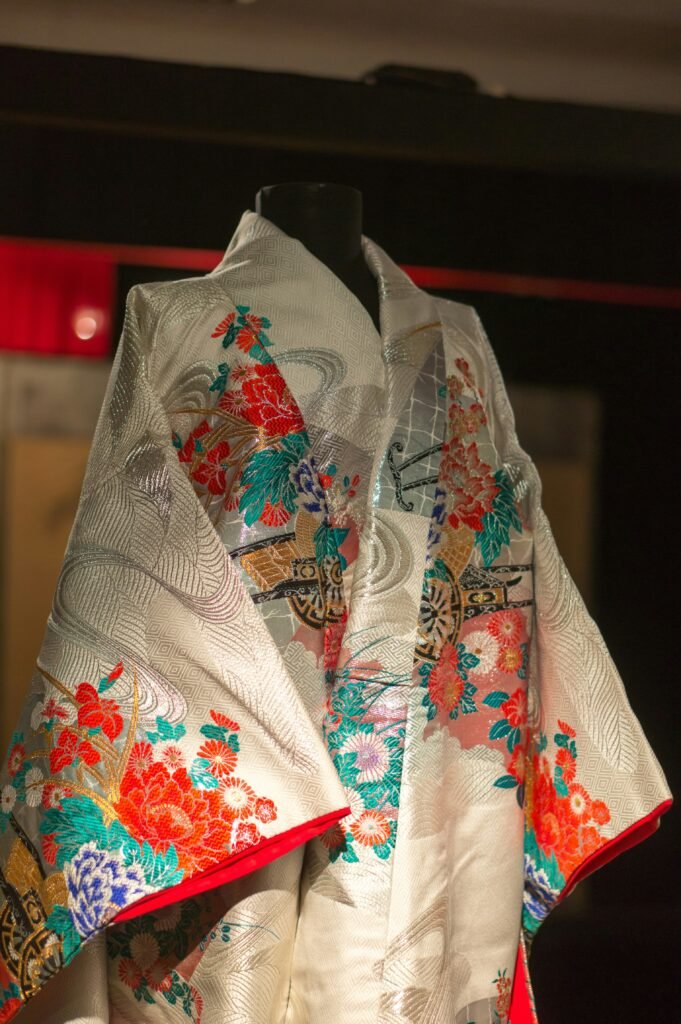
During your visit to Kanazawa, you can dive deeper into the Kaga Yuzen dyeing technique and even take part in a hands-on workshop at the Kaga Yuzen Kimono Center, located very close to Kenrokuen Gardens.
Here you can watch an artisan painting kimonos using the Kaga Yuzen method.
Sakuda Gold Leaf studio
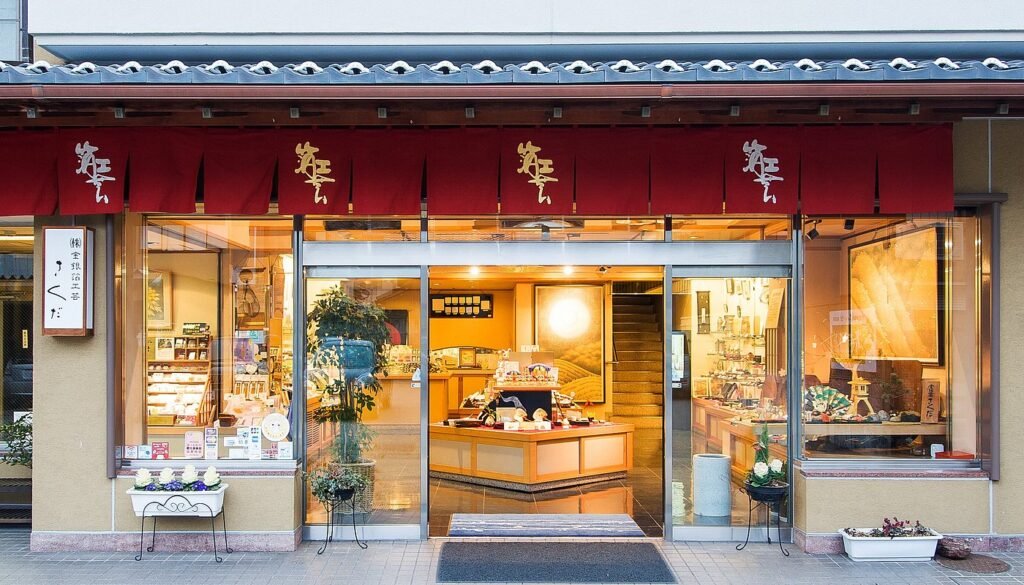
You can also discover Kanazawa’s famous gold leaf craft at the Sakuda Gold Leaf studio. There you’ll see the full process of making gold leaf, watch artisans working with the delicate sheets, and even join one of their workshops if you like.
Myoryuji Temple
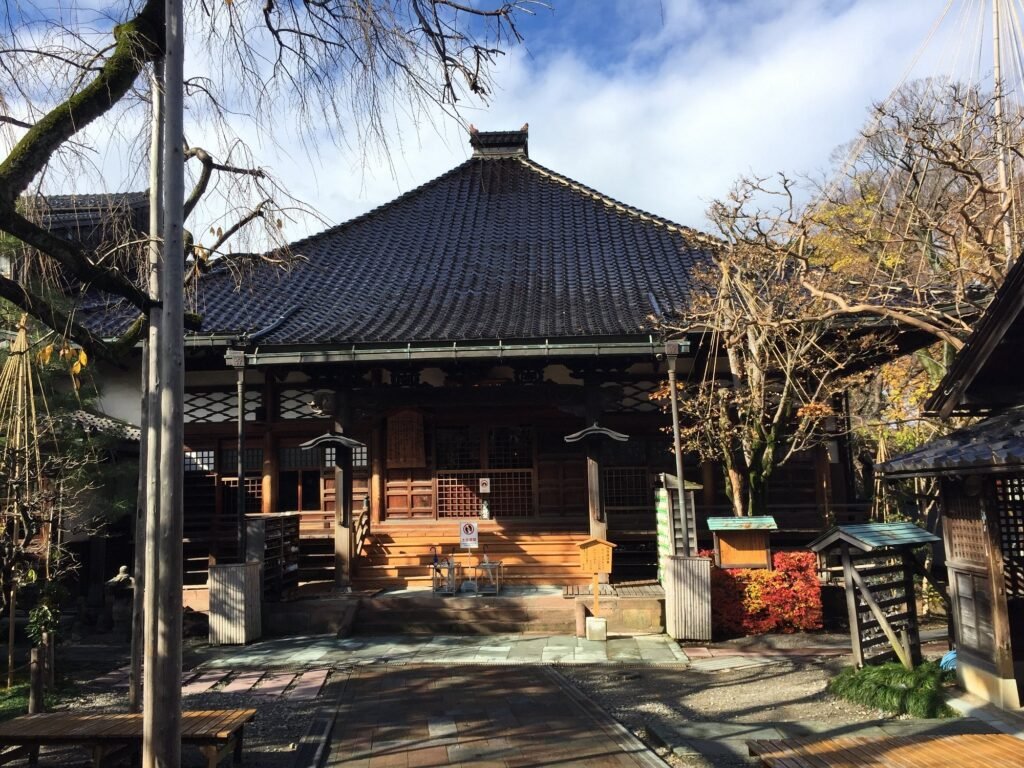
Finally, you can feel like a ninja as you explore hidden doors and secret passages in Myoryuji Temple, nicknamed “the ninja temple” or Ninjadera.
We know that ninjas, as they’re often portrayed today, never really existed in that exact way—but sometimes it’s fun to suspend disbelief for a while and simply enjoy the experience.
Where to eat in Kanazawa
1. Omicho Market & Mori Mori Sushi – for peak seafood and kaisendon
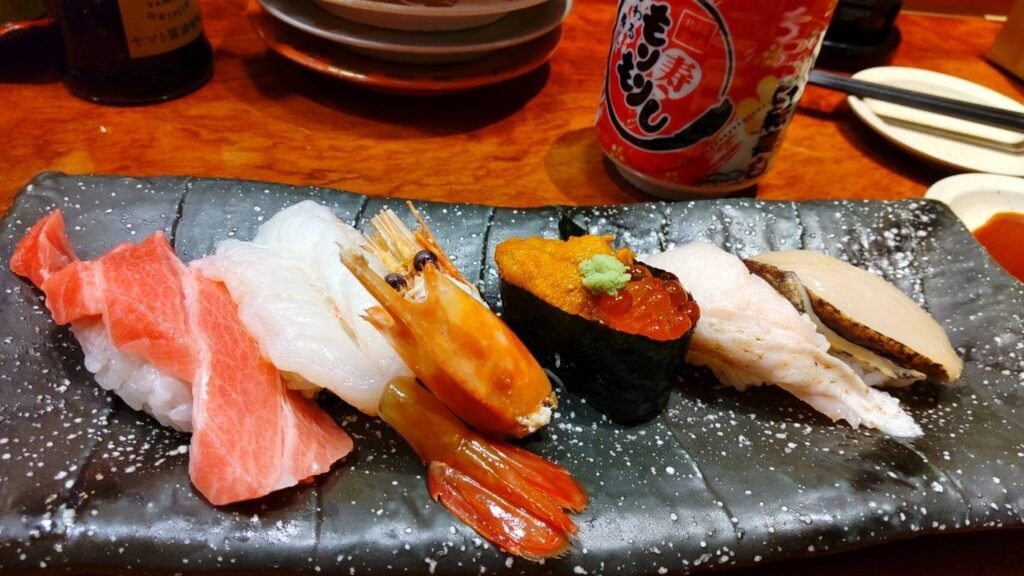
If Kanazawa has a stomach, it’s Omicho Market, nicknamed the city’s “kitchen” and packed with more than 170 stalls of crabs, oysters, sweet shrimp and glistening fillets on ice. You can graze on skewers, croquettes and snow crab claws as you wander, but when we’re properly hungry, we make a beeline for Mori Mori Sushi Omicho, the conveyor-belt spot right by the market.
Plates of sushi parade past loaded with local specialties: nodoguro (blackthroat seaperch), buttery snow crab and sweet shrimp. Their famous “Omicho 3-piece set” lets you try a trio of the day’s best bites without blowing the budget.
What to try: A heaving kaisendon (seafood rice bowl), anything with nodoguro, and in between stalls hunt down gold-leaf soft serve inside the market – Kanazawa produces almost all of Japan’s gold leaf, so yes, they put it on ice cream just because they can.
Close to: Easy walk from Kanazawa Castle and Kenrokuen Garden, so it’s the perfect lunch stop between sightseeing.
2. Kagaya Kanazawa – station-side hit of local classics
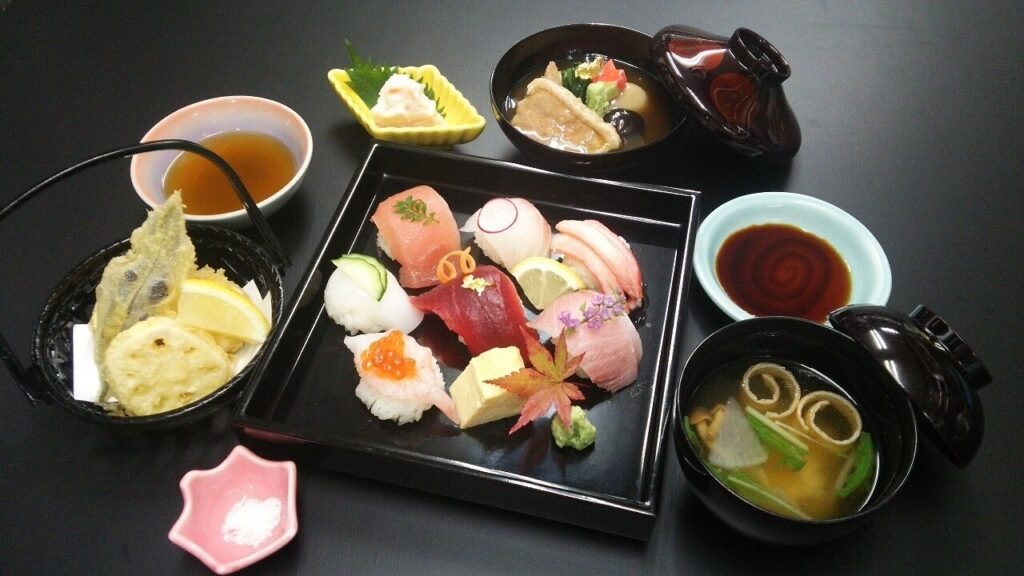
Rolling into town and hungry straight off the train? We’d point you to Kagaya Kanazawa inside or just by JR Kanazawa Station. It’s a relaxed sit-down restaurant that specialises in regional set meals – perfect when you want a little bit of everything without decoding an entire menu.
Order one of the gozen (set menus) and you’ll get grilled fish or meat, small side dishes, pickles and soup on a lacquer tray. Their nodoguro shioyaki (salt-grilled blackthroat seaperch) is famously rich and fatty, and many sets sneak in a small bowl of jibuni, Kanazawa’s signature duck or chicken stew thickened with wheat gluten.
What to try: Nodoguro grilled set, Jibuni, or any seasonal seafood gozen – it’s an easy way to taste several Kanazawa dishes in one go.
Close to: Inside the station area – ideal for first or last meal in the city, or on a tight connection day.
3. Oden Miyuki – cosy bowls of Kanazawa comfort food
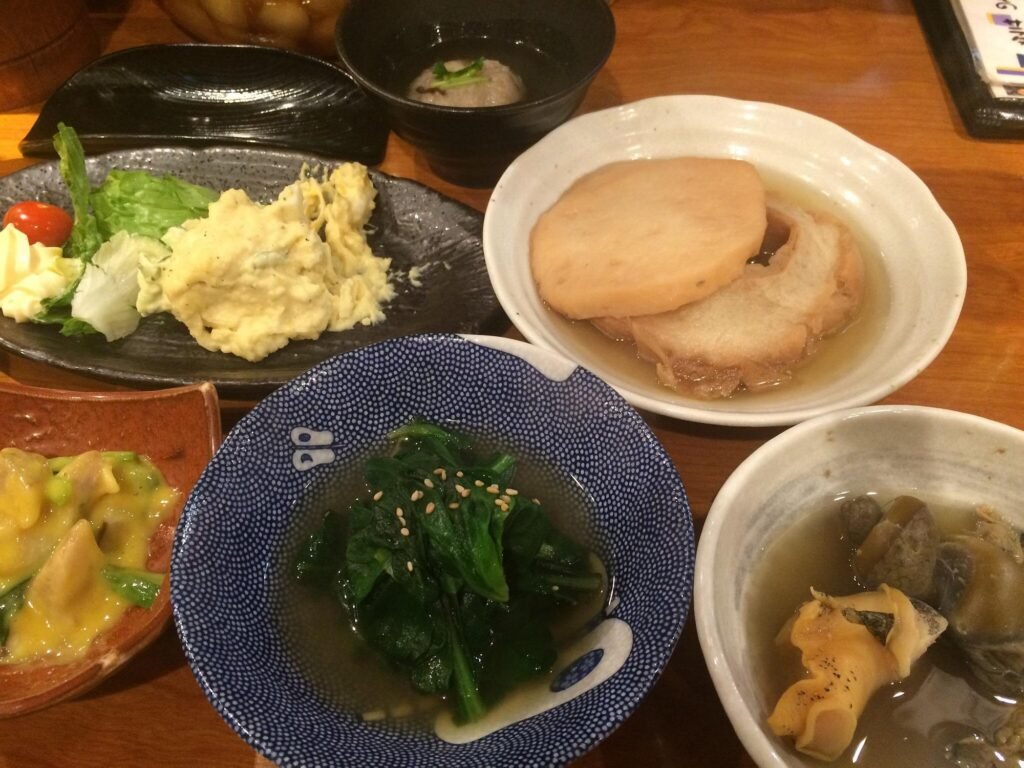
When the sea breeze turns chilly, we follow the locals into Miyuki, an old-school izakaya famous for Kanazawa oden – a steaming hotpot of daikon, fish cakes, tofu and local seafood simmered in a rich house broth. The owners have been tweaking that broth for decades, and it shows: salty, deep, a little addictive.
The room is compact, busy and friendly – you squeeze in at the counter, point at what looks good in the oden pot, and let the staff guide you. It’s also a great place to try a few glasses of local sake while you defrost.
What to try: A mixed bowl of oden with seafood cakes, Miyuki-age (their signature fried fish paste), plus whatever seasonal items the staff recommend that night.
Close to: Katamachi nightlife area – handy if you’re bar-hopping or staying near the modern downtown.
4. TILE – DIY designer seafood bowls in a machiya
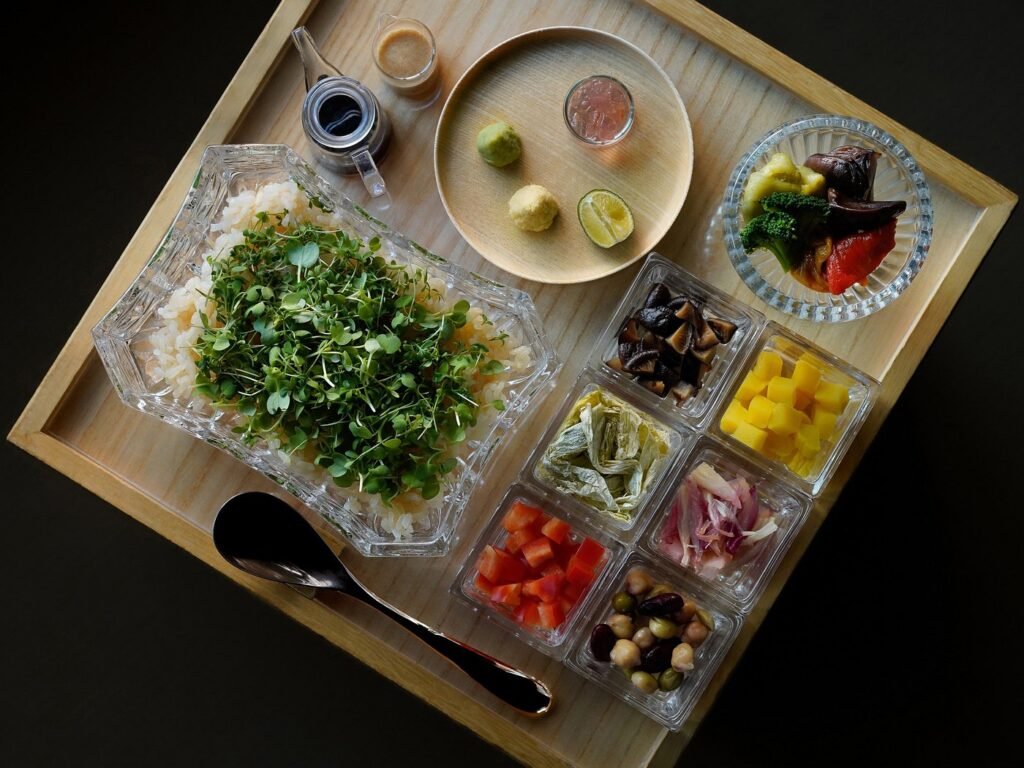
For something more playful, head to TILE, a stylish restaurant in a renovated wooden townhouse where you basically design your own seafood bowl. You choose from around 30 toppings – from luxurious nodoguro and tuna to roast beef and seasonal vegetables – and build your dream kaisendon on beautiful glass tableware.
Even the entrance feels like a secret: you punch in a passcode from their website to get inside. It’s very Kanazawa – traditional shell, modern sensibility.
What to try: Their signature “Kanazawa Yakumi Kaisendon” bowl – go heavy on local fish, a little wagyu or roast beef if you’re curious, and don’t forget a photo before you demolish it.
Close to: Walkable from Kanazawa Station and convenient if you’re doing a loop between the station, Omicho Market and the modern art museum.
5. Tsubajin – splurge-worthy historic kaiseki
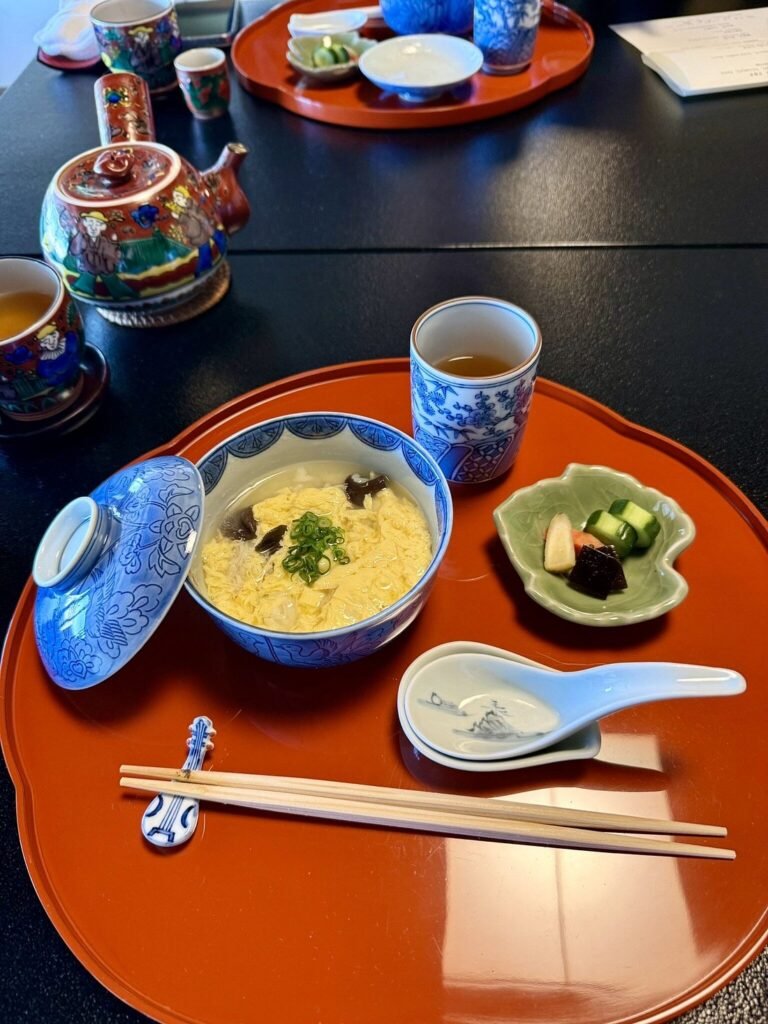
When you’re ready for a “this might ruin all future dinners” experience, book Tsubajin. Operating for more than 270 years, it’s one of Kanazawa’s oldest and most prestigious kaiseki restaurants, set on a hill overlooking the Sai River.
Courses change with the seasons: spot prawns and shellfish in spring, snow crab and rich hotpots in winter, all served on exquisite local lacquerware and ceramics. This is the kind of place where you’re not just eating; you’re time-traveling through Kanazawa’s foodie history.
What to try: Lunch kaiseki if you want the experience at a slightly gentler price, or a full dinner course if you’re going all in. Mention any dietary restrictions when you reserve – menus are set and very seasonal.
Close to: A short taxi ride from central Kanazawa; combine with a wander through the Teramachi temple district before or after.
Pro tip: Kanazawa is wildly seasonal. In winter, chase snow crab and hot oden; in warmer months, lean into sashimi bowls, grilled fish and gold-leaf sweets. If there’s one rule? Arrive a little hungry, and leave room for “just one more” bite – because here, there always is.
Where to stay in Kanazawa
Kanazawa offers a wide variety of accommodation, from modern business hotels to ryokan and traditional-style inns.
Below, we share a few hand-picked options so you have some concrete ideas when planning:
Dormy Inn Kanazawa

A typical business hotel next to the train station. It offers renovated Western-style rooms, public onsen hot spring baths, and laundry facilities—a very convenient choice for all types of travelers.
Sumiyoshiya
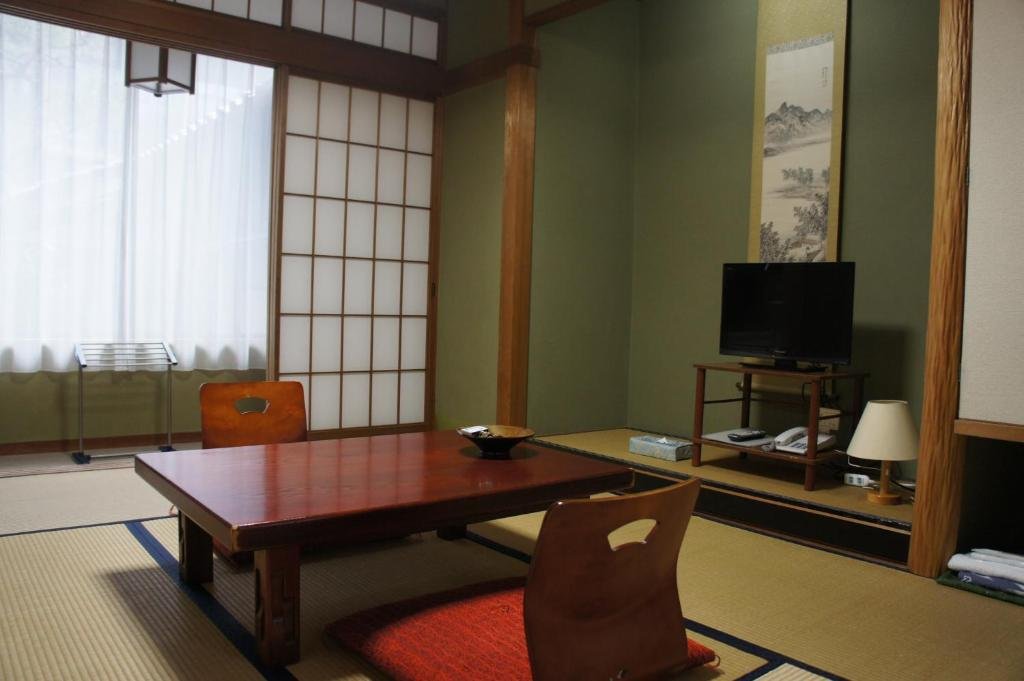
A charming traditional Japanese ryokan just minutes from Kenrokuen Gardens. Rooms have tatami floors, and some feature shared bathrooms. Bicycles are available for guests free of charge.
Hotel Pacific Kanazawa
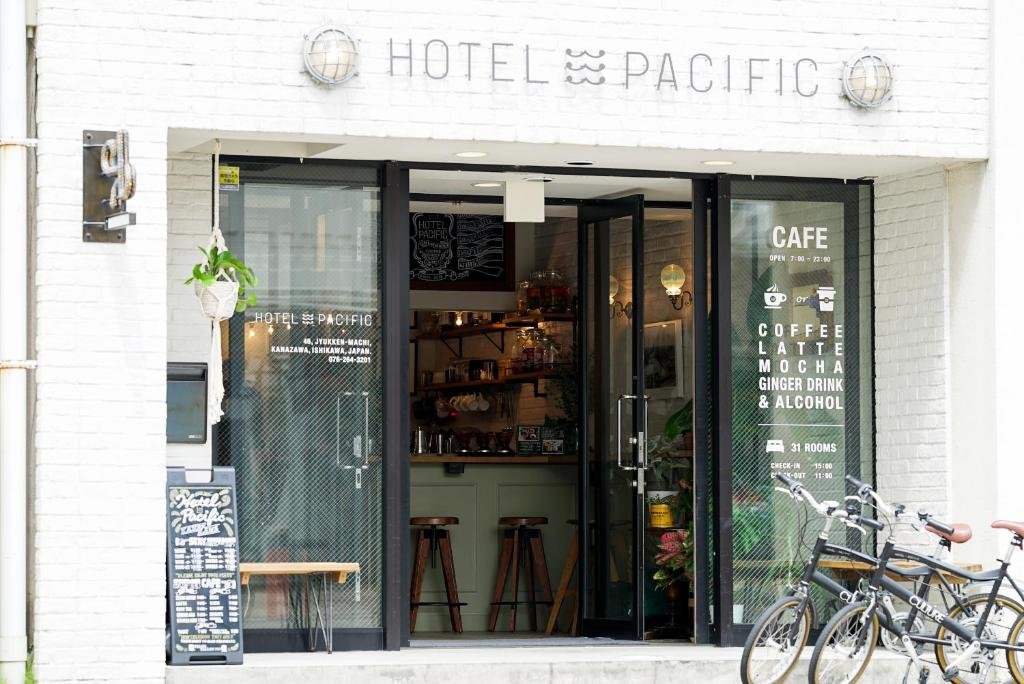
About 15 minutes on foot from the station and right next to the market, this hotel offers both Western- and Japanese-style rooms, and also provides bicycle rental.
UAN Kanazawa
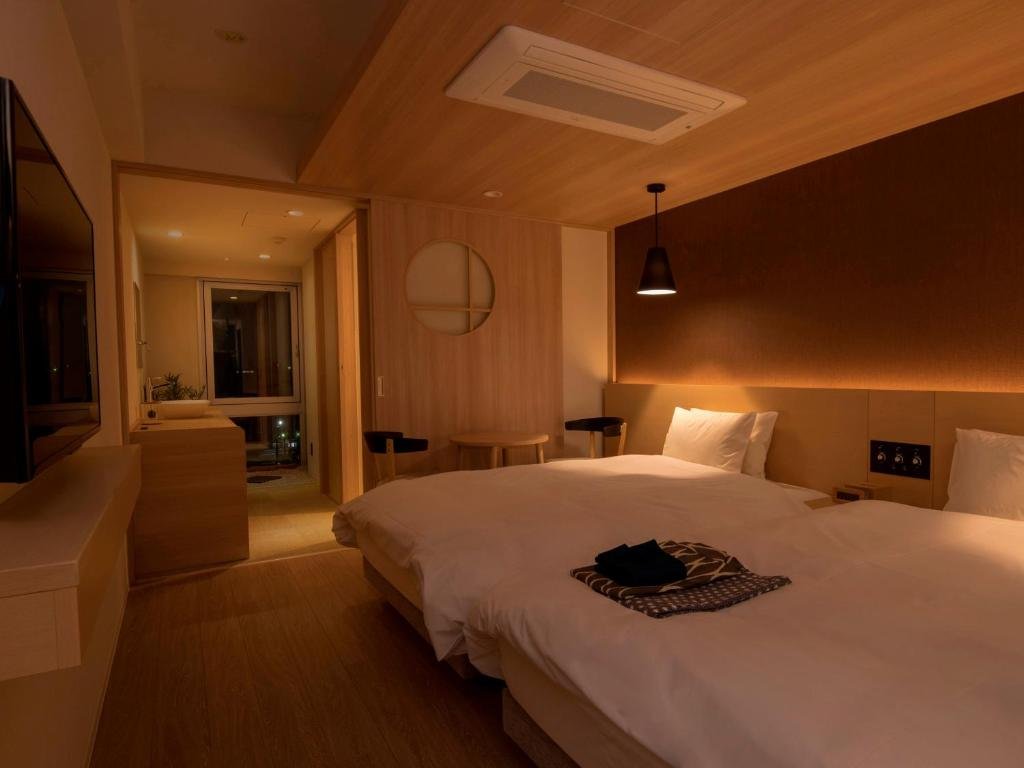
A modern hotel near Omicho Market and just a few minutes’ walk from Kanazawa Castle. It offers spacious Western-style rooms, all with private bathrooms.
Day trips from Kanazawa
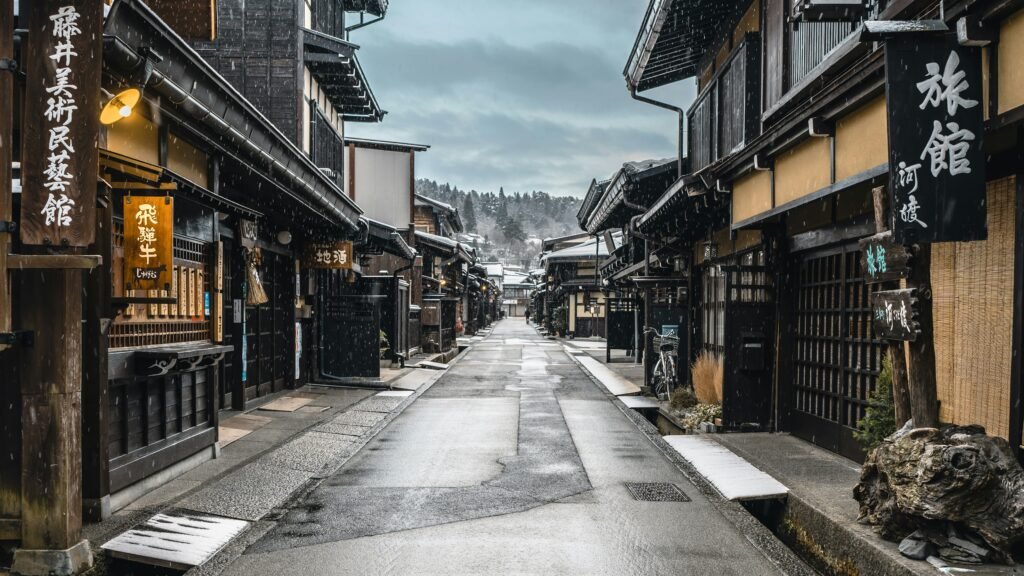
Kanazawa can be either a base for exploring the region or simply one stop on a broader itinerary. You can join organized tours or travel independently.
Many destinations are easily accessible from Kanazawa. Here are a few suggestions:
- Take a train excursion through Kurobe Gorge, Japan’s slowest scenic train.
- Visit Toyama, the cradle of traditional Japanese medicine and a city famous for its excellent sushi.
- Enjoy the onsen villages of Kaga Onsen, now closer than ever thanks to the new Hokuriku Shinkansen station.
- Immerse yourself fully in ryokan and onsen culture in Awara Onsen and use it as a base to visit nearby spots such as the Tojinbo cliffs, the Eihei-ji temple, or Maruoka Castle in Fukui.
- Take a day trip to Takayama, known for its traditional architecture and delicious Hida beef in the heart of the Japanese Alps.
- Don’t skip Shirakawa-go, a UNESCO World Heritage village—ideally visited in combination with Takayama.
- Explore the Tateyama-Kurobe Alpine Route, especially famous for its road flanked by towering walls of snow in spring.
- Visit the city of Takaoka to see its Great Buddha and wander its old merchant and artisan streets.
- If you want something quieter and less touristy, head to Hida-Furukawa, where you can take a bike tour and visit locations from the film “Your Name”.
- Discover the Noto Peninsula and towns like Wajima, known for their traditional crafts and lacquerware.
4-day itinerary from Kanazawa to Ishikawa
Below is a simple 4-day itinerary for Ishikawa Prefecture starting from Kanazawa. You can combine it with other routes in Ishikawa or the wider Hokuriku region. It’s also a great option if you’re planning to follow the New Golden Route, which links Tokyo and Kyoto via the Sea of Japan coast.
Day 1: Arrival in Kanazawa
You arrive in Kanazawa from Tokyo on the Hokuriku Shinkansen line, which you can use with the JR Pass. Depending on your arrival time, you might want to have lunch at Kanazawa Station itself, considered one of the most beautiful stations in the world and home to many restaurants.
Next, we recommend visiting the Nagamachi samurai district as well as some of Kanazawa’s museums. In particular, we suggest the 21st Century Museum of Contemporary Art and the DT Suzuki Museum. One of the advantages of Kanazawa is that the central area—where most tourist attractions are concentrated—is quite compact and easy to explore.
In the evening, treating yourself to a traditional Kaga-style fine dining experience at a ryotei is a wonderful idea.
Day 2: Excursion to Shirakawa-go
If you’re staying in Kanazawa, it’s only natural to want to visit nearby destinations that are always in the spotlight. One of the most famous, without a doubt, is Shirakawa-go.
This World Heritage village is known for its traditional gassho-zukuri farmhouses, many of which have been converted into museums or even accommodations. There are also several restaurants in the village, making it a great full-day excursion.
Day 3: Kanazawa and Kaga Onsen
On your third day, we recommend starting with Kenrokuen Gardens, where you can enjoy green tea in one of the teahouses. From there, visit the castle grounds and then head to Omicho Market. With its 180 stalls, it’s the perfect place to grab something delicious for lunch.
Next, visit the Higashi Chaya geisha district, famous for its beautiful traditional architecture. Nearby, you can join a gold leaf workshop—gold leaf is one of the region’s signature crafts, and Kanazawa is the only place in Japan where it is still produced on such a scale.
Afterwards, the itinerary takes you to the Kaga Onsen area (specifically Yamanaka Onsen), where you can relax in the hot springs, enjoy the local cuisine, and discover regional handicrafts.
Day 4: Yamanaka Onsen and Yamashiro Onsen
In this area, we suggest starting in Yamanaka Onsen, walking along the scenic Kakusenkei Gorge, and, if you like, enjoying a drink or snack on a kawadoko, a wooden platform built over the river.
Once you’ve explored the gorge, don’t miss Yuge Kaido Street and, if you’re interested, join a Yamanaka lacquerware workshop to learn more about this traditional craft.
Later, you can head to Yamashiro Onsen and enjoy its baths in a beautifully restored Meiji-period bathhouse. From there, it’s about a 15-minute taxi ride to a Kutaniyaki pottery workshop.
FAQs: What to do in Kanazawa
Is Kanazawa worth visiting compared to Kyoto or Tokyo?
Yes, absolutely. Kanazawa is like Kyoto’s quieter cousin: you still get stunning gardens, samurai lanes, geisha districts, art museums, and great food, just with fewer crowds. Within a compact radius you can hit Kenrokuen Garden, Kanazawa Castle, the Nagamachi samurai district, and the Higashi Chaya geisha quarter in one or two days.
How many days do I need in Kanazawa?
If you’re fast-paced, one full day covers the main highlights (Kenrokuen, Kanazawa Castle, Higashi Chaya, Nagamachi, and Omicho Market). Two days lets you slow down, visit the 21st Century Museum of Contemporary Art, duck into smaller temples and museums, and enjoy more food stops and workshops like gold leaf or tea ceremony.
What are the must-see places in Kanazawa for first-time visitors?
If it’s your first time, don’t skip Kenrokuen Garden, Kanazawa Castle, Omicho Market, Higashi Chaya District, the Nagamachi samurai district (and Nomura Samurai Residence), and the 21st Century Museum of Contemporary Art. These spots give you a nice mix of history, gardens, food, and modern culture.
What can I do in Kanazawa when it rains or snows?
Kanazawa is famously rainy, so there’s plenty to do indoors: browse the 21st Century Museum of Contemporary Art, visit the D.T. Suzuki Museum, explore samurai and geisha houses, or linger over seafood bowls at Omicho Market. In winter, Kenrokuen looks magical in the snow with its yukitsuri (rope supports on pine trees), so pack waterproof shoes and still go out.
Is Kenrokuen Garden really worth the entrance fee?
Yes. Kenrokuen is considered one of the three most beautiful landscape gardens in Japan, with ponds, stone lanterns, seasonal flowers, and tea houses. It’s especially gorgeous during cherry blossom season, autumn foliage, and winter snow. Plan at least 1–2 hours to wander, and try to pair it with Kanazawa Castle right next door.
What are the best food experiences in Kanazawa?
Start at Omicho Market for fresh seafood bowls, crab in winter, and snacks as you wander the alleys. Add conveyor-belt sushi, local kaiseki dinners, and wagashi (traditional sweets) around Higashi Chaya District or in old machiya townhouses. Food tours are great if you want help navigating the market and local specialties.
Can I visit Kanazawa as a day trip from Tokyo or Kyoto?
From Tokyo, the Hokuriku Shinkansen takes around 2.5–3 hours one way, which makes a really long day trip but a very doable overnight. From Kyoto or Osaka, limited express trains are convenient but still make Kanazawa feel more like an overnight or 2-day stop than a quick dash. If you have time, staying at least one night is much more relaxed.
Is Kanazawa family-friendly? What can kids do there?
Yes, it works well with kids. You can run around Kenrokuen and Kanazawa Castle Park, snack through Omicho Market, spot samurai armor and hidden tricks at the “Ninja Temple” (Myoryuji), and play outdoor/indoor games in the castle grounds and museums. E-bike or walking tours are also a fun, low-stress way to explore with older kids.
What unique activities can I try in Kanazawa?
Kanazawa is famous for gold leaf, so you can do a gold-leaf workshop (decorating chopsticks, accessories, or souvenirs), join a tea ceremony experience, rent a kimono for photos in Higashi Chaya, or take a cooking class to learn local dishes. Many of these workshops are clustered near the geisha districts and central attractions.
Should I base myself in Kanazawa to visit Shirakawa-go?
Yes, Kanazawa is a popular base for a day trip to Shirakawa-go and nearby Gokayama. Direct buses connect the city to the UNESCO-listed villages, so you can explore traditional gassho-zukuri farmhouses by day and sleep back in the city with more restaurant and hotel options at night.
- 13 Best Things to Do in Kobe With Kids (2026): Waterfront views, Animals, Museums, Cable cars & Shopping Breaks
- 35 Best Things to Do in Kobe (2026): Waterfront Views, Mountain Escapes and Cultural Sights
- What To Buy in Kobe (2026): Sweets, Kobe Beef Gifts and Local Finds

- What to buy at Matsumoto Kiyoshi (2026): The Budget-Friendly Japan Beauty Finds Worth Checking Out

- Best Japanese Snacks to Try in 2026: From Crispy Senbei to Weird Little Konbini Treasures